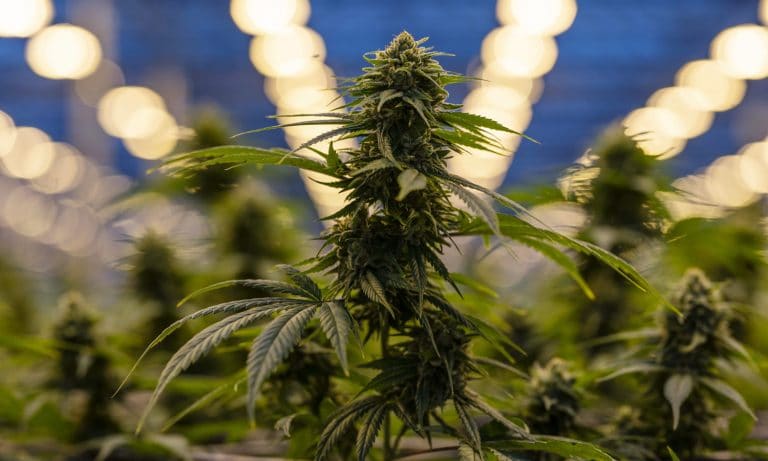
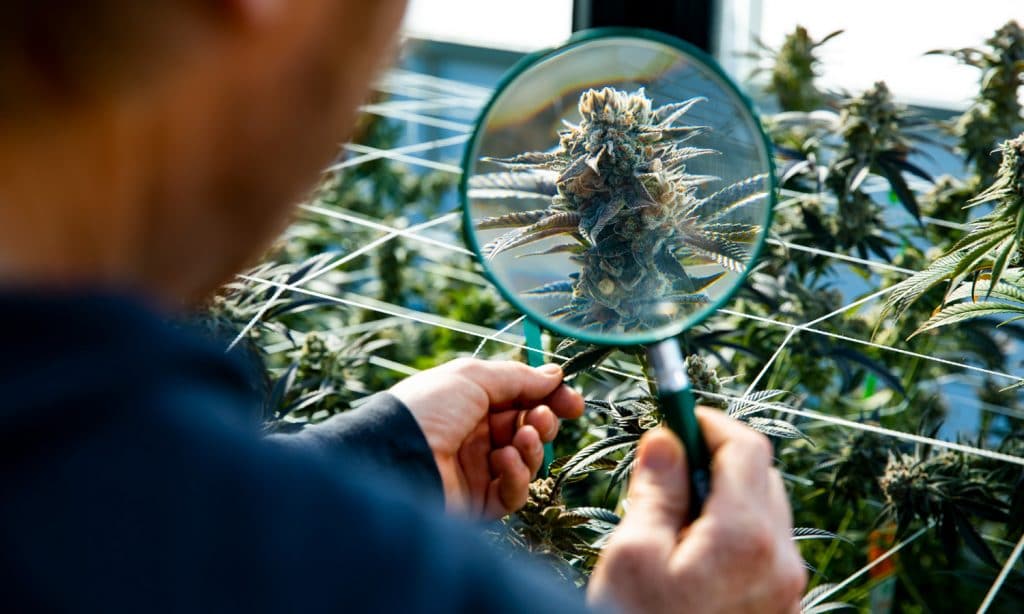
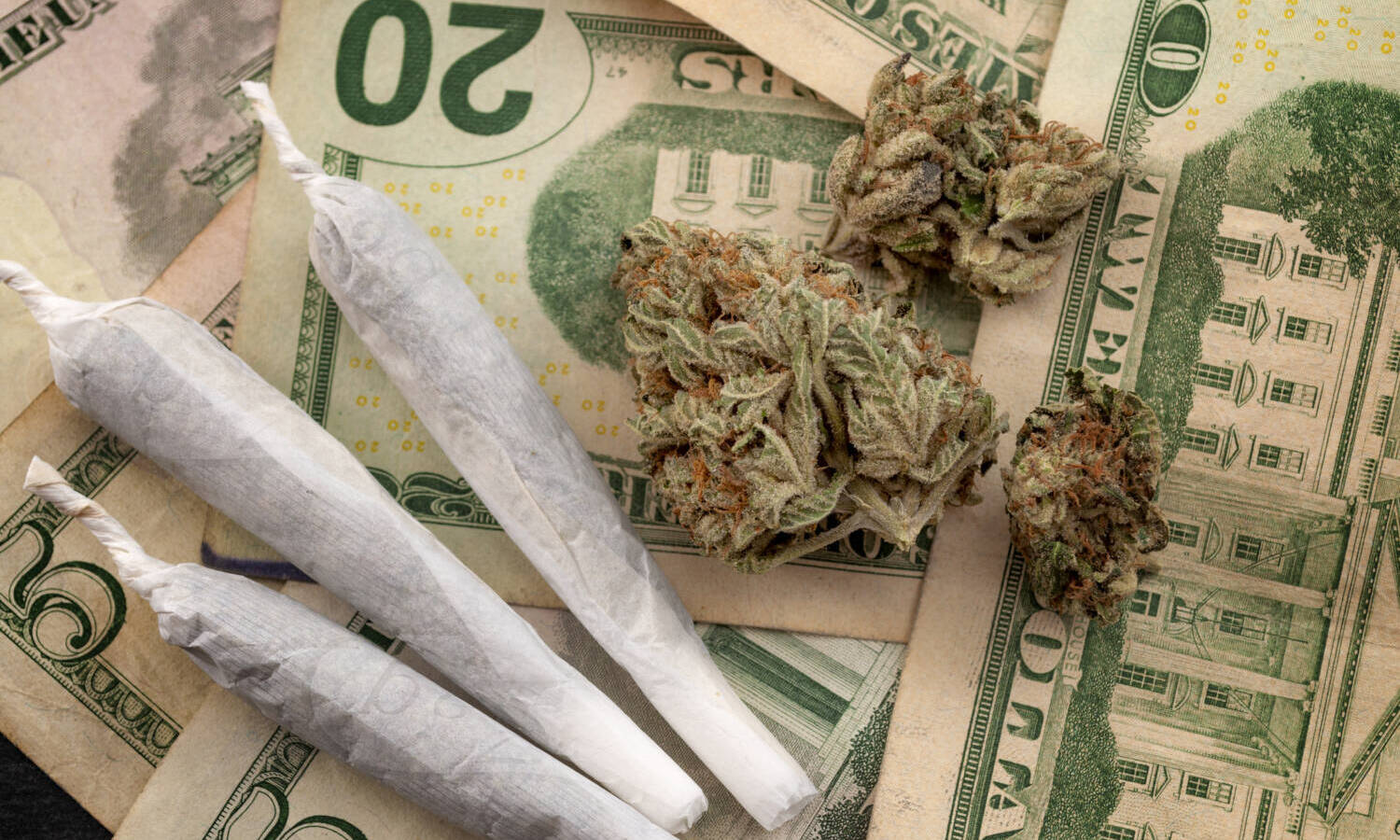
Why did the USDA set the dividing line at 0.3% anyway? Why not 0.5% or 1%? The answer to that question lies in Canada and in the work of research botanist Dr. Ernest Small.
We are heading into the first decade of scaled commercial hemp production in the United States since the 1920s. As a law firm that has been helping cannabis businesses succeed since 2010, we couldn’t be more excited. And for good reason: the recreational market is expanding. Hemp is legal. CBD and other cannabinoids are fast becoming (if not already) household names. The international market is taking form and access to banking services is expanding. Public support is increasing. This looks like a great decade for cannabis.
But the USDA’s interim rules governing the production of hemp threaten significantly this economic juggernaut. Perhaps the most dubious rule is the total THC testing standard. To briefly summarize, the 2018 Farm Bill defined hemp as “[t]he plant species Cannabis sativa L. and any part of that plant . . . with a delta-9 tetrahydrocannabinol concentration of not more than 0.3 percent on a dry weight basis.” The USDA then adopted a total THC testing requirement by which total THC is the molar sum of delta-9 THC and delta-9 tetrahydrocannabinolic acid (“THCA”).
The industry consensus is that the total THC requirement is impractical and likely devastating to cultivators and, therefore, to every business in the hemp supply chain. By way of contrast, several states previously had tested only for a .3 percent concentration of delta-9 THC, which everyone agrees is a more forgiving standard.
But why did the USDA set the dividing line at 0.3% anyway? Why not 0.5% or 1%?
Photo by Jordan Siemens/Getty Images
The answer to that question lies in Canada and in the work of Dr. Ernest Small, a research botanist who began studying and writing about cannabis in the 1970s. In 1976, Small and his colleague, Arthur Cronquist, published “A Practical and Natural Taxonomy for Cannabis,” which set a dividing line between hemp and marijuana at 0.3 percent THC for purposes of establishing a biological taxonomy.
Dr. Small’s approach is not the only one. Cannabis had been subjected to different taxonomical treatments by Linnaeus in 1753 and Lamarck in 178. Indeed, the proper taxonomical treatment of cannabis is still debated says Antonino Pollio in “The Name of Cannabis: A Short Guide for Nonbotanists.”
Small never intended his 0.3 percent demarcation to have legal significance. In a 2018 interview with the Winnipeg Free Press, Small—who continues to research and write about cannabis—explained:
At that time, when I did that study and published it, I had no idea that that would be used as a practical measure for countries licensing the amount of THC that would be permitted in order to grow it.”
Yet relied on it was. First by the European Union, whose Common Agricultural Policy caps THC concentrations at 0.2 percent to be deemed hemp, and later by the United States, which codified the 0.3 percent dividing line in the 2018 Farm Bill. This was done despite a 2016 article Small published with a colleague in the journal Agronomy in which described 0.3% THC as the “arbitrary threshold at which cannabinoid content is used to distinguish strains of hemp from marijuana.”
Take Action
All is not lost. Laws can be changed—telephone, write, or email your congressional representatives. Regulations can be rewritten—the USDA recently extended the comment period on the interim final rule until January 29, 2020.
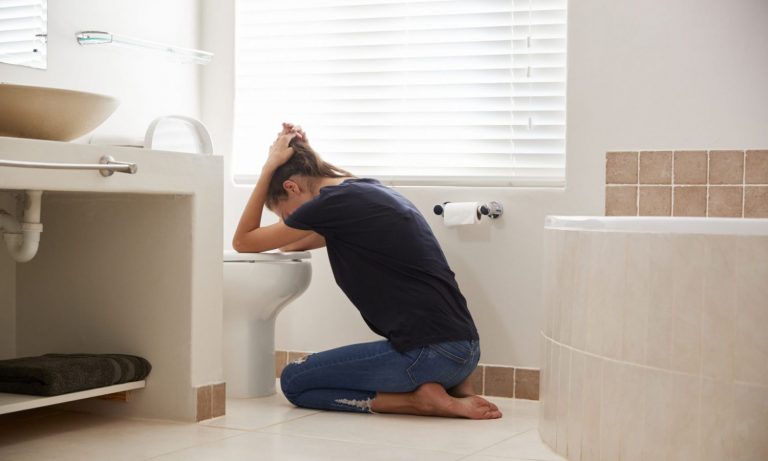
When the syndrome develops, which takes a few years, the consumer will experience various problems such as nausea, vomiting, weight loss, and disturbed eating patterns.
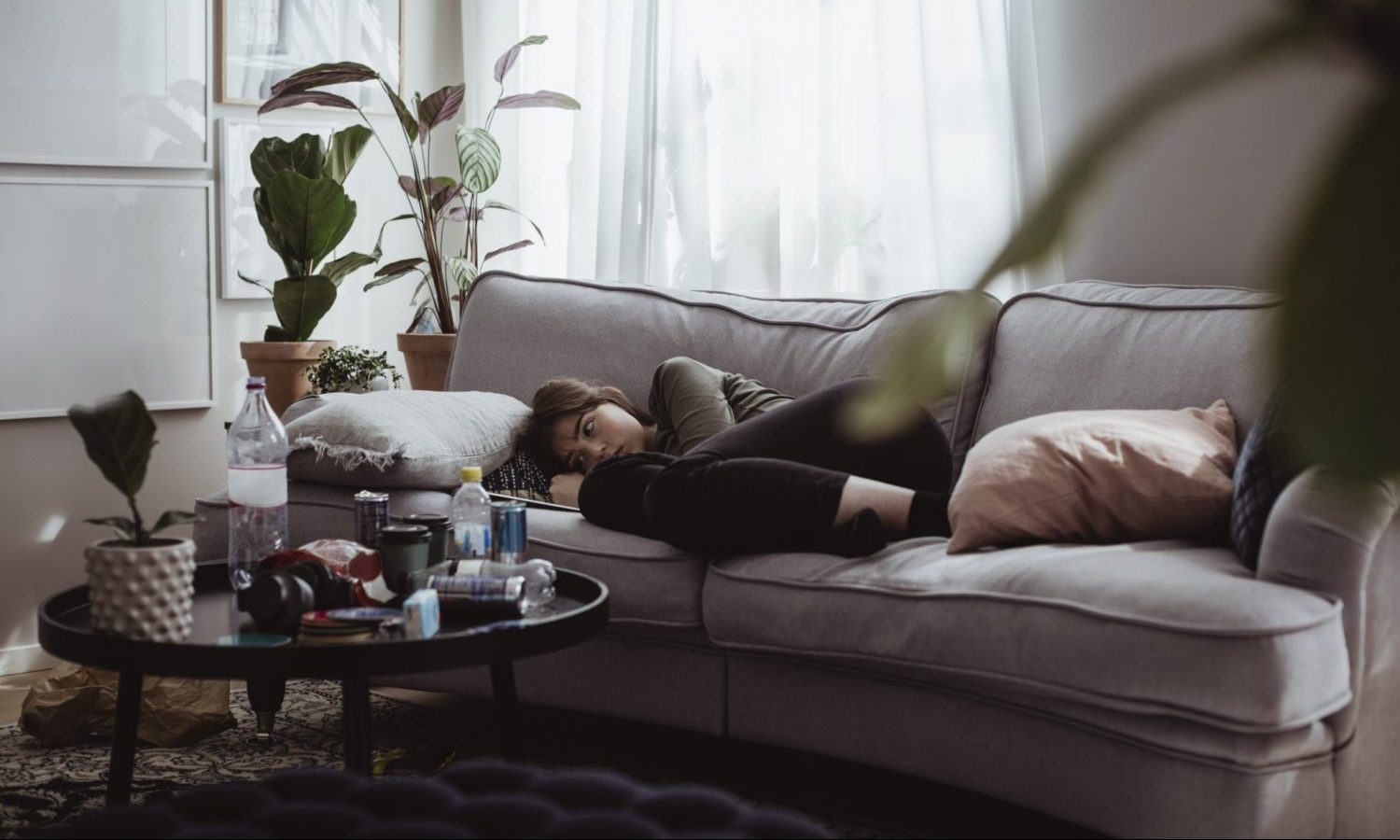
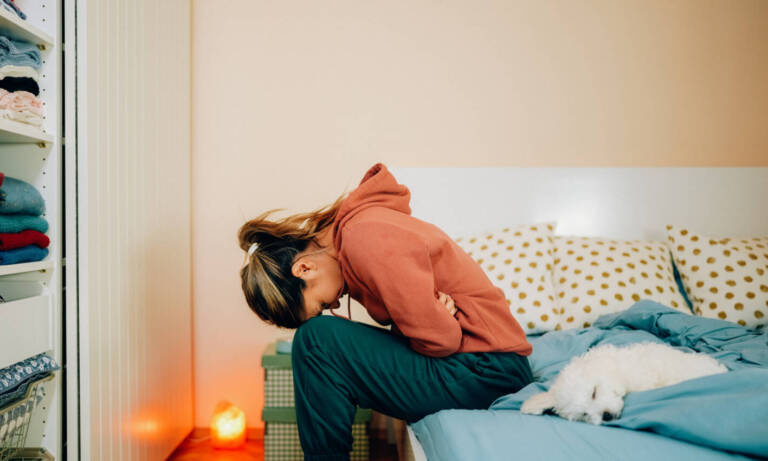
Daily and long-term use of cannabis can cause a rare condition with symptoms including nausea and an unsettled stomach. What is cannabinoid hyperemesis syndrome (CHS), what causes it and here is how to treat it.
Many researchers tried to give more details on CHS and its causes, but it requires more studies as it is a fairly new condition. The first cases were reported in 2004 in South Australia, where doctors started treating cannabis users for vomiting, stomach pain, and more. The people who experienced these issues were long-term cannabis users.
Photo by PeopleImages/Getty Images
Diagnosing the condition is often tricky, considering that many users go for treatment without mentioning using marijuana. In most cases, the symptoms disappear entirely once the user stops consuming cannabis. However, as legalization is still in progress, the number of people using marijuana is increasing, and so is the number of those with CHS.
CHS is a rare phenomenon. In most cases, it occurs in people who use marijuana for years (usually 1-5), a few times per day (3-5 times).
Main Causes of Cannabis Hyperemesis Syndrome
Some research suggests that cannabis hyperemesis syndrome is caused by the daily and long-term use of marijuana. The number of people diagnosed with CHS is increasing due to more states in the US legalizing marijuana. However, the number of regular users who develop weed sickness is not high. Some studies suggest that genetics plays a part. There is a lack of evidence that would fully support the current theories around CHS, which is why further research is necessary.
Cannabis has several active components, and since it is very complex, it affects every user differently. One of its main ingredients is THC that features anti-nausea effects. But what has been noted is that if someone uses cannabis regularly for an extended period, the results could be the opposite. Some theories suggest that THC can make cannabinoid receptors act contrary to how they should behave. As a result, the consumer may experience cramps, vomiting, stomach pain, and other issues.
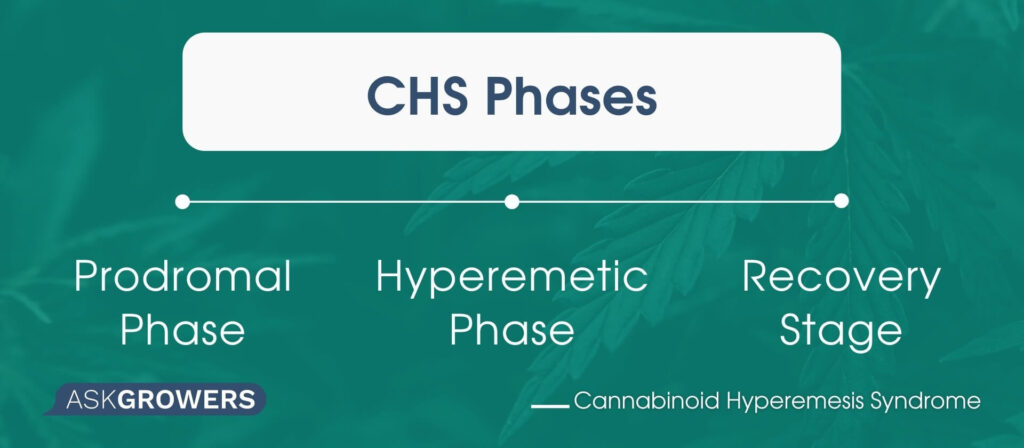
The symptoms of CHS are divided into three main phases. The first is called the prodromal phase, the second is hyperemetic, and the third is the recovery phase.
Prodromal Phase
The prodromal phase is the first one, and the symptoms in this stage are usually abdominal pain, morning nausea, and urge to vomit. Other symptoms can be skin flushing, body temperature changes, and sweating. While this phase is on, most people will continue to eat normally. In addition, most users will continue to consume cannabis, thinking it will help them stop nausea and vomiting. The prodromal stage can last for a long time, in some cases for a couple of weeks, months, and even years.
Hyperemetic Phase
The second stage is called the hyperemetic phase, and during it, the vomiting is often pretty intense. To ease nausea, people will mostly use hot showers throughout the day. Some people take marijuana to ease nausea, but it only makes the situation worse.
The symptoms in this phase include feeling sick and nauseous, throwing up after smoking weed, dehydration, stomach pain, disturbance of eating patterns, reduced food intake, and weight loss. The syndrome represents a real medical issue. Extreme vomiting and intense tummy pain can plausibly lead to scromiting (the combination of screaming and vomiting). The phase lasts until the consumer stops with marijuana usage.
The last of three phases is the recovery stage. It starts the moment the user stops consuming cannabis. During this phase, all the symptoms will go away, and the person will go back to the standard eating patterns. In addition, people in the recovery phase generally feel better. The need for several hot showers or baths throughout the day will disappear as well. The stage can last from a couple of days to a few months. If an individual decides to turn back to marijuana by any chance, the symptoms will most likely return.
Diagnosis of the Sickness
Various health issues can cause repeated vomiting, and what needs to be pointed out is that CHS is a rare condition. The healthcare provider will ask the patient about the symptoms, and it will also ask about past health and issues if there were any. Then, a physical exam is necessary, including a stomach exam.
One of the things that can make the diagnosis faster and a lot simpler is admitting the consumption of marijuana to the doctor. For many health care providers, diagnosing the syndrome can be pretty challenging and can take a lot of time and effort. The main reason for that is that the patient does not report and mention their use of cannabis.
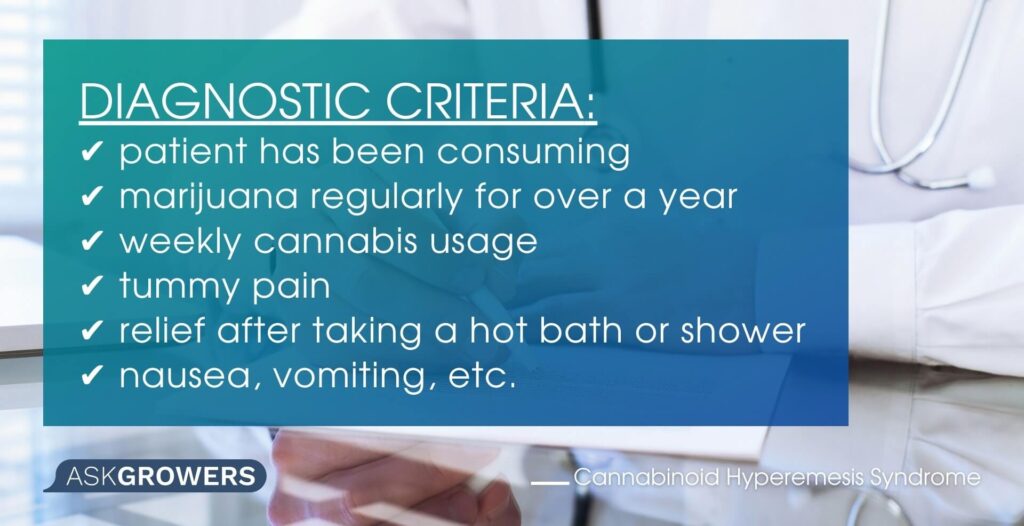
There are specific criteria to diagnose the syndrome. The first one is the patient has been consuming marijuana regularly for over a year. Some other things that can play a significant role are weekly cannabis usage, tummy pain, relief after taking a hot bath or shower, nausea, vomiting, etc. Other things that are considered are morning nausea, age (if the person is younger than 50), weight loss, and disturbed eating patterns.
If the health care provider diagnoses the CHS, it will be explained to the patient what is cannabinoid hyperemesis syndrome, and then it is the treatment time.
One of the first steps doctors suggest is to stop consuming marijuana. If a person experiences extreme vomiting and nausea, hospitalization that may last a few days could be necessary.
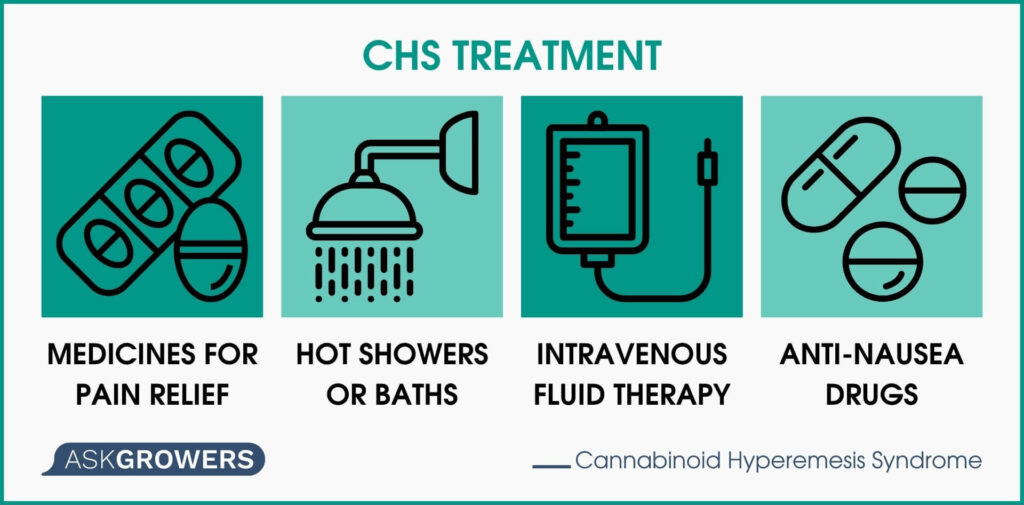
During the second phase, known as the hyperemesis phase, the patient might need treatment, such as:
Medicines for pain relief and anti-sickness
Constant hot showers or baths
Intravenous fluid replacement
Anti-nausea drugs
All of the above are short-term treatments. The only option to treat the condition long-term is to stop using marijuana.
In most cases, the symptoms of the syndrome will disappear pretty fast. The patient may feel much better in general within a few days, usually one or two. However, the symptoms can come back if the person starts consuming cannabis again.
The only way to prevent cannabinoid hyperemesis syndrome is the complete absence of marijuana consumption. Unfortunately, people tend to consume cannabis for years and become chronic users before the CHS develops. That’s because the development of the syndrome takes a lot of time.
When a person has the symptoms, especially vomiting, it may cause additional issues such as dehydration. In addition, if the condition is not treated, some other complications may arise, such as weakness, muscle spasms, shock, to name a few. In the most severe cases, cannabinoid hyperemesis syndrome can lead to kidney failure that can cause death.
Conclusions
CHS is caused by regular marijuana consumption. When the syndrome develops, which takes a few years, the consumer will experience various problems such as nausea, vomiting, weight loss, disturbed eating patterns, etc. The symptoms take three phases, and they can be extremely severe, especially in phase two.
The diagnosis of the syndrome is one of the trickiest parts of the story because people often fail to report using marijuana to their health care providers. Once the syndrome is finally diagnosed, the patient gets familiar with the condition, learns what CHS is, and begins treatment. The most important part of the recovery process is the stopping of weed consumption. If the patient continues to consume, the symptoms will come back.
The condition is a rare phenomenon and it does not affect all smokers. Every marijuana user should know the right dose. When the marijuana consumer experiences extreme vomiting for one whole day or more, contacting a health care provider is the best possible option.
Disclaimer: The information in this article is for educational purposes only and should not be used as a substitute for any prescribed medication. See your doctor first!
The first recreational marijuana dispensary has finally opened in New York. Here are some important notes to know before you go.
Recreational marijuana was legalized in New York in March 2021. As we enter 2023, the state has finally opened its first recreational legal dispensary, a topic that’s been confusing for many residents.
On December 29 (at 4:20 p.m.), the first recreational legal dispensary opened its doors and provided New Yorkers with their first legal weed experience. Here’s what consumers should know.
How do you know if the location is legal?
Photo by Moussa81/Getty Images
For now, there’s only one legal location. Housing Works Cannabis Co. is the first recreational legal dispensary and is located at 750 Broadway, in the East Village. The business should have a QR code stuck at its door, allowing customers to verify whether the location is legitimate or not.
When will other dispensaries open up
Photo by Jason Colston via Getty
Currently, New York has handed out 36 licenses, which are located across cities’ different boroughs and are scheduled to open within the coming weeks. Official dates haven’t been released yet, but you should expect more information from the New York Office of Cannabis Management.
The store should have a wide range of products, including marijuana flower, vape products, edibles, pre-rolled joints and even CBD treats for pets. In terms of prices, the Housing Works website shows that an ounce of marijuana will range between $40 to $60.
What’s the difference between legal vs. illegal shops?
Following marijuana’s legalization, an impressive amount of marijuana stores and cannabis pop-ups have appeared, confusing any person who’s not keeping up with legal cannabis news. While many of these illegal shops sell high-quality cannabis, the difference between these shops and the ones that have a license is the fact that the latter stores sell products that have been regulated and tested by the state. These products are likely safer, of higher quality, and made under regulated conditions.
Drama? Check. Intrigue? Check. These five events helped define the cannabis industry in 2022. How could 2023 possibly top this?
We always joke that time moves quickly in the cannabis industry. One year in cannabis is equal to five years in any other industry. It also feels like the marijuana industry, unlike more mature industries, has its fair share of scandals. So Green Market Report took a look at the past 12 months and came up with the top five cannabis scandals of 2022.
MedMen/Ascend Wellness
This story started nicely enough. MedMen needed some money and decided to sell its New York assets to Ascend Wellness. A price was agreed upon, though it seemed a little low considering how promising the New York market looked at the beginning of 2022.
Photo by Anton Petrus/Getty Images
Then the top management at MedMen changed, and they too thought the price was a bit cheap and tried to back out of the deal. After court battles that included accusations of political pandering, Ascend won.
But the victory dance didn’t last long. Ascend developed buyer’s remorse as the New York market began looking like a hot mess, so the company said thanks but no thanks.
MedMen was left with its New York assets and found itself stuck with a property that few desire even as it put them back on the shelf to sell. Wonder what would’ve happened if MedMen had just taken the original price and closed on the deal before the New York market unraveled for MSOs?
Parallel/Beau Wrigley
Hell hath no fury like a scorned investor. Parallel Cannabis, which used to be called Surterra Wellness, found itself in the crosshairs with some of its investors. The investors sued the company, saying that, according to their investment agreement, Parallel couldn’t take on more debt — but it did.
The investors also claimed that the company CEO, gum scion Beau Wrigley, wasn’t being truthful with them. Wrigley ultimately lost his job as a result of the lawsuits. But the challenge is ongoing, and Parallel defaulted on that debt.
Despite that, Floridians can still go into a Parallel cannabis dispensary and buy medical marijuana. Bills, schmills. Only suckers pay their debts, right?
High Times
No money, no problem. High Times owes its lenders $28 million, but that hasn’t stopped the company from going on an acquisition spree. It bought Moxie Holdings and a consumption lounge this year, and it paid for the deals despite defaulting on its debt.
High Times also owes $5 million in back rent for a lease agreement it got stuck with when it bought some dispensaries from Harvest Health.
The legacy publisher started the year by watching its latest CEO, Peter Horvath, walk out the door and named Paul Henderson as CEO. Henderson’s also president and interim CFO. Busy guy!
The company extended its stock offering even though it can’t sell any stock until it updates its financials with the SEC. If all that wasn’t enough, High Times found itself embroiled in a stock promotion scheme with a fraudulent newsletter writer based in Florida.
Maybe the name should be changed to Not-So-High Times.
Photo by Aleksandr_Kravtsov/Getty Images
Dutchie Ditches Founders
Dutchie co-founders Ross and Zach Lipson found themselves dumped by their own company via a board coup. The Lipsons were fighting for control of the company after some board members became unhappy with their leadership.
While the Lipsons went into the fight thinking they had majority voting power, the board ditched one of their own and changed the balance. It then ditched the Dutchie founders and put themselves in charge.
The brothers are suing, saying that the board didn’t have that power and that they should be reinstated. The board, which was made up of several investors, believe they are in the right and will bring better leadership to the company.
Lesson learned: Don’t piss off the investors.
Tip Jar Jokes
It looks so simple. A tip jar on the counter for the bud tender. A little thank you for the cannabis concierge, who likely gets paid less than a living wage. Only it turns out the workers weren’t getting the tips.
Various companies, including Curaleaf and Bud’s Goods & Provisions, found themselves in hot water when employees complained they didn’t get their tips. Massachusetts landed on the side of the employees, who will get some money back from the company. Curaleaf argued that the workers were told not to put out a tip jar, but they did it anyway.
Here’s a tip: Pay employees enough so that a tip jar doesn’t have to become a thing.
New research from consumer insights platform Veylinx suggests that abstinence events like “Dry January” are more than just a social media fad. More than three-quarters of Americans say they’ve temporarily given up alcohol for at least a month in the past.
Almost half (46%) of drinkers are trying to reduce their alcohol consumption right now, and 52% of them are replacing alcohol with non-alcoholic beverages. Consumers identified improving their physical health and mental wellbeing as the main reasons for drinking less.
Veylinx, which uses behavioral research to measure consumer purchasing habits, tested the fast-growing non-alcoholic canned cocktails market to learn who is buying these drinks and why. The study also measured demand for versions enhanced with functional benefits like mood boosters, detoxifiers and CBD.
Photo by VICTOR HABBICK VISIONS/SCIENCE PHOTO LIBRARY/Getty Images
Overall, people who currently drink alcohol are actually willing to pay more for non-alcoholic canned cocktails than non-drinkers. And people who say they want to reduce their alcohol consumption do indeed show stronger demand for non-alcoholic cocktails.
For these consumers, demand for non-alcoholic canned cocktails is 13% higher than demand for the version containing alcohol.
At premium price points, the disparity between consumers who are trying to drink less and the general population is even more pronounced: demand from these consumers for non-alcoholic canned cocktails is 71% higher at $20 for a four-pack.
CBD, Mood Boosters, and Other Variations
Among the canned non-alcoholic cocktails tested, CBD and mood boost versions perform best, while natural detox and zero-calorie variations lag behind. Adding CBD to a $12 four-pack of non-alcoholic canned cocktails increases demand by 13%, and adding natural mood boosters increases demand by 9%.
For men, the CBD-enhanced version is the most popular, driving 16% more demand than a standard non-alcoholic cocktail. The zero-calorie variation generates the most demand among women, outperforming the base version by 14%.
Younger Consumers Driving the Trend
Demographics and consumption habits impact demand: 21-35 year olds, light drinkers and people who have previously given up alcohol for a month or more show the greatest demand. Younger consumers, in particular, are the most interested in all of the non-alcoholic concepts.
Demand for non-alcoholic canned cocktails is 48% higher among 21-35 year olds than over 35s
Spiking the drinks with CBD boosts demand by 18% among 21-35 year olds.
The mood boost version—blended with natural adaptogens and nootropics—drives the highest demand among over 35s, generating 29% greater demand than the standard non-alcoholic version.
Previous participants in Dry January show 65% greater purchase interest than those who haven’t previously taken part.
Photo by IURII BUKHTA/Getty Images
Taste, Price and a Chance to Try Are Keys to Adoption
The ability to try before purchase and better taste are the key ways to attract more consumers to the category. Consumers said that their main reasons for not purchasing non-alcoholic drinks are flavor, price, and because they have never tried them before.
Aligning with this, added health benefits, ability to try before buying, and better taste were cited as factors that would convince people to buy these drinks in the future. A fifth of consumers want to first try before committing to a purchase.
As a result of the effectiveness of cannabinoid receptors in the body, THC and CBD are being explored as tools for promoting good bone health.
The skeletal system is an essential of the human anatomy. We need our skeletal system to stand erect, to walk properly and function optimally. The sad reality is that, a lot of people take their bone health for granted thereby affecting the skeletal system.
For some individuals, poor bone health is caused by the strenuous activities that they engage in on a daily basis. For others, it is poor workout routines that leaves a strain on the bones. Cannabis has emerged as a possible remedy for poor bone health in recent times, but how?
Photo by Jairo Alzate via Unsplash
Why is Bone Health Important?
Our bones are essential to our proper functioning as humans. Without bones, we will simply be a pool of tissues that cannot accomplish the most basic activities. Our muscles and tissues attach to the bones, giving our body shape and form. The functions of our bones can be broken into three main parts.
Protection: We have said much on how our bones give our body shape and form, allowing us to carry out daily function. Another important function of our bones is providing protection for the body. Our bones works with the muscles to provide a needed shield for the vital organs in our body. With the bones in place, our vital internal organs like the heart and lungs, are protected from blunt force trauma in case of an accident. Protection of our organs is one important function of bones that cannot be overemphasized.
Blood Cell Production: It might seem unbelievable because of the hard form that they take, but bones are actually instrumental in blood cell production. Inside the bone marrow, both white blood cells and red blood cells are produced. White blood cells are essential for immunity of the body system from diseases and sickness, and red blood are crucial for the transportation of oxygen around the body. In essence, the bones are essential for good health and proper functioning of the body system
Mineral Reservoir: The bones are basically a store house in the body, serving as a mineral reservoir. Our bones store up to 85% of the phosphorus and 99% of the calcium in the body. All of these functions prove that poor bone health reduces our quality of living.
Best Practices for Good Bone Health
When it comes to figuring out the best practices for good bone health, there are two simple answers: movement and nutrition. Food provides your bones with the necessary nutrients and building blocks, while movement helps the bone to remodel itself in the best way to give the body a great shape.
Osteblasts are the cells that are responsible for stripping away old bone tissue, and creating new bones. And your body needs good nutrition as well as movement in order to utilize their functionality. Without movement, the activity of the cells might be reduced, resulting in a condition called osteoporosis. Osteoporosis refers to the thinning of bones, to the point that a higher risk of fracturing is present.
Photo by GRAHAM MANSFIELD via Unsplash
Tips for Good Bone Health
Protein: There is a general misconception about the composition of human bones, with many people believing that they are solid masses of calcium. While bones are made of calcium, they contain other ingredients as well. As a matter of fact, the human skeleton is made of about 50% protein, which takes the form of collagen. Bones require high levels of mineral to be sturdy, and protein is instrumental to achieving this. Having low levels of protein in the body affects bone formation, as it reduces calcium absorption.
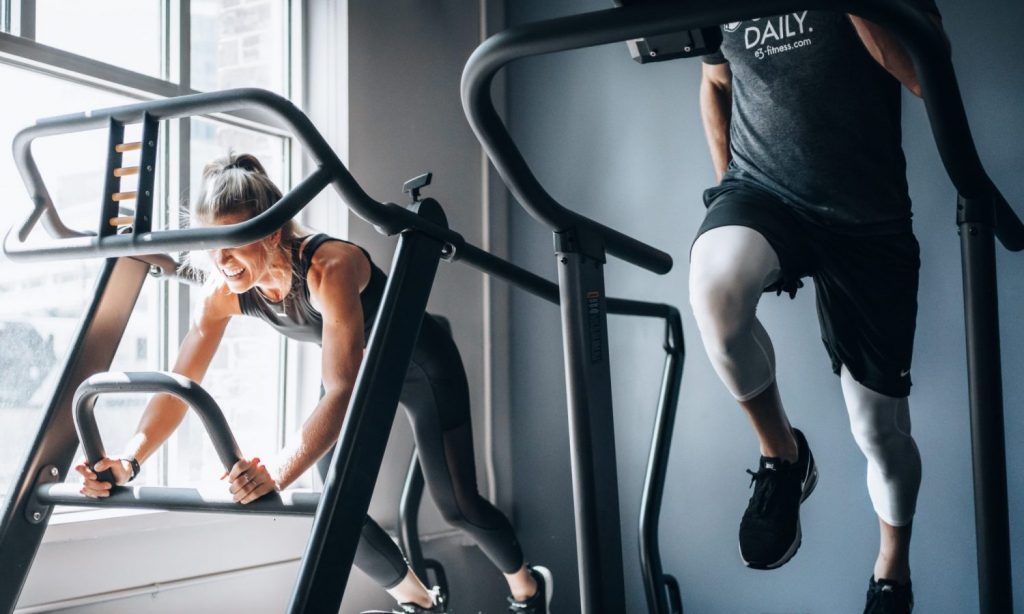
Resistance Training: Exercising helps a lot in promoting good bone health. One of the best forms of exercise for your bones is resistance training. This entails lifting weights and other tasking activities in the gym. When you carry out this resistance training, your body gets the signal that there is a need to maintain (or increase) bone density in order to deal with the rigorous activities. This way the bone stays strong and healthy. It is important, however, to avoid taking on weights that are too heavy for your body.
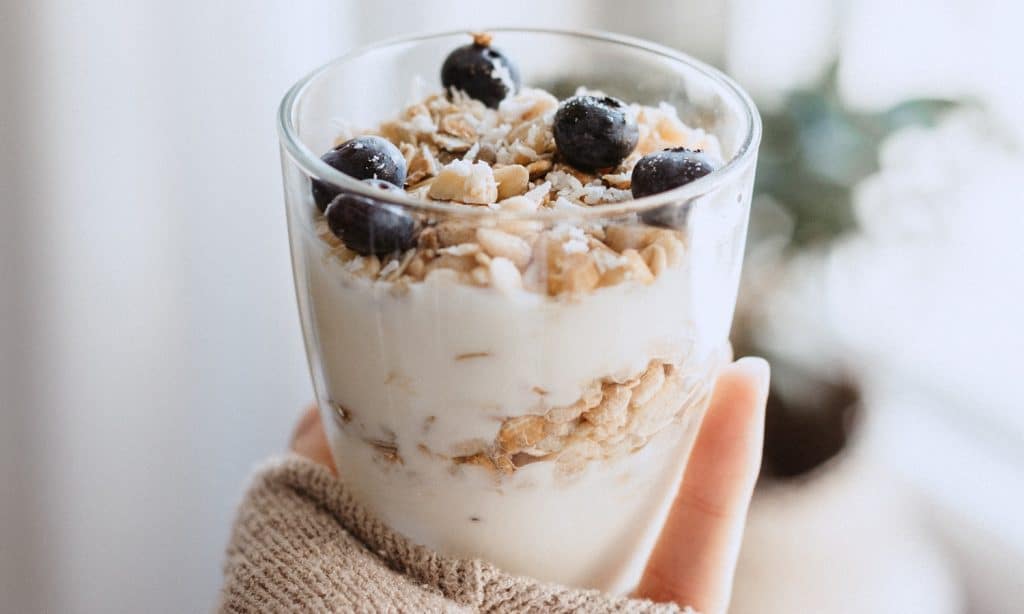
Calcium: Of course, calcium makes up a large part of our bones, which makes it essential to eat calcium-rich food. This includes food like cheese, yogurt, fish, lentils, beans and seeds.
Vitamin D: Your bones also need vitamin D in order to be strong and healthy. This is because vitamin D helps the body to absorb calcium easily. Vitamin D can be absorbed from exposure to sunlight, as well as foods such as fatty fish, mushrooms, fortified plant-based milks and cereals, and cheese.
Photo by Ellieelien via Unsplash
Cannabis and Bone Health: All You Need to Know
The tips listed above are effective in promoting good bone health, however, scientists are actively exploring another means in the form of cannabis. The endocannabinoid system (ECS) is linked to the possibility of cannabis being beneficial to bone health. The ECS, which is made up of receptors, enzymes and signaling molecules, plays a regulatory role in the body.
One of the body functions that this system regulates is bone remodeling. The receptors in the endocannabinoid system that are linked to bone health are: cannabinoid receptor 1 (CB1), cannabinoid receptor 2 (CB2), as well as transient receptor potential vanilloid 1 (TRPV1). While TRPV1 and CB1 aid the breaking down of old tissue, CB2 assists in osteoclast activity of laying down new bones.
As a result of the effectiveness of these cannabinoid receptors in the body, THC and CBD are being explored as tools for promoting good bone health. At this point, THC and CBD are being experimented in cases like rheumatoid arthritis, osteoporosis and fractures.
Conclusion
The use of cannabis for bone health still requires some research, and as such, it is important to consult a doctor before consuming THC or CBD for any bone condition. However, it is being predicted that cannabis will play a big role in bone health in the near future.
The past 12 months have been many things for the cannabis industry, but uneventful is not one. Since December 2021, the U.S. cannabis industry experienced a wealth of both highs and lows, and heading into next year, it is poised for both more growth and painful contraction, several industry experts agreed.
But as 2022 comes to a close, it’s worth a quick look back at some of the milestones the year has wrought for the turbulent marijuana trade and its participants.
What Went Right
Maryland and Missouri legalized adult use.
These two states were the only ones out of five ballot measures in November to succeed with voters, but they bring the new tally of U.S. states that have legalized adult-use cannabis to 21, along with Washington, D.C. and two U.S. territories: Guam and the Northern Mariana Islands.
New York is bringing up the rear, with its anticipated launch on Dec. 29
That’s a huge amount of new business opportunities and markets for the industry to develop in coming years, particularly on the East Coast.
Photo by Jeff Swensen/Getty Images
President Joe Biden launches rescheduling review.
When the U.S. commander in chief issued an order in October to pardon nonviolent federal cannabis convictions, he also kicked off a lengthy process that very well may result in the legalization of marijuana.
The problem is, nobody really knows how long the process may take. What’s also unclear is if the administration will choose to move cannabis from its spot on the Schedule 1 list of federally controlled substances to Schedule 2, down to the least restrictive category of Schedule 5, or remove it from the list altogether.
Some political observers believe it only makes sense for the administration to issue a decision before the 2024 election, meaning that marijuana could be legalized in the U.S. within another two years.
Congress passes medical marijuana research bill.
Speaking of the federal government, the one piece of cannabis legislation did manage to get through Congress this year and signed into law – the first pro-cannabis bill to make it that far since the plant was banned under President Richard Nixon.
The Medical Marijuana and Cannabidiol Research Act was signed by Biden the first week of December. Though many stakeholders derided it as a symbolic victory since cannabis bills of far greater consequence died without hearings, the bill’s success irrefutably represents solid progress for the legalization movement.
Photo by Alexander Sanchez/Getty Images
What Went Wrong
Every other congressional cannabis bill died.
At the end of the year, a lot of industry insiders were still bullish on the chances of the SAFE Banking Act, but it was all for naught in the end, as Senate Minority Leader Mitch McConnell was able to withhold key GOP support for including the measure in an omnibus spending bill.
Another much-touted bill, the Cannabis Administration and Opportunity Act, never even received a hearing, despite being sponsored – and hyped for months – by Senate Majority Leader Chuck Schumer. Now, given that Republicans are taking over the House of Representatives next month, the chances of getting a similar legalization bill through both chambers have shrunken considerably.
In addition, despite the Democratic-controlled House approving the MORE Act once again, the Senate sidelined the bill and it never got a vote or a hearing.
Ballot measure defeats in three states.
The cannabis movement suffered the largest number of statewide defeats in a decade in 2022, with voters in Arkansas, North Dakota and South Dakota rejecting proposals to legalize adult-use marijuana.
Though there were electoral losses previously, the vast majority of statewide ballot measures to legalize either medical or recreational marijuana have succeeded since 2012, when Colorado and Washington State became the first two to legalize adult use.
The South Dakota defeat in particular was a bitter pill for supporters to swallow, because the state voted to legalize recreational in 2020, but the victory was thrown out after a lawsuit backed by Gov. Kristi Noem succeeded in overturning the results based on a technicality.
Photo by Brandon Bell/Getty Images
Wholesale prices trending down.
The commoditization of marijuana seems to have accelerated through 2022. Wholesale prices hit a national bottom of $955 per pound in December, according to Cannabis Benchmarks, a drop of 26% for the year.
Though the firm forecasts a slight rebound in early 2023, the pain felt by much of the supply chain isn’t likely to dissipate any time soon, and a lot of companies struggled to adjust through the year.
Widespread layoffs.
The cannabis industry as a whole seemed to feel a good bit of pain through 2022, with both plant-touching and ancillary companies cutting costs and, in many instances, staff.
Businesses that reported significant layoffs this year included:
New York-based LeafLink, which shed 80 workers this month.
California testing lab Sonoma Labworks, which closed down and laid off about 25 employees.
Massachusetts-based Curaleaf, which laid off 220 employees in November.
Florida-based Trulieve, which laid off an unknown number of workers in November.
California-based Weedmaps, which had two rounds of layoffs this year, first letting go about 60 employees in August, and then another 175 in December.
California retailer The Parent Company, which cut about 33% of its staff throughout the course of the year.
Seattle-based Leafly laid off 21% of its staff in the third quarter of 2022.
Photo by Moussa81/Getty Images
What Went Sideways
New York adult-use launch.
Although New York is set to make good on its pledge earlier this year of getting recreational cannabis sales going before the end of the year, the process has been a hair-pulling one and the future of the licensing program remains up in the air, particularly because of a lawsuit that is trying to overturn a residency requirement for permit holders.
The case has already put the issuance of at least 18 retail licenses on hold indefinitely, as the state tries to combat the lawsuit.
In addition, there’s been a lack of clarity for many of the 36 retail license recipients on when or how they’ll benefit from the promised $200 million in funding to build out their shops. As of the Dec. 21 Cannabis Control Board meeting, there was no news of any specific licensees receiving funding or a shop location from state authorities, although there was an announcement that the first such shop will be located in Harlem.
The situation has forced regulators to pivot hard, and even though sales will launch Dec. 29, it’ll be just a single retailer who is slated to begin sales, a far cry from the minimum 175 retail licenses the state has planned.
California tax reform.
In June, California Gov. Gavin Newsom signed into law a state budget that included, on its face, something the state’s marijuana industry had been clamoring for: state tax relief.
The bill eliminated the weight-based cannabis cultivation tax, and made other significant structural changes to how the 15% excise tax is collected. It was arguably a major industry victory and hailed as such by the Newsom administration.
But in the months since, cannabis industry insiders have said the real-world relief has been minimal, and some are worried about a potential excise tax increase because of marijuana tax revenue shortfalls to state coffers, as well as the possibility that lawmakers could raise the excise tax rate in 2025.
Photo by Rex_Wholster/Getty Images
Inflationary impacts.
Inflation hit the cannabis industry hard, with impacts that ranged from shrinking consumer spending — which translated to plateauing or dipping sales in mature U.S. state markets — as well as downward trends for company valuations.
Those factors in turn led to price compression on the wholesale market, hesitancy by many investors, and a number of busted merger and acquisition deals that may have otherwise gone through, said several industry experts while linking multiple industry trends together.
The situation also presents opportunity, said Chicago Atlantic Vice President Steve Ernest, noting that bear markets are often when the most shrewd investors start putting money on the table, betting on a long-term rebound. And the financial markets are so tight – with cannabis stocks and valuations at some of their lowest points ever – that there’s nowhere to go but up.
“There’s only upside from here,” Ernest said. “I’m very bullish on the long-term prospects of cannabis. There’s an immense amount of opportunity ahead.”
Investor sentiment and activity.
The year was a mixed bag on the investment activity front for the cannabis industry, with insiders reporting both ongoing deal closures and interest from individual investors, but also more wait-and-see-with-bated-breath attitudes from institutional capital.
President Biden’s rescheduling review announcement on Oct. 6 resulted in cannabis stocks jumping by double digits, noted Matt Bottomley, managing director at Canaccord Genuity.
As I’ve said before, no one should be in jail just for using or possessing marijuana.
Today, I’m taking steps to end our failed approach. Allow me to lay them out.
“If we’re talking about cannabis-focused investors, there’s certainly capital waiting to be deployed, and you saw it with all these types of federal headlines, in terms of how the markets reacted,” Bottomley said.
“When Joe Biden made that tweet a few months ago, the entire sector in terms of inter-days highs and lows, had a 50% swing, in one day. This isn’t one company. This is the entire sector of all public company equity.”
The main takeaway from 2022?
“If you’re not concerned with the stock market or specific timing, I think that everything is moving in the right direction,” Bottomley said. “Whether that’s legalization or de-scheduling, I think it’s all but a certainty to happen.”
Multiple young adults living in Florida have decided to take medical marijuana following their mental illness diagnosis.
The lingering effects of the pandemic have created a rise in multiple mental health conditions, among them, depression and anxiety. For some young Floridians, this has resulted in an investment in medical marijuana, which can help treat multiple health conditions while minimizing the negative side effects of prescribed medications. It seems rising depression and anxiety have to led to more marijuana sales in this state.
Considering the fact that marijuana sales have risen to $30 billion, around 40% more than in 2020, this phenomenon might be affecting the entire country.
Photo by monkeybusinessimages/Getty Images
WUSF spoke with multiple Floridians, who shared that medical marijuana was becoming a better option when treating their mental health. “I believe that cannabis has been more effective in fighting my anxiety and depression,” said Tatiana Tipton, a student from the University of Florida. “I am diagnosed with ADHD, anxiety, depression, insomnia, and obsessive-compulsive disorder,” she said. “After the pandemic hit, I discussed getting my medical card with my psychiatrist.”
Tipton started college in the year 2020, when the pandemic started, creating a spike in her mental health conditions, with marijuana becoming a viable option that didn’t come with many significant side effects. She isn’t the only young adult who’s turned to cannabis for some relief.
Floridians shared that while cannabis helped them manage their mental health, it also eliminated some of the concerns associated with prescription medications. “I just don’t like my anxiety and depression medication because they make me feel like a zombie,” said Tipton.
Joseph Orallo, a physician from Jacksonville, shared that a mix of medications treating different conditions often results in negative side effects for patients. “SSRIs take four to six weeks to absorb within the body,” he said, which can create this period of unease.
“Weed is the alternative,” he added. “The long-term use of weed is still pointing toward dementia, but I have patients who suffer from dementia who still use cannabis because it calms them down.”
Due to marijuana’s ability to alleviate pain and reduce the unpleasant effect of inflamed membranes, it is widely used to treat menstrual and sport-related cramps.
Everyone has probably felt the sudden, painful muscle contraction at a particular moment in their lives. Such contractions, or cramps, are not harmful to your health. However, they may be highly discomforting, especially if they reoccur pretty often. The causes of cramps are diverse, ranging from athletic exercise to periodic pain associated with menstruation in women.
What Are Cramps?
Cramps are sudden, involuntary muscle contractions or excessive shortening. As soon as you experience cramps, you might feel that your muscle gets paralyzed. In some people, cramps cause considerable pain, while menstrual cramps are couch-locking for many women. Thus, medical professionals are constantly searching for effective medications that can block or at least minimize the impact of cramps on people’s well-being and daily performance.
Photo by LaylaBird/Getty Images
The most widespread remedy for cramps is a complex of nonsteroidal anti-inflammatory drugs (NSAIDs), such as ibuprofen. Their positive effect is associated with blockage of prostaglandins — the hormones causing muscular contractions.
Still, not everyone favors pharmacological treatments and searches for more natural ways of minimizing the discomfort of cramps.
In this article, we will examine the existing clinical evidence to show you how cannabis can deliver a relief alternative to NSAIDs.
DISCLAIMER: This article isn’t intended for use as an instruction for self-medicating; it’s only a compilation of clinical evidence and published facts about the impact of cannabis on cramps. Always consult your physician before using weed to treat cramps!
Most Common Types of Cramps
Cramps have many manifestations and happen in cases of painful muscular contractions. The latter are usually brief and sudden, but the intensity of cramps is individually determined. Some people are highly intolerant to cramps-associated pain and spend several days on a couch trying to live through this period with minimal damage.
You may suffer cramps after an intense workout. Cramps also happen during the premenstrual period and plague millions of women across the globe every month. Thus, when we talk about marijuana administration for cramps, we mean menstrual cramps in most cases as women are increasingly accepting this method of coping with the pain of PMS cramps. So how does weed help cramps? Let’s clarify that.
Muscles Cramps
Both professional athletes and sports beginners can feel muscles cramps after intense workouts. This condition is caused by muscle overuse or dehydration. Otherwise, you can overburden the muscle by holding it too long in a fixed position. Such cramps are harmless but can cause significant discomfort and intense, though brief, pain episodes.
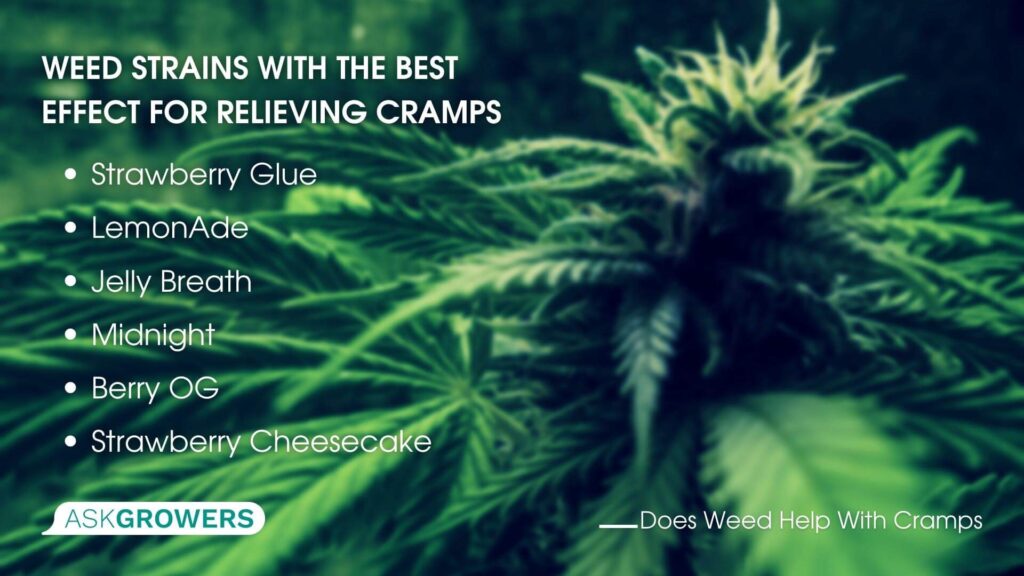
If you wish to use weed to fight cramps, here is a couple of weed strains with the best-proven effect for this condition.
They all cause significant muscle relaxation and help you feel relief quickly due to the release of dopamine:
Strawberry Glue
LemonAde
Jelly Breath
Midnight
Berry OG
Strawberry Cheesecake
Menstrual Cramps
Menstrual cramps are a distinct type of pain and discomfort women experience before menstruation. These cramps come with major pain, inflammation, soreness, and tenderness that not every woman can stand. Thus, PMS-associated muscle contraction requires management not to affect women’s daily activities.
Does weed help menstrual cramps? Yes, there is enough medical evidence to suggest that cannabis has a proven positive effect on the unpleasant feelings caused by uterus contractions during PMS.
The impact of cannabinoids and terpenes is relaxing and anti-inflammatory, thus helping to combat the complex of painful and discomforting cramps experiences. Here is a list of weed’s positive effects:
Reduced tenderness of breasts, abdomen, and lower back.
Minimized inflammation.
Digestive issue management.
Mood improvement.
Healthier skin.
Does Weed Help Menstrual Cramps?
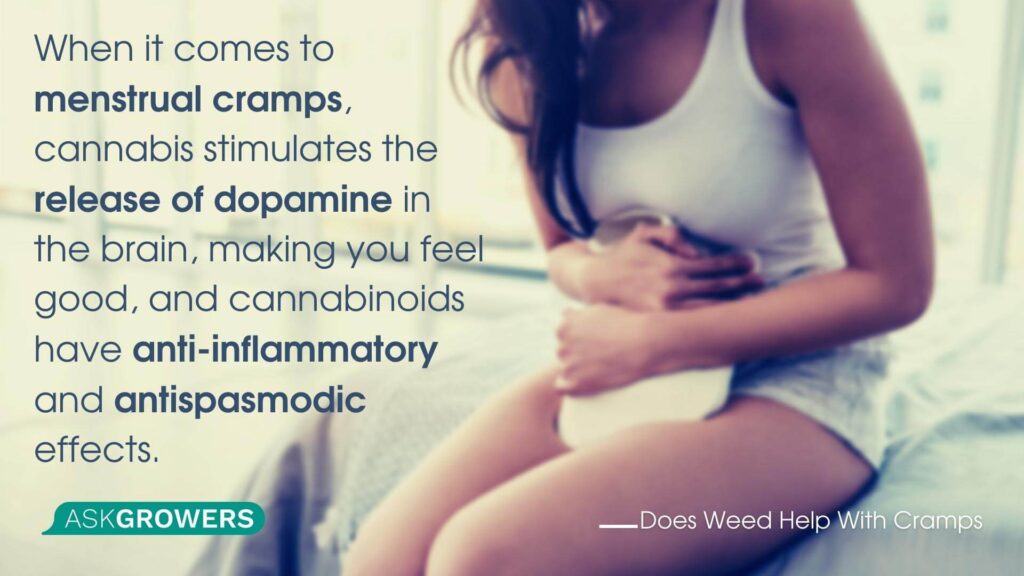
The first thing you need to keep in mind is that weed doesn’t produce an effect similar to that of NSAIDs we’ve discussed above. In other words, it won’t block the release of prostaglandins, causing you pain and discomfort. However, weed helps you differently — it stimulates the release of dopamine in your brain, making you feel good. It means that even if cramps persist, they won’t bother you that much.
Besides, the cannabinoids contained in marijuana are known for their anti-inflammatory and spasmolytic effects, which help your uterus relax and experience less pain from cramps. Thus, taking into account the generalized painkilling effect of weed, the consumption of weed products can relieve cramps-related pain as well.
Kogan and Sexton reported the presence of conclusive and substantial evidence for cannabis’s efficiency for pain treatment in adults (as per the National Academy of Sciences’ 2017 statement).
Hasnie (2019) found CBD effective in menstrual cramps relief, among other therapeutic effects (depression relief, skin rejuvenation, improved sleep, lowered blood sugar, etc.)
Mercurio et al. confirmed that marijuana is a viable substitute for prescription medications, such as opioids and analgesics.
Besides, women are growing more accepting of this treatment method in the USA. Clinical research supports this assumption as well:
Alton et al. studied a sample of U.S. female respondents and found that many of them would consider using (or are currently using) cannabis to manage gynecological conditions.
The 2021 survey of Han et al. showed that many women use cannabis for gynecological conditions and those who haven’t tried cannabis for cramps management are willing to do so.
Given this clinical evidence of marijuana’s effect on cramps, you might consider adding weed-containing medications to your arsenal of managing menstrual or sports cramps. But before you do this, make sure to study all the pros and cons of using cannabis for treating menstrual cramps.
PROS
Positive effect on inflammation.
Healthier skin and PMS acne prevention.
Better mood.
Reduced tenderness of breasts, lower back, and abdomen.
Muscle relaxation reduces the intensity of cramps.
CONS
There is always a risk of overdosage and unwanted psychoactive side effects. Cash et al. discovered in their 2020 study that the potency of cannabis products sold in medical and recreational dispensaries is higher than the one recommended for cramps treatment.
Bonn-Miller et al. cautioned against trusting the labeling of cannabis products as 90% of all merchandise available to date are incorrectly labeled, indicating the wrong concentration of cannabinoids, which may also end with an unwanted overdosage or side effects.
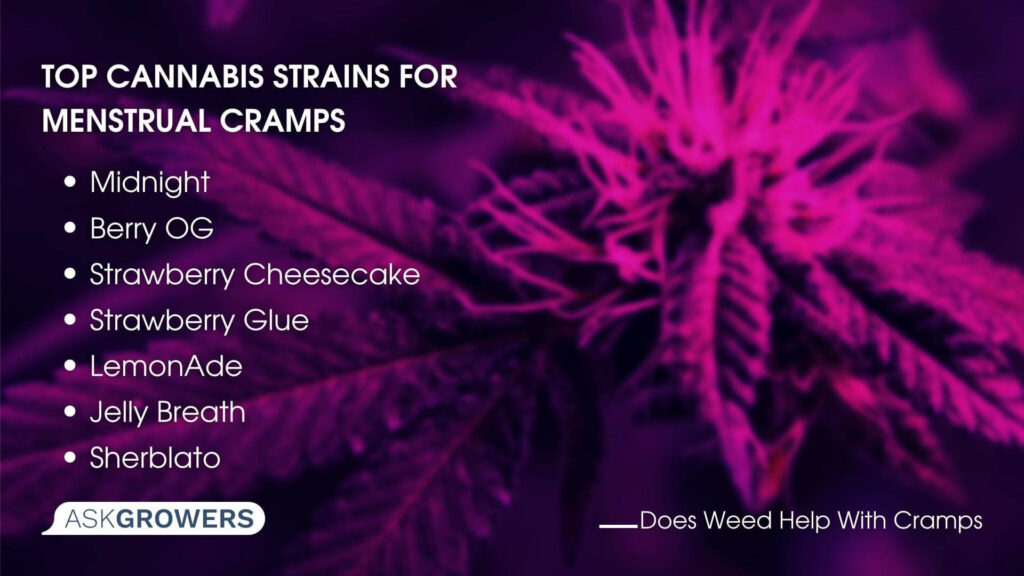
Experts recommend using CBD-rich strains to alleviate the pain and discomfort coming with menstrual cramps. Here is a list of weed strains suitable to manage menstrual cramps.
Midnight
The Midnight strain is the most CBD-rich choice among those available on the market today. It has 10.98-11.5% of CBD, which makes its effect mostly relaxing. Its CBD-THC ratio is roughly 1:1, which is quite rare. The strain is grown in Israel and labeled as a hybrid product, though its dominant strain is Sativa.
Berry OG
Berry OG offers up to 0.96% of CBD, thus being suitable for those who want to relax and have a good night’s sleep, exhausted by cramps and pain. Its strong relaxation effect makes it a good match for evening weed consumption. Medical smokers report its strong impact on physical pain.
Strawberry Cheesecake
Strawberry Cheesecake strain is a favorite among those who lean for the relaxing effect. The CBD concentration is 1.16-1.48%, which is relatively high. Women also love the strain for its sweetness, dessert flavor, and pleasant taste. You’ll enjoy the combination of fruity and creamy shades in its flavor. However, the strain is not recommended for inexperienced users as it possesses a solid sedating effect and can be really couch-locking.
Strawberry Glue
The Strawberry Glue strain is also an excellent choice for females as it contains sweet strawberry flavors and is very pleasant for consumption. This strain is specifically recommended for pain, inflammation, and muscle spasm treatment because of its balanced, calming effect.
LemonAde
The 0.45-0.3% CBD concentration in LemonAde strain gives the users a significant inflammation and pain management effect while at the same time not affecting their daily activities. Its impact of relaxing for the body and stress-clearing, though without a knock-out effect. The citrus flavor also attracts many weed connoisseurs.
Jelly Breath
The Jelly Breath strain comes with up to 1% CBD concentration, thus giving a pronounced soothing effect for the users. Consumers claim that this choice is ideal for those wishing to ease the tension and minimize pain and cramps.
Sherblato
The sweet taste and 0.8% CBD contained in Sherblato make it a top pick among users seeking stress minimization, pain relief, and cramps alleviation. It’s also good for fighting depression as its major effect is an elevated mind, boosted creativity, and better focus.
Possible Risks of Marijuana and Menstrual Cramps
Marijuana and menstrual cramps have become closely associated as weed can bring quick, tangible relief for this condition. However, it’s strongly recommended not to self-medicate as intense, prolonged cramps may be a sign of a severe illness, or you may be too susceptible to weed components, thus not achieving the desired therapeutic effect. Here is what Joseph Rosado, MD, recommends:
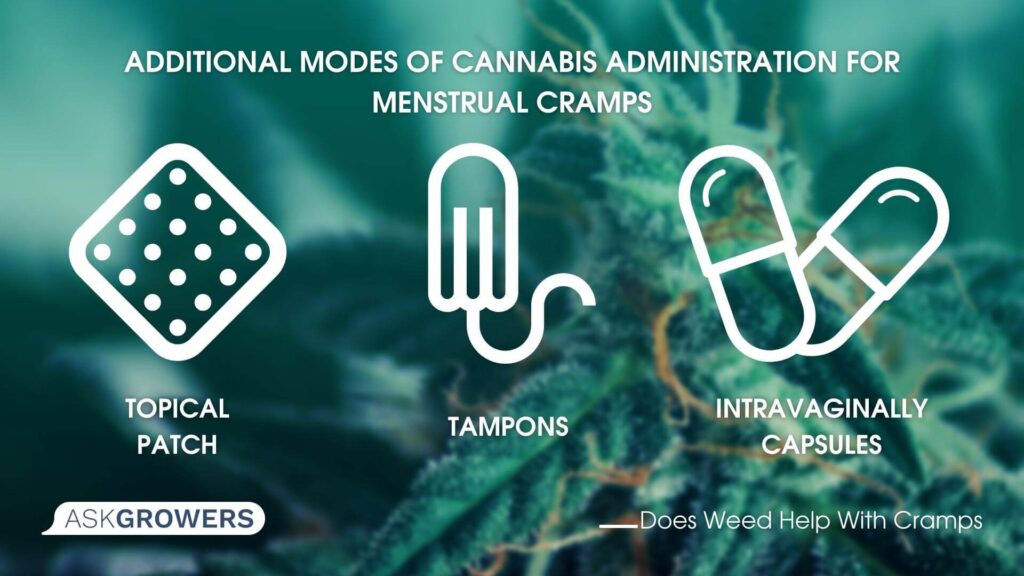
“Definitely. I manage a lot of patients with pelvic pain, and I provide different modes of administration. One is using the topical patch. Applying the patch and cutting the patch – because it comes in a rectangular form – in half and putting one half on one inguinal area of the groin and one on the other inguinal area of the groin because you’ve got the femoral arteries and veins there and it’s absorbed through the skin and makes its way into the bloodstream and then addresses the pain. Also, applying it directly over or just above the pubic bone, which is the bone found between your belly button and your pelvis — a good place to apply the topical patch.
“Other things that we recommend are utilizing a capsule or a gel cap and inserting it intravaginally. The glycerin capsule dissolves, and the oils are absorbed intravaginally, which will help with the cramping. There are certain states in the United States that have tampons that have been infused with cannabis, so inserting the tampon during their menstrual cycle helps also with the cramps. So those are different modes of administration to manage cramping and cramp pain.”
There are numerous precautions for women, including pregnancy, breastfeeding, or other issues they should consider.
Medical marijuana labeling is not always precise, with numerous products containing higher cannabinoid doses.
Marijuana use may affect your ability to drive a car and perform daily work routines. Thus, you shouldn’t use this method of fighting cramps on a daily basis.
Thus, despite the proven efficiency of weed for muscular contractions and menstrual pain, you need to seek a medical professional’s consultation first to develop an individual treatment plan and dosage to achieve the intended effect.
Conclusion
As the presented evidence suggests, the impact of weed on cramps is well-established in medical research and practice. Due to marijuana’s ability to alleviate pain and reduce the unpleasant effect of inflamed membranes, it is widely used to treat menstrual and sport-related cramps.
However, don’t self-medicate with marijuana as it is a psychoactive substance not everybody can benefit from. If you’re considering the use of cannabis for menstrual cramps, we recommend consulting with your physician first. In this way, you’ll minimize the risks of undesirable side effects and check whether this option will be safe for you.
Hangovers are always terrible but they’re especially hard to avoid over the holidays. Here’s how you can control them before they strike.
Holiday plans may change, but two things are almost always certain: copious amounts of drinking and eating. As we get older, our hangovers tend to get stronger, which is why it’s important to make a plan before drinking so you don’t lose an entire day to alcohol-induced nausea and brain fog. Have a holiday hangover? Here’s how to stop it before it strikes.
Hangovers are complicated things, occurring when your blood alcohol level drops significantly. While there are no direct ways of preventing a hangover, there are ways of lowering your odds if you pace yourself and hydrate. Here are some tips that can help you drink while lowering your odds of a bad time the next day.
Take your preparation seriously
Photo by KoolShooters from Pexels
When trying to avoid a hangover, preparation is key. If you know you’re going out, try to make a plan and have a filling meal before your outing. This will delay your body’s speed at absorbing alcohol (Can You Prevent A Hangover By Eating A Big Meal?).
Drink slowly
Photo by Taylor Brandon via Unsplash
Once you’re out, try your best to drink slowly. This is difficult but it’s the most reliable way of staving off a hangover, giving your body enough time to process alcohol. According to health experts, your liver takes up to one hour to digest each drink. An easy way to keep track of how much you’ve consumed is to add a cocktail emoji to your notes app and to keep a clear timeframe.
Drinking water is pivotal when preventing hangovers, hydrating your body when it needs it most. While it’s difficult to limit yourself to having one drink per hour, drinking a glass of water per drink is easier to do. This act alone will slow down your alcohol consumption, filling your system with much-needed fluids.
Experts recommend sticking to alcoholic drinks with a low ABV percentage (alcohol by volume). These drinks include beers, wine, or mixed drinks, especially if these are sipped leisurely and not chugged. Shots tend to contain higher volumes of alcohol, resulting in worse symptoms of hangovers for a lot of people.