Tuesday, April 28, 2026
Home Blog Page 171

Does Weed Go Bad? Here’s How To Identify Old Marijuana

0

In an attempt to extend the shelf life of weed, many people try many things. While some of these might actually work, others are myths that shouldn’t be believed.

Does weed go bad? Even though cannabis packaging has improved a lot, the product still needs to be stored in a certain way for it to remain fresh. A lot of people still wonder whether they need to do anything to keep their marijuana fresh, and the answer is yes. Because while weed won’t go ‘bad’ as most other foods would, it will still get moldy and lose its potency over time. Here’s how to Identify old marijuana.

The biggest threat that cannabis faces is in the form of moisture. Exposure to moisture can cause marijuana to grow mold and mildew, which can be very harmful to people. Stale weed also loses its strength over time which all but kills the purpose of consuming it in the first place.

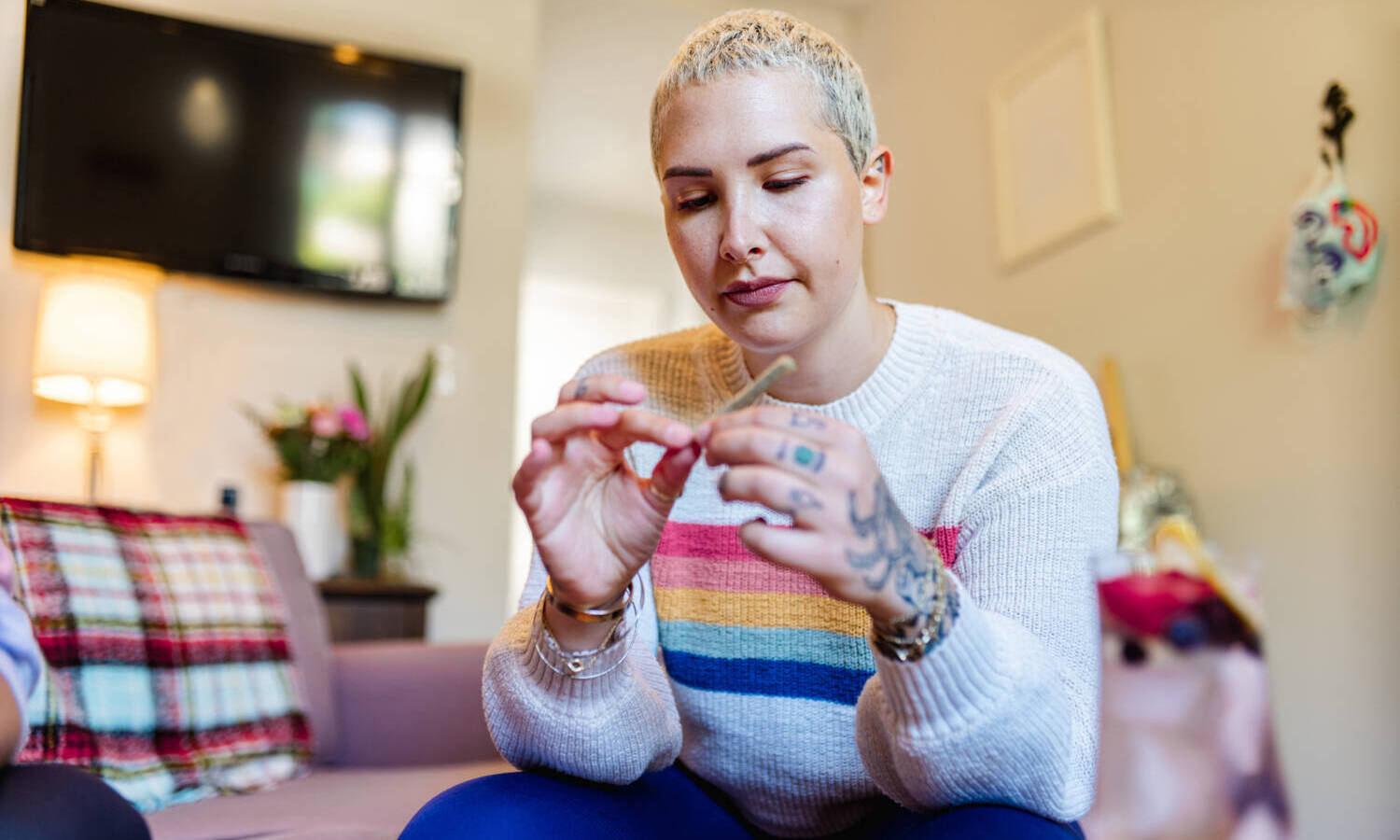
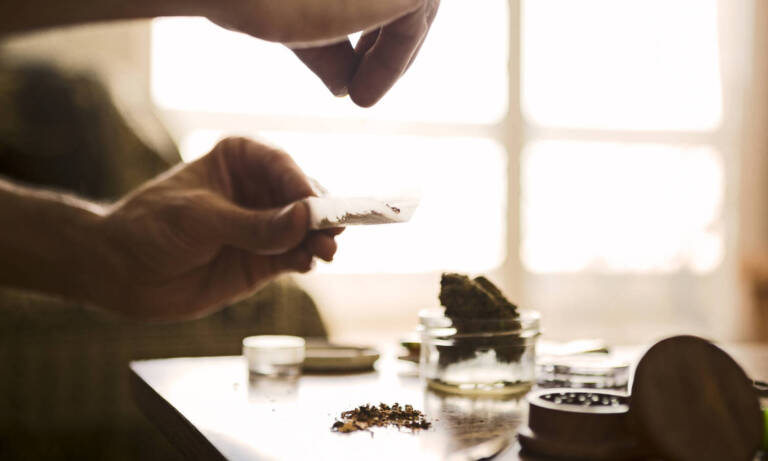
rolling a marijuana joint
Photo by gradyreese/Getty Images

To increase the shelf life of weed, cultivators make it undergo the process of curing. When it is carefully cured, a certain amount of moisture is trapped inside the cannabis because losing too much moisture is also bad since it can cause the flower to become brittle. It is, therefore, important to store weed in a way that can maintain this moisture without introducing more of it.

Another factor to consider is that weed’s cannabinoid content starts getting affected in the presence of light and oxygen. Too much of these can make the weed lose its potency and also make it smell grassy.

How Long Does Weed Stay Good?

This question doesn’t have a straightforward answer. There’s a reason why cannabis packaging usually doesn’t come with an expiration date because the flowers don’t really expire in the traditional sense — they just lose their potency and can become moldy. The better question to ask is, “how long does weed stay good?”. And the answer to that would be up to two years if you store it properly.

After two years, it starts losing its potency significantly. Some research suggests that marijuana loses around 16% of THC just after the first year of storage. After that first year, it starts dropping even more. After two years, it can lose up to 26% THC. After three years, this loss increases to 34%. So, if you’re still asking yourself, “does weed get old?”, it really does.

Cannabis Expiration Date

The two things that cannabis has to be kept away from are light and oxygen. Exposure to UV light was found to be the most rapid way to age cannabis in a study done in 1976. Both light and air slowly convert THCA into THC, which then gets turned into CBN. CBN may not be harmful for consumption, but it does not have the psychoactive properties that THC has. Too much oxygen also makes cannabis buds smell like hay. The best way to preserve the integrity of your cannabis is to store it in a cool and dark place. It should be kept away from humidity and in an airtight container.

RELATED: Is The Old Marijuana I Found Under The Couch Safe To Smoke?

The best thing to do when you buy some marijuana is to consume it as soon as possible. That will ensure that you get all the benefits out of it that you’re looking for, and there are no risks to your health that could arise with longer storage periods. When you buy a jar of weed, you can see the harvest date printed on it. The fresher it is, the stronger it will be.

Good vs Bad Weed: How to Understand If Yours Is Fresh

There are a few ways in which you can determine the freshness of your cannabis buds:

  • The first thing to note is the smell. Weed that’s not in the best condition will lose its aroma or smell different when compared to a fresh batch. It can even smell quite bad at times.
  • You can also look at it and see if it’s old. Fresh buds will not crumble when you press or break them. If your weed does that, it’s a good sign that it is old.
  • The texture of old weed is also different. It will not really harm you, though, unless it has grown moldy while sitting in a wet jar.
  • Old marijuana also doesn’t taste pleasant. It can often have a harsh flavor that will likely make you cough or even vomit.

One of the first things you should do when you buy some cannabis is to check for mold. Weed does not have to be old to grow mold. A research study showed mold and bacteria growth on 20 weed samples that were purchased directly from dispensaries and growers. So, even if you have just bought your marijuana, check if you can see any small white fuzzy spots.

RELATED: How To Preserve Your Cannabis Through The Winter

Any of these things can mean that your weed is stale. Smoking stale weed won’t usually cause any serious health issues unless you have a weak immune system. Weed that contains fungus or bacteria can cause serious problems for such people, while it will likely only cause coughing or vomiting for healthy adults. The bottom line is that if you feel like your weed is bad, the best idea is to just throw it away. If you’re asking yourself, “what does good weed look like?”, then it looks and smells fresh, has its own aroma, holds its structure when you break a bud apart, and doesn’t have fuzzy white spots on it.

Do Edibles Expire?

How long does marijuana stay good in an edible form? This depends on the edible in question. If cannabis is introduced into an edible product the correct way, then the expiration date of the actual edible will remain unchanged. In other words, the presence of weed in an edible should not change how long the edible product lasts.

How Long Edible Stays Fresh

How long an edible remains fresh depends on what it is. For example, refrigerated products like condiments and drinks can stay fresh for 5 to 7 days, while products with dairy in them, like a cannabis chocolate bar, can go bad within a week. So, when it comes to edibles, you should follow the same storage principles as you would with normal food products. If food items are not stored properly, they will go bad much quicker than if they were stored in an airtight container or the refrigerator, depending on what kind of edible you have.

RELATED: Old Marijuana Edibles: To Eat or Not To Eat?

You can tell that an edible is going bad by the smell or taste of it. A weed edible will start to smell bad, just like a normal food item would. The longest-lasting edible products are gummies and candies, while products like brownies and cookies also have a long shelf life.

How to Properly Store Weed to Keep It Fresh Longer

There are several little things you should consider when thinking about proper weed storage. The shelf life of weed can drastically change depending on your storage method. Here are some things you should be doing:

  • Get the right kind of containers. Do not use plastic bags or other plastic jars. The reason for this is that plastic holds a static charge that can reduce the potency of your marijuana by messing with the trichomes. The ideal containers to choose from are glass ones that have airtight seals. They do not let in too much oxygen and also don’t have any static charge. You can find the ideal weed storing containers at the dispensary you buy your cannabis from.
  • Another thing to consider is humidity. The ideal humidity range for weed storage is between 59 and 63 percent. If you have higher humidity, your weed can trap moisture and get moldy. In lower humidity, there is a risk of your cannabis getting dried out.
  • You should also keep it in a dark place with little to no sunlight. UV rays are very detrimental to cured cannabis, so this might be the most important thing to keep in mind. You should also keep it in a cool place, but that does not mean you should go freezing it. Just don’t keep it somewhere it can trap moisture or get direct light.

How to Store Other Cannabis Products

How to Store Other Cannabis Products

  • In the case of edibles, the best thing to do is to keep them in their own packaging. Keep them in a cool and dark place, like you would keep most food items anyway.
  • Concentrates should be kept in small containers that are often specifically designed for them. These are mostly made of glass or silicone. You should keep these in a cool and dark place as well.
  • For vape pens, the same rules apply: keep the airtight cartridges in a cool and dark place.

Myths About Old Weed and Marijuana Storage

In an attempt to extend the shelf life of weed, many people try many things. While some of these might actually work, others are myths that shouldn’t be believed:

  • It is not wise to store cannabis in a cigar humidor. These products usually have a lining of cedar, which has oils that can damage cannabis. If you want to use a humidor, there are ones specifically designed for storing marijuana, and only those should be used.
  • Some people think that adding an orange peel in a bag of weed will help maintain the moisture content and keep the cannabis from getting dry. This does not really work. On the contrary, it increases your buds’ risk of developing mold due to the increased moisture. The orange peel can also change the aroma or taste of your marijuana.
  • It is also unwise to keep your cannabis in a freezer. The freezer is likely to make the trichomes on your buds brittle, and they can snap off when you handle the buds later. Also, the freezer can increase the chance for mold to appear because of the moisture inside.

Does Weed Get Old?

The topic is a really important one, so we suggest you read the opinions of these industry experts:


Robert Miller, Purefectionery

Flower changes as it ages. A lot of people say they feel like the more cannabis ages, the more CBD-like quality it takes on. My thing with older weed is, if you take care of it.


Dee Dee Taylor, 502 Hemp

Not really. It may lose some of its cannabinoid content, but not necessarily get old.


Dr. Joseph Rosado, MD

If not stored properly, it can get old. But that old weed will have a high level of CBN because if you leave cannabis laying out with oxygen over seven to ten days, the THC can convert into CBN which is excellent in helping people with their sleep and/or insomnia.


Jack Robson, High Desert Pure

Yes. It’s a plant. Like any plant, it will decompose if you leave it long enough.


Lawrence Perrigo, Saints Joints

Yes, it does get old. It will degrade and stop smelling good. I guess you’ll just have to smoke your weed fast!


Matthew Frigone, Lazy Bee Gardens

Yes. Proper storage and cure can prolong but oxidation will still occur. Not all strains hold cure as well as others either. I have some that look like crap after only a few months in cure, and others that look just harvested like 9 months deep.


Scarlet Palmer, Sensi Seeds

Yes indeed! It goes through various chemical changes as the cannabinoids naturally decarboxylate and change. Eventually it will stop having any psychoactive effect, but will be very soporific.


Terry Sardinas, Bird Valley Organics

Yes, but if you add a spinach leaf to your jar of dry Cannabis, you can help give it a refresh.

Germany’s First Cannabis Start-Up Lists On Frankfurt Stock Exchange Ahead Of Legalization

“It’s time to democratize the medical cannabis market in Germany and offer investors the opportunity to participate early,” said Philip Schetter, Cantourage CEO.

By Joana Scopel

On Friday, a Berlin startup became the first medical cannabis company to list on the Frankfurt stock exchange.

After a draft of the German government’s cannabis legalization measure was leaked, it seems the EU country is getting closer to setting up retail marijuana distribution, possession and home cultivation.

germany cannabis
Photo by SusanneSchulz/Getty Images

With the ticker symbol “HIGH,” shares of the Berlin-based company HIGH, +200.93% rose as high as €19.70 Euros after the IPO was priced at €6.48 per share. One Euro equals $1.04 US dollar.

The First MMJ Company On the Frankfurt Stock Exchange

Cantourage, a startup founded in 2019 that imports, processes and distributes marijuana for medicinal purposes, was looking for a cash influx to fund its expansion in a “dynamic market,” after noting the emerging industry growth in Germany and across Europe.

“It’s time to democratize the medical cannabis market in Germany and offer investors the opportunity to participate early,” said Philip Schetter, Cantourage CEO.

Barron’s reported that at the market opening, the new entrant debuted at €6.48 per share, achieving a valuation of €86.6 million euros.

RELATED: With Adult-Use Cannabis Legalization Imminent, Germany Gears Up To Capitalize On Global Weed Wanderlust

Listed on the Frankfurt stock market’s Scale segment for small and medium-sized companies, Cantourage aims to raise capital through a private placement of around 15% of its shares. The company also seeks to develop production capabilities and “make preparations for the upcoming legalization of recreational cannabis.”

germany
Photo by Maheshkumar Painam via Unsplash

Imports will need to be stepped up to meet expected future demand for marijuana, according to the company, which currently has 38 partnerships with suppliers in 17 countries.

RELATED: Will Germany Legalize Recreational Cannabis In 2022? New Push In Motion

According to a survey presented by Health Minister Karl Lauterbach, roughly four million adults use marijuana in Germany, indicating a substantial illicit market involving the cannabis trade.

Lauterbach said the new plan represents “the most liberal legalization of cannabis in Europe,” which will result in “the most regulated market” in the EU, though it needs to be reviewed by the European Commission before taking further action.

This article originally appeared on Benzinga and has been reposted with permission.
It All Started With The OG Strain Landrace Weed

0

Most of these landmark strains date back well before the 1960s, which is when Americans slowly started creating new strains by cross-breeding.

There are so many weed names it has become comical. And it isn’t just the names either; aside from strains like “Cheetah Piss” or “Crouching Tiger Hidden Alien,” the sheer volume of strains that have been cultivated since marijuana has become mainstream is so unreal you have no other choice but to laugh.

As we venture on into a world with more and more cross-species specialty strains, it might be a good exercise to look back in time, to the plants that started this now colossal global industry.

cannabis flower
Photo by AYEHAB/Getty Images

The birth of cannabis may have started more than 2000 years ago. According to Science, there is “clear physical evidence that mourners burned cannabis for its intoxicating fumes on a remote mountain plateau in Central Asia some 2500 years ago.”

While science can use carbon dating to trace the birth of people getting high, the plants that have been getting people high for hundreds, and even thousands of years, are still around today. Whether along the trading routes of the Silk Road in Asia, or by natural plant evolution, several original strains of THC filled cannabis popped up around the world from South America, to India and Africa.These long-standing original strains of cannabis are the landrace strains.

A landrace strain is another way of saying the “original strain” or “OG” if you want to make it sound cool. Most of these landmark strains date back well before the 1960s, which is when Americans slowly started creating new strains by cross-breeding these landrace strains to form a new type of weed that had the best of two or more of these landrace strains. 

RELATED: Is All Weed Basically The Same? Here’s What Scientists Recently Found

According to MedMen, “One of the very first was conceived by California’s famed underground Sacred Seeds. Dubbed Skunk #1 for its pungent aroma, the indica-dominant creation was a cross of three heavy-hitting landrace strains: Afghani, Acapulco Gold, and Colombian Gold.”

You might think that with all this cross-breeding and extraction from one strain to build more and more super strains that these landrace strains have been lost and forgotten by time. But they are, in fact, alive and well. You have likely even heard of several of the more popular landrace strains, as they are either common folklore or still available for purchase in cannabis dispensaries to this day.

cannabis
Photo by Kirill Vasikev / EyeEm/Getty Images

Landrace strains are named after the geographical area where they were originally discovered and cultivated. Some popular landrace strains include Acapulco Gold, Maui Wowie, Hindu Kush, Afghani, Thai and many many others. These strains are still in existence today, often in part thanks to purists who continue to grow them. 

RELATED: What Are Heirloom Marijuana Strains, Exactly?

Landrace strains are grown and preserved year after year, often preserving the best of each crop, just like farmers do with plants like heirloom tomatoes, which explains the other common name for landrace strains. “Another term for original landrace strains is heirloom strains, and you may see breeders and sellers of seeds use this term instead,” according to online dispensary Acreage Pharms.

Regardless of what you call them, without these original strains, the hundreds of cleverly (and not so cleverly) named new strains would not exist. So the next time you see Acapulco Gold or Hindu Kush on a dispensary menu, consider giving it a whirl. It will take you back in time, and help you understand what cannabis was many years ago, before it was a business.

Psychedelics Industry Full-Steam Ahead, While Cannabis Sputters — Here’s Why

The psychedelics industry continues to attract investors with huge bankrolls, as psychedelics decriminalization efforts continue across the US, and broader psychedelics legalization efforts pick up speed.

By Dave Hodes

Psychedelics companies look to be solidly on the rise this year without the need for any figure-finagling, fancy-dancing sleight of hand. The same can’t be said for the cannabis industry, which appears to be in the midst of a reset.

While both industries face limitations, it’s beginning to look like the psychedelics industry is stepping up to mainstream acceptance faster than cannabis did in its early days. Psychedelics is staying true to its medical roots, as it plays up how it can profoundly help treat mental health conditions. On the other hand, cannabis’ attention seems divided between medical and recreational use, with the goal of just achieving a high seeming to take priority.

psychedelics
Photo by eskymaks/Getty Images

According to Politico, most cannabis companies continue to hemorrhage red ink nearly a decade after Colorado and Washington became the first states to establish legal markets for anyone at least 21 years old. An analysis of financial filings from two dozen of the largest publicly traded U.S. operators shows that they collectively lost more than $550 million in the first six months of 2022 on revenues of nearly $4.5 billion.

The Politico report also noted that cannabis companies spent heavily last year to expand capacity due to misguided optimism about the prospects for loosening federal marijuana restrictions after Democrats won control of Congress and the White House. That led to a glut of product and plunging prices in many of the largest state markets, such as California, Colorado, Massachusetts, and Michigan.

The cannabis industry is facing some of the same setbacks that any maturing emerging industry faces, such as hostile takeovers (Agrify), critical political issues related to who controls and regulates the market, and a growing list of lawsuits.

Plus, there’s the cannabis black market, which continues to be a force to reckoned with, especially in California. In 2019, estimates place illicit cannabis market sales at around $8.7 billion in that state, while the legal cannabis market reported sales of around $3.1 billion that year, according to Statista.

Meanwhile, the psychedelics industry continues to attract investors with huge bankrolls, as psychedelics decriminalization efforts continue across the U.S., and broader psychedelics legalization efforts pick up speed in states like Colorado (Colorado Proposition 122 is on the ballot today), which could propel an even faster growth.

psychedelics
Photo by wildpixel/Getty Images

The U.S. government appears to be all in, adding fuel to the psychedelics development fire. For example, the U.S. Defense Advanced Research Project Agency (DARPA) in June 2020, gave the University of North Carolina and Dr. Bryan L. Roth (with the UNC Eshelman School of Pharmacy) a grant of nearly $27 million to create better medicines for treating mental illness using psychedelics and other psychoactive molecules. The work will capitalize on the UNC research already underway to develop new techniques to fully understand how drugs might affect signal processes inside cells to create drugs that are more effective.

The National Institutes of Health, which essentially ignored psychedelics from 2006-2020, jumped in to help in October 2021 with a $4 million grant (funded by NIH’s National Institute on Drug Abuse) to Johns Hopkins to study psilocybin and tobacco addiction.

The global psychedelic drugs market is expected to gain market growth in the forecast period of 2022-2029. Data Bridge Market Research analyses that the market is growing 13.3% in the forecast period of 2022 to 2029 and is expected to reach $6.5 billion by 2029 from $2.4 billion in 2021.

There are other examples of government and industry turning their efforts toward building the psychedelics industry as the cannabis industry struggles, but much will be ironed out over the next two years, as a string of advancing psychedelics clinical trials could quickly lead to FDA approval and drug development by late 2024. As with most things psychedelic, time will tell.

This article originally appeared on Green Market Report and has been reposted with permission.
Judge Puts New York Dispensary Licenses On Pause On Dormant Commerce Clause Grounds

While this preliminary injunction could be overturned and is limited to five geographic areas, it does not bode well for New York’s timeline.

By Ramsey Chamie and Daniel Shortt

On November 10, 2022, a federal judge temporarily stopped the Office of Cannabis Management (OCM) from issuing conditional adult-use retail dispensary (CAURD) licenses in certain parts of New York. The reason: the CAURD application contained NY residency requirements that may violate the U.S. Constitution (specifically, a court-created doctrine called the “dormant commerce clause”). A copy of the full decision is available here.

CAURD LICENSES

OCM plans to issue 150 CAURD licenses to qualifying applicants. A CAURD licensee will be able to operate an adult-use recreational cannabis retail store in the state of New York. The CAURD application window closed in September, but OCM has not issued any CAURD licenses yet.

OCM divided the state of New York into regions and plans to issue a specific number of CAURD licenses in each region. In their applications, CAURD applicants ranked their top 5 regions.

CAURD APPLICATION REQUIREMENTS

The CAURD Regulations include New York residency requirements. For example, an applicant must demonstrate “a significant presence in New York State, either individually or by having a principal corporate location in the state.” Also, qualifying CAURD applicant (or their parent, guardian, spouse, child, or dependent) must also have been “convicted of a marihuana-related offense in New York State” before March 31, 2021 (There are other NY-specific CAURD requirements, but we don’t need to go through them all here.)

VARISCITE LAWSUIT

CAURD applicant Variscite NY One, Inc. is 51% owned by an individual with a cannabis conviction in Michigan (and not New York). Variscite selected as its five preferred regions the Finger Lakes, Central New York, Western New York, Mid-Hudson, and Brooklyn.

In September, Variscite sued the state of New York on grounds that the CAURD rules are unconstitutional. Specifically, Variscite claims that the CAURD rules violate the “dormant commerce clause,” a court-created legal doctrine that is grounded in the Constitution’s Commerce Clause.

In a previous Green Light Law Blog post, we summarized the dormant commerce clause as follows:

The U.S. Constitution contains a passage, commonly referred to as the “Commerce Clause,” which provides that “Congress shall have Power . . . to regulate Commerce . . . among the several States[.]” The U.S. Supreme Court has long interpreted this clause to include a corollary or “dormant” Commerce Clause which has the effect of prohibiting states from enacting laws inhibiting trade among the states.

In a recent case, Tennessee Wine and Spirits Retailers Association v. Thomas, decided in 2019, SCOTUS invalidated a two-year residency requirement for Tennessee retail liquor stores. In applying the DCC to case at hand, the Court wrote “if a state law discriminates against out-of-state goods or nonresident economic actors, the law can be sustained only on a showing that it is narrowly tailored to advance a legitimate local purpose.” SCOTUS determined that “Tennessee’s 2-year durational-residency requirement plainly favors Tennesseans over nonresidents, and found that the law was not “narrowly tailored” to advance a legitimate local purpose and invalidated Tennessee’s residency requirement as unconstitutional.

Put simply, the Constitution grants the federal government jurisdiction over any interstate commerce and if a state law or regulation prohibits or prevents interstate commerce by favoring its residents over the residents of other states, it violates the Constitution.

COURT FINDS NY RESIDENCY REQUIREMENT LIKELY UNCONSTITUTIONAL

In a 29-page decision, the Honorable Gary L. Sharpe of the United States District Court for the Northern District of New York granted Variscite’s motion for a preliminary injunction. Variscite essentially asked the court to stop OCM from issuing CAURD licenses in five geographic areas where it applied, while the lawsuit was pending.

Court’s do not issue preliminary injunctions lightly because it requires the court to act before each party has the opportunity to make its case at trial. A plaintiff seeking an injunction must meet several criteria, including their likelihood of success on the merits. As such, the court’s analysis in this case began with the question of whether Variscite was likely to succeed on the merits of its dormant commerce clause argument.

New York cannabi
Photo by Anton Petrus/Getty Images

In evaluating a dormant commerce clause challenge, a court first evaluates whether the challenged law discriminates against interstate commerce in favor of intrastate commerce or whether it regulates evenhandedly. The court determined that requiring CAURD applicants to demonstrate a significant presence in New York will have a “discriminatory effect on out-of-state residents.”

RELATED: What Will New York Do If Dispensaries Do Not Open In Time?

When a law or regulation has such an effect, it can only survive a legal challenge if it is “narrowly tailored to advance a legitimate local purpose.” It turns out that this was all that was required because, according to the court, OCM “not even attempt” to explain how its rules are narrowly tailored. When asked directly by the court, “defendants offered no cogent response.”

This is surprising. Whether or not you agree with OCM’s CAURD requirements, they should be able to at least develop several arguments as to WHY those regulations are narrowly tailored so not to violate the dormant commerce clause. After establishing a likelihood to succeed on the merits, Variscite succeeded in meeting the other criteria necessary to obtain a preliminary injunction in the geographic areas it applied.

BOTTOM LINE

New York regulators have made it a priority to issue CAURD licenses before the end of the year. While this preliminary injunction could be overturned and is limited to five geographic areas, it does not bode well for New York’s timeline. It could also open the door to other challenges to New York’s cannabis residency requirements.

We’ll continue to monitor this case and report as it develops.

Ramsey Chamie is a corporate and litigation attorney who focuses on complex cannabis and non-cannabis transactions and litigations. Daniel Shortt is a corporate and regulatory attorney based in Seattle, WA who works extensively with entrepreneurs in the cannabis industry. You can reach Ramsey and Daniel at (917) 764-4896 or info@gl-lg.com. This article originally appeared on Green Light Law Group and has been reposted with permission. 
Why Did Arkansas’ Cannabis Legalization Fail? And What Happens Next?

This time around, the proposed legalization measure was rejected by both marijuana opponents and advocates who argued that it was not comprehensive enough.

By Nina Zdinjak

Arkansas voters defeated the recreational marijuana legalization ballot measure in Tuesday’s midterms. The measure failed to receive enough votes, surprising many as a recent poll showed a comfortable majority of likely voters had favored the ballot measure. On Tuesday, however, voting broke down with 57% against legalization and 43% in favor.

Arkansas was one of five states voting on cannabis legalization in this year’s midterms. Only Missouri and Maryland voted in favor of legalizing adult-use cannabis.

marijuana vote no
Photo by FatCamera/Getty Images

Why Did The Measure Fail?

This time around, the proposed legalization measure was rejected by both marijuana opponents and advocates who argued that it was not comprehensive enough, reported Arkansas Advocate.

Melissa Fults, an advocate for medical marijuana patients, was against Issue 4 though on Wednesday she said she’d help lead a 2024 initiative effort. She has plans to partner with the attorney who drafted the 2016 medical marijuana amendment and that they’d address Issue 4’s shortcomings.

What Was In Issue 4?

The measure would have legalized cannabis use for people 21 and older and would authorize the commercial sale of marijuana with 10% taxes. Of the collected tax revenue, 15% was set to be used to fund an annual stipend for all full-time law enforcement officers certified by the Commission on Law Enforcement Standards and Training that they’re in good standing.

Under the initiative, sponsored by the group Responsible Growth Arkansas, adults would have been allowed to possess up to one ounce of cannabis, while home growing would not have been allowed.

RELATED: Here Are The Big Midterm Wins And Losses For Cannabis Legalization

Furthermore, the measure would have enabled Arkansas’ current medical marijuana licensees to sell cannabis at their existing locations and establish one additional location for commercial sales only. An additional 40 licenses would have been granted to businesses via a lottery.

The Alcoholic Beverage Control (ABC) Division of the Department of Finance and Administration would have been in charge of regulating the program and issuing cannabis business licenses.

The measure did not contain any provisions for expunging or sealing past criminal records for cannabis convictions or providing social equity licensing opportunities for people from communities most impacted by the War on Drugs.

medical marijuana
Photo by simpson33/Getty Images

What’s Next?

“We’ll have expungement, home grow and greatly expand the industry and make it more affordable for everyday people to get into the industry,” Fults said.

A campaign official for Responsible Growth Arkansas told the Arkansas Democrat-Gazette on Tuesday that the group could introduce another amendment to voters in 2024.

“We are proud of what we have done and the first time in history that this has been on the ballot, and we are going to go back and look back at what we can do next time and bring it back to the voters in 2024,” said Robert McLarty, campaign director for Issue 4.

RELATED: Industry Thought Leaders Weigh In On Midterm Marijuana Results

Eddie Armstrong, chairman of Responsible Growth, didn’t confirm any plans for another amendment in two years, though he stated, “Responsible Growth Arkansas was committed to responsibly expand the adult use of cannabis in Arkansas, attempting to become the first southern state to pass this through a citizens’ driven initiative on the ballot. While hundreds of thousands of Arkansans supported this effort it came up short in the end. We thank all those who worked to place this initiative on the ballot and supported our campaign with their voice and their vote.”

Opponents Also Have Plans

On the other hand, marijuana legalization opponents believe in their strengths as well. Jerry Cox, director of the anti-marijuana Family Council Action Committee said the organization plans to continue to fight against legalization.

“Any future recreational marijuana effort will be hampered by the fact that wealthy donors spent over $15 million on this campaign and came away with nothing to show for it,” Cox said. “They will think twice before doing that again. They took their best shot and failed. We took their best shot and won. It will be interesting to see how much money future efforts will be able to raise.”

legal marijuana
Photo by Olena Ruban/Getty Images

Previous Cannabis Efforts In Arkansas

After securing more than enough valid signatures, the initiative to legalize recreational marijuana was turned down by the State Board of Election Commissioners in August 2022. The commissioners dismissed the amendment citing the lack of certain guidelines as the reason. More precisely, the commissioner rejected the measure on the grounds of the ballot title not being clear enough in terms of its impacts, with the main issue being the level of THC allowed in cannabis edibles.

Several hours before the initiative was rejected, Governor Asa Hutchinson encouraged law enforcement to “stand firm” against marijuana legalization, saying “Marijuana is a harmful drug.”

RELATED: Here’s Why Arkansas Gov. Opposes Legalizing Weed

Quickly after, Responsible Growth Arkansas filed an appeal with the Arkansas Supreme Court to overturn a decision by the Arkansas Board of Election Commissioners that ban a proposed amendment to reach the November ballot.

The Arkansas Supreme Court ruled in September that voters can decide whether to legalize recreational cannabis, after all, overturning a decision by the Board of Election Commissioners.

“We give the ballot title a liberal construction and interpretation in order that it secure the purposes of reserving to the people this power,” the court said. “And we recognize that it is impossible to prepare a ballot title that would suit everyone. With these standards in mind, we conclude that the ballot title at issue is complete enough to convey an intelligible idea of the scope and import of the proposed amendment.”

Whatever happens next, it is clear that both proponents and opponents will continue to fight with all their strength for what they believe.

This article originally appeared on Benzinga and has been reposted with permission.
Industry Thought Leaders Weigh In On Midterm Marijuana Results

By 

Voters in Maryland, Arkansas, Missouri, and North and South Dakota used their vote to make a decision about legalizing marijuana for recreational use. With most of the results in, it is clear that a majority of voters in Maryland and Missouri have given the greenlight to adult-use cannabis, while voters in the other three states have decided the contrary.

With these two additional states, the total number of states that will have legalized recreational cannabis will be 21 plus the District of Columbia.

RELATED: Here Are The Big Midterm Wins And Losses For Cannabis Legalization

About 12 million more adult Americans will soon be able to enjoy recreational weed, even though federal cannabis laws remain unchanged. Here are some views from key thought leaders regarding the mid-term election results.

vote
Photo by Element5 Digital via Unsplash

Maryland Midterm Elections 

Maryland has officially become the latest state to legalize adult-use cannabis, and I am thrilled to see this state take steps toward social equity through cannabis legalization. Though this initiative’s framework is relatively bare-bones, I look forward to seeing how Maryland will structure their legislature for full adult-use cannabis legalization, and hopefully, they do so with social equity in mind.”

  • Jeffrey M. Zucker, Vice Chair, Marijuana Policy Project Board of Directors and President of Green Lion Partners.

Missouri Midterm Elections

“Congratulations to the citizens of Missouri for taking it upon yourselves to bring the important question of adult-use cannabis to the ballot and showing up in droves to pass such important legislation. Missouri continues down the path of normalizing cannabis consumption and we celebrate the Herculean effort that went into today’s victory.”

  • Justin Kahn, CEO and Co-founder of Reepher.

Arkansas Midterm Elections

“I am disappointed by Arkansas’ failure to pass any adult-use cannabis initiatives this election season. This state has a long way to go in its efforts to right the wrongs of the war on drugs, but I believe in the cannabis activists working in Arkansas. I look forward to cheering on their progress in the future.”

  • Jeffrey M. Zucker, Vice Chair, Marijuana Policy Project Board of Directors and President of Green Lion Partners.
marijuana vote no
Photo by FatCamera/Getty Images

North Dakota Midterm Elections 

“It’s unfortunate that North Dakotans will not have access to recreational cannabis for a little while longer. However, the success that New Approach North Dakota had in collecting signatures shows that there is significant support for recreational cannabis in the state. We look forward to a day when the shadow of the War on Drugs lifts over North Dakota.”

“It is disappointing that North Dakota has failed to legalize adult-use cannabis this election season. Despite this setback, cannabis activists have made massive.”

  • Jeffrey M. Zucker, Vice Chair, Marijuana Policy Project Board of Directors and President of Green Lion Partners.

South Dakota Midterm Elections 

“We commiserate with the people of South Dakota over the failure of this recent legalization initiative. It’s unfortunate that it did not succeed and even more unfortunate that the matter was once again put to a vote after the success of 2020’s initiatives. This defeat is not the end and we believe that South Dakota will soon join the ranks of states that have legalized cannabis.”

“It’s a disappointment that South Dakota has — once again — failed to legalize adult-use cannabis. If there’s anything that these past election cycles have proven, it’s that cannabis activists in South Dakota don’t give up easily. I maintain hope for an adult-use industry in South Dakota’s future, and I know activists in the state will continue to do all they can to make this happen.”

  • Jeffrey M. Zucker, Vice Chair, Marijuana Policy Project Board of Directors and President of Green Lion Partners.

This article originally appeared on MyCannabis.com and has been reposted with permission.
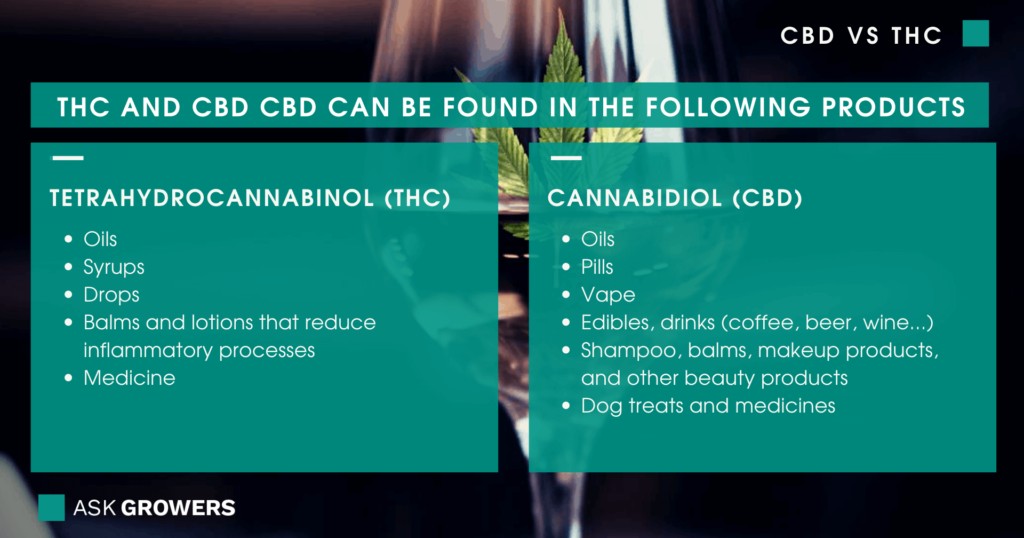
Veterans and Medical Marijuana Legally

This classification of marijuana of a Schedule I substance poses all sorts of legal issues, from research all the way to a veteran’s right to use marijuana as therapy.

It is well known and generally accepted that active duty military service members cannot partake in even the slightest bit of THC. But what about once they retire? The subject of U.S. military veterans and their access to medical marijuana continues to be the topic of many debates and several proposed bills in congress. Where is the veterans and medical marijuana now legally? And where does it look like it might go>

As it stands today, military veterans are essentially subject to the laws within the states they live in, but no federal VA doctor is going to be recommending THC gummies. According to the US Department of Veterans Affairs website, “As long as the Food and Drug Administration classifies marijuana as Schedule I VA health care providers may not recommend it or assist Veterans to obtain it.” 

military marijuana
Photo by DerwoodPhotography/Getty Images

This classification of marijuana of a Schedule I substance poses all sorts of legal issues, from research all the way to a veteran’s right to use marijuana as therapy. One might argue it is common medical sense that military veterans should receive any and all possible treatments available to them. Additionally, it is particularly taxing since cannabis has shown great promise when it comes to alleviating symptoms related to several issues that many veterans face.

According to NORML, veterans actually consume cannabis at higher rates than the general population. “Veterans often report using cannabis to treat symptoms of chronic pain and mood disorders, like post-traumatic stress. Clinical data supports the use of cannabis treatment for these indications.”

RELATED: Senators Introduce Amendments For Legalizing Medical Cannabis For Veterans

While the Veterans Affairs website also mentions that veterans won’t be denied VA benefits because of marijuana use, the fact that medical marijuana is not available as a treatment option has resulted in several drafted legislations. 

There is the Veterans Medical Marijuana Safe Harbor Act, also referred to as the Safe Harbor Act, whose primary purpose is to allow veterans safe and easy access to medical marijuana through the VA. Veterans rights are also a strong point of focus in almost every marijuana legalization bill, including the democratic sponsored Cannabis Administration and Opportunity Act, and the States Reform Act, which was introduced by republican congresswoman Nancy Mace of South Carolina. Both of these bills highlight the importance of veterans having access to medical cannabis.

RELATED: EXCLUSIVE: Rep. Nancy Mace Talks Biden’s Pardons, Reclassification Of Marijuana, And States Reform Act

“One of the other things that I’m really excited about that the state’s reform act does is it protects our veterans,” said representative Mace in a recent Q&A with The Fresh Toast a recent Q&A with The Fresh Toast. “So a veteran with PTSD can get a prescription at any VA in the country regardless of state law.” Mace, who recently won re-election, will be continuing to push for more support for her States Reform Act.

veterans PTSD
Photo by RODNAE Productions from Pexels

RELATED: Why The Military Should Have Reduced The Penalties For Getting Caught With Weed

She mentioned a touching moment in DC during her campaign for re-election, when she was in a room with female wounded warrior veterans. “As soon as we started talking cannabis, the entire mood of the room shifted. We talked about it for the remainder of the time that we had, the rest of the hour.”

As conversations like that one continue to take place across the country, only time will tell what the future of these bills hold. But the public opinion continues to shift towards an eagerness towards legalization. The question is how quickly will lawmakers realize this will of the majority, because for many veterans, it can’t be realized quickly enough.

The Big Midterm Wins And Losses For Cannabis Legalization

These are the major cannabis victories and losses that came out of the 2022 midterm elections.

The 2022 midterm elections were unique and historical for all sorts of reasons. Sure, there was the “red wave” that never came, but there were also ballot measures and victories that will change the trajectory of marijuana legalization in several states. 

Two states, Missouri and Maryland, both voted to legalize recreational marijuana. Several others, Arkansas, North Dakota and South Dakota, shot down measures that would legalize recreational adult use marijuana in their states.

vote
Photo by JGI/Jamie Grill/Getty Images

There were also some key wins for cannabis legalization advocates, which may help further the hope of cannabis legalization on the federal level.  

Maryland Votes Big to Legalize Recreational Cannabis

More than 65% of Maryland voters supported a ballot measure to legalize marijuana in the form of a constitutional amendment on election day. You might be wondering what this means exactly going forward. “The constitutional amendment defines that recreational marijuana would not be legal until July 2023 for people 21 and over, subject to a requirement that the General Assembly pass legislation in its next session regarding distribution, regulation and taxation of cannabis,” according to the Associated Press.

Cannabis is already legal to the North (New Jersey) and South (Washington D.C.). In fact, much of the North Eastern United States has gone green, with Pennsylvania being the largest exception, but more on the Keystone state later.

Missouri Legalizes Weed and Initiates Automatic Expungement

Missouri citizens voted 53.1% to 46.9% to legalize marijuana on election day. This decision is not only a victory for cannabis enthusiasts, but also for those who support criminal justice reform for non-violent cannabis crimes.

According to The Kansas City Star, “It will legalize recreational marijuana for adults over the age of 21 and create a licensing system for businesses who wish to sell or grow marijuana.” The Star also goes further, explaining that the law “allows for people with past non-violent weed charges to have their criminal records expunged.” 

RELATED: What To Expect When You’re Expecting Cannabis Legalization In Tuesday’s Midterms

This is a major victory for those looking to destigmatize those convicted of low level marijuana crimes. Missouri also joins Alaska and other Red states in the recreational marijuana family, proving that legalizing cannabis is not as partisan an issue as many once thought.

marijuana legalization
Photo by FatCamera/Getty Images

North and South Dakota Both Vote Down Cannabis Measures

Both North Dakota and South Dakota had ballot measures that offered citizens the chance to legalize marijuana. Both ballot measures failed. In North Dakota, the measure failed by almost 10 percentage points. The South Dakota Measure to legalize adult use for those 21 or older lost by a much smaller margin of 52.9% voting “No” and 47.1% voting “Yes.” 

RELATED: 5 Surprising Benefits Of Legalizing Marijuana

While many were optimistic that these measures could pass, there are several reasons they couldn’t make it to the finish line. According to TIME, “The failure of three out of five of these marijuana ballot measures this year is largely due to lower voter turnout in a non-presidential election—and opposition from prominent conservative voices who were staunchly against the measures.”

Arkansas

There was high hope that Arkansas could be yet another red state to pass marijuana legalization measures this midterm election, but the Arkansas ballot measure lost 57% to 43%. 

There are several possible reasons why this hopeful measure failed fairly considerably. From lower voter turnout (which is standard in a non-presidential election year), to an imperfect bill, there are plenty of places to point the finger. But the bill also received loud and considerable opposition. According to the TIME article,“Legalization efforts in Arkansas faced heavy opposition from groups like the Arkansas Family Council Action Committee, which worked with former Vice President Mike Pence to encourage citizens to vote no on the measure.”

John Fetterman Calls On Biden To Legalize Weed Ahead Of Labor Day
Photo by Nate Smallwood/Getty Images

Cannabis Advocates Win to Fight Another Day for Legalization

John Fetterman flipped a senate seat in Pennsylvania, where recreational cannabis is still illegal, and marijuana is still criminalized. Fetterman has been an outspoken advocate for marijuana legalization, as we have previously reported, so it will be interesting to see what happens with cannabis in the Keystone state over the next four years.

Congresswoman Nancy Mace, the republican congresswoman looking to move forward a bi-partisan federal cannabis legalization bill, won re-election in South Carolina. This will give her a chance to move forward with the States Reform Act. Democratic Senator Chuck Schumer, who is sponsoring his own legislation on the other side of the aisle, also won reelection.

Cannabis Users Have Better Sex According To Study

Researchers found that sexual function in young people who use cannabis and alcohol more frequently was shown to be better than in those who do not use either.

By Nina Zdinjak

Young marijuana enthusiasts and alcohol consumers have better orgasms and overall sexual function than those who abstain, according to a study undertaken in Spain, reported Marijuana Moment.

Researchers from the University of Almeria were inspired to tackle the controversy swirling around numerous previous studies that looked at the impact of cannabis and alcohol on sexual functioning, which disclosed both positive and negative effects. And so, Spanish researchers created a new observational study that concluded: “Sexual function in young people who use cannabis and alcohol more frequently was shown to be better than in those who do not use either.”

sex
Photo by ChristopherBernard/Getty Images

Study Details – Reduction In Anxiety And Shame 

For six months, researchers examined 185 females and 89 males between the ages of 18 to 30 who were either regular cannabis or alcohol users or non-users. The research excluded those who were using opiates or MDMA and those suffering from health conditions like depression and diabetes, as these are known to produce a negative impact on sexual performance.

“Sexual function is improved in young people who are high-risk cannabis consumers with a moderate risk of alcohol use, resulting in increased desire, arousal, and orgasm,” revealed the study, which was published in late December 2021 in the journal Healthcare. “This improvement is usually associated with a reduction in anxiety and shame, which facilitates sexual relationships.”

RELATED: Study: Cannabis Can Help Alleviate Insomnia In Those Suffering From Depression & Anxiety

Cannabis consumers had better scores than non-consumers when it came to both the overall sexual functioning scale and subscales of arousal and orgasm. In addition, frequent cannabis users also had better functioning and arousal scores than those who consumed weed moderately.

There was no significant difference in scores between men and women.

“Our findings indicate that young people who use cannabis frequently, regardless of gender, have better overall sexual function,” according to the Spanish study.

What About Alcohol? Depends On The Amount

Surprisingly, alcohol use showed no notable differences in either overall sex function or any of the subscales examined. There were, however important differences based on levels of alcohol consumption, with heavy drinkers having higher scores on the total sexual function and arousal subscale, compared to those who did not consume booze at all.

marijuana alcohol
Photo by Matthew Micah Wright/Getty Images

“The findings of this study revealed a higher score in sexual function, as well as arousal and orgasm, in subjects at risk of having cannabis-related problems and risk of addiction associated with alcohol consumption,” noted the study.

RELATED: Most Americans Don’t Think Weed Is Dangerous, But They’re Split On Whether It Does This

The researchers reported that they did not focus on the detection and consequences of heavy drinking and/or marijuana use such as the tendency to engage in less safe sex due to them being under the influence of either substance.

In conclusion, considering that these and similar results are often associated with less anxiety and shame in individuals who consume marijuana or alcohol, the study suggested that future sex education methods provide strategies that help people reduce shame and anxiety without placing them at risk of developing potential marijuana and alcohol dependency.

This article originally appeared on Benzinga and has been reposted with permission.
Don't Miss Your Weekly Dose of The Fresh Toast.

Stay informed with exclusive news briefs delivered directly to your inbox every Friday.

We respect your privacy. Unsubscribe anytime.