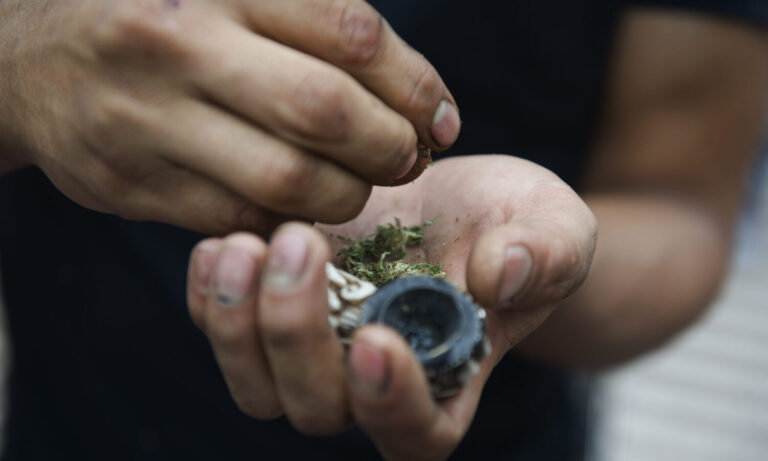
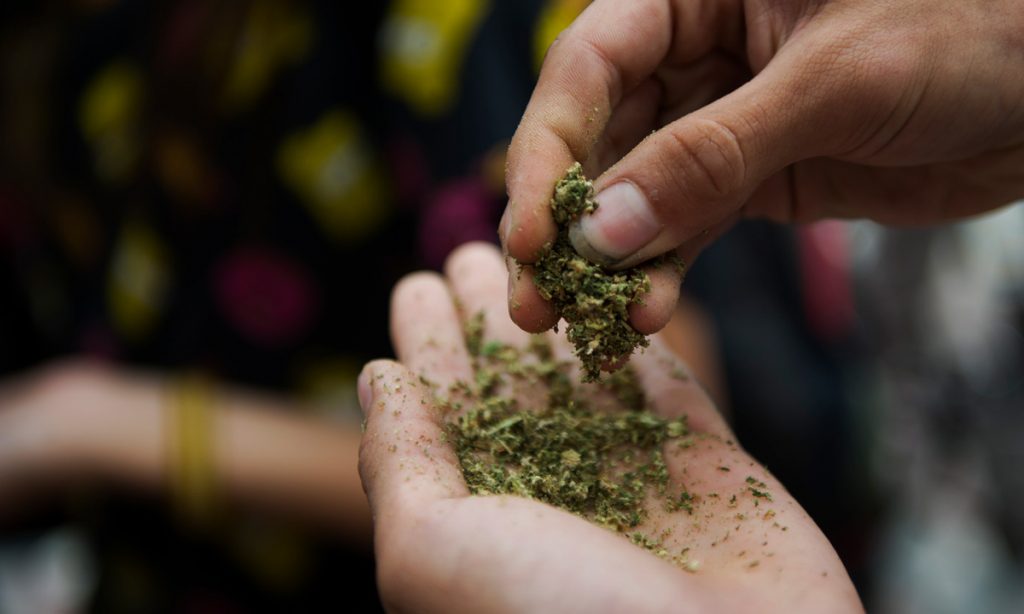
Synthetic marijuana, also known as K2 or Spice, has been increasingly on the rise — and has been associated with some serious side effects.
Synthetic marijuana, commonly known as K2 or Spice, is marketed as cheaper and stronger than natural marijuana. It’s also known as a substance that won’t cause you to fail a drug test. While this can be true, the side effects associated with synthetic cannabis are dangerous, impacting the body in ways that can last years.
Here’s what you should know about synthetic marijuana:
What is it?
Photo by Jorge Alberto Mendoza Mariscal/Getty Images
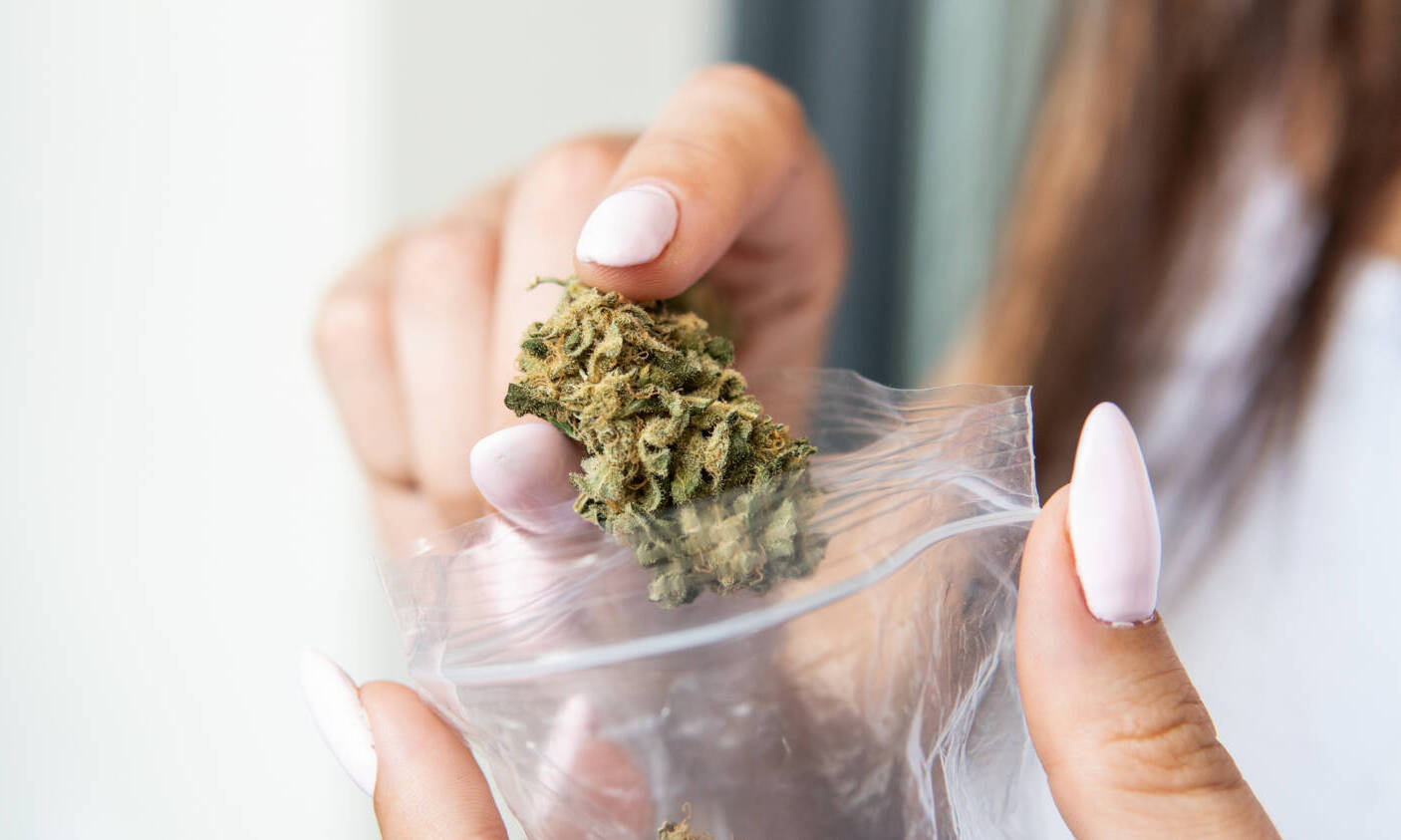
Synthetic marijuana is a group of manmade chemicals that produce a “high” that mimics the effects of THC. Natural THC naturally binds to the body’s cannabinoids, producing strong effects that can be euphoric and relaxing. Synthetic marijuana tries to do the same, binding to your body’s endocannabinoid system in ways that can be unpredictable and dangerous, particularly since no one really knows what’s in these products. If you want to learn more about synthetic weed and its makeup, you can check out this link.
Aside from its unpredictability, synthetic marijuana tends to bind more tightly to the body’s endocannabinoid system, creating a stronger relationship that’s harder to shake off. Side effects associated with synthetic weed are dramatic and dire, unlike the ones associated with regular marijuana use. According to the Cleveland Clinic, they include heart attacks, organ failure, seizures, psychosis, stroke, violent behavior, hypertension, and more. Researchers believe synthetic marijuana can make it more likely for people to suffer from psychiatric conditions, among them bipolar disorder, schizophrenia, anxiety, and depression.
According to the Centers for Disease Control and Prevention (CDC), people between the ages of 20-30 are more likely to be exposed to synthetic cannabis, with men being more likely than women to try it out. Users tend to have already tried out cannabis or are regular cannabis consumers.
If the legislature does not act on the legalization measure by April 2023, it will be on the November 2023 ballot, as long as the group can collect the second round of signatures it needs.
State officials and cannabis legalization advocates reached a deal on Friday, agreeing to allow the Coalition to Regulate Marijuana Like Alcohol to retain the signatures they’ve already collected while delaying their campaign until 2023.
The Coalition agreed to delay its legalization campaign until next year in exchange for state officials agreeing to accept the more than 140,000 signatures the coalition had already collected, instead of potentially making them start over from scratch.
“This guarantees the validity of the signatures we’ve already gathered, and we’ve got a much clearer path if we have to get to the ballot next year,” said Tom Haren, a spokesman for the Coalition to Regulate Marijuana Like Alcohol per Cleveland.com.
It’s Been An Arduous Legalization Campaign…Still Is
The Coalition, meanwhile, recently sued after House Republicans refused to take up the marijuana legalization law the group had proposed under a state mechanism called an ‘initiated statute,’ through which members of the public can propose new laws. The House GOP pushed back saying that the group submitted its signatures too late anyhow to be considered during this year’s legislative session.
Under the initiated statute rules, however, the public can force lawmakers to take up a proposed law change if they can gather the needed number of signatures – currently 132,887 – from registered voters in Ohio’s 44 counties. If lawmakers don’t enact the law as written within four months, backers of an initiated statute can then collect the same number of signatures again to force it onto the ballot for the following November’s election.
The problem is the Coalition fell short by some 13,000 signatures in the initial batch after elections officials decided that more than 87,000 signatures were invalid.
The group then hit the streets and gathered the additional needed signatures during a 10-day “cure” period, but by that point, they’d missed a late-December deadline to force the state legislature to take up the proposal this year.
So now, if the legislature does not act on the legalization measure by April 2023, it will be on the November 2023 ballot, as long as the group can collect the second round of signatures it needs.
Couche-Tard, a prominent multinational convenience store operator, has been keen on becoming a top name among cannabis-related investors globally.
International cannabis venture investor Couche-Tardrecently disclosed its plans to increase its holdings in Fire & Flower, a cannabis retailing giant. As of December 2021, Couche-Tard owned about 20-21% of the Canadian company’s shares, yet it aspires to acquire more — up to 35% in the coming weeks.
Couche-Tard, a prominent multinational convenience store operator, has been keen on becoming a top name among cannabis-related investors globally. Its resilience can be observed in its quick procurement of substantial shares in Canada’s major cannabis retailer.
This announcement suggests that before the end of the second quarter of the year, Couche-Tard could own as many as 8.2 million Fire & Flower shares. This intending exchange would play out once the Circle K convenience stores exercises its warrants.
Information on the Intending Acquisition
As mentioned earlier, Couche-Tard intends to buy these shares by flexing their warrants as soon as Fire & Flower’s annual earnings are released and published in a few days. Once the acquisition goes through, the Quebec-based convenience store giant would have increased its initial stake by at least 11%. From 14.5% to 35%. In fact, that’s more than double the amount of its existing shares.
Different news release pegs the company’s total amount of Fire & Flower shares at 21.5% of the total amount. They claim the information was let out thanks to a regulatory filing sometime ago.
Who Is Couche-Tard Inc.?
Alimentation Couche-Tard Inc. is a prominent name in the North American convenience and fuel retail scene. The giant corporation operates in more than 20 countries and territories. With more than 14,000 physical stores situated in strategic locations worldwide, Couche-Tard Inc. offers approximately 10,800 areas with road transport fuel.
Alimentation Couche-Tard has an easily noticeable trademark. It is identifiable because it can be found outside some of the biggest independent convenience stores in the U.S. its daughter company, Circle K is another popular venture in the states.
Photo by Xnatedawgx via Wikimedia
The parent company is one of the leading forces in the convenience store industry and road transport fuel retail market in Scandinavia, the Baltics, Ireland, and Canada. Poland and Hong Kong SAR are two other locations that feel the company’s presence. Today, Alimentation Couche-Tard employs over 120,000 people across its vast network.
Fire & Flower is highly respected for its use of a central, tech-powered operations system. The cannabis retail giant has at least 100 corporate-owned stores in different country regions. The company often capitalizes on its tech-developed sister company, Hifyre, to push its retail operations to newer heights. With this, there’s an added independent high-margin revenue stream.
Fire & Flower adeptly guides its customers through the new, sometimes complex, cannabis ecosystem. It achieves this through proper retail practices and educational materials. At the same time, the Hifyre digital retail and analytics platform regularly empowers small-scale retailers with the means to optimize their connections with prospective, new, and existing consumers.
The Canadian-based company has an efficient executive team that strives to combine years of experience from the logistics, retail and technological industries to elevate their cannabis-based business. Some of the brands owned and operated by the Fire & Flower’s multi-banner cannabis retail operations include Friendly Stranger, Happy Dayz, and Hotbox brands. Fire & Flower Holdings corporation legally owns all its issued and outstanding shares. A few of the company’s retail stores can be found in the provinces of Alberta, British Columbia, Ontario, Saskatchewan, Yukon Territory, and Manitoba.
More Details on the Deal
Alimentation Couche-Tard has successfully positioned itself as a strategic investor in the North American cannabis space. The company has plans to expand its operations to other companies and territories, specifically the United States. It plans to use its strategic licensing agreement with the U.S. branch of Fire & Flower to expand into the country. It is still unclear whether or not the company would hold on until progressive changes are introduced to the federal cannabis regulatory regime.
Fire Holdings confirmed that it is aware of Alimentation Couche-Tard Inc’s intention to purchase over 8 million of its common shares.
Photo by Erik Mclean via Pexels
Couche-Tard’s subtle entry into the cannabis market can be traced to July 2019. At that time, the company announced its mandate to provide Fire & Flower with funds to support its expansion plans. In 2019, the ACT invested an estimated amount of $26 million in Fire & Flower. In turn, it received about 9.9% of its total shares. A considerable bulk of the Couche-Tard investment has gone into opening up more corporate stores for the network. The upcoming investment may also be used for the same purpose.
Fire & Flower’s team says it would continue to build on its operational union with the ACT. Once more funding is received, Fire and Flower cannabis retail stores plan to open new stores close to existing Circle K stores in relatively new markets in Canada. A few weeks ago, Fire & Flower disclosed that one of its fully-owned daughter companies, Open Fields Distribution, just attained a one-year cannabis distribution agreement with Manitoba’s liquor and lotteries department. In other words, Open Fields Distribution would begin to offer distribution of adult-use cannabis items from registered producers to licensed retailers within Manitoba. Additionally, Open Fields also serves areas within and around Saskatchewan.
Bottom Line
More information will be revealed once Alimentation Couche-Tard exercises its warrants. The total exercise price for this shares acquisition will be determined based on the average cost of Fire & Flower’s command shares calculated over the duration of 20 days.
According to the Series B warrant certificate, all the Series B warrant exercise prices must not exceed $18.75 per share, while the minimum price is $4.77.
You can access Fire & Flower’s fourth quarter and fiscal year 2021 financial statements on the company’s website.
New data shows that a new wave of COVID-19 is imminent and unlike the ones we’ve experienced in the past.
It’s that time of the year again — everyone around you is starting to get COVID-19. Since large amounts of people have already contracted the disease, it’s possible for people to experience their second, third, or even fourth round of infections.
According to Bloomberg, experts are calculating that new variants of the virus are reducing people’s immunity. They suggest that people who had COVID-19 in December, when the country experienced one of its largest waves, are currently at risk of reinfection.
The variants responsible for the incoming wave of cases are subvariants of omicron, thus more contagious than previous iterations of the virus. They also appear to be better equipped at avoiding vaccine protection and post-infection immunity.
To make matters worse, this new wave of COVID-19 is occurring within a very confusing space. People are getting more and more at-home tests, rarely reporting this to the authorities, leaving experts with little knowledge of what stage we’re in in the pandemic. States and counties are also less likely to report COVID-19 numbers to responsible parties, leaving health experts at a loss for what happens next.
“The reality is that things are really not going well at the moment,” said infectious disease expert Jacob Lemieux. “We all thought that we were in for a reprieve after the devastating omicron wave. And that was clearly the case until a few weeks ago.”
Vaccines are still doing their jobs, keeping people out of hospitals and preventing deaths, but we’re entering an interesting moment where we don’t have a reference for how things will work out. People have never been laxer about the virus, not wearing masks or following any sort of guidelines. This suggests that once the wave starts it might not drop as quickly as it did at the start of the year when people were still taking protective measures against the virus.
Photo by Dollar Gill via Unsplash
The immunity of those who’ve had COVID is dependent on the variant they caught. For example, the journal Nature published a recent study that showed that those infected with the delta variant had little immunity against different variants. New variants and subvariants make this all the more likely, with them being better equipped at avoiding the natural protection granted by infections.
During these COVID-19 peaks, experts resort to the advice they’ve been giving out over the past two years. They suggest masking up if people have comorbidities or vulnerabilities, or if the area where they live has a high rate of infections. As always, vaccines are vital in preventing serious infections and hospital stays.
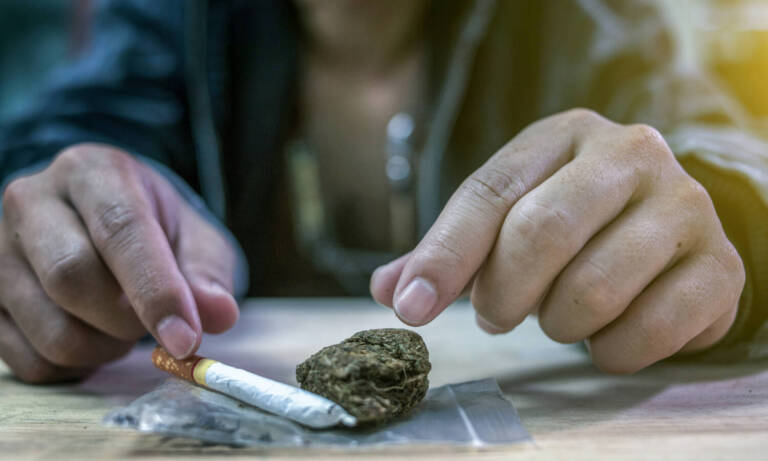
The main objective of recognizing cannabis bud impurities is to ensure we take in purer and smoother-hitting buds.
It’s impossible to select only the best buds all the time. Even the best cannabis growers and bud tenders in the world make mistakes when picking buds. Once in a while, buds with odd physical appearance, flavor, or texture will be harvested alongside regular buds. You don’t have to judge yourself when this happens. There are even times when a bud seems perfect at harvest and develops issues later.
Cannabis bud impurities are pretty common. They are detected when the texture, taste, or aroma of the buds is off. Everyone wants a weed stash void of impurities. So, here is a comprehensive process to identify and avoid buds with impurities when you next harvest or process your crop.
Photo by Kindel Media via Pexels
Cannabis Analysis
This basically involves seeing, touching, and smelling your buds to check for contaminants.
Step One: Visual Inspection
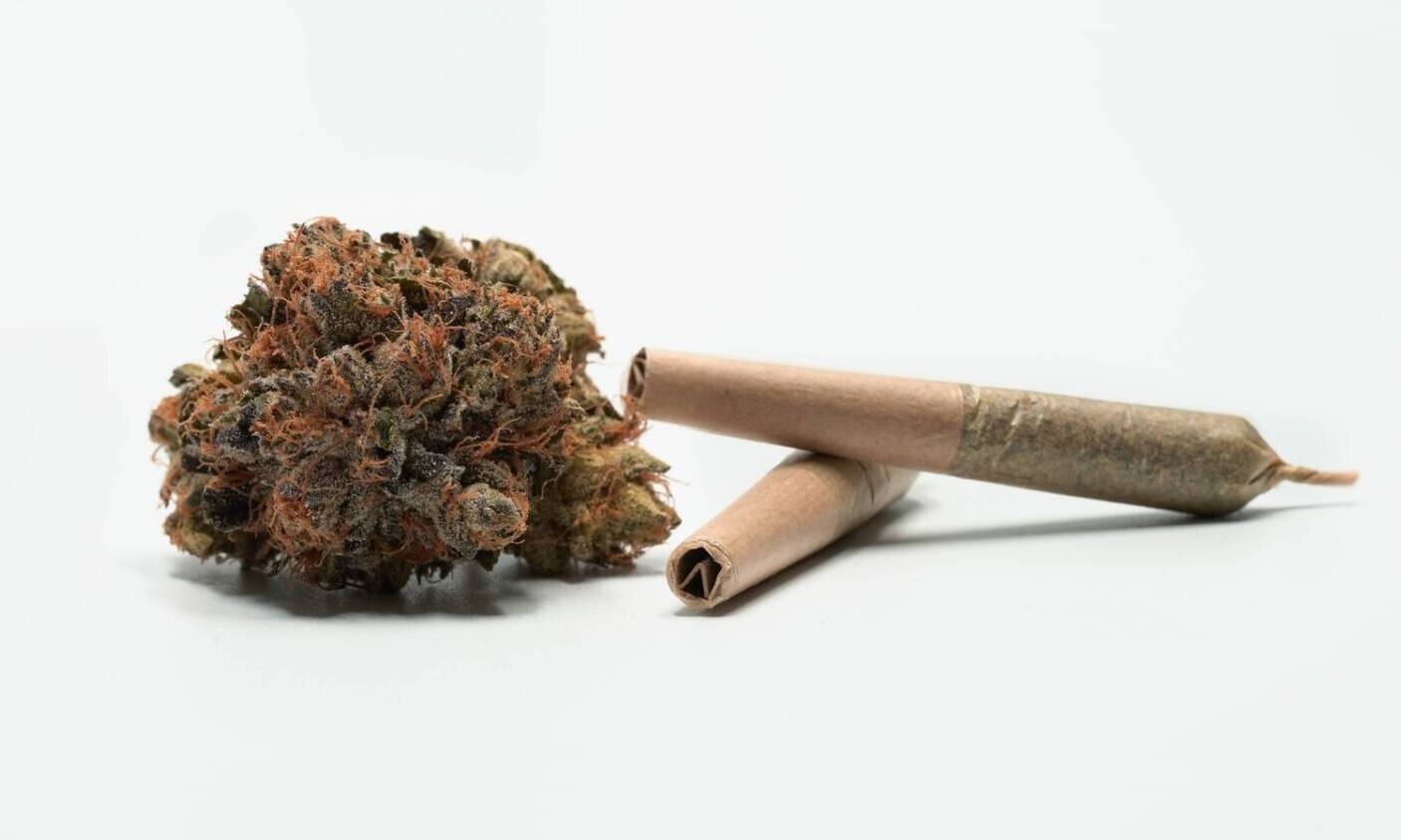
This can be done using the naked eye or a microscope. If you notice that your cannabis flowers are covered with too much shiny, crystalline substance, something could be afoot. During the harvest process, shake out your buds and view the drop-off substances. Some impurities you might see include grains, crystals, or powders. If you cannot identify some of these substances, it would be best to run more analyses.
Step Two: Inspect by Feeling
Visual Inspection is not the end of the analysis, even if it doesn’t yield anything negative. Please pick up a bud to determine whether or not it crumbles or dries out quickly. Also, check to see if they are heavier than they ought to be and what happens when they get exposed to air. If the answer to the above questions is “yes,” then your buds could be contaminated.
Step Three: Smell and Taste Inspection
Before lighting up the buds, take a whiff to get a better read. Although this only works if you’re familiar with what a good nug smells and tastes like. If you catch a hint or taste of chemicals or other unnatural substances, then you may have contaminated buds.
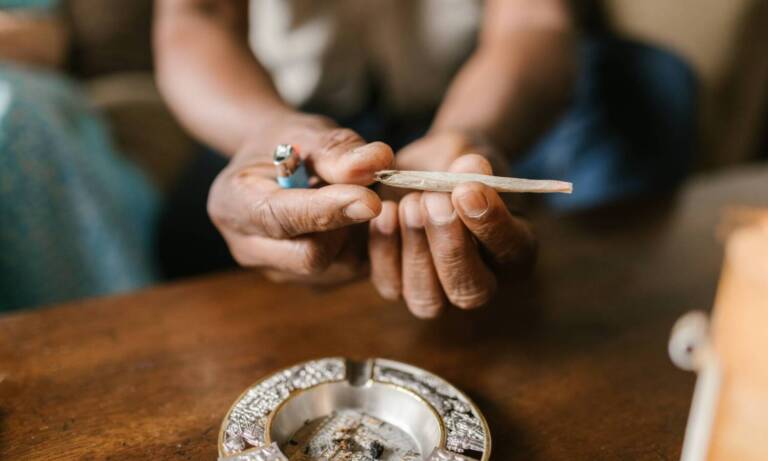
When you light up the rolled-up buds, check if the buds give up sparks when you inhale. Also, check what the flame looks like immediately and after the weed is lit. If you hear a crackling sound when you drag on the buds, it is very possible that your buds are contaminated.
Also, check the flavor and smell given off by the weed; as soon as you detect an abnormal odor, you should put down the weed and stop inhaling.
Step Five: Inspect The Leftovers
This is the last process. If the previous inspections did not give off any weird results, there’s still a need to observe the ash left behind. A non contaminated bud will leave dark gray ash, which is obviously dry and soft to touch. If you see jet black, hard or greasy ash, then your buds contain one or more contaminants.
Types of Cannabis Contaminants
Cannabis is often exposed — directly or indirectly — to contaminants. The common culprits include sugar, sand, Brix fertilizer, hairspray, and industrial pesticides or fertilizers.
Sand
Sand is one of the natural residues that can slip past the inspection of even the most experienced cannabis connoisseurs. Sand is an unavoidable material in agricultural operations, so there’s a high chance it contaminates the products by accident. Some unscrupulous growers tend to add sand on purpose to their products because it gives the buds a shinier and heavier look.
It is always advisable to shake out your buds and sift through the ground ones before packaging.
Industrial Pesticides or Fertilizers
These often appear in commercially grown cannabis buds. Their presence in cannabis products can put consumers at risk of developing life-threatening ailments. Many of these chemicals are out for credible reasons, such as protecting crops and maximizing growth. However, the consumption of these hazardous chemicals over time can result in diseases such as neurotoxicity and asthma.
These contaminants are not always detectable. The best way to check if your buds are contaminated by industrial pesticides or fertilizers is through laboratory testing.
One of the typical industrial pesticides and fertilizers is lead.
Inspection could be a very tiring process. Correction is much more complicated than prevention. Hence, it is better to practice the following suggestions.
Check For Contamination Before Purchase
Whenever you want to buy cannabis, use the above methods to confirm that the intended product isn’t contaminated. Try to do the inspection at the store or as soon as you get to a private location.
Self-Cultivation
What better way to know what you’re consuming than to personally grow your own product. When you cultivate your own weed, you will be able to monitor what your cannabis is exposed to. You’ll personally regulate the plant’s environment to ensure it isn’t exposed to harmful contaminants.
There will be times when you’ll have no choice but to visit a cannabis store for a product—most likely because you’ve run out of your own self-cultivated stash. It is advisable to have a trusted dispensary and delivery company. Patronize well-respected outlets that have dedicated staff members for product testing and inspection. Many renowned dispensaries will not risk the reputation of their businesses by stocking unsafe products.
Bottom Line
If you ever find yourself with contaminated cannabis buds or products, the severity of contamination determines whether or not you’ll have to dispose of them. Some contaminated buds can be cleansed with the proper materials. However, if you have no time to do this yourself, it’s best to throw them out.
Water curing is best for removing contaminants like sand and sugar. Although it is not guaranteed to wash off every impurity, it will not compromise the bud’s terpene Orr cannabinoid profile.
The main objective of recognizing cannabis bud impurities is to ensure we take in purer and smoother-hitting buds. Carefully check through your homegrown and purchased cannabis bids at all times, if not for anything, but stay safe.
A Delaware attorney said this progress can mostly be attributed to social inequity residents face when it comes to law enforcement and cannabis possession.
About a week after Delaware’s House of Representatives gave the green light to a bill that would legalize cannabis possession and sharing between adults, the state Senate reiterated the House’s decision and approved the measure. HB 371, which passed in a 13-7-1 vote, legalizes the possession of up to one ounce of marijuana for adults 21 or older, reported NORML.
The move comes on the heels of HB 372, also sponsored by Rep. Ed Osienski (D) and approved Tuesday by a House Appropriations Committee and is now heading to the floor. This measure aims to set up a specific regulatory framework for the recreational cannabis market.
Photo by Bet_Noire/Getty Images
“I’m looking forward to continuing working on this and I’m not really going to rest until we do have a legal regulated market,” Osienski said, as reported by 47 ABC.
Tom Donovan, a Delaware attorney told the outlet that this progress can mostly be attributed to social inequity Delaware residents face when it comes to law enforcement and cannabis possession. “Where you were born, where you live, what street you live on shouldn’t determine whether you’ll be a part of the criminal justice system,” Donovan said.
NORML executive director Erik Altieri praised the passage of HB 371. “We applaud the Delaware legislature for passing this important legislation. The overwhelming majority of Delaware residents support ending their state’s failed prohibition on marijuana, and Governor Carney should respect the will of the people and immediately sign this bill into law.”
Earlier attempts to legalize cannabis faced technical obstacles in the Senate which needs a 3/5 majority to approve any proposal that creates taxes. That’s why Osienski decided to split the package into two separate pieces of legislation — one that only legalizes cannabis possession for adults (and needs a simple majority to pass) and the other that deals with retail and regulatory issues.
Photo by Kirill Vasikev / EyeEm/Getty Images
What If Regulatory Bill Fails?
The question is, what happens if HB 372 does not get approved?
State Sen. Colin Bonini (R-Dover) reiterated the views of other Republicans… the passage of HB 371 could lead to undesired consequences, writes Delaware Online. The main concern is that the bill would legalize cannabis without any real regulation.
“We might as well call this ‘encourage illegal behavior act,’” Bonini said. “Because where are you going to get it? A drug dealer.”
Sen. Trey Paradee, a sponsor of the legalization bill, shared the same concern. If HB 372 doesn’t get approved by the end of the session, Paradee said he would ask Carney to veto HB 371.
Though medical use of cannabis was legalized in England in 2018, marijuana remains classified as a Class B drug, which carries a maximum sentence of five years in prison.
Several months after London’s Mayor Sadiq Khan announced plans to stop prosecuting adolescents and young adults caught with cannabis, he set up a commission with the task of decriminalizing cannabis in the United Kingdom. The first-ever London Drugs Commission will be chaired by ex-justice secretary Lord Charlie Falconer QC, reported the BBC.
While the mayor was impressed after visiting a cannabis dispensary in California, Home Secretary Priti Patel said Khan’s efforts are pointless as he “has no power to legalize drugs. They ruin communities, tear apart families and destroy lives.”
Khan responded: “We need to have an honest, open conversation about the evidence in relation to the history of cannabis and our laws in the UK and our experience of the health consequences in relation to crime and the community. The best way to do that will be with the drugs commission we’ve now set up.”
“You can hear from the experts, that’s one thing, but seeing it for yourself … hearing from those who cultivate and grow this plant has been fascinating.”
Once the commission researches everything it can, it will offer its recommendations to City Hall, the government, the police, the criminal justice system and public health services. In the event of any policy changes, the University College London would provide an analysis of the impact of the proposed amendments.
Though medical use of cannabis was legalized in England in 2018, marijuana remains classified as a Class B drug, which carries a maximum sentence of five years in prison for possession. Cannabis possession was the most recorded drug offense in England and Wales in 2021, as per a parliamentary report.
Khan’s Party Says Not Your Job
UK’s Labour Party has stated that it does not support Khan’s initiative to change the law regarding drugs. “Drugs policy is not devolved to mayors and under Labour would continue to be set by the national government,” the party stated.
On the other hand, Steve Rolles of the Transform Drug Policy Foundation told BBC Radio London that it would be good if the UK could look to Mexico and Uruguay and other countries that have decriminalized marijuana and learn from them.
“Clearly as the mayor has pointed out, our cannabis policy is not working. It is not deterring youths and we can always smell it off them. It is criminalizing lots of people – particularly young black males – and it costs the criminal system a lot of money,” Rolles said.
“We need to look at it. Other places in the world have decriminalized it and hopefully, we can learn from these experiences.”
Ironically, it seems that the states that cling to the myths perpetuated by prohibition are the same ones suffering from the consequences these myths suggest would happen if you legalize weed.
Throughout the prevalence of prohibition, we’ve been sold on the idea that if we were to legalize cannabis, everybody would just start smoking like junkies on the hunt for their latest fix. When cannabis was legalized, that didn’t happen.
They told us that if we were to legalize cannabis, kids would suddenly think that it’s okay to smoke weed and we’d have a bunch of red-eyed youths running around being all “delinquent” and stuff. When we legalized, it seemed that there was no change in youth consumption rates, and in some cases, fewer youths engaged in the activity.
Photo by Los Muertos Crew via Pexels
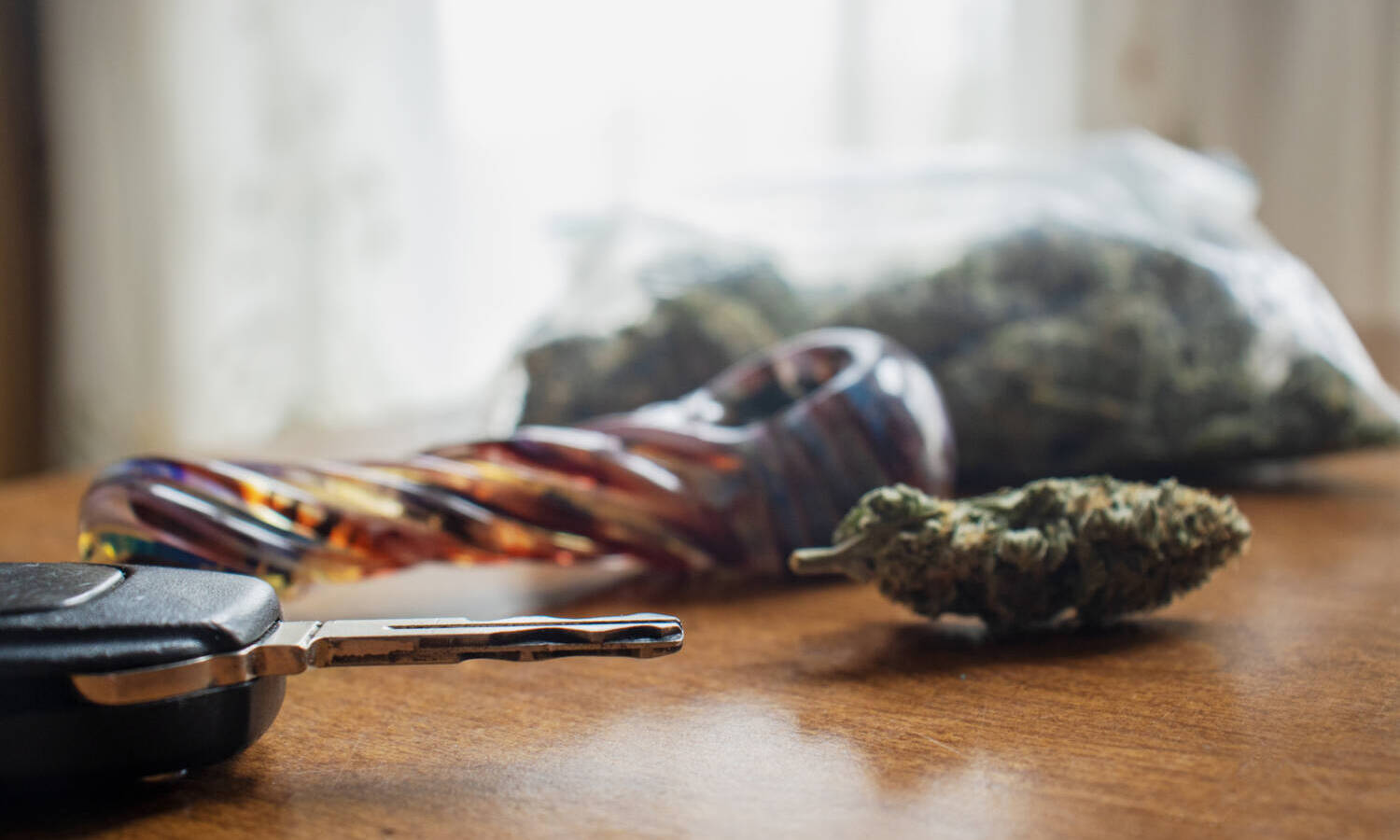
Now it seems that another myth that was often perpetuated by the prohibition has surfaced agin, the myth that if we were to legalize, we would have “stoned drivers” crashing all over the place. Unfortunately with most prohibition myths, once a legal market steps in to prove or disprove the point, the facts usually side with cannabis.
“The risk of self-reported DUIC was significantly lower in recreational and medical states than in neither states,” the study authors wrote. “Current cannabis users in recreational and medical only cannabis states were significantly less likely to report driving within three hours of getting high in the past 30 days, compared to current users living in states without legal cannabis.”
“One potential explanation for lower prevalence of DUIC in legal states is perceived safety of cannabis use, which is associated with DUIC and varies by legalization,” the study continues. “In legal states, cannabis users may receive more information about the risks of cannabis use from sources like physicians who issue medical cannabis cards or dispensary staff than users living in neither states.”
In other words, the researchers believe that due to the fact that cannabis is legal, odds are that consumer education plays a vital role in reducing DUIC. People who live in legal states typically become more “aware” of the side effects of cannabis and begin to view cannabis consumption in the same light as driving under the influence of alcohol, which people tend to avoid.
Conversely, since there are no public education about cannabis and driving in states that prohibit the plant, they are less likely to engage with other people who would openly frown about the idea of driving. The culture is already “illicit” meaning that doing other illicit things such as driving high might be less of a gap than if what you are doing is legal. Police are in the process of developing new protocols for testing cannabis-infused drivers.
In other words, in a prohibition state, the mere act of smoking marijuana would mean that you are breaking the law. But in a legal state, only driving under the influence would warrant an illegal action. When you’re already doing something illegal, doing other things that are illegal costs less than if you are not breaking the law.
However, the authors also believe that there could be another reason.
“States that have not legalized cannabis cannot regulate the labeling of cannabis products, while many recreational and medical states require warning labels and instructions on products,” the researchers wrote. “Some edible cannabis products contain warnings about driving within a few hours of consumption.”
Photo by Cappi Thompson/Getty Images
This is part of the consumer education benefit of legalization. You can actually put warnings on the consumer products compared to the illicit market that has no regulations. This means that by the simple act of consuming a legal product in a cannabis friendly state, you are being exposed to the ideas of responsible consumption right on the packaging.
While many people might not read these labels, the unconscious mind picks up on them and slowly over time begins to cement itself within the consumer’s mind. This isn’t possible in prohibition states.
“Because regulation of cannabis products in non-legal environments is not possible, mass media campaigns may be a good option by providing education about DUIC,” the authors said, concluding that: “Although all states should educate its citizens about the potential dangers of using cannabis and driving, this analysis suggests that states without legal cannabis are particularly in need of DUIC prevention efforts.”
Ironically, it seems that the states that cling onto the myths perpetuated by prohibition are the ones suffering from the consequences these myths suggest would happen if you legalize cannabis. The truth of the matter is that legalization as a policy has worked and while there certainly are areas of improvement, society is experiencing a net benefit from legalization.
Prohibition does nothing to reduce cannabis consumption, and seemingly performs poorer in reducing the potential side effects of mass cannabis consumption – reducing DUIC, youth consumption, etc.
What would happen if we do this with all drugs?
Cannabis should never have been made illegal in the first place. However, the same could be said for every other drug. While it’s true that meth doesn’t have the same “social value” as cannabis, consuming it should never be illegal.
In fact, if there is anything we can learn from prohibition it’s that by utilizing the “law enforcement approach” only makes the act of consuming drugs more dangerous. We have seen what can happen when we slowly educate people on the proper way of handling drugs.
We realize that when we treat people like adults and give them the freedom of choice, they typically tend to find some equilibrium and practice safe consumption habits.
Photo by Darwin Vegher via Unsplash
In 2022, we need to recognize that the policies dreamed up by corrupt politicians over 50-years ago is the real cancer to society. And if we truly want to make society “safer” from drug consumption, we’ll take it out of the shadows, bring it into the light, and teach people the proper way of getting high.
It’s time we remove the stigma associated with drug consumption and recognize that we’re all caffeine junkies (for the most part). We’re all consuming a drug in one way or another, and just because some might have effects that make you question your very existence doesn’t mean that they should be illegal.
I’m sure, if we embrace drug use in a responsible manner and create the space for adults to experiment with their own consciousness, the world would not end, drug addiction rates would drop, crime would drop, and we would be entering into a new cultural revolution within 10 years after legalization.
Of course, this last part is just personal conjecture, but one thing is certain: prohibition even fails at what prohibition aims to stop, it’s time for something better.
Marijuana gifting has made cannabis much more accessible across states, with these types of sales replacing black market deals.
Several states have put bans on marijuana “gifting,” but what, exactly, does marijuana gifting mean and why is everyone talking about it?
Marijuana gifting refers to the practice of including a free “gift” of marijuana with the purchase of another item, say, a video or a t-shirt. It’s a loophole many small businesses are taking advantage of.
Marijuana dispensaries and sellers have had to get creative with their businesses. While they’ve been waiting for legal cannabis to become effective, the process is slow and taxing, and something that doesn’t meet up with the expectations and needs of the growing cannabis market.
Marijuana gifting has made cannabis much more available across states, with these types of sales replacing black market deals and being carried out in stores and pop-ups. The fact that most states that are trying to create a marijuana industry are also working on decriminalizing it makes the process easier, giving marijuana sellers a sense of security when conducting their business. While they could be pursued by lawmakers, the people in charge have to be careful with the way they navigate these situations, trying their best to avoid sending mixed signals to the public.
Recently, states have started cracking down on these issues. In the case of Connecticut, where weed is legal but dispensaries are nonexistent, penalties include up to a year in prison and a $10,000 fine. This decision was introduced in a bill and was battled by marijuana advocates who argued that marijuana gifting is the only way of obtaining the product in a semi-legal fashion.
“It’s important to be able to gift cannabis because not everybody has the financial stability that they need in order to enter into the medical program,” said Christine Capitan, from advocacy group CT Canna Warriors.
Photo by Megaflopp/Getty Images
“Enacting a law that criminalizes any of the giving of this plant-based medicine to our fellow family members, friends or even complete strangers is unethical, unfathomable, borderline nefarious,” said Duncan Markovich, a local cannabis seller.
In February, New York allegedly sent out cease and desist letters to retailers engaging in these practices. Per The Gothamist, the state’s Office of Cannabis Management (OCM) refused to recognize whether these letters were sent out or not. “Based upon this search, OCM does not confirm nor deny the existence of a letter sent by it to any entity,” said Rashied McDuffie, the office’s deputy general counsel, making matters even more confusing.
While New York’s OCM might have their reasons for hiding their letters, they’re stoking fear and scaring off people who might be interested in getting involved in the business. While some marijuana sellers will likely back down from selling their products, others will continue and get a head start on establishing their names in the local cannabis scene.
In a recent interview, she revealed her intention to fight against the Arkansas Adult-Use Cannabis Amendment, which is sponsored by a ballot question committee and financially backed by current medical marijuana growers.
Melissa Fults, a board member of Arkansas NORML and a medical marijuana patient advocate, withdrew her adult-use cannabis amendment petition preferring to wait until the 2024 elections, giving her time to focus on other recreational proposals she disagrees with, reported the Northwest Arkansas Democrat-Gazette.
Fults filed the Arkansas Adult Use and Expungement Marijuana Amendment in November, under which cannabis possession for adults would be legal and those with certain cannabis-related misdemeanors or felony convictions would be allowed to petition the courts for relief.
Photo by Olena Ruban/Getty Images
In a recent interview, she revealed her intention to fight against the Arkansas Adult-Use Cannabis Amendment, which is sponsored by a ballot question committee and financially backed by current medical marijuana growers.
“We’ve been working so hard trying to stop the cultivators,” Fults said. “You can’t fight on that many fronts.”
According to Fults, that amendment would enable large-scale growers to benefit while forcing out smaller cultivators and damaging the medical program. She further condemned the amendment for failing to include an expungement provision for people with criminal records over minor weed-related charges.
Fults said there are many volunteers ready to fight against the amendment.
Her measure would enable enough cannabis companies to meet Arkansas’ demands. Whereas, the amendment supported by Responsible Growth Arkansas would grant first cultivation and dispensary licenses to current operators, according to Fults.
Responsible Growth Arkansas chairman Eddie Armstrong responded to Fults’ criticism by saying that it urges his group to improve on the proposal. According to Armstrong, the amendment would benefit medical marijuana patients by lowering prices and meeting their needs.
“The industry is a new industry, so there are lots of bumps and bruises along the way when you’re building something new,” Armstrong said.
He noted that the petition already has over 50,000 valid signatures.
A third recreational marijuana proposal, Arkansas Recreational Marijuana Amendment is also likely to get postponed until 2024, according to a spokeswoman for Arkansas True Grass, a group behind it. That amendment aims to allow for the automatic release of those incarcerated over cannabis-related charges and would not cap the number of marijuana operators.