A new study shows that while easier to spread, Omicron is much less deadly than previous variants.
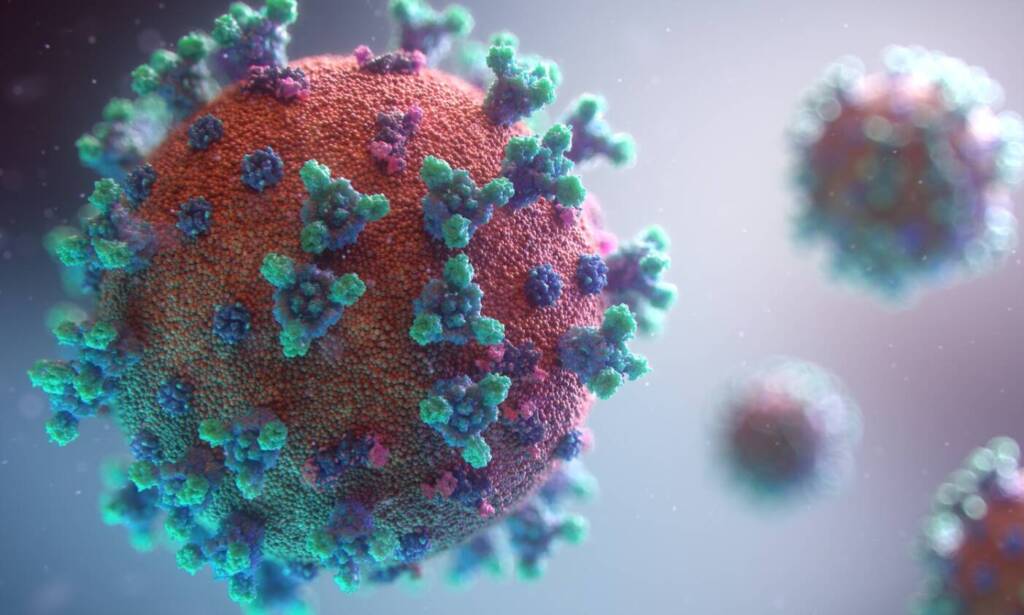
Omicron is the most recent COVID-19 variant, responsible for sparking a wave of viral infections that have infected most parts of the country. As of this writing, the vast majority of cases being reported are from Omicron infections.
Despite these large numbers of COVID-19 cases, hospitalizations rates and deaths are not in line with previous variants. New research suggests this is due to Omicron being 91% less likely to result in deaths.
The study, conducted by the Centers for Disease Control and Prevention (CDC), involved 70,000 COVID-19 patients in California, and it showed that Omicron is less deadly and less likely to result in hospitalizations. Even those people who had Omicron and ended up hospitalized were likely to recuperate earlier than those who were infected by the Delta variant.
“Reductions in disease severity associated with Omicron variant infections were evident among both vaccinated and unvaccinated patients, and among those with or without documented prior SARS-CoV-2 infection,” explains the study’s authors.
Details of the study include that those infected with Omicron are 75% less likely to require intensive care and that hospitalized patients require an average of 1.5 days of treatment when compared to patients in the past, who required an average of five days of attention. None of the subjects with Omicron had to go on a ventilator, a striking fact considering the number of people whose data was analyzed.
“We may see deaths from Omicron but I suspect that the deaths that we’re seeing now are still from Delta,” said Rachelle Wolensky, director of the CDC, in a statement.
Despite the encouraging news, Wolensky says that people should still be careful of the virus and monitor their behavior accordingly, ensuring the safety of elders, immunocompromised people, and more. Aside from that, it’s important to account for the strain on your state’s health care system, which is likely higher than usual due to the types of numbers that the Omicron variant is producing.
POTIFY pointed out that it existed in 2014 before Spotify became famous and that its name came from the online shopping site Shopify, and not the streaming platform, Spotify.
The U.S. Patent and Trademark Office’s Trademark Trial and Appeal Board (TTAB) upheld two oppositions filed by Spotify against trademark applications made by U.S. Software Inc. for its cannabis software known as POTIFY, according to IP Watchdog.
What To Know: The USTPO declared that POTIFY’s trademarks would have diluted and blurred trademarks held by the popular music streaming service.
Photo by camilo jimenez via Unsplash
U.S. Software, which filed the trademark applications in 2017 and 2018, was seeking to register POTIFY for “downloadable software for use in searching, creating and making compilations, rankings, ratings, reviews, referrals and recommendations relating to medical marijuana dispensaries and doctor’s offices and displaying and sharing a user’s location and finding, locating, and interacting with other users and place, in International Class 9.”
U.S. Software was also seeking the trademark for clothing, medical cannabis information, creating an online community for medical cannabis patients and as a platform to create an online community for discussion of medical marijuana and scheduling of healthcare services.
Spotify opposed the application, saying that common law rights to its music and entertainment software, as well as advertising, could be mistaken for the POTIFY site and cause consumer confusion.
Spotify also claimed that because “pot” is known as a term for cannabis, confused consumers might associate POTIFY with the promotion of marijuana and therefore tarnish the SPOTIFY mark.
Why It’s Important: The Trademark and Trial Appeal Board noted that Spotify already hosts content, such as music and podcasts, related to cannabis, reports Ganjapreneur.
U.S. Software argued its product is not for individual consumers, rather “sales systems, telemedicine systems, and enterprise resource planning systems,” and “is a back-end software platform designed for legal marijuana dispensaries to market and sell their products.”
Furthermore, POTIFY pointed out that it existed in 2014 before Spotify became famous and that its name came from the online shopping site Shopify, and not the streaming platform, Spotify.
Ultimately, the board ruled that “because the marks SPOTIFY and POTIFY are used for software products that perform analogous functions, and are so similar in appearance and sound, their commercial impressions are similar even if consumers take different meanings from SPOT and POT,” and it is “inevitable POTIFY will diminish SPOTIFY’s distinctiveness.”
A Michigan judge apologized after threatening an elderly man with cancer due to the state of his front yard. Her behavior was captured on Zoom and went viral on social media.
Michigan judge apologizes after berating an elderly cancer patient with jail time due to some unruly weeds in his front yard. “I made a mistake,” Alexis Krot said in a statement. She’s also reported herself to a state commission that probes judicial misbehavior.
Krot’s comments occurred in a court hearing via Zoom call, which then spread through social media. The clip shows Judge Krot telling a visibly sick man that he “should be ashamed” of the state of his house. “If I could give you jail time on this, I would,” she said, threatening him with jail a second time when the meeting was ending. “If you come back here, you’re going to jail.”
The man, whose name is Burhan Chowdhury, was visibly struggling to breathe. “I am a cancer patient, very old, ma’am,” he said. His son also interjected to explain the health of his father.
Aside from calling the judge unprofessional and rude, many people viewed her comments as racist, purposefully intimidating a sick man whose first language is not English.
“When I was a child I would go to interpret for my parents and I would get so intimidated by the judge that I wouldn’t even be able to interpret or translate for my parents,” said Rebeka Islam to USA Today. She is a resident of Hamtramck, the area where Chowdry lives, and the executive director of the civic engagement group APIA Vote-MI.
“I made a mistake,” Judge Alexis G. Krot said in a statement on Thursday. “I acted intemperately. I’m very embarrassed that I did so. I apologize to the person who appeared before me and to our entire community for having failed to meet the high standards that we expect of our judicial officers, and that I expect of myself.”
The apology follows a Change.org petition that has over 230,000 signatures, asking for Krot to be removed from Michigan state court. If you ask, it is a bit late for the judge apologizing after berating elderly cancer patient.
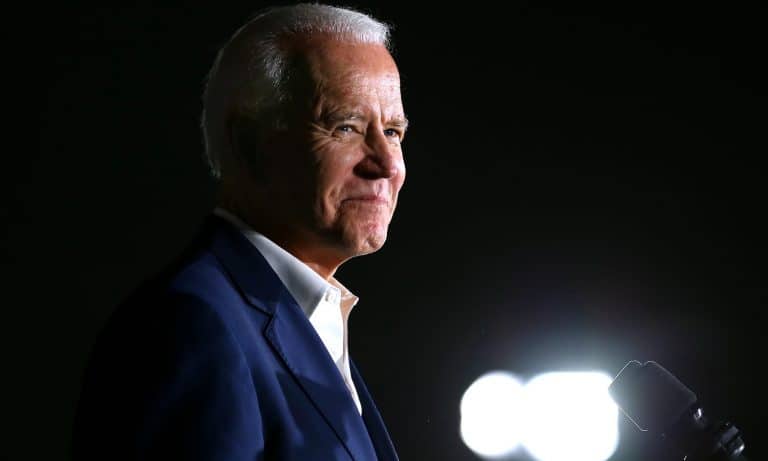
During his presidential campaign, Biden repeatedly said that he wanted to see marijuana decriminalization as well as automatic expungement of prior cannabis convictions.
“It is important to bear in mind that political campaigns are designed by the same people who sell toothpaste and cars,” the late great Noam Chomsky once said.
Right on point, many would agree, considering that more than half of the U.S. adult population concurs that President Joe Biden has made little to no progress on his crucial campaign promise to decriminalize cannabis during his first year in office, according to a new poll conducted by YouGov and the Economist.
Photo by Chip Somodevilla/Getty Images
The survey revealed that the majority of U.S. residents also don’t hold out much hope that the president will make progress on this important reform in 2022, reported Marijuana Moment.
Survey Highlights
As per the survey, 54% believe that Biden made little to no progress on marijuana decriminalization; 23% said they don’t know and another 23% think he made some or a lot of progress on the matter.
When it comes to other issues such as clean energy, infrastructure, COVID-19 response, student loan forgiveness and raising the federal minimum wage, respondents said Biden made somewhat more progress. The only issue that ranked lower than cannabis decriminalization in terms of poor progress was securing bipartisan collaboration in Congress for economic relief.
Some 42% Democrat and 73% Republican respondents said Biden had made little to no progress on cannabis reform. More than half (58%) of respondents overall do not expect Biden to make progress on cannabis decriminalization in 2022, with 26% unsure what to expect and only 16% optimistically believing he’ll make some or a lot of progress on the issue.
It is important to note that 58% of respondents confirmed they support marijuana decriminalization and 25% do not.
‘Betrayal Of The People’
During his 2020 presidential campaign, Biden repeatedly said that he wanted to see marijuana decriminalization as well as automatic expungement of prior cannabis convictions.
After a full year in the Oval Office, Americans have seen neither.
Although the president has been under pressure from all sides, he hasn’t budged despite numerous letters from marijuana advocates, lawmakers, celebrities and those who have been, and still are, negatively affected by the war on drugs including those who are behind bars for marijuana-related convictions.
“The Biden Administration’s failure to live up to campaign statements and, in the case of including a rider preventing D.C. from regulating cannabis in his budget proposal, even backsliding on cannabis is extremely disappointing,” Morgan Fox, political director of NORML told Marijuana Moment. “This inaction on modest cannabis policy reforms over the past year is inexcusable and is a betrayal of the people that put the president in office.
“The president has an opportunity with cannabis to show initiative and leadership on an issue that enjoys broad bipartisan support,” Morgan said. “Continued inaction on this issue will have negative consequences for his party this year and in 2024.”
TV is usually associated with eye problems, not brain problems. But a new study found a link between too much TV and dementia in older adults.
We’ve all been taught that watching too much TV will rot our brains, but that idea might not be too far off. A new study found a connection between dementia and sitting in front of the TV for too long. To make this news worse, the number of hours spent watching TV isn’t even that high before it starts to impact the health of your brain.
The study, conducted by researchers in England, found that TV poses a threat for dementia in older adults. According to researchers, just 24 hours of TV a week can be enough to impact your brain. That’s just 3.4 hours of TV a day.
Photo by Nico De Pasquale Photography/Getty Images
The majority of studies conducted on the impact of TV are usually done on children and young adults, with researchers finding this the biggest source of concern. This recent study took a new approach, trying to understand the effect of TV on people over the age of 50.
Over 3,600 people, with a median age of 67 and with no dementia diagnosis, participated in the study. Results showed that participants who watched over 24.5 hours of TV a week had an 8-10% decrease in their verbal memory. In comparison, participants who watched less than 24.5 hours of TV a week only experienced a 4-5% of decrease.
Photo by FatCamera/Getty Images
“Research suggests that television is a bit of unusual activity for the brain because you’ve got lots of bright and fast-moving images so your brain is very alert, but at the same time it is quite a passive activity to engage in, and this has been shown to lead to a less-focused brain,” said Ph.D. Daisy Fancourt, one of the lead authors of the study.
While the study looked into the effects of TV, it probably suggests that older adults should complement their TV viewing with other activities, staying active and engaging their brain in other ways, eliminating a bit of its negative influence.
When, or if, the Senate approves the changes and Gov. Reeves signs the bill, the program regulating and selling cannabis to registered patients will kick off later this year.
The Mississippi House of Representatives passed an amended version of the Senate’s medical marijuana bill on Wednesday, lowering the amount of cannabis a patient can purchase each month.
What Happened
The measure was approved on a 104–14 vote. The changes addressed concerns raised by Gov. Tate Reeves (R), who repeatedly called for lawmakers to lower the amount, Marijuana Moment reported.
The legislation allows patients to purchase the equivalent of 3.5 grams of marijuana (or 1 gram of cannabis concentrate) daily, with a maximum monthly limit of 3 ounces. The maximum monthly amount of cannabis that can be purchased passed by the Senate was 3.5-ounces.
Rep. Lee Yancey (R), who chairs the House Drug Policy Committee, and who has been working with the bill’s lead sponsor, Sen. Kevin Blackwell (R), expects that the legislature will increase the amount in the future.
“When I got involved in this bill, I said, ‘How can we build a wall around this program, so the people who get it are the people who need it the most, and only the people who need it the most?'” Yancey said. “This is not for everybody out on the street. This is not for a bunch of kids. This is for hurting people with debilitating conditions.”
Additional Amendments
In addition to lowering the amount of marijuana a patient can purchase monthly, Yancey made another two changes to the bill, including removing the Department of Agriculture and Commerce from oversight of the industry and handing the role to the Department of Health, while also enabling cannabis cultivators and processors to locate in commercial-zoned areas in addition to areas zoned for agricultural and industrial use.
The bill is now heading back to the Senate, where changes can either be accepted or further negotiated between the two chambers.
When, or if, the Senate approves the changes and Gov. Reeves signs the bill, the program regulating and selling cannabis to registered patients will kick off later this year.
Mississippi voters approved a broad legalization initiative in November 2020.
In Asia, a region notorious for its harsh drug laws, Thailand is making waves by becoming the first country in all of the region to legalize the use of cannabis medicinally as well as in food and cosmetics. They are going one step at a time while neighboring countries still impose deadly penalties for anyone caught using or selling the drug.
Just this week, the Food and Drug Administration (FDA) of Thailand stated they were going to propose to remove cannabis from the controlled substances list, reports Bloomberg. If the board agrees, the next step would require approval from the Health Minister Anutin Charnivirakul, before the law is active in Thailand. Should this go to plan, it would mean that Thai citizens could enjoy easier access to cannabis without worrying about going to jail or having to pay big fines.
Photo by Florian Wehde via Unsplash
“If we’re able to decriminalize marijuana, we will be able to benefit from all of the plant and not just parts of it,” explains Within Sariddeechaikool, the FDA deputy secretary-general. “The flower buds and seeds could be used economically and in compliance of the law.” Thailand has been doing baby steps to decriminalize cannabis, still keeping some laws which limit growing and harvesting of the crop even if it could have significant economic benefits. If cannabis is still considered a narcotic, people can’t possess it though it opens up business access to the plant.
“While the law change will allow all parts of cannabis to be bought, sold and used, recreational use will likely remain controlled as marijuana extracts with higher tetrahydrocannabinol levels that get people high will still be regulated,” said Chaiwat Sowcharoensuk, an analyst at the Krungsri Research firm. “Producers of soaps, beauty products, and cosmetics from marijuana will likely be the ones to benefit the most from the decriminalization.”
Long Time Coming
Thais have been using cannabis since antiquity for treating several diseases, and it has also been used in traditional medicines. Meanwhile, the fibers of the plant were used to make rope and clothing.
However, in the last few decades, the plant more commonly known as ganja, was controversial in Thailand as well as in other countries around Southeast Asia. During the 1960’s, a time of cultural and moral reform in the United States where psychedelic drugs were widely used after the wars in Southeast Asia. Thailand was home to the U.S. bases for soldiers fighting in Vietnam, and it was also the official destination for soldiers on holiday. Because of the ties between the U.S. and Thailand, they had a “gentleman’s agreement” where the American bases in Thailand were part of the Royal Thai Air Force, and operated by local officers. They had full access to the bases though the US still retained command of their officers serving in the Kingdom.
The time spent by American soldiers in Thailand helped shape it culturally. Not only did they contribute to hospitality and nightlife culture, but this was also a time when they experimented with recreational cannabis use. There are some reports that the US troops started using cannabis upon arrival in the 60’s though there are no official records of this.
By 1979, the Narcotics Act was officially enacted by the Thai government, which forbade cannabis use, and indicated that the cannabis plant as well as all its derivatives were category 5 narcotics or, in other words, prohibited substances. That did not stop Thais from consuming it illegally and from foreign tourists from finding their own sources (it was a popular hippie destination in the region for many decades), though many locals lobbied to the government to legalize its use especially for commercial and personal use.
Photo by athima tongloom/Getty Images
Come February 2003 and a drug war was launched by then Prime Minister, Thaksin Shinawatra. Of course, it was aimed at eliminating drug trafficking which was widely going on at the time. But it did not have positive results, with around 2,800 arbitrary extrajudicial killings that occurred within its first 3 months. Sadly, in 2007, it was discovered during an official investigation that over half of those people who were killed weren’t even connected to drugs.
By 2018, the government finally started taking action to remove cannabis from the list of prohibited drugs. A regulation was passed which allowed hemp to be legally cultivated for non-commercial and industrial purposes, such as in the use for research, development, and household cooking. In 2019, bigger steps through the amendment of the Narcotics Act came; it legalized the use of medical marijuana but with restrictions. The government has since continued to work with the Ministry of Public Health (MOPH) as well as the FDA so that cannabis products could be reclassified and new regulatory laws would help make cannabis a viable cash crop for the economy.
In August 2019, food, drugs, cosmetics, and beverages that contained hemp were removed from the Narcotics Act. It was also during this time that cannabis was already being taken seriously by government officials and political parties. In December 2020, a notification from the MOPH, which was released in the Government Gazette, indicated that the delisting of cannabis from the Narcotics Act would remove almost all the parts of the cannabis as well as hemp plant.
Keep in mind that foreign participants are still not allowed to participate in any cannabis business until the 5-year ban on foreign participation from Feb 2019 has culminated. Until then, only members of the Thai government and their official partners can benefit from these laws. That can’t stop you from enjoying some CBD drinks at a Thai café, though.
With the recent trend of global cannabis legalization, the study’s authors emphasized the importance of comprehending the cognitive risks associated with marijuana use.
What are, if any, the negative effects of regular marijuana consumption? According to a comprehensive review published Wednesday in the journal Addiction, cannabis use can lead to small or to moderate acute cognitive impairments that can persist after the period of intoxication, reported MedicalXpress.
The study was conducted by the research center of the Institute Universitiaire En Santé Mentale De Montréal in Canada. It was a meta-review, meaning a review of reviews — merging the results of 10 meta-analyses with a total of 43,000 participants.
Photo by RODNAE Productions from Pexels
While meta-analysis is a powerful tool, a National Center for Biotechnology Information (NCBI) study cautioned that meta-analyses can be controversial tools that may lead to misleading conclusions in that “decisions made when designing and performing a meta-analysis require personal judgment and expertise, thus creating personal biases or expectations that may influence the result.”
The study concludes that marijuana intoxication produces cognitive deficits in the following areas:
Decision making;
Memory and concentration;
Suppression of inappropriate responses;
Learning through reading and listening;
The time required to finish a mental task.
According to the review, these adverse effects of cannabis consumption begin while it is being consumed and persist afterward.
“Our study enabled us to highlight several areas of cognition impaired by cannabis use, including problems concentrating and difficulties remembering and learning, which may have considerable impact on users’ daily lives,” said the study’s co-author Dr. Alexandre Dumais, associate clinical professor of psychiatry at Université de Montréal. “Cannabis use in youth may consequently lead to reduced educational attainment, and, in adults, to poor work performance and dangerous driving. These consequences may be worse in regular and heavy users.”
Importance Of The Study
The study further highlighted how cannabis is the third most consumed psychoactive substance in the world, after alcohol and nicotine, with adolescents and young adults being the most common consumers.
Because of the recent global cannabis legalization trend, which shifts the perceptions of the safety of the plant, the study’s authors emphasized the importance of comprehending the cognitive risks associated with marijuana use, especially for adolescents whose brains are undergoing significant developmental changes.
Reputable vegan CBD product manufacturers tend to use better quality ingredients overall compared to the artificial ingredients found in most cheap CBD items.
The rise of veganism is widely spreading all around the world. Surveys suggest in 2020 alone, there was an increase of 40%, though it’s hard to pinpoint the exact number.
It’s not just a fad; veganism is more than a plant-based diet as more and more people see the value in completely eliminating all forms of animal products from their lifestyle. Whether it’s for environmental reasons, health, or for the animals, there’s no doubt that there are certain benefits to going vegan.
Photo by 24K-Production/Getty Images
What Is CBD?
Cannabidiol (CBD), is one of the two primary compounds in the cannabis plant. The other being tetrahydrocannabinol (THC), which is famous for its psychoactive effects and therapeutic benefits. On the other hand, CBD doesn’t get you high but it has it’s own health benefits especially when it comes to anxiety, stress reduction, seizures, sleep management, pains, and aches. CBD can be taken in a wide variety of forms: it can be vaped, consumed as an edible or in gummies, or in capsule form and so much more. But some vegans probably wonder if CBD is vegan.
Vegan CBD Products
CBD in itself is vegan, because it’s derived from the hemp plant, which is rich in amino acids. Vegans can enjoy a range of health benefits from consuming vegan CBD products because they can help increase energy, improve brain function, contribute to overall emotional and mental wellbeing, aid in metabolism, and much more. In addition, it’s also rich in antioxidant contents.
However, not all CBD products on the market are vegan. The whole point of going plant-based means that one eschews all forms of animal byproducts including cosmetics, supplements, and actual food. And when it comes to manufacturing CBD products, the same rules apply. For example, there are many CBD edibles out there are that are not made with vegan ingredients, such as milk or honey as well as flavorings, so it pays to look out specifically for vegan CBD products that are better for you and the environment, which are also more aligned with your own lifestyle choices.
It’s also good to note that reputable vegan CBD product manufacturers (some of which we will cover below) tend to use better quality ingredients overall compared to the artificial ingredients found in most cheap CBD items.
Non-Vegan CBD Ingredients to Look Out For
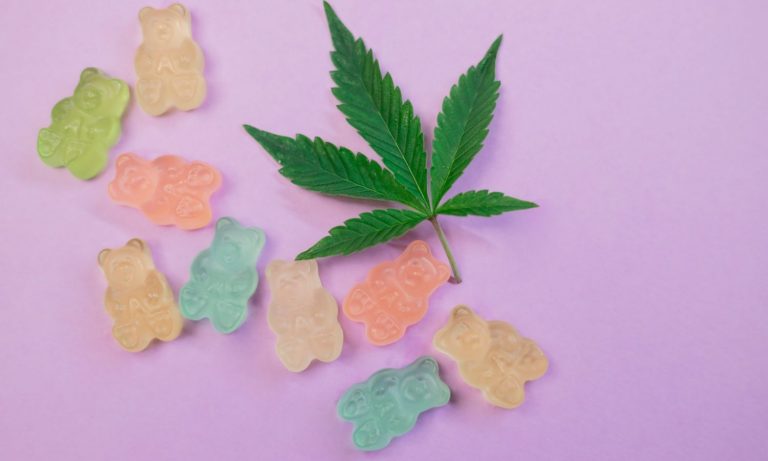
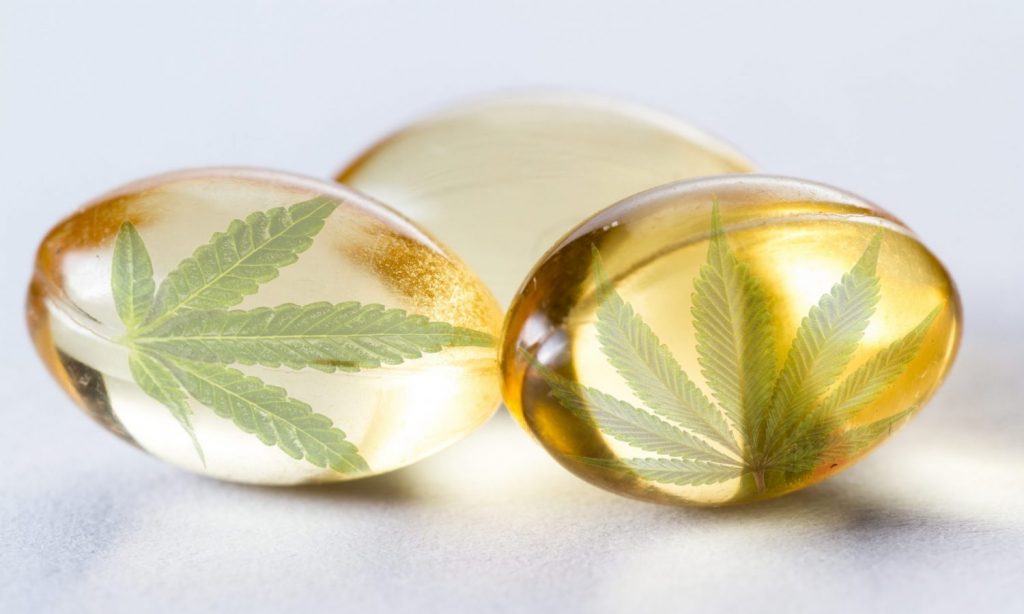
Gelatin is the primary non-vegan ingredient used in many forms of CBD. This commonly used ingredient is intended to add texture and body to food and cosmetics, and it comes from collagen, which is then taken from animal body parts. Gelatin is used in many CBD products, such as the coating for capsules, CBD gummies, and topicals.
Beeswax is another common ingredient used in many CBD products, which isn’t vegan. This natural wax is produced by honeybees, and is often used in numerous topicals and cosmetics. The purpose of beeswax is for homogenizing liquid and oil so that the end-product has a creamy consistency. It’s also touted for sealing moisture into the skin because it effectively creates a barrier that locks out irritants and pollutants, which is why many topicals use it.
On top of that, CBD is not a regulated ingredient in the cosmetics industry. As a result, some of them may have been tested on animals despite the fact that it uses vegan-friendly ingredients. You can avoid buying and using CBD cosmetics that are tested on animals by looking for cruelty-free symbols, or doing your own research on the manufacturer before purchase to ensure the quality of a product and brand.
Integrating CBD Into a Vegan Lifestyle
Since there are so many ways you can consume CBD, there are adequate options for vegans to integrate it into their lifestyle. Consuming CBD orally such as through vegan capsules and edibles is a great way to ensure that vitamins and extra nutrients are added into your diet.
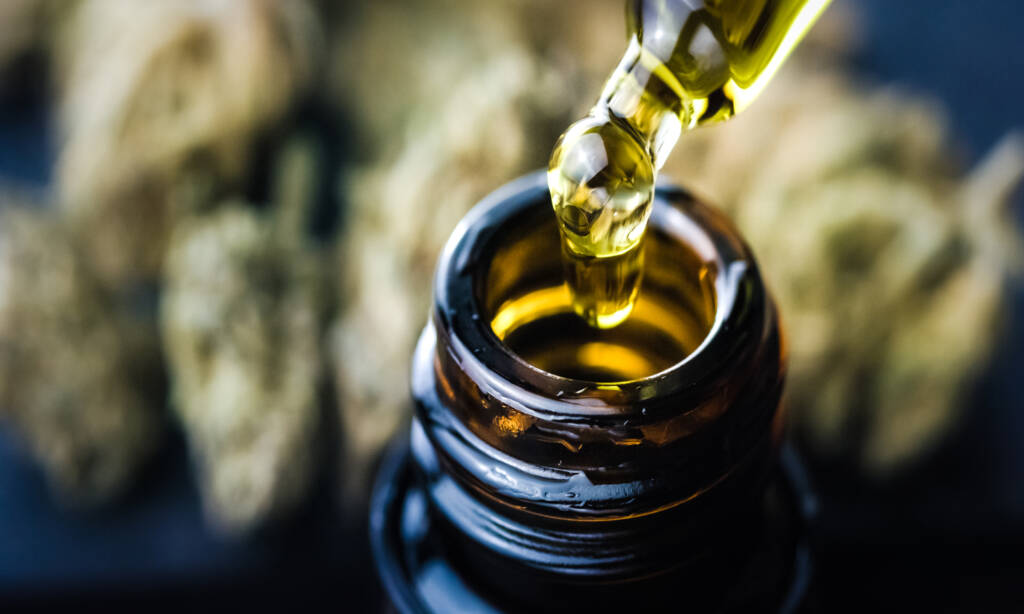
CBD tinctures are a popular way of consuming them. These are small bottles equipped with droppers, or a spray applicator in some cases. There are many flavors and varying potencies that you can experiment with. CBD capsules are another convenient way to ensure you get a specific and accurate dose each time, but be sure to look out for gelatin and avoid that. Instead, opt for vegan capsules that are made with inulin.
You can also add CBD oil to your vegan food and drinks, pretty much just about anything you want to drink and eat. CBD can be added into complex dishes even brownies and other baked goods. Just keep in mind that CBD is very sensitive to high temperatures, so avoid using it in recipes that require it such as fried food.
Popular and Quality Vegan CBD Brands to Try
For the uninitiated, here are some renowned vegan CBD brands that you can start trying today:
Onda Wellness: They carry almost everything from capsules to body balms and much more. They are known for using a holistic approach, and all their products are 100% vegan.
Bloom Farms: This brand has taken the CBD world by storm, even garnering mentions in Allure, Rolling Stone, and Vogue magazines. They have a wide assortment of whole-plant products to choose from.
Lazarus Naturals: With a wide variety of vegan CBD products to choose from, Lazarus Naturals is a terrific place to start shopping. Some of their renowned products include isolate and full-spectrum CBD.
In order for the cannabis industry to consistently achieve and maintain a high sales volume, it needs to be more nimble and prepared for changes than the tobacco industry was.
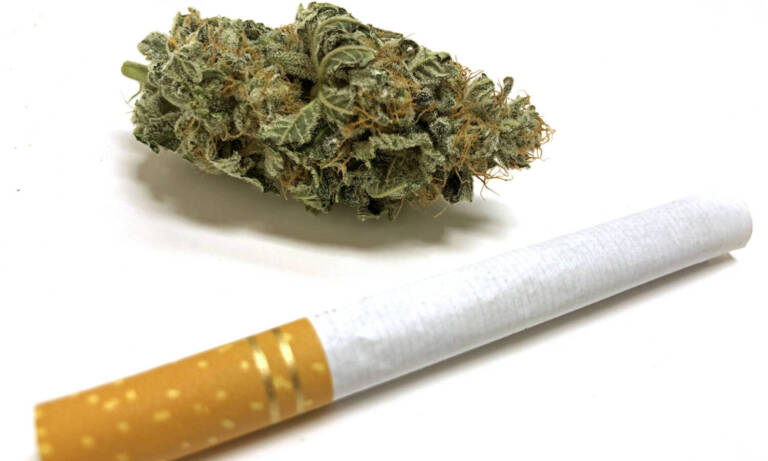
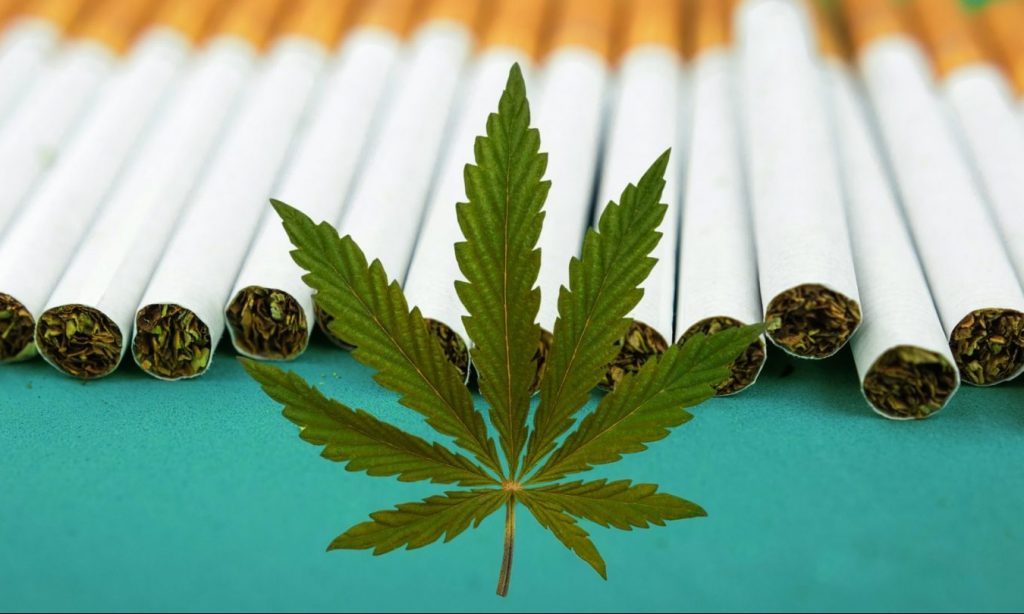
Given the rapid rate the recreational marijuana space has grown, it’s only natural to wonder what, if anything, could slow that growth down. In order to find out what some potential roadblocks could be for recreational marijuana, look no further another big “vice”. Here are some lessons the cannabis industry can learn from big tobacco.
Even though it isn’t legalized nationally yet, it’s easy to note numerous similarities between recreational cannabis companies and businesses in the tobacco industry. As the legal cannabis industry continues to grow, it’s imperative that they don’t repeat the same mistakes as the tobacco did in the early 20th century.
Here are some insights on what the biggest lessons the cannabis industry can learn from Big Tobacco.
Photo by Mathew MacQuarrie via Unsplash
Provide Transparency About Product Risks
One of the most costly mistakes the tobacco industry made in the early days was not being completely honest about the risks associated with tobacco use. In fact, back in the 1930s, it wasn’t uncommon to find advertisements with doctors endorsements of cigarette use. Unfortunately dishonest messaging continued to emerge from big tobacco throughout the decades, as tobacco executives claimed as recently as 1994 that cigarettes aren’t addictive. In order for the cannabis industry to maintain trust with its consumers and remain in the good graces of regulators, being honest and upfront about the risks associated with the use of specific cannabis products is paramount.
Be Mindful Of Marketing Best Practices
Keeping cannabis products out of the hands of children is a key responsibility recreational cannabis companies share. Tobacco companies also have this responsibility, which is why recreational cannabis companies can learn from the marketing tactics used within big tobacco.
John Hudak, Deputy Director of the Center for Effective Public Management for The Brookings Institution, believes that part of the onus of ensuring responsible marketing practices are used falls at the feet of regulators.
“Left unchecked, a product like cannabis can induce business owners to behave in predatory ways. Those predatory behaviors disproportionately impacted younger people and people of color and continue to do so today,” he says.
Since many business owners instinctively gear their marketing efforts to suit their bottom line, entrepreneurs within the recreational cannabis industry will need to be much more mindful of how they go about advertising methods.
Prepare For Shifting Sales Regulations
Another area where the recreational cannabis industry can learn from Big Tobacco is in distribution and sales. Take the advent of cigarette vending machines for example. Ever since they became banned in most locations in 2010, sales figures for cigarettes had been down. In fact, cigarette sales had actually experienced 20 straight years of declining sales prior to 2020. In order for recreational cannabis companies to avoid this type of lull in sales, the industry needs to be more adaptable when it comes to sales regulations.
Despite cannabis vending machinesincreasing in popularity, who’s to say if they won’t eventually fall victim to stricter regulations? In order for the cannabis industry to achieve and maintain a high sales volume on a regular basis, it needs to be more nimble and prepared for changes than the tobacco industry originally was.