There’s a popular belief that holding in a cannabis hit will get you higher. Here’s what actually happens.
There’s a lot of misconceptions regarding cannabis use. One of the most popular beliefs among amateur and seasoned cannabis users is that the longer a hit is held in the lungs, the stronger the effect. This is not true, although holding in your breath for long periods of time might make you feel as if you were higher.
Why are these beliefs so popular? Here’s an explanation of how your lungs work once cannabis is introduced.
How Your Lungs Work
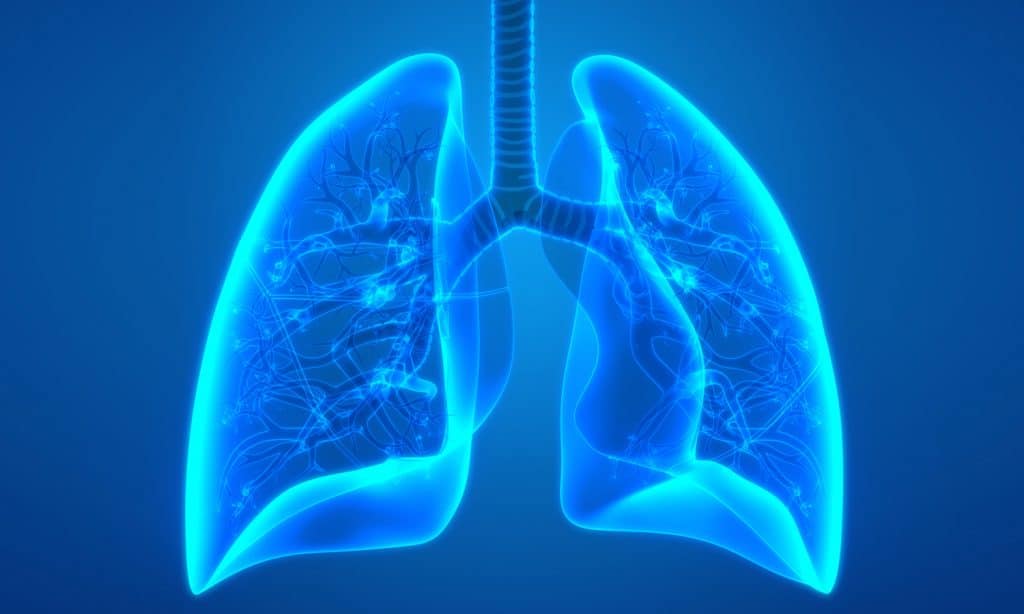
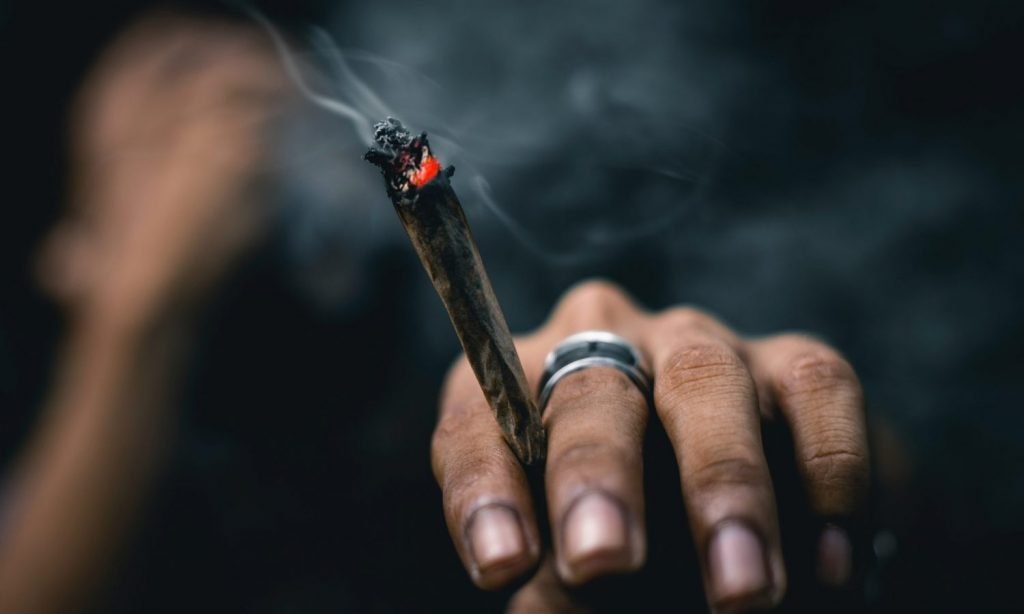
Whether you’re inhaling smoke from a joint, a pipe, or a bong, your lungs react in the same way as when you’re breathing. Lungs expand and pick up oxygen. In the case of breathing in cannabis, they pick up on THC and deliver it to your alveoli (the little sacs of air in your lungs). The THC is then passed on to your bloodstream, where it will be delivered to different areas of the body, getting you high in the process. It’s a relatively quick succession of events, resulting in people feeling high within minutes.
When it comes to how long you hold in the THC or how much you cough, the effect remains the same. It takes approximately 3 seconds for the THC to make its way through your body.
Why You Feel Lightheaded
Photo by Toan Nguyen via Unsplash
While you’re not making the cannabis affect you more by holding in the smoke, you are depriving your brain of oxygen and accelerating your heart rate. This process will make you feel lightheaded, which might contribute to feeling higher, at least for a couple of seconds as your body takes a minute to rebalance itself. Still, holding in your breath is not an effective way of getting more high.
If you’re interested in finding a more efficient way to get high, there are several things you could try. A new method of cannabis, whether that’s an edible or smoking from a vape or a bong, might kickstart your body’s relationship with the drug, getting you higher in the meantime. You can also try adding some kief to your joints or bowl, adding more trichomes in the mix, and producing stronger experiences.
Pharmaceutical giant Pfizer Inc. is entering the cannabis space via the $6.7 billion acquisition of Arena Pharmaceuticals, Inc. The two publicly-traded companies confirmed Monday that they have signed a definitive agreement under which Pfizer will acquire all outstanding shares of Arena for $100 per share in an all-cash transaction.
Pfizer expects to finance the transaction with existing cash on hand upon obtaining all necessary approvals.
Photo by Christina Victoria Craft via Unsplash
Arena Pharmaceuticals, based in San Diego, Cal., is a biotech company with one segment of its drug pipeline dedicated to cannabinoid-type therapeutics. The core of its cannabis biotech operations is the research and development of its investigational drug candidate called Olorinab. This is an oral full agonist of the cannabinoid receptor 2 that is being researched for the treatment of various symptoms, mainly concentrated on visceral pain connected with gastrointestinal illnesses.
Other parts of Arena’s drug pipeline are concentrated on non-cannabinoid drugs with the main focus on developing innovative potential therapies for the treatment of several immuno-inflammatory diseases. Arena’s portfolio includes diverse and promising development-stage therapeutic candidates in gastroenterology, dermatology and cardiology.
“The proposed acquisition of Arena complements our capabilities and expertise in Inflammation and Immunology, a Pfizer innovation engine developing potential therapies for patients with debilitating immuno-inflammatory diseases with a need for more effective treatment options,” stated Mike Gladstone, global president & general manager, Pfizer Inflammation and Immunology. “Utilizing Pfizer’s leading research and global development capabilities, we plan to accelerate the clinical development of etrasimod for patients with immuno-inflammatory diseases.” Etrasimod is Arena’s drug candidate for the treatment of immune-mediated and inflammatory diseases.
Amit D. Munshi, president and CEO of Arena said they are thrilled to be acquired by Pfizer, which recognized “Arena’s potentially best in class S1P molecule and our contribution to addressing unmet needs in immune-mediated inflammatory diseases. Pfizer’s capabilities will accelerate our mission to deliver our important medicines to patients. We believe this transaction represents the best next step for both patients and shareholders.”
Big Pharma Entering Cannabis Space
This is not the first time one of the largest pharmaceuticals companies in the world has obtained an interest in a cannabis-related company. In February 2021, Jazz Pharmaceuticals bought cannabinoid drug company GW Pharmaceuticals, known for developing Epidiolex, the first FDA-authorized CBD medicine for treating children with severe forms of epilepsy. The medicine was first approved for the treatment of seizures connected to Lennox-Gastaut syndrome and Dravet syndrome, and last July for treating seizures related to tuberous sclerosis complex. Epidiolex sales generated more than $500 million last year.
In 2018, Canadian cannabis giant Tilray entered a supply and distribution agreement with medical marijuana with pharmaceutical giant Novartis AG.
Another big pharma company that dipped its toes into cannabis was Johnson & Johnson when, in 2017, it accepted cannabis company Avicanna into its Innovation JLABS@Toronto — a 40,000-square-foot life science innovation center located in MaRS Discovery District. The labs provide a flexible environment for startup companies pursuing new technologies and research platforms to advance medical care, without Johnson & Johnson taking an equity stake in these companies.
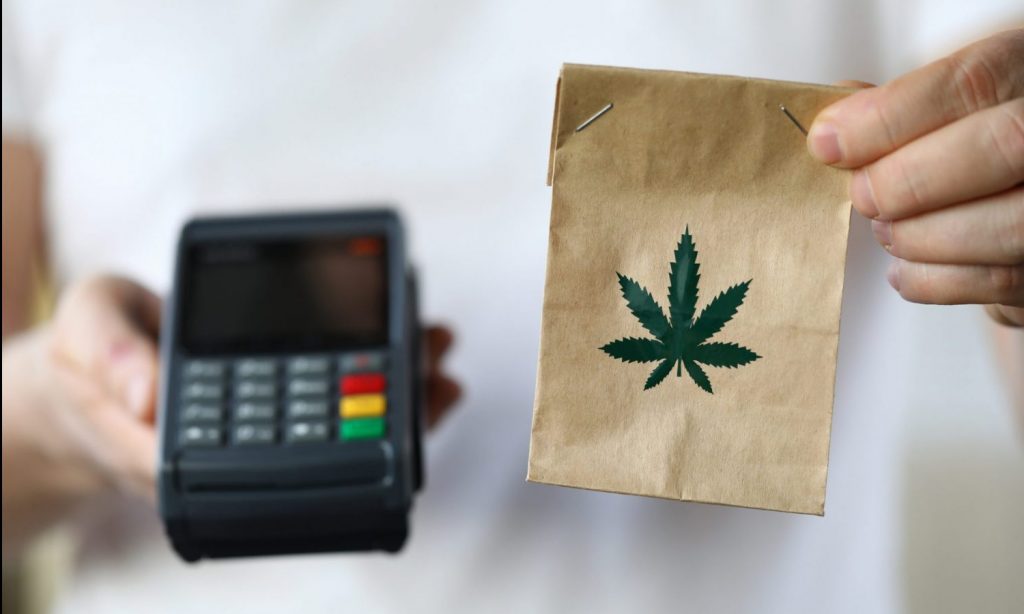
The company is “aware of a scheme” in which retailers are utilizing cashless ATMs to avoid limitations on the types of sales for which payment cards are allowed to be used.
The burgeoning recreational marijuana industry — illegal at the federal level yet legal for adults in some 18 U.S. states and DC — has faced multiple challenges throughout the years, mostly because of the Schedule 1 status of the cannabis plant.
The biggest problem? Banking, of course.
Photo by Ivan-balvan/Getty Images
As in life, retailers have had to find a way to work around the system. Some cannabis merchants have begun using cashless ATMs to bypass limitations on the types of sales payment cards they can legally accept.
One of the largest payment processors in the world, Visa Inc., recently issued a compliance memo to customers warning them that incorrectly coding point-of-sale transactions via cashless ATMs could be penalized or punished by unspecified enforcement procedure, reported Marijuana Moment.
Visa’s warning comes on the heels of the marijuana banking reform bill that was recently chopped from Congress’ defense bill. Thelatest version of the Congressional defense bill left out several key provisions that were in the House-approved National Defense Authorization Act (NDAA), including the much-anticipated marijuana banking reform known as the Secure and Fair Enforcement (SAFE) Banking Act, which would protect banking and financial institutions that work with state-legal cannabis companies.
Aware Of A Scheme
Visa’s memo from Dec. 2 obtained by Marijuana Moment revealed that the company is “aware of a scheme” in which retailers are utilizing cashless ATMs to avoid limitations on the types of sales for which payment cards are allowed to be used.
“Cashless ATMs are POS [point of sale] devices driven by payment applications that mimic standalone ATMs. However, no cash disbursements are made to cardholders,” the memo clarified. “Instead, the devices are used for purchase transactions, which are miscoded as ATM cash disbursements. Purchase amounts are often rounded up to create the appearance of a cash disbursement.”
Although the Visa directive does not specifically mention cannabis, it highlights that cashless ATMs (also called reverse ATMs) “are primarily marketed to merchant types that are unable to obtain payment services—whether due to the Visa Rules, the rules of other networks, or legal or regulatory prohibitions,” a category that covers marijuana businesses.
Nathaniel Gurien, CEO of Fincann, which provides financial services to cannabis businesses, estimates that thousands of marijuana retailers in the U.S. rely on this scheme.
A Desperate Move With Catastrophic Potential
“What keeps me up at night is that when, not if one or more eager assistant U.S. attorneys with their eye on advancement sinks their teeth into this, it has the catastrophic potential to derail our industry’s momentum and inflict great damage,” Gurien told the outlet.
While it remains clear that marijuana retailers are in an untenable situation – having no access to banking services – they should be aware that relying on the use of cashless ATMs can endanger their operations.
Photo by Heath Korvola/Getty Images
Corporate and banking compliance lawyer Kasim Carbide noted that violating Visa’s regulations “may result in a disciplinary action against the Merchant, as well as a potential fine of $200,000 or $2,500 per day (which can be retroactively applied [sic] to and from the first day of noncompliance), and termination of the Merchant’s account.”
What’s more, according to the Chicago Bar Association, miscoding cannabis sales is not only a violation of payment processors’ (in this case Visa’s) policies but a“violation of federal law as well.”
Confused Yet?
To exacerbate an already complicated situation, Jessica Billingsley, CEO of cannabis technology company Akerna, pointed out that there are probably many businesses that are unaware that cashless ATM practice is illegal.
“With the number of unique complexities and challenges the cannabis industry faces, many operators don’t understand that they have been sold misrepresented products that may not be legal,” Billingsley said in a statement. “The work of a few bad actors cannot undermine the important legal work the majority of ancillary providers have been doing.”
Many cannabis advocates reacted to Visa’s statement, arguing that such a large company should support marijuana retailers instead of placing obstacles in their paths.
“It is unfortunate that Visa is unwilling to work with the cannabis industry, which is legal in dozens of states and represents billions of dollars in economic activity, at a time when this country needs all the financial options it can use,” said Morgan Fox, media relations director for the National Cannabis Industry Association. “But it is even worse that they are trying to discourage alternative solutions that are primarily utilized by small businesses to protect themselves and their customers from theft and violent crime.”
The best way to determine whether or not marijuana can play a role in helping patients overcoming opioid addiction is by continuing to closely study the relationship between the two.
The devastation the opioid crisis has wrought upon communities throughout the country, especially throughout the pandemic, is immense. Deaths from opioid overdoses amassed the threshold of 93,000 in 2020, and relief is nowhere in sight.
That’s why now, more than ever, governing bodies and the medical community benefit from pulling out all the stops to get a handle on the situation.
Part of leaving no stone unturned in the fight against opioid addiction is studying the effects marijuana can have on people currently dealing with an addiction to opioids. Fortunately, recent moves made from the Biden Administration have made researching marijuana easier than it ever has since current research on the impact of marijuana on opioid addiction recovery is limited.
Photo by Darwin Brandis/Getty Images
Here are a few things research has already concluded about marijuana and opioid addiction.
Marijuana Helps Ease The Symptoms of Withdrawal
The journey of opioid recovery is intimidating to lots of people currently in the throes of opioid addiction because of how daunting withdrawal can be. The long process of overcoming an addiction to opioids can consist of a variety of undesirable side effects, including anxiety, nausea, chronic pain, insomnia and chronic pain. Fortunately for people undergoing the process of opioid withdrawal, marijuana has shown evidence of being an adequate resource in helping patients to overcome withdrawal symptoms.
Even though research on the relationship between marijuana and opioid withdrawal syndrome is still in the early phases, the results right now are encouraging.
Marijuana Could Reduce or Eliminate Cravings for Opioids
Having a thirst or craving of any kind can become a serious burden. That’s especially the case for addictive substances like alcohol, nicotine and caffeine. When that constant hankering is for opioids instead of something like coffee, it’s crucial to have a resource that helps eliminate that craving.
That’s exactly where marijuana can become a resource for people currently in the process of opioid withdrawal. According to a recent study, researchers found that subjects who used cannabis daily were less likely than those who used cannabis only on occasion. Additionally, a New Mexico doctorstudied the effects that marijuana had on her patients and came to the conclusion that it actually helped 25% of her patients overcome opioids.
The promise for marijuana as a resource to help people overcoming opioid addiction is clear, but more research is the key to understanding the full potential.
Photo by FatCamera via Getty Images
Marijuana Has the Potential to Offset the Negative Impact Opioids Have
Aside from how addictive opioids are is the fact that they can be overwhelmingly detrimental to health over a period of extended use. Some of the side effects that come with extended opioid use include problems fulfilling work or school obligations, giving up hobbies, and avoiding loved ones.
Given the effects that marijuana has on patients who are in the process of overcoming their opioid addiction, such as reducing opioid cravings, it’s within the realm of possibility that it could be instrumental in helping patients regain their lives before opioids entered the picture.
The best way to determine whether or not marijuana can play a role in helping patients overcoming opioid addiction is by continuing to closely study the relationship between the two.
The cannabinoids in marijuana are immune-modulators, which means that they can manipulate our immune systems. So, what does that mean?
Cannabis is a multipurpose plant. Depending on our moods, method, strain, and more, the plant can have different effects. The compounds in cannabis, called cannabinoids, are known as immune-modulators. This refers to them having some kind of influence on our immune system, thus producing a wide variety of effects.
So, for people who are not scientists, what does this mean? There are several possible explanations and they’re all contradictory and complex, so we’ll try our best to break them down in simple terms.
Photo by Shannon Fagan/Getty Images
Research claims that cannabis suppresses our immune system, which is why it has such a powerful impact as an anti-inflammatory agent. This can be a good or a bad thing depending on your immune system and what you’re currently going through. When it comes to viruses and infections, inflammation plays an important role in our bodies, trapping them and preventing them from spreading around. Cannabis could stunt your immune response and produce more harm than good.
Other studies suggest that the cannabis plant does something else entirely, making our immune systems stronger and helping it battle infections. This seems to be the case with patients that suffer from cancer or AIDS, where cannabis helps them cope with their symptoms and strengthens their bodies’ response to the disease.
Research conducted on mice with cancer found that cannabis causes apoptosis, which means that it kills cancerogenous cells. Another study conducted on humans with AIDS/HIV discovered that the patients that consumed cannabis ended up with stronger immune systems and had higher CD4 counts (these are T cells that kill the HIV virus).
Photo by Louis Hansel via Unsplash
When it comes to CBD, much of the research out there continues to reflect these contradictory ideas. Essential Health explains that for a healthy person, CBD can compromise their immune system.
For people with an autoimmune disease, where someone’s immune system doesn’t work properly and attacks the healthy cells in their bodies instead of the infections, CBD can provide some benefits, reducing the strength of these symptoms. Autoimmune diseases include HIV, diabetes, fibromyalgia, and more, all of which are difficult to treat.
There’s a lot of information out there, but there’s still not enough research to definitively explain cannabis’ role in our immune systems. Like most things cannabis related, the way in which it interacts with our bodies is highly individualized and needs much more research than the one that’s available now.
Before you consider taking cannabis as a way of managing disease, it’s important to talk to a doctor to see if your situation warrants this and if the plant will be able to provide you with what you need.
The growing acknowledgment that the War on Drugs targets Black and brown communities provides an opportunity to employ race-conscious measures that give reparations to BIL communities.
In just a few years cannabis transformed from an illicit product to the 5th most valuable crop in the United States and a multibillion-dollar industry. This economic success, however, is not benefitting the Black and brown communities targeted by the War on Drugs. The capital-intensive cannabis market is dominated by white-owned businesses, a direct consequence of the wealth disparities that Black, Indigenous, and Latinx (BIL) communities experience because of cannabis criminalization.
A growing recondition of this hypocrisy is developing, leading state legislatures and municipal governments to develop cannabis equity programs. These programs seek to remediate the harms of criminalization through expungement of cannabis offenses, direct investment into communities disproportionately targeted by law enforcement, and creating cannabis equity licenses to assist entrepreneurs from communities most harmed by prohibition.
Unfortunately, these efforts often fall short of achieving their goals, largely because these programs do not specifically list BIL communities as those most impacted by the War on Drugs. This blog post will explain that despite the difficulties of race-specific language passing strict scrutiny, affirmative action in cannabis equity is possible and can provide reparations for targeted communities.
Photo by Rattankun Thongbun/Getty Images
Fourteenth Amendment and Strict Scrutiny
Despite the overwhelming evidence that the War on Drugs was created and is enforced to oppress Black and brown communities, equity programs almost always shy away from using race-conscious measures or minority-business designations. Ironically, this timid-ness is traced to the Fourteenth Amendment, a post-civil war amendment passed to stop states from denying the rights granted to recently freed slaves.
The Equal Protection clause of the Fourteenth Amendment mandates that the government treat similarly situated persons equally under the law. In interpreting the Fourteenth Amendment, the Supreme Court of the United States takes a “color-blind” approach to race, taking the position that all race-conscious classifications are inherently suspect even when the objective is helping minority populations experiencing racial discrimination. Therefore, all race-based government classifications are reviewed under “strict scrutiny,” and are constitutional only when two requirements are met:
The racial classification must address a compelling governmental interest; and
There must be a showing that use of the race-based classification is narrowly tailored to advance the compelling governmental interest.
Initial Shortfalls and SCOTUS Affirmative-Action Caselaw
Ohio was the first state to employ affirmative action in cannabis equity when the state included a 15% license set-aside in its medical marijuana program for businesses meeting the definition of Ohio’s race-conscious “economically disadvantaged groups” designation. Ohio’s medical marijuana program achieved a 16% minority-owned business participation rate with this rule in place, but the program was eventually challenged under the Equal Protection Clause and ruled unconstitutional. This decision focuses on the seminal affirmative-action case of Richmond v. J.A. Croson Co, where the Supreme Court of the United States (SCOTUS) ruled that the government can give race-specific preferences in licensing or contracting only when it’s shown that a particular industry historically discriminated against minority business owners. The issue then, according to the judge, was that Ohio’s medical marijuana program was just beginning, so there was no history of discrimination because the industry was new.
In 2017, legislators in Maryland intended to employ similar affirmative action measures but retreated after their state Attorney General expressed concerns the program was unconstitutional. In response, Maryland commissioned a disparity study to determine if there was statistical evidence sufficient to satisfy the standards of strict scrutiny. To address the problem that cannabis was a new state industry, the Maryland disparity study analyzed industries similar to cannabis to determine whether documented discrimination in those analogous industries would replicate in the medical cannabis market. The study found “a strong basis in evidence, consisting of both quantitative and qualitative findings, that supports the use of race- and gender-based measures to remediate discrimination affecting minority- and women-owned businesses in the types of industries relevant to the medical cannabis business.”
More recently, activists in Oregon in 2020 introduced an omnibus cannabis equity bill, HB 3112, that included race-conscious measures in cannabis licensing. HB 3112 sought to create new social consumption and cross-jurisdictional delivery licenses exclusively for any business 51% owned by individual(s) with a previous cannabis conviction (regardless of race); or who were Black, Indigenous, or Latinx. The constitutionality of this program was never tested as the bill died in the Oregon Ways and Means subcommittee.
Compelling Governmental Interest Argument #1: Remedying Past Discrimination
For a legislative body to adopt race-conscious policies that remediate the effects of past discrimination there must be a showing (1) that there exists specific, identified discrimination, and (2) there must be a strong basis in evidence to conclude that remedial action is necessary. Showing “specific, identifiable discrimination” is often difficult to prove, as legislators enacting discriminatory laws simply hide their intention from legislative record and use bill language that is race-neutral on its face.
Photo by Louis Hansel @shotsoflouis via Unsplash
Whereas many affirmative action programs are deemed unconstitutional for failing to show direct discriminatory intent, the history of the War on Drugs is marred by racism and was enforced with racist motivations. Harry J. Anslinger, the father of the War on Drugs, was a notorious racist who didn’t keep his overtly racist comments and propaganda behind closed doors. Anslinger testified to the following in front of the U.S. House Committee on Ways and Means: “[a] Negro raped a girl eight years of age. Two Negroes took a girl fourteen years of age and kept her for two days in a hut under the influence of marihuana. Upon recovery she was found to be suffering from syphilis… Colored students at the University of Minnesota partying with female students smoking and getting sympathy with their stories of racial persecution. Result—pregnancy.”
The Nixon campaign in 1968, and the Nixon White House after that, had two enemies: the antiwar left and black people. You understand what I’m saying? We knew we couldn’t make it illegal to be either against the war or Black people, but by getting the public to associate the hippies with marijuana and Blacks with heroin, and then criminalizing both heavily, we could disrupt those communities. We could arrest their leaders, raid their homes, break up their meetings, and vilify them night after night on the evening news. Did we know we were lying about the drugs? Of course we did.
Turning to the second requirement of showing a strong basis in evidence that race-conscious remedies are necessary, numerous studies demonstrate the disparate enforcement of the Wars on Drugs on BIL communities and the resulting economic impact of over-policing and mass incarceration. This systemic divestment of wealth from targeted communities explains why BIL entrepreneurs are not able to equitably access the capital-intensive cannabis industry.
While the cannabis market may be too young to show direct and systemic discrimination within the emerging industry specifically, the racist motivation behind the government’s War on Drugs directly explains why BIL communities cannot equitably access the market. This in addition to disparity studies, like the one conducted in Maryland, provide a strong basis for remedial measures to ensure the benefits of legalization flow to communities who bore the brunt of the War on Drugs.
The second argument relates to the economic benefits of increased diversity. This is extremely applicable to cannabis, as an industry dominated by white owned business will fail to effectively market itself in a nation on track to become Minority-Majority by 2045.
SCOTUS in Grutter v. Bollinger explained that in the context of affirmative action in secondary education the benefits of diversity, “are not theoretical but real, as major American businesses have made clear that the skills needed in today’s increasingly global marketplace can only be developed through exposure to widely diverse people, cultures, ideas, and viewpoints.” Contemporary studies consistently show that more diverse businesses outperform their less diverse counterparts. Thus, states who want to become leaders in the cannabis industry possess a compelling interest in fostering a diverse industry that can reach national and international markets.
Cannabis equity programs that provide direct investment into BIL communities would also address the racial wealth gap and the dead-weight economic loss that results. A 2019 report found that the effect of the racial wealth gap will cost the U.S. economy between $1 trillion to $1.5 trillion between 2019 and 2028. Similarly, a 2020 study completed by Citi GPS found that if the racial wealth gap were closed today, $5 trillion would be added to the U.S. over just the next half decade. Direct investment into targeted communities can remedy the racial wealth gap and expand the entire economy.
Photo by Priscilla Du Preez via Unsplash
Narrowly Tailoring
Narrowly Tailoring requires that race is used only to the extent necessary to address the compelling governmental interest at stake. The most important factor of narrow tailoring is demonstrating that race-neutral alternatives are ineffective. In the context of cannabis equity licensing, programs usually employ the following race-neutral qualification factors:
Prior Cannabis Conviction: An individual who has been arrested for or convicted of any crime relating to the sale, possession, use, cultivation, manufacture, or transport of cannabis.
Low Income: An individual who currently lives in a household with household income that is less than 80% of the current fiscal year median family income for the county of residence.
Member of an Impacted Family: An individual who, in the previous tax year, had a parent, legal guardian, child, spouse or dependent of an individual who, prior to legalization, was arrested for or convicted of any crime relating to the sale, possession, use, cultivation, manufacture, or transport of cannabis prior to legalization.
Resident of a Disproportionately Impacted Area: An individual who lived for a minimum of [2-10] consecutive or non-consecutive year(s) in an area that experienced a disproportionately high number of cannabis arrests relative to population.
While these race-neutral factors were crafted to benefit targeted communities, they prove ineffective in practice. Prior Cannabis Conviction and Member of an Impacted Family often over includes individuals who are not from communities targeted by law enforcement and are more likely to possess the financial means to move on from the consequences of contact with the criminal justice system.
Low-income misses the mark as income does not accurately track the wealth stripping caused by the War on Drugs. According to Prosperity Now, an average white household in the middle-income bracket owns nearly eight times as much wealth ($86,100) as middle-income Black households ($11,000) and ten times as much wealth as middle-income Latinos ($8,600). Disparities in start-up capital is the main reason BIL entrepreneurs cannot enter the cannabis market, so giving qualification based on income alone does not resolve the racial wealth disparities caused by the War on Drugs.
These observations in addition to the initial poor feedback of existing equity programs shows that a new strategy is needed to repair targeted communities. Equal Protection caselaw would require some race-neutral factors to stand alongside race-conscious factors in awarding equity licenses, but it is becoming increasingly clear that race-neutral qualifications alone are not reaching BIL communities.
Conclusion
The growing acknowledgment that the War on Drugs targets Black and brown communities provides an opportunity to employ race-conscious measures that give reparations to BIL communities. The demanding constraints placed upon affirmative action programs are not inflexible and come from divided SCOTUS opinions. A new day offers the opportunity for judges to sign on to Justice Brennan’s conclusion in Regents of Univ. of Cal. v. Bakke:
Claims that law must be “color-blind”; or that the datum of race is no longer relevant to public policy must be seen as aspiration rather than as description of reality… [We cannot] let color blindness become myopia which masks the reality that many “created equal” have been treated within our lifetimes as inferior both by the law and by their fellow citizens… In order to get beyond racism, we must first take account of race. There is no other way. And in order to treat people equally, we must treat them differently. We cannot- we dare not let- the Equal Protection Clause perpetuate racial supremacy.
Brett Mulligan joined Green Light Law Group in September 2021. He assists the firm’s litigation and transactional attorneys with legal research and drafting. You can contact him at info@gl-lg.com or (503) 488-5424.
The Mexican Supreme Court of Justice decided that the production of cannabis with low THC content is now allowed in the country. The court’s ruling arose from a legal dispute with international firm Xebra Brands LTD.
Now, the Mexico-based company will be able to produce cannabis for medical, scientific purposes and to market CBD and CBG products (such as oils, beverages, creams and tinctures).
But, beware: It will only be able to do so as long as the products contain less than 1% THC.
Rodrigo Gallardo, president of Xebra, stated, “This is another positive step towards positioning Xebra in Mexico, which is often seen as having the potential to be a huge cannabis consumer market.”
What’s next?
As reported by Ciudad Cannabis, the ruling will now head to a lower court for implementation through COFEPRIS (Comisión Federal de Protección contra Riesgos Sanitarios).
It should also be noted that, recently, the ruling party’s deputy, María Clemente García Moreno, presented a draft Federal Law for the Regulation of Industrial Hemp.
In a press conference, the legislator stated that, “The project is intended to provide the business sector and small producers with legal certainty for the cultivation of hemp”.
Vape pens are incredibly popular, attracting users of all demographics. Here are the basics you should know about buying, choosing and using them.
Vape pens are the biggest technological development in weed usage, ever. While you may still not have one of your own, they’re practically impossible to avoid and for a good reason. They’re convenient tools, making the weed-smoking process more accessible and discreet.
While there are many who prefer the feel of smoking flower, cannabis vape pens don’t have to replace one method over the other; they can be used to round out your cannabis experience, in general.
Since the vaping industry blew up so quickly, it can be tough to know what these devices can do and which product works best for you. For the most part, vaporizers are intuitive and easy to use, with two main types of pens: herb and extract.
Photo by Sharon McCutcheon via Unsplash
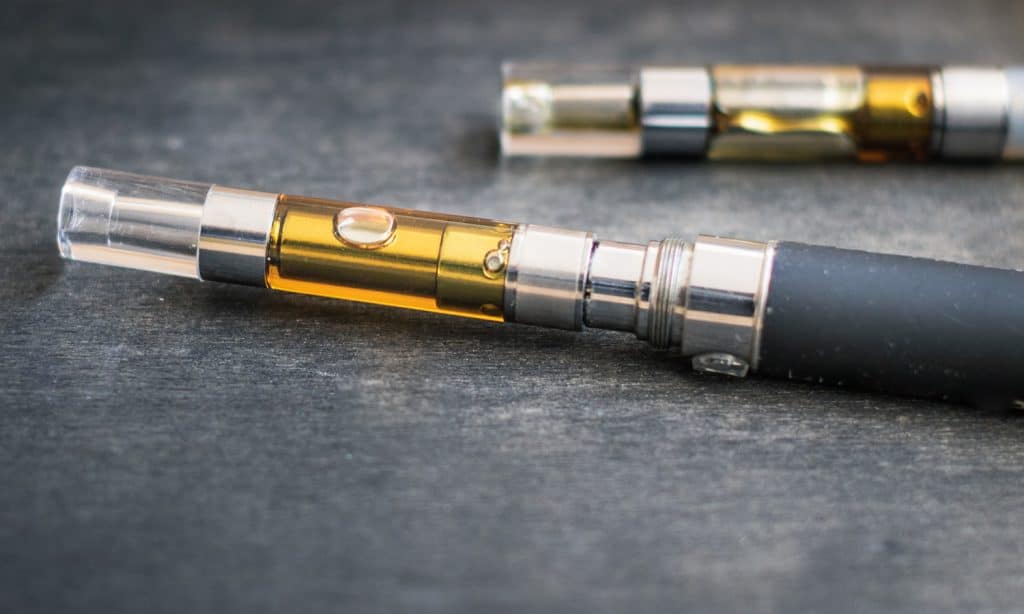
Herb vaporizers use cannabis flower and contain what is basically a small oven inside that heats up the cannabis and turns it into vape. These devices are generally reusable, bigger and more expensive. On the other hand, there’s extract vaporizers, which run on cannabis extracts. They’re very popular and can be reused, containing batteries, cartridges, and ports for charging.
Here are 5 things you should know if you’re considering purchasing a pen of your own:
When smoking weed, the paper goes through a combustion process that creates smoke and toxins associated with cancer and other illnesses. Vape pens heat the marijuana and create a vapor, which can still have an odor, but is much less thick and invasive than smoke. Vape pen vapor usually doesn’t cling to clothes and fabrics, and can be quickly dispersed in a room within minutes.
There are some issues with buying them online
Photo by rawpixel.com
While you can still purchase vape pens from online sources, you won’t find them in places like Amazon, which screens against all sorts of drug/tobacco paraphernalia. Your best bet when purchasing these types of products is to order directly from a company’s website or to buy them from your nearest dispensary, which will allow you to get a feel for them before committing to the purchase.
A lot of people argue that vaping is healthier than smoking flower, primarily because you eliminate the combustion and smoke, which are the most harmful aspects associated with marijuana.
Still, there are some risks associated with vape pens, particularly with the chemicals that are in the devices — the side effects of which remain unknown and largely unresearched. It’s also important to purchase products from trusted sources, especially due to the strange vaping illness that appeared last year that affected hundreds of people.
Vape highs are different
Photo by Darrin Harris Frisby/Drug Policy Alliance
While vaping marijuana is still vaping marijuana, the highs that vape pens produce are slightly different than the ones you’d get from a joint. If you’re not used to vaping, be sure to start off slow and to expect a stronger reaction. Vape pens usually pack a stronger hit than joints, especially if the cannabis comes from a concentrate.
As we enter the holiday season and are likely to go on trips or to spend time with different people, a vape pen can make your experience better. Aside from being easily portable and the smartest option for your travels, you can use them discreetly amongst family and friends, and get high to make the whole ordeal less stressful. Happy holidays!
‘Women have lots of options when it comes to treating menopause symptoms, but the offering of credible, reliable, plant-based solutions is slim to none” — Stef Swiergol, Revelry.
Lilach Mazor Power, cannabis CEO and brand builder, has always enjoyed the entrepreneurial challenge of building something new. Now, nearly a decade after securing one of Arizona’s original licenses, she’s carving out a new market niche by tackling a subject most don’t want to talk about.
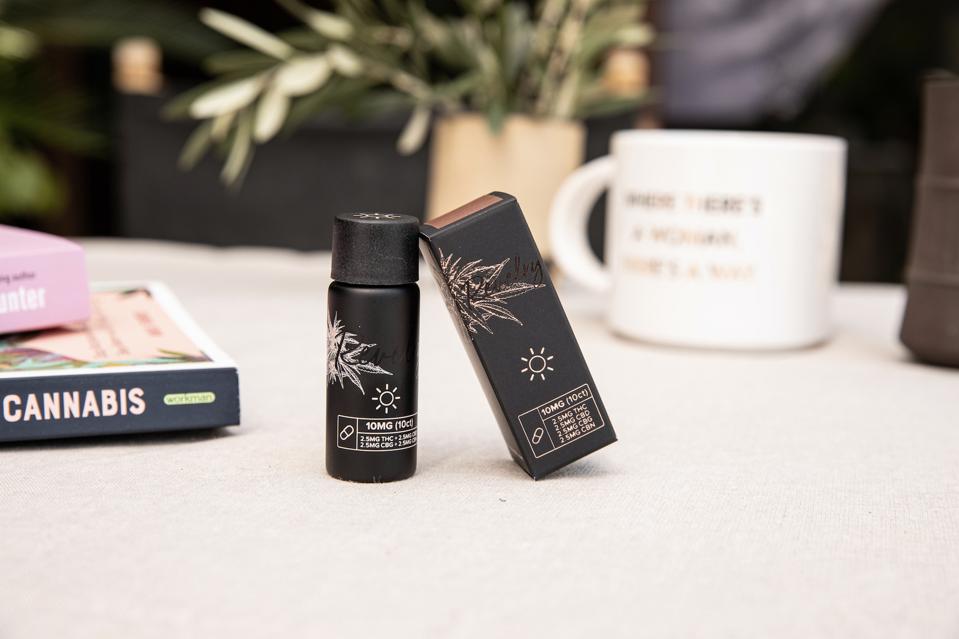
Lilach and her partner Stef Swiergol just launched Revelry, a women-focused brand with a cannabis twist. Currently available in Arizona, the wellness collection brings a plant-based approach to two underserved healthcare conditions, perimenopause and menopause, and features THC-infused day and night capsules, as well as CBD-infused intimacy oil.
Despite being an overlooked subject, 6,000 women enter menopause every day in the U.S. with 75% of them experience hot flashes, night sweats and other lifestyle-inhibiting symptoms. In fact, a recent analysis published on Medical News Today looked into these symptoms and revealed that “sleep disruption tends to increase as people age,” affecting:
Roughly 16 to 42% of people premenopause.
Around 39 to 47% of people perimenopause.
Approximately 35 to 60% of people postmenopause.
More research has urged companies to turn their attention to women’s health issues. Recent analysis estimates the global femtech solutions industry could surge from $648 million in sales in 2020 to $1.15 billion by 2025.
Creating A Movement
Lilach is also the founder of Giving Tree Dispensary which achieved Inc. 5000 recognition in 2021. This venture was the one that sparked the idea of creating Revelry, after years watching women “desperately looking for solutions for the symptoms of menopause and how many of them found relief with cannabis.”
Seeking to take the guesswork out of cannabis dosing for women and other menstruating beings, Lilach and Stef created a product line tailored to their unique needs.
“I’m hoping we’re going to create a movement that continues to evolve the dialogue around cannabis. We want women to know what’s coming, to feel comfortable talking about it and to make it through perimenopause and menopause with ease,” Lilach says, pointing out Revelry comes to fill this gap in society and the market.
“Until recently, I have not seen real, honest, and mature depictions of menopause in our culture and think this product has the potential to change that,” she voices.
And Stef adds, “Women have lots of options when it comes to treating menopause symptoms, but the offering of credible, reliable, plant-based solutions is slim to none. We believe that the therapeutic attributes of cannabis can help women safely navigate their symptoms.”
People don’t like to talk about aging, it’s a matter of overcoming stigma, the duo concludes.
“Women’s worth in our society is defined by their ability to raise children, and menopause marks the end of that,” says Lilach. “We want to reframe what womanhood is and celebrate it.”
The stigma that is usually associated with the use of cannabis is considerably reduced on Reddit, most likely because a large proportion of Redditors are younger generations.
When you think about Reddit and cannabis, subreddits like r/trees probably come to mind. Cannabis-related topics are most often promoted on Reddit subgroups like this one.
The social media platform has one of the highest numbers of cannabis-accepting audiences. In fact, records show that one of the most popular posts on the site can be found on the r/trees subreddit. The post in question was uploaded by a user who described the meltdown their parents experienced after consuming cannabutter unknowingly. The post has over 3,500 comments and at least 64,000 upvotes. A “no-smoking” sign got over 87,000 upvotes on a Reddit cannabis channel as well.
Photo by LeoPatrizi/Getty Images
Reddit sees its fair share of trolls, memes, jokes, news updates, and comprehensive information on various topics. From cannabis to cryptocurrencies, science, and even food. Reddit is a comprehensive platform that caters to a heterogeneous global community.
Cannabis On Reddit
Cannabis has its mini-universe on the Reddit platform. There are hundreds of subreddits dedicated to operating with the cannabis theme. For information about the latest cannabis news, culture, cultivation techniques, and even fast-growing quality marijuana plants, Reddit users know that various subgroups provide them.
Many even use Reddit to direct traffic to their cannabis websites due to the high performance and wide acceptance of pro-cannabis issues.
For cannabis users and advocates, Reddit serves as a source of fun, networking, tips, and most importantly, it provides a sort of weed crisis hotline in case of weed troubles.
Conversations In The Mini-Discussion Subgroups Vary
Different forms of cannabis posts are received differently and perform differently on the site. A great indication of the kinds of conversations that are usually well-received is more or less like the post described earlier.
The conversational feature of the site promotes discussion of cannabis. It requires users to have back-and-forth interaction with themselves. Experienced cultivators can share information with novices on the site or amongst themselves. For newbies in the cannabis scene, it is like Pandora’s box that contains almost every piece of information on tips, tricks, techniques, processing, and even marketing of cannabis plants. There’s always space for others to join the cannabis community.
Distinguishing Reddit From Other Marijuana Blogs
For years, Reddit has been used to cater to the subcultures, medicine, and hobbies of millions of Redditors all over the world. Everyone with something to say or add to the conversation can always do so.
Unlike regular blogs that report cannabis updates in professional ways, leaving very little room for suggestions and corrections, Reddit has an amateur edge. There’s also the anonymity of discussions and posts.
Reddit is free to use, and users can be sure that there’s someone like them, with the same budget or skill set, in the subgroups. At least 90% of the problems and issues relating to cannabis have their solutions and tips on various subreddits.
In the event that a particular piece of information cannot be found, it is straightforward to create a new thread asking others to proffer beneficial or practical solutions. On Reddit, most users are willing to share their cannabis experiences, tricks, tips, and general knowledge about the plant and its uses.
Photo by OsmanZekiDemirkale/Getty Images
Reddit’s Most Popular Cannabis-Related Posts
Redditors are always quick to post their cannabis-related updates on cannabis-themed subreddits. Subreddit moderators stay on the ground to ensure all things run smoothly.
On r/cannabis, the most popular post since the group was created is less than a year old. It is a petition uploaded by a user to support the suspended track star Sha’Carri Richardson, who was prohibited from participating in the Tokyo Olympics after testing positive for cannabis. This petition made waves in the media and was reported by some media houses— proving that subreddits can be a source of weed news.
On r/marijuana, the most upvoted article is about three years old. The post reflected on Senator Bernie Sanders’s support for the decriminalization of all forms of cannabis. Sanders made this statement when he was in the running for the presidential election.
On r/cannabis cultivation, the most popular post can’t be a surprise because, as the subreddit name implies, it’s all about cultivation news and tips. The most-read posts showcase pictures of stunning weed gardens and large plants.
The most-rated post on r/stonerprotips is a thread on tips for packing bowls. The thread is pretty self-explanatory.
The post at the top of r/mmj was made by a happy user who had just obtained his first medical marijuana permit.
Photo by We Are/Getty Images
Not Everything Here Is True Or Accurate
For a platform as porous as Reddit, it is not unusual for fake new updates to be uploaded. Although moderators serve as fact-checkers to confirm the genuineness of information passed across, they are unable to detect it all.
In discussion with The Cannigma, the moderator on r/cannabis cultivation said that the platform’s most significant problems arise when people try to disseminate false claims and misinformation.
Novice growers pretending to be experts and know-it-all, blogs dropping links with click-bait headlines, users proffering wrong solutions, etc., are typical examples of this challenge.
To be on the safe side, users are always advised to carry out more research on any piece of information that could seem helpful. Regardless of the tag of the Redditor who made the post, try to confirm the data. Sponsors and brands are now paying creditors to influence and hawk their products. This gives other users a false impression that the products are good. Thankfully, Google is just one click away.
Conclusion
Reddit is the most pro-cannabis social media platform because it gives users the freedom to post what they want. Having said that, the platform removes all posts that provide information on buying or selling weed products. Even with this, Reddit is still the most weed-tolerant space.
A Redditor wrote that Reddit probably has more weed users than there are in the general public. The stigma that is usually associated with the use of cannabis is considerably reduced on Reddit, most likely because a large proportion of Redditors are younger generations.