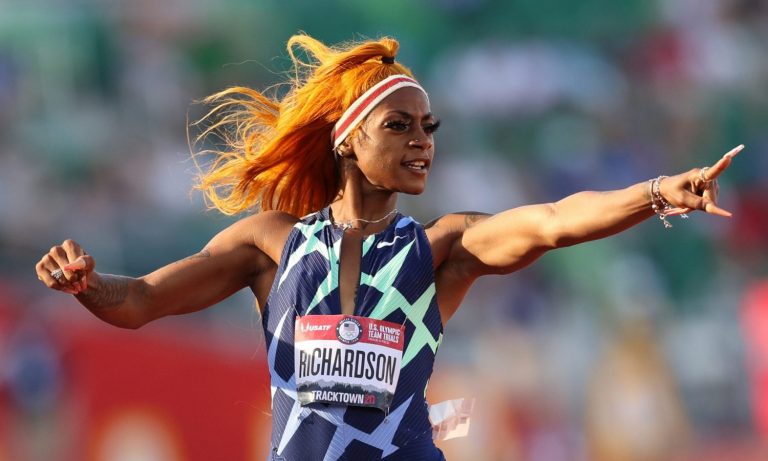
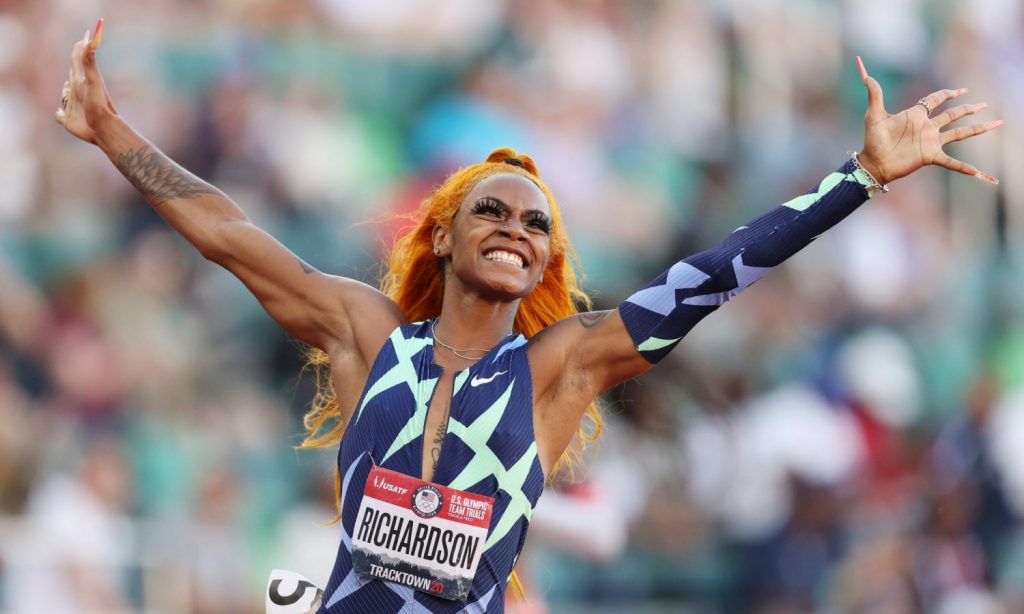
The World Anti-Doping Agency (WADA) announced Tuesday that it intends to review the status of cannabis on its banned substance list, following last summer’s exclusion of track star Sha’Carri Richardson from competing at the Tokyo Olympics after she tested positive for cannabis in her home state of Oregon, where marijuana is legal.
The scientific review will be conducted by a group that advises WADA in 2022.
“Following receipt of requests from a number of stakeholders, the (executive committee) endorsed the decision of the List Expert Advisory Group to initiate in 2022 a scientific review of the status of cannabis,” a WADA statement read. “Cannabis is currently prohibited in competition and will continue to be in 2022.”
Fastest Runner In The World
When Richardson tested positive for cannabis during the U.S. Olympic Track & Field Trials in June, she was given a one-month suspension that essentially wiped out her results – an extraordinary 10.86-second 100m dash – that had qualified her for a spot on the Olympic team.
Outcry Then And Now
The suspension sparked anger as well as an outpouring of support for Richardson among the cannabis industry and all sectors of society, including several members of Congress. Soon thereafter, rose a call for a review of cannabis’ status from numerous organizations, including the White House via the U.S. Office of National Drug Control Policy (ONDCP), which told Benzinga at the time that it would “ask WADA to gather additional information on its cannabis policies.”
Prior to the Tokyo Olympics in July, the White House was in pursuit of a meeting with WADA to discuss cannabis’ position as a banned substance, said the ONDCP press secretary.
A Little Science, Please
One of the justifications for the suspension of Richardson, 21 — that cannabis was potentially performance-enhancing — was roundly rejected by scientists.
“It is so ironic that now they are using that argument when in fact all these years there has been been very little scientific research done about the benefits of cannabis,” Dr. Peter Grinspoon, Harvard Medical School instructor and cannabis expert, told Benzinga at the time. “Cannabis research was essentially prohibited so no one really knows where the US Anti-Doping Agency came up with these standards. Cannabis meets none of them.”
The FDA is concerned that some manufacturers may use potentially unsafe household chemicals to make delta-8 THC through a chemical synthesis process.
On Tuesday, the Food & Drug Administration (FDA) issued a warning about delta-8 THC noting that the product hasn’t been evaluated or approved by the agency. Granted, the FDA’s opinion on anything cannabis-related is received with a healthy dose of skepticism. The FDA still hasn’t made any determination on CBD after years of discussion and research.
The 2018 Farm Bill that essentially legalized hemp specifically called out the exclusion of delta-9 THC. Manufacturers seized on that and decided that delta-8 could slip through the loopholes since it wasn’t named in the bill. Delta-8 THC is one of over 100 cannabinoids produced naturally by the cannabis plant.
It doesn’t pack the punch of a delta-9 high, but consumers say it gives a light buzz. Delta-8 though isn’t easily extracted from the plants, and so it’s typically manufactured from hemp-derived cannabidiol (CBD). As such, the FDA is concerned that these products get labeled as hemp-derived and some consumers may think there are no psychoactive effects like other hemp products. The products are also marketed as having therapeutic qualities, which the FDA notes are unsubstantiated claims.
Photo by Animaflora/Getty Images
Adverse Side Effects
What is troubling are the reports of adverse side effects. In the waring notice the FDA said that from December 2020 through July 2021, it had received adverse event reports from both consumers and law enforcement describing 22 patients who consumed delta-8 THC products and 14 who went to a hospital or emergency room for treatment. Nineteen of these patients said they had eaten delta-8 THC food products. The adverse events included vomiting, hallucinations, trouble standing, and loss of consciousness.
In addition to that, the FDA said that the national poison control centers received 661 exposure cases of delta-8 THC products between January 2018 and July 31, 2021, 660 of which occurred between January 1, 2021, and July 31, 2021. Of the 661 exposure cases:
41% involved unintentional exposure to delta-8 THC and 77% of these unintentional exposures affected pediatric patients less than 18 years of age.
39% involved pediatric patients less than 18 years of age
18% required hospitalizations, including children who required intensive care unit (ICU) admission following exposure to these products.
Photo by Thanasis/Getty Images
Added Chemicals
The FDA noted that the natural amount of delta-8 THC in hemp is very low, and also additional chemicals are needed to convert other cannabinoids in hemp, like CBD, into delta-8 THC through a synthetic conversion. The FDA is concerned that some manufacturers may use potentially unsafe household chemicals to make delta-8 THC through this chemical synthesis process.
Also, additional chemicals may be used to change the color of the final product. Since these products are unregulated the manufacturing of delta-8 THC products may also be taking place in unsanitary settings.
Children Targeted
The FDA has also pointed out that the products are showing up in packaging that is appealing to minors. “These products may be purchased online, as well as at a variety of retailers, including convenience stores and gas stations, where there may not be age limits on who can purchase these products. As discussed above, there have been numerous poison control center alerts involving pediatric patients who were exposed to delta-8 THC-containing products. Additionally, animal poison control centers have indicated a sharp overall increase in accidental exposure of pets to these products.”
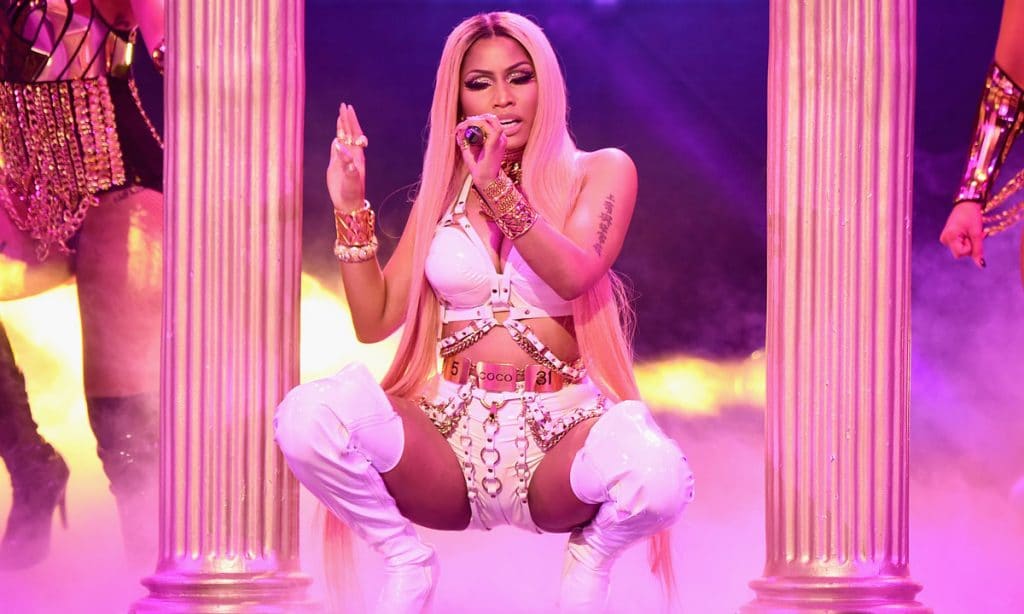
Nicki Minaj seems to have hit a few off-key notes with a recent tweet regarding the COVID-19 vaccine, bringing criticism from the likes of Dr. Anthony Fauci, Britain’s Prime Minister Boris Johnson and TV broadcasters Joy Reid and Piers Morgan.
What Happened: The glamorous rapper wound up in the center of the vaccine kerfuffle ahead of Sept. 13’s Met Gala, which Minaj declined to attend because the fashionista event required its A-list guests to be fully vaccinated and she has yet to receive her vaccine shots.
Photo by Michael Loccisano/Staff/Getty Images
“They want you to get vaccinated for the Met,” she Tweeted, adding, “if I get vaccinated it won’t for the Met. It’ll be once I feel I’ve done enough research. I’m working on that now. In the meantime my loves, be safe. Wear the mask with 2 strings that grips your head & face. Not that loose one.”
Minaj followed that statement with another tweet concerning a family friend who reportedly had an unexpected side-effect to the vaccine.
My cousin in Trinidad won’t get the vaccine cuz his friend got it & became impotent. His testicles became swollen. His friend was weeks away from getting married, now the girl called off the wedding. So just pray on it & make sure you’re comfortable with ur decision, not bullied
“My cousin in Trinidad won’t get the vaccine cuz his friend got it & became impotent,” she tweeted. “His testicles became swollen. His friend was weeks away from getting married, now the girl called off the wedding. So just pray on it & make sure you’re comfortable with ur decision, not bullied.”
She then returned to Twitter to insist she was not advocating against vaccines, responding to a fan’s message by tweeting, “A lot of countries won’t let ppl work w/o the vaccine. I’d def recommend they get the vaccine. They have to feed their families. I’m sure I’ll b vaccinated as well cuz I have to go on tour, etc.”
What Happened Next: Somehow, Minaj’s tweeted were viewed by several prominent individuals as being a rallying cry against vaccinations.
Photo by Alex Edelman-Pool/Getty Images
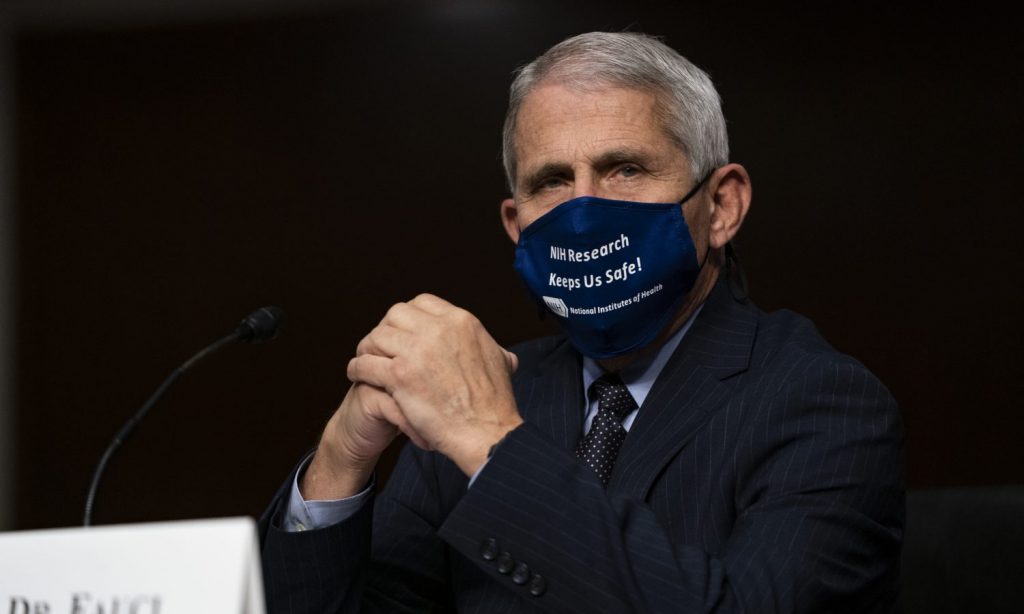
Dr. Fauci, the director of the National Institute of Allergy and Infectious Diseases and the chief medical adviser to President Joe Biden, called out Minaj’s tweet about her cousin’s friend, explaining during a CNN interview that there is no evidence of the unusual side-effect she described while complaining, “She should be thinking twice about propagating information that really has no basis except a one-off anecdote, and that’s not what science is all about.”
Dr. Anthony Fauci on Nicki Minaj’s false claim that Covid-19 vaccines cause reproductive issues: “She should be thinking twice about propagating information that really has no basis… except a one-off anecdote, and that’s not what science is all about.” pic.twitter.com/YXPZuQMs5s
Prime Minister Johnson was asked about Minaj’s tweets during a press conference and he drew a blank, acknowledging, “I’m not familiar with the works, or as familiar with the works of Nicki Minaj as I probably should be” – although he quickly voiced his support for the efficacy of COVID vaccines.
But Chris Whitty, chief medical adviser to the U.K. government, was more direct, stating, “There are a number of myths that fly around, some of which are just clearly ridiculous and some of which are clearly designed just to scare. That happens to be one of them. That is untrue.”
Professor Whitty beefing with the ghastly @NICKIMINAJ (one of the rudest little madams I’ve ever met) is not the breaking news that I expected today – but it’s most welcome. She’s peddling lies that will cost lives.
Minaj’s tweets also brought criticism from MSNBC’s Reid, who pointed to Minaj’s Twitter audience of 22 million followers and complained, “For you to use your platform to encourage our community to not protect themselves and save their lives, my God sister, you can do better than that! You got that platform – it’s a blessing that you got that. The people listen to you – and they listen to you more than they listen to me!”
As for Morgan, he also questioned her comments but took it into more personal drubbing by calling her “one of the rudest little madams I’ve ever met” and claimed she “refused to say hello to my three young sons” during a guest appearance on “America’s Got Talent” because she insisted that she was ‘too busy.’”
What Else Happened: Minaj was cognizant of the criticism leveled against her and returned each volley with the wit and sass that her fans have come to expect and cherish.
With the British leadership, she playfully took on an Anglophile vibe by jesting, “I love him even tho I guess this was a diss? The accent ugh! Yassss boo!!!” She also did a comic audio recording with a comic audio recording where she addressed Johnson as a former Oxford classmate of Margaret Thatcher.
With Reid, she was less jolly, tweeting, “This is what happens when you’re so thirsty to down another black woman (by the request of the white man), that you didn’t bother to read all my tweets. “My God SISTER do better” imagine getting ur dumb ass on tv a min after a tweet to spread a false narrative about a black woman.”
Minaj suffixed her comments by calling Reid a “lying homophobic coon.”
As for Morgan, Minaj countered: “Sir I’ve never met you. I know… we all look alike. ‘Rudest little madam.’ I like it. Has a special ring to it. Thanks Pierce. Love the accent. I’d love to come chat. Scones. Tea. Clown nose & big red shoes for you. Lmk babe.”
While Minaj appeared to overlook Dr. Fauci’s remarks, she nonetheless made it clear she never used social media to dissuade people from being vaccinated and even offered a tweet asking her Twitter followers which vaccine was the best, which brought more than 7,000 responses.
At the start of the year, medical experts suggested that people getting the COVID-19 shot should wait 14 days before getting any other shot. Here’s what they’re saying now.
Cool weather makes it easier for viruses to spread. When it’s cold out, the majority of people prefer to spend as little time indoors as possible, usually meeting up with friends in indoor bars, apartments or places where they can do stuff. With COVID-19 (or any virus) in the mix, this creates the perfect breeding place for contagion.
Is it possible to have the flu shot and the COVID-19 booster at the same time? When you’re a kid and you’re getting vaccinated, it’s common to get different shots, one after another. But is it the same with COVID-19.
Photo by Kelly Sikkema via Unsplash
COVID-19 booster shots will start to become widely available on September 20. A few months ago, the Centers for Disease Control and Prevention (CDC) used to recommend a wait period of 14 days between the COVID-19 vaccine and any other vaccines, making us all a little wary of its possible interactions with other elements. Add that to the surprisingly debilitating side effects of the shot, and it’s okay to ask yourself if your two shots should overlap, or if you should prize COVID-19 above the flu shot.
Fortunately, following the full approval of the COVID-19 vaccine, health experts are now sure that it’s very very unlikely for there to be adverse reactions when getting multiple vaccines at a time.
“Experience with other vaccines has shown that the way our bodies develop protection, known as an immune response, after getting vaccinated and possible side effects of vaccines are generally the same when given alone or with other vaccines,” says the CDC.
The COVID-19 vaccine is pretty new, so some wariness is understandable, especially if you coped with some intense side effects during your first or second time getting the shot. The answer is up to you; while it’s totally safe to get both shots, adverse side effects might be more likely, and both of your arms might hurt a bit.
Still, the flu shot remains a priority. Getting that immunization will give you some peace of mind, making it less likely to catch a disease during the winter time, in a moment when there’s a variety of viruses on the rise.
The Iowa judge sentenced a marijuana offender to probation for his indiscretions. And the case didn’t exactly involve a simple possession charge either.
There are still reportedly hundreds of thousands of marijuana arrests taking place across the United States every year, but that doesn’t mean that every case ends in a conviction. More to that point, the fact that slews of people are being dragged to jail every day for marijuana-related violations isn’t an indication that the prisons are filling up with pot offenders.
Even in areas of prohibition — that is to say, those states where marijuana remains an outlaw substance — prosecutors and judges are, at times, taking a more relaxed approach to people busted for weed. In some cases, marijuana offenses are punished less harshly than crimes pertaining to alcohol.
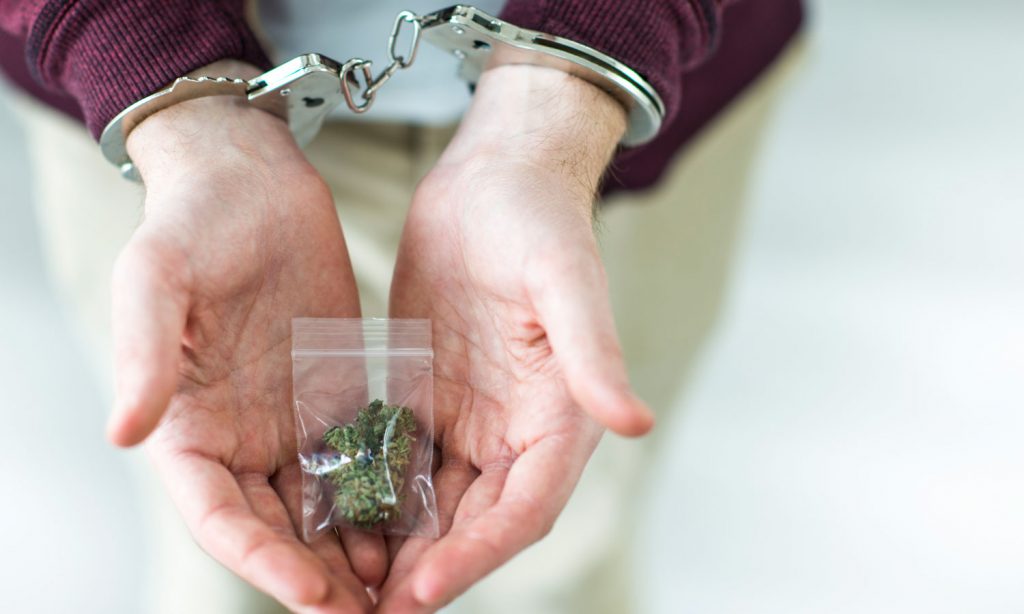
In Iowa, a judge recently sentenced a marijuana offender to probation for his indiscretions. And the case didn’t involve a simple possession charge either. No sir, 21-year-old Nathan Ray Veal-Cox was convicted of possessing a pound of marijuana with intent to deliver. For those who are not privy to the legal jargon, this means the cops, the prosecutor, and the court believed Veal was a drug dealer — one of those dastardly fiends that authorities want behind bars.It turns out that they were probably right.
Photo by FatCamera/Getty Images
It’s hard to argue that Veal-Cox wasn’t at least a low-level black market marijuana dealer. In March, when police stopped him along State Highway 17, in addition to a pound of cannabis, an officer also discovered an unloaded handgun, ammunition, stacks of cash, a digital scale, and other contraband believed to be associated with the illicit sale of marijuana. Veal-Cox was dead to rights.
So, how did law enforcement discover all these ganja goodies, which ultimately gave Veal-Cox a first-class ticket to the criminal justice system? Well, when the officer approached the vehicle, he could smell marijuana wafting from it. When asked about the odor, Veal admitted that he had been smoking marijuana. That was enough to establish probable cause for a search, and the rest is history.
Of course, smoking weed on the roadways, regardless of whether it is in prohibition Iowa or legal California, is against the law. It is an offense that typically results in an arrest and a charge for Driving Under the Influence of Drugs (DUID). But Veal-Cox wasn’t just smoking pot. He was going for broke that night. He also admitted to law enforcement that he had been doing a little drinking.
According to Iowa State Law, Veal-Cox’s marijuana-related offense alone was enough to land him in prison. Possession of a pound of weed in the Hawkeye State is a felony with a maximum penalty of five years in prison and fines reaching $7500. Toss in the handgun and various other charges for paraphernalia, etc., and Veal presumably spent the summer scared that he would be eating Thanksgiving dinner in the slammer this year. But his fate would not be that severe.
Earlier this week, Veal-Cox, who pleaded guilty to the charges back in July, went before the judge for sentencing. The outcome was about as good as it could get for someone branded a drug dealer. The judge gave him three to five years supervised probation (meaning: he must meet with a probation officer at least once a month and submit to random drug testing) for the marijuana possession charge. However, if Veal-Cox completes his probationary term without any further violations, the drug conviction will be cleared from his record — like it never happened.
That’s the good news. The bad news is the judge was none too keen on Veal-Cox driving around with booze in his system. For that offense, he was sentenced to two days in jail and fined $625.
New data shows that the COVID-19 vaccine is very effective in preventing the spread of the virus and protecting people against a variety of situations.
Unlike average vaccines, the COVID-19 vaccine provides immunization after the introduction of two injections. This makes it a relatively long process in order to build immunity, with many mistakenly thinking that they’re protected two weeks following their first shot. In reality, immunity kicks in two weeks of your last shot.
Still, despite the clunky administration process, there’s a variety of perks that appear once people are fully immune, including statistics that show that people are significantly less likely to die after getting their full set of immunizations.
According to data obtained by the U.K.’s Office of National Statistics, 37% of deaths reported between the months of January and July 2021 came from unvaccinated people. For comparison purposes, only 0.8% of the deaths that were reported came from vaccinated people. While some discrepancy is to be expected, such a large difference means that vaccines are really efficient at not only preventing infection but also keeping people alive.
Other numbers included in the data show that out of 57,263 deaths among vaccinated people, only 458 of them were “involved” with COVID-19. While these numbers might startle some people due to the fact that it is possible to get infected with COVID-19 after being inoculated, and that death is also a possibility, the vaccine is not full proof. No vaccine in the world is, especially when there’s a pandemic going on and the virus remains rampant.
“Some people do still die of COVID-19 even though they are fully vaccinated,” said Professor Kevin McConway, Emeritus Professor of Applied Statistics, The Open University. “No vaccine is 100% effective.” He mentioned how important it was to get the two shots, and how one wasn’t enough to provide the necessary protection.
As is the case in the U.S., the U.K. is also struggling with managing the Delta variant, which has proved to be more contagious than the original form of the virus.
The letter to Biden includes signatures from some 150 artists, athletes, producers, lawmakers, law enforcement officials, academics, business leaders, policy experts, reform advocates and other professionals.
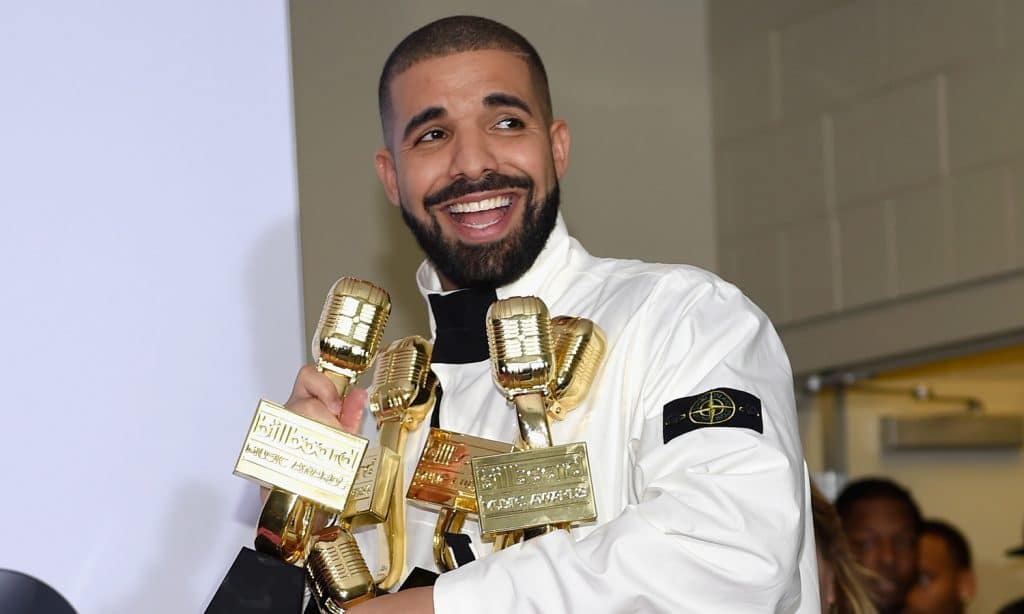
In a live-streamed event, NBA star Al Harrington, four-time Grammy-award winner Drake, world champion boxer Badou Jack, rapper & activist Killer Mike, Meek Mill, NFL player Julio Jones and NBA star John Wall and others announced on Tuesday that they’d co-written and signed a letter to President Joe Biden requesting a general pardon for “all persons subject to federal criminal or civil enforcement on the basis of a nonviolent marijuana offense.”
What Happened
The letter to President Biden, spearheaded by Weldon Angelos of the Weldon Project/Mission Green and Academy for Justice Director Erik Luna, includes signatures from some 150 artists, athletes, producers, lawmakers, law enforcement officials, academics, business leaders, policy experts, reform advocates and other professionals.
Photo by Alex Wong/Getty Images
Angelos, along with Luna, Harrington and Ralo, also participated in the live-streamed event in which they discussed the letter to President Biden and emphasized the call for clemency.
The stories of those this will help are compelling, Angelos told Benzinga, noting that Drake, Lil Baby, Meek Mill, Killer Mike and dozens of other hip-hop artists signed on the letter in support of their friend and fellow rapper Ralo, who is facing 8 years for a nonviolent marijuana offense.
“I appreciate my friends and peers in the hip-hop community, such as Drake & Killer Mike, for supporting my clemency because it’s just not right that corporations are allowed to violate federal law and become millionaires while people like myself go to prison for years,” Ralo said. “This is hypocrisy. But I am hopeful that Joe Biden will honor his campaign promise and grant us clemency, without delay, so that we can return home to our families and communities.”
Photo by David Becker/Stringer/Getty Images
Angelos added, “The long-term effects on the formerly incarcerated for federal marijuana convictions go beyond the prison walls, making it difficult if not impossible for someone to get a job, have access affordable housing, educational loans etc. They’re limited in so many ways that people don’t realize when they just want to begin again and contribute to society. Enough is enough. No one should be locked up in federal prison for marijuana.”
Why It Matters
It is important to note that three-quarters of the states have abandoned the federal government’s criminal ban in favor of a safe, regulated cannabis program, yet, more than a half-million individuals are arrested each year for marijuana-related offenses.
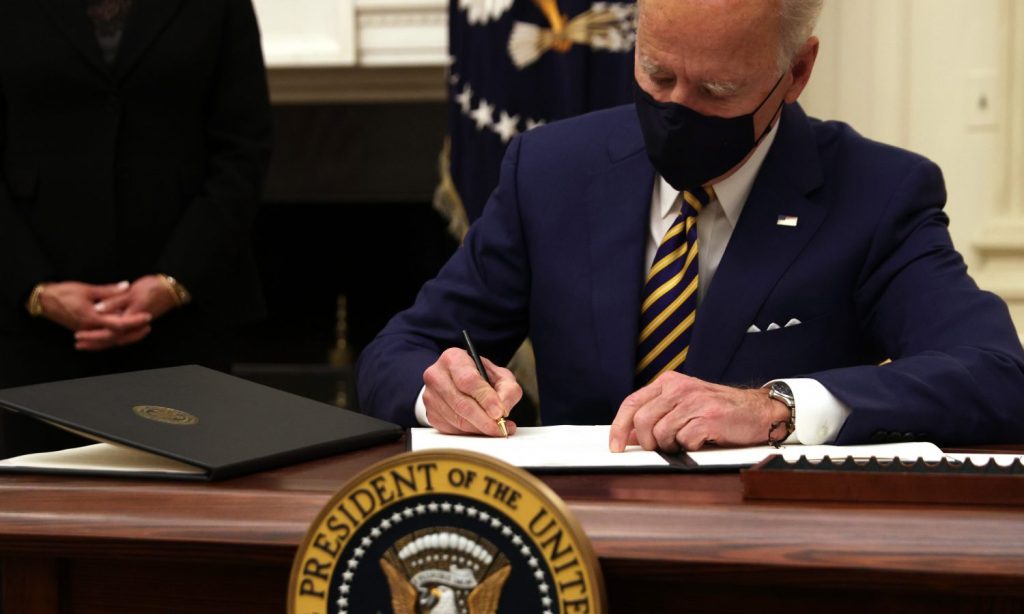
“It’s time for the federal government to say the Drug War is over when it comes to marijuana,” said Prof. Luna, two-time Fulbright Award winner whose scholarship often explores the criminalization of victimless crimes. “With the stroke of a pen, President Biden can help end the national criminal prohibition of marijuana, a crude policy that has wrought havoc for nearly a century.”
Biden Campaign Promise
“When Biden ran for president, he promised to take action and use the pardon power of the presidency to release those serving prison time for marijuana and pardon their felony convictions,” Angelos said. “At a time when dispensaries are as prevalent as liquor stores in some states, it is time for President Biden to now make good on that promise.”
Luke Scarmazzo, currently serving 22 years for operating a state-compliant medical marijuana dispensary in Modesto, CA. is hopeful the President will do the right thing.
“The letter delivered to President Biden today demonstrates that the public no longer supports these incarcerations,” Scarmazzo said in a press statement. “And I pray the President fulfills his campaign promise of releasing cannabis prisoners and expunging our records. The country is urging him to act.”
Sen. Jeff Irwin emphasized that the legislation would rid people of having to choose between prioritizing their health and safety, or following the law.
Michigan Senators Jeff Irwin (D-Ann Arbor) and Adam Hollier (D-Detroit) co-sponsored and introduced legislation last week that would decriminalize the use of psilocybin and mescaline and allow the possession, cultivation and delivery of these two types of psychedelics.
In an interview with the Michigan Advance, Irwin contended that psychedelics provide several benefits and that continued prohibition was a waste of time and resources.
Photo by Merlin lightpainting from Pexels
“These substances have medicinal value, they have religious significance and they have a very low propensity for abuse,” Irwin said. “And so that’s why I’m proposing to decriminalize the substance because it really makes no sense to spend any time or money arresting people and turning their lives upside down.”
Recent Advances In Decriminalization: The Ann Arbor City Council passed a resolution in September 2020 decriminalizing the use of psychedelics. In Grand Rapids, a vote is coming up this year to decriminalize the use, possession, growing or gifting of psychoactive plants and fungi.
What’s In The Current Bill? Irwin said his proposed legislation would build off of decriminalization efforts in Ann Arbor and other communities to ensure no one is criminally penalized for utilizing psychedelics. He added that the bill would contribute to efforts to reverse the effects of the War on Drugs, which has disproportionately affected communities of color since the 1970s when federal restrictions on psychedelics went into effect.
“There are efforts in other communities across the state to decriminalize these substances and to stop wasting any police resource [and] turning people’s lives upside down over it,” Irwin said. “I’m really proud to be kind of starting up this conversation at the state level of why is it that we’re continuing to engage this fail in government policy of prohibition? Why are we continuing to prosecute the war on drugs in ways that don’t help us and lead to mass incarceration?”
No Medicinal Properties? Researchers Beg To Differ: Like cannabis, psychedelics are classified as a Schedule-1 drug with “no currently accepted medical use and “potential for abuse.”
Photo by Nathaniel Paluga, Wikimedia user Drpaluga
However, numerous studies currently underway have shown that psychedelics are indeed helping patients with crippling mental illnesses such as depression, post-traumatic stress disorder (PTSD) and addictions.
Irwin emphasized that the legislation would rid people of having to choose between prioritizing their health and safety, or following the law.
“Fixing that for those people and giving our institutions an opportunity to research and learn more about why these substances work for some people can be a great benefit to many people who are struggling with mental illness,” Irwin said.
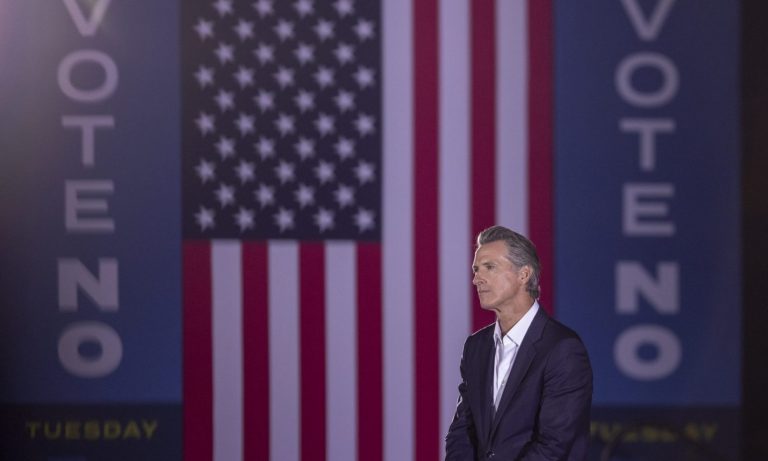
On Tuesday, California voters will decide whether Governor Gavin Newsom will continue his first term or be removed from office through a recall vote.
If Gavin loses his position as governor, the decision is bound to have a tremendous impact on California’s future, with consequences likely to be felt in nearly every sphere across the country’s most populous state… and cannabis is no exception.
First let’s look at a FAQ, which the NY Times refers to as “one of the more remarkable mysteries of the moment,” and that is: How did a Democratic star in the bluest of blue states end up confronting a recall?
Photo by Patrick Tomasso via Unsplash
Newsom’s recall was fueled in part by a public shaming event when the unmasked Governor was caught on camera publicly dining with a group of friends and lobbyists at a high-end restaurant during the height of California’s strict lockdown. The event catalyzed the Republican base, which nationally continues to rage against lockdowns and the use of protective face masks.
How Will The State’s Legal Cannabis Industry Be Affected If Newsom Is Ousted?
Newsom has historically been pro-cannabis. He was an outspoken backer of Proposition 64, which legalized adult-use cannabis state-wide in 2016.
Conrad Gregory, president of the California Cannabis Industry Association pointed out that Newsom campaigned as a leader on cannabis reform during his 2018 campaign, and began his mandate with an initial regulatory system that intended to merge adult-use and medicinal laws.
However, the Governor was soon overcome with competing, pandemic-related priorities.
“As the largest and one of the oldest cannabis markets in the country, California should be leading the nation on what a well-regulated and successful market looks like, but that will require much more effort and political commitment,” said Gregory, who is also senior vice president of compliance and government relations at Harborside Inc.
While Newsom’s approach to the cannabis industry is deemed satisfactory, taxes, regulatory hurdles, retail access, and the illicit market are having significant impacts on the ability of large and small businesses to succeed in California, said Gregory in an interview with Benzinga.
Kyle Kazan, co-founder, chairman and CEO of Glass House Brands said the industry has been asking for tax relief and enforcement to make the legal market more competitive with the illicit.
“Unfortunately, that has not happened at any scale which has put a lot of pressure on companies, particularly mom and pops,” Kazan told Benzinga, adding that California operators have paid $2.8 billion in taxes since 2018.
Photo by Animaflora/Getty Images
“California needs to prepare for the long-term and work to shape the national landscape before it shapes us,” added Harborside’s Gregory, who cautioned that Newsom’s recall would most likely stall or undo any progress already achieved.
“As it stands now, the governor recently merged all three regulatory agencies into one that will govern the entire cannabis supply chain. The process of sorting out this consolidation is currently underway including appointments and rulemaking,” Gregory said.
Changing horses now could severely disrupt that process and further obstruct licensing, enforcement and regulatory streamlining efforts, he added.
Gregory also pointed to a set of hemp regulations that successfully passed the state’s legislature last week and are now headed for Newsom’s desk.
“The bill will again create new rulemaking and enhanced agency activity to implement and oversee the hemp industry and how it interacts with the cannabis industry,” Gregory explained.
Among other measures, the law allows hemp extracts with CBD to be added to food, beverage and cosmetic products; establishes new rules for hemp farmers and businesses; holds new standards for out-of-state hemp products and bans delta-8 THC outside of regulated cannabis sales channels.
“It would be best for both the hemp and cannabis industries to see these changes through and get to the other side,” Gregory concluded.
Meanwhile, a poll released on Friday by the Institute of Governmental Studies at the UC Berkeley, puts Newsom in the clear, with 60% of support. However, notes that a slight tilt in the balance could give place to a majority voting him out of office, leading to the candidate with the most votes taking over the job.
Polls open at 7 a.m. and close at 8 p.m. local time on Tuesday. Voters, and the rest of us, can see the live preliminary results for their county at the California Secretary of State’s website starting from 8 p.m. local time.
The passage of Assembly Bill 45 is significant in that California will no longer be a CBD dinosaur.
Many people ignore — or just don’t want to believe — the fact that, until recently, California was a bit of a villain when it came to the manufacture, distribution, and sale of industrial hemp derived products, namely hemp CBD in food, beverages, dietary supplements, animal products, and cosmetics. However, AB-45 is going to change all of that once Governor Newsom inevitably signs it into law, as it’s now passed the Senate and Assembly.
A brief history about California’s love/hate relationship with hemp CBD is warranted. The California Department of Public Health (CDPH) issued a FAQ on its website in July 2018 taking the position that CBD ingestibles were unlawful, in line with the current position of the Food and Drug Administration (check out our analysis on those FAQs here). California essentially considered products for human and animal consumption to be improperly “adulterated” if they contained hemp CBD.
Photo by Anshu A via Unsplash
Over the next few years, CDPH issued 13 notices of violation, 7 voluntary condemnation and destruction regulatory letters, and 9 embargoes — all without ever creating any real regulation. Local departments of public health were also active in enforcement.
In 2019, California tried but failed to pass AB-228, which would have legalized CBD. Last year, California tried but failed to pass AB-2827 and AB-2028, which were both targeted to legalize CBD. Finally, in late 2020, AB-45 made its debut.
Like its predecessor bills, the goal of AB-45 is to “legalize” many different CBD products. AB-45 takes a lot of concepts from AB-228, but adds some things that–while intended to compromise apparently controversial aspects of prior legislative attempts–are sure to upset some people in the industry (like banning all smokable hemp products, including vapes). Here are some of the main highlights of AB-45:
AB-45 specifically mandates that the DCC regulate to allow for hemp-CBD to come into the state-licensed cannabis supply chain, which includes allowing state-licensed retailers to sell stand-alone hemp-CBD products (which currently they’re not allowed to do, but everyone and their mother seems to be violating this policy hangover from the BCC/CDPH);
The Department of Food and Agriculture and the CDPH will be the main agencies overseeing the regulation of hemp cultivation and production, distribution, and sale hemp industrial products (rather than the DCC). The CDPH will be in charge of establishing the licensing and registration regimes for industrial hemp manufacturers, distributors, labs, and retailers;
Manufacturers, distributors, and retailers of hemp products cannot, in any of their advertising, marketing, or even product labeling, include “. . . any health-related statement that is untrue in any particular manner as to the health effects of consuming products containing industrial hemp or cannabinoids, extracts, or derivatives from industrial hemp in violation of this part.” “Health-related statement” means “a statement related to health, and includes a statement of a curative or therapeutic nature that, expressly or impliedly, suggests a relationship between the consumption of industrial hemp or industrial hemp products and health benefits or effects on health”.
Industrial hemp cannot be used in dietary supplements or food products unless the manufacturer demonstrates both of the following: (1) All parts of the hemp plant used in dietary supplements or food products come from a state or country that has an established and approved industrial hemp program that inspects or regulates hemp under a food safety program or equivalent criteria to ensure safety for human or animal consumption; and (2) The industrial hemp cultivator or grower is in good standing and in compliance with the governing laws of the state or country of origin.
“Hemp manufacturer” means either of the following: (1) A processor extracting cannabinoids from hemp biomass. (2) A processor purchasing industrial hemp raw extract for the purpose of manufacturing a final form product (and final form product means a product to be sold at retail).
Hemp testing labs cannot have a direct or indirect “interest” in the entity for which testing is being done; cannot have a direct or indirect interest in a facility that cultivates, processes, distributes, dispenses, or sells raw hemp products in this state or in another jurisdiction; and does not have a commercial cannabis license other than as a licensed testing laboratory for cannabis.
Industrial hemp products can only be sold if the following conditions are met: (1) they have a certificate of analysis from an independent testing laboratory that confirms both of the following:
(a) The industrial hemp raw extract, in its final form, does not exceed THC concentration of an amount determined allowable by the CDPH in regulation, or the mass of the industrial hemp extract used in the final form product does not exceed a THC concentration of 0.3 percent.
(b) The industrial hemp product was tested for any hemp derivatives identified on the product label or in associated advertising; and (2) the industrial hemp product was produced from industrial hemp grown in compliance with the 2018 Farm Bill and corresponding California state law regarding hemp cultivation.
Industrial hemp cannot be infused or put into any of the following products: medical devices, prescription drugs, any product containing nicotine or tobacco, and alcoholic beverages (CDPH is free to expand this list, by the way, and they’re free to impose customer age limitations on purchases of certain industrial hemp products if they think there’s a threat to public health and safety).
Manufacture or sale of inhalable products is prohibited unless it’s for the sole purpose of sale in other states. Interestingly, this prohibition becomes “. . . inoperative and is repealed on the effective date of a measure passed by the Legislature that establishes a tax on inhalable products and states the intent of the Legislature to fulfill the requirements of this section.”
AB-45 contamples and allows for hemp industrial products for pets and also for the import of out of state raw hemp extract.
There will now be detailed testing requirements for both in-state and out of state raw hemp extract to be used for the production of industrial hemp products before final form products hit retail shelves, so be on the look out for those regulations from CDPH. There will be advertising and marketing requirements, too, some of which are similar to state-licensed commercial cannabis laws and regs already.
Photo by Elsa Olofsson via Unsplash
The passage of AB-45 is significant in that California will no longer be a CBD dinosaur. Hopefully the FDA takes note and initiates its own rulemaking process to finally address the manufacture, distribution, and sale of hemp CBD products within a federal framework that piggy backs off of the 2018 Farm Bill. The next step for California though is for the CDPH to initiate some rulemaking (probably on an emergency basis) to bring the state’s hemp-CBD program to life. Stay tuned!