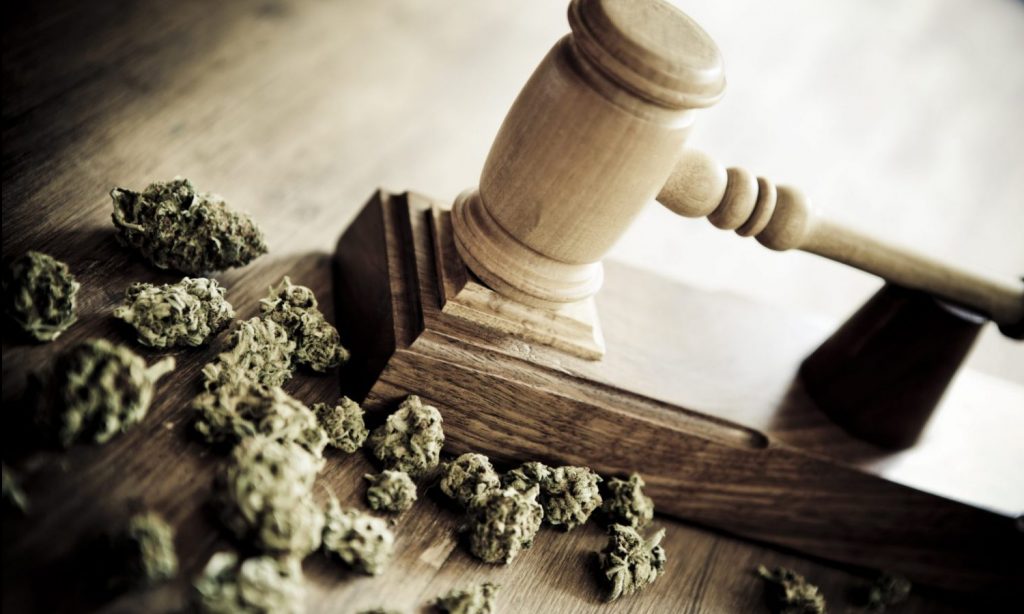
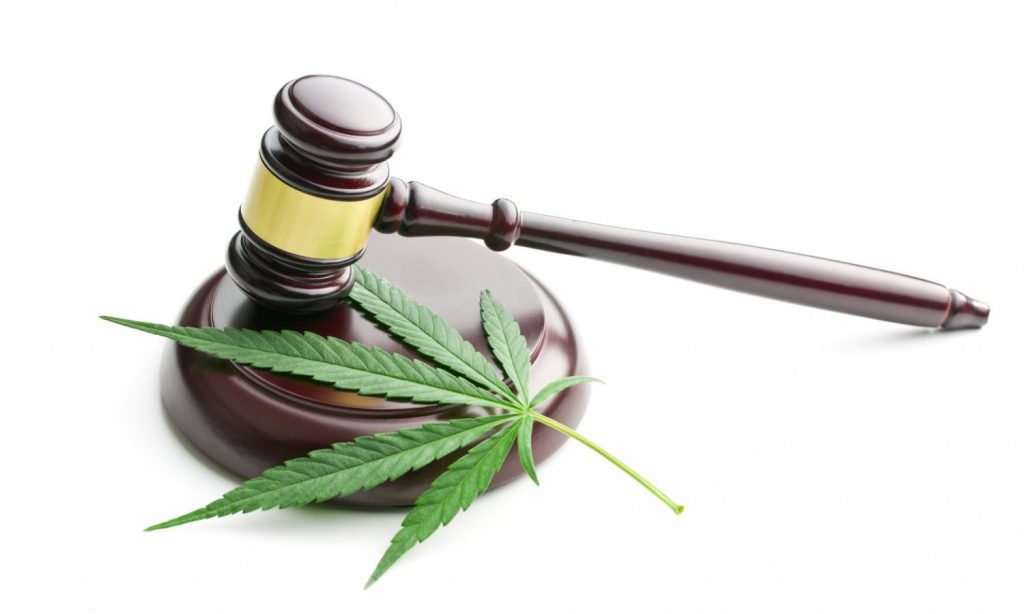
Senator Jeff Irwin (D) presented a new bill last week that aims to align licensing protocols for Michigan’s medical and adult-use programs by removing a “moral character” clause from the medical cannabis licensing policy.
If the bill, which is assigned to the Senate Judiciary and Public Safety Committee, becomes law, marijuana regulators in Michigan could no longer refuse to issue a medical cannabis license to someone based on “moral character and reputation” or previous cannabis convictions.
Photo by Roman Budnyi/Getty Images
“It would seem to be especially important in the cannabis space that we open the door to the legal cannabis industry to folks who are very experienced in the illicit cannabis space,” Irwin said, adding it would be unreasonable to assume illegal cannabis sales would simply end.
“I don’t think we want to exclude anyone who’s ever participated in the marijuana industry before it was legal from participating now that it is legal because that’s going to make it even harder for us to build the legal space and diminish the illicit space,” Irwin noted.
Moral Character Clause Invites Inequality And Corruption
One of the most important problems with the “moral clause” is its existence in the medical cannabis program, but not in the recreational.
Irwin told Marijuana Moment in a phone interview on Monday that the subjective nature of the moral character clause “invites unequal application of the law, it invites favoritism, it invites corruption.”
To build a successful legal market “we need to keep the taxes low,” Irwin continued. “We need to keep the barriers to entry low. We need to welcome people who might have a marijuana conviction on their record into the licensed space. That’s all part of being successful as a state in making sure the majority of transactions are taking place in a safe and regulated legal space.”
Michigan cannabis sales hit a record $171 million in July, which in return brought more than $23 million in tax revenue funding the Great Lake roads, schools and counties.
The bill is co-sponsored by Senators Sean McCann, Stephanie Chang and Sylvia Santana, all Democrats, but according to Irwin, the bill should ultimately garner GOP support.
Last week, Irwin separately introduced the legislation to legalize the possession and cultivation of certain psychedelics.
Cannabinoids overall are likely to be helpful for headache sufferers due to their ability to penetrate the part of the brain involved in migraine pathophysiology.
Did you know that 23 million Americans suffer from severe migraine headaches, and 25% have four or more episodes per month?
In fact, this epidemic costs businesses between 1.2 billion to 17.2 billion dollars annually, through lost productivity and sick time.
But can cannabis provide relief?
Photo by Andrea Piacquadio via Pexels
Though the United States classifies medical cannabis as a Schedule 1 drug (meaning it has the high potential for abuse and has no accepted medical use and lack of safety for use under medical supervision), there have been numerous case studies surrounding the use of medical cannabis for headaches. And it would be a natural derivation of those studies to at least consider CBD oil, another closely related cannabinoid.
For example, one woman with a rare type of headache was presented in Headache Magazine in the 2004 Journal For Headache Medicine. She had a history of pseudotumor cerebri, which is a very uncomfortable splitting headache, associated sometimes with obesity and high pressures within the spinal cord fluid.
This woman experienced resolution of her headache within five minutes of smoking cannabis. Though anecdotal, case studies such as this suggest further evaluation be considered for headache sufferers.
Cannabinoids overall are likely to be helpful for headache sufferers due to their ability to penetrate the part of the brain involved in migraine pathophysiology, offering migraine sufferers with endocannabinoid (naturally appearing pain modulators) deficiency or receptor activation dysfunction possible relief. (If you’re suffering with headaches or migraines, you may want to read that sentence a few more times, because it offers HOPE.)
While also being entwined with the central nervous system’s serotonin, the endocannabinoid system mechanism of action can be similar to drugs already in use for migraine sufferers such as triptans, like Sumatriptan, Imitrex, Maxalt and Amerge which act through serotonin activation.
Photo by Andrea Piacquadio via Pexels
Cannabis has been found to be most effective in treating patients with:
Migraines
Anxiety (prior to the onset of migraines)
Migraines concurrent with fibromyalgia
Endocannabinoid deficiency in pain disorders
Variation with the CNR1 gene
Female migraine sufferers due to the accelerated degradation fo endocannabinoids
WHY DO WE CARE? Look, current migraine medications fall far short, whether from side effects, failed response to triptans, or simple intolerance to the medications.
In these situations it is perfectly reasonable to consider an alternative treatment with the use of medical cannabis or even CBD.
When medications have failed, a patient’s medical team might want to consider cannabis or CBD.
These might very well present a logical alternative therapy to finding relief.
The authors of a new study admitted that much more research is needed before the medical community fully understands the relationship between cannabis and cancer.
The medical marijuana legalization movement has spent decades tugging at the heartstrings of Americans by suggesting that the herb of all highness is, in many cases, the best remedy for cancer and, in some cases, even a cure.
The line between reality and hype has presumably sparked an uprising in cancer patients using marijuana to cope with the symptoms of the disease rather than relying solely on traditional treatments. However, a new study shines some light on cannabis use against perilous tumors, and it turns out it’s not as prevalent as you might think.
Researchers at the Virginia Commonwealth University Massey Cancer Center found that cannabis use is lower in cancer patients than those with absolutely no history of the disease. The study, recently published in the journal Cancer, shows that only around 9% of cancer patients dabbled in the doobie compared to 14% who have never received a cancer diagnosis.
Photo by Cavan Images/Getty Images
As far as researchers can tell, not as many cancer patients are using marijuana to combat the various stages of this scourge as advocates would have us believe. Not even now that legalization has taken hold in over half the nation are cancer patients using weed more than modern medicine.
“Even when we looked at whether someone used cannabis over the four years of observation and we control for things like age and race, cancer patients are still not increasing their use over time like the general population,” study lead author Bernard Fuemmeler, Ph.D., associate director for population science and interim co-leader of the Cancer Prevention and Control research program at Massey Cancer Center, said in a statement. “I would have expected them to have at least mirrored what was happening in the general population,” he added.
Although there was assuredly a time when more cancer patients were using cannabis, a significant decline happened between 2013 and 2018, the study shows. This drop was, presumably, because patients tried it, and it wasn’t as effective as reported. Either that or they watched friends and family members using cannabis for cancer and watched them die horrific deaths.
By now, people are coming to grips with the fact that smoking marijuana isn’t the be-all, end-all cancer treatment, and they are choosing more scientific methods. “You have to be mindful of your health and contemplate whether something like cannabis is helpful or hurtful,” Fuemmeler said.
Photo by National Cancer Institute via Unsplash
The findings, however, do not entirely discount marijuana as a treatment option for cancer patients. Researchers said that patients who experienced higher pain levels were more likely to use marijuana than those who didn’t.
But that doesn’t mean cannabis is an effective reliever of cancer pain. Some of the most comprehensive medical research published on this subject over the past few years shows that the best marijuana can do for people with cancer is tame their nausea. Other than that, there is zero evidence that marijuana can cure or impact cancer at all.
Interestingly, the lowest rates of cannabis use were found in women, people with higher incomes, those with health insurance, and mentally stable folks. In short, researchers believe that cancer patients with lower incomes and without adequate coverage to pay for remedies (including prescription drugs) within the healthcare industry are the ones seeking out medical marijuana for this disease.
The study authors admitted that much more research is needed before the medical community fully understands the relationship between cannabis and cancer. Yet, they urge patients to engage in open and honest conversations with their primary care physicians and oncologists before going all-in on cannabis.
“As with all health decisions, it’s best to talk to your doctor before making any big changes,” said study co-author Egidio Del Fabbro, M.D., the Palliative Care Endowed Chair and director of palliative care at Massey Cancer Center and a professor of internal medicine at VCU.
In Canada and the U.S., weed has become such an important business that, in 2021, more than 320,000 people are earning their salary from the sale of marijuana and associated services.
Businesses that sell weed on the street? Cannabis stocks? What are you talking about?
Depending on what country you are in, the progress of cannabis legalization is in very different stages. Therefore, some readers may be stunned by the headlines on our site.
Here’s what it’s all about.
Photo by MmeEmil / Getty Images
Legal Cannabis: A Reality
While in some countries cannabis legalization remains a fight yet to be won, in others it is widespread. Canada, for example, fully legalized the plant and its consumption in October 2018. This means that anyone over 18 years of age can buy, grow, consume and transport moderate amounts of marijuana (yes, even with THC) in a totally legal manner. Uruguay was the first country in the world to legalize cannabis, a few years before Canada.
For the time being, only those two nations have fully legal cannabis, but many other countries have already come a long way in developing regulations that allow for different levels of legalization. Among them we can count Spain, Colombia, Mexico, the Netherlands, Germany, Italy, Israel and the United States.
The latter is a special example because, due to its federal system, many of its states already allow the cultivation and sale of legal marijuana to adults and medicinal patients.
Photo by Jeff Vinnick/Stringer/Getty Images
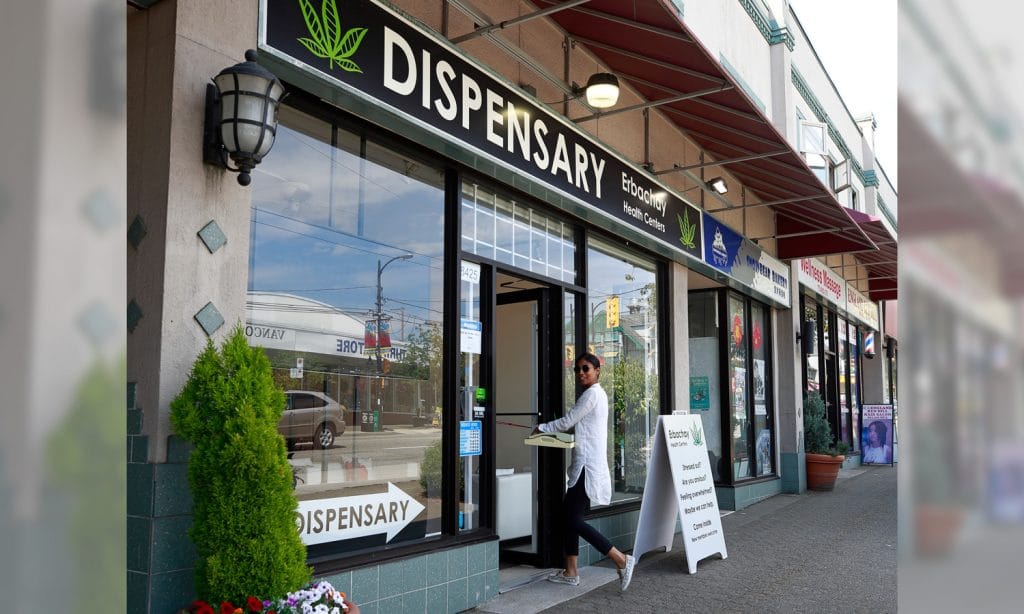
What Are Dispensaries?
A dispensary is basically a legitimate business that sells marijuana.
In countries where cannabis is legal, consumers don’t have to buy their weed from a dodgy-looking guy in a dark corner, or sneakily plant it in the closet, away from their neighbors’ sight.
Dispensaries are totally legal businesses where you can obtain information on weed strains, try different products (from flowers or buds to concentrates, creams, oils, and accessories) and buy the cannabis product that best suits your needs.
In fact, in Canada and several places in the United States – such as California and Colorado – you can even order marijuana online and have it delivered to your home, and it’s all 100% legal.
OK, And What Are Cannabis Stocks?
In countries where it can be bought and consumed legally, weed has become a multi-billion dollar business. This means that those who grow cannabis are not just amateurs doing gardening on their balconies, terraces and closets. There are huge companies dedicated to the cultivation, production, distribution and sale of marijuana products.
Some of these companies have thousands of employees and are valued in billions of dollars. Among them we can name Canopy Growth Corporation, Aurora Cannabis, Cronos Group, Aphria, Hexo, and Tilray.
Photo by Darren415/Getty Images
Several of these companies have become so important that their shares are listed on the major stock exchanges in the world, such as NYSE or NASDAQ. In the same way that investors can buy shares of Apple, Amazon, Disney or PepsiCo, they can also buy shares and own a slice of these cannabis giants. Hey, even you can do it if you have some extra cash lying around!
In Canada and the United States, cannabis has become such an important business that, in 2021, more than 320,000 people are earning their salary from the sale of marijuana and associated services.
This industry does not just employ growers and sellers. A whole industry secondary to the production and sale of cannabis has developed, offering specialized marketing services, legal consulting, laboratory testing and development of customized software solutions.
Disclaimer:The views expressed in this article solely belong to the author and do not necessarily represent those of The Fresh Toast.
Hundreds of thousands of Americans have died because people don’t believe the medical establishment. The medical establishment has squandered its credibility on the Drug War, and continues to do so.
Mahatma Gandhi was once asked, “What do you think of Western civilization?” He replied, “I think it would be a good idea.”
Today, we might have to say the same thing about medical marijuana. Even though 90% of the American people support it, the Johnstown Tribune-Democratreports that the Pennsylvania Medical Marijuana Advisory Board recently rejected petitions to allow “medical marijuana to be used to treat traumatic brain injury, hepatitis, hepatitis C, chronic insomnia, and major depressive disorder that is unresponsive to other treatments.”
Photo by CasarsaGuru/Getty Images
The Tribune-Democrat explains, “Pennsylvania’s 367,925 active medical marijuana patients have all been diagnosed as having one or more of 23 serious medical conditions, including amyotrophic lateral sclerosis, anxiety disorder, cancer, Crohn’s disease, multiple sclerosis, post-traumatic stress disorder and opioid use disorder and chronic pain.
“Physician General Dr. Denise Johnson said board members were concerned the applications for traumatic brain injury, hepatitis and Hepatitis C were overly broad and would have allowed people to qualify for medical marijuana cards in cases that would be inappropriate. The board was concerned that juveniles could qualify for medical marijuana if they suffered acute traumatic brain injuries. Johnson said there is evidence that medical marijuana could benefit patients suffering from chronic hepatitis and chronic Hepatitis C, but that board members felt it would be inappropriate to allow medical marijuana for people who’d had acute cases of hepatitis….”
One of the Prohibitionists’ most disingenuous arguments against medical marijuana initiatives was that “we don’t vote on medicines.”
Of course, that is literally true. The FDA supposedly evaluates proposed pharmaceutical industry products to determine if they are safe and effective. It is a hugely expensive process that only works because the pharmaceutical companies have patents on the prospective medicines.
However, the medical marijuana initiatives were actually votes on criminal law, which is certainly within the purview of the people. Sick people were unwilling to die in pain or live with their heads in toilets while the police and the politicians lied to them…and about them.
Of course, when patients no longer had to live in fear of arrest and could speak publicly about it, it became impossible to convince the American people that the system was protecting the public, much less the patients.
Photo by Denise Hasse/EyeEm/Getty Images
It is particularly ironic that Pennsylvania, where the Declaration of Independence and the Constitution were written, would now deprive sick and dying Americans of their right to use a plant that was widely grown by the authors of those founding documents.
It would be easy — but pointless — to attack the hubris of this board. Sadly, they are simply a manifestation of the utter failure of our medical system that I call the “Quackocracy,” dominated by the American Medical Associations, including the state franchisees, that are still actively opposing state medical marijuana initiatives, including, most recently, in Mississippi!
This arrogance is actually a major argument for the complete legalization of “recreational” marijuana. Yes, there may be a difference between medical and recreational use, but clearly that is not a decision we can leave to governments that have lied to us for generations.
Theoretically… it should be possible to regulate cannabis and cannabinoids in way that “protects” the public, but the Federal government — with NO OBJECTION from the Quackoracy — has long blocked research on cannabis and still shows no interest in possible treatments for any medical conditions, even for COVID during the pandemic.
Hundreds of thousands of Americans have died — and more are dying every day — because people don’t believe the medical establishment. The medical establishment has squandered its credibility on the Drug War, and continues to do so.
Yes, the truth would make us free. “I think it would be a good idea.”
This state is a classic example of how the country’s economy would grow once the marijuana industry is legalized nationwide.
With a total of $1.4 billion in taxable cannabis sales in the second quarter, California takes the lead as the state with the highest sales of weed in the United States of America.
From being the first state to approve the medical use of marijuana in 1996, to now hosting some of the biggest cannabis farms and dispensaries in the country, California has always been at the forefront of the cannabis industry in this country.
Photo by Ivan-balvan/Getty Images
Cannabis Sales in the U.S.
The cannabis industry makes revenues worth billions of dollars from the states that have legalized either or both the use of recreational cannabis and medical cannabis.
Sales are somewhat limited because the drug is still prohibited based on federal laws. However, this has not hindered the popularity of the drug among patients and adults in the country.
As more pro-cannabis laws are being approved, the sales in each state are increasing. The U.S department of commerce classifies cannabis stores under a segment called miscellaneous store retailers.
The latest figures obtained from this segment show that as of July, cannabis dispensaries single-handedly increased sales by 3.5% from June to July. These dispensaries cannot be referred to as “small” any longer. All dispensaries across the country are doing more than fine. In the last quarter, total retail sales lagged, however cannabis retail sales continued to boom. This sale contributed to the economy in immense ways.
At the last count, 15 states have legalized recreational weed while 35 states allow medical marijuana programs for licensed patients. Among these states, few have stood out in the way they have swiftly built infrastructures and passed more policies for the growth of their cannabis industry. Some of these states include California, Colorado, Michigan, Washington, Nevada, and Illinois.
California Makes The Highest Cannabis Revenue In The U.S
The total tax revenue realized from cannabis sales in 2020 is over $800 million. The medical and recreational weed industry in California made combined sales of up to $4 billion in the past year.
California has the largest legal cannabis market across the United States. Investors troop into the state in droves because of the amazing revenues that can be gotten from the cannabis industry.
Despite having a recreational marijuana sales market that is barely three years old, the state holds the record for having the biggest legal recreational cannabis market, surpassing Washington and Colorado. The booming sales are projected to continue increasing for the next months.
Deeper Insight On Cannabis Sales in California
The California Department of Tax and Fee Administration (CDTFA) released reports that state that California’s taxable cannabis sales increased by 11.2 %. Taxable cannabis sales in Q2 rose to $1.4billion. This means that legal cannabis sales have jumped by 108% since 2019 Q2, and 24.4% since 2020 Q2.
The above figures are astonishing as they do not include medical marijuana sales or black market sales. Sales of medical marijuana in California cannot be taxed by the government and the Black market industry has no trackable records for the CDTFA to observe and report on.
Photo by Jp Valery via Unsplash
Analysts believe that the black market sales which are off the charts most times equal or surpass sales realized by the regulated market.
From the regulations guiding the legal recreational market, the government generates revenue from the excise tax, cultivation tax, and cannabis sales tax collected from the actors of the market.
Other factors contribute to the growth of the legal recreational cannabis market.
Size of the State
California has the third-largest landmass in the United States. This makes it one of the most populated states in the country. Its landmass also makes it perfect for the cultivation of cannabis.
The Emerald Triangle which is located between Mendocino County, Humboldt County, and Trinity County produces around 1.7 million pounds of cannabis every year, imagine how many millions this equates to— and this is not the only site where cannabis is cultivated within the state.
Cannabis Culture
The old and young residents of California have showcased high domination of cannabis culture. In the 1960s, California was the global epicenter for cannabis culture within the states, with residents accepting the drug for its medical and recreational benefits. This culture has not waned and it contributes to the high sales of cannabis within the state.
Photo by Patrick Tomasso via Unsplash
Tourist Appeal
The State records a high rate of tourist visits each year. An average of 260 million tourists come into California annually.
Like Colorado, California is prepared to boost cannabis tourism in the state. These new tourists will be able to experience the entrenched cannabis culture within the state as well as the legal use of the drugs.
What to Expect
A report written by Wolf Ritcher states that cannabis retail sales show a unique growth pattern that is rarely observed in other retailer segments. Around July of last year, the sales of taxable cannabis in the state were a little over $2.6 billion and now this figure has increased by 48% to $5.1 billion.
The heavy taxation of the products might be looked into as it encourages actors of the black market to keep churning out products with reduced costs. Residents have also learned to work around this by purchasing medical marijuana products instead. However, despite the high taxes, thousands of people buy legal adult-use weed daily.
Bottom Line
California is a classic example of how the country’s economy would grow once the marijuana industry is legalized nationwide.
Federal laws when introduced will position other states for increased cultivation and sales. Perhaps one of these states will be able to threaten the supremacy of the California cannabis market. It will also encourage the NAICS to create a segment for cannabis retail sales.
Till then, California will continue to be the envy of cannabis markets around the world by making billions of dollars in annual retail sales. It will remain a cannabis powerhouse for a long time.
With all the tech advancements in grow ops, and a valiant attempt to eliminate the stoner stereotype from dispensary storefronts, the American pot market has become a bit bougie.
Everyone is ranting and raving these days about medical marijuana. Depending on who you ask, it can prevent, treat and even cure various health conditions from anxiety to cancer. Some believe in the powers of the herb so much that they have tossed all of their prescription drugs in the trash and kicked it into high gear down the path of pot. But a lot of these people are learning that with all of the legal discrepancies associated with this crop, it’s a rather expensive trip.
In Ohio, a survey conducted by the state found that nearly 60% of patients and caregivers are unnerved about the price of medical marijuana. The poll found that most program participants pay around $300 out of pocket every month for cannabis products. And many are complaining about it.
Photo by CasarsaGuru/Getty Images
“Why are these products so expensive?” one responder inquired. “Does Ohio realize that those prescribed mmj (medical marijuana) often deal with symptoms that make working full-time difficult?”
But while Ohio patients grumble about the state’s prices being unreasonable and unaffordable, expensive is just the nature of the beast when it comes to medical marijuana. In states like Michigan and Illinois, the average cost of an ounce of medicinal herb is between $265 and $380.
Pennsylvania’s medical marijuana program is no exception.
A December 2020 report from The Philadelphia Inquirer shows that the state is one of the country’s most expensive medical marijuana markets. The high cost has been attributed to everything from profiteering to supply issues, but no one really has any clear answers. The consensus is that the state’s cannabis industry is a wild west business model, and everyone involved is charging whatever they want because they can. Officials with the state’s medical marijuana advisory board say program participants are always complaining about the price of weed. And probably always will.
“The patient community is always outraged about the prices,” said Luke Shultz, an advisory board member. “I’m not sure where the price should be. But we’d sure like to see it lower.”
Medical marijuana is a solid concept at a basic level. Studies emerge almost every day, showing how the herb can make life a little more palatable. Even regular people with no opinions about whether medical marijuana is better or worse than being a slave to Big Pharma are giving it a try. Patient counts have continued to increase over the past few years. This has caused pot shortages in some areas, which leads to price hikes and unhappy customers. There are also a wealth of other attributes that bring about high medical marijuana prices. And the cost can be a deterrent.
Photo by Esther Kelleter/EyeEm/Getty Images
“The dispensaries are severely overpriced,” one Ohio medical marijuana patient wrote in a note accompanying the survey.
Spending hundreds of dollars every month isn’t always the most feasible option for alternative medicine; not when patients can lean on their health insurance plan for pharmaceuticals that provide similar or even better results for little to no money out of pocket. Even those who refuse to give up on medical marijuana (they believe it’s the only way to go) often bypass legal channels and frequent black market sources for a price break. But if a patient doesn’t have health insurance, they likely don’t have a job or one good enough to afford legal weed.
With all the technological advancements in grow operations, and a valiant attempt to eliminate the stoner stereotype from dispensary storefronts, the American pot market has become a bit bougie. And there’s no $5 prescription plan.
It could be argued that federal prohibition is what makes medical marijuana a flawed concept. Since the U.S. government still considers cannabis a Schedule I dangerous drug with no known medical value, state produced medicinal cannabis isn’t really even considered medicine. It isn’t covered by any health insurance network, it’s not being administered in hospitals (not even in legal states), and it cannot be purchased at CVS or Walgreens.
In fact, while a doctor can write a recommendation for it, medical marijuana cannot be prescribed.
There are apps for everything, including monitoring your period. Here are 5 of the best apps that can help you keep track of your symptoms and sex life.
Technology has made great advances in all regards, including period health. This much-maligned area of interest is one that needs a lot of research and support since many women struggle with chronic pain and impairment that’s simply chalked up to their periods.
Menstrual tech, a scary term that’s not nearly as dramatic as it sounds, usually relies on tracking the days of your period and monitoring symptoms. While very simple, their use is extremely helpful for women with irregular periods or simply women who wish to have a better understanding of how their body functions.
Flo is one of the most popular period trackers, with over 150 million users. While it does the standard job of tracking your period, it also provides a space where people can discuss their symptoms and, for an extra price, contacting experts that can provide insight and education on a personal basis.
Some of Flo’s perks include the fact that the app uses AI to create accurate period predictions and the numerous wellness guides that can provide a better understanding of people’s sexual health.
Eve by Glow is designed for menstruators who want to keep an eye on their period and sex habits. While there’s a paywall, with a one time payment you’re able to access all of the app’s features for life, including features that can help when trying to conceive and with post-partum life.
Eve is very inclusive, allowing for a variety of sexual activity, symptoms and scenarios that not all apps have.
The Health app, which is already installed on the iPhone, is a great and no fuss way of tracking your symptoms. If you don’t want to add any extra software into your phone or are distrustful of other apps, this is a good idea for you. Since the app tracks a bunch of other things pertaining to your health, it might not provide as full of a picture, but it’s still a good option for a majority of people.
Cycles is a free app, very simple and easy to use. The feature that makes it stand out from the rest is the fact that, with a paid membership, you’re able to share all of your data with your partner, keeping you both in the loop when it comes to topics like your period, ovulation cycle, and more.
Clue is one of the oldest apps in the game. It’s trustworthy and easy to use, with few ads and features that make navigating the app clunky. That goes a long way nowadays.
Over the summer, Amazon came out in favor of federal marijuana legalization. The company also said that it would no longer drug test job applicants that aren’t regulated by the Department of Transportation.
Over the past three years, Seattle City Councilmember Kshama Sawant has made it her mission to drive Amazon out of Seattle and ruin the hundreds of mom and pop businesses supported by the company’s employees, including local cannabis retailers. Despite the attacks on the company, its headquarters, and even its employees, Amazon continues to embrace progressive policies. The company recently stopped drug testing applicants for marijuana and actively promotes itself as a cannabis-friendly workplace. The retail giant is now calling on its contracted delivery services to stop screening all drivers for cannabis.
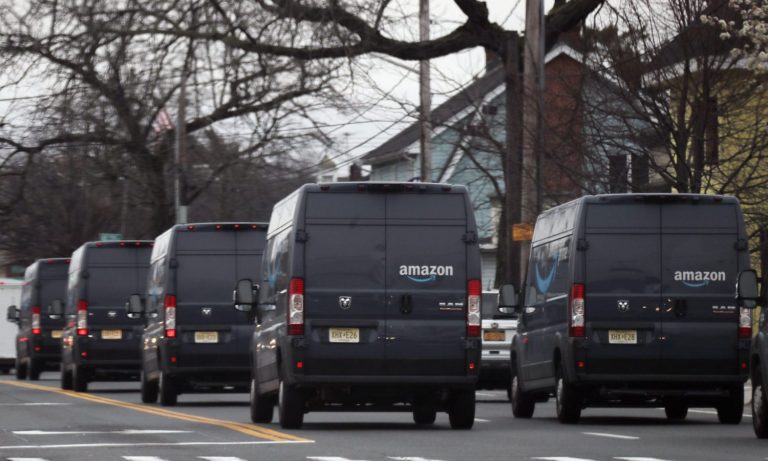
According to a new report from Bloomberg, Amazon sent word to its delivery services this week, urging them to no longer test applicants for marijuana. It’s a strategy that Amazon believes will boost driver applications by as much as 400%, the news source asserts, putting an end to the driver shortage before the holiday season kicks into high gear in the next two months. Many delivery companies went along with the policy change, while others aren’t into it.
Photo by Bruce Bennett/Getty Images
“If one of my drivers crashes and kills someone and tests positive for marijuana, that’s my problem, not Amazon’s,” said one anonymous delivery service executive. Everyone doing business with Amazon is reportedly keeping their mouths shuts because the company has urged them not to discuss the situation with the media, which is strange considering its overall position on pot.
Over the summer, Amazon came out in favor of federal marijuana legalization. The company also said that it would no longer drug test job applicants that aren’t regulated by the Department of Transportation. “In the past, like many employers, we’ve disqualified people from working at Amazon if they tested positive for marijuana use,” wrote Dave Clark, CEO, Worldwide Consumer. “However, given where state laws are moving across the U.S., we’ve changed course.”
But now, Amazon wants to see its associate companies make similar changes. Of course, the directive only applies to drug testing for marijuana. Delivery services are still required to test potential employees for hard drugs like methamphetamine, cocaine, and heroin. They just want these operations to take a step back on the marijuana issue, considering it is now legal in half the nation. However, like alcohol, this doesn’t mean that drivers can come to work high or get stoned on the job.
“If a delivery associate is impaired at work and tests positive post-accident or due to reasonable suspicion, that person would no longer be permitted to perform services for Amazon,” a company spokesperson said.
Photo by 400tmax/Getty Images
Amazon, headquartered in Seattle, Washington, is now on a mad hiring spree. The company is looking to fill some 55,000 open corporate and tech positions across the globe. In the U.S., it needs to fill 40,000 jobs to meet the demand of their customers.
There are valid concerns Amazon plans to reduce their Seattle footprint over Sawant’s ongoing attacks, the city’s high crime rate, and its paralyzed government. Cannabis friendly Amazon was among local companies shocked by efforts spearheaded by Seattle City Councilperson Kshama Sawant and Lorena Gonzales that lead to the popular police chief, Carmen Diaz, resigning despite her efforts to rein in crime and chaos during the chaotic summer of 2020. Seattle had part of a popular neighborhood overtake and declare independent. During the weeks long occupation, the City Council supported closing the police station and allowed attacks on the neighborhood and local businesses.
During the recession, Amazon, along with Seattle’s iconic Pike Place Market, provided rent relief to their tenants to help them weather the lockdown. In addition, Amazon provided grants to mom and pop neighborhood businesses to help keep them afloat. Amazon posted more than 12,000 positions available in the Puget Sound region with neighboring city Bellevue benefiting from Sawant’s anti-job policies.
Sawant has been ordered to pay a fine of more than $3,000 to the Seattle Ethics and Elections Commission (SEEC) for using city funds to illegally support her Tax Amazon Initiative. She was charged last year with using city resources to promote her efforts to damage the regional economic stability.
Sawant is accused of violating COVID protocols last summer when she led a gang of hundreds inside Seattle’s locked-down city hall. She used the BLM movement to support her ongoing attacks on Amazon with Moe’Neyah Dene Holland, a protester who followed Sawant, commenting, “I want to tax Amazon too, but can we please for once focus on Black lives?” The statement drew applause from the audience and highlighted Sawant’s focus on damaging one of the regions key employers instead of the left’s positions.
Sawant’s focus against the retailer comes at the expense of progressive policies including cannabis legalization small businesses. Data released in April 2021 revealed 68% of employees at Amazon US are non-white. There is now a campaign to recall Sawant — something the Washington State Supreme Court recently ruled can proceed and is gaining steam.
It seems in Seattle, talk of progressive policies doesn’t always equal action.
Not only would legislation reduce the power wielded by the FDA and establish guidance for CBD manufacturers, it would ultimately guarantee the customer’s safety.
The FDA has chosen to maintain the standard of accepted dietary supplements by throwing out the possibility that cannabidiol compounds can be used as active ingredients or supplements in foods and beverages.
The Farm Bill
The Farm Bill legalizes the cultivation of hemp plants in the United States. CBD is derived from hemp. This law which was passed in December 2018 was an effort of the previous government to improve agriculture in the country. While the legislation permits the growing of hemp, it also prohibits the sale of hemp products without FDA approval.
All brands being marketed and regulated as a drug cannot be sold or labeled as food, beverage or dietary supplement except the FDA approves it.
Photo by jirkaejc/Getty Images
The FDA’s Position
For many years, even before the approval of the Farm Bill, the Food and Drug Administration (FDA) has taken a position that opposes the inclusion of cannabidiol compounds in food production.
This position was reaffirmed in July, when the agency vetoed two dietary ingredients that tested positive for CBD compounds. The FDA was notified that the New Dietary Ingredients (NDI) had full-spectrum hemp extracts that also contained cannabidiol.
The FDA linked the cannabidiol contained in these products to the active ingredient used in an approved prescription drug called Epidiolex. This drug was approved by the FDA for the management of seizures in Lennox-Gastaut syndrome patients. It can also be used to treat patients diagnosed with Dravet syndrome. The FDA argues because CBD has previously been studied and marketed by GW Pharmaceuticals with its Epidiolex drug, it can no longer be accepted as a dietary supplement ingredient.
The FDA also claims that the manufacturers of these products failed to prove that the CBD extracts failed to meet the conditions of use that state that products must be reasonably expected to be safe.
The companies marketing these dietary ingredients were subsequently contacted and told that their products would not be entering into the mainstream market because these ingredients failed to meet the definition of dietary supplements provided by the food and drug administration.
The companies involved were Charlotte’s Web, product ID; NDI 1199, and Irwin Naturals with product ID; NDI 1202. The agency wrote that both companies did not include enough evidence to relieve the agency’s significant concerns over consumer’s safety.
Photo by Cavan Images/Getty Images
In the letter, the agency mentioned that the data provided by Irwin Naturals is not related to their product. Instead, the information referred to phytocannabinoid mixtures.
The FDA wrote that Charlotte’s Web failed to give substantial proof to show that NDI 1202 induces no adverse effects in the consumer.
Two years ago, Commissioner Scott Gottlieb, head of the agency then, explained that the singular way cannabis or cannabis-derived product can be marketed as or in a dietary supplement is if it is FDA approved. He stated that is a criminal act for manufacturers to include CBD in foodstuff or dietary supplement without proper regulations. The FDA must first regulate the product through its notice-and-comment rulemaking process. The company has to present the agency with evidence of benefit that would be sufficient to review present CBD conclusions.
Some months ago, the FDA showed an interest in creating a pathway for cannabis and cannabis-related products to be approved. Nothing significant has been said or done about it. Recent happenings point that the FDA is not switching sides anytime soon, except the legislation is changed by the congress.
CRN Extremely Disappointed By FDA Decision
As expected, the affected parties did not receive the news well. The Council For Responsible Nutrition (CRN) is a body that is recognized as “the official trade association for dietary supplement and functional food industry in the country”. The headquarters of this council is based in Washington.
On August 11, the council responded saying that the FDA is guilty of mislabelling the rejected products. The president and chief executive officer of the association explained that the FDA did not consider the evidence put forward that explained how the products could be used safely.
According to CRN CEO & President, Steve Mister, the FDA dismissed and downplayed information that could have moved the products forward. The administration has failed to reason that full-spectrum hemp products can also be used and marketed in a manner that is best for human consumption.
Photo by athima tongloom/Getty Images
Mister also added that the agency has still not done anything substantial enough to ensure the majority of consumers are against the products from the unregulated marketplace. He made sure to add that the market became unregulated due to the inaction of the Food and Drug Administration over the last two years.
Could The Judgment Of The FDA Be Flawed?
Mister claims that the FDA wrongfully equated the ingredient extracts to Epidiolex.
From the laboratory tests carried out on Epidiolex and the full spectrum extracts, it was observed that the first contains around 10 times more cannabinoids than the latter.
The FDA’s findings were incorrect; Epidiolex is a more potent substance because it contains highly concentrated CBD isolates.
The CEO of Charlotte’s Web, Deanie Elser, pointed out the skewed reasoning of the FDA, he added that the agency’s decision further proves that Congress must take immediate steps to provide regulatory clarity on the use of CBD in dietary supplements.
The Hemp And Hemp-derived CBD Consumer Protection And Market Stabilization bill was introduced earlier in May to legislate hemp CBD as a dietary supplement. Another proposed measure is the Hemp Access and Consumer Safety Act. Both bills are still being circulated among the senators and Reps. Reports have it that Senate Majority Leader Chuck Schumer is currently drafting another bill to this effect.
Bottom Line
The FDA’s refusal to change its position on this issue has become frustrating to the affected parties.
For the agency to stop issuing these NDI objection letters, congress has to swiftly approve legislation that would legalize the use of a certain amount of CBD in dietary supplements.
Like Charlotte’s Web wrote, not only would legislation reduce the power wielded by the FDA and establish guidance for manufacturers, it would ultimately guarantee the customer’s safety.