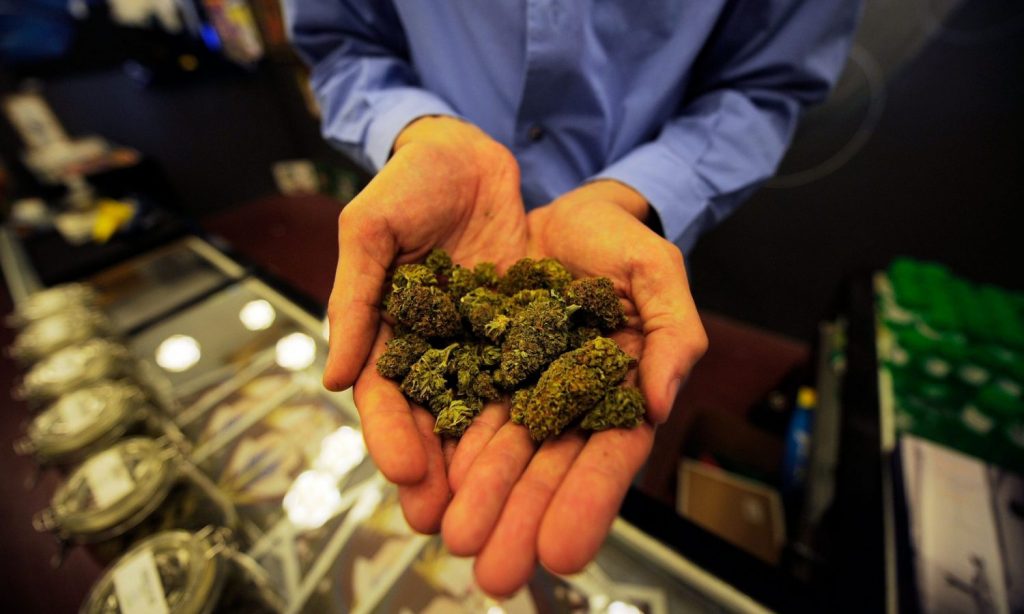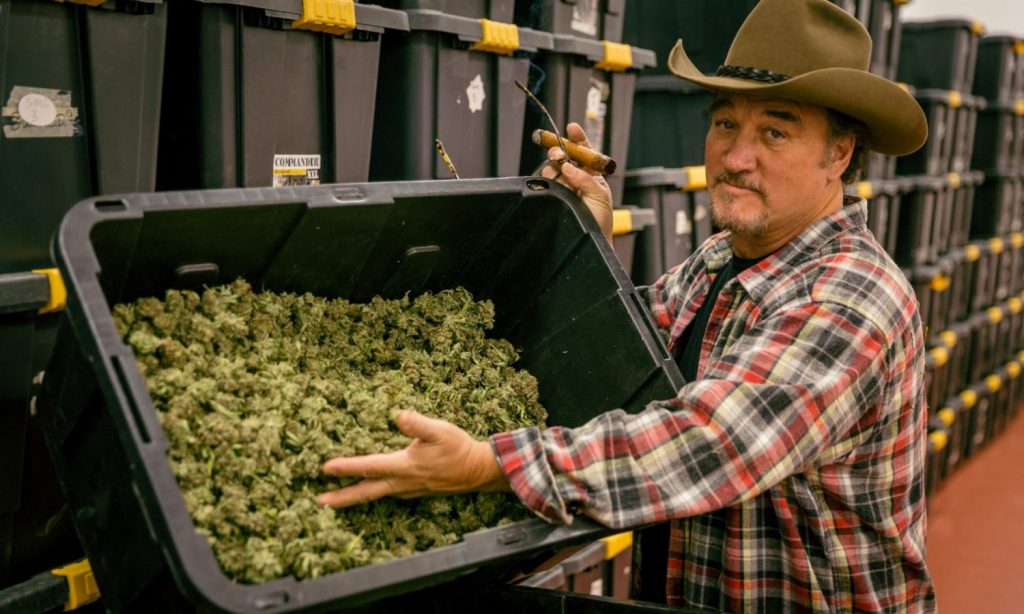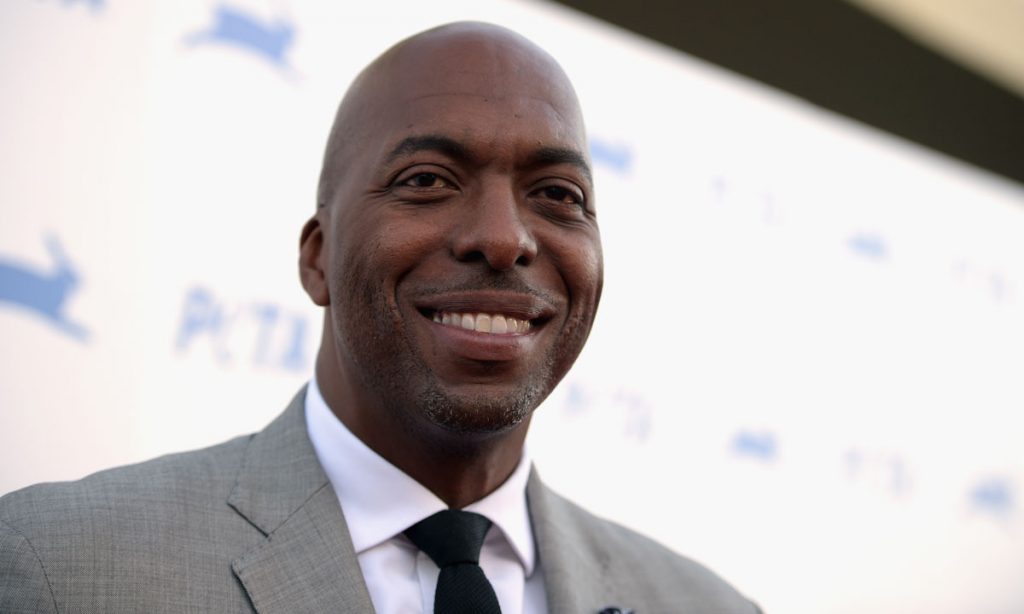
Just over a month following Louisiana Gov. John Bell Edwards signing off on a bill to decriminalize small amounts of cannabis possession for personal use, the measure took effect. Finally, marijuana possession not a a Louisiana crime!
As of Sunday, August 1, Louisianians caught possessing up to 14 grams of cannabis will face up to a $100 fine, but without jail time, Marijuana Moment reported.
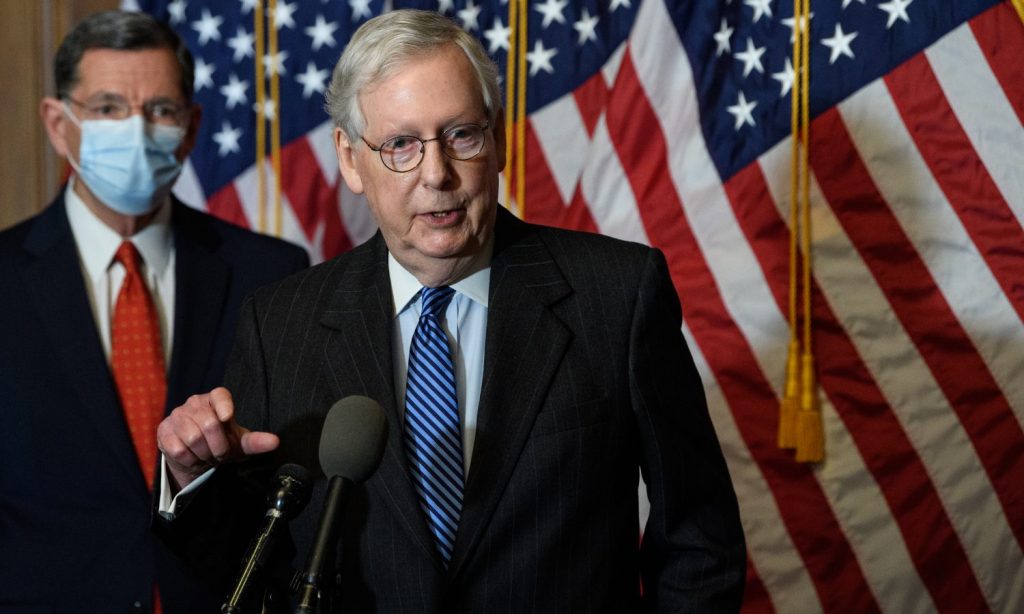
Photo by Peter Unger/Getty Images
Under House Bill 652, possession of smaller cannabis amounts is now classified as a misdemeanor rather than a felony.
And while the measure removes the threat of incarceration for low-level possession, the governor has pushed back on the notion that it has decriminalized cannabis.
State Rep. Cedric Glover (D), who sponsored the decriminalization bill, has teamed up with advocacy group Louisiana Progress to work on an awareness campaign to educate and inform the public about the new reform via FAQ pamphlets they released. They are also using social media.
“When I saw two city council members in my hometown of Shreveport—one conservative and one progressive—come together to decriminalize personal-use marijuana possession there, I knew it was time to take this reform to the state level,” said Glover who represents the Shreveport area. “Criminalizing marijuana possession is harmful to the people of Louisiana in so many ways, but it’s been particularly harmful to Black and Brown communities, lower-income folks, and young people. My fervent hope is that this new law will finally bring some relief and a feeling of freedom to those communities.”
The governor has said in the past that he would not likely sign a bill to legalize recreational marijuana even though that reform “is going to happen in Louisiana eventually.”
A Bill To Legalize Smokable Medical Marijuana
In June, Edwards signed another bill, enabling medical cannabis patients to legally smoke whole-plant marijuana flower.
The measure significantly expanded the state’s medical marijuana program, which previously only allowed patients to vaporize cannabis via a “metered-dose inhaler.”
Cannabis staffing leaders tell Benzinga that much of the industry is already back to pre-COVID in-person working arrangements.
Some of the market’s ancillary job functions did pivot and embrace the new digital arrangements. However, that was not the case for many and does not appear to be the reality for most going forward.
Photo by Helena Lopes via Unsplash
Several sources explained that cannabis and its early-stage maturation requires workers to be in-person to produce products, forge relationships and drive sales through face-to-face interactions. Therefore, working from home is unlikely to be an option for much of the workforce.
Many In Cannabis Never Left The Office
Much of the industry received its essential status early on during the pandemic. The distinction allowed producers, cultivators, retailers and others to remain open, using modified social distancing protocols.
“Many of these operations actually added additional on-site workers and spread them out over additional shifts in order to safely socially distance,” stated Kara Bradford, CEO of Viridian Staffing.
Bradford noted that a packaging facility client shifted its operations, splitting its ten-person staff into two working shifts to satisfy social distancing rules.
Still, some roles in non-plant-touching capacities and ancillary fields did head home during the pandemic’s peak.
There is a chance cannabis companies keep employees working remotely, but most don’t see that outcome playing out.
Danielle Schumacher, co-founder and CEO of THC Staffing Group, sees work from home remaining in place under one condition. “I believe many will allow employees to continue working from home as long as it saves the company money,” she predicted.
Other staffing leaders, including Liesl Bernard, Cannabiz Team CEO, believe that most workers will head back to the office if they haven’t already.
“We just didn’t see the same level of interruption that other industries did, and cannabis will definitely bounce back faster in terms of the in-person workplace,” Bernard said, adding that workers from various sectors, spanning cultivation and retail to compliance and admin, are already working on-site or can expect to be back soon.
She added that some clients pivoted select roles to remote work during the pandemic but now are specifically stating in job listings that they expect to hold in-person interviews and have in-office operations.
Photo by Heath Korvola/Getty Images
“We see this as another strong indication of where the industry mindset is,” Bernard added.
One company embracing that vision is 4Front Ventures Corp. (OTC:FFNTF). As much of the market did during COVID, 4Front’s operations remained open, keeping much of the staff working in person.
“As an essential business, our cannabis retail and production facilities have never closed,” said Jill Vipond, 4Front’s human resources director.
For Most, The Future Of Cannabis Work Will Remain In The Office
While much of the market could head back to the office, not everyone sees the decision as the most efficient.
Like Schumacher, Bernard said that when assessing cost centers versus revenue generators that “these groups don’t necessarily need to head back into the office post-COVID as long as the infrastructure” is in place to support their work. She highlighted roles in marketing, accounting, payroll and select HR as possible long-term work-from-home candidates.
Bernard noted that the previously mentioned roles, as well as legal and marketing, could also find themselves in a hybrid work arrangement. That said, most won’t have the option.
“It is very much an in-person industry that is built on meeting with people face-to-face and building a foundation of trust and connection,” said Bernard. She added, “This is difficult to do online or remotely.”
Vipond stated that 4Front has asked all its employees to return to the office, save for a few exceptions based on location, regular travel and for those who have an entirely tech-based role.
She cited relationship building and collaboration as primary reasons for the return to the office.
She added that most employees tend to do best in an office setting. “The vast majority of employees need structure and socialization to be a top performer and contributor, moving the company forward,” Vipond said.
For Dems to get any kind of comprehensive cannabis legalization policy on the books before the end of the year, the bill could end up highly watered down and ultimately defeat its purpose.
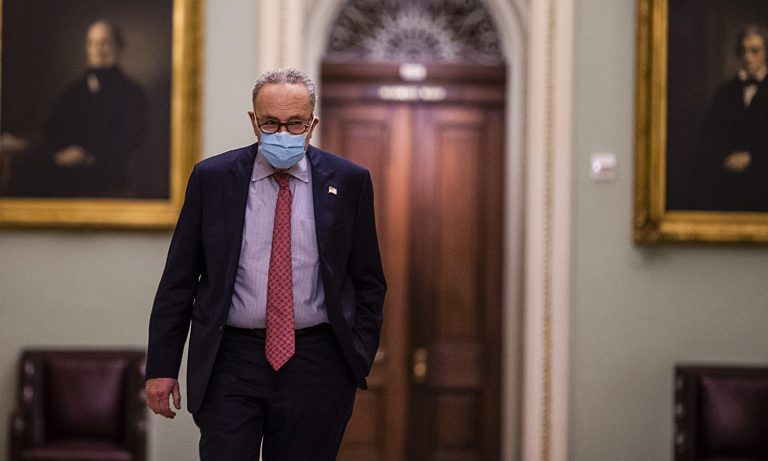
Well, it finally happened. Senate Majority Leader Chuck Schumer and his pot-friendly cronies introduced their long-awaited federal marijuana legalization bill (Cannabis Administration and Opportunity Act) last month, aiming to repair the damages done by the drug war while also creating a capitalistic environment allowing the herb to join the ranks of alcohol and tobacco. It’s a bill that has advocates split. Big surprise, right?
Some are obviously all for it, as it beats prohibition. Others, however, are less impressed with the details and want the measure to undergo a severe overhaul before it ever reaches the president’s desk, the proverbial end of the line. But not so fast, maverick. Does Schumer’s bill have what it takes to go the distance in 2021?
Photo by Kevin Dietsch / Getty Images
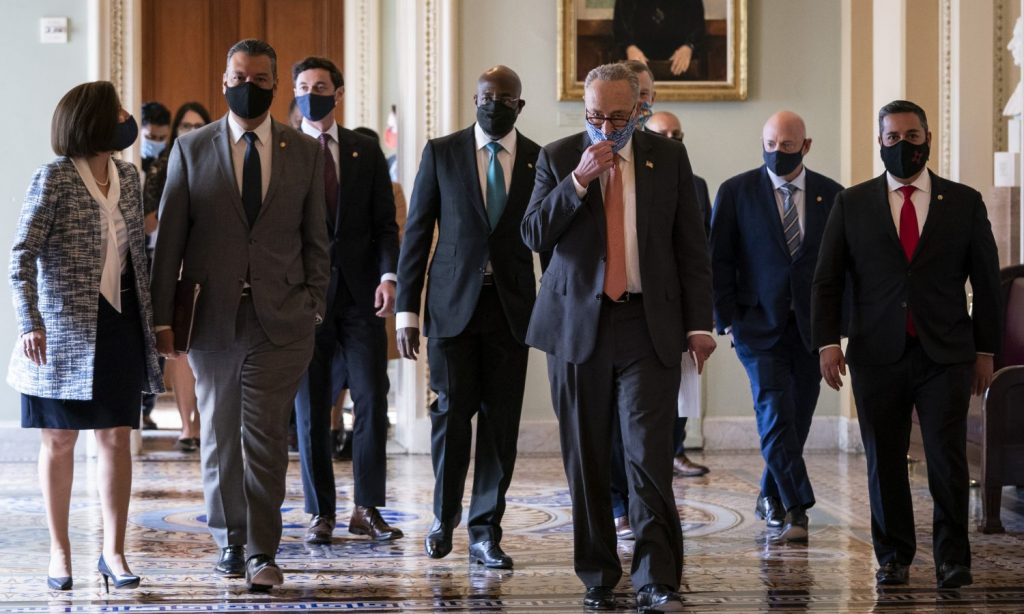
By Senator Schumer’s own admission, probably not. Although the Democrats have the majority in both the House and the Senate, the margins are slim, the animosity is fierce, and the divisiveness is strong. And then there’s the filibuster — an old Senate rule that demands a supermajority for controversial issues. That means Schumer needs at least 60 votes in the upper chamber for his bill to pass, which because of all the reasons mentioned above, he doesn’t have.
At least not right now.
“We don’t have the votes necessary at this point,” Schumer said during a recent press conference. “But we have a large majority of our caucus for it. We’re going to show it to the others and say, ‘Well, what don’t you like? What do you like? And we’ll see if we can get the support.’ We’re going to put our muscle behind it, all our effort behind it, and we’re going to get this done ASAP.”
Photo by Kevin Dietsch / Getty Images
The lack of votes is precisely why the cannabis bill wasn’t actually formally introduced but rather opened for discussion and public comment through the beginning of September. That’s when Schumer will presumably use all the input he’s collected, revise the bill and formally introduce pot legislation that is more palatable to America. And to him, we say good luck with that! Seriously. We hope it works out.
However, often, as the proverb goes, “too many cooks spoils the broth.” If Schumer’s big idea is to negotiate with the people, his peers, and everyone else, for that matter, on how the nation should legalize weed in a way that is best for the country, he will end up with a mud sandwich. As we have learned ever since marijuana legalization started happening in the US, everyone wants something different, and nobody is ever happy.
Still, Schumer’s hope is that he can reach a consensus of sorts and guide this legislation to the finish line.
“We’re now going around to our colleagues saying, ‘Would you sign onto the bill? And if you don’t like what’s in the bill and want some modifications, tell us,'” Schumer said last month during an appearance on ABC’s The View. “I want to get this done. And I think we will get it done because it’s so, so overwhelmingly supported by the American people.”
The one sure thing preventing the Cannabis Administration and Opportunity Act or some tweaked version of it from going the distance in 2021 is bipartisanship or a lack thereof. Congress has been locking horns all year on a wide range of issues. Senate Minority Leader Mitch McConnell still has more influence and power than Schumer, despite his demotion. Whether the bill gets a fair shot is really up to him.
McConnell hasn’t given any indication that he’s changed his anti-pot position in the past six months, nor is he too excited about doing anything to help further the Democratic agenda. On the flip side, however, he recently surprised Democrats by assisting in reaching a $1 trillion infrastructure deal.
Does that mean there’s hope?
Photo by Alex Wong/Getty Images
At the risk of sounding pessimistic, probably not much. Even if Schumer’s marijuana legalization bill would happen to miraculously pass both chambers of Congress and land on President Biden’s desk for a signature, the chances of it getting signed are slim. Biden said during his campaign that he would support decriminalization but didn’t feel full-blown legalization was the way to go. Last month, White House press secretary Jen Psaki clarified that the president hasn’t budged. “I have spoken in the past about the president’s views on marijuana,” Psaki said. “Nothing has changed. There’s no new endorsements of legislation to report today.”
By all accounts, we will just have to wait until after September to see the results from months of public discussion. Unfortunately, for Democrats to get any kind of comprehensive cannabis legalization policy on the books before the end of the year, the bill could end up highly watered down and ultimately defeat its purpose.
A new study shows promising evidence that CBD can benefit patients, specifically those with epilepsy, in myriad ways.
Despite years in the medical marijuana market, many still doubt the efficacy of cannabidiol (CBD) in treating symptoms for physical and mental health conditions such as anxiety or epilepsy. But a new study published in the journal Epilepsy & Behavior indicates that epilepsy patients who used a form of artisanal CBD-based product showed “higher quality of life, lower psychiatric symptom severity, and improved sleep” than those who did not.
The study indicates that cost and access were driving factors in epilepsy patients who opted for artisanal CBD instead of Epidiolex, the CBD-based drug approved by the FDA back in 2018 to treat two rare and severe forms of epilepsy that manifest in early childhood: Lennox-Gastaut syndrome and Dravet syndrome.
Unlike many CBD products for sale online and in-stores made from hemp-derived CBD, Epidiolex is made from cannabis, and marked a shift in how the medical world viewed the plant.
Photo by Tinnakorn Jorruang/Getty Images
“This approval serves as a reminder that advancing sound development programs that properly evaluate active ingredients contained in marijuana can lead to important medical therapies. And, the FDA is committed to this kind of careful scientific research and drug development,” FDA Commissioner Scott Gottlieb, M.D. said in a press release.
The drug, which the official website claims has helped treat over 15,000 people, also lists a variety of side effects including “increased liver enzymes, sleepiness, decreased appetite, diarrhea, fever, vomiting, feeling very tired and weak, rash, sleep problems, and infections.” It’s also incredibly expensive, priced at $32,500 per year when it was released, though most insurance plans, including Medicaid, are expected to help cover costs.
Despite arguments that artisanal CBD is not as regulated or effective as the pharmaceutical alternative, there are additional, indirect benefits. The study was conducted in collaboration with researchers at the Johns Hopkins University School of Medicine, and funded by cannabinoid therapy nonprofit Realm of Caring, which is sponsored by companies that make CBD products. Users in the study showed “significantly better epilepsy medication tolerability, use of fewer prescription medications overall, and reduced healthcare utilization compared with Controls.”
Photo by Tinnakorn Jorruang/Getty Images
While the authors clearly state this observational study wasn’t looking at seizure control, this is promising evidence that CBD can benefit epilepsy patients, and others, in myriad ways. Skeptics and deterrers point to the inconsistency and opacity of the CBD market for avoiding artisanal CBD, but even participants whose products were obscure and with few product details reported higher wellness indicators.
Cannabis-derived CBD remains a Schedule 1 substance despite its lack of psychoactive properties and growing list of health benefits, limiting further discoveries that will improve quality of life for thousands across the country. Studies like these exemplify just one of the many advantages to federal legalization.
Motivation can be difficult to control. Here’s how to get it back when you’re feeling unmotivated.
Motivation is weird. Some days you have it and feel great, being able to get stuff done quickly and effectively. Other days you don’t, and everything you do feels borderline impossible. Motivation is linked to your mood; if you’re feeling burned out or depressed, your motivation will be lacking, and it’s a difficult cycle to break.
Paradoxically, in order to get your motivation back, you have to do stuff, even when you don’t feel like it. It’s also important to address the cause of your lack of motivation since this can worsen with time and invade other areas of your life. Due to the year we’ve had and the stressors that we’re facing, lack of motivation is growing increasingly common.
Here are a few tips that can help you get stuff done
While it won’t completely resolve your problem, rewarding yourself for completing tasks can help you get things done and is also fun. It’s also an extremely malleable trick since rewards mean different things for each person. Complete a task and reward yourself by watching something you’ve been meaning to watch or prepare yourself a cup of coffee or tea in your favorite mug. If you need to motivate yourself to work out or go for a run, save your favorite podcast or audiobook for these moments, using them as encouragers.
Share it with other people
Photo by Campaign Creators via Unsplash
Sometimes what you need is to hold yourself accountable, which can help if you share your goals and objectives with others. If you’re working on a creative project, share that with some friends that can help you stay on track. If you need motivation for your fitness, get a friend to help you and keep you accountable.
Lastly, being kind to yourself is always important, especially when you’re going through a rough patch. Lack of motivation affects all of us and it’s not a reflection of our personality and it doesn’t mean we’re lazy. Be kind to yourself and this moment will pass.
While many expect that Ohio Gov. Mike DeWine will oppose the bill, many more are optimistic based on the fact that a vast majority of Ohio voters support marijuana legalization.
A bill to legalize cannabis possession, production and sales was officially filed for the first time in the state of Ohio on Friday. The legislation was submitted by state Reps. Casey Weinstein (D) and Terrence Upchurch (D), after weeks of trying to gather more support for the proposal, reported Marijuana Moment.
“It’s time to lead Ohio forward,” Weinstein stated. “This is a big step for criminal justice reform, for our veterans, for economic opportunity, and for our individual liberties.”
Photo by traveler1116 / Getty Images
The 180-page measure proposes legalizing the possession of up to five ounces of cannabis for adults 21 and older and the cultivation of up to 12 plants for personal use. Some of the provisions seek to expunge prior convictions for possession and cultivations of small amounts of cannabis.
‘More Than Legalization’
“This bill is much needed in Ohio, and it’s time for Ohio to become a national leader in marijuana decriminalization and legalization,” Upchurch stated. “This bill is more than just about legalization, it’s about economic and workforce development, it’s about decriminalization, and it’s about healthcare! The time is now, and I look forward to getting this done in a bipartisan fashion.”
While many expect that Ohio Gov. Mike DeWine (R) will oppose the bill, many more are optimistic based on the fact that efforts undertaken over the past several years have shown that a vast majority of Ohio voters support marijuana legalization.
The Ohio Department of Commerce would be in charge of managing legal cannabis program and issuing business licenses. The proposal highlighted that Ohio’s current medical marijuana program would not be affected by the recreational market.
A 10% excise tax would be imposed on marijuana sales, with revenue first going toward the cost of implementation and then being divided among municipalities with at least one cannabis shop (15%), counties with at least one shop (15%), K-12 education (35%) and infrastructure (35%).
Forget about that stinky cheese you love. Is mold a health hazard when it comes to your weed?
Mold is easy to spot, at least when it comes to food. But how about when it comes to weed? When you find an old joint under the couch, should you toss it out? Are there risks to smoking moldy weed?
Sadly, mold is never a good thing to inhale, no matter how much you want that weed. While it likely won’t kill you, inhaling mold could pose some health hazards to your lungs, increasing your odds for coughing and then develop a lung infection.
For people who are allergic to mold, smoking could result in inflamed sinuses and lungs. These conditions could result in symptoms like sinus pain, wheezing, and congestion. In rare instances, people who are sensitive to mold could experience a fungal infection in their lungs or throats, which could be deadly, particularly if the person afflicted is immunocompromised.
Recognizing mold in weed isn’t as easy as recognizing it in food. In marijuana, mold usually looks like a greyish or white coating, which can be easily confused with trichomes. Upon closer look, mold can look like fuzz, spots, or even slime.
Photo by Flickr user Thomas Bresson
For all users, the easiest way to tell if your weed is moldy is to smell it. Mold has a distinctive smell, one that will cloud marijuana’s natural aroma. It’ll smell musty and unpleasant, unlike skunky marijuana that hasn’t yet expired.
The best way to avoid moldy weed is to buy your products from a certified dispensary and to always check the expiration date if there is one. The closer the weed is to this date, the more likely it is for it to be contaminated by mold. To prevent mold, storage is key. Keep your cannabis in a cool and dark place, sealed in an airtight container.
Whether they’re breaching the stratosphere or lobbying for weed, America’s billionaires want to take their businesses to the next level.
The same day Amazon CEO Jeff Bezos and his fellow passengers flew into space in the New Shepard rocket, his company took action to start lobbying in favor of cannabis reform legislation. Bills such as the Marijuana Opportunity Reinvestment and Expungement (MORE) Act, in the event it passes, “removes marijuana from the list of scheduled substances under the Controlled Substances Act and eliminates criminal penalties for an individual who manufactures, distributes, or possesses marijuana.”
The retail behemoth and one of the country’s largest employers made $21.3 billion in net income in 2020, while legal cannabis sales across the United States topped $17.5 billion. Bills like the MORE Act have passed in the House but are consistently left to languish in the Senate, and many cannabis activists, like the leaders of the Marijuana Policy Project and the Drug Policy Alliance, believe Amazon’s support could tip the legislative scales in their favor.
Photo by Christian Wiediger via Unsplash
“I think that if Amazon were able to lend its political support to federal reform and fund state level efforts, that would be a net positive for the cannabis reform movement in this country, Matthew Schweich, deputy director of the Marijuana Policy Project, told Politico.
This is far from the first time Amazon has expressed an interest, either financial or political, in cannabis. In February, the company announced the launch of a pilot program for sellers of CBD-infused products for the UK branch, though thousands of unregulated CBD products are searchable for sale on the American site.
On June 1, the company declared changes to its drug-testing policy, and would cease disqualifying candidates and employees who tested positive for marijuana. In the same memo, as part of their “Earth’s Best Employer and Earth’s Safest Place to Work” initiative, Amazon expressed its support for the MORE Act, and encouraged others to get involved.
Other billionaires seem to have the same idea. Tesla and SpaceX Elon Musk has publicly smoked cannabis with Joe Rogan, and expressed in a tweet last year, which has since garnered over 680K likes, that “selling weed literally went from major felony to essential business (open during pandemic) in much of America & yet many are still in prison. Doesn’t make sense, isn’t right.”
Whether they’re breaching the stratosphere or lobbying for weed, America’s billionaires want to take their businesses to the next level. It’s only a matter of time until we see what their actions mean for the rest of us.
“I can tell you that marijuana, undoubtedly, is connected to violent crimes that we’re seeing in our community,” said Robert Contee.
Disclaimer:The views expressed in this article solely belong to the author and do not necessarily represent those of The Fresh Toast.
During a press conference July 23, Washington D. C. Police Chief Robert Contee said that: “I can tell you that marijuana, undoubtedly, is connected to violent crimes that we’re seeing in our community… When you have something where people get high reward—they can make a lot of money by selling illegal marijuana—and the risk is low, the risk for accountability is very low, that creates a very, very, very, very, very bad situation because those individuals get robbed, those individuals that shot at, those individuals get involved in disputes all across our city.”
“Marijuana undoubtedly is connected to violent crimes that we’re seeing in our communities.”@DCPoliceDept Chief Contee addressed the recent string of violent crime in the District.
Of course, most major American cities are dealing with increasing violence, probably pandemic related. However, the Drug War is continuing and “more people were arrested for cannabis last year than for all violent crimes put together,” according to FBI data
Could that number explain the real relationship between marijuana and violence?
Chief Contee is African American, but he still seems to ignore the fact that, as Forbes reports, “In addition to those dwelling in the northeast, those in the black community may also be at particular risk of being arrested for cannabis crimes. A recent report from the ACLU looked at data from 2018, and found that black people were 3.6 times more likely to be arrested for cannabis possession than white people. This is despite the fact that both groups use cannabis at similar rates.
Photo by Matthew Karila via Unsplash
Even in western states with recreational cannabis laws, black people were 1.5-1.8% more likely to be arrested for having cannabis. In states with the worst racial disparity in arrests, like Montana and Kentucky, black people were 9.4-9.6% more likely to be arrested. In some counties, disparities were so high, black people were 50 times more likely to be arrested. Contee, who is 48, is a D.C. native, and, as noted, is African American (as is roughly half of the D.C. population) and has been on the D.C. police force all of his adult life. Consequently, he would seem to be an excellent choice for his job, despite his muddled statement.
Ironically, he complained, “This is the same movie when I was a boy growing up here.” Yep. It was called the Drug War, and marijuana prohibition is still a major part of it, despite the city trying to legalize it and despite the opposition of the federal government, which ultimately controls D.C.
“This is the same movie when I was a boy growing up here. When are we going to do something different? And what different looks like and what does not happen here is accountability.”
Chief Contee voices frustrations over the recent D.C. shootings.
In 1972, a couple of years before Contee was born, I visited D.C. and wandered around and found myself at RFK Stadium, where there was about to be a concert by a rock group called “The Rolling Stones”, or something like that. A scalper sold me his last ticket, and — as best I remember — there was some skinny guy dancing around the stage complaining that he couldn’t get no satisfaction. Terrible grammar!
I’m a little hazy on the rest of it, but I am certain there was no violence despite there being 50 thousand people there smoking marijuana. I have lived in Amsterdam, where I have never seen any marijuana related violence. I have lived in Nevada and in California, where I have never seen any marijuana related violence. Ditto, Austin, Texas. Ditto, Vancouver. Ditto, ditto, ditto!
Photo via Pixabay
Contee is complaining about the violence associated with black markets for anything. I’m sure that the African American leaders in Congress who are working on legalization will help him issue a “clarification”. Badly needed.
For many people, the task seems daunting and I’m not going to sugar coat it. The first time you attempt it by yourself you’ll be questioning your actions every step of the way.
When you decarboxylate cannabis, you’re essentially applying heat to activate the cannabinoids and convert them from their acid form into their psychoactive state. For example, turning THCa into THC. Here is how to decarb cannabis.
If you were to skip the step of decarboxylating your cannabis, your infusion would lack in potency and would in most cases not live up to your expectations. But what’s the right time, method, and heat settings to get the perfect decarbed weed?
That’s what we’re about to find out in this article right now. Not only are we going to be talking about the right temperature and time, but also providing you with different methods of decarbing your weed. This should provide you with everything you need to know to start experimenting with cannabis infusions. Let’s get ready to bake!
Photo by Margo Amala via Unsplash
Decarboxylating Your Weed the Right Way
Depending on the sources you find on the internet, there’s many ways to decarb your weed. The most common method is using the oven and some oven-ready trays.
Conventional wisdom says to put it in a preheated oven at about 250º F (122ºC) for about 30-minutes and this is entirely a correct assessment.
However, you can also do faster decarbs if you raise the temperature or slower decarbs if you lower it. There’s actually a chart which I found on Green Camp that is very useful if you wish to play around with the temperature.
But why would you play around with temperature in the first place? Wouldn’t following the “rule of thumb” be enough to get consistent decarboxylations on the cannabis?
Of course it would!
The reason you want to play around with time and temperature settings is because some terpenes and flavonoids are sensitive to the heat.
We’ll talk more about preserving your terps during the decarboxylation process a bit later on.
Depending on the purpose of your decarb-ed weed, by following the chart you should have a more precision with your process.
The Process of Decarbing
Oven Method
Let’s first go over the most common method — using the oven.
This is pretty straight forward.
You’ll preheat the oven at the desired temperature. We’ll say 250ºF for this example. While the oven is heating up, you’ll begin to break up the cannabis into small chunks. Don’t grind it; simply break it up finely, but not too much either. Small chunks should do.
Lay these chunks on some baking paper, evenly. Then, place it in the oven and let it cook for about 25-30 mins.
The weed should turn from green to a light brown. Once this has been achieved, you’ll carefully remove the tray and let it cool for a bit.
The weed will now be breaking and crumbling rather easily. So be careful!
Your weed is now ready to be infused.
Double Boil Method
The other method is to use a double boiler.
You’re essentially following the same basic principles, except the cannabis would be in a jar with a lid, that will allow it to trap in a lot of the terpenes
A double boiler is essentially a stovetop method for decarbing. You’ll have a pot with some water in it; roughly a quarter of the pot should be filled.
Then, you’ll place another pot on top of it, creating a sort of seal between the two pots. The steam from the water below will evaporate and will heat the pot above it.
This gives you a controlled heat of about 212 degrees F or 100 degrees C. Based on the chart below — also from Green Camp — shows you that at that temperature you’ll be cooking it for about 90-120 minutes.
By placing a lid on the top boiler — perhaps with a little opening — you’ll be able to trap in a lot of the other gases that get rereleased when heat is applied. These are terpenes, flavonoids, etc.
Once the THC is activated, and the vapor settles in the second boiler, the terps and flavonoids will recombine with the weed, increasing the taste profile of the decarb.
This comes in especially useful when you find aromatic buds. Take a blueberry strain or some lemon haze and infuse that with your favorite desert. You’ll absolute love it.
Your edibles can take on a whole new life if you understand the subtle chemistry behind all of this. The best teacher however, will always be experience.
If you’ve got some weed, it’s time to start experimenting!
Can I Store Decarbed Weed?
Sure, but it will only continue to degrade over time. It’s probably best to use it as soon as it is ready to be used.
If you’re thinking of storing weed, rather store it as fresh herb. The decarboxylation process continues with time. In fact, leave it for long enough the weed will completely decarboxylate on its own.
It may take months in some cases! Who’s got time for that!
It’s not recommended to store already decarbed weed simply because it will continue to degrade until it becomes non-viable.
Photo by Yarygin/Getty Images
The Sticky Bottom Line
Making infusions is a science that many people enjoy! It’s just as addictive as growing weed, and when you begin to process your weed according to your own desire, cannabis takes on a whole new level of awesome!
For many people, the task seems daunting and I’m not going to sugar coat it. The first time you attempt it by yourself you’ll be questioning your actions every step of the way.
I’ve left weed in the oven until it was blackened and smoky. It happens to all of us at some point.
But that’s okay!
All you got to do is get out there, experiment, make your own infusions, and learn the craft of bringing depth to your cannabis activities.
I hope this article inspired some confidence in your interest to start making your own infusions. Trust me, it’s worth the learning curve!