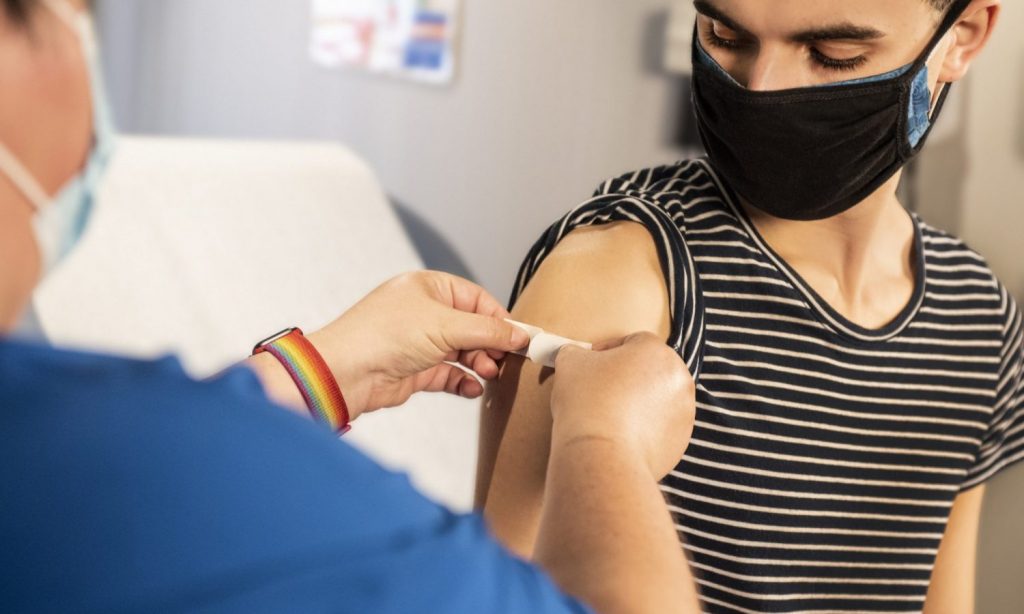
This past year has taken a toll on our mental and physical health. Here’s what you can do to feel a little more safe if you’re rejoining the gym.
Just when we started to recover from the past year, COVID-19 cases started to rise again. And while we should kind of know how this works by now, this situation still feels new and scary, especially since states and businesses are doing things their own way. Gyms are some of the businesses most affected by the pandemic and a big source of anxiety for people.
While working out can be done anywhere, some people prefer to go to a place where they can be a part of a community, where they’re encouraged by other people’s progress. That’s totally fair and something that should be done if it ends up making you feel better and happier in the long run.
In order to do what you want to do and continue to feel safe, it’s important to do the stuff that you know works. Getting vaccinated is first, providing thorough protection from the virus and protecting your community as well. After that, you should learn your state, county and gym guidelines. While so many rules can be overwhelming, knowing them can help ease your anxiety and give you some control over the situation. Wear your mask and keep a distance from people, especially if they’re unvaccinated. Wipe down the equipment you use and keep washing your hands.
Do what feels comfortable to you
Photo by Victor Freitas via Unsplash
If joining a socially distanced gym class feels comfortable to you, go ahead. If working out in a machine alone makes you feel safer, do that. There’s no right or wrong way to act, and if you’ve been battling COVID-19 anxiety and are in a gym then you’re already making progress by trying your best to go back to your normal life.
The previous year has been a weird one, to say the least. While it may seem that other people are thriving and rejoining the normal world, many are still struggling with anxiety, weight gained over the pandemic, and more. Try your best to be kind to yourself and to celebrate your small wins, whether that’s getting back to the gym or meeting up with friends in a space that feels safe and comfortable to you.
As billionaires like Elon Musk,Jeff Bezos and Richard Branson race for space, who will be the leaders in the nascent cannabis industry as it vaults to astronomical heights?
Operators in various parts of the cannabis industry offered Benzinga their takes. Providing various responses, most focused less on the people and more so the brands and companies that could be headed to the moon, of sorts.
Photo by rawpixel.com
Predicting The Shape Of The Cannabis Space Race In Its Early Stages
The cannabis space race is in its earliest days, providing no clear answers at this time. The uncertainty leaves room for ample speculation and hypothesizing.
Olivia Alexander, CEO of online global CBD boutique Kush Queen, compared the industry to the dot com bubble.
“At this stage, the industry is so young with so much room for innovation and expansion it is very hard to say how many players are going to remain once the market begins to mature and fully develop on a federal level,” Alexander stated.
Marco Eadie, managing director at consulting firm O’Keefe, said that well-capitalized companies would have an advantage over smaller players. “Larger companies will be much more strategic in deploying their capital,” he said. Eadie added that market variables, such as state-by-state licensing and capital access, will hinder companies.
Alexander believes that the number of players in the space will hinge on which companies can successfully navigate the tumultuous space, forming a reliable consumer base in the process.
Major MSOs could have to pivot if vertical integration doesn’t become part of federal legislation. Trevor Fencott, CEO of Fire & Flower Holdings Corporation (OTC:FFLWF), believes that vertical integration won’t last, thus separating the industry into product and distribution companies.
“Vertical integration is uncommon in most other industries and we believe this will be true of cannabis,” Fencott said.
If true, both sides of the market will see “inevitable” consolidation. Like other industries, he expects significant consolidation to lead to three to five global players in each market segment, reflecting many other industries.
Photo by Kevork Djansezian/Staff/Getty Images
Seth Worby, co-founder and managing partner of the Cannabis Creative Group, believes that legalization will eventually lead to the downsizing of current players as major companies swoop in to get in on the action.
“They will find cannabis businesses with impressive revenue potential, brand equity, and operational standards – and they’ll snatch them up at a premium too,” Worby said.
Non-Cannabis Brands Largely Predicted To Become Eventual Market Leaders
Both major cannabis brands of today and leading non-cannabis companies could become the eventual leaders of the industry’s space race.
Worby predicted market leaders will ultimately be determined by scale. “Major corporations such as Pfizer Inc. (NYSE:PFE), Johnson & Johnson (NYSE:JNJ), Procter & Gamble Co (NYSE:PG), et cetera, that have existing distribution and plants in similar markets will quickly emerge at the forefront of this race as soon as federal legalization comes about.”
He added that companies experienced in recreational-focused marketing, like Anheuser Busch Inbev SA (NYSE:BUD) and Molson Coors Beverage Co Class B (NYSE:TAP), will also enter and innovate the space post-federal legalization.
“These types of conglomerates have stayed away from the industry because of the federal status and restrictions, but that doesn’t mean they are not preparing for a shift,” Worby added.
Photo by VictoriaBee/Getty Images
Roger Bloss, CEO of cannabis holding companyMJ Holdings, Inc. (OTC:MJNE), believes Jeff Bezos will be in the race as well, with Amazon.com, Inc. (NASDAQ:AMZN) likely becoming a distribution dominator. Aside from Amazon, he sees brands that are able to excel at both medical and recreational becoming eventual leaders.
Leading cannabis brands weren’t excluded from the conversation entirely. Eadie noted increased market caps and double-digit growth from Curaleaf Hldgs Inc. (OTC:CURLF) and Canopy Growth Corp (NASDAQ:CGC) as signs of their strength. He also liked private companies, including Gage Cannabis and its continued focus on growth.
“Each rising star will need to differentiate themselves in this competitive market as groups like Harvest Health & Recreation Inc. (OTC:HRVSF) and Verano Holdings Corp. (OTC:VRNOF) continues to acquire unique cannabis-related companies to strengthen their portfolios,” Bloss noted.
Getting in ahead of the wall of capital that will follow federal banking reform should also prove almost as historic as the broader cannabis legalization movement.
By Tim Seymour and Brady J. Cobb, Esq.
After Democrats swept control of the White House, the House of Representatives and the US Senate in January of 2021, cannabis stocks soared into the new year on the hopes of major legislative policy reform advances including the prospect of federal legalization. While waiting for this legislation cannabis markets have consequently fallen from their January 2021 highs, despite plenty of commentary by Democrats their cannabis agenda was coming fast.
On July 14, after rumored releases each of the last two months, Majority Leader Schumer unveiled the much-anticipated discussion draft of the comprehensive cannabis reform bill that he and Senator Wyden and Senator Booker have been working on since January. While the proposed bill contains sweeping reforms that are long overdue, the prospects of the bill garnering the support of 10 Republicans in the Senate is slim, and based upon previous statements from some Democrat Senators obtaining all 50 votes from that caucus may be a bridge too far as well. Schumer and his colleagues have presented a wish list of legislation for the industry that while important over the course of time for the growth of the sector and the social restitution that should accompany it, is not realistic or necessary at this time.
Photo by Kevin Dietsch / Getty Images
The Bill contains sweeping reforms including:
a) Descheduling cannabis from schedule 1
b) Offering expungements for those with cannabis convictions
c) Funding social equity programs via cannabis excise taxes
d) Ceding regulatory control of cannabis to the FDA, ATF and TTB from the DEA, and
e) Maintaining state based regulatory frameworks (which seemingly contradicts item (d) above), among other initiatives. The Bill does not expressly tackle needed banking and financial reforms, tax and 280e reforms, and/or how to harmonize state and federal regulation of cannabis, which will be key items to watch for as comments pour in from stakeholders and negotiations begin.
Clearly, Democrats are well positioned to deliver the first step towards historic and long overdue cannabis policy reform, yet to date it’s been more conversation and less action in the halls of Congress. Schumer’s Bill doesn’t leave Republican lawmakers a lot of room for compromise that they can get comfortable with.
We take the view that Schumer has the ability to cut right to important issues that and take a pragmatic approach to passing legislation now that can be passed, and that this legislation will be a stepping stone to more broader, sweeping reform he has proposed. Even Supreme Court Justice Clarence Thomas, who is regarded as one of the most conservative Justices on the Court, recently threw his hat into the ring on cannabis reform when he opined in a recent opinion that “the Federal Governments current approach is a half in, half out regime that simultaneously tolerates and forbids local use of marijuana. This contradictory and unstable state of affairs strains basic principles of federalism and conceals traps for the unwary.”
Photo by Sarah Silbiger/Getty Images
Now, it’s time for Congress and more specifically the Senate to address banking and taxation issues that can allow the industry to be built on a more solid foundation and afford minority/social equity applicants access to affordable capital while we tackle the bigger federal issues and social issues over the longer term.
Although the SAFE Banking Act passed through Congress last month (with over 100 Republicans voting in favor of allowing cannabis companies access to the federal banking system), Senate Majority Leader Chuck Schumer expressed reservations about the legislation and how it could undermine his own proposed cannabis bill that will seek broader reforms including long overdue social justice measures. While we agree that SAFE does not go far enough in remediating our country’s ill fated “war on drugs,” it would be the first major win for cannabis reform in Congress, and winning begets winning.
Social justice must be a critical component of the broader reform legislation, but the reality of policy making in Washington D.C. is that its a game of incrementalism, and in some cases pragmatism that is best summarized by the motto of the late Jim Valvano during the miracle run by N.C. State Wolfpack in the NCAA tournament, namely “survive and advance.”
If we truly want to empower minorities and those that have been negatively affected by this misguided war on drugs, the industry needs to first have proper access to capital and real banking services. If the leading U.S. cannabis companies cannot access traditional commercial and investment banking, while also facing punitive tax code, minority small business owners will no chance to succeed
How About Putting Some Points on the Board?
The SAFE Banking Act is a rare piece of bipartisan legislation supported by Republicans, Democrats, and the cannabis industry at-large. In last month’s House vote, 15 more Republicans voted in favor of the bill than in 2019 (when the SAFE Act was first introduced only to be derailed by the coronavirus pandemic). The significant increase in Republican support coincides with the growing trend of legalization of medicinal and adult-use cannabis products at the state level over the last two years.
Photo by Bloomberg Creative Photos/Getty Images
Since the SAFE Act was first passed, seven states have legalized adult-use cannabis. A bi-partisan group of 34 U.S. Senators have signed on to sponsor or co-sponsor the SAFE Act, and the bill has the public support of the American Bankers Association and a bipartisan group of Governors and State Attorney Generals.
Passage of the SAFE Banking legislation would mark the first time that Congress passed cannabis reform legislation, while simultaneously serving as a springboard for the members of both chambers to collaboratively tackle reasonable and workable social justice, social equity and legalization policies. Immediate benefits of this legislation would include allowing the government the ability to accurately assess the size of this market and the tax dollars to flow from it (even the head of the IRS has stated he wants the money in banks for regulatory purposes).
Taxation at the federal level would unofficially transition the federal government’s treatment on cannabis from legal enforcement to revenue generation, and the potential tax revenue that could be generated from the cannabis sector could be used to assist in the funding of other key Democratic initiatives such as the infrastructure bill that is currently being finalized.
Thankfully, Majority Leader Schumer has made cannabis a priority and the release of his comprehensive proposal is an exciting day for the industry and investors alike. But to get it over the finish line, Democrats need a two-step approach: Pass the SAFE Banking Act first and take the historic first win, while simultaneously crafting and building bi-partisan support for a broader reform bill. The former is what will make the latter, including the Senate Majority Leader’s more involved bill, a reality.
Meanwhile, cannabis investors no longer are pricing in near term federal banking access and cannabis stocks have pulled back 20-30% from the mid-February highs. While investors are right to focus on the long term growth fundamentals, getting in ahead of the wall of capital that will follow federal banking reform should also prove almost as historic as the broader cannabis legalization movement.
Tim Seymour is thePortfolio Manager of the Amplify Seymour Cannabis ETF (NYSE:CNBS).
Brady J. Cobb, Esq, is the founder and former CEO of Bluma Wellness/One Plant Florida. He’s also a board member of Captor Capital and a longtime cannabis advocate.
More than 100 million U.S. residents already live in a recreational state and 95% of residents live in a state with legal medical weed — so the consumer population is present and growing.
By Michael Sassano
Multi-State Operators (MSOs) in the United States are primed for the next big stock amp-up, which could see at minimum a 50% move starting as early as late August even without federal legislative movement. As volumes start to pick up this July, U.S. stocks don’t need a special event to bounce off this latest correction.
Cannabis is a Consistent Performer
Cannabis is rapidly closing the revenue gap outpacing such landmark institutions as the National Football League — and there is still an estimated $66 billion U.S. legacy market still to replace. Even more compelling is the emergence of profitability that is coming after the massive infrastructure spending that started in 2018 and 2019. While summers have always presented lower volumes of movement for small caps, the trading indexes are showing favorable valuations through the end of the season, despite the to-be-expected typical federal legislative gridlock on the horizon.
Photo by p_saranya/Getty Images
Even without federal rule enactment of legislation like the SAFE Banking Act, U.S. cannabis revenues increased astronomically from $1.9 billion in 2014 to $17.5 billion in 2020, beating expectations yet again. Forbes recently predicted that by 2025 the U.S. market will reach $43 billion — which only a few months ago was predicted to reach $29 billion. A flurry of newly legalized states (and more to come) all but ensure we will most likely see another stellar year in 2021, and an even larger increase in 2022. And with more demographics like seniors opening up to cannabis therapies, the industry is growing more robust with legalization sweeping through the remaining hold-out states.
Cannabis is Creeping up the U.S. Marijuana Index
Compare the above mentioned revenue growth and increased growth predictions to the U.S. Marijuana Index and you will see a typical over-optimistic yearly run. The index started in January 2015 and was trading at 115 which is above where we are trading today, around 110. By February 2016 that index dropped to 23 which is exactly where the second-biggest drop bottomed in March of 2020. In that period from February 2016 to March 2020, we saw two peaks of 101 in late October 2016 and another peak of 134 in April 2019 followed by a record high in February 2021 of 145. The next run will crack the 145 ceiling established this year and surpass it.
The quality of companies operating now — plus the solid fundamental of a guaranteed, permanent U.S. cannabis market — is dramatically different from the landscape back in 2015. Profitability has emerged as a recurring theme in larger, more well-developed MSOs, while smaller companies have learned to be profitable by starving MSOs of capital markets. Of course, if the SAFE Banking Act or other measures occur to stimulate cannabis companies, that will turbocharge the financial environment, but it’s not vital for hitting a new high in cannabis stocks this year. Cannabis sales will keep increasing, companies will continue posting record numbers and profits, and new states will legalize until federal rules catch up to consumer preference.
Legislative Stagnation Can’t & Won’t Impede the Growth of the Cannabis Market
Mergers and Acquisitions (M&A) and infrastructure building are reaching the highest levels ever seen. And despite Canada’s woes, the U.S. and global capital markets are responding by beefing up their services for cannabis. The U.S. is receiving the largest benefit of private equity funding due to the massive revenue stream that is gaining momentum, but also the increased fundamentals of the companies. People are shunning the build and forget about the profitability model Canada’s federal legalization brought and realize cannabis is here to stay and best to invest in profitable operators. However, money and M&A are going to all companies big and small in the U.S. Even the Canadians are trying to buy into the U.S. market and picking up the scraps that U.S. MSOs are passing on. Expect M&A and infrastructure investment to only increase over the year.
Photo by stockstudioX/Getty Images
Ideally, positive legislation will be taken on Capitol Hill to work toward building out the cannabis industry, but regardless of this term’s action, cannabis will continue making major gains. The political hubbub becomes mere background noise to the daily reality of a regular U.S. cannabis consumer. 100.9 million U.S. residents already live in a recreational state and 95% of residents live in a state with approved medical cannabis — so the consumer population is present and growing.
Moving into the fall, we will see disrupted supply chains return to full volume production in the market, and should be prepared for the next stock run somewhere around late August. Already cannabis brokerage houses are telling brokers to take time off now and be prepared for heavy activity in late August. The valuations you see today won’t be around again, and any surprise positive news from Washington DC will send stocks doubling where they are today.
Author Bio: Michael Sassano, the CEO of Somai Pharmaceuticals, a European company centered in pharmaceutical extraction, manufacturing and formulation of pharma-grade GMP-certified cannabinoid products throughout the European Union.
COVID-19 safety measures are fluctuating and it can get confusing. Here’s what the CDC is recommending you do if you’re vaccinated and exposed to the virus.
While the slow rise of COVID-19 cases can make it feel like we’re going back in time, there’s one big difference. Vaccines are readily available to any adult who wants to get their shot. Still, getting the call or message that you’ve been exposed to COVID-19 is terrifying, no matter your vaccination status.
What should you do if you’re vaccinated and have been exposed to someone who tested positive for the virus? It’s very unlikely for people who have been vaccinated to spread the virus or to get the disease symptomatically. Still, there is a margin of error, and breakthrough COVID-19 is a possibility.
There are a few steps you can take for some peace of mind:
Monitor your symptoms
Photo by cottonbro via Pexels
Per the Centers for Disease Control and Prevention (CDC), vaccinated people who’ve been exposed to someone with COVID-19 should monitor themselves for symptoms for 14 days. These include fever, cough, breathing difficulties, loss of smell and taste, and fatigue. These symptoms are often confused with those of a common cold and it’s important to remain vigilant.
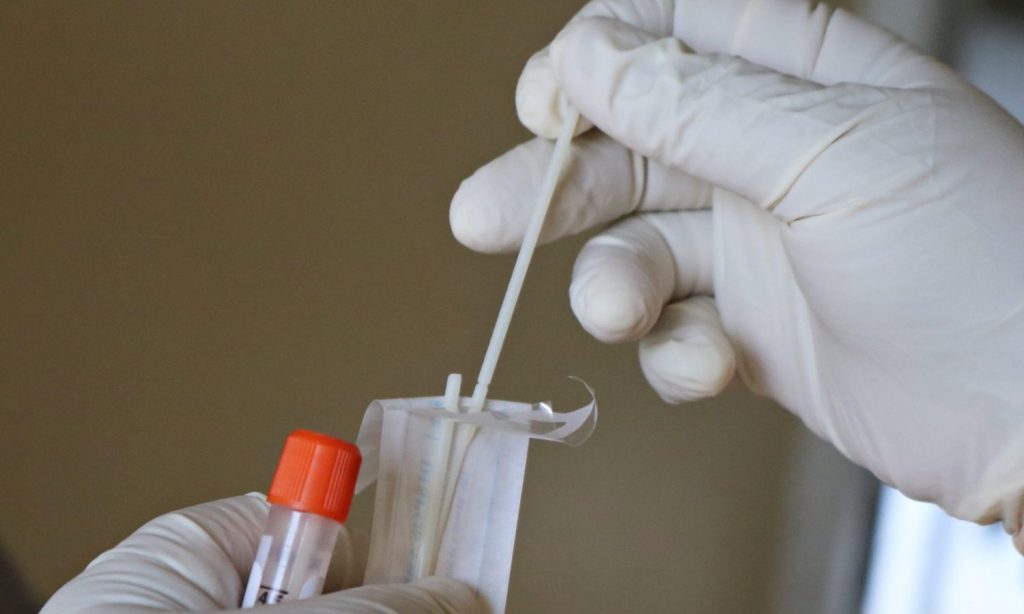
If experiencing these symptoms, people should stay isolated and get a test for the virus. There should be an immediate test administered and another one 5 days later to make sure the results were correct. If you test positive for COVID-19, you should remain isolated for at least 10 days since your last COVID-19 test.
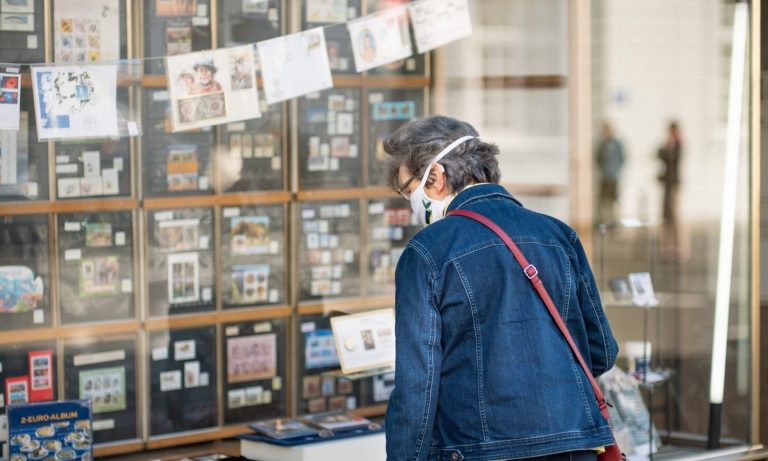
Lastly, mask mandates are fluctuating now that COVID-19 cases are on the rise. It’s always best to err on the side of caution, even if you’re vaccinated, masking up when located in indoor settings and crowded spaces. Even if the vaccine is highly effective against the virus, it’s still not a foolproof solution. By wearing a mask you’ll be protecting yourself and other people in your community, slowing down the person-to-person spread of the virus.
The future looked bright for hemp farmers, but the demand for CBD didn’t follow at the expected levels.
Delta-8 and smokable flower are the two products keeping hemp framers alive. The regulatory loophole that has allowed delta-8 to be sold legally is also causing legal confusion.
Delta-8 is a cannabis product that can be derived from hemp, but still give the consumer a light psychotropic experience. Some states have issued restrictions around the product, while others haven’t addressed it at all. Either way, the demand has been a blessing to hemp farmers who planted lots of acres in 2019 expecting a surge in CBD products, only to see the market contract and prices plummet.
Photo by CRYSTALWEED cannabis via Unsplash
Hemp Benchmarks reported that after rising 4%in May, the average per-kilogram price for delta-8 THC distillate fell 1% in June to $1,215. “Notably, both the low and high ends of observed transaction data — $900 and $1,650 per kilogram — were up compared to May.”
In Georgia, Reginald Reese of Green Toad Hemp Farm told Hemp Benchmarks that delta-8 THC was here to stay. “The beauty of it is, Georgia refused the [delta-8] ban,” he said. “We have the right as licensed hemp growers to use every part of that hemp.” Reese also told Hemp Benchmark that he believes efforts to ban delta-8 THC are part of a “full-court press” from the businesses participating in licensed, state-legal marijuana industries, which do not want the competition.
Smokable Flower Grows
The other product that has been welcomed by the farmers is smokable flower. The Benchmark reported that as of June 2021, the number of square feet registered for indoor or greenhouse hemp production, which is typically for the purpose of producing smokable CBD flower, is up significantly relative to last year. “Hemp Benchmarks has documented over 168.2 million square feet registered for indoor or greenhouse production. This figure is up 328% compared to over 39.5 million square feet recorded in June 2020 and up 85% from over 90.8 million square feet ultimately documented by the end of last year.”
It seems farmers are leaving the outdoor growing and focusing on indoor growing in order to fulfill smokable flower demand. The Benchmark report documented that smokable CBD Flower has maintained its value in the U.S. hemp wholesale market better than perhaps any other hemp-CBD product. “Flower grown indoors or in greenhouses also typically commands a premium price compared to that cultivated outdoors.”
The Benchmark report said that smokable CBD flower saw its average price decline in June after cresting above $300 per pound in May. “Despite some reports of still-stagnant demand for CBG, the price for smokable CBG flower rose 15% in June to average $326 per pound, exceeding the price for its CBD counterpart. The significant increase in the assessed price for CBG flower this month follows an over 50% jump observed in May.” This shift away from biomass and towards flower farming could potentially stabilize the biomass market. A reduction in supply could help wholesale prices.
Grasshoppers?
The problems affecting hemp crops this season could end up helping reduce the glut of hemp inventory. Excessive heat and drought in the western part of the U.S. have affected hemp farmers. Wildfire threats and water reductions have also conspired to challenge hemp farmers. And if that wasn’t bad enough, it seems grasshoppers love warm, dry weather.
Last year, farmers fought grasshopper infestations and it looks like this year conditions are ripe for an even bigger outbreak. The Hemp Benchmarks June report noted that the U.S. Department of Agriculture is said to be taking steps to mitigate damage to crops and rangelands by spraying pesticides in areas where infestations are likely to occur, including roughly 3,000 square miles of Montana, which is home to significant hemp production, primarily for grain.
Less Hemp Acreage
Hemp Benchmarks reported that there is less hemp being grown as farmers head into the 2021 season. Several reasons have caused the less than stellar outlook for the market. A glut of biomass and CBD caused a plunge in prices reducing the profitability of the crop. Farming more mainstream products have become a better investment. The hemp market has also been affected by a lack of regulatory guidance has also caused farmers to back off from planting more acreage.
Photo by MysteryShot/Getty Images
Hemp Benchmarks said it has documented the following hemp production licensing and acreage data for 2021:
8,298 licenses issued (down 8% from 9,066 counted in June 2020; down 58% from 19,799 ultimately documented for 2020);
107,702 acres registered for outdoor production (down 55% compared to 236,732 acres documented in June 2020; down 75% from 429,300 ultimately documented for 2020).
CBD Collapse
It seemed that almost every product on the retail shelves had some form of CBD in it. Food, beauty products and supplements popped up on every retail counter. The future looked bright for hemp farmers, but the demand didn’t follow at the expected levels. Thousands of CBD companies sprang up overnight and the flood of products created a confusing and competitive landscape.
A new Brightfield Group report says that the CBD industry has lost more than 1,000 players in the past 12 months — some through corporate consolidation and others to bankruptcy. Hemp Benchmarks also quoted farmers who said that there was a lot of low-priced inventory on the market due to bankrupt companies. Earlier this year the Phoenix Business Journal reported. that Integrated AG, the parent company of Integrated CBD, filed for Chapter 11 bankruptcy protection on Jan. 20 and disclosed over $20 million in outstanding debt.
Despite all the negative news, last month California-based Kadenwood, a privately held CBD consumer packaged goods company, completed a $30 million cash Series B capital raise. The company said it will use the money to buy advertising and acquire more companies. Kadenwood said the raise also includes a $20 million media campaign to raise brand awareness, bringing the total value to $50 million.
Your heart health is influenced by a wide variety of behaviors. A recent study shows a common behavior could be increasing your risk of developing heart disease.
Heart disease is the leading cause of death in the US, causing about 1 in 4 deaths. The term refers to several diseases that affect the heart, which can be influenced by a variety of things, from how much you work out, to the number of french fries you eat on a weekly basis. This one habit, that we might be guilty of doing depending on our professions, could also increase your odds of developing heart disease.
According to a 2018 study, spending large parts of your day standing up can double your risk of heart disease. We can’t win one, because sitting too much is also harmful for our heart health.
Photo by LuckyLife11 via Pixabay
The study, published in the American Journal of Epidemiology, analyzed over 7,000 people over a period of 12 years. These people worked at least 15 hours a week and didn’t have heart disease at the start of the study. Results showed that participants who worked jobs that required them to stand were twice as likely to report heart disease than others who sat down during the duration of their work.
While we tend to associate standing up with movement and other positive things, researchers explained that standing for prolonged periods of time causes blood to pool in your legs. This can create pressure in the veins, elevating your risk of heart disease over time.
Photo by LinkedIn Sales Navigator
Surprisingly, in the long run, standing up over long periods of time is comparable to obesity and consuming nicotine on a daily basis. “Occupations that involve primarily standing represent an important, but often overlooked, cardiovascular risk factor,” researchers explained.
We often talk about the health problems associated with sitting over long periods of time, which are valid concerns. It seems like when it comes to our well-being, it’s important to lead a life with as much balance as possible. Ideally, workplaces should accommodate all sorts of people, encouraging behaviors that allow employees to be as healthy as they can be.
Cannabis operators and executives tell Benzinga that the movement of private and public companies may serve as a better indicator of regulatory activity than the federal government. At the very least, they say that the industry has made advancements so far without the efforts of Capitol Hill.
Poseidon Asset Management managing director Emily Paxhia recently mentioned that she and her firm are tracking the steps of private companies, cannabis and otherwise, noting which prominent brands are supporting the cannabis industry.
Photo by Darren415/Getty Images
Paxhia highlighted Nike Inc‘s (NYSE:NKE) recent support of track star Sha’Carri Richardson over her suspension from the Olympics over cannabis use.
Calling the actions “signaling moments,” Paxhia said investors and operators should consider, “Thinking about these bigger companies and looking at directions from them, not always from the regulators who seem to be lagging behind.”
Operators in various sectors of cannabis feel that the industry provides a better insight into regulatory needs and movements than lawmakers.
Michael Sassano, CEO of Somai Pharmaceuticals, believes that big business is doing fine, shaping the industry’s market without the federal government. He expects this trend to continue.
“All this continues while the government continues to fumble the ball,” said Sassano. He added, “At some point, it should be evident that legalization on a federal level is just an outdated political football.”
Roger Bloss, CEO of holding company M. J. Holdings, Inc. (OTC:MJNE), said that lawmakers act when businesses create a need for industry movement and policy reform. “Big business led it, and it’s had very little government intervention,” he said of industry progress so far.
Dede Perkins, co-founder and CEO of compliance tech company ProCanna, also considers big cannabis a worthwhile gauge of the market.
She noted that cannabis leaders have “a multi-jurisdictional lens and have hired lobbyists to be on the frontlines, talking with lawmakers at the state, federal, and in some cases, international levels.”
Photo by matt_benoit/Getty Images
Perkins cited how business leaders have a pulse on the public cannabis demand and insights to pending M&A (mergers and acquisitions) activity that could alter markets and potential legislation.
“Some lawmakers have insight into upcoming market movements, but I’d listen to big business leaders who have their fingers on the pulse at all levels,” Perkins said.
Operators Using M&A As Regulatory Gauge
Cannabis companies see the writing on the wall through major M&A deals.
Sassano said that following the U.S. market is the best indicator of possible reform. “When Canadian CEOs…claim that the U.S. is like a lottery ticket, and meanwhile U.S. companies continue a blistering pace of M&A, you know that the U.S. is going up.” In May 2021, Epidiolex and the entirety of G.W. Pharmaceuticals plc‘s (NASDAQ:GWPH) neuroscience portfolio was acquired by Jazz Pharmaceuticals plc (NASDAQ:JAZZ) for $6.7 billion.
Perkins referred to another pending deal between MSOs Trulieve Cannabis Corporation (OTC:TCNNF) and Harvest Health & Recreation Inc. (OTC:HRVSF). Trulieve is currently in the process of finalizing a $2.1 billion deal to acquire Harvest.
Perkins added that MSOs are merging to claim their stake before intrastate distribution is allowed. She said those that do so would “be positioned to dominate a region rather than just one or a few scattered states.”
Klee Irwin, founder, and owner of CBD brand Irwin Naturals said his company is looking to become the first national herbal extract brand to sell THC products as well.
Like many others in the space, Irwin, whose company retails at Costco Wholesale Corporation (NASDAQ:COST), Walmart Inc (NYSE:WMT), CVS Health Corp (NYSE:CVS) and Whole Foods, believes “federal legalization of marijuana is around the corner.”
A new study conducted on teens finds no connection between marijuana use and loss of motivation.
The lazy stoner is one of the most prevalent stereotypes, one that is still difficult to shake. A new study shows that marijuana use alone isn’t associated with less motivation, particularly in teens.
Published in the Journal of the International Neuropsychological Society, the study was conducted by researchers of the Florida International University and took two years to complete.
Photo by Elsa Olofsson via Unsplash
Researchers recruited over 400 participants of the ages 14 to 17, and asked them to complete five biannual assessments over the course of the study. These assessments consisted of two motivational questionnaires — the Apathy Evaluation Scale and the Motivation and Engagement Scale — and questions about the participants’ use of alcohol, tobacco, and marijuana.
While results showed that higher cannabis use correlates with higher loss of motivation, once factors like tobacco and alcohol use, and age, sex and levels of depression were accounted for, there was little evidence that suggested marijuana alone had an impact on motivation.
The study also showed that while some subjects increased their cannabis use over the years, this change wasn’t associated with more or less motivation.
Monkey Business Images/Shutterstock
“Our findings do not support a relationship between cannabis use and reductions in motivation over time in a sample of adolescents at risk for escalation in cannabis use,” wrote the study’s authors. “The current study contributes to the extant literature by examining these associations longitudinally in a large sample of adolescent cannabis users while controlling for important and often overlooked confounds, including sex and depression.”
Motivation in teens is a complex issue, one that’s influenced by a lot of factors. According to Psychology Today, teenagers are more difficult to motivate since they’re growing out of their childhood mindsets. “External factors are typically reliable as sources of motivation for children, but after 12, the factors, such as the desire for parental and social approval, start to diminish as core sources of motivation.” Outside distractions like social life, home life and substances like marijuana and alcohol, can all impact their levels of motivation.
Scientific data on cannabis and its effects on people are important for debunking myths that have long tampered with the plant. Having this knowledge and providing it to people makes it harder for legislators to continue the war on drugs by spreading fear and misinformation.
During their years of collaboration, Houseplant grew to become a popular consumer brand in Canada and is now among the top 10 in the premium cannabis market in Ontario.
Seth Rogen and Evan Goldberg’s cannabis and lifestyle brand Houseplant and cannabis giant Canopy Growth Corp. (NYSE: CGC) will terminate their partnership.
The two companies that created a joint venture three years ago and launched in Canada have mutually agreed to end their collaboration. Since the brand’s launch, the Canadian cannabis market has significantly expanded, thus the parties decided it was time for Houseplant to further evolve on its own while Canopy will continue working on its wholly-owned brands.
Photo by Rich Fury/Staff/Getty Images
During their years of working closely together, Houseplant grew to become a popular consumer brand in Canada and is now among the top 10 in the premium cannabis market in Ontario.
Among the most successful products are beverages with Houseplant Grapefruit becoming the top-selling cannabis drink in Canada in its first year. In 2020, more than one million cans of Houseplant beverages were sold in Canada.
“The recent launch of Houseplant in the United States has given us a clear benchmark for what Houseplant stands for, and how we plan to bring the brand to life globally,” Michael Mohr, co-founder and CEO of Houseplant said. “While our collaboration with the Canopy team has been fruitful and we continue to hold similar views on the opportunities ahead, we believe the time is right for us to focus on Houseplant independently.”
Rade Kovacevic, president and chief product officer at Canopy Growth added that the company is pleased with its Houseplant partnership.
“We’ve delivered high quality and innovative products to Canadian consumers and played a critical role in defining the premium cannabis category in Canada,” Kovacevic said. “As we move forward, Canopy will advance our focus on our wholly-owned brands for the Canadian market and we wish the Houseplant team the best in their future endeavors.”
What’s Next – Relaunch In Canada
Some Houseplant-branded cannabis products will still be available across Canada until the end of September 2021. The company plans to relaunch in the Canadian market with products similar to its U.S. offerings.
“Canada is where it all started – for us as people, and for the brand,” said Houseplant co-founder Seth Rogen. “This is not an exit from the Canadian market, but a chance for us to evolve the brand.”
The collaboration between Houseplant and Canopy Growth did not reach the U.S. which is why termination of the deal does not affect the company’s operations there. However, Houseplant launched a line of its products in the U.S. this March.