The COVID-19 Delta variant is the most prominent strain within the U.S. Here’s what you should know.
The COVID-19 Delta variant is on everyone’s minds. While several countries have taken great strides in inoculating their population, this variant has been making appearances in a variety of places, including the U.S.
Here’s what you should know about this strain of COVID-19:
Why are people concerned?
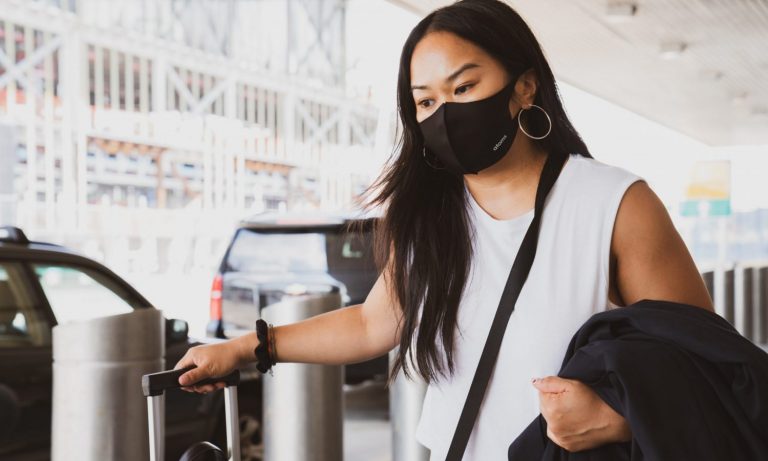
Photo by McKinsey via rawpixel.com
Per the Centers for Disease Control and Prevention (CDC), the Delta variant can spread more easily than the original coronavirus. It has mutations on the spike protein that make it easier to be transmitted from person to person, infecting human cells more rapidly.
According to the Washington Post, the Delta variant is 50% more contagious than the original coronavirus, with every person infected spreading it to three or four people. As of June, the Delta variant is the most prominent strain within the U.S.
What about symptoms?
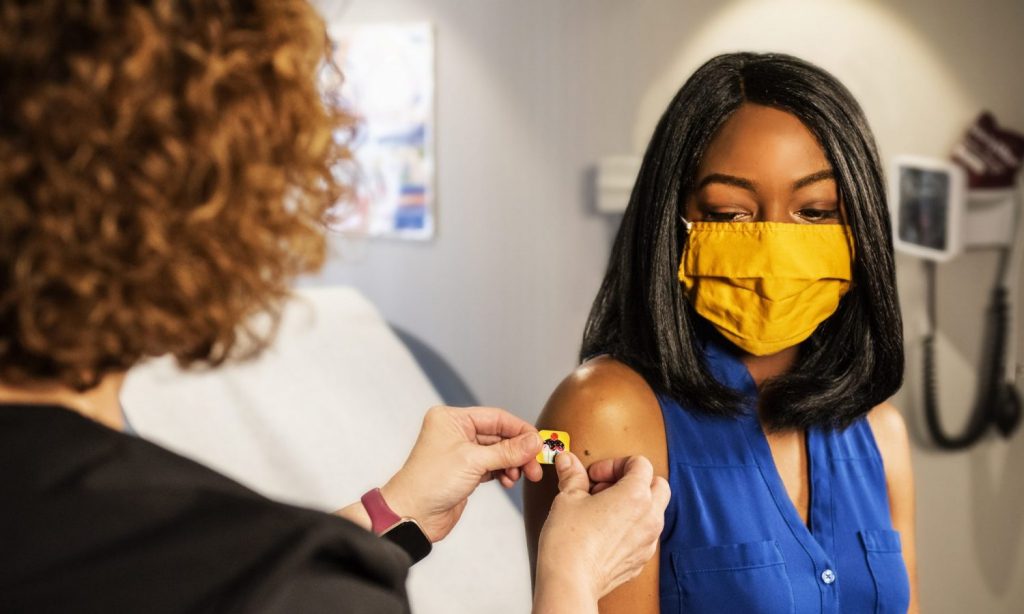
Photo by cottonbro via Pexels
While the degree of contagion is concerning, when it comes to symptoms, the Delta variant is very similar to the original form of the virus. There are persistent coughs, headaches, fever, and sore throat.
Data from the U.K., which has been tracking the development of the Delta variant since before the U.S., shows that there was less prevalence of cough and loss of smell. The most reported symptoms included a runny nose, headache, fever, and sore throat.
Is it more deadly?
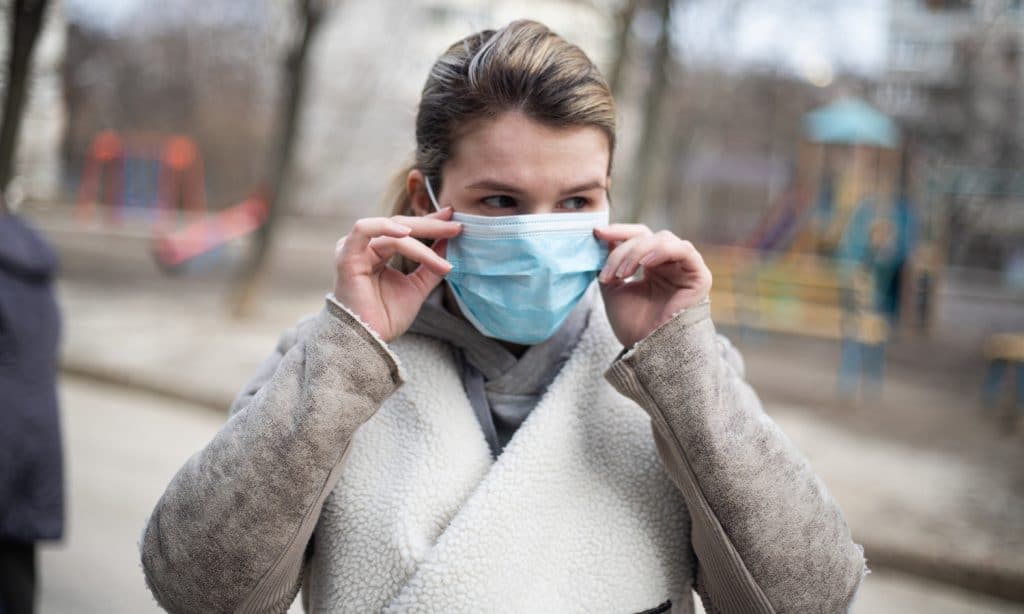
Photo by CDC via Unsplash
The delta variant is significantly more dangerous for people who are not vaccinated. Communities with low vaccination rates have seen significant jumps in cases over the last couple of weeks in areas like the Midwest and the south. For people who are vaccinated, infections are rare. Two doses of the Moderna and Pfizer vaccine were 88% effective against disease and 96% percent effective against hospitalization.
When it comes to how deadly it is, data from the U.K. shows that this variant is more likely to result in hospitalizations and death, especially among those who are unvaccinated.
Should we mask up again?
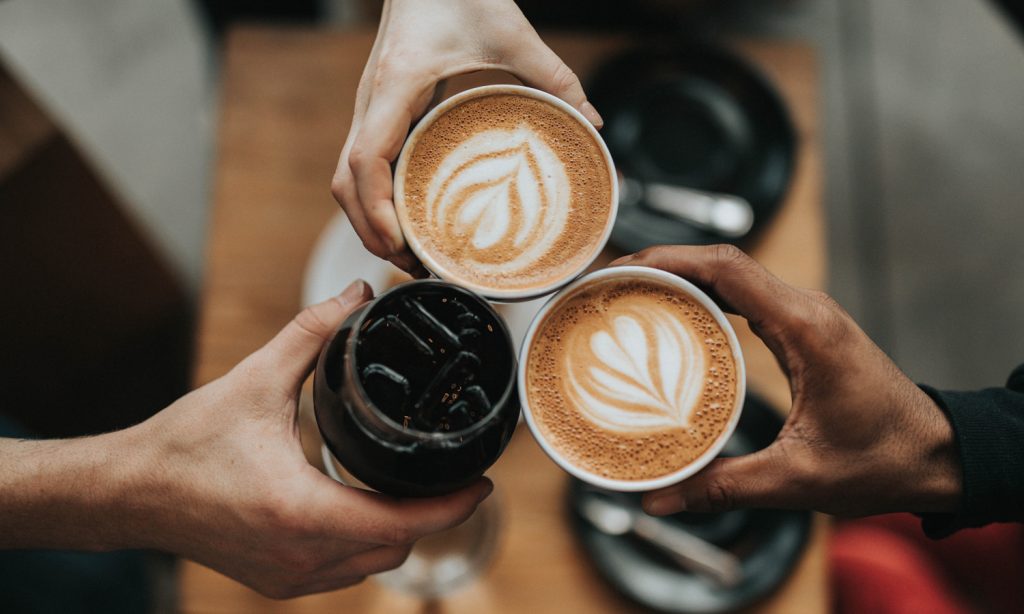
Photo by EVG photos via Pexels
There are different opinions on the matter. While the CDC advised for only unvaccinated people to remain masked up, the WHO is suggesting for everyone to wear masks. On behalf of the CDC, Dr. Anthony Fauci spoke to CBS News. “If there are any changes that would instigate making a change in recommendation, that will happen,” he said. “But for now, the CDC recommendation stands that if in fact you are fully vaccinated, you are protected and you do not need to wear a mask outdoors or indoors.”
Our body temperature is affected by many things, including what we eat. Here are some foods we should avoid when facing a heat wave.
Not only can heat waves be incredibly uncomfortable, they’re also more dangerous than you think. Our bodies are so sensitive to this than what you eat and drink can have an effect on how you feel and can impact your health when exposed to extreme temperatures.
Heat and sun are things that we normally can’t get enough of, especially if we live in a cold climate area. While chilly temperatures also come with their risks, the heat is easier to ignore and, thus, more likely to result in dehydration, heatstroke, and more.
When taking care of yourself and battling the heat, what you eat can have an impact, ranging from what feels like it’s obvious to what doesn’t. Here are 5 foods to steer clear of when it’s really hot out:
Coffee and tea
Photo by Nathan Dumlao via Unsplash
Aside from the fact that they’re hot (unless you have them served over ice), these drinks have strong diuretic properties and are not the best thing to consume when you want to quench your thirst. When it’s hot out, it’s important to hang on to our liquids, and consuming large amounts of coffee or tea, even if they’re iced, might deprive us of this.
We probably don’t need to tell you this, but alcohol can quickly dehydrate our bodies. Once it enters our system, our liver will try to flush out alcohol’s natural toxins. Dehydration normally results in hangovers. When braving really hot conditions, this is made worse since stress and strain from the heat could trigger a more complicated episode.
Spicy foods aren’t the first thing that come to mind when it’s hot out and that’s because it’s not nice to have spice sweats when you also have regular sweat to deal with. Science explains that capsaicin, the active component in chili peppers, can temporarily increase our body temperature. When the weather is very hot out, try your best to keep your body as cool as possible.
High protein foods
Photo by Szabo Viktor via Unsplash.
Proteins like red meats feel heavy in your stomach. This is due to the fact that they ask a lot of your body in order to be fully processed, forcing your body to do a lot of heavy lifting, resulting in thermogenesis. This is normal, but it creates a lot of heat, which should be avoided during really hot days. Lighter foods, like fruits, are easier to process and produce less heat.
The World Anti-Doping Agency (WADA) issued a public response to a cascade of reactions from U.S. Government officials regarding Sha’Carri Richardson’s disqualification from the Tokyo Olympics due to state-legal marijuana use.
Background: Last week, several congressional lawmakers stated their position to the inclusion of cannabis on WADA’s list of prohibited substances, urging the U.S. Anti-Doping Agency (USADA) to revise its decision to disqualify the 21-year-old sprinter.
Photo by Patrick Smith/Getty Images
USADA claimed it was obliged by WADA regulations to impose penalties on Richardson, though “its own views are different” when it comes to which substances are on WADA’s prohibited list.
The White House, through the U.S. Office of National Drug Control Policy, joined the fray and announced its intention to meet with WADA to discuss cannabis policy.
The World Anti-Doping Agency Speaks Out
In a public letter signed by Witold Banka, president of WADA, the agency explained that the process by which cannabis is annually included in the list of prohibited substances is consistently reviewed by global experts via a process wherein U.S. representatives have substantial, if not overly represented, voting rights.
The letter was directed specifically to Reps. Alexandria Ocasio-Cortez and Jamie Raskin, who last week issued a statement saying USADA’s anti-marijuana policy perpetuates anti-drug policies that negatively affect communities of color and urged both USADA and WADA to reconsider their verdict regarding Richardson.
WADA annually publishes the Prohibited List with an expert advisory group of 12 international members, three of whom are from the U.S., thus giving the United States more weight and representation than any other nation. It currently includes USADA’s Chief Science Officer, Dr. Matthew Fedoruk.
Cannabinoids On WADA’s Prohibited List
Cannabinoids have been on the Prohibited List every year since WADA began supervising it in 2004.
As opposed to claims made by USADA, which essentially blamed WADA for Richardon’s disqualification, WADA stated in a letter that “at no time since the first Prohibited List was published in 2004 has WADA received any objection from U.S. stakeholders concerning the inclusion of cannabinoids on the Prohibited List,” said Banka.
“On the contrary,(…) the U.S. has been one of the most vocal and strong advocates for including cannabinoids on the Prohibited List.”
Photo by Getty Images/Staff/Getty Images
Banka said that submissions received from the U.S. for nearly two decades, in particular from USADA, have consistently advocated for cannabinoids to remain on the Prohibited List and insisted that “the argument that some have advanced indicating that U.S. anti-doping stakeholders are bound by antiquated thinking regarding the Prohibited List is not supported by the facts.”
However, Banka pointed out that, over the years, several such changes have been made to the list, and there is nothing preventing additional changes to be made in the future if everyone agrees.
Can Sha’Carri Richardson’s Disqualification Be Overturned By WADA?
The agency’s president said that WADA plays a coordinating role in the development and publication of the Prohibited List and as such “is not in position to vacate the results of Ms. Richardson’s test in Oregon…”, imposed by USADA, “nor the decisions of USA Track and Field regarding her participation at the Tokyo Olympics.”
USADA said in a public statement that because Richardson accepted the outcome, there is no longer any legal process to challenge or reverse it.
Benzinga’s Take: While it’s unlikely that Richardson will participate in the Tokyo Olympics after her disqualification, it’s fair to believe that the domino effect catalyzed by her disqualification could have significant consequences in future iterations of WADA’s Prohibited List, leading to possible changes in the inclusion of cannabis as a prohibited substance.
Since the eruption of altcoins, the crypto space has experienced a wide variety of wonders and unexpected events. Smart contracts, Lighting network, DeFi, scams, bubbles and failed projects to name some of the most obvious. In the midst of this frenzy, a fascinating concept appeared: Cannabis Crypto.
Some view these tokens as a possible solution to the cannabis industry’s banking problem that stems from the DEA’s outdated Schedule I status of marijuana as a controlled substance thus making it impossible for the entire industry to access banking institutions, essentially forcing cannabis companies to operate outside of insured banking systems.
Photo by MichaelWuensch via Pixabay
As such, many are wondering if cryptocurrency might be the solution the industry is seeking. Might this be the way to bypass regular banking systems without a federal bill?
Presently the relationship between cryptocurrencies and cannabis is in its infancy but will likely unfold and flourish in the near future as crypto adoption levels increase and technology becomes more sophisticated.
When examining cannabis-specific crypto, the most established at the moment is POT coin (CRYPTO: POT), a low radar alt-coin that experienced a huge pump & dump after Dennis Rodman wore a POT T-shirt at his now-infamous public meeting with North Korean leader Kim Jong-un. While the T-shirt, like the meeting itself, made waves internationally, this type of appearance is never healthy for a financial instrument that’s meant to be used as a long-term method of exchange. It now ranks #1135 in CoinMarketCap.
The main issues cannabis tokens encounter are adoption, market capitalization and aiming. Instead of bringing new tech along with innovative proposals, these cryptos fail to confront the problem faced by the industry.
They also fall short because cannabis cryptocurrencies do not provide any innovation in their technology and are limited to a single industry, thereby narrowing their potential market outreach. A currency must be widely used and desired to be adopted by publicly traded companies.
In Addition, Cannabis Cryptocurrencies Cannot Answer A Simple Question
Why should companies use them?
The fact that they are publicly related to cannabis is not enough. The problem lies in the fact that alt-coins fail to differentiate themselves from other coins. Most companies would prefer to use ETH, BTC, BNB, USDT, or any of the other top 25# Crypto.
It would be unwise for a cannabis company to rely on any of the existing “Cannabis Crypto.”
Photo by rawpixel.com
We asked Tyler Beuerlein, Hypur’s chief revenue officer, why his company did not utilize crypto when undertaking its daily financial transactions as a way to bypass the banking system.
“Combining one highly-regulated product with another highly-regulated industry is a non-starter for banks and regulators. A company’s dependence on crypto could negatively impact its financial operations in the face of numerous potential consequences. They could suffer from unpredictable value fluctuations, increased tax liability, and even the loss of a company’s bank accounts or banking partnerships,” Beuerlein told Benzinga.
“It is likely much riskier for a business to use crypto to bypass traditional banking. Cryptocurrency actually needs banking because the funds associated with digital assets eventually must be converted into traditional currency. Moreover, contrary to popular belief, the vast majority of legal cannabis businesses are in fact already banked anyway.”
What About The Future?
A possible way for the industry to adopt a specific blockchain-based token could be to form strategic partnerships with well-positioned companies. This would make the token more stable and ease the way for smaller businesses to also adopt it. If this is not the case, businesses would tend to choose non-cannabis-specific tokens or other financial instruments.
Blockchain technology also provides cannabis manufacturers with the possibility of precisely tracking their production process from seed to sale, therefore guaranteeing customers quality control and vigilant product supervision.
“Unless central banks begin to tokenize their currencies, due to their practicality, immediacy, and cost-saving, I believe that so-called stablecoins have a chance of slowly joining in international trade operations,” Franco Amati, co-founder of NGO Bitcoin Argentina and Signatura, told Benzinga in an exclusive interview.
Photo by QuinceMedia via Pixabay
“For the rest of what we call ‘crypto,’ although tech will continue to progress, in the near future it won’t stop being a niche tool.”
As for now, unless someone comes up with a way to revolutionize the market, cannabis-specific cryptos remain impractical for the industry. Nevertheless, dispensaries would be wise to provide crypto payment methods to customers who choose to follow that financial trend.
Unlike cannabis, which has been consumed since the dawn of civilization, crypto is new to humanity. As it develops and evolves, it will no doubt deepen its link to the cannabis industry. For the moment, traditional financial services remain the best option to provide what the industry requires. As such, cash is still king when it comes to cannabis sales.
Purple cannabis is an umbrella term for a growing family of strains that share a color as much as they share a distinct taste, smell and stony effect.
Purple is the color of royalty, so it’s the perfect shade for a classic strain of cannabis that anyone who calls themselves a connoisseur should know.
While Purple isn’t as common as other pioneering strains like Haze, Skunk or Kush, it’s beloved by everyone who’s lucky enough to try it, from medical patients to celebrities. Actor Jaleel White released an entire line of Purple cannabis strains earlier this year.
Here’s everything you need to know about Purple cannabis.
Photo by Esteban Lopez via Unsplash
Origin of Purple Cannabis
What newer generations of cannabis users may not know is Purple was once the hottest strain both in dispensaries and the streets. The exact birthplace of Purple cannabis is unknown, but seed companies like Purple City Genetics believe it originated in Humboldt, California, and was popularized in the San Francisco Bay Area. Others point to grower Kenneth Morrow of Trichome Technologies as its creator, as he produced Purple Kush back in 1995.
One of the most popular Purples, known as Granddaddy Purple, or GDP for short, was grown by Ken Estes, an old school cannabis legend who credits his famous cut of GDP to Vietnam veterans who returned from overseas with seeds from Thailand and Afghanistan. It’s likely that Purples descend from an old Afghani landrace cut, or even a version of Skunk.
What Is Purple Cannabis?
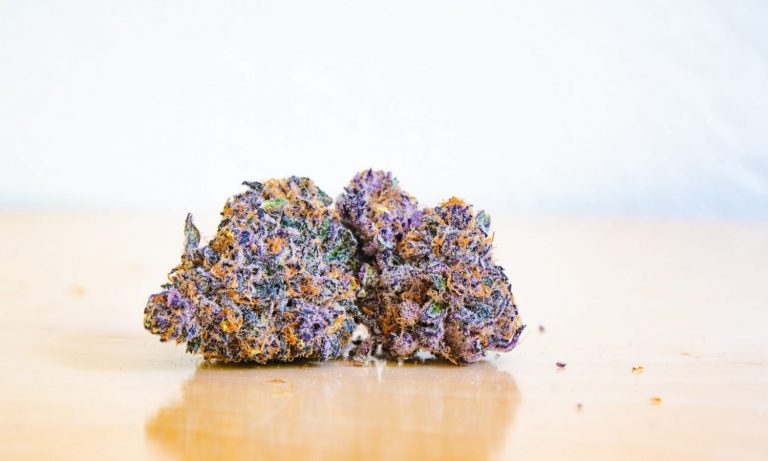
Purple cannabis is an umbrella term for a growing family of strains that share a color as much as they share a distinct taste, smell and stony effect.
There are a couple of theories as to what gives some cannabis plants a purple hue, ranging from lavender to deep black-purple, but not all of them are true. What makes Purple purple, longtime cannabis breeder Todd McCormick says, are the flavonoids of certain genetics, and that “Afghan genetics are the genetics responsible for the purple colors in broad leaflet cannabis.”
One of the biggest appeals of Purple cannabis, besides the color, is the taste. Purple cannabis strains often taste “purple” too, like a sweet candy grape that can even express floral notes.
Due to their genetics, Purple strains are almost always indicas unless crossed with something else, known for the intense body high that patients reported was great for chronic pain without totally wiping the mind. But despite this intense effect, Purple cannabis has never been a high THC producer, averaging 15-16%.
How Does It Compare?
Purple strains are most comparable to Kush strains, as they share the intense couch-lock of a pure indica and a similar stocky look to the plants as they flower. The unique flavor profile, which likely draws on terpenes like linalool, is something that sour and Haze can’t achieve.
Photo by Daniel Norin via Unsplash
Kay Watt, the principal geneticist at Dark Heart Nursery, says Purples were always popular with medical patients for their intense pain-numbing effects, but weren’t as mentally sedating as Kush or Skunk could be.
The only downside to Purple might be that it’s so hard to find, because the plants themselves don’t produce big yields, making them more costly to grow.
Bottom Line
The beauty of cannabis is that it’s so abundant that anyone can find the right strain for them. Purple cannabis was an incredibly popular strain amongst people with chronic pain and nausea, but it was also a euphoric high that didn’t leave its users asleep or in a daze.
It won’t provide the energy of a sativa like Haze or Sour Diesel, so it’s not the best for a busy or active lifestyle. Ask anyone who’s tried Purple and they probably liked it. Don’t believe me? There’s only one way to know for sure — try it for yourself!
Gradually, people are becoming aware of the value cannabis offers, making it possible for countries and regions to accept and legalize cannabis.
Continentally, cannabis is decriminalized and allowed for medical use in several regions of North America, Africa, Australia, Europe, and South America. But it remains prohibited in Middle Eastern countries and Asia. It is essential for every individual that uses cannabis to have an understanding of these cannabis laws, especially if they are traveling or relocating to another country.
This article is a collection and a quick guide of cannabis laws around the world. So whenever you are visiting a new region, you should have a quick look to determine if you can freely take cannabis while in that region or not.
Photo by Levi Ventura via Unsplash
Europe
Currently, cannabis usage is at varying stages of legality and decriminalization in some countries in Europe. Some of these countries include Czech Republic, Portugal, Russia, Croatia, Spain, Ukraine, and Switzerland. However, it remains illegal everywhere else in Europe.
You can avoid the possibility of randomly getting caught in a cannabis search by vaping discreetly. But the smell of cannabis is still very divisive, and if caught in areas with strict anti-cannabis rules, you may face some legal issues.
With the European cannabis discourse, it stops short of Turkey. Turkey is beginning to ease off cannabis slightly, but it is still advisable that you don’t take it with you when visiting the country.
European police may also turn a blind eye to weed if it is in small quantities and clearly stated that it is for personal use. If you carry cannabis in more significant amounts, it may seem like you will sell it, and such commercial intent is to be avoided. If you buy cannabis to share with a group of people in Europe, you should quickly divide it into smaller quantities before the police search.
Americans and the Caribbean
In America and Canada, cannabis usage is either legal or considered a misdemeanor. Just as it is with Europe, it is highly recommended that anyone visiting such countries remain discreet even in states where it is entirely legal.
Some people in the Americas and Caribbean may object to the cannabis smell when smoked or vaped around them despite cannabis having a legalized status in the state. When you get to the south of the U.S.A, the situation becomes highly complex, so be careful.
Plaza Botero, Medellin, Colombia, Photo by John Coletti/Getty Images
South American countries are more accepting of marijuana as many nations in this region have decriminalized cannabis possession despite sales and cultivation remains illegal.
Jamaica is the only country where the utilization of cannabis is celebrated as a part of their culture. Other countries are either legal, semi-legal, or ignored (so long people are discreet with it). Currently, these countries where it is legal, semi-legal, or ignored include Costa Rica, Mexico, Peru, Belize, Columbia, Peru, Argentina, Ecuador, and Uruguay.
Just as we mentioned with Europe when outside Jamaica, ensure that you carry small quantities of cannabis. Also, emphasize the fact that it is for personal and non-commercial use.
Middle East and Asia
The best thing to do with cannabis when in these regions is to avoid moving with it ultimately. Cannabis is currently illegal in these regions except in South Korea, where it can only be used for medical purposes. There is also a rumor that it is legal in North Korea, but this is still in dispute because of the country’s lack of access to information.
In the Middle East and Asia, most people still consider possession of cannabis a grievous offense, while some others completely ignore it. In some countries, like Singapore, Turkey, Korea, KSA, Pakistan, Malaysia, and Japan, it is not legal to touch cannabis at all,
Photo by fak1911 via Pixabay
It might be safe for you to use cannabis in countries like India, Laos, and Cambodia. Also, remember that foreigners should not expect preferential treatments than what the locals’ experience. If you arrive in these regions, check the peculiar cannabis status in the countries you visit and abide by the rules.
It may be wise to leave your stash at home when going to Asian or Middle Eastern countries as these regions are still strictly against the plant in both forms (medical and recreational).
Australia, New Zealand, and Africa
Recreational cannabis is illegal in Australia, New Zealand, and Africa. It is largely explicitly ignored in Australia and New Zealand such that if you are caught with t, it will only be treated as a misdemeanor. But remember that it will be treated as a misdemeanor if you are caught with smaller quantities and clearly state that it is for personal use.
Australia is still at the forefront of cannabis reform globally as it first legalized medical marijuana all over the nation in 2016. The country decriminalized and accepted cannabis within the cultures of the local Australian people.
Photo by Dan Freeman via Unsplash
In Africa, the enforcement of marijuana-related laws is ineffective. If you are caught with it, you may face severe consequences, especially in Nigeria and Ethiopia. South Africa is the only country where it is safe to use cannabis compared to other African countries, but it is still not recommended.
Lesotho and Zimbabwe have legalized cannabis for medical cultivation, while some other nations are considering legalization. Some of these countries include Morocco, Ghana, Egypt, Malawi, and Kenya. In the future, these countries have a better chance of decriminalizing cannabis.
You may wonder, “What about those living in Antarctica?” Well, since it is a kind of lawless land, people can do whatever they want. But please be careful with cannabis possession when visiting as there may be some rules concerning cannabis you don’t know about.
Bottom Line
Unlike in previous times, many of these regions that may seem very hostile towards cannabis are beginning to consider the medical benefits the plant offers. Yes, many of these countries are still conservative, but the young ones are reading and searching for the benefits of marijuana.
They may remain conservative for now, but experts agree that the future of cannabis in these regions is bright. A good example are North American countries where cannabis may still be illegal at the Federal level and legalized within states. Gradually, people are becoming aware of the value cannabis offers, making it possible for countries and regions to accept and legalize cannabis.
The big uncertainty was whether New York’s local jurisdictions would embrace the cannabis industry. Riverhead voting against opting out is a very positive development.
As we continue to wait for Governor Andrew Cuomo to nominate a Chairperson for the Cannabis Control Board (CCB), effectively kickstarting the rule making process, a surprising and welcome piece of news came down. On July 7, 2021, the Town of Riverhead voted not to opt out of allowing retail dispensaries and on-site consumption locations in Riverhead.
As a brief refresher, the Marijuana Regulation and Taxation Act (MRTA) includes a provision that allows any town, city, or village to adopt local law to prohibit the retail dispensaries or on-site consumption locations in their jurisdiction, provided the law is adopted by December 31, 2021.
Photo by Thomas Habr via Unsplash
Riverhead choosing to embrace retail and on-site consumption cannabis establishments is an important indicator for Long Island’s openness to recreational cannabis. Riverhead is the effective “capital” of Long Island’s Suffolk County, a conservative stronghold. For context, Suffolk County’s courts and administrative agencies are all located in Riverhead.
With that said, it was close. The vote to not opt out was 3-2. The three board members who voted against opting out publicly stated that by allowing recreational and on-site consumption establishments in Riverhead, the town would be in a better position to regulate where, when, and how the businesses operate. Council Member Tim Hubbard also highlighted the impact of the black market in stating “if we don’t allow it, the black market is going to thrive in the Town of Riverhead. And that’s not where we want people to buy it, that’s where you have issues.”
But even more tellingly, even the two board members who voted in favor of opting out did so for purely practical reasons. Council member Ken Rothwell, one of the opt out votes, emphasized a desire to wait and see how the MRTA works out in other Long Island towns. Town Supervisor Yvette Aguiar highlighted the absence of any rules and regulations for the industry in stating that there are “many questions and many unknowns” with the MRTA.
Other than waiting for the CCB to issue the industry rules and regulations and details regarding the application process, the big uncertainty was whether New York’s local jurisdictions would embrace the cannabis industry. Riverhead voting against opting out is a very positive development. And while Riverhead alone will not make the cannabis industry go on Long Island, it is (hopefully) an indicator that Nassau County and Suffolk County will choose the facilitate cannabis’ emergence as an economic driver on Long Island.
Currently, patients who are admitted to the ER with cannabis intoxication have no other option but wait in the hospital until they become sober — taking up valuable resources and delaying other patients.
As of July 2021, 18 states have legalized recreational marijuana while another 18 have legalized cannabis solely for medical purposes. Meanwhile, Florida, Connecticut and Hawaii all have introduced legislation supporting legalization.
As cannabis becomes decriminalized across the country, one of the unintended consequences is an increase in use and, inevitably, an increase in cannabis intoxication.
Photo by Javi Julio Photography/Getty Images
Cannabis-associated emergency department visits have gone up by a compound annual growth rate (CAGR) of 15% since the first states legalized the substance in 2012. Estimates suggest that more than 1.7 million emergency room visits in 2018 were associated with THC. Trends of adults and children accidentally consuming high concentrations of THC and synthetic THC are likely to persist.
Public discourse around the symptoms of cannabis intoxication tend to be minimized, especially in comparison to other narcotics where overdoses frequently result in death. Nevertheless, cannabis intoxication can be incredibly distressing. Symptoms include extreme anxiety, panic attacks, psychotic reactions, uncontrollable shaking or even seizures. Synthetic cannabis symptoms are more severe.
According to emergency room physicians, patients can’t wait for an antidote and neither can doctors, but unfortunately, the market has lacked an efficient solution for cannabis intoxication.
Anebulo as a Treatment for Cannabis Intoxication
Anebulo Pharmaceuticals (NASDAQ:ANEB) is a clinical stage biotech company whose lead product, ANEB-001, is a promising antidote for cannabis intoxication. Anebulo’s development is significant because there are currently no approved medical treatments for alleviating the symptoms of cannabis intoxication.
Instead, patients who head into the emergency room with cannabis intoxication have no other option but wait in the hospital until they become sober — taking up valuable resources and delaying other patients.
Photo by Adrian Black/Getty Images
Anebulo’s solution is intended to work fast and alleviate the most distressing symptoms of overdose — especially those caused by accidental ingestion of edible products and synthetic marijuana.
The ANEB-001 treatment works by blocking the effects of THC at the brain’s CB1 receptor. In as little as 1 hour, patients could receive relief from anxiety, decreased psychosis, normalization of heartbeat and an overall decrease in feeling high.
How Companies Like Anebulo will Continue to Shape the Cannabis Industry
Much of the investment focus within the cannabis sector centers on production, distribution and retail cannabis brands. However, as nationwide legalization increases, so will cannabis-related emergency room visits and the need for a viable antidote.
While there’s not much that can be done to prevent cannabis intoxication, Anebulo’s solution offers the potential for fast, safe treatment that could help patients and people struggling with addiction as well as allow physicians to perform their work more effectively.
Anebulo is a publicly traded company based in Texas. You can learn more about Anebulo’s stock data, financial reports and investor relations here.
State regulators are helping legitimize the industry, build consumer confidence and expand this promising market.
While the Food and Drug Administration (the FDA) continues to drag its feet in forging a legal path for the manufacture, sale, and distribution of hemp-derived products, state regulators are keeping up with the demands of this evolving market and adopting increasingly more nuanced and more sophisticated regulations for these products.
Several states, including Oregon and Colorado, first established hemp regulations in 2015, following the enactment of the 2014 Farm Bill. Though fairly comprehensive at the time, these regulations quickly became too broad to adequately regulate the wide range of product categories that eventually emerged on the market. To address this issue, these states have had to amend their regulations frequently to keep up with industry.
Photo by Remedy Pics via Unsplash
Earlier this year, the Colorado Department of Public Health and Environment (the CDPHE) adopted a new set of rules that recently went into effect (the labeling requirements as well as some of the testing requirements went into effect on July 1) and now constitute one of the most comprehensive regulatory frameworks in the country.
Many of the CDPHE’s newly adopted rules address issues that have become hugely important to the industry but have yet to be addressed by state regulators – and the FDA. Some of these issues are outlined below.
Nomenclature
The CDPHE regulations authorize the sale of hemp-derived foods, dietary supplements and cosmetics provided these products contain ingredients derived from an “approved source.” The term “approved source” includes CDPHE registered manufacturers and wholesalers but also out-of-state products that come from states and countries that regulate these products to ensure their safety for human consumption. By adopting a broad definition of the term “approved source”, the CDPHE acknowledged that many hemp-derived products sold in the state come from other jurisdictions and that there is a need to regulate, even if partially, these products.
The regulations also define terms like “broad spectrum”, “cannabinoids”, “full spectrum”, “industrial hemp extract” and “unfinished industrial hemp products”, showing the need to clearly identify but also differentiate the wide range of hemp-infused products now available in the U.S. and to tailor regulations to fit the specificities and intricacies of each product category.
Processing and Manufacturing
State manufacturers and processors must be registered with the CDPHE and must meet specific manufacturing requirements, such as establishing a very detailed, written recall plan, in accordance with federal law.
Testing
In addition to testing the products for conforming levels of THC and total THC, the CDPHE is requiring that as of August 1, hemp-infused products manufactured in the state be tested for over 100 pesticides, microbials, heavy metals and residual solvents to ensure they are safe for human consumption.
Labeling
The new regulations mandate that the product labels comply with the general labeling requirements imposed under the Federal Food, Drug and Cosmetic Act, including the identification of allergens for foods and dietary supplements, and, whenever necessary, of warning statements to prevent a health hazard that may be associated with a cosmetic product. Upon the adoption of these new rules, the CDPHE also published very detailed labeling guidelines for each products category it regulates: Foods, dietary supplements, and cosmetics.
Photo by Iryna Veklich/Getty Images
Other notable labeling requirements include: (1) identifying each isolated cannabinoid as an ingredient and their concentration in milligrams; (2) listing the levels of THC per serving and total THC per finished product package; and (3) incorporating a code or numbering system that identifies the date and location of manufacturing and packaging so the products can easily be tracked in the event of a recall.
Transportation
The CDPHE is also imposing transportation requirements, mandating that unfinished and finished hemp products be packaged and transported in a manner where they will be protected from adulteration, allergen cross-contact, environmental contamination, and any other hazards.
If you follow this blog, you may have noticed that the CDPHE’s regulations mirror many of the proposed regulations released by the New York Department of Health in October 2020, which, back then, we had described as “the most comprehensive” set of regulations to date. You can read more on this issue here and here.
What these newly adopted regulations and proposed regulations suggest is that state regulators are anticipating upcoming federal regulations and proactively aligning their requirements with those already imposed by federal law.
Moreover, by adopting high-quality testing standards and mandating more transparency and accuracy in the labeling and marketing of these products, state regulators are helping legitimize the industry, build consumer confidence and expand this promising market. Now all we can hope for is that the leadership of these states will inspire the FDA to finally serve its administrative functions, enable the industry to follow its course and succeed.
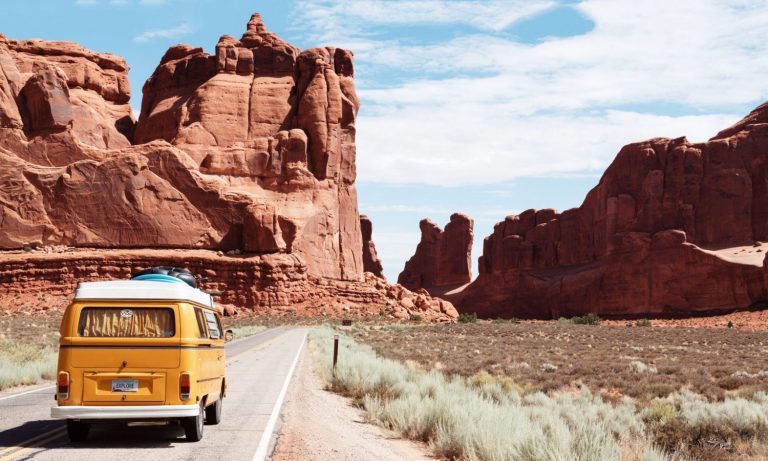
Podcasts are essential for long trips. Here are some great ones for all sorts of travel.
If there’s one thing many of us are looking forward is traveling comfortably. You know, without worrying about long lines, delays or long searches an airline ticket that doesn’t cost double what it should. While every person goes at their own pace in terms of what they’re comfortable with, it’s always nice to have a distraction. There’s nothing better than something entertaining and engrossing, like a great podcast.
Podcasts make great travel companions for a variety of reasons. They lend themselves to road trips and flights, don’t require good eyesight or a stable connection if you download them ahead of time. Here are 5 great podcasts for traveling:
Las Culturistas
Hosted by Matt Rogers and SNL’s MVP Bowen Yang, Las Culturistas is a hilarious podcast about two funny people talking about culture and why we care so much about it. Every episode features new guests that connect to something current that is going on, taking the time to reminisce about what made them love culture in the first place.
Fiction podcasts are going through a big moment right now, like having someone read to you but the person who’s reading has perfect diction and you also get an elaborate audio production. Blood Ties stars Gillian Jacobs, Josh Gad, and more, and tells the story of siblings Eleanore and Michael, who unexpectedly lose their parents in a plane crash. It gets way more complicated from there.
Haunted Places
If you’re a lover of spooky things, like a large percentage of podcasts listeners, then you’ll love Haunted Places. This podcast releases a new episode each week discussing a new haunted place and all of its history.
Imaginary Worlds posts episodes twice a week, all about genres like fantasy and science-fiction. The host of the show, Eric Molinsky, has a talk with different novelists, screenwriters, cartoonists, video game designers, and more, all about creating fictional worlds.
Root of Evil
Root of Evil is one of those true crime podcasts that focuses on The Black Dahlia murder of the 1940’s. What sets it apart from the many other entries of that very crowded genre is that the podcast widens its scope, choosing to focus on the very charged history of the family of George Hodel, the man suspected with the original murder.