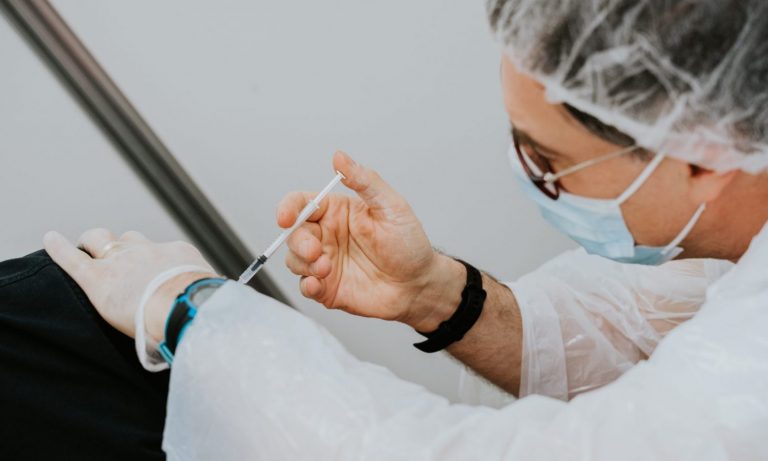
Aside from slowing down your immune system’s response to the pathogen, this can also lower the durability of the vaccine’s effectiveness.
The COVID-19 vaccines are highly effective, reducing the spread of the disease and virtually eliminating the risk of getting dangerously ill. Still, factors like age and comorbidities are important when gauging the vaccine’s effectiveness. A study found one additional factor that could have a significant impact on your antibody response to the vaccine.
“These findings suggest that with the COVID-19 vaccine when you’re more stressed and more anxious, it may take a little longer to develop antibodies. So you should allow more time before assuming you’re protected,” said OSU clinical health psychologist Janice Kiecolt-Glaser.
Aside from slowing down your immune system’s response to the pathogen, stress can also lower the durability of the vaccine’s effectiveness.
Stress and anxiety affect many areas of your health. It’s a condition that’s connected to your immune system, meaning that it could impact your entire vaccination process, from how effective your body’s response is, to how long it lasts. Stress could also increase side effects at the time of injection.
The OSU study showed that people who were stressed or depressed when they got their shot experienced malaise, lethargy and irritability more often than others. The longer the period of stress or depression, the worse the side effects.
While it’s normal to be stressed out during these strange times we’re living through, it’s important to try to make the most out of your vaccine. Before you get your shot, try to address your stress and anxiety in some way, whether you’re talking to someone or taking care of your mental health.
Even if you don’t completely resolve the problem by the time of your shot, you’ll still have addressed some behaviors that can make your vaccine more effective and the experience more manageable.
In a recent op-ed, Manchin confirmed that he would not vote for the For the People Act, while also reiterating his position, once again, for not eliminating or even weakening the filibuster.
Democrats will need all the inner-party support they can get this year if they expect to pass the comprehensive marijuana reform bill that Senate Majority Leader Chuck Schumer has promised. But it has become painfully evident that the mission to legalize the leaf nationwide could be foiled one way or another.
There is, of course, the continued wrath of Senate Minority Leader Mitch McConnell and his willingness to lean on the filibuster to prevent any Democratic legislation from getting through. He recently said he had one goal: stopping the Biden Administration dead in its tracks. No surprise there.
Photo by Tom Brenner-Pool/Getty Images
But, well, there is Democratic Senator Joe Manchin of West Virginia. This guy is being called the “new Mitch McConnell” by his own party, as he seems fully dedicated to hindering progress and helping to crush Democratic dreams.
“Joe Manchin has become the new Mitch McConnell. Mitch McConnell during Obama’s presidency said he would do everything in his power to stop (then-President Barack Obama),” said New York Rep. Jamaal Bowman in an interview with CNN’s John Berman. “He’s also repeated that now during the Biden presidency by saying he would do everything in his power to stop President Biden, and now Joe Manchin is doing everything in his power to stop democracy and to stop our work for the people, the work that the people sent us here to do. Manchin is not pushing us closer to bipartisanship. He is doing the work of the Republican Party by being an obstructionist.”
What Bowman is referring to is Manchin’s decision to oppose a heavily supported Democratic legislation to protect voting rights. In a recent op-ed, Manchin confirmed that he would not vote for the For the People Act, while also reiterating his position, once again, for not eliminating or even weakening the filibuster. While this news isn’t necessarily cannabis-related, Manchin’s position against his own party could end up having dire consequences for the future of federal cannabis reform. Why? As we mentioned before, Democrats need every vote they can get to accomplish their objective — to oppose the filibuster, to pass a cannabis reform bill, to do anything at all.
Photo by Tasos Katopodis-Pool/Getty Images
Senator Manchin is likely to rail against Schumer’s soon-to-be-introduced cannabis bill. Manchin still believes pot is a gateway drug, which has earned him a D-minus with the national cannabis advocacy group NORML. “I go to the treatment centers. I talk to the addicts. I always ask, ‘How did you get started?’ Most told me they started out with recreational marijuana,” he said in a 2017 article for STAT. “Legalizing recreational marijuana is something I have not been able to accept or support.”
But we don’t know for sure where Manchin stands on cannabis reform in 2020. Not even his own party is certain about the scope of his politics. “If you can figure out what Joe Manchin is about, let me know because I can’t,” one Democratic senator recently told the Hill on the request of anonymity.
However, we do know that Senator Manchin will not vote to end the filibuster. This means Senate Democrats would have to secure 60-votes to get Schumer’s cannabis bill approved. Right now, it doesn’t appear the party has that kind of support from across the aisle. “We’ve got to pick up another ten votes,” Senator Cory Booker of New Jersey, whose name will appear alongside Schumer’s in the upcoming pot bill, said earlier this year at a ACLU event. “Now, the good news is, is that there are Republican bright red states that have legalized marijuana. And that should give us some advantage in trying to cobble together the kind of majority that we need.”
Photo by Paras Griffin/Stringer/Getty Images
Sadly, Booker’s optimism for pot reform seems a little naive. The inability to secure the necessary votes may be why we haven’t yet seen a cannabis reform measure introduced in the Senate. It’s been five months since Schumer and Booker announced the coming of a cannabis measure. They almost certainly see the challenges ahead, some of which are being created by their own party.
How will they overcome them? Do they even stand a chance? A betting man wouldn’t put his money on the Democrats changing the cannabis laws this year — not a prayer. He would, however, wager the farm on the hybrid policy destruction power of McConnell and Manchin.
The data from a survey that considered the consumption of marijuana by fans of certain sports leagues and teams show that NFL fans consumed the highest amount of weed.
As more people discover the benefits of cannabis, the industry grows in leaps and bounds, with more cannabis-infused products flooding the market. A significant characteristic of any thriving industry is its ability to become multi-faceted such that there are several growing sectors within the same industry.
The cannabis industry is an example of a thriving sector with different sectors that cut across; research, planting, business development, consumers, sales, marketing, health, wellness, etc.
Although all sectors are essential, the marketing aspect of cannabis is at the center of the entire industry. You are about to find out how strategic marketing between cannabis companies and players broke the conservatism associated with cannabis in sports.
Photo by AndreyPopov/Getty Images
Cannabis and sports fans
If you have created a fantastic cannabis product, your first point of call should be a marketing strategy, and who are the best people to focus on? Sports fans! Sports fans can get wild with excitement and love for their favorite team, and because sports is a global phenomenon, products marketed to this demographic tend to perform well in the market.
Cannabis gives the fans the “kick” they need to stay energized and excited throughout the game, and cannabis brands are beginning to make money off this interest. There is an increase in the number of athletes that have become cannabis advocates through cannabis sponsorships.
The strategy is simple: since the athletes have global appeal, fans pay attention to what they wear and the brands they support. Cannabis companies now work with pro-athletes to promote their products.
Despite some of the sports being conservative, the promotions are primarily successful because people are beginning to maximize the wellness benefits cannabis offers. The athletes make money off the deal, the cannabis company sells out, the fans are happy, and the marketing strategy succeeds.
How to effectively market cannabis to sports fans
If you want to sell your cannabis products to sports fans, you have to understand the consumer demographic in states having lots of sports fans, such as Maryland and Georgia. The concentration of sports fans in a particular state should be a significant key indicator that drives your marketing campaign.
For instance, you don’t want to market your cannabis products in states like Minnesota or Massachusetts. These are states proven to offer fewer returns on marketing budgets with cannabis because low sports fans turn out.
Photo by LightFieldStudios/Getty Images
Yes, even with some highly conservative sports, if you are strategic with your location, you will get results. Sports fans need to be interested, they need to see their favorite player endorsing the brand, and if you get this right, you are promised marketing success.
The data from a recent survey that considered the consumption of marijuana and alcohol by fans of certain leagues and teams show that the NFL fans consumed the highest amount of cannabis. The survey also concludes that 36% of fans confirm that they enjoy cannabis while watching their favorite football game.
This data from the survey puts the NFL fans ahead of other league leaders who were slow to make changes with cannabis use for athletes. The cannabis conversation, service, and marketing in the sports industry have gained tremendous popularity to the extent that female soccer superstars call for more women’s representation in the cannabis industry.
The NFL was always labeled as the most conservative sport in the U.S. But do you know that a study recently conducted revealed that NFL fans have one of the highest cannabis usages while watching games?
The survey report also highlighted other sports leagues with fans that enjoy marijuana while watching their favorite game, and this includes The MMA/UFC at 41%, Esports at 40%, NFL at 36%, NBA at 35%, and the NHL at 33%.
The respondents to the survey also mentioned how they prefer to consume cannabis on game day because this is also very important within the cannabis marketing industry. At the top of the list is smoking which ranked at 42%, with Bowl at 41%, Bong at 34%, Edible at 32%, and One Hitter at 24%.
The team with lots of cannabis loving fans
In terms of individual teams in the NFL, you might want to focus on Atlanta and Baltimore as the highest percentage of cannabis users at 77% are from the Atlanta Falcons and Baltimore Ravens. Other teams with very high cannabis use rate on game day (in no particular order) are Buffalo Bills, Los Angeles Chargers, Las Vegas Raiders, and Indianapolis Colts.
Worthy of note is that the New England Patriots fans use the least amount of cannabis, which is interesting because the team plays in Massachusetts. If you recall, Massachusetts has legalized adult use of cannabis, yet the sports fans are not as enthusiastic about using cannabis as the fans in other cities.
Photo by Philip Pacheco/Stringer/Getty Images
As an intelligent cannabis business owner, you can plan your marketing strategy to concentrate more on the sports fans excited about using cannabis for game day. Conservatism in the sporting world against cannabis has become a blurry line. Fans want to have fun; they want to maintain the same adrenaline level from kick-off to the end of the game and will pay for a product that will give them that “Rush.”
Cannabis provides this rush through a myriad of products, and with athletes endorsing cannabis brands, fans are happy to buy the cannabis products their favorite players support.
The marketing world is all about partnerships; the right cannabis company partnering a famous athlete in a state where cannabis is legalized the dream business deal.
The cannabis industry continues to grow, and sports fans of conservative teams are maximizing the thrill it offers them during game time. Cannabis companies are in for a great time in terms of returns on their investments as products fly off the shelf due to the impact of athletes endorsing such products.
If you own a cannabis company in America, you need to re-strategize your marketing plans to accommodate more sporting events because the fans are ready to buy!
A new study indicates that THC levels are not accurate representations of whether someone is impaired or not.
A new study suggests that the amount of THC in someone’s system is not an accurate predictor of impairment.
The study, done with the support of the National Institute of Justice, involved 20 participants. They were asked to consume cannabis through edibles or vapes, all with different degrees of THC. Afterward, participants were tested with common field sobriety tests and asked to complete cognitive tasks.
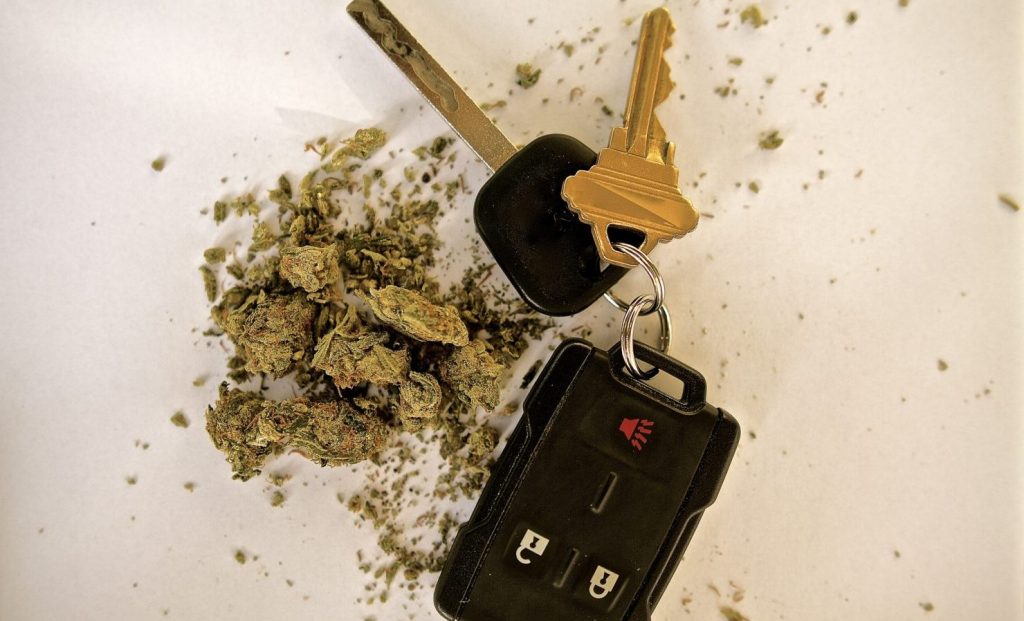
According to the study’s results, the amount of THC wasn’t a reliable indicator when discussing participant’s impairment. This is important since it questions many of the rules and regulations when it comes to cannabis use, particularly when discussing impairment when driving.
“These important findings come as no surprise,” said NORML Deputy Director Paul Armentano. “Despite a handful of states imposing per se THC thresholds as part of their traffic safety laws, there exists no science demonstrating that these arbitrary limits are reliable predictors of either recent cannabis exposure or impairment.”
Researchers investigated how marijuana affects skills required for safe driving and found that biofluid levels of THC did not correlate with field sobriety test performance or marijuana intoxication, regardless of how the cannabis was ingested. Read more: https://t.co/Aqkfvplv9Ppic.twitter.com/1mWehGKCHQ
Researchers gathered blood, urine and oral samples from participants who had ingested THC. The data didn’t correlate with the cognitive tasks and field sobriety tests participants were asked to participate in. Some participants had low levels of THC and performed poorly on these tasks and vice versa.
THC has long been the focus for impairment when discussing marijuana use. Now that the drug is getting legalized across different states, this is a problem, since it may result in the arrests of people who shouldn’t be arrested. The drug tests that are available, particularly those that are administered on the road, aren’t able to measure impairment. They’re only able to determine whether someone ingested cannabis or not.
Driving under the influence should be monitored since it could result in dangerous situations. Still, it’s important to avoid creating a problem when there isn’t one, especially since data shows that marijuana’s legalization hasn’t resulted in an increase in car accidents.
The Washington State University Faculty Senate and Board of Regents have formed a Center for Cannabis Policy, Research and Outreach (CCRPO) with the idea of overseeing the school’s comprehensive cannabis research, reported Hemp Today.
“The center status recognizes our researchers’ outstanding, multi-disciplinary scholarship on cannabis. It also brings together under one center work on everything from research focused on the impact of cannabis on development to scholarship on cannabis and public safety, as well as our growing hemp research,” said Michael McDonell, CCPRO Director.
Photo by cyano66/Getty Images
WSU began cannabis research back in 2011, prior to Washington becoming the first state, along with Colorado, to legalize adult-use cannabis in 2012. Now, the university is poised to take its research to the next level as it will employ around 100 scientists to supervise many ongoing cannabis-related studies.
One of them is being led by Professor David Gang, whose WSU research team is in its second year of hemp planting trials.
The University also collaborated with researchers from Oregon and California who are examining hemp germplasm for CBD and industrial use, analyzing plant chemistry and searching for varieties that would blossom in specific parts of the state.
Over the last six years, WSU has undertaken some 50 projects including studies of behavioral and biological predictors of cannabis abuse using a novel animal model of cannabis vapor administration. This research was recently granted $400,000 from the National Institute on Drug Abuse.
Now that we’re navigating many new social situations, here are some questions you should ask yourself when going out.
The majority of people who complied with social distancing guidelines for the past year have already been vaccinated. These people — immunocompromised, above a certain age group, or mindful of the government guidelines — may be having a hard time now that their friends want to hang out and the world is going back to normal. What are the rules now?
It’s clear that fully vaccinated people can basically do whatever they want as long as it’s with other vaccinated people. Still, for some, the prospect of dining indoors or going to an indoor space without wearing a mask, may feel uncomfortable. That’s okay.
As we navigate this new stage, it’s important to be communicative and to explain to others what you’re going through. This will save you some awkwardness and give you some peace of mind. Here are some questions you should ask yourself next time you plan on hanging out with others:
Should you hang out inside or outside?
Photo by Priscilla Du Preez via Unsplash
While indoor dining and seating is reopening, some people are not ready to do that just yet. Luckily, it’s the summer, so it’s the best time for outdoor seating. After a year of these conditions, restaurants have adapted and have managed to design a good experience for everyone involved, one that feels safer and more intuitive than it did a year ago. Before you meet up with someone, talk about your options and be clear regarding your stance.
While vaccinated people are safe, some may not feel ready for hugs and may be second guessing themselves when approaching others. Make sure to ask before you hug someone or to understand if someone doesn’t want to hug you right away. We’re only starting to see the trauma of living under COVID-19 conditions, so it’s important to be patient and understanding.
Dating is probably the toughest social activity to be doing right now, and there are no easy answers. Still, asking someone if they’ve been vaccinated is a valid question, one that’s become increasingly more common and less awkward. If it’s something that’s bothering you, you should ask it. The risk of transmitting COVID-19 through kissing when both people have been vaccinated is minimal, but you still shouldn’t do it if you’re not feeling up to it.
If you’re done visiting retailers and are hoping to use online sources to fill the void, you might be better off learning to grow your own.
One of the biggest stories to hit last week was news of Amazon’s newly adopted drug policy stating that it would no longer test employees for marijuana. Every media outlet known to man had something to say about it. But the basic message contained in them all was that the company’s willingness to support legalization and eliminate pot testing might be a sign of higher times. Perhaps the nation was making real progress on this issue and would soon be prohibition free.
One cannabis news outlet even posted an article branded with a headline that was borderline click-bait, predicting that weed sales through the online retailer was on the horizon. The publication came right out and said, “Yes, Amazon will sell weed,” seemingly trying to pull one over on the readers by giving them hope that they might soon have the luxury of ordering bud in the same way they do with things from books to protein powder. The only caveat to the future of Amazon’s speculative marijuana marketplace, according to the article? Well, let’s just say it’s a big one.
Photo by Getty Images
Cannabis advocates believe all that is standing in the way of Amazon becoming one of the largest pot dealers in the country is federal marijuana prohibition. That once weed is removed from the Controlled Substances Act, of course Amazon is going to get in on the mix just like everyone else. Why in the heck wouldn’t they? After all, alcohol is legal, and the company recently nabbed a piece of that action. It makes sense that the next logical move would be cannabis. Right?
Although it is conceivable that Bezos and crew will attempt to capitalize on marijuana to some degree once it is legal nationwide, Amazon’s weed distribution center is not going to flourish right away. The company is sure to encounter a slew of challenges if it decides to move on pot products.
Even if changes come to federal law, some states will opt to maintain pot prohibition. Furthermore, the company’s entry into alcohol — a totally legal substance — is far from being anything to write home about. Search the site to buy “alcohol,” “beer,” “wine,” “spirits,” and you’ll inevitably end up running to your neighborhood liquor store instead. The selection is limited, and it’s primarily full of non-alcoholic choices and brew supplies. Amazon might sell booze, but just barely.
Furthermore, despite the legality of booze at the federal level, some states still don’t allow alcohol to be delivered. Right now, Alabama, Utah, Kentucky, and Mississippi do not permit alcohol delivery of any kind. As for the states that do, the regulations are different for each, making it next to impossible for an international company like Amazon to comply easily enough across the board to supply booze for all.
Photo by Westend61/Getty Images
Right now, only 12 cities (not states, cities) enjoy the convenience of Amazon’s alcohol sales. That’s just a drop in the bucket for a substance that has been legally accessible in this country for decades. Rest assured, Amazon will expand as local and state laws allow. But the company has a long way to go before mom-and-pop liquor stores have anything to worry about.
A fully legal national pot market is destined to turn up these regulatory snags and probably even more.
Standing in the way of Amazon’s potential weed business is Congress. Regardless of the unbridled optimism of most cannabis advocates, federal lawmakers are still a long way from legalizing marijuana nationwide. Although Senate Democrats are planning to push a comprehensive marijuana legalization bill later this year, the wonky dynamic in the upper chamber — the filibuster, Mitch McConnell, pot-hating Democrats — could and probably will prevent legal weed from going the distance.
In fact, even with marijuana reform having more support than ever on Capitol Hill, there’s a good chance that federal legalization will not take shape for several more years. There just isn’t enough bipartisan consensus in the nation’s capital to further this issue all the way. Not even President Biden agrees with the Senate’s legalization plan.
Photo by Jose Luque / EyeEm/Getty Images
Don’t expect to buy legal weed from Amazon anytime soon. If that development does eventually come to pass, much like its alcohol business, it’s going to take time to mature beyond a limited reach. There’s no doubt about it, cannabis dispensaries will continue to be the go-to legal source for marijuana for many years to come. But if you’re done visiting retailers and are hoping to use online sources to fill the void, you might be better off learning to grow your own.
Amazon might not sell weed or seeds, but it does have a variety of books on cannabis cultivation. We guess they have to start somewhere.
To some, this latest development on recreational marijuana has been a long time coming as residents of the state have always supported the adult use of cannabis.
Montana is about to decriminalize the adult use of cannabis. The state has had a very stable medical marijuana program for a while now. And with this new development, the state’s revenue department seems prepared to take over the medical marijuana scheme to develop an efficient adult-use industry as stated in House Bill 701.
Governor Greg Gianforte signed House Bill 701 on May 18, following the legislature’s approval last month.
The lead up to this development
Montana has legalized the use of medical marijuana since 2004. To some, this latest development on recreational marijuana has been a long time coming as residents of the state have always supported the adult use of cannabis.
Photo by KeithBinns/Getty Images
The 2020 elections had cannabis reform ballot initiatives in Montana. Residents of the states came out to show their support for the initiative, and the measure got over 50% support. This made Montana one of only five states in the U.S. to adopt a cannabis reform initiative during the 2020 elections.
This approved measure, the I-190 ballot initiative, made it legal for anyone above the age of 21 in the state to possess and use marijuana for recreational purposes.
A 20% tax was imposed on all cannabis sales in Montana, and it will later be directed to developing a substance abuse prevention program in the state. Another aspect of the initiative is that it expunges several marijuana-related crimes, and it allows convicted inmates to appeal their sentences.
Currently…
Adults in the state can only possess a maximum amount of one ounce of weed for personal adult use. Since the initiatives were passed in November and later approved in early 2021, the one way to procure cannabis for recreational purposes was to plant. Some have mulled over bringing these products in from other states that have authorized their use, but it would be an offense under federal law. You can only grow your plants. Residents are permitted to grow, at most, four marijuana plant stands.
HB 701
Existing medical marijuana dispensaries are about to make a lot of money from now till the end of the year. As the bill authorizes only these existing stores to sell recreational drugs to the public until the official sales of adult-use cannabis begin in 2022. They have an 18-month head start. Therefore, newly licensed stores will begin their sales in the third quarter of 2023. This would also give the state’s revenue department enough time to lay down regulations.
Photo by FatCamera/Getty Images
Under this bill, the limit for cannabis plants that can be self-cultivated by residents has been reduced. The new bill states that a household can only cultivate four plants, and an individual is only permitted to grow two plants.
Residents that will be unable to grow their own products may have to wait till Jan 2022 when existing medical dispensaries would begin selling to residents that don’t have a medical marijuana card.
This bill also states that a fine of up to $100 can be issued to residents found transporting cannabis products under unsafe conditions. All transported products must be in their original packaging and placed either in the trunk or in the glove compartment. Public smokers will also be issued fines of up to $50, as the bill prohibits the smoking of pot in public spaces. Although, the state promises to single out places or establishments that will be licensed for the consumption of cannabis.
HB 701 only allows marijuana plants with a THC content of no more than 35%. Edibles and capsules can contain at most 100 milligrams of THC per capsule. The total THC content in a package of capsules or edibles must not exceed 800 milligrams.
The bill touches every aspect involved in the sales of recreational cannabis, from starting a new regulatory body to stating the amount of THC content that would be permissible. Implementing this law would take time, and a lot of work would have to be done to ensure the law is implemented successfully.
What is expected in the next months?
The I-190 has already set down a system on how the revenues from legal cannabis can be handled. Just a few tweaks here and there will ensure the scheme is rigid enough to handle the huge revenues that would be pouring in as soon as sales begin.
The Department of Revenue has been tasked with the objective of regulating the newly permitted cannabis enterprises in the state. The department will issue licenses for cultivation, manufacture, sale, laboratory testing, and also transportation of cannabis products in the state.
Photo by Cavan Images/Getty Images
For now, the legislature plans to allocate these funds to the cost of veterans services, a park, and maintenance of the trails. There have been talks that the funds might also cover the acquisition of conservation easements in Montana.
These plans may be changed, as sessions are still being held to discuss other strategies the finds can be saved or spent.
There are also fears that some residents may be pushed to the black market because of the 20 percent imposed sales tax. Due to this, some advocates have called that the percentage of tax be reduced.
Governor Gianforte in a statement showed his dedication to combating the drug epidemic in the state. His office promises to fund several programs for substance abuse prevention treatment in Montana communities. These funds will also give a chance to those Montanans who wish to quit using and get sober. Most of these programs will be non-profit.
The Governor also emphasized that House Bill 701 is the best way to implement the will of Montanans in a responsible and regulated way.
Last Words
It is the beginning of a new dawn in Montana. Although this is still the early stages and it’s still unclear if any of the counties will be willing to opt-out of these new reforms, the Department of Revenue is getting prepared to begin the management of all marijuana programs in the state, as well as integrate some workers from the department of public health and human services for the smooth running of operations.
Whichever way this unfolds, Montana is about to make a ton of money.
Vinegar and cranberry are some of the most mentioned DIY drug test solutions. But are they effective or simply an urban myth?
The internet is great for getting information and advice on a lot of things. Flushing drugs out of your system is not one of them.
Advice on how to pass drug tests range from time-consuming to dangerous practices that involve ingesting products that help your body get rid of lingering traces of THC. For the most part, they’re not accurate. Do innocent suggestions like consuming vinegar or cranberry actually help in speeding up the metabolization of THC?
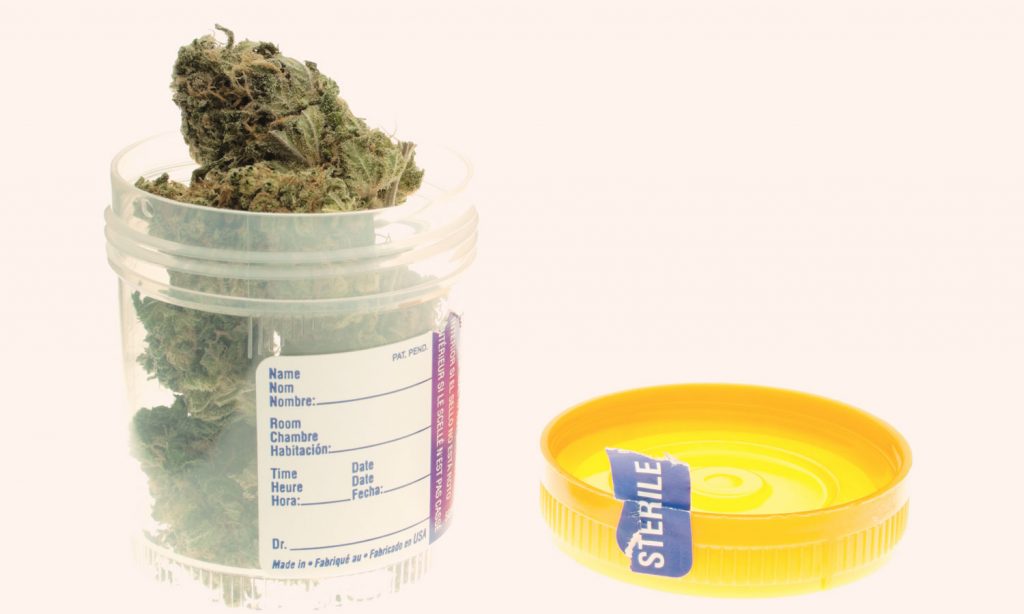
Depending on the test you’re taking, there’s a higher difficulty level. Saliva tests are the simplest ones, measuring THC from the past week. Urine tests can measure any THC in your system over the past 30-45 days. Blood tests measure 45 to 60 days. Lastly, hair follicle tests are capable of spotting THC up to 120 days. As you can see, there’s a wide variety of tests and time frames to take into account.
Cranberry juice is a diuretic, affecting your bladder and urine. This is the reason why they’ve become popular fixtures in detox processes. While the increased visits to the bathroom might speed up the elimination process of THC, it’s very unlikely. THC is mostly stored in your fat cells, meaning that there’s higher odds of burning it off by working out, which might only work with time.
Photo by Alessandro Zambon via Unsplash
When it comes to vinegar, the situation is pretty similar to drinking cranberry. Apple cider vinegar is very acidic, thus making you empty out your bladder more often. According to wellness aficionados, it’s also supposed to improve your metabolism, speeding up the elimination process of THC. But none of this information is scientifically sound. It does make you pee more, so go for it if that’s your thing.
At home solutions for drug tests are a toss up. There’s no evidence that they work and it all truly depends on the type of test you’re taking. Drug tests should be taken seriously. If you have the time to get rid of the THC in your body naturally, go for it. It’s the safest and most efficient way of passing a test and eliminating the cannabis elements from your system.
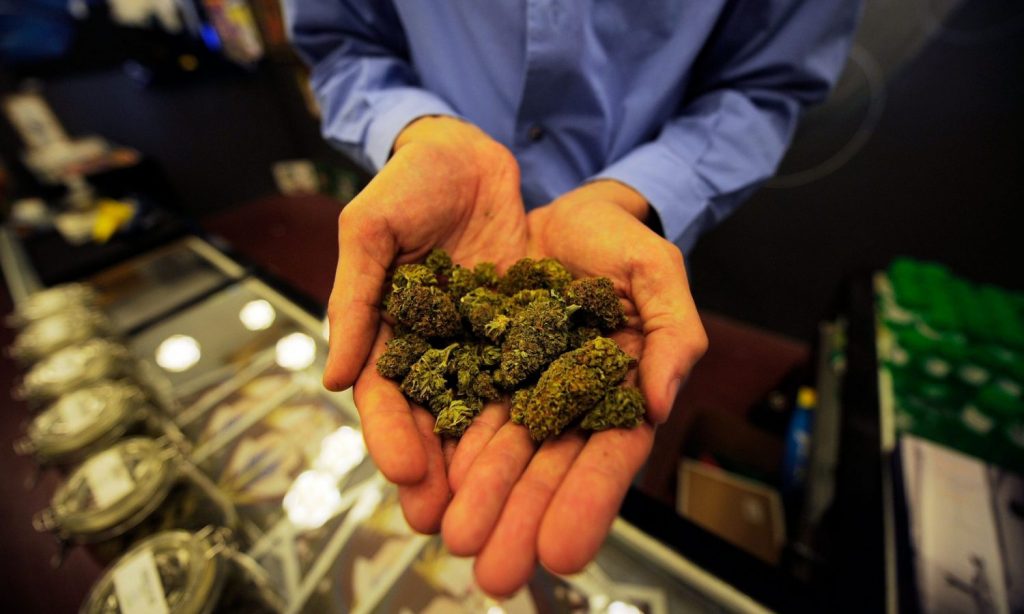
Washington State will be handing out free joints in participating cannabis retailers for adults getting a COVID-19 shot.
In an effort to encourage vaccinations and speed the process up, Washington State has approved a “Joints for Jabs” policy, giving adults the chance to get a free joint with their COVID-19 shot.
The joint must be claimed at the time of vaccination. The “Joints for Jabs” policy will stay in place until July 12, with retailers being able to advertise if they’re participating in the promotion.
According to the LCB, cannabis retailers had been asking for permission to engage in promotions to support state vaccinations.
“The LCB has provided dozens of allowances for alcohol and cannabis licensees throughout the COVID pandemic in an effort to support businesses during the restriction period and to support the vaccine effort,” explains a press release. “Most recently, it to be provided an allowance for a beer, wine or cocktail to be provided at no cost for those vaccinated by June 30.”
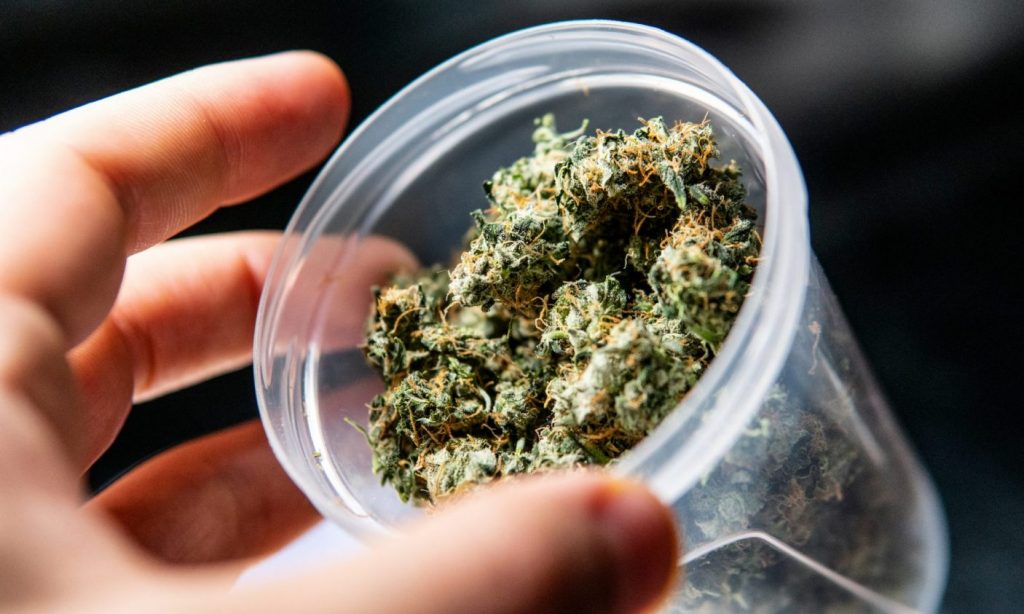
Only people 21 or older are eligible for this promotion, and only pre-rolls are being handed out for free. Edibles, bongs, and other ways of consuming marijuana aren’t included in the deal.
Nearly half of the people in Washington State have been vaccinated, but, like other states, governments are designing creative ways to get reticent people involved in the vaccination process.
States that are trying to get people lured to get their COVID-19 shot include Arizona, New York, Ohio, and more. Prizes are varied, including free beers, wine, cocktails, doughnuts from Krispy Kreme and lottery prizes. The state of West Virginia is providing participants with scholarship opportunities, trucks and even hunting pistols and rifles.