Tuesday, May 12, 2026
Home Blog Page 379

Can COVID-19 Vaccines Be Mix-Matched? UK Study Has Answer

Researchers believe it’s possible that adverse reactions to a mixed schedule of COVID-19 vaccines may be more prevalent in younger age groups.

By Vandana Singh 

Preliminary data from a U.K. clinical trial testing the benefits of mixing and matching COVID-19 vaccines showed that participants who received a mixed schedule of vaccines incurred more frequent reactions than those on standard non-mixed schedules, reports CNBC.

What Happened: The trial named the Com-Cov study led by the University of Oxford and is examining the immune responses of trial participants given a dose of the Oxford-AstraZeneca Plc (NASDAQ: AZN) vaccine followed by the Pfizer Inc (NYSE: PFE) – BioNTech SE (NASDAQ: BNTX) shot and vice versa.

This COVID-19 Vaccine Side Effect Suggests You May Already Have COVID
Photo by CDC via Unsplash

The study aims to evaluate the feasibility of mixing and matching COVID-19 vaccines and whether this could be a viable route to increase the flexibility of vaccination campaigns.

Some of the reactions reported among participants receiving a mixed vaccine schedule included chills, fatigue, feverishness, headache, joint pain, malaise, muscle ache, and pain at the injection site.

The adverse reactions were found to be short-lived, and there were no other safety concerns.

The data was recorded among participants aged 50-years and above. Researchers of the study believe it’s possible that adverse reactions to a mixed schedule of COVID-19 vaccines may be more prevalent in younger age groups.

RELATED: Are Employers Allowed To Issue COVID-19 Vaccine Mandates For Employees?

Trial Results: In the Lancet international medical journal, researchers of the trial reported that when given at a four-week interval, both of the alternating vaccine schedules of the Oxford-AstraZeneca vaccine and the Pfizer-BioNTech vaccine induced more frequent reactions following the second dose than the standard non-mixed schedules.

“The results from this study suggest that mixed dose schedules could result in an increase in work absences the day after immunization, and this is important to consider when planning immunization of health care workers,” he added.

RELATED: What To Do If You Missed Your Second COVID-19 Shot

Matthew Snape, the trial’s chief investigator, said it was important to underline the fact that there were no safety concerns, adding it remained unclear whether the immune response will be affected.

vaccine
Photo by CDC via Unsplash

“We hope to report these data in the coming months. In the meantime, we have adapted the ongoing study to assess whether early and regular use of paracetamol reduces the frequency of these reactions,” Snape said.

The trial initially recruited 830 volunteers aged 50 and above.

In April, researchers expanded the program to include the Moderna Inc (NASDAQ: MRNA) and Novavax Inc (NASDAQ: NVAX) COVID-19 vaccines in a new study, dubbed Com-COV2. It added a further 1,050 volunteers to the program.

Price Action: Shares of MRNA are trading 0.37% lower at $152.11, BNTX share is down 3.05% at $180.52, PFE stock is +1.36% at $40.23 on the last check Thursday.

This article originally appeared on Benzinga and has been reposted with permission.

People Who’ve Lost Their Sense Of Smell Are Coping By Following This Therapy

One side effect of COVID-19 includes the loss of smell and taste. For some, this can last for months.

One of the most striking symptoms of COVID-19 is the temporary loss of smell and taste. For a subset of people, these symptoms can last for months, creating great stress and anxiety.But something called “smell therapy” is helping them cope.

Also known as olfactory retraining or smell training, research suggests it’s an affordable, non-invasive and convenient way to treat the loss of smell.

COVID-19 Loss Of Taste And Smell — How Long Does It Last?
Photo by Louis Hansel @shotsoflouis via Unsplash

Smell therapy is simple: It consists of exposing the person to strong scents, like eucalyptus, rose, lemon and cloves, for a period of 15 to 20 seconds, twice a day. These smells are supposed to evoke the four primary smells: floral, fruity, aromatic and resinous.

In a study published in the journal Laryngoscope, researchers found that after a period of 12 weeks, participants reported better recognition of smells when compared to those who didn’t follow the smell tests.

RELATED: What To Do If You Missed Your Second COVID-19 Shot

“It’s important that you understand that, for example, this is a rose smell you’re supposed to be smelling,” otolaryngologist Dr. Raj Sindwani told Self. “The idea is for you to try and think about what roses smell like and what they look like by combining visual imagery with the stimulation of the isolated scent.”

Despite the research, the way in which the olfactory system works is not wholly understood. In a system that’s functioning normally, the odor particles in the air signal the receptors in the sinuses, which then send a signal to the area of smell in the brain. Viral illnesses can harm these receptors.

RELATED: COVID-19 Symptoms Tend To Appear In This Order

Smell therapy is supposed to engage the brain in the act of smelling, engaging neuroplasticity, helping it to grow, reorganize itself and create new pathways and links related to smell.

While the majority of people who suffer from COVID-19 and lose their sense of smell regain it in a couple of weeks, this isn’t the case for everyone. For some, their smell comes back slowly and may never fully recover. Smell therapy might help speed the recovery process along, providing these people with a sense of control.

Somebody Should Let Federal Government Know Americans Want Legal Marijuana

The U.S. is in a unique position right now to make drastic policy changes that will continue to benefit the country for decades to come.

You or someone you know wants the United States government to legalize marijuana. In fact, it’s more likely than not that most of the people you rub elbows with on any given day support ending federal pot prohibition.

The latest poll from the Pew Research Center finds that 91% of the population now thinks Uncle Sam should end cannabis criminalization across the board and allow it to be used for therapeutic purposes. They also think it should be taxed and regulated like alcohol and tobacco. This means only 1 in 10 Americans believe marijuana should remain classified as an illegal drug, and that most of the population considers it ridiculous to keep policing it. 

Which State Will Legalize Marijuana First In 2020- Kentucky, Ohio Or Indiana?
Photo by RobinOlimb/Getty Images

So, hey, someone should let the federal government know that the country is primed for legal weed. Because the inner workings of that rusty machine are not likely to come to terms on this issue anytime soon.

Although FiveThirtyEight recently declared that both parties want legalization, the article fails to mention that, while a bipartisan issue, pot doesn’t have strong enough support to go off without a hitch. And that’s the reason the federal government isn’t on board.

As we pointed out last week, just because marijuana reform is a hot topic that crosses party lines, doesn’t mean federal legalization is a sure thing. The problem is there is no new blood to truly motivate the cannabis debate. It’s mostly the same small group of bipartisan supporters. 

It could be said that not enough Republicans want it, or not enough of the right ones. Furthermore, not every Democrat feels strongly about efforts to reform pot laws. Even Pew found discrepancies in the support threshold that will undoubtedly jam up the cannabis cause. Lawmakers can’t agree on marijuana. They certainly can’t when it pertains to how it should be used. 

RELATED: Marijuana Is Bipartisan, But That Doesn’t Mean Federal Legalization Is A Sure Thing

“While both Republicans and Democrats differ greatly on whether marijuana should be legal for medical and recreational use, there are also age divides within each party,” Pew reported. “A 63% majority of Republicans ages 18 to 29 favor making marijuana legal for recreational and medical use, compared with 53% of those ages 30 to 49 and 48% of those 50 to 64. However, only about a quarter of Republicans 65 and older (27%) say marijuana should be legal for both.” 

Whew!

The Disconnect Between Cannabis Companies And Consumers
Photo by Nataliya Vaitkevich from Pexels

If your head is spinning a little after reading the above paragraph, imagine those whirling, confusing pieces of data with faces and a mouthful of opinions. It makes perfect sense why prohibition hasn’t been repealed. The politicians in charge of changing the national drug policies just can’t figure out how or why to focus energy on legal pot. They’re not even sure if God wants them to do it. Never mind that several states have already legalized pot for adult use, and many are enjoying a great deal of success; the boys and girls on Capitol Hill remain apprehensive about marijuana. It’s just one of the reasons that Congress is considering a bill this session designed to study statewide legalization for the next ten years, rather than just get on with it. 

No doubt, Uncle Sam’s foot is-a-dragging.

RELATED: We’re About To See If Senate Filibuster Will Ruin National Cannabis Reform

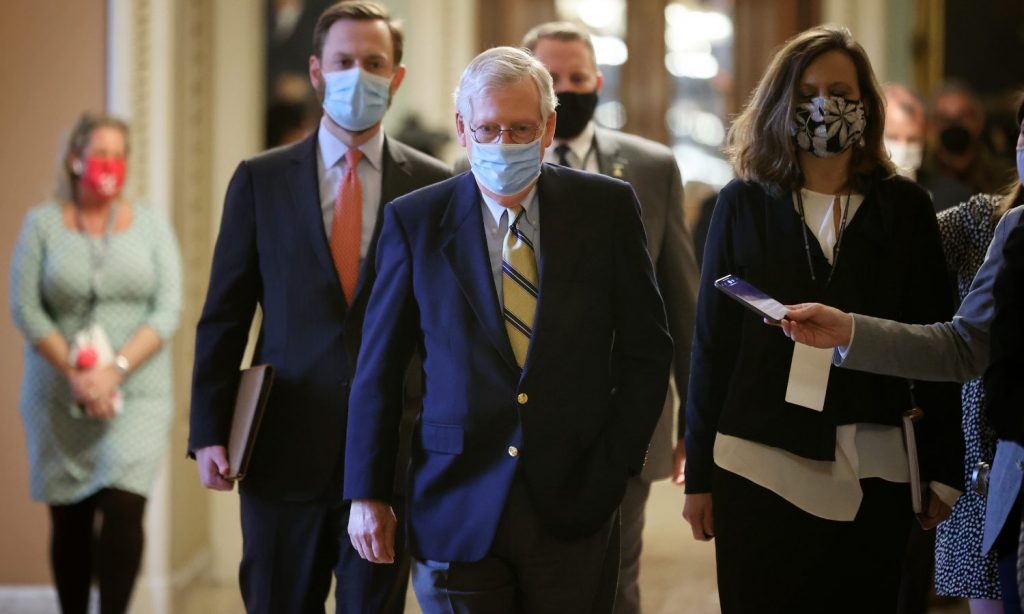
Nevertheless, Senate Majority Leader Chuck Schumer is going to attempt to end marijuana prohibition soon. He’s just waiting for the right time to slide a bill into the Senate circus. It’s an admirable fight — it really is — but, as we mentioned above, Congress is a garbled mess right now, a political kitchen with too many cooks, most of which have little to no experience in cannabis, trying to prepare the menu for how the pot industry will be allowed to take shape. It remains to be seen whether that will leave legal weed the business equivalent of a Michelin restaurant or an ant-infested picnic table littered with a half-eaten bologna sandwich and some chips. 

Chuck Schumer’s Senate Balancing Act Could Impact Marijuana Reform
Photo by Sarah Silbiger/Getty Images

Perhaps waving a wad of cash around Capitol Hill would help move the cannabis issue along. A recent study shows that legal weed could contribute $92 billion to the national economy this year. But the money probably won’t matter. The IRS is going to get their share one way or another.

Meanwhile, states are starting to base unemployment benefits on a person’s willingness to find a new job to make up for the one they lost due to COVID-19. The United States is in a unique position right now to make drastic policy changes that will continue to benefit the country for decades to come. It’s just whether Congress will see that marijuana should be part of the plan.

Can Cannabis Reduce The Stigma Around Mental Illness

 With marijuana use and mental health both wildly stigmatized, perhaps there are solutions in place that are as simple as having a conversation.

Millions of Americans are coping with mental health issues. Often undiagnosed or misdiagnosed, those who suffer in silence with mental illness issues often remain silent due to the stigmatization that shrouds depression, anxiety, and other psychiatric disorders.

Two perspectives on cannabis and mental health

Olivia Alexander, the founder of Kush Queens, an online retailer in CBD and Cannabis products, shared recently that she questioned growing a business and leading a team while addressing using cannabis for her mental health. “It’s a hard thing to admit that some days you can’t cope with daily life without cannabis,” Olivia explains online. CBD and cannabis helped ease the symptoms of Olivia’s bipolar disorder and Olivia found that she was more successful using cannabis than without.  

Movember
Photo by Victor ilunga via Pexels

But, there’s another side to the story. Dr. Elinore F. McCance-Katz believes that substances like marijuana can carry mental health risks. Speaking in 2018, she shared, “As a clinical psychiatrist specializing in addiction, as someone committed to treating people with substance use disorders, as a concerned American — I cannot stress enough how understated the risks and consequences tied to marijuana consumption are in our nation’s dialogue.” Dr. McCane-Katz listed risks such as a decrease in IQ and a “predisposition to mental illness” as risks that society needs to address.

Interestingly, a 2016 study demonstrates no loss of IQ in British teens who consumed marijuana. 

Marijuana users lost about four IQ points over the course of the study. But their abstinent twin siblings showed a similar pattern of decline, suggesting that the loss of mental sharpness was due to something other than pot…” – The American Association for the Advancement of Science

Two wildly-different perspectives lead to one, gigantic question: At what point do rewards outweigh risks? 

Dressing Up To Work From Home Has Surprising Effects On Your Mental Health
Photo by Yasmina H via Unsplash

Mental Health: The figures involved

The National Alliance on Mental Illness (NAMI) shared powerful statistics around mental health that may offer more insight: 

  • Approximately 1 in 5 adults in the U.S. (46.6 million) experiences mental illness in a given year.
  • Serious mental illness costs America $193.2 billion in lost earnings per year.
  • 7.8% of adults in the U.S. — 19.4 million — had at least one major depressive episode in 2019. 
  • Only 44.8% of adults in the U.S. with a mental illness received treatment in the past year. Among adults with a serious mental illness, 65.5% received mental health services in 2019.
  • Suicide is the 10th leading cause of death in the U.S., and the 2nd leading cause of death for people aged 10–34.

Steps to a solution

It may currently be a stretch to stay that cannabis can eliminate the stigma of mental illness, but it certainly has the power to empower and start conversations that can lead to healing. Ljubica Kostovic from TRNTO believes that perception is already changing in CBD and cannabis, with individuals more willing to use for pain, anxiety, and PTSD.

RELATED: Marijuana Reduces Symptoms Of Anxiety, Depression, And Stress

He shared, “Cannabis has been used for medical purposes for thousands of years and has been used to treat mental health conditions for over a century — its full legalization on a federal level presents a unique opportunity for us to explore.”  

Cannabis Does Not Lead To An Increase In Suicidal Behavior
Photo by Anemone123 via Pixabay

With marijuana use and mental health both wildly stigmatized, perhaps there are solutions in place that are as simple as a conversation. Twisp House of Cannabis in Washington recently hired a 74-year-old woman named Sonja, as they noticed many of their older patrons wanted to speak to someone who was currently or had been in their place.

RELATED: Mental Health Gut Check — When Do You Talk To Someone?

Undergoing certification, Sonja is hoping to eliminate the stigma of cannabis by sharing her story and the benefits of marijuana with adults who may not have asked before, a tactic often used in the mental health community that allows for greater inclusion and trust.  

Stories are an incredible balm, aren’t they? When individuals feel safe in sharing, it allows others to do the same. 

Brain Fog? Here Are 5 Ways To Cope

Brain fog is a common affliction among the pandemic. Here are some effective ways to deal.

The coronavirus pandemic has felt eternal, but in the grand scheme of things, it’s progressed pretty quickly. More and more people are getting vaccinated and we’re nearing the day when things will go back to normalish. Still, the world has changed, and it’s expected that we feel as if we’re emotionally exhausted without knowing the exact source.

Brain fog is hard to define, but it encapsulates this feeling of tiredness and lack of productivity and energy. Quarantine brain basically. Brain fog is not a mental condition, but it’s produced by things like lack of sleep, stress and chaos — things that we’ve had our fill of over the past year.

Here are 5 ways to cope with brain fog:

Create the space for breaks

Photo by Vladimir Kudinov via Pexels

When spending the majority of time at home, it’s common to finish your work day at 7pm. Sometimes, these aren’t hours spent focused doing what you’re supposed to do, but on working, spending time on social media, getting distracted and then working again.

Do your best to break this cycle, creating the space for breaks. These can include preparing some lunch, going for a walk, for a run or reading something away from your computer. Breaks with intent stimulate your mind and improve your mood. They will help you get rid of brain fog and to come back to work with a more creative and purposeful approach.

Socialize

Most Americans Receive Marijuana Education From Friends, Not The Industry
Photo by Nqobile Vundla via Unsplash

RELATED: 5 Tips To Help You Get Work Done When You’re Working Remotely

Socializing varies in difficulty depending on the person. For some, it’s easy while for others it’s draining, requiring them to make an effort to hang out with friends and loved ones. When experiencing brain fog, it’s very important to see other people and talk to them, getting some much needed perspective. Ease into the process slowly, especially if you’ve spent the past year alone, but make it a priority.

Stay active

Don't Trust CBD Workout Gear
Photo by Andrew Tanglao via Unsplash

Staying active not only breaks up the monotony of your day, it also helps you have some structure. Try your best to be active at least once a day, whether that means going for a brief walk around the neighborhood, to stretching in your yoga mat.

Be positive with yourself

How To Relax When You Don't Know How
Photo by Haley Phelps via Unsplash.

RELATED: How To Keep Your Space Organized When Working From Home

We tend to talk down to ourselves a lot. It’s a bad habit that’s very harmful and difficult to shake off. Try your best to have some compassion for yourself, reminding yourself that it’s okay to go through an adjustment period when going through strange circumstances. Which is basically what this entire year has been.

Focus on your routine

5 Things That’ll Help You Schedule Sex Without Killing Romance
Photo by rawpixel.com

The pandemic has forced us to rework and rebuild our routines time and time again. Brain fog is a sign that you should work on your routine again, switching it up in a way that feels fresh and invigorating. Incorporate activities that make you happy in your day to day life, going on walks in lieu of commutes or using the extra time in the mornings to do something that makes you feel happy and relaxed.

Thyroid-Related Headaches And CBD: A New Solution To An Old Problem

Study after study is finding that not only does CBD oil help with headaches, but also pain related to inflammation and anxiety.

It’s often said that there is nothing like the exhaustion of a thyroid condition. The endocrine system, when not in working order, can wreak havoc on many functions within the body. Functions like:

  • Metabolism
  • Menstrual cycles
  • Body temperature
  • Blood Pressure
  • Mood

In fact, according to the American Thyroid Association, the complex relationship between thyroid disease, body weight, and metabolism is being studied more and more. With so many bodily functions relying on one teeny gland, the function of the thyroid is paramount to your well-being — mind, body, and spirit.

Should Chronic Pain Patients Use Metered Doses For Most Effective Treatment?
Photo by Andrea Piacquadio via Pexels

A 2018 study published in the journal Frontiers in Pharmacology researched cannabis use for self-medication in Germany, Austria, and Switzerland and found that, “10.2% of patients reported using it for migraine headache symptoms…with low doses tending to alleviate migraine while higher doses even triggering headaches. These findings call for creating a highly specific prescription for individual patients, which might be required for a safe and successful treatment plan.”

To put it plainly, cannabis works but needs to be personalized to help alleviate symptoms in a way that’s personal and efficient.

Thyroid replacement medication and CBD

Many who have lost a thyroid due to cancer or other diseases know the juggle of ensuring that the proper dose of thyroid medication and regulation is present in their body. But often with thyroid replacement therapy comes the dreaded headaches and the soul-crushing, vomit-inducing migraines that accompany thyroid issues.

RELATED: What Impact Does Cannabis Consumption Have On Our Hormones?

And even those not on thyroid replacement medicine experience severe migraines. In fact, the International Headache Society estimates 30% of individuals with an underactive thyroid (also known as hypothyroidism) experience headaches, while Mayo Clinic also states that hyperthyroidism, (or an overactive thyroid) can cause migraines as well. So, what’s a headache sufferer to do?

CBD Market Set To Grow 700 Percent By 2020
Photos: geralt via Pixabay; rgbspace/Getty Images

Patients who experience thyroid-based headaches also face other thyroid-related complications like anxiety, inflammation, and joint pain. With CBD available on the market in almost every state, study after study is finding that not only does CBD oil help with headaches but pain related to inflammation and anxiety as well, especially since they stimulate the endocannabinoid system.

Understanding the Endocannabinoid System

Often called a network of receptors or sensors, the endocannabinoid system regulates the body’s environment. The receptors communicate internally from the brain to the nervous system about pain, heat, cold, and other stimulants. Cannabis and CBD oil contains cannabinoids that directly help the endocannabinoid system by heightening the function of the receptors, often enhancing natural levels of cannabinoids. Think of it this way: Your body has serotonin and other reactions to stimulation that it creates naturally. Cannabis and CBD oil mimic what your body already creates to give it a little extra “oomph.”

RELATED: 9 Scientific Strategies To Harness The Endocannabinoid System

By utilizing CBD oil or cannabis during a headache, the pain isn’t being “numbed” as much as it’s being “managed” by giving the body exactly what it already produces. That’s why medication like pain killers, which block the pain, tend to not work in long periods of use. Cannabis and CBD jump-start the body’s own reaction system to remind it to do what it knows best: Thrive.

Study Now Finds Marijuana Legalization Decreases Property Value

0

The latest study goes against the grain of previous research that shows how property values increase with the onset of legalization.

Marijuana legalization is happening across the United States. Naysayers have predicted that a veritable apocalyptic moment is coming on the heels of the movement, screaming about how ending marijuana prohibition would increase crime, minor consumption rates and contribute to the overall decline of civil society. Yet, the only thing that most of these people have proved is that they are no Nostradamus.

Marijuana legalization is working for the most part, and it hasn’t led to any drastic uprising in dread and downtrodden. However, if there has been a downfall to this progress, it’s that it seems to be lowering property values in neighborhoods that open dispensaries. 

A recent study in the journal Regional Science and Urban Economics found that Washington state, one of the first jurisdictions to legalize for recreational use, has experienced a decline in property values in districts with cannabis dispensaries. Researchers found a 3-4% decrease in property values in homes that were .36 miles from retail pot shops. Although the study focused specifically on Washington state, it provides a glimpse into what might be expected nationwide as legalization spreads. 

Why Investors Are Taking A Closer Look At Cannabis Real Estate Nationwide
Photo by Kindel Media from Pexels

The potential for crime is the reason property values are taking a hit. Although the study authors didn’t find any evidence of increased criminal activity due to marijuana legalization, they discovered more crime in spots where pot was sold. “While we find no evidence of a general increase in crime in Seattle, WA, there is a significant increase in nuisance-related crimes in census tracts with marijuana dispensaries relative to other census tracts in Seattle,” they wrote.

The latest study goes against the grain of previous research that shows how property values increase with the onset of legalization. In 2017, the University of Wisconsin found that property values rose by around 8% (around $6k more) in parts of Denver, Colorado, within one mile of a pot dispensary.  

“Our results indicate that retail conversion has a large positive impact on neighboring property values after controlling for property attributes and neighborhood characteristics,” researchers wrote.

 RELATED: Will Americans Tolerate Marijuana Odors As Legalization Progresses?

Two years later, a study from Clever Real Estate also found that property values in legal states were worth in upwards of $6,000 more than in prohibition states. The conclusion was that legal weed was positive for landowners. “States that legalize recreational cannabis see an immediate bump in home values following legalization, even without retail dispensaries opening up,” the report reads. 

So why would property values suddenly decrease in states where weed has been legal for years? 

Presumably, it’s because property values only increased in those parts of the country following legalization due to the overall attraction of living in an area where marijuana could be bought like beer. 

Some Massachusetts Landlords Are Trying To Ban Edibles, But Can They?
Photo by bymuratdeniz/Getty Images

There’s no denying that there has been a novelty to marijuana legalization that has prompted the stoner culture to move to states where their drug of choice doesn’t come with legal repercussions. But now, the novelty could be wearing off since legal weed is just a way of life in some states. The excitement of buying weed without the cops jumping out of the bushes and marching everyone to jail has faded, and cannabis businesses are viewed as normal, just like any other. Furthermore, citizens have likely decided that they don’t want to live too close to the marijuana scene.

RELATED: Why Investors Are Taking A Closer Look At Cannabis Real Estate Nationwide 

Sometimes normal is enough to do damage to property values. A 2016 report from Realtor.com shows that all sorts of the typical neighborhood features can drag down the value of a home by several points. Hospitals, shooting ranges, power plants, funeral homes, cemeteries, homeless shelters, strip clubs, and bad schools were all credited for destroying property values. Most folks do not want to live next to cruel reminders of immorality, their own mortality, or the combination of the two.

Other studies have found that liquor stores, drug treatment centers, and even convenience stores also lower property value. These operations are often considered magnets for crime, which makes them less than appealing when someone looks to that area to buy a home. 

There are a few things that communities with pot dispensaries can do to prevent property values from tanking. The main thing is working together to create an environment that benefits the entire neighborhood. Keeping lawns mowed, clean and nicely landscaped is a great start. It also doesn’t hurt to try working with local law enforcement to see what can be done to provide added security. Pushing the city for infrastructure repairs (fixing busted sidewalks and potholes) can also increase property values. Communities need to work together to ensure everyone’s best interests are looked after. Only then can they begin to balance out any negative connotations.

5 Most Common Embarrassing Sex Questions Experts Are Asked

Sex experts get their fair share of embarrassing questions. Here are 5 of the most common.

While sex has become a more openly discussed topic, your level of comfort with the topic depends on audience and personality. For some, it’s very easy to be honest about sex but for others it’s just the opposite. The majority of us fall in the middle of this spectrum; we’re aware of sex and talk about it with the right crowd, but some questions make us blush.

We scoured the web and compiled a list of the most common and embarrassing questions people have about their sex lives. Masturbation and vibrators abound. Check out 5 of our favorites:

Can a penis really be broken?

5 Tips To Help You Manage Nighttime Anxiety
Photo by Andrea Piacquadio from Pexels

Broken penises make great fodder for tv shows and sex columns. While the penis is not a bone it can be injured and, yes, fractured. “It is possible to fracture a penis due to trauma during particularly vigorous sex or masturbation,” ob-gyn Alyssa Dweck told Women’s Health. “The erect penis is engorged with blood. Forceful bending of the erect penis during aggressive sexual play, can lead to this serious injury.” Let’s move on, please.

What to do when a condom gets lost in a vagina?

Stealthing
Photo by kerryank via Pixabay

RELATED: 4 Sex Therapists Reveal The Questions They Get Asked Most

Condoms lost inside vaginas are very common and stressful. Still, as most sex experts will tell you, avoid panicking. There’s not much you can do except fish the condom out and make sure it’s intact, that way there are no pieces left inside of you. Says Dweck, “Even if you think there is no spillage of contents, if you are not using another form of contraception such as the pill or IUD, I recommend emergency contraception ASAP if you don’t desire pregnancy.” Also, if you don’t know whether your partner has an STD, get tested at your earliest convenience.

Can you pee during sex?

cbd water is the next big thing
Photo by TapisRouge via Pixabay

It’s common to feel like you want to pee during sex, but, according to experts, it’s very unlikely. “While it is possible to leak urine during sex, especially if the bladder is really full, I suspect this is actually not urine at all but rather female ejaculation which can occur during orgasm,” says Dweck.

Can you masturbate too much?

Many People Have Abandoned This Daily Hygiene Routine During The Pandemic
Photo by Adrian Swancar via Unsplash

RELATED: 4 Ways Cannabis Can Stimulate Your Sex Life

According to sex educator Francisco Ramirez, it’s okay and normal to masturbate, no matter how many times you do it. “Unfortunately, long-standing shame around masturbation has led many of us to be somewhat skeptical, or uncomfortable, about masturbation, especially frequent masturbation or instances where solo sex is more common than partnered sex,” he told The Huffington Post.

If your masturbation habits interfere with your daily life and relationships then a break is worth considering.

Do vibrators desensitize vaginas?

A Lot Of Women Would Use Cannabis To Treat Gynecological Conditions
Photo by Priscilla Du Preez via Unsplash

Nope. According to sex educator Eva Bloom, while it’s common for people to develop patterns when masturbating, making it more difficult to orgasm when trying new activities, as long as you switch up your technique you should be fine.

Increased Demand For Top Talent As Cannabis Industry Salaries Continue To Surge

The burgeoning industry continues to seek diversity among its employees, as evidenced by the opportunities within all cannabis verticals for minority candidates.

By Jelena Martinovic

With 320,000 full-time cannabis jobs in 2021, legal adult-use cannabis in 17 states and D.C., and medical marijuana in 36 states, the U.S. cannabis industry continues to prove its strength and resiliency.

Seeking to provide a clearer picture of the industry, cannabis-focused executive search and staffing firm CannabizTeam has released its 2021 Cannabis Industry Salary Guide – Second Quarter Update.

marijuana industry
Photo by Heath Korvola/Getty Images

The report looks into salaries for the most popular positions within the cannabis space and examines hiring trends.

The updated salary guide also highlights changes in the cannabis industries over the past period.

“The future is bright, and we look forward to our continued role in placing exceptional talent at the industry’s leading companies,” CannabizTeam founder and CEO Liesl Bernard disclosed.

RELATED: Cannabis Industry Job Growth Up 50%

Some of the hottest jobs in cannabis are leadership positions, including director of distribution, director of cultivation, vice president of product development, chief financial officer, vice president of human resources, and vice president of retail, the report writes.

  • Other key findings of the report include:
  • Over the past couple of years, cannabis salaries spiked due to increased demand that outpaced supply. In 2020, the median executive salary grew by 10%, with the trend continuing in the first three months of 2021.
  • The highest paying position in both 2020 and 2021 was chief executive officer, with an average base salary of $315,450 and $350,300, respectively, representing an 11% increase year-over-year.
  • Chief operations officers followed, earning an average of $232,700 in 2020 and $257,100 in 2021.
  • The lowest paying jobs in cannabis were trimmer and brand ambassador, with an average annual wage of $32,250 and $33,500, respectively, in 2020. Over the ongoing year, salaries increased by 5% to $34,000 for trimmers and 6% to $35,550 for brand ambassadors.
Photo by Bulat Silvia/Getty Images

Hiring Trends: Diversity, Temp Workers & Non-Cannabis Talents

The burgeoning industry continues to seek diversity among its employees, as evidenced by the opportunities within all cannabis verticals for minority candidates.

The trend of hiring temporary workers is also evident, especially for hard-to-fill jobs and to cover full-time employees on health or family leave.

RELATED: 32% Cannabis Job Growth In 2020, Despite COVID-19

The temp markets in California, Arizona, Illinois, Michigan, and Oklahoma are utilizing temp jobs to check out the new staff before permanent hiring.

2020 also saw C-suite cannabis positions filled by seasoned experts from outside the cannabis industry for the first time.

Many cannabis businesses strengthened their teams by hiring beverage experts. Food experts followed suit.

Other industries that yielded cannabis talent include pharmaceuticals, as well as agriculture, medical supplies, consumer packaged goods, technology, and retail sectors.

California still tops the U.S. booming cannabis job market with 24,000 new jobs created in 2020 and a total of 58,000 people working in the industry. Gross sales amounted to $3.7 billion in the Golden State.

Other states that made it to the top ten are Colorado, Florida, Arizona, Washington, Michigan, Oregon, Illinois, Oklahoma, and Pennsylvania.

Find the full report here.

This article originally appeared on Benzinga and has been reposted with permission.

The Disconnect Between Cannabis Companies And Consumers

Ultimately, you want to make a “black market competitive weed” where the price maybe is elevated due to regulatory costs, but still very accessible to blue-collar consumers.

There is a reason why roughly 80-90% of the weed purchased in Canada is still from the black market — price.

When cannabis was illegal, it was one of the cheapest drugs available on the planet. In fact, in “Walk Hard: The Dewey Cox Story,” they poke fun at how “not dangerous” it really is.

Of course, when it was illegal it didn’t have the sophisticated processes of cultivation like we have today in the legal market. It also didn’t have all of the strict regulation which elevates the cost to consumer.

Demand For Weed Surges, Prices Skyrocket
Photo by stockstudioX/Getty Images

Yet since cannabis has been legalized officially, the price per gram has been increasing. While this trend will not hold for too much longer — especially after the U.S. enters officially into the cannabis marketplace — there are some new brands trying to “get the money!” from stoners.

Some might argue, “Reg – the cost of production, regulations, quality – it all matters in terms of price” and I’m right there with you – of course it does!

However, the elevated costs are not a matter of the plant itself but rather the new industry rules that are driving up the price. Things like not being able to grow outside for instance forces companies to grow indoors.

RELATED: It’s Not All About Potency: What Cannabis Consumers Need To Look For In Their Weed

Indoor cultivation has a large carbon footprint and elevated costs of production. Sure, it gives you fantastic weed, but a greenhouse would be able to achieve the same results as any indoor grow operation (if not better) while drastically cutting costs of operations. Namely in climate control and lights.

But everything I’m mentioning is related to the “unmovable” items. By unmovable I’m referring to things that the cannabis companies themselves cannot change whether they like to or not. For example, if a particular state has rules in place that requires all cannabis crops to be tested before being sold; this is something that a legal company cannot circumvent.

Legal weed is just more expensive

Because of all of the aforementioned issues, the average stoner must accept that legal weed is just more expensive.

That’s okay. Stoner’s do not have a problem paying 15-20% more for their weed if they know they can get high quality and easily accessible weed with a robust catalog of products.

Hell, stoners would probably pay up to 30% more.

The problem is that the average person in the United States makes roughly $900 a week or $3600 a month.

how much does weed cost
Photo by Kirill Vasilev / EyeEm/Getty Images

If you’re making that much money, you’re most likely renting your place. So let’s say that at least 25% of the income is spent on rent, which is roughly $900. Some might say, “Dude I pay $450,” but I’m using averages here so don’t be a d**k about it.

RELATED: Whoa! New Report Finds This Many Americans Consume Cannabis

But if you take a closer look at how many people get paid minimum wage in the U.S., a 2019 survey placed that number at 58.1% of wage workers or 82.3 million people in the U.S.

That is, they make a whopping $7.25 per hour. This is roughly between $58-$72 per day. On a six day work week we’re talking about $350 — $432 a week. That’s about “half” of the average earnings of the entire population.

Now the $450/month or even $350/month rent starts looking steep.

Why it’s important to understand the situation of 82 million Americans

The reason I’m writing this article is to illustrate the disconnect between cannabis companies and a significant portion of the US population.

These “blue collar” workers take up a lump sum of cannabis consumers. In fact, this demographic have some of the heavier consumers within it.

And when you’re sitting on $1500-$2000 per month, with elevated costs of living — a $20 joint is not cheap!

Yet frequently you see dispensaries and companies try to pitch “premium cannabis” selling joints and blunts at $100 per pop. Even the price of premium pre-rolls or raw cones can creep up quickly.

Despite Layoffs, Cannabis Industry Job Growth Continues To Boom
Photo by rawpixel.com

Sure, these dispensaries and companies are making money and yes there are people willing to spend on this.

But these companies are also alienating a large portion of their potential consumer market and is the reason why the vast majority of weed still comes from the black market.

Why spend $160 an ounce when $90 an ounce would do?

What companies should be doing to win the cannabis game

If you’re thinking about venturing into the cannabis marketplace, I challenge you to create the “Average Jane Dispensary” which caters to the Average Jane and Joe’s of the world.

In these “Blue Collar Dispensaries” you aren’t trying to sell the Premium Weed that everybody is promoting on Instagram, but rather ‘good weed’ that gets the job done.

You want a weed between 8%-15% in THC that will give you enough of a buzz, but not floor you like the hyper elevated THC-strains.

You’ll want to have a robust crop, preferably a hybrid with indica characteristics on the buds — short, fat and stocky. You’ll want to have a decent curing time, but it doesn’t have to be as elaborated as premium strains.

Here's Where Consumers Draw The Line At Where Cannabis Is Sold
Photo by CasarsaGuru/Getty Images

Ultimately, you want to make a “black market competitive weed” where the price maybe is elevated by 10-20% due to regulatory costs, but still very accessible to these blue-collar stoners.

Who is going to be the Walmart of Weed?

Right now, there is not a single brand that has honed in on one of the largest consumer groups within the cannabis space. The first company to master the art of cheap-yet-effective weed, will win the marijuana game simply because of the sheer volume of consumers within this demographic.

If this doesn’t happen, the blue collar stoner will continue to buy from the streets because when it comes to breaking the law and paying for food, it’s far more cost effective to break the law…if you’re not caught.

RELATED: Do Cannabis Legalization Efforts Suggest Joe Biden Is A Pawn For Big Pharma?

This year, the United States will probably try to make a push for Federal legalization. I’m not sure if it’s going to happen with Old Touchy Joe at the helm, but then again, I have been surprised in the past as well.

I know that President Joe Biden caters to Pharma and not to the “average Joe” as he claims in his campaign promises, so odds are that the blue collar worker will still need to buy illegally post federal legalization — at least for a few years more.

This article originally appeared on Cannabis.net and has been reposted with permission.

Don't Miss Your Weekly Dose of The Fresh Toast.

Stay informed with exclusive news briefs delivered directly to your inbox every Friday.

We respect your privacy. Unsubscribe anytime.