While no industry should consider itself exempt from the risk that its supply chain will be contaminated by forced labor, agricultural production is of particular concern.
In recent weeks, I have spoken to several entrepreneurs interested in growing cannabis in Africa for exportation to the United States and other markets. It is not hard to see their attraction to the idea: The areas in question have suitable climates to grow cannabis, while inputs such as land and labor are relatively inexpensive. There is still a way to go before it becomes as straightforward to import hemp to the United States as it is to bring in oranges, but importation of raw materials is the logical direction to follow if market forces are heeded.
As the cannabis industry continues to internationalize, it would do well to pay attention to the issue of forced labor. Enforcement activity against the importation of goods made using forced labor has become a major focus area for U.S. Customs and Border Protection (CBP). The cannabis industry has the opportunity to get things right from the start, avoiding the pitfalls encountered by companies in other sectors.
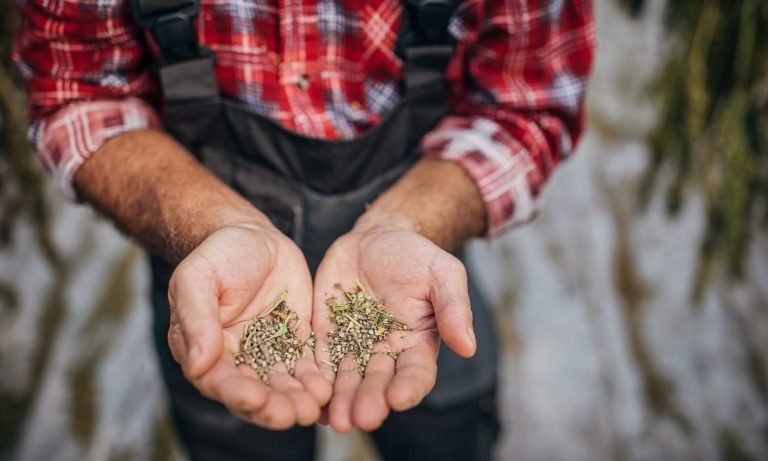
Photo by AlenaPaulus/Getty Images
By way of background, U.S. law prohibits the importation of “goods, wares, articles, and merchandise mined, produced, or manufactured wholly or in part in any foreign country by convict labor or/and forced labor or/and indentured labor under penal sanctions” (19 U.S.C. § 1307). In turn, forced labor is defined as “all work or service which is exacted from any person under the menace of any penalty for its nonperformance and for which the worker does not offer himself voluntarily.”
This prohibition has been on the books for a long time, but in recent years has really come to the forefront. In addition to the ethical imperative of doing all they can to avoid becoming complicit in forced labor, U.S. importers also have to be concerned about the potential for supply chain disruptions, fines, and even jail sentences.
For business opportunities overseas, cannabis companies must keep forced labor concerns front and center. Obviously, any suggestions that forced labor is being used by a supplier must raise immediate red flags. However, CBP is demanding much more from importers, as those who find themselves the target of a CBP “focused assessment” (audit) are learning.
The necessary work begins at home, with companies establishing proper internal policies on forced labor. Relevant staff must receive training on the subject. Supplier vetting must incorporate forced labor risk assessments. Contracts with suppliers must specifically prohibit the use of forced labor and ensure access to internal or third-party auditors.
Photo by Lukas via Pexels
While no industry should consider itself exempt from the risk that its supply chain will be contaminated by forced labor, agricultural production is of particular concern, as demonstrated by some recent forced labor cases. Back in December 2020, the Supreme Court heard arguments in a case brought against U.S-based Nestlé and Cargill by six Malians “who claim they were kidnapped and sold to cocoa plantations along the Ivory Coast as children.” A couple of months earlier, CBP issued a forced labor finding against a stevia producer in China’s Inner Mongolia region. However, cannabis companies need to pay attention to all the products they import, not just cannabis itself. This includes goods such as clothing and smokers’ accessories.
Undergoing a CBP audit is unlikely to be a pleasant experience for any company, but preparing for the eventuality of one is essential for a successful outcome. Moreover, there is no reason to expect CBP will cut cannabis companies any slack. As they say, however, forewarned is forearmed.
Fred Rocafort is a former diplomat who joined Harris Bricken after more than a decade of international legal experience, primarily in China, Vietnam, and Thailand. This article originally appeared on the Canna Law Blog and has been reposted with permission.
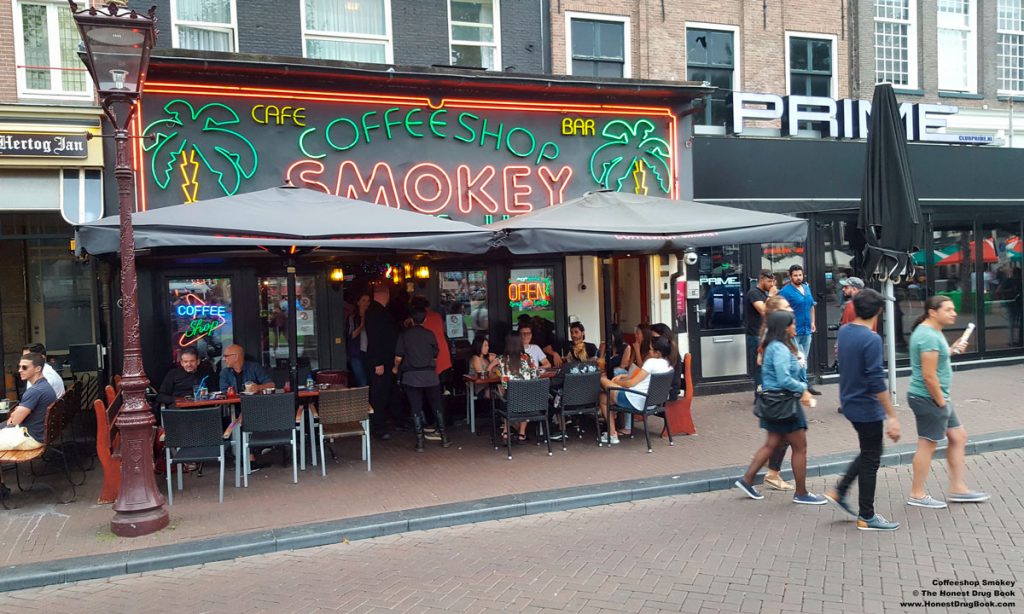
No one has considered copying the Dutch model where people can buy small quantities of cannabis and smoke it on site or take it home.
Disclaimer:The views expressed in this article solely belong to the author and do not necessarily represent those of The Fresh Toast.
There are three major steps in the legalization of marijuana: Stop arresting people for possession of marijuana, even if they are not white; Take marijuana sales out of the black market with hard drugs; The establishment of venues where marijuana can be consumed in the presence of other actual human beings to see if the Universe will implode.
On 420, the Mayor of Denver signed an ordinance that would legalize places where customers could bring their own weed to smoke, as well as clubs that could sell small amounts of weed to be smoked there. But no one seems certain about when it will go into effect. Well, as the saying goes, if the people will lead, the leaders will follow. There are already a number of “smoke-easies” where patrons can BYO their weed in Denver.
Photo by Photography Life via Unsplash
Similarly, Nevada’s legislature seems likely to authorize “consumption lounges”. New York’s new marijuana law leaves that issue to the local authorities, so New York City can and will almost certainly allow it. In any case, it seems likely that both cities will have venues where patrons can legally consume their legal cannabis.
Of course, the Dutch did all that in the 1970s, but apparently they live on another planet, because no one in any other country on Earth has even considered copying their model where people can buy small quantities of cannabis and smoke it there or take it home.
But wait until they hear about Barcelona!
Barcelona has taken maximum advantage of a loophole in Spanish law. There are a large number of “Cannabis Social Clubs” that really are “Clubs”, but they are very friendly for strangers. Some of them are really lavish. It remains to be seen how many will survive the pandemic, which has devastated Spanish tourism.
For me, the key point is the word “social”. In the bad old days, I used to joke that there was a lot more smoke than sex in closets. But now I say, no more lies and no more closets. Marijuana has always been a “social drug” like alcohol, but without the violence. (The Dutch police are almost never called to “coffeeshops.”) It is hard to imagine anything more “social” than sharing a joint or bong, but the pandemic will require improved “social hygiene.”
When Jefferson wrote the Bill of Rights he included Freedom of Assembly in the FirstAmendment. (Congress shall make no law respecting an establishment of religion, or prohibiting the free exercise thereof; or abridging the freedom of speech, or of the press; or the right of the people peaceably to assemble, and to petition the Government for a redress of grievances.)
The term ”smoke-filled room” is actually 101 years old. According to Wikipedia: “The origin of the term was in a report by Raymond Clapper of United Press, describing rumors of the process by which Warren G. Harding was nominated at the 1920 Republican National Convention.” Of course, it was tobacco smoke.
Photo by Flickr user Dominic Milton Trott
Ironically, Dutch cannabis venues are called “coffeeshops” simply because it was easy to get a license to sell coffee. But most people don’t understand the historical importance of “coffee houses” as social, political, and business venues. (Lloyds of London began in a coffeehouse.)
Like coffee houses, cannabis social and political venues will evolve among free people everywhere, but may not always be popular with the government. As Wikipedia reports, “Charles II later tried to suppress the London coffeehouses as ‘places where the disaffected met, and spread scandalous reports concerning the conduct of His Majesty and his Ministers’, the public flocked to them.”
Whatever they are called, we certainly need places where “the disaffected” can meet and enjoy cannabis and the rights of a free people. And no one will really be free, until everyone is free.
Spotting the symptoms of marijuana addiction isn’t all that simple. Here’s what you should know.
Years of research has proved that the marijuana plant provides far more benefits than side effects. The majority of people can use cannabis without developing an addiction to it. Still, it is possible to develop a marijuana addiction, one that can be limiting and harmful to people’s lives.
Cannabis use disorder (CUD) affects about 30% of marijuana users, impairing their lives to a degree that affects their relationships and overall health.
Photo by Sharon McCutcheon via Unsplash
According to the Diagnostic and Statistical Manual of Mental Disorders (DSM-5), the manual used by mental health practitioners to diagnose mental health conditions and disorders, a person must meet two out of 11 requirements to be diagnosed with CUD. These are extensive and include marijuana cravings, the development of interpersonal problems due to cannabis use, or using the plant when in a dangerous situation.
Among marijuana users, the ones more likely to develop an addiction are adolescents. Studies show how important it is to understand cannabis use in adolescents. Since their brains are still developing, copious marijuana use could impact their future and their brain’s make up.
Photo by Jamie Grill/Getty Images
Other factors that increase the odds of developing a reliance on marijuana include people coping with mental health conditions like depression and anxiety and the influence of genetics.
It’s difficult to spot symptoms of marijuana withdrawal. They include irritability, nervousness, aggression, sleep disturbances, headaches and more. People who are addicted to cannabis have similar experiences to those who are addicted to cigarettes, finding themselves fidgeting or needing to increase their dose over time in order to have the same experience they used to. Like all addictions, if someone finds themselves having arguments with their family or putting themselves in dangerous situations because of marijuana, it’s very possible they have a problem.
In order to manage this condition, it’s important to stop your usage for a period of time and to monitor your body’s response to it. If you’re unable to get through a period of a week or two without using marijuana, you might need to get professional help from a psychologist or psychiatrist. Common treatments include the use of Cognitive Behavioral Therapy (CBT), which is the first resource used for treating different kinds of addictions.
It seems more crucial for the cannabis movement to keep pushing forward on a state-by-state basis.
There was once a time when the only lawmakers supporting the concept of legal marijuana were those long-haired candidates running as independents that didn’t have a chance at winning anyway. But times have changed. Now Democrats and Republicans alike support the legalization of marijuana and continue to fight for it on Capitol Hill.
There’s a great deal of support for cannabis reform in the House of Representatives — the chamber just passed a cannabis banking bill known as the SAFE Banking Act — and there is a great deal of backing coming from the Democratic-controlled Senate. Even President Biden is said to support these ideas to some degree.
So why isn’t weed legal nationwide?
Photo by dvulikaia/Getty Images
For starters, while cannabis might be a bipartisan issue at this juncture, there is still not enough collective support to get it done. Furthermore, everyone still seems to have different ideas about what legal weed should look like. Senate Democrats want to end federal marijuana prohibition, yet they want to do it in a way that hinders Big Alcohol and Big Tobacco from exercising their capitalistic rights.
Joe Biden is only interested in legalizing medicinal use and eliminating criminal penalties, but he’s none too keen on the idea of taxing and regulating the herb. Other lawmakers would be content if they could pass the measly SAFE Banking Act or renew temporary riders in a budget bill that hold very little legal weight in the grand scheme of things.
Meanwhile, plenty of naysayers do not want marijuana legalization, no matter how it is designed. As we mentioned earlier this week, that includes opposition from the Democratic Party itself. Senator Jeanne Shaheen of New Hampshire says, “I do not support marijuana legalization.” Meanwhile, Senator Jon Tester of Montana claims legal weed would “cause more problems than it solves.” Ohio Senator Sherrod Brown says the Senate isn’t going to consider the SAFE Banking Act. Rest assured, there is more Democratic opposition hiding in the shadows.
Marijuana might be a bipartisan issue, but it is far from unanimous.
Although lawmakers still aren’t entirely sure which side to stand on concerning weed, marijuana legalization continues to do well at the polls. It’s the reason so many states have legalized for medical and recreational use — not because of the lawmakers, but because of the people. Right now, 69% of the population thinks marijuana prohibition should be brought to an end.
Photo by Darren415/Getty Images
Thirteen of the 18 states where marijuana is now legal for adults 21 and over happened only because there was a ballot initiative for the voters to voice their opinions. Not every state has the freedom to legalize in this manner, so lawmakers in places like Indiana, Kentucky, Ohio, and Texas must start to fall in line on this issue for it to go further. But there’s no chance of that happening this year.
Some of the latest national polls find that around 72% of Democrats support the legalization of marijuana, while so do 47% of Republicans. The numbers are encouraging, but again nowhere near enough to make cannabis a sure thing in the halls of Congress. Still, that’s not stopping Senate Majority Leader Chuck Schumer from trying everything he can to get a “comprehensive” cannabis reform bill passed this year. He knows that he’ll have to contend with the filibuster if they try to pass it the old-fashioned way, which means he might attempt to get it approved for budget reconciliation. If he does, it would only take a simple majority to get it passed.
But Schumer is likely counting votes before submitting his proposal, and they’re just not there. He needs 60 votes to beat the filibuster — that means he needs every Democrat and some Republicans. So, we hate to be the bearer of bad news, but it seems unlikely that nationwide marijuana legalization will happen this year. It’s a shame since 2021 provided the best chance the U.S. has ever had to make it happen with Democrats finally having the majority.
There are just too many roadblocks, and all of the bipartisan support is from the usual suspects. Marijuana needs some new blood on the Hill. It seems more crucial for the cannabis movement to keep pushing forward on a state-by-state basis. That’s the only way to send a more direct message to Congress that Americans are ready for weed to be legal, just like alcohol and tobacco.
Since the election of President Biden and the Democratic wins in Georgia, investors are getting more and more interested in cannabis-related real estate.
Cannabis properties can often command premium rental rates, but the first questions real estate investors always have are: 1) Is my money safe in a cannabis property, and if so, 2) are the premium rents sustainable long term?
The main worry for the potential cannabis real estate investor is the danger of civil forfeiture. In other words, because marijuana is illegal at the federal level, investors worry that if federal law enforcement targets their marijuana business tenant, the investor’s property will be at risk of forfeiture because it was used for federally illegal activities.
Photo by Olena Ruban/Getty Images
THE INNOCENT OWNER DEFENSE
The primary defense to a civil forfeiture action the landlord of a marijuana business would usually like to make is the “innocent owner” defense. This is when the landlord argues that they were unaware of the illegal activity underlying the civil forfeiture and thus innocent of any wrongdoing, so their property should not be subject to forfeiture. If a landlord knowingly rents to a marijuana business, it may be difficult for them to establish an “innocent owner” defense if they are functionally indifferent to whether the business is complying with state law.
Thus, landlords need to be proactive to make sure their cannabis tenant is complying with state regulations – meaning what the license allows and doesn’t allow, and how different businesses operate under the numerous rules and regulations to which they are subject – and the lease should require compliance and give the landlord additional inspection rights to verify that compliance.
Investors should be aware that marijuana businesses (and to a lesser extent, marijuana-adjacent businesses such as cannabis landlords and cannabis-focused service providers) still have financial and banking challenges. Access to banking is extremely limited and lots of business is still conducted with cash. Some credit unions offer checking accounts for cannabis businesses, but there is typically a waitlist to get one, and they are not available everywhere.
Similarly, most title companies will not hold money in escrow, close transactions, or issue title insurance on properties which have a cannabis business operating on them. This can be a significant challenge for buyers and sellers of real estate with cannabis business tenants.
LICENSING COMPLICATIONS
Cannabis landlords need to be aware of the dynamics of how changes of ownership of licensed businesses work under state law. Doing real estate transactions without being aware of regulatory dynamics can be a big problem. For example, in Oregon only people with an approved financial interest in a licensed business can operate the business. If an agreement is made to sell the business, the buyer may be impatient to begin operating the business, or to begin changing things at the business, or even to begin putting money into the business.
However, both the seller and the buyer can get into trouble if the buyer begins to spend money on, or exert control over, the business before the regulatory agency has approved the ownership change. Similarly, closing dates for ownership changes and real estate purchases involving cannabis businesses should nearly always be flexible and based upon when the agency gives its approval for the change. Also, if a cannabis business has pending violations, which can take a long time to either settle out or have a hearing, or if it is under investigation, ownership and location changes will typically be held up until the issues are resolved.
Marijuana business licenses are generally tied to the specific piece of property for which the license is issued. In Oregon, local law governs where marijuana businesses may be located. Some local governments limit their marijuana-approved areas, so properties in those areas can be in high demand. At the same time, there is often a legally-mandated, minimum distance between retail stores, so if a retail store moves in close to your property, you may not have the option of opening a retail store at your property even if it is otherwise suitable. Local jurisdictions must sign off on the suitability of the property for use as a marijuana business, and sometimes bureaucratic processes can delay that approval.
Photo by Olena Ruban/Getty Images
On the flip side, all of these difficulties surrounding the locations of marijuana businesses mean that once a marijuana business establishes itself in a particular location, it is much less likely than a non-marijuana business to change locations, because of the accompanying regulatory difficulties. Additionally, marijuana processors and producers will often sink significant sums into building out their locations, improving the value of the underlying real estate.
BUT IS MY MONEY SAFE?
With this information in mind, we can take a shot at answering the first question I posed: is my money safe in a cannabis property? The reality is that thousands of landlords have been renting to thousands of licensed marijuana businesses for many years now. And, in states like Washington and Oregon, we haven’t seen much in the way of federal law enforcement targeting marijuana businesses who are operating in accordance with state law, and we wouldn’t expect this to change materially, at least under the current administration. As long as a landlord has mechanisms in place to hold its marijuana tenant accountable for state law compliance, the landlord should not be overly worried about civil forfeiture.
But what about the premium rents that some marijuana landlords are charging? Are they sustainable over the long term? Every state is going to be slightly different, but the general pattern with recreational marijuana licensing has looked like this:
Huge amount of interest and greatly inflated real estate prices as licensing is announced and begins.
Drastic drop-off as the market saturates.
The market recovers as the winnowing and consolidation occurs, and rent prices gradually reach equilibrium at a healthy but modest premium above market rate.
RETROSPECTIVE: OREGON’S EARLY REC MARKET DAYS
Real estate issues in the cannabis industry have changed a lot since I first started working with cannabis businesses back in 2014. In those days, Oregon had just passed HB 3460, which finally regulated medical dispensaries for the first time and contained the famous “1,000 Foot Rule,” which says a licensed dispensary cannot be located within 1,000 feet of another licensed dispensary or a school. Oregon first allowed people to apply for these licenses beginning on March 4, 2014, and so everyone and their mother tried to stake out whatever they could, some even using computer macros to fill in the application form faster so they could be at the head of the queue. Many of the dispensaries in Portland remain from those days or are new businesses in locations that have been dispensaries since those days.
After Measure 91 passed in late 2014 (which established recreational licensing beginning in 2016), there was another huge land grab – this time for farms and production spaces – as people started scrambling to try to stake out good, licensable properties to take advantage of the “Green Rush.”
Starting late 2016-2017, Oregon issued a ton of recreational marijuana licenses. After the 2017 harvest season, a huge glut of cannabis hit the market and prices went into the toilet. This is the era when you began seeing ounces of good flower in retail stores for $50 or less (those same ounces these days can fetch more than $200). For those who couldn’t turn a profit, many just gave up their licenses, and some ruined cannabis properties were sold for a song. This is when the survivors and the well-funded began to snap up licenses and the process of consolidation within the industry began. (Oregon doesn’t have any limits on how many licenses a person or business can have an interest in, and vertical integration is very attractive because of the tax effects of IRC 280E.)
Photo by chrisbeez via Pixabay
When the 2018 Farm Bill passed, a lot of people who lost their money in cannabis shifted to hemp, so there was another land grab and tons of new businesses cultivating hemp in summer 2019. Too many lost their money in hemp as well, as huge supply of a quickly deteriorating product met a public that was not ready to start buying massive quantities of hemp and CBD. But at the same time, many of the marijuana businesses that had survived slowly started making money as the early froth burnt off and the public became more accustomed to consuming cannabis routinely. Coming into 2020, the industry was still struggling, but slowly getting better.
Then when the COVID-19 pandemic hit, we saw a massive boost in sales, and a lot of clients doing a lot better financially. Also, around last summer, the OLCC started speeding up pending license applications and ownership change applications, which made a huge difference to people and unlocked a lot of dormant assets – stores and operations that were ready to go but had been waiting, in some cases, more than a year to get their license. Also, once Biden was elected we saw a big jump in demand for licenses, I think because of speculation about federal legalization.
In Oregon, we are seeing retail stores generally sell for a small multiple (and sometimes a fraction) of last year’s revenue, depending on location, perceived potential, and what kind of other assets come with the store. Some small number of stores sell for more than $3MM, but that is relatively rare. Producer licenses have value, but that value is usually limited because a company will usually want to set up its own grow and often won’t be interested in existing grow infrastructure – many companies just buy the license only, and they are currently going for around $200,000, plus or minus. Processor licenses are rarer and more valuable, as are processing businesses, because they require more infrastructure. For example, an extraction lab using CO2 or butane will usually require a Fire Marshall inspection before the space is approved for use.
THE BOTTOM LINE
Going forward really depends on whether we get some form of federal legalization, and how the Oregon legislature addresses social consumption. Oregon is trying to set itself up as a producer and destination state, but New York has leapfrogged us, having passed laws allowing social consumption. The industry here is maturing, so I wouldn’t expect huge changes in the market from here on out.
Depending on how their regulatory agency handles licenses administration, states like New York and Florida may be in for a similar type of ride as Oregon, as speculative money pours in at the beginning, followed by thinning out and, then, consolidation begins.
Andrew founded the Oregon Cannabis Law Group in 2014 and merged with Green Light Law Group in 2019. He has long been on the forefront of the novel legal issues concerning the emerging cannabis industry. You can contact him at andrew@gl-lg.com or 503-488-5424.
The most important part of taking CBD is to dose regularly. Taking CBD only once will not have much effect. A steady amount is the only way to experience the benefits.
CBD capsules are one of the most popular ways to take CBD. They are a clean, efficient, and familiar administration method. Unfortunately, there is a lack of understanding of how much each individual should be taking.
The confusion is due to two reasons. First, we do not have a sufficient amount of research regarding CBD. While we have seen a recent influx of human trials using CBD, we are far from the position we need to fully understand the amount of CBD required for a specific condition. Second, we each metabolize CBD differently. One amount may work for one person but not another.
Photo by Elsa Olofsson via Unsplash
What are CBD Capsules?
A capsule is a gelatin container that keeps CBD escaping in a pill form. The CBD powder is inside the tablet that is easily swallowed and absorbed into the stomach.
CBD softgels are another popular form of CBD delivery. Instead of a capsule, the CBD oil is suspended in a clear gel, also designed to be swallowed and absorbed readily. CBD softgels 25mg are a common dose. Many people like the softgel over the capsule because they usually contain an oil rather than a powder.
CBD Oil or Capsules
Most people are more comfortable swallowing a pill than taking CBD sublingually. The taste of CBD oil also can be off-putting. Hemp has a strong earthy flavor that can take some getting used to. CBD oils capsules are swallowed, allowing the consumer to avoid any unpleasant taste, getting their daily dose.
CBD oil has higher bioavailability, meaning more CBD will be available for the body to utilize after ingesting. Bioavailability is essential, but it does not matter if you are not consistently dosing. If CBD oil turns you off and keeps you from getting your daily dose, the amount that is used by the body is irrelevant.
CBD Capsules Dosage
Most studies are observing people using CBD look at a dosage between 25-75mg. A typical dose given in retail products is also 25mg. This amount is a low threshold that most researchers and CBD companies choose to give their patients or customers.
While 25mg is a typical dose, many people taking CBD capsules for the first time may want to start smaller. The freedom to choose your amount is the most significant disadvantage to carrying CBD in capsule or softgel form. You are not able to lower the dose. If you aren’t comfortable taking a full dose just yet, find a company selling microdoses of 5-10mg before going up to an entire 25mg.
CBD is tolerated well by humans and does not have any adverse side effects. However, some people may still be intimidated by taking 25mg capsules. It may be more difficult to find, but there are options online for users wanting a smaller dose.
Photo by Pexels
When to Take CBD?
The timing of CBD is also not entirely understood. Some studies suggest taking CBD at night if your goal is to overcome sleeping disorders and in the day if you are experiencing pain or a mental health condition. The most important part of taking CBD is to dose regularly. Taking CBD only once will not have much effect. A steady amount is the only way to experience the benefits.
Take CBD on a full stomach, especially if you are taking CBD capsules. The absorption rate will be much higher than if you were to take CBD without eating. If you are experiencing trouble sleeping and hope CBD can help, take 30-45 minutes before going to bed. We recommend taking your CBD capsules right after your first meal for those suffering from mental health conditions.
The pandemic has reshuffled our priorities, including our daily hygiene routines.
The pandemic has reshuffled many of our priorities and prompted us ask ourselves a lot of personal questions: Do we really need to get dressed to work from home? Will we ever wear pants again? There are no wrong answers. This year has been one where daily life has been upended, and it’s okay. But one mainstay of our regular hygiene routines is being questioned.
A British poll shows that people have really dropped the ball with their grooming habits. Per YouGov: “Showering in general is down, with one in six people (17%) doing so less often, however one in ten (10%) say they actually shower more frequently. Younger people aged 18 to 24 are the most prone to skip showers at 27%.”
While we were raised in a culture of showering every day, when people are spending the majority of their time shifting between sitting in their home office and sitting on the couch, there’s not a lot of activity to contend with. It’s common for us to find ourselves disoriented, not knowing if we brushed our teeth or showered since the patterns of our daily lives — commute and work — have been taken out of the equation.
As a reader of The Guardiancandidly put it: “I started to brush my teeth once a day most days, instead of two. I definitely use less deodorant. I bathe less than three times a week. I do pay attention to my hand hygiene as well as my genital hygiene, but the rest I kind of gave up.”
This problem isn’t limited to Britain alone; The New York Times reports that in America, people are following this trend as well. “Don’t get me wrong — I like showers,” said Robin Harper, an administrative assistant at a preschool. “But it’s one thing off my plate. I’m a mom, I work full-time, and it’s one less thing I have to do.”
While showers are nice and prevent us from being smelly — an important priority — there are worse things going on in the world than skipping a daily shower. As long as you stay healthy and are a welcome presence for your family or roommates, go ahead and skip it. Who’s keeping track?
Chief Executive Officer Peter Horvath and High Times seem to be made for one another. Both talk a big game and fail to deliver.
Shockingly, April came and went without an IPO from HighTimes Holding Company. Once again the leaders at High Times teased that the beleaguered shareholders would finally see their shares hit the public markets only to have the day come and go with nothing happening.
CEO Peter Horvath, “Well we’re definitely going public this year, and I don’t want to peg it to a specific time but in this industry 4/20 is a notable date … so I think that’s a target.” Although he added that he couldn’t actually commit to a formal target date for the company’s public debut. “We’ll see where we end up,” he said.
The company didn’t issue a press release at the time and Horvath only spoke to Cheddar. No other news outlets had this scoop, but then most of the cannabis media is skeptical of any of High Times claims of going public.
Photo by David Gabrić via Unsplash
This proclamation of a 420 IPO came as a surprise because the company was essentially shut down with regards to selling its stock according to a story on the Cannabis Law Report. The story reported that because the company hadn’t updated its financial statements since 2019 and the Securities & Exchange Commission (SEC) would not allow the company to sell more shares. Companies are required to provide current financial reports to investors by the SEC. High Times made a big fuss and threatened any reporters who wrote about the issue with legal action, however, the reporting was accurate and the company even noted in its most recent Form U-1 that the offering is pending the updated financial statements.
Horvath told Cheddar reporter Chloe Aiello that the statements could come as soon as March. That hasn’t happened either. “Our audits are progressing. Our books are — by closing our books from the prior year, that qualifies us to move ahead,” he said. “And, that’s imminent. We’re a couple of weeks away from getting our ducks in line.”
Horvath went on to say that High Times was in a much better position than when it last published financial statements in 2019. Back then the magazine experienced “recurring operating losses, net operating cash flow deficits, and an accumulated deficit.” Horvath’s claim that the financial statements were just a couple of weeks away, also did not come true. It is now May and no financial statements have been released. In addition to that, the updated statements wouldn’t include some of the company’s new revenue from its pivot to the dispensary business.
“The sales from our largest dispensary out of the three are more than [High Times] did in the last few years, you know, as a magazine and events company,” he said. “So, I think that’s a pretty big pivot when all sudden, boom, you’ve got assets that are generating revenue.”
Horvath’s Big Talk
Horvath and High Times seem to be made for one another. Both talk a big game and fail to deliver. Horvath had previously been the CEO of Green Growth Brands (GGB) which is no longer in business. Horvath had a retailing background with mainstream brands like Victoria’s Secret and DSW. He frequently stated in the early days of GGB that he was going to show cannabis people how “retail is done.” He wasn’t shy at dismissing cannabis dispensary owners as not knowing what they were doing. Of course, many of those same dispensary owners are thriving, while Horvath ran his company into the ground.
Photo by Elsa Olofsson via Unsplash
While CEO of GGB, Horvath consistently made business arrangements using GGB stock as payment, like paying for retail consultants. That stock is now worthless. High Times has also made numerous deals in which CEO Adam Levin has paid with High Times stock. Stock that still isn’t tradable and was originally sold at $10 a share. High Times has lately valued the stock at just $1 a share in certain business agreements.
Horvath announced with great fanfare in 2019 that he would be opening a chain of CBD stores in Simon Malls and selling products in DSW Shoe stores. While he did ultimately open over 100 stores, the chain went bankrupt as numerous employees claimed they hadn’t been paid. High Times has also faced lawsuits in the past for not paying writers and employees.
Horvath made lots of headlines for announcing big acquisitions like buying Aphria (APHA), a company that rejected GGB’s offer and has just merged with Tilray to become one of the largest cannabis companies in the industry. Then GGB said it was buying the company Moxie in an all-stock deal valued at $310 million. That deal was called off by December 2019. High Times also has a track record of announcing acquisitions with great fanfare only to have those acquisitions quietly slip away. Acquisitions like Spannibus and The Big Show never materialized and in some cases, sellers complained they never received promised funds according to a big expose in Politico.
Photo by Kindel Media from Pexels
Green Growth Brands went belly up with $100 million in debt when it declared bankruptcy. The shareholders ended up with nothing. NY Post at one time said that High Times had over $100 million in debt. However, the company hasn’t filed any financial statements since 2019 and so it’s hard to know what shape the company is in. So, Horvath has experience when it comes to debt of over $100 million.
Horvath is High Times’ third CEO in as many years and many believe he is not an acting CEO. For example, the documents for any recent deals announced by High Times are signed by Chairman Adam Levin, not Horvath.
The Long Awaited Stock
At one point Executive Chairman Adam Levin suggested at the end of December 2020 that the company would launch its stock in the first quarter of 2021. That is what prompted Cheddar to ask when the stock would go public as the first quarter came and went with no IPO. Horvath then hinted the High Times stock may go public in April, which has come and gone. Now the clock is ticking. In March, the company extended the offering to May 21, 2021.
High Timeshas been trying or at least saying since 2017 that it planned to list on the public markets. Expectations have tempered over time down from a Nasdaq listing and eventually to the current mini-IPO plan on the OTC Markets. The company’s long-awaited debut hinges on its compliance with the Securities Exchange Commission, which requires up-to-date financial reports be filed and available to investors.
High Times cannot close on the offering until it files and releases semi-annual financial statements for the end of 2019 and the first half of 2020. When the company releases these statements, investors might not like what they see. It is expected that the debt is enormous. The company has begun shifting its lucrative assets to a separate subsidiary and no one knows whether the original High Times Holding Company shareholders will have any claims on those assets. High Times said it so far has raised $35 million from more than 30,000 shareholders.
If High Times tanks when the financial statements are finally released, at least the company is in experienced hands.
Colorado Gov. Jared Polis signed a bill on Wednesday that would expand access to medical cannabis for school children in need by removing obstacles to its administration.
The new legislation, SB 21-056, removes the discretion from school principals to set policies that regulate storing and administering cannabis-based medicines.
Photo by Green Chameleon via Unsplash
The bill places the responsibility on principals to “create a written treatment plan for the administration of cannabis-based medicine and on school boards to adopt policies regarding actual administration.”
School boards will be called upon to create guidelines on how cannabis medicines should be stored.
Governing bodies are also required to set rules that will allow personnel to voluntarily possess and administer medicinal cannabis to qualifying students.
Gov. Polis said the measure was long overdue and called it “the culmination of communities coming together to make it happen—make change.”
The governor thanked those who worked on the bill, which he praised for lifting the discrimination against those who administer medical cannabis and those students who need it.
“I’m pleased to sign this bill, which finally will treat cannabis the same way as other prescribed medicines,” Polis said.
Another bill also ended up on Polis’s desk, Marijuana Moment reported.
The proposed legislation seeks to raise the amount of lawful cannabis possession for adults from one ounce to two ounces.
Cannabis advocates are enthusiastic about the legislation, which will help those with prior arrest records for cannabis possession.
Photo by Scott Webb via Unsplash
Under the bill, courts would be required to approve requests to seal prior records for marijuana possession without consulting with a district attorney.
“Passage of this legislation will ensure that many low-level offenders are not saddled with fines they cannot afford and that law enforcement can focus more of their resources on fighting legitimate crime, rather than interacting with otherwise law-abiding Coloradans because of a minor, nonviolent marijuana offense,” Carly Wolf, state policies manager at NORML, told Marijuana Moment.
Colorado legalized cannabis for recreational use in December 2012. Following the onset of the coronavirus pandemic, marijuana sales in Denver spiked 140%.
The Centennial State recently awarded the Aurora-based High Country Supply, which is doing business as Colorado Harvest Co., with its first recreational marijuana delivery permit.
Vaccination centers aren’t limited to hospitals and pharmacies. There’s also movie theaters, parking lots and plenty of abandoned buildings.
The vaccination process in the U.S. has gained momentum with every passing day. Over 249 million dosages of the COVID-19 vaccine have been administered, with the government on track to immunize a significant percentage of the population by the middle of the year. There are lines everyone and most citizens are looking for something close, easy and they can get an appointment. But sometimes it is an odd location, here are 5 weird places people have been vaccinated.
The pandemic has exposed us all to new situations, including vaccination discussions.”What vaccine did you get?” and “Where did you get injected?” are common exchanges these days.
While the majority of vaccines have been administered in hospitals and pharmacies, local governments have had to get creative with their locations, finding places that are big and easy to manage so that more people can get vaccinated.
An abandoned K-Mart
Twitter user Michael Robbins kicked off an epic string after he tweeted that he’d gotten his shot at an abandoned K-Mart. And that’s not dystopian at all.
some vax sites mentioned in the replies: charlotte russe, disneyland, shuttered best buy, “an old speedway,” football stadium, fairgrounds, “extremely ugly pub,” megachurch, shopping mall
Amusement parks were put on hold for the majority of 2020. Six Flags and Disneyland resort parking lots were transformed into vaccination centers, taking advantage of their large spaces and free flow of air. “It was super easy, extremely well-organized, and definitely the best experience I’ve had at a Six Flags,” Amanda Ach told The Huffington Post.
An abandoned JCPenny
Photo by Pawel Czerwinski via Unsplash
JCPenny, a department store chain beloved by moms and grandmas, are also open for vaccinations. At least some of them are. “The experience was somewhat surreal: Standing in line in an abandoned and empty massive store while people [received] directions and shots from men in uniforms (National Guard) and masks felt post-apocalyptic. But it was also very efficiently organized,” historian Udi Greenberg told HuffPo.
A movie theater
Movie theaters were among the hardest hit businesses in the U.S., forced to close for the majority of 2020 and part of 2021. Someone explained on Twitter that they got their shot by the concession stand. There were still leftover snacks on the counter.
I got vaccinated right by the concession stand at a movie theater! (There was still candy in the cases.)
Calling it one of the most Texan experiences she’s ever heard of, this twitter user explained that her parents got their COVID-19 shots in the Texas Motor Speedway. Not what Nascar had in mind, but still a good use of open space.
Still feel like my parents getting their shot at the Texas Motor Speedway is maybe the most Texas thing ever. https://t.co/7o31DfNEZv
— Jet (aka Courtney) Jacobs she/her (@CourtneyEJacobs) March 30, 2021