Thursday, May 7, 2026
Home Blog Page 387

Why Cannabis Operators Expect Record 420 Despite Coronavirus Concerns

Strong sales during the pandemic’s peak provide optimism for a holiday season featuring many vaccinated consumers in what could be the final months of the pandemic.

By Andrew Ward

The high holy day of pot is almost here and ready to shake off the rust from last year.

April 20, the most celebrated day in cannabis, is usually marked with copious amounts of pot. Last year, the online marketplace I Heart Jane saw a 35% sales increase the week of 420 versus a typical sales week.

Data from Headset shows cannabis sales spike around 420 in California, Colorado, Nevada, Oregon and Washington. Beverages (54%), topicals (41%) and concentrates (41%) were the highest growers during the period.

“Attention to the 420 holiday is another example of how the cannabis industry has arrived, with 420 driving sales just like any other type of retail environment holiday, from Valentine’s Day to Mother’s Day,” said Choice Consolidation Corp. (NEO: CDXX-UN.NE) CEO Joe Caltabiano.

Strong sales during the pandemic’s peak provide optimism for a holiday season featuring many vaccinated consumers in what could be the final months of the pandemic.

Continued Growth Expected As COVID-19 Declines, Cannabis Interest Rises: “As we continue to see strength in the market and more new customers becoming familiar with our products, we predict another record-setting 420,” said Jeff Yapp, CEO of Golden Leaf Hldgs Ltd (OTC:GLDFF). The company owns and operates Oregon’s Chalice Farms dispensary brand.

Manifestseven Holdings (OTC:MNFSF) Director and CEO Sturges Karban expects continued growth this 420. Karban, whose company owns Weden dispensaries in California, said the last year validated the resilience of cannabis.

“If anything, the past year has proven to consumers, operators, regulators and legislators alike that demand for this product can compete even with pressures on disposable income,” said Karban.

Bryan Lloyd, VP, retail operations at the multistate operator Jushi Holdings Inc. (OTC:JUSHF), said the company’s BEYOND/HELLO dispensaries typically see an uptick in sales in the days leading up to 420 and on the holiday itself.

“This year, 420 has a real chance to go mainstream,” said Lloyd. Jushi has a footprint in Pennsylvania, Illinois, California and Virginia through BEYOND/HELLO. The company plans to double its store count in 2021.

Different Approaches To Safe Cannabis Operations: Some stores shifted to a new normal of operations during the pandemic. Others remain focused on returning to old operations — with personal protective equipment.

More Legal Marijuana Equals Less Crime? Not So Fast
Photo by nattrass/Getty Images

Chalice Farms had three priorities over the past year: “staff safety, customer safety and keeping our stores open,” Yapp said.

COVID-19 precautions remain in place at the company’s seven locations, he said.

“Our safety procedures that were implemented last year have become standard practices and we’re looking forward to a safe, exciting celebration for our community.”

Some of the protocols include limiting the number of customers in the store and an emphasis on online ordering.

Karban said Weden keeps employees up to date with quarterly COVID-19 guideline updates.

RELATED: Cannabis Sales Expected To Hit $370M In Days Leading Up To 420

Internal checks include a safety buddy system of sorts.

“All of our teams have a usually self-designated person who helps enforce safety and health procedures, guidelines and compliance within his or her own teams,” he said.

US Cannabis Sales Projected To Hit $28 Billion In 2022
Photo by
Ivan-balvan/Getty Images

Weden hopes to provide a quality shopping experience this 420.

“We want the 420 experience at the store and in delivery to be an escape from a year of lockdown restrictions and quarantines and give them a truly normal and quality retail experience, even with masks and safety measures included,” Karban said.

Other parameters in place include a strict adherence to PPE mandates. The company also aims to have a fully vaccinated workforce, so customers feel a higher comfort level at stores.

Lloyd said that BEYOND/HELLO locations are approaching 420 from a “revitalized digital perspective” while capping customers in-store, completing frequent sanitizing and ensuring social distancing remains in place.

RELATED: US Cannabis Sales Projected To Hit $28 Billion In 2022

The company hopes its recently launched online experience, in-store pickup and delivery options help service customers efficiently while keeping everyone safe.

“Now more than ever, consumers are looking for safe and streamlined online shopping experiences,” said Lloyd, “which is why we offer cutting-edge digital technologies that deliver the kind of flexibility customers want.”

This article originally appeared on Benzinga and has been reposted with permission.
Let Artisanal Marijuana Growers Replace Black Market With Home Grown

The new laws that legalize marijuana growing and sales leave small growers in the black market. That is great for them, until it is a disaster.  

Disclaimer: The views expressed in this article solely belong to the author and do not necessarily represent those of The Fresh Toast. 

An excellent article in Forbes about the pending legalization of marijuana in New York points out a common failing in various state legalization laws.

I have been very critical of most state legalization policies because of their excessive taxes and “regulations” that raise costs and barriers to entry that make legal products more expensive than black market products. 

SEE: Why The US Has Made A Complete Mess Of Partial Marijuana Legalization (So Far) 

The Hemp Standard Is 0.3% THC — And That Should Be Changed
Photo by Bloomberg Creative Photos/Getty Images

After real decriminalization that stops arresting marijuana users, even if they aren’t white, the primary objective of legalization should be to take marijuana out of the black market with hard drugs. The Dutch call this the “separation of the markets.” If someone in the Netherlands wants cannabis, they don’t have to go to a poly-drug street dealer; they just go to the nearest “coffeeshop.” 

Unfortunately, as the Forbes article points out, the new laws that legalize marijuana growing and sales leave small growers in the black market. That is great for them, until it is a disaster.  

Aside from the fact that I have lots of friends who are growers, it is counterproductive to leave these good people behind in the black market. First and foremost, these people are not a social or public health and safety problem. On the contrary. 

Of course, small growers cannot supply the mass market, just as homebrewers cannot replace the other Bud. The solution is to create a category for “small” growers who would pay a small licensing fee and comply with reasonable standards for public health and safety. They could create grower cooperatives with their own “brands” that could be sold at “farmers markets”. They might then be able to broaden their markets. They would be subject to the same income taxes as lettuce growers.  

How To Succeed At Marijuana Job Fairs
Photo by Hero Images/Getty Images

Just as the beer and wine businesses were allowed to create craft bars, restaurants, and even resorts around their products, cannabis entrepreneurs should be able to do the same.  

Unfortunately, under New Jersey’s new laws, you can buy it, but you can’t even grow one plant for yourself, much less as a small business without dealing with a bureaucracy.

Other states place excessive requirements for permits for retail marijuana sales. Absurdly, some are planning high taxes on retail marijuana sales to pay a sort of “reparations” to minority marijuana users, because their communities have been victimized by the laws the same politicians supported until they belatedly read the polls.   

SEE: Illinois To Tax Marijuana Users To Pay Reparations To Marijuana Users  

And let’s be blunt. These people will need legal protection because the Prohibitionist propaganda machine has not been turned off. Small growers will continue to be major targets for the narcs. It’s a lot easier to kick down a door in a no-knock raid at a small grow-op than go after a hard drugs dealer. 

Richard Cowan is a former NORML National Director and author of A Brief Introduction To Crude Hemp Oil 

Will Marijuana Reform Lead To Legalization Of Harder Drugs?

0

Allowing drugs like cocaine, heroin and meth to be produced and sold legally would create an inevitable financial boon for state and local governments. But that doesn’t mean it’s the smart move.  

It’s hard in this day and age not to support the legalization of marijuana. In fact, most do. The latest Quinnipiac poll shows that 69% of Americans believe the herb should be given a spot on the ranks of legitimate commerce, just like alcohol and tobacco.

They’ve heard the tales about how cannabis has therapeutic benefits, it’s safer than alcohol, it creates tens of thousands of new jobs and provides a huge boon to struggling economies. Now they’re learning about social justice, and how part of eliminating racism in the United States is through cannabis reform. After all, cannabis wouldn’t have been outlawed in the first place if not for a frightened nation of bigots. Failing to support the legalization of cannabis in 2021 means, well, that you might not be a good person. And nobody wants that label. They’re all scared the cancel culture will come for them next. 

So it’s full steam ahead for legal weed. The Democratic-controlled Congress is even talking about trying to push a bill through this year that will legalize the leaf nationwide. If that happens, more states could pass similar laws, giving way to the likelihood that marijuana, a plant that has been mostly associated with the downtrodden of society, will be grown and sold legitimately. This is what cannabis advocates have been fighting for since the early days of High Times Magazine. But there are still enough naysayers out there that think this legalization business is a bad idea. They believe the nation has been scammed into believing that weed is safe, and they are convinced that the efforts to eliminate prohibition in the US aren’t going to stop there.

 RELATED: Federal Marijuana Legalization Could Mimic End Of Alcohol Prohibition

“This has been a very, very savvy and coordinated campaign,” former New York Times reporter and award-winning novelist Alex Berenson told Fox Nation’s Tucker Carlson Today. “Not just about cannabis but really about all illegal drugs, that’s been going on for 25 years now that has won. It has won on cannabis and they are pushing psychedelics.” 

If you recognize Berenson’s name, it’s because he published a controversial book entitled Tell Your Children: The Truth About Marijuana, Mental Illness, And Violence, which critics called a “brilliant antidote to all the false narrative about pot.” The book suggests that the nation would be better to support decriminalization as opposed to legalization, since it does away with the arrests and incarcerations without creating a huge market for retail sales. “For the marijuana lobby, which now includes for-profit companies, decriminalization isn’t a satisfactory compromise. Advocates want cannabis on equal footing with alcohol and tobacco,” the book reads

how serial podcast changed marijuana crime laws in ohio
Photo by FatCamera/Getty Images

Cannabis advocates have called Berenson’s document “Reefer Madness,” but is it really? He’s not wrong: marijuana is winning and now advocates are making the same moves with respect to psychedelics. That’s all true. Last year, Oregon became the first state to legalize psychedelic mushrooms. While I’m not personally against it, rest assured, more states are going to pursue similar changes to their drug laws in the near future. Berenson is also correct about how the cannabis community is gunning for full-blown legalization, as opposed to decriminalization.

Sure, they’ll wholeheartedly support policies that call for eliminating criminal penalties — a win is a win — but they will not stop until full legalization is realized. All one has to do is look at the course of marijuana legalization to see this is true. Nearly every state that has legalized weed for adults 21 and over started out with a “medical marijuana” program. The pro-cannabis narrative usually begins with “compassionate use” for the seriously ill and then transforms into a spiel about legalizing weed like alcohol. Yet, if the real objective of the national drug advocacy groups is putting a stop to the hundreds of thousands of marijuana-related arrests every year and freeing drug offenders, then decriminalization and expungement policies should be sufficient. And it works.

After all, if you look at Portugal, a country that decriminalized the possession of ALL illegal drugs nearly 20 years ago, they no longer have issues with prison overcrowding due to drug offenses. They also don’t have a legal means for users to buy drugs and government officials are not even entertaining the notion. The result is one of the most respected and talked about drug reform actions in history. Portugal now experiences fewer drug overdoses, more people are seeking treatment, AIDS cases are lower and above all else, nobody is going to jail for drugs. It works. 

But the United States isn’t going in that direction.  

More Legal Marijuana Equals Less Crime? Not So Fast
Photo by nattrass/Getty Images

Nope, we will soon live in a world where marijuana dispensaries are as common as liquor stores and pharmacies. In many states, that is already the reality. Once the federal government lifts its ban on cannabis, however, watch out! More states will follow the path of pot reform and the cannabis industry will continue to grow into a mighty force to be reckoned with. Bet on it. Still, echoing Berenson’s predictions, other drug warriors believe that legalization efforts won’t end with pot.

RELATED: Biden’s Anti-Marijuana Stance Is Perfect For America Right Now

 “If you think legalization ends with marijuana, I have a bridge (and a bunch of coke) to sell you,” Kevin Sabet, PhD, President of Smart Approaches to Marijuana and author of the upcoming book Smokescreen: What The Marijuana Industry Doesn’t Want You To Know, wrote in a recent Tweet.  

Sabet’s message was in response to a Twitter thread showing how the Drug User Liberation Front, a Canadian drug reform organization, has been handing out complimentary heroin, cocaine and meth in Vancouver. They are doing this because the drugs have been tested for fentanyl and other harsh cutting agents that can prove fatal for drug users and are therefore safer than the stuff found on the black market. It’s a campaign that could arguably save some lives.

While an admirable charge, Sabet believes that campaigns like the Liberation Front and the American legalization trend could collide, working together to establish taxed and regulated markets for hard drugs like cocaine and heroin. It’s not a stretch. After all, a lot of the same arguments in favor of marijuana legalization (and psychedelics) could work for these substances as well. We could soon hear advocates giving America a sales pitch such as:

Drugs like cocaine, heroin and meth purchased on the legitimate market would be safer (and there would be fewer overdoses) because of government oversight; legal drugs would help chip away at the black market and eliminate violence; these substances would be harder for kids to get their hands on. And… just think about all of the tax revenue the United States could generate with a fully legal cocaine market. “

Well, duh! 

Here’s Why You Have To Trust Your Dispensary
Photo by Kevork Djansezian/Getty Images

The legalization of any feel-good substance in the United States is bound to become the next billion dollar industry. Right now, the illicit drug market in the US is worth in upwards of $150 billion. It would grow immensely, too, once the population was led to believe that it is socially acceptable to use hard drugs in a manner similar to beer. Don’t laugh, that’s precisely what years of cannabis advocacy has done for marijuana. Now, it’s on the fringe of being normalized. So, sure, allowing drugs like cocaine, heroin and meth to be produced and sold legally would create an inevitable financial boon for state and local governments. But that doesn’t mean it’s the smart move.  

 RELATED: How Prohibitionist Ideology Has Wrecked The Republican Party And Undermined Democracy

Decriminalizing these drugs, though, is something the country should think about. It would ensure that no one ends up with a criminal record or spending years in prison because of minor drug offenses. It also wouldn’t encourage more Americans to use drugs. But then again, there is the question of personal freedom. Some argue that it’s unconstitutional for Uncle Sam to tell the people what they can or cannot put into their bodies. Perhaps it’s time the country adopts a live-and-let-live philosophy, and let intelligence, education and overall common sense sort it all out. That’s what the US has done with booze – a substance that kills 95,000 Americans every year.

The question is: Where’s the line? So far, marijuana legalization hasn’t shown any hard signs of contributing to the degradation of society. Of course, there is conflicting evidence out there, and depending on which side you stand, you can argue for or against it ad nauseam. But how far is the United States willing to go with the legalization of drugs? Will it stop at marijuana? Psilocybin? Or is Sabet right, and we’re headed for a time when there will be a convincing argument being made for why America would be better off with legal meth. Where do we go from here?

Biden’s DEA Pick Anne Milgram & Cannabis Implications

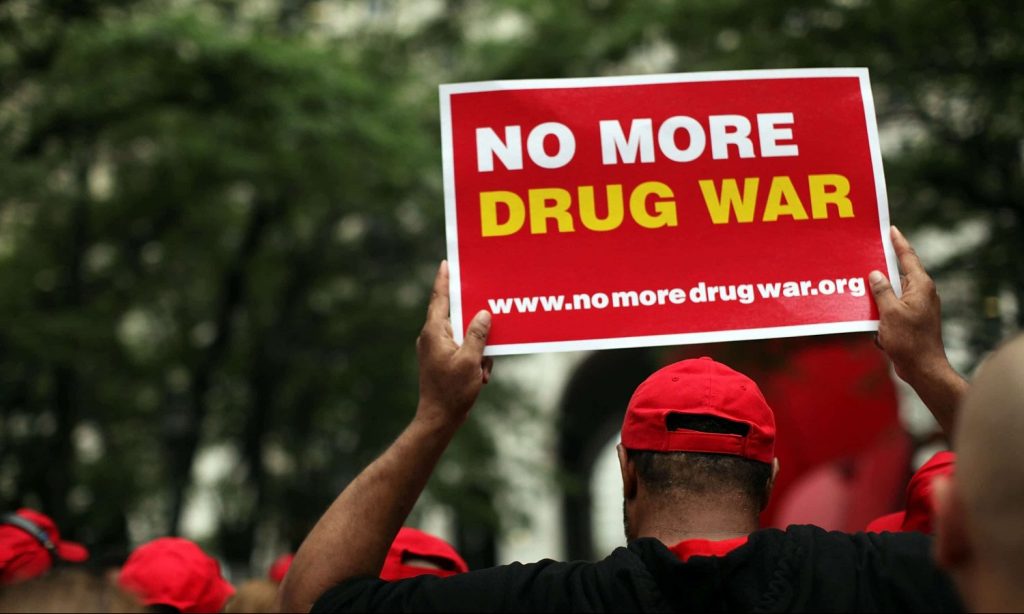
The cannabis community and the DEA have long been at odds over the unjust War on Drugs, and it’s rare that any appointment to this agency provides a glimmer of hope.

President Biden nominated Anne Milgram as head of the Drug Enforcement Administration (DEA), the White House announced on Monday, April 12.

If confirmed, Milgram will report directly to Biden’s pick for Attorney General (AG), Merrick Garland, who was confirmed by the Senate on March 10. Both Garland and Milgram have mostly refrained from commenting on cannabis legalization in public, but they have not actively attacked cannabis, which is a step up from Trump-era appointees including former Attorney General Jeff Sessions, who in 2018 rescinded the Cole Memo after years of publicly criticizing any form of cannabis reform.

everything you need to know about the deas refusal to declassify marijuana
Photo by Don MacKinnon / Stringer via Getty Images

The DEA, created in 1973 under President Nixon, is a  federal law enforcement agency serving under the U.S. Department of Justice tasked with implementing and enforcing the Controlled Substances Act. The agency is responsible for coordinating and pursuing U.S. drug investigations and plays a major role in determining how substances are scheduled. It is no surprise that the DEA — the agency at the helm of the War on Drugs — has long been at odds with cannabis legalization and reform. It is a welcome surprise, however, to have a leader of the agency who might change its tune.

BACKGROUND ON MILGRAM

From 2007 to 2010, Anne Milgram served as the Attorney General of New Jersey. She was just 36 when she took the job. In a widely viewed 2013 Ted Talk titled “Why Smart Statistics are the Key to Fighting Crime,” Milgram discussed her data-driven approach as New Jersey’s top law enforcement officer:

“It turns out that most big criminal justice agencies like my own didn’t track the things that matter,” she says in her talk. “We didn’t share data, or use analytics, to make better decisions and reduce crime.” Under her leadership, the New Jersey AG’s office gathered and analyzed years of case data. “What we found was not good,” she said. “We were doing most low-level drug offenses right up the street. [The] reason we are incarcerating low-level, non-violent people, and we’re releasing high-risk, dangerous people, is that we don’t have an objective measure of risk.”

RELATED: DEA Hit With Another Lawsuit From Scientists Seeking to Research Cannabis

During her tenure as New Jersey AG, Milgram overhauled the Camden, N.J. police department using data, innovating thinking, and a fervent belief that a community knows best what it needs to be safe. She most recently discussed her data-centered work in a June 2020 CNN Op Ed, written shortly after Minneapolis police officer Derek Chauvin brutally killed George Floyd and while the nation erupted over a debate about how to revolutionize community safety.

Since 2010 , Milgram — who lives in New York, the latest state to legalize a recreational adult use marijuana market — has been a professor at NYU’s School of Law, where she leads the criminal justice innovation lab. Many of her projects focus on keeping the wrong people out of jail. Until her appointment, she had also been busy co-hosting podcast CAFÉ Insider (café.com) with Preet Bharara, on which the duo debates politically charged legal issues.

RELATED: How Cannabis Friendly Is Biden’s New Administration? Part 1: Merrick Garland’s DOJ

In a 2019 series Ceiling Smashers, Market Watch wrote that Milgram says her personal mission is to create paths for less crime and less incarceration, which means re-thinking public safety. “There’s no system that is more old-school and broken and problematic than the criminal justice system,” she said. “There are amazing people in it, but as a system it doesn’t run the way it should run.”

the dea still doesnt acknowledge all the good things that marijuana offers
Photo by Eric Kayne/Stringer/Getty Images

MILGRAM, THE DEA, AND CANNABIS

Anne Milgram has not said much on the record about cannabis. In 2009, she weighed in on a New Jersey bill to legalize medical marijuana. She called the bill “workable,” which in 2009, three years before any state legalized adult-use cannabis, means a little more than it would today. In the last 11 years, Milgram has not added much to discourse on cannabis legalization. However, Milgram’s reverence for and reliance upon data could indicate that she will be a welcome leader of the DEA for cannabis stakeholders because the data on the DEA shows, to borrow a phrase from Milgram, “a system that doesn’t run the way it should run.”

Here’s some data, as summarized by GLLG attorney Daniel Shortt in the Fresh Toast:

“The drug problem in the US has not improved and is much worse today than when the DEA was formed. In 1973, 1.1 out of 100,000 deaths in the US were attributed to unintentional drug overdoses. In 2018, the CDC reported that 19.1 out of 100,000 were attributed to unintentional overdoses. Drug War Facts reports that in 1973 there were 328,670 arrests for drugs out of 9,027,700 total, meaning that 3.6% of all arrests were for drugs. In 2018 there were an estimated 1,654,282 arrests for drugs out of 10,310,960 [total,] accounting for 6% of all arrests.”

RELATED: DEA Doesn’t Want You To Worry About Its New Hemp Rule—Don’t Take The Bait!

Not one of these overdose deaths has been caused by cannabis. However, Pew Research Center reports that 40% of all drug arrests were related to cannabis. If Milgram’s personal mission is to reduce crime and incarceration, she could make an immediate impact by focusing the DEA’s resources away from cannabis-related crime and redirecting that focus on the manufacture and distribution of deadly opioids.

illinois pot offenders how to get your marijuana offense wiped clean
Photo by FatCamera/Getty Images

Also important for the cannabis community, as reported by Marijuana Moment, if confirmed, Milgram will pick up the mantle on several lawsuits from cannabis and psychedelic advocates and patients. Most notably, a coalition of scientists and veterans sued the DEA in 2020, arguing that the legal basis the DEA has used to continue categorizing marijuana as Schedule I is unconstitutional.

BOTTOM LINE

The cannabis community and the DEA have long been at odds over the unjust War on Drugs, and it’s rare that any appointment to this agency provides a glimmer of hope.

The most promising aspect of Milgram’s appointment for those looking to a future with federally legal cannabis markets is not necessarily that she once called New Jersey’s MMJ program “workable.” It is that she has demonstrated a level-headed use of science and logic over historical status quo in policing and other areas. Let’s hope she brings the same to the DEA.

Green Light Law Group will be watching Milgram’s Senate confirmation hearing (not yet scheduled at the time of this post) and will report back on any relevant commentary after she responds to inevitable questions on marijuana.

Steph Barnhart is Green Light Law Group’s Legal and Marketing Assistant and studied journalism at Concordia College. Steph is not an attorney. You can contact Steph at steph@gl-lg.com or 503-488-5424.

This post originally appeared on Green Light Law Group.

5 Things To Celebrate 4/20

0

Smoking marijuana with friends on 4/20 is a time-honored tradition. But now that we’re social distancing, here’s what you can do instead.

This year’s 4/20 will be different. Most of the country will spend the day indoors, complying with social distancing regulations and avoiding meet-ups with their fellow marijuana loving friends. Like all 4/20s, however, the date will require some preparation ahead of time.

“In the best interest of public health and safety, NORML encourages cannabis consumers not to congregate either outdoors or indoors in groups this 4/20.” says Erik Altieri, executive director of NORML.

Since we’re facing unprecedented times, it’s important for everyone who expects to celebrate 4/20 to purchase the necessary elements ahead of time, whether you’re preparing edibles or sticking to some flower.

When it comes to having a safe 4/20, it’s important to be more careful than usual. Emma Snowdon-Jones, a consultant for CBD brand Black Dahlia, recommends cleaning all marijuana equipment before and after each use, avoiding sharing joints or bongs with the people you’re quarantining with and utilizing delivery services that minimize risk of exposure.

Photo by Tobias Tullius via Unsplash

Remember to plan in advance, that way you’re not scrambling for weed when everyone else is having the same idea. Here are 5 things you can do to celebrate this year’s 4/20:

Do something meaningful

Organizations like Friends in Weed have been developed in order to help and protect workers in Colorado who are keeping the weed industry functioning. For 4/20, they developed 420Help, a weekend event where every dollar raised will be donated to healthcare workers, first responders and other people affected by the pandemic throughout the state of Colorado.

You could also make donations of money, masks, or products that might provide relief, such as Black Dahlia, which will be donating CBD confections to health workers and first responders. Organizations in need of donations during this time include the American Red Cross, Boys & Girls Clubs of America and the CDC Foundation.

Learn how to roll the perfect joints

https://www.youtube.com/watch?v=AoSy6uwqEkY

RELATED: Why Smoking A Cannagar Is Better Than A Pre-roll

Something interesting and fun you can try out is learning how to roll joints. While there are hundreds of tutorials out there (and this helpful guide we published), Tony Greenhand just released a series on Quibi called Let’s Roll. The series is made up of super short episodes features crazy joints and celebrities. It will get you super pumped for the art of joint-making.

Take advantage of the offers and buy some products

Different sellers of marijuana and CBD are offering some deals due to April 20th. Verra Health is offering discounts between the dates of April 20 until the 30th, with the code CBD420. Lightshade dispensary is also offering 25% off of all their products throughout the month of April.

Dispensaries in LA and Chicago, cities that have deemed marijuana dispensaries as essential businesses, are providing discounts throughout the month of April. Deals vary depending on the dispensary, like Illinois’ Sunnyside, that’s offering 10% off on offers over 250$. In LA, it’s easier to get marijuana delivered with apps like Eaze, which is providing a 20$ discount for first time costumers when they use the code ‘DO420LA.’

Have a dance party

study claims that there are dance moves that are scientifically sexy
Photo by Brooke Cagle via Unsplash

RELATED: Confused About How Much THC And CBD Is In Your Weed? You’re Not Alone

If the doom and gloom of the pandemic is bringing you down, you can try dancing it out with different 4/20 themed parties. Many of these are concerts for a cause, like 4/20 for a cause, which will raise money for different associations battling the pandemic in Colorado. Others are simply for the fun of it, like the party hosted by dispensary Lightshade or the 4/20 world record meetup. This latter will be conducted through Zoom. You can get an RSVP here.

Watch some stoner movies

If you decide to spend a chill 4/20, you can always go with a joint and movie. Here’s a list of recommendations.

The 4 Biggest Problems With CBD Products

0

Many consumers are snatching up CBD products that may not be all they’re cracked up to be.  

If it weren’t for cannabidiol, more commonly known as CBD, the marijuana industry would be on the streets begging for nickels rather than enjoying the fruits of a business sector earning $22 billion last year.  But things are always perfect, here are the 4 biggest problems with CBD products.

It seems that America has fully embraced the concept of this non-intoxicating cannabinoid in hopes that it will do everything its proponents say it will, from alleviating pain, anxiety and perhaps even depression. But due to the company this marketplace keeps — not to mention its lack of federal oversight — a lot of consumers are snatching up CBD products that may not be all they’re cracked up to be. These are just a few of the most common problems with CBD. 

Dosage Is Sometimes Lower Than Advertised

Consumers should be able to trust the labels of the products they use, but when it comes to CBD, it is harder. Since these products are not regulated by the U.S. Food and Drug Administration like other drugs, cannabis companies are basically responsible for putting their own standards in place.

CBD
Photo by Christin Hume via Unsplash

Admittedly, some do a relatively good job manufacturing high-quality products. Still, others have no qualms whatsoever about cutting corners in pursuit of a stronger bottom line. And the proof is in the products. In fact, a recent analysis from Mile High Labs in Colorado found that some products being sold all across the United States are consumer rip offs. For example: While the advertised dosage might read 500 milligrams, the actual dose could be closer to 300 milligrams. But then again, the dosage debacle could go in the opposite direction.

Dosage Is Sometimes Higher Than Advertised

The same examination, which was commissioned by CBS News, found that as easy as it is for the consumer to get CBD with a lower than advertised dosage, they could also be buying products that contain more than what the label reads.

RELATED: How Long Does CBD Stay In Your Body?

In some cases, the lab results found products with 10% over the advertised dosage. But some took it to the next level. At least one sample was found to have 210% more CBD than what it was supposed to. Some medical experts say consuming too much CBD could actually pose some health risks. It could make the user drowsy and even cause nausea, vomiting and diarrhea, according to one toxicologist.  

Some CBD Contains Dangerous Synthetic Marijuana

Consumers new to the CBD scene should know that counterfeit products are a real concern. A recent report from the Associated Press shows that some CBD vapes and edibles are being made with dangerous synthetic marijuana known as K2 or Spice. The AP commissioned laboratory analysis found that 10 of the 30 CBD vapes they examined contained some kind of synthetic additives.

RELATED: Sorry, But Your CBD Hemp Products Probably Contain Some THC

What’s more, some of these products didn’t have any CBD in them at all. Unfortunately, a number of people have been admitted to the hospital after using these bogus products. How do you keep from becoming a statistic? The best advice for avoiding dangerous synthetic marijuana disguised as CBD is to avoid buying it from truck stops, convenience stores and smoke shops. The U.S. Hemp Authority has a list of certified CBD producers across the country that adhere to strict standards. Check it out before you buy.   

new survey calls florida the center of exploding cbd trend
Photo by Tinnakorn Jorruang/Getty Images

CBD Could Have Enough THC Content To Fail A Drug Test

Laboratory tests have shown some products contain enough THC, the marijuana component that gets the user high, to cause someone to fail a drug test. There have been several reports over the past year or so of people unexpectedly getting flagged for drug use at work after consuming CBD products. This is a problem that actually stems from a lack of federal oversight, as well.

It is just another reason to always purchase CBD from a reputable dealer as opposed to a neighborhood convenience store. If you want to use CBD for medicine, then the products should be obtained from companies that have CBD’s therapeutic qualities in mind. Otherwise, it’s just a crapshoot as to whether the CBD you are using is legit or a ticket to unemployment.

PTSD Patients Report On Efficacy Of Medical Cannabis

Because of all the incredible therapeutic benefits of cannabis for PTSD, more are turning to it as an alternative medication.

Post-traumatic stress disorder (PTSD) has proven to be one of the most challenging psychiatric disorders to treat. With over 8 million people suffering from PTSD, and 1 in every 13 people who will suffer from it at some point in their lives, this debilitating condition requires medicine that truly works so that patients’ lives can go back to normal.

When PTSD patients don’t receive the treatment they need, the symptoms can last a much longer time. The symptoms vary; they can include chronic nightmares, hypervigilance, panic attacks, overwhelming or self-destructive emotions, and in some cases these feelings can be so extreme that they lead to suicidal tendencies.

Veterans Can Use Medical Marijuana, They Just Have To Pay For It
Photo by Bumblee_Dee/Getty Images

This is why psychiatrists and therapists need to turn to several treatment techniques, and in some cases they don’t work effectively. Conventional methods typically recommend cognitive behavioral therapy, exposure therapy, eye movement desensitization, antidepressant and anti-anxiety medications, or a combination of these.

Thankfully, there is mounting evidence that cannabis is extremely promising for the treatment of PTSD. One of the latest studies was conducted by Dutch researchers in the Netherlands, and their findings were shared in the Journal of Basic and Clinical Physiology and Pharmacology. For the study, they analyzed data from the last 10 years on PTSD patients who have taken a range of cannabis medicines including THC, plant extracts, synthetic cannabinoids, and/or CBD.

“Cannabinoids were shown to improve overall PTSD symptoms, including sleep quality and quantity, hyperarousal, and treatment-resistant nightmares,” write the authors. “Cannabinoids have been shown to be an effective treatment option for patients with PTSD. Besides aiding to relieve the symptoms and enhance extinction training, they are also relatively well-tolerated,” they conclude.

Another recent study, and the first FDA-regulated, double-blind and placebo-controlled study on the impact of smoked cannabis on veterans suffering from PTSD reported that those who were administered with higher doses of THC showed the most significant improvements. The study, which was also conducted by MAPS (Multidisciplinary Association for Psychedelic Studies), revealed that cannabis blends containing 9% THC were the highest, though those with 11% THC, and 8% THC with 8% CBD were also effective.

RELATED: Survey Shows 75% Of Veterans Are Interested In Cannabis

“This study served as the first randomized placebo-controlled trial comparing the therapeutic potential of varying ratios of THC and CBD for treating symptoms of PTS,” explains Dr. Marcel O. Bonn-Miller, the study’s lead author.

Survey Shows 75% Of Veterans Are Interested In Cannabis
Photo by SDI Productions/Getty Images

Dr. Bon-Miller explained that they will need to conduct larger studies which would also have to be randomized and placebo-controlled to tell what the “minimally-effective doses of THC needed to safely treat individuals suffering from PTSD while also mitigating risks of cannabis dependence in this vulnerable population” would be.

“One of the biggest takeaways from this study is that veterans with PTSD can use cannabis at self-managed doses, at least in the short term, and not experience a plethora of side effects or a worsening of symptoms,” says Mallory Loflin, the paper’s co-author, regarding a separate study involving 150 participants.

Why Does Cannabis Work So Well For PTSD?

The studies available today point to several reasons. One is that cannabis reduces amygdala activity; since the amygdala is the part of the brain that is associated with our fear-based response to perceived threats. A study conducted by Wayne State University researchers revealed that PTSD sufferers who consumed THC displayed a decrease in amygdala activity, which means that they had less measured symptoms of fear and anxiety in situations that would normally elicit trauma-based responses from them.

The authors wrote, “that THC modulates threat-related processing in trauma-exposed individuals with PTSD” as well as that cannabis “may prove advantageous as a pharmacological approach to treating stress- and trauma-related psychopathology.”

RELATED: Long-Awaited Study Shows Cannabis Not Very Effective For PTSD

The other reason scientists believe how cannabis treats PTSD suggests that the cannabinoid within the plant help eliminate traumatic memories. A study, this time from the Federal University of Parana in Brazil, reveals further insight as to how. But this technique of treating PTSD via extinguishing of bad memories was first hypothesized by R. Andrew Sewell, a Yale associate professor of psychiatry, who says that cannabis has the ability to “overwrite” these traumatic memories through “extinction learning”.

The Brazilian study analyzed cannabis literature dating 1974 through 2020, combing through data from human trials to support Sewell’s theory. They found promising results, particularly in the area suggesting that low-dose THC or THC mixed with CBD were effective in enabling the extinction rate for traumatizing memories while decreasing the anxiety response. Their findings point to THC being the most effective in extinction rates.

The authors concluded that cannabis can “suppress anxiety and aversive memory expression without producing significant adverse effects.”

“Based on the Clinician-Administered Post-Traumatic Scale for DSM-IV, study participants experienced greater than 75% reduction in CAPS symptom scores when patients were using cannabis compared to when they were not,” states the findings of a study taking place from 2009 to 2011 involving the psychiatric assessment of 80 patients who applied for New Mexico’s marijuana program for PTSD.

Evidence Only Continues To Grow

Because of all the incredible therapeutic benefits of cannabis for PTSD, more are turning to it as an alternative medication. This is amazing news for everyone who has PTSD, whether you’re a veteran or not.

We can expect only more studies that prove just how beneficial cannabis is for PTSD. This is a terrible disease that robs people of quality of life, but the answer lies in the humble plant that does so much: it promotes good sleep, reduces the recurrence of traumatic memories, promotes wellbeing both mentally and physically, and finally, allowing patients to regain control of their lives once again.

This article originally appeared on Cannabis.net and has been reposted with permission.

7 Natural Pain Relief Options To Consider Before Prescription Drugs

0

If you are currently looking for the best manner in which to get a handle on your own chronic pain, here are a number of natural pain relief methods that you can consider.

Chronic pain is something that millions of Americans suffer from every year. Some people develop chronic pain over time, while others deal with it as a consequence of an accident, injury, or surgical procedure. Whatever the cause is behind your own chronic pain, finding the best methods of managing it can be difficult.

The medical community has shifted sharply in its approach to pain management in recent years. This is due to the fact that many of the more traditional pain management treatments that were once routinely offered to patients, such as opioids and harmful medications, are now known to do far more harm than good. For this reason, other alternatives to pain management are considered before turning to such medications in most cases.

Intramuscular Or Smoked Cannabis May Be The Future Of Managing Acute Pain
Photo by Karolina Grabowska from Pexels

Furthermore, society, in general, is far more concerned with finding natural solutions to pain management than synthetic ones. For many people, natural remedies prove to be more effective in the long run when it comes to promoting overall health and wellness.

If you are currently looking for the best manner in which to get a handle on your own chronic pain, here are a number of natural pain relief methods that you can consider. As always, it is important to clear any pain management options with your physician before trying them out.

CBD

One naturally-derived substance that many people are turning to for pain relief is that of CDB. This is the chemical component found in marijuana that can potentially help lead to ease the pain of either a chronic or acute nature.

RELATED: Small Harvard Study Shows ‘Real World’ Medical Cannabis Treatment May Help With Chronic Pain

Although once disparaged as a purely recreational substance, there are many in the medical community who have found through extensive research that CBD can be an option for better pain management alternatives when compared to harmful narcotics and opioids.

National CBD Day Is Saturday
Photo by Thanit Weerawan/Getty Images

It is vital that you source your CBD from a reliable and certified manufacturer. It is also a good idea to consider some of the best weed vape pens for your purposes as they can greatly reduce the irritation that is caused by the inhalation of smoke that accompanies the standard methods of consuming marijuana.

Physical Therapy

Depending on the nature of your chronic pain, you might be advised to seek out treatment from a physical therapist. Through a series of strength-building and mobility-promoting exercises, it might be possible to take much of the load off of the area of your body that is causing you pain so that it doesn’t experience as much pressure and work throughout the day. This can lead to a significant reduction in the amount of pain that you experience from day to day.

Acupuncture

What Can You Expect At Your First Acupuncture Appointment
Photo by massagenerds via Pixabay

One of the more holistic natural pain management options that are available to you is that of acupuncture. Derived from Eastern medicine, acupuncture seeks to relieve pain in one area of the body by addressing the nerves in another area. Many people have found a great deal of pain relief via acupuncture and have appreciated the totally natural and un-addictive nature of this type of treatment.

Lavender Essential Oil

Lavender and its aroma have been used a lot more frequently in recent times to help people relax and unwind, but there’s although been an increased movement of people who believe that it can also help with mild pain relief. One of the main areas in which lavender can help a lot is with dealing with headaches and migraines, as studies have shown that it works better than a placebo. It also has the potential to be an anti-inflammatory and antioxidant.

Here's What You Should Know About Getting A Massage During COVID
Photo by Alan Caishan via Unsplash

When using any form of essential oil, including lavender, it’s important never to ingest them, as they can be harmfully toxic and cause poisoning. Additionally, if you’re applying the oil directly to the skin, make sure to use a carrier oil to dilute the substance, as some oils can cause irritation in the forms of rashes or even burns.

Ginger

Ginger has been used for millennia as a form of pain relief in plenty of different and unrelated civilizations, which can potentially illustrate that ginger can be a great source of relief. Modern-day studies have shown that eating 2 grams of ginger per day for at least five days can help alleviate muscle pain from resistance exercises and running, making it really well suited to athletes. This is because ginger can reduce inflammation which helps accelerate recovery.

RELATED: Acute And Chronic Pain Affects Millions — How Can Cannabis Help?

One of the best ways to get more ginger into your diet is by adding raw ginger into teas or smoothies. In addition to this, you can also get ginger supplements from herbal stores as well as online retailers, but it is believed that the natural variety could be more beneficial to you.

Turmeric

In addition to ginger, another flavorful food product that can help relieve pain is the spice turmeric. The reason that turmeric can be useful in dealing with pain is that it has the active ingredient curcuma within it, which has pain-relieving qualities.

This ingredient is also pretty strong, as when compared to ibuprofen, it was found that it was just as effective at managing pain as this routine medicine. However, this was only for concentrated and isolated curcuma, which means that the benefits of turmeric might be a bit milder. However, it can still help improve how you feel, meaning that adding it to curries and juices might be a good idea.

Yoga

5 Tips To Get The Most Out Of Yoga
Photo by Carl Barcelo via Unsplash

Yoga is a form of exercise, but because of its nature of being one that’s focused on stretching, it can actually be very effective at elevating muscular pain, especially in the back and joints. This is because these stretches help to strengthen your muscles and stops them from being stiff.

In general, movement is very beneficial in helping to deal with mild pain, as too much inactivity can weaken muscles, making them hurt even more. In addition, yoga is great for self-care as it also puts an emphasis on breathing exercises and meditation, which can help keep you calm and relaxed.

This article originally appeared on Cannabis.net and has been reposted with permission.

New York Is The Newest Global Destination For Cannatourism

0

New York State just blew away the competition by allowing the public consumption of cannabis and creating a legal framework for cannabis consumption sites.

New York just cemented its status as the cannabis tourism capital of the world. New York City has always been a hub for tourists because it is at the center of American culture, entertainment, finance, and politics. With the recent passage of the Marijuana Regulation and Taxation Act (MRTA), New York City is now poised to become America’s answer to Amsterdam, the European city that has long permitted the consumption of cannabis at its famed cafes.

The MRTA makes it legal for adults (over the age of 21) to smoke cannabis anywhere that tobacco can be legally smoked in New York and creates a license for adult-use consumption sites. In New York, you can legally smoke cannabis in public and once the MRTA is fully implemented, you will be able to visit what essentially sounds like a cannabis cafe. In the near future, Americans will be able to legally enjoy that cannabis café experience without having to pack their passports and fly to Amsterdam.

New York's Gov. Cuomo Wants Legalization In 2021
Photo by Arthur Brognoli from Pexels

While the MRTA allows cannabis to be smoked or vaped anywhere that smoking tobacco is permitted, state agencies and localities can impose stricter regulations. This means that under New York state law, cannabis can be smoked in hotel or motel rooms, outdoor dining areas, and adult-use on-site clubs, and anywhere else where smoking tobacco is legal. Smoking cannabis is not permitted anywhere that tobacco is prohibited. Cannabis also cannot be smoked at a school. The MRTA creates a license type called an adult-use on-site consumption license. These licenses will allow for the sale and consumption of cannabis. These lounge-like locations will allow people to buy and use cannabis on site.

WASHINGTON TOURISM IS MISSING THE BOAT

Tourists visiting New York will have legal avenues to consume cannabis. Compare that to one of the first two states to legalize adult-use cannabis, Washington. Washington voters legalized recreational marijuana by passing Initiative 502 (I-502) in 2012. I-502 made it “unlawful to open a package containing marijuana, useable marijuana, or a marijuana-infused product, or consume marijuana, useable marijuana, or a marijuana infused product, in view of the general public.” In 2015, three years in to Washington’s experiment with legal cannabis, lawmakers passed a comprehensive bill to unify the state’s medical and recreational market. Included in that bill was an amendment that made it illegal to conduct or maintain a marijuana club. In Washington, it is a Class C felony to maintain a premises for the “primary or incidental purpose of providing a location” where people can keep or consume marijuana on the premises, “for profit or otherwise.” (RCW 69.50.465.)

RELATED: New York Becomes 15th State To Legalize Recreational Cannabis

If a tourist flies to Seattle to try Washington cannabis products, she may not have a legal place to consume marijuana. If she’s staying in hotel, the hotel staff could face felony charges by allowing her to consume marijuana in her room.

The same would be true of any vacation rental host, such as those who list their space on AirBNB, as it’s a felony to allow the use of marijuana on premise, even if such consumption is “incidental” to the primary purpose of renting space out for travel purposes. The person visiting Seattle also would not be able to legally consume cannabis in public. Unless our tourist was staying in a private residence, like a friend’s house, and the owner of that residence allowed the consumption of marijuana on site, she would have no legal way to consume the cannabis that she legally purchased under Washington State law.

RELATED: Study: Legalizing Marijuana Results In Major Tourism Spike

Now imagine that the same tourist visited New York City after the MRTA program is up and running (it will likely be about two years before rules are drafted and licenses are issued). She can smoke cannabis in public anywhere that tobacco can be smoked. She can go to a cannabis lounge where she can buy and use marijuana on site. She can find a hotel that allows her to smoke in her room. She can both legally buy and consume adult-use cannabis on her vacation.

Mayors Of Seattle And Denver Lead The Fight Against Jeff Sessions
Photo by Zhifei Zhou via Unsplash

BOTTOM LINE

It pains me to say this as a life-long Washingtonian, but the Evergreen State has really dropped the ball on cannabis tourism. While other states and jurisdictions may have done better than Washington when it comes to cannabis tourism (I am looking at you Denver), New York State just blew away the competition by allowing the public consumption of cannabis and creating a legal framework for cannabis consumption sites.

New York has always been able to draw-in tourists, so it’s not as if cannabis is going to “put New York on the map.” However, New York’s cannabis laws are truly groundbreaking in the sense that the MRTA explicitly provides for legal consumption. Cannabis prohibition is often compared to alcohol prohibition, so viewed through that lens, this is like if New York legalized bars in the 1920s while other states only legalized the sale of liquor.

I hope that other states will learn from New York’s public consumption model. In the meantime, I know where I’ll be planning my next vacation.

Daniel Shortt is a corporate and regulatory attorney based in Seattle, Washington who works extensively with entrepreneurs in the cannabis industry. This article originally appeared on Green Light Law Group and has been reposted with permission. You can contact Daniel at info@gl-lg.com or (206) 430-1336.
Can You Get COVID-19 In Between Vaccine Dosages?

 It takes time for your body to build up immunity, leaving you exposed for a brief period of time. But is it long enough to catch COVID?

Millions of Americans are getting vaccinated with every passing day. If you’re getting the Moderna or the Pzifer vaccine, you’ll have to account for two trips to your vaccine site, waiting for three or four weeks in between each shot to allow the vaccine to work to its maximum potential. But while waiting for your second shot, is it possible to get COVID-19?

While not very common, it is possible to get COVID-19 while you wait for your second dose. “You will see breakthrough infections in any vaccination when you’re vaccinating literally tens and tens and tens of millions of people,” Dr. Anthony Fauci said during a White House press briefing on March 26.

This Vaccine Side Effect Can Affect Your Whole Body
Photo by National Cancer Institute via Unsplash

According to data compiled by medical experts, the first shot of the Moderna and Pfizer vaccines builds up to 80% of immunity, but it’s a process that takes time, with the shot prompting your immune system to build a response to the virus that can last for at least six months. This percentage is usually achieved within the two week mark. It’s important to stay vigilant throughout your vaccination process, that way you can avoid catching the virus and earn full immunization from your inoculation smoothly.

RELATED: This Vaccine Side Effect Can Affect Your Whole Body

While it is possible to catch the virus with one vaccine shot in your body, it’s very unlikely for you to develop serious illness or death. “In the studies, nobody who got vaccinated died. Obviously in the real world, we have many, many more people, but they’re still extremely, extremely effective at preventing severe disease and death,” infectious disease expert Valerie Cruzet told the Huffington Post. “That’s true certainly after your second dose, but probably also true for after the first dose.”

RELATED: People Are Still Afraid After Taking The COVID-19 Vaccine — Here’s Why

If you do get COVID-19 in between vaccine shots, your immunization process will likely remain intact, except for a change in your timeline. According to the Centers for Disease Control: Vaccination of people with known current SARS-CoV-2 infection, including those who experience SARS-CoV-2 infection after the first dose of an mRNA vaccine but before receipt of the second dose, should be deferred until the person has recovered from the acute illness (if the person had symptoms) and they have met criteria to discontinue isolation.

Waiting until the illness is over to get your second shot will give your body have time to develop an appropriate and strong response to the vaccine.

Don't Miss Your Weekly Dose of The Fresh Toast.

Stay informed with exclusive news briefs delivered directly to your inbox every Friday.

We respect your privacy. Unsubscribe anytime.