

Sober October is growing beyond an alcohol-free challenge. As cannabis becomes more mainstream, where does marijuana fit into a month of sobriety?
October is the time of year when all four major American sports leagues are active at the same time, horror movies are a huge thing, Locktober, fall foliage captures the hearts and instagrams of the public and Octoberfest is a not only a thing – but for many a destination. Adding to the list is something newish, but is Sober October thing and does cannabis count? Is Sober October a thing and does cannabis count?
October has become the month when some drinkers put down the wine glass, skip the weekend cocktails and see what happens when alcohol disappears for 31 days.
Sober Octoberbegan as an alcohol-free fundraising challenge has become part of a much larger conversation about drinking, health and the increasingly popular idea of being “sober curious.”
But, if someone gives up alcohol for October but takes a THC gummy on Saturday night, are they still doing Sober October?
The answer depends on who you ask—and, more importantly, what the person is trying to accomplish.
RELATED: Do You Want a Mind or Body High
The modern Sober October movement traces back to Australia, where an alcohol-free fundraising campaign known as Ocsober launched in 2010. The idea gained additional attention in the United Kingdom in 2014 when Macmillan Cancer Support introduced its “Go Sober for October” campaign to raise money for people living with cancer.
The concept eventually made its way into American popular culture.
Podcast host and comedian Joe Rogan helped bring Sober October to a much larger audience after participating in the challenge with fellow comedians, turning the month into something of a personal health experiment. Exercise, diet, sleep and other measures became part of the challenge.
Since then, Sober October has taken on a life of its own.
For some people, it means no alcohol. For others, it is a chance to examine how much they drink, improve their sleep, lose a few pounds, save money or simply prove they can go a month without reaching for a drink.
This distinction matters.
The distinction matters.
Unlike traditional sobriety, Sober October isn’t necessarily a declaration someone will never drink again. It can be a 31-day reset.
Here’s where things get complicated.
There is no universal Sober October rule saying cannabis automatically disqualifies someone.
Most traditional Sober October campaigns are specifically focused on alcohol. If the challenge is defined as “31 days without alcohol,” then using cannabis doesn’t technically break the rule.
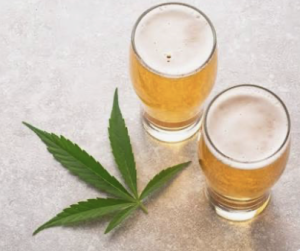
But if the goal is broader—giving up intoxicating substances, taking a break from recreational drugs or understanding what life feels like without getting high—then marijuana would reasonably be included.
This distinction has become increasingly relevant as cannabis has moved from the cultural margins into the mainstream.
Cannabis beverages, gummies, tinctures and other THC products are now marketed alongside a growing universe of alcohol alternatives. Some consumers have even replaced an evening beer or glass of wine with a cannabis product.
It may be a lifestyle change, but it isn’t necessarily sobriety.
And is the bigger question behind Sober October: Is the goal to stop drinking, or to stop being intoxicated?
RELATED: 7 Cannabis Strains to Help You Chill This Fall
