

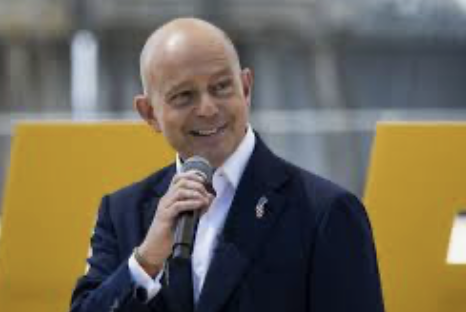
Republicans send another political mixed message about cannabis as Steve Hilton pushes tax and regulatory reform.
For more than a decade, cannabis reform has become one of the rare issues where public opinion has moved significantly faster than politicians. Despite campaign promises from leaders in both parties, neither Democrats nor Republicans have fully delivered on the changes many voters expected. Now there is another political mixed message about cannabis.
President Joe Biden repeatedly discussed marijuana reform and initiated the process to review cannabis scheduling, yet marijuana remains federally illegal. Meanwhile, the current president has expressed support for reforms such as banking access and signaled openness to rescheduling, but significant federal changes have yet to materialize. For cannabis advocates, the result has been frustration from both sides of the political aisle.
RELATED: The Facts On Marijuana, Crime and Guns
Part of the challenge is generational. Many of the nation’s senior politicians came of age during the height of the War on Drugs and continue to view marijuana through a lens shaped by decades-old messaging. While public support for legalization now exceeds two-thirds of Americans in many polls, a substantial number of older lawmakers remain hesitant to embrace full reform. The result is a patchwork of state laws, conflicting regulations, and an industry often finding itself caught between legalization and prohibition.
The Republican Party in particular continues to send mixed messages. Some conservatives champion states’ rights, criminal justice reform, and free-market principles aligning with legal cannabis. Others remain firmly opposed, citing public health and safety concerns. This divide has created uncertainty for businesses and consumers alike.
The latest example comes from California gubernatorial candidate Steve Hilton. Hilton, a British-American political commentator, author, and former adviser to former U.K. Prime Minister David Cameron, became a familiar face to many Americans through his work as a Fox News host. Now he is seeking to become California’s next governor on a platform centered around affordability, lower taxes, government efficiency, and reducing regulatory burdens on businesses.
While Hilton has not emerged as a leading national voice on cannabis legalization, he has highlighted concerns resonating with many operators in California’s struggling legal marijuana market. His campaign has criticized excessive government bureaucracy and has questioned how cannabis tax revenues are being managed by the state. Earlier this year, Hilton’s campaign released findings criticizing transparency surrounding California’s cannabis tax programs.
His comments arrive at a time when California’s legal cannabis industry continues to face significant challenges. Industry leaders have long argued high taxes, extensive regulations, and competition from the illicit market have made it difficult for licensed businesses to survive. In response to mounting pressure, California lawmakers recently approved a temporary reduction in the state’s cannabis excise tax, acknowledging the financial strain facing legal operators.
RELATED: Republican Attorney Generals Plan to Block The President’s Marijuana Rescheduling
Many cannabis business owners would welcome additional tax relief and regulatory reform. They argue lowering costs for legal operators would help consumers move away from illicit sellers while generating more sustainable long-term tax revenue. Critics, however, worry reducing taxes could limit funding for social programs currently relying on cannabis-generated revenue.
The debate highlights the broader political reality surrounding marijuana in America. Support for legalization continues to grow among voters across party lines, yet policymakers remain divided on what reform should look like. Whether it is Democrats who promised rescheduling or Republicans who champion business-friendly policies while remaining split on legalization, cannabis remains an issue where political rhetoric often moves faster than legislative action.
For now, cannabis businesses, consumers, and investors are left waiting for elected officials from both parties to turn promises into policy.
