Monday, May 11, 2026
Home Blog Page 1029

Bill To Legalize Recreational Marijuana Introduced In New Jersey

It’s no secret that newly minted NJ Governor Phil Murphy is a vocal supporter of both medical and recreational cannabis. It was a big part of his gubernatorial campaign and he’s been sticking to his word since winning office. During Murphy’s first week as governor, he signed into legislation a bill to better New Jersey’s floundering medical marijuana laws. At the same time, he introduced Senate Bill No. 830, which aims to legalize adult use.

This would be a major milestone for the Garden State, especially considering the stance of previous governor Chris Christie, who despite being the least popular governor in US history, held the office for eight long years. Christie did everything he could to stop even medical marijuana, so recreational legalization seemed like a far-fetched idea.

S830 was introduced by NJ Senator Nicholas Scutari on January 9, 2018 and starts off with some of the hard facts about New Jersey and cannabis use, including incarceration rates, racial disparity in arrests despite similar rates of use, the black market and the $127 million per year that taxpayers dole out for cannabis related law enforcement over possession.

And speaking of possession, S830 would allow New Jerseyans 21 and older to have cannabis paraphernalia, up to one ounce of dried marijuana, 16 ounces or less of solid infused pot products, up to seven grams of concentrate, and oddly, up to six immature plants.

The six immature plants will be able to be transferred to another 21 or older resident, provided it is not for business or promotional purposes, but the language is yet unclear as to what else can be done with the non-flowering cannabis plants. It seems that licensed, large-scale grow facilities would do best to grow their own seedlings or make their own cuttings in a sterile environment, but time will tell what the final language will be or even if this bill passes the Senate.

Assemblyman Reed Gusciora co-sponsored the above Bill, however, he also plans on introducing his own bill into the Senate in the coming weeks. In his proposed Bill, things would be along the same lines as S830, but with a couple of key differences: lower taxes and home cultivation. New Jersey residents would be able to grow those six plants to fruition.

California Ghost Towns Looking For New Life With Legal Marijuana

There are towns across the United States suffering from economic hardship, and many of these areas are searching for ways to save the day. In legal marijuana states like California, some of the jurisdictions buried in this downtrodden way of life are looking to get involved with the legal cannabis trade — not as a means to an end, but as a new beginning.

The desert town of Blythe, located on the California-Arizona border, is hoping to get into the business of growing and selling marijuana. Blythe is part of the agricultural community in the Palo Verde Valley, and has been considered a farming community for the past century.

The town, which was initially apprehensive about letting marijuana in, is now one of several California border towns trying to capitalize on the newfound legal marijuana market that launched at the beginning of the year.

“Proponents of bringing marijuana into Blythe say the city can compete against the Coachella Valley and coastal cities because of its cheaper land, plentiful water and, potentially, lower taxes,” according to the Desert Sun.

But this approach to potential economic salvation has not been an easy sell. Segments of the town are concerned that legal weed will create public health and safety problems. Some are skeptical about whether the cannabis trade is really a salvation’s wing. This attitude mostly stems from the town’s past. Previous attempts at resurrection have been less than impressive.

Yet, others, like retired Blythe city councilman Tim Wade, we believe that if legal marijuana is here, “we might as well make money on it.”

As it stands, Blythe, which has a population of around 20,000, is getting by on the funds from two state prisons. But more is needed. The unemployment rate in the area is now around 13 percent, and most of the population is living below the poverty line.

“People think there’s going to be some savior that’s going to come to Blythe, that’s going to help them out,” Wade said. “There’s no shopping here. Big corporations don’t want to come here. My personal opinion is, we’ve got to do something.”

Fortunately, the marijuana industry is interested in doing business with Blythe.  There are reportedly around 40 new businesses looking to set up shop in the community. One of those operations is a marijuana production facility that will give way to two million square acres of cannabis farming.

But nothing is set in stone – making some community members skeptical about the supposed savior called marijuana. The town has heard big talk throughout the years, but most of those opportunities fell through. But if all goes according to plan, Blythe and other California border towns could rake in huge profits from legal cannabis and breathe new life into their home.

Marijuana Legalization Just Became A Key Issue In Florida Elections

As Florida’s governor race begins to heat up, cannabis has emerged as a strong issue issue among candidates. John Morgan, the powerful Central Florida attorney who spearheaded medical marijuana legalization efforts, loudly hinted he might run for governor as a Democrat with recreational marijuana legalization as his primary campaigning issue. His candidacy was polling strongly within Florida, and other Democratic gubernatorial candidates feared he might emerge as the outsider X-factor candidate this election.

But Morgan suspended any worry this past Thanksgiving when he formally announced on Twitter he would not run for governor as a Democratic nominee. In fact, he left the Democratic party fully, citing that he couldn’t “muster enthusiasm for any of today’s politicians,” and would instead register as Independent.

In his departure, Tallahassee Mayor Andrew Gillum has emerged as the pro-cannabis Democratic nominee. Within the past month Gillum has publicly stated his support of legalizing marijuana recreationally to create lucrative tax incentives for the state.

Just this past week Gillum retweeted a post from the “NBC Nightly News” account that showed an NBC News/WSJ poll regarding Americans’ newfound pro-cannabis legalization stance. Around 60% of Americans now support legalization, according to the poll.

Gillum sided with that majority, writing, “Legalize it. Tax it. Use the revenue to fix Florida’s public schools and move us up from 29th in the nation to #1. #FlaPol”

When Attorney General Jeff Sessions announced he’d rescind the Cole Memorandum—policies that dissuaded federal prosecutors from targeting states with legalized marijuana-Gillum publicly condemned Sessions.

Via andrewgillum.com:

Attorney General Jeff Sessions is dangerously deluded about our nation’s drug policy. This decision is not rooted in science or justice—though that’s little surprise since he has compared marijuana to heroin. While people of every walk of life smoke marijuana, the criminal penalties for doing so are far less equal. He has made his goal crystal clear: put more young people and people of color behind bars.

At the moment, Gillum is the only major candidate advocating to legalize recreational marijuana. However, he isn’t the only pro-cannabis gubernatorial candidate in Florida. At least two others support decriminalization. Gillum’s major competition in the Democratic primary will be former Congresswoman Gwen Graham, who wants to follow the will of the voters when it comes to state marijuana policies.

“This discussion is long overdue, and our first priority must be upholding the will of the people and making medical marijuana accessible to those who need it today,” Graham said in a statement released Friday. “Beyond that, Florida should embrace the principle that no young person should go to jail or have their lives ruined over an incident of marijuana use—we can and should decriminalize.”

Across the aisle is the two-headed race between Republican nominees Ron DeSantis and Adam Putnam. Putnam, Florida’s Agricultural Commissioner, has stated he was frustrated by the Legislature’s inability to put together medical marijuana laws. DeSantis currently has a “B” rating by cannabis reform organization NORML.

Veteran Says Medical Marijuana Controls His PTSD Symptoms

Some of the latest statistics show that somewhere around 20 percent of the military veterans that served in Afghanistan and Iraq suffer from post-traumatic stress disorder (PTSD), a vicious malady that can cause severe panic attacks and haunting nightmares. However, many veterans, like 42-year-old Leo Bridgewater, say medical marijuana has the power to control the symptoms of PTSD – allowing them to lead normal, productive lives among that portion of civil society that has never seen combat.

In a recent piece from the Huffington Post, Bridgewater, said he was first turned on by the idea of medical marijuana through the counsel of his uncle, who was Special Forces in Vietnam.

“It was through his guidance that I started looking at cannabis as a way of treating my knee pains and then also, my overall health, my overall emotional health,” he said. “That’s the one thing that we don’t really pay too much attention to, because it’s the thing that you can’t see.”

Unfortunately, despite the fact that medical marijuana is now legal in over half the nation, it is still not a treatment that most doctors are comfortable discussing with their patients. What’s more is that since the herb is classified a Schedule I dangerous drug under the DEA’s Controlled Substances Act, it is against federal law for physicians employed with Veterans Affairs to so much as utter the word “cannabis” when treating vets.

Instead, the healthcare community continues to feed these men and women dangerous prescription painkillers and antipsychotic medications to help them function. Not only do these medications come with some undesired side effects, but they also highly addictive…and sometimes deadly. In fact, opioid painkillers, like the ones commonly prescribed to veterans suffering from chronic pain, are responsible for well over 20,000 overdose deaths in the United States every year.

This is just one of the reasons veterans, like Bridgewater, a registered patient in New Jersey, are turning to medical marijuana.

“When you get into bed at night, you’ve got to decompress and stuff, but cannabis takes all of that away. It does. It literally does,” he said. “You’re moving better, and you’re feeling better, before you even realize you do.”

Unlike some lawmakers would like the population to believe, not every person interested in medical marijuana is simply chasing a high. Bridgewater says he has actually had more success controlling the symptoms of PTSD with the use of CBD oil, a non-intoxicating derivative of the cannabis plant.

“I knew I was getting better, when I started using cannabis and CBD oil,” he said.

But while it has proved challenging in the past to get the federal government to hear arguments in favor of allowing veterans to have legal access to medical marijuana, the situation is in no better shape now that President Trump and his callous crew of pot-hating conservatives have taken over the White House. It is possible the Justice Department may soon unleash an all out war against the concept of legal marijuana, medical sector included, and set the entire industry back twenty-plus-years by driving it back into the underground.

It is for that reason that Bridgewater, who joined the activism world in 2015, says he plans to continue pushing harder for legitimate medical marijuana use.

“It doesn’t match the rhetoric in terms of patriotism,” he said. “Patriotism is not relegated to just while we’re at war. Patriotism is indicative of how you treat the men and women who fought for you.”

‘The Sex Factor’ Is Just Like ‘X Factor’ But With Porn

America really loves reality TV and shows where people get to display their talents. Xhamster, the popular pornsite, is looking to exploit both of these markets by mixing them and adding a dash of porn, because who cares about anything anymore.

“The Sex Factor” is a reality TV series about eight men and women who move into the same house, where they receive training and feedback from experts in the field. It’s very much like “Top Chef,” just instead of cooking there’s sex, and the judges aren’t Padma and Tom. Here, there’s a judge named Keiran Lee whose penis is rumored to be insured for a million dollars. Very famous.

The participants of the show have never been involved in professional porn movies – or any movies –  and their dream is to become millionaires and to achieve porn stardom. At the end of the show, one man and one woman will win a million dollars and will get a deal with a porn studio.

The Huffington Post reports that the show is more focused on the personality aspect of the contestants than on the sex. “We’re looking for marketable, compelling personalities and want to tell the stories of their failures and follies,” said Buddy Ruben, the creator of the show.

Ruben claims that this project has had a long history and that it’s been in development since 2014. He pitched the idea to Netflix and other similar companies but it didn’t work. We wonder why.

Why Did It Take 7 Years For This Man To Get A Trial After Marijuana Bust?

0

A New York man had to wait seven years before courts would hear his trial for marijuana growing charges. Withstanding a calamity of “small neglects,” Joseph Tigano experienced “the most egregious trial delay it had ever seen,” wrote the United States Appeals Court for the Second Circuit.

According to the New York Times, the courts castigated everyone involved in the case including lawyers, judges, US Marshals, prosecutors, and even a court reporter. As a result, the appeals court dismissed Tigano’s indictment, freed after two years into his sentence and nine years after his arrest. The courts did not hold back their negative opinions on the proceedings of how Tigano spent that much time awaiting trial.

“No single, extraordinary factor caused the cumulative seven years of pretrial delay,” the appellate judges wrote. “Instead, the outcome was the result of countless small choices and neglects.”

The case started back in 2008 when the Drug Enforcement Agency descended upon Tigano’s residence and discovered a “hydroponic marijuana grow operation” with over 1,000 plants. Both Tigano and his father, Joseph Tigano Sr., received marijuana distribution charges.

Whereas his father accepted a plea deal, Tigano himself fought the charges. He reminded the jury his right to speedy trial about 10 times, which caused his lawyer Thomas Farley to request that Tigano undergo a mental competency test. His results came back fine, but it would be the first of three different mental competency tests the courts would force him to take.

Via New York Times:

Over the next two years, the court said, Mr. Tigano’s case became mired in “confusion among judges” and various other “small neglects.” There were three different jurists handling different aspects of the case, and they often found themselves awaiting the others’ decisions. The government was also slow in turning over discovery material, according to the opinion. At one point, as an important hearing neared, a court reporter filed a transcript nearly four months late.

Experiencing various other delays, Tigano would wait until May 4, 2015 for his trial to begin. A jury would find him guilty just four days later.

“There was no reason why he should have endured seven years of pretrial incarceration for a one-week trial,” said Gary Stein, Tigano’s appeals attorney. “Things like this aren’t supposed to happen.”

Most Americans Believe Alcohol Is More Dangerous Than Marijuana

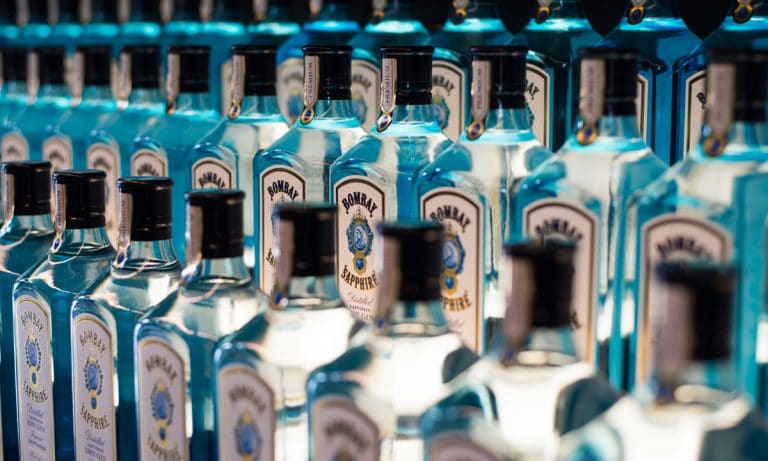
The study found that around 30 percent of Americans believe that alcohol is “very harmful,” while only 16 percent felt the same about marijuana – a plant that remains mostly illegal in the United States.

Most Americans are convinced that alcohol is more of a detriment to gears of civil society than marijuana, according to a report from global research firm DIG Insights.

The first ever Cannabis Culture Report finds that more of the population now has a relatively good understanding about how the federal government has bamboozled the people for decades with respect to the dangers associated with the cannabis plant. In turn, most of these folks are now convinced that it is alcohol that poses the real threat to public health and safety, and that all of this prohibition business has simply been a long con with a convoluted agenda.

Indeed, the population has become privy to what it means to ingest a harmful substance. The study found that around 30 percent of Americans believe that alcohol is “very harmful,” while only 16 percent felt the same about marijuana – a plant that remains mostly illegal in the United States.

“That was particularly interesting to us, just to see that a higher percentage of Americans think alcohol is very harmful compared to marijuana,” said Rory McGee, research director for DIG Insights, in an interview with The Daily Caller. “We’re certainly not commenting on what is and is not harmful, but those are the attitudes in America.”

What’s more is 51 percent said they were of the opinion that the consumption of marijuana could provide some level of benefit for the user. But there just doesn’t seem to be a quick remedy for the stereotypes that have surrounded the cannabis culture for all these years. The study shows that 32 percent of the population believes the nation’s 11 million daily pot consumers are destined to be less successful in life than their clean whiz counterparts.

Although marijuana is legal in over half the United States for a variety of purposes, the federal government has all but refused to change it stance on the issue. As far as Uncle Sam is concerned, anything derived from the cannabis plant is considered one of the most dangerous substances in the world – marking it as much of a scourge as heroin.

But very few are buying this nonsense these days.

Some of the latest federal data shows that alcohol kills around 88,000 people in the United States every year, while marijuana, according to the DEA, has never killed a single person.

Donald Trump Awkwardly Finds Out He Isn’t Invited To Royal Wedding

With Meghan Markle and Prince Harry’s upcoming nuptials fast approaching, everyone is speculating on who will make the guest list and if their favorite celebrity will make the cut. One person who hasn’t yet made the cut? Donald Trump.

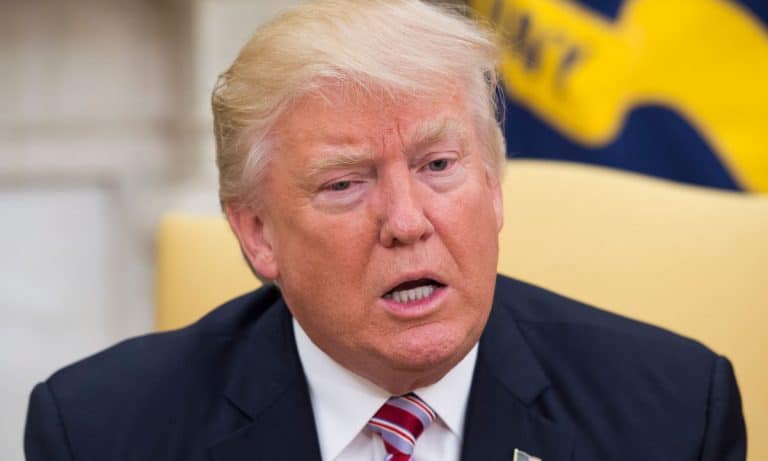
In an interview with Piers Morgan, Trump was asked if he had received an invite to the Royal Wedding. He responded, “Not that I’m aware of.”

Trump wouldn’t declare either way if he wanted to go. “I want them to be happy,” he said. “I really want them to be happy. They look like a lovely couple.”

Via AOL.com:

Morgan then brought up Meghan’s “misogynist” comments on Trump, which the president quickly dodged. “Well, I still hope they’re happy,” he returned, affirming his late mother’s love for the British royals.

“She had a love for the Queen. She had a love for the Royal family. She really respected the Queen, and she loved the pomp and ceremony. The fact is, she loved the U.K,” POTUS explained.

It’s been wildly speculated that Barack and Michelle Obama will be invited to the Royal Wedding, due to their close relationship with the Royal Family. When Newsweek inquired about the potential guest list, Kensington Palace spokeswoman Julie Barley replied, “We’re focusing on the happy announcement of their engagement,” and that invitations “will be announced in due course.”

5 Things You Can Do At Home To Avoid This Year’s Dreaded Flu

0

We’re experiencing the worst flu season since the swine flu of 2009.

During a recent news conference, Dr. Daniel B. Jernigan, director of the Center for Disease Control’s influenza division, says we can expect to see numbers similar to the 2014-2015 flu season, which claimed the lives of 56,000 people and sent more than 700,000 to the hospital.

So, how can you avoid getting infected? Getting vaccinated can help, but there are also things, easier things, you can do in your own home to help combat the flu virus. According to the Centers for Disease Control and Prevention, these five tricks will help you stay healthy.

1. Wash Your Hands

And wash them often. Use soap and water. And if that’s not available, use an alcohol-based hand rub.

https://giphy.com/gifs/ZNR4rzu5lLTkk

2. Disinfect

Clean and disinfect surfaces and objects that may be contaminated with germs like the flu. Wipe down handles, knobs and other surfaces that come into hand contact often.

https://giphy.com/gifs/nVGWFEWQjz5II

3. Don’t Touch Your Face

If you’ve touched an infected surface and then touched your eyes, nose and/or face, you likely contaminated yourself. This is how germs are spread. Also, this goes without saying, but don’t touch other people while you’re at it.

https://giphy.com/gifs/japanese-G6lZQA8DYTUZO

4. Toss Your Toothbrush

Once you’re infected, throw that petri dish in the trash. Flu, staph and strep live on toothbrushes, which are often damp.

https://giphy.com/gifs/two-night-stand-m6GToznGJN7DG

5. Stay Home 

Nobody wants to be around someone who is contagious. While staying home when you’re sick may seem like an obvious suggestion, not everyone does it. Heading into work is a good way to spread your germs and contaminate others. You’re better off quarantining yourself until you’re better. From the CDC: “If you are sick with flu-like illness, CDC recommends that you stay home for at least 24 hours after your fever is gone except to get medical care or for other necessities. (Your fever should be gone for 24 hours without the use of a fever-reducing medicine.)”

People Are Petitioning Meghan Markle To Do This One Thing For Them

When Meghan Markle deleted her social media accounts in preparation of her becoming a royal, you could almost hear the sobs of her fans. After all, she had nearly two million followers on Instagram and 350,000 on Twitter.

And now, according to Town & Country, a petition has been making the rounds urging Markle to GET BACK ON SOCIAL MEDIA!  I mean, it’s not like she has anything better to do.

As of press time, the petition has more than 4,500 signatures with a goal of 5,000.

The petition was started by Sabrina A., who, as Town & Country points out, also runs the website meghanmaven.com. Sabrina is kind of in a hurry because in order for Markle to reactivate her social media accounts, she has to do it, like, now.

Her petition reads: “Please let Ms. Markle keep the voice that inspired so many, by reactivating her social media accounts before 9 February, 2018, which is the 30-day mark when deactivated accounts are permanently deleted.”

But according to Popular Science, Twitter has a year-long timeline for holding onto Tweets for verified accounts, like Markle’s. For Instagram and Facebook, it might already be too late if Markle permanently deleted those accounts versus disabling them. However, it can take Facebook as long as 90 days to permanently wipe your data. After that, there’s no going back.

https://www.instagram.com/p/BeGjT31gJu0

If you’re one of those royal watchers who is eager to keep up with the Princess-to-be, you can follow her through the official Instagram account of Kensington Palace. Town & Country says it’s likely Prince Harry and Markle will want their own social media account to promote the charity work, so that’s something to look forward to.

Don't Miss Your Weekly Dose of The Fresh Toast.

Stay informed with exclusive news briefs delivered directly to your inbox every Friday.

We respect your privacy. Unsubscribe anytime.