Friday, May 8, 2026
Home Blog Page 1095

Marijuana Ads May Be Banned On San Fran Muni Buses

San Francisco may just so no to marijuana ads on buses. A proposal submitted this week to the San Francisco‘s Municipal Transportation Agency would “prohibit the advertisement of any material that constitutes commercial advertising of cannabis, cannabis products, cannabis businesses or cannabis services.”   

Currently, Eaze, a local cannabis company, is one of three cannabis firms that advertise on the city’s Muni buses. “We care deeply about our San Francisco community and are committed to being a good corporate citizen. We follow the regulations outlined by the SFMTA and will always do so,” Eaze CEO Jim Patterson said in a statement. But those regulations apparently will be changing soon. Eaze’s ad, seen on Muni buses across the city reads:  “Marijuana Has Arrived.” 

According to the mayor’s office, there are 130 cannabis ads on Muni property. Urban Pharm and Green Cross are the other two firms using the buses as platforms for their advertising.  Ads that have already been sold would be allowed to run on Muni.

“People have been disturbed by seeing ads about cannabis-related materials on a public transit system like Muni” said Paul Rose, the agency’s spokesman. The state and local regulations need clarity, so SFMTA has recommended a six-month ban, Rose said. 

San Francisco Mayor Ed Lee agrees with the ban. “We don’t need advertising to influence our kids,” Lee said. “I am urging the SFMTA Board of Directors to ban cannabis advertising on all SFMTA property, including Muni vehicles and bus stops. Prohibiting cannabis advertising on public transit is the right policy to protect our future generations and communities of color the same way we have done with alcohol and tobacco ads,” Lee added.

According to an SFMTA staff report,  the proposed ban is due to “uncertainty in the state and local regulatory environment for cannabis.”

Lawsuit Brings Florida To Task Over New Marijuana Law Delays

Bill’s Nursery in Miami-Dade and a Pensacola man who suffers from epilepsy, Michael Bowen, are suing several Florida state officials and the Department of Health over the fact that the new medical marijuana laws simply aren’t being implemented.

Florida legislature said that 10 more treatment center licenses had to be issued by October 3rd, but so far only six have been distributed. The DOH says they are doing everything they can to move the law forward, but…

“More egregiously,” stated the plaintiffs’ lawyers, “the DOH has no intention of complying with this mandate soon.”

The suit also states that the current delays are putting Bowen’s life in jeopardy and that, as he relies on medical marijuana to not suffer his severe seizure disorder. Bowen suffered a seizure during a Senate committee hearing earlier this year.

The challenge has an, “actual and present interest in ensuring an adequate supply of medicinal marijuana in the marketplace as determined by the Florida Legislature.”

Specifically, they are targeting the laws made in a June special session. Those include the ten licenses that have yet to be completely distributed.

Arguing that the few licensed distributors there currently couldn’t possibly grow enough strains to choose from for different medical conditions, and according to the Pensacola News Journal, “The DOH’s failure to license all 10 of the required MMTCs has therefore limited the available strains on the market and diminished patients’ ability to find strains that work for them.”

The lawsuit requests that the DOH give out the licenses “forthwith.” It also accuses the DOH, the Florida Surgeon General and Christian Bax, the director of the Office of Medical Marijuana Use of dragging their feet purposely. Bax had previously stated that they would not issue any more licenses while dealing with litigation revolving around licenses and discrimination.

It also seeks to put the DOH in violation of the Florida State Constitution, as it was a constitutional amendment that made medical marijuana a reality in Florida.

3 Breakfasts Recipes That Will Help You Lose Weight

0

While it may make sense to eat less food if you want to consume fewer calories, breakfast is a very important part of weight loss. That morning mean kickstarts your metabolism and allows you to lose pounds in a healthier way. The earlier your breakfast is the better, ideally eating 30 or 60 minutes after waking up, giving you more time to burn carbs and use those nutrients to your advantage. A smart breakfast will allow you to be productive during the day and to have energy so you can exercise accordingly.

Popsugar reports that the ideal healthy breakfast should have between 300 and 400 calories, containing healthy carbs like grains, veggies and fruits, and about 20 grams of proteins, which promote weight loss. Fiber, fats, and sugars are also recommended; these can be found in veggies, grains and different kinds of fruits. Some good ingredients that provide healthy breakfast nutrients are olive oil, almond butter, peanut butter and avocados. 

Check out these 3 healthy options for breakfast that’ll help you start the day off right:

Peanut Butter And Banana Toast

https://www.instagram.com/p/BbKal2UDFst/

This option provides healthy unsaturated fats, fiber and carbs. It’s also sweet and not boring, while at the same time providing the necessary carbs for a filling meal.

Ingredients

  • 1 slice hearty whole grain bread
  • 2 tablespoons all-natural peanut butter
  • 1 banana
  • Sprinkle of cinnamon

Contents

  • Calories: 395
  • Fat: 16 grams
  • Carbs: 52 grams
  • Fiber: 9 grams
  • Protein: 13 grams

Eggs And Toast

https://www.instagram.com/p/BbuI8oCgYNW/

By eating the right amount of eggs you’ll be limiting your cholesterol intake while also providing your body with a healthy dose of proteins.

Ingredients

  • 2 eggs, scrambled
  • 2 cups Swiss chard or spinach
  • 1 tablespoon chopped onion
  • 1/2 tablespoon olive oil
  • 1 slice of whole wheat toast
  • 1/2 cup blueberries or raspberries

Contents

  • Calories: 362
  • Fat: 19 grams
  • Carbs: 33 grams
  • Fiber: 6 grams
  • Sugars: 10 grams
  • Protein: 20 grams

Protein Smoothie

https://www.instagram.com/p/Bbud_xfDFQh/

  • Related Story: Here Is A Top Chef’s Recipe For Cannabis Brussels Sprouts

Protein smoothies are great for eating before or after workouts, providing protein for your body and helping you rebuild and replenish your muscles.

Ingredients

  • 1 scoop protein powder
  • 2 cups spinach
  • 1/2 banana
  • 1/2 cup frozen mango<!–span>
  • 1 tablespoon flaxmeal
  • 2 cups unsweetened vanilla almond milk
  • 3 ice cubes

Content

  • Calories: 330
  • Fat: 10 grams
  • Carbs: 35 grams
  • Fiber: 7 grams
  • Protein: 37 grams

How Science And Technology Will Make Growing Cannabis Better

In Canada and around the world, legal cannabis producers face many challenges: Varying government regulations, high security requirements and a lack of reliable information on how to grow their crops.

Growing cannabis has been illegal for so many years that scientific research on how to best produce this crop is limited. Much of the knowledge on how to grow cannabis lacks validation, is clouded in secrecy and is mostly connected to hidden and illegal production facilities of the past.

In contrast, researchers have been improving production practices for other crops, including medicinal plants, for decades, creating a large body of scientificaly validated information.

With changing government regulations in Canada, and the many medicinal benefits of cannabis, it is time to move the legal cannabis plant production industry into the realm of high-tech laboratories and scientific practices.

We must sift through accumulated grower knowledge, while publicly documenting and improving production practices. Evidence-based research will help growers produce more consistent, high-yielding and high-quality products and help inform policymakers as they regulate this industry.

As researchers who study how to produce high-value plants (e.g. medicinal, nutraceutical, edible and ornamental plants) under controlled environments — including indoor medical cannabis — we believe this will require collaborative research among cannabis growers and researchers.

Our lab at the University of Guelph is one of the best in the world for horticulture research, particularly for controlled-environment plant production. In recent years, we have been applying this knowledge to our collaborations with legal cannabis growers. With legalized recreational cannabis use on the horizon in Canada, more licensed growers are seeking this sort of expertise.

Current State Of Cannabis Production

Growing cannabis can be a lucrative business. Spending on legal cannabis in North American medicinal and recreational markets is projected to reach $21.6 billion by 2021.

In Canada, there are currently 73 authorized licensed medical cannabis producers, most of them large-scale producers. With the recreational use and sale of cannabis scheduled for legalization in our country next year, it is foreseeable that many more large-scale producers will enter the market.

In the past, indoor cannabis production was largely confined to smaller-scale operations. Under these conditions, growers accumulated enormous levels of knowledge and experience. But much was kept as trade secrets and most still need to be scientifically validated.

Even in today’s modern medicinal cannabis production facilities, growers are often reliant on online forums — so-called “grow guides” — and advice from salespeople for information on crop production. Without proper training, it can be hard to tell fact from fiction.

Looking To Decades Of Horticultural Knowledge

Humans have been growing plants in controlled environments for hundreds of years. Over the past 50 years, billions of dollars have been invested into this research field and an enormous amount of knowledge has been accumulated. Cannabis producers can dip into this knowledge pool by working with skilled researchers.

The production challenges facing large-scale cannabis producers will inevitably be like those producing other greenhouse crops, especially issues with nutrient and disease management. For example, large-scale plant production facilities use large quantities of fertilizers and water. If improperly disposed of, they could pollute the surrounding environment.

Growers may also decide to reuse their nutrient solution, but doing so risks spreading pathogens from one infected plant to the whole operation. Through collaboration with horticultural scientists, large-scale producers will have access to many different technologies and strategies to treat irrigation water for reuse or discharge. This will help combat potential problems.

Another example involves artificial lighting for plants. In the past, most operations were using high-pressure sodium (HPS) lamps as growing lights. HPS is not efficient in converting electricity to light for plant growth, and lighting is one of the major costs for indoor plant production.

Light-emitting diode (LED) technology) is rapidly developing, with dramatic increases in energy efficiency and decreases in price. LEDs can provide different light colours and spectral combinations as needed. Research tells us that we can use light color and intensity to steer plants to produce desired characteristics and chemical components. However, there is hardly any published scientific research on how to use this modern technology to produce high quality cannabis — information that cannabis growers certainly need.

Developing Government Policy

Public policy on cannabis has focused on public health concerns, the illegal market and taxation. With the opening of the recreational market and increased production, regulating production will also be important.

In the Canadian medicinal cannabis market, there are strictly enforced quality and safety regulations on products being distributed to patients. However, there is little guidance on production, other than to meet these standards. Governments will have to regulate production practices, with both producer and public interest in mind.

Unfortunately, reliable evidence-based research is lacking. As mentioned, the bulk of production knowledge is anecdotal and even secretive. It makes things difficult for policymakers charged with setting standards and policies.

The ConversationResearch efforts to scientifically improve, verify and document valuable knowledge on cannabis production will not only help growers, but also governments seeking to regulate and support this industry.

Dr. Youbin Zheng, Associate Professor, University of Guelph and Deron Caplan, PhD Candidate in Environmental Systems Research, University of Guelph

This article was originally published on The Conversation. Read the original article.

Reparative Justice: Old Marijuana Convictions Go Away In These States

America’s war on drugs has done a lot of damage — especially to people of color. Even as more and more states legalize the sale and use of marijuana, there are still hundreds of thousands of citizens trapped in a justice system.

Some states — notably California, Colorado, Maryland, New Hampshire and Oregon — are taking steps to erase some of the damage, according to a report by the Pew Charitable Trusts. The report examines how these states and others are allowing those busted for minor marijuana crimes to petition courts to reduce or hide their convictions. In California, state residents can now petition courts to change some felonies to misdemeanors, change some misdemeanors to infractions, and wipe away convictions for possessing or growing small amounts of marijuana.

“We call it reparative justice: repairing the harms caused by the war on drugs,” Eunisses Hernandez of the Drug Policy Alliance, told Pew. Some states are passing legislation that will seal records of past convictions or even expunge the crime from public databases. Massachusetts lawmakers are considering a bill that would let people expunge any conviction that’s no longer a crime, such as marijuana possession.

These steps are critical for those caught up in a system that targeted people of color, especially black Americans. With a drug conviction on their record, otherwise upstanding citizens were unable to procure housing, employment or student loans.

According to the Drug Policy Alliance:

President Barack Obama has granted 774 commutations. That is more commutations than the previous nine presidents combined and more commutations than any individual president in nearly a century.

The majority of people receiving commutations were convicted of drug offenses and sentenced to egregious mandatory minimum sentences. The announcement of commutations is commonly greeted with floods of adulation from media and advocates for fair sentencing that are laced with rhetoric calling America a nation of second chances. This conveniently frees policymakers and elected officials who stoked the flames of the war on drugs from accountability and places the onus to change on those who have been oppressed by life sentences in federal prisons due to draconian drug policy.

California has done more than any other state to require judges to excuse residents’ past marijuana crimes, Pew reports. That’s because the state took the issue to voters, Hernandez said. “Through the Legislature, we would not have gotten this.”

According to the Pew Report:

In states that have legalized marijuana, some lawmakers say reducing old marijuana-related convictions is a no-brainer. “Since this is now the law of Nevada, it’s important that we allow folks who have made these mistakes in the past to have their records sealed up,” said Nevada Assemblyman William McCurdy, a Democrat who proposed a bill on the issue this year.

McCurdy hails from a poor area of Las Vegas. He knows people who have been convicted of possessing an ounce or less of marijuana — formerly a misdemeanor — and who are struggling to overcome the black mark on their record, he said. “They’re labeled now.”

Almost half a million people were arrested for marijuana crimes in California over the past decade, according to the Drug Policy Alliance. But California courts have received only 1,506 applications for reclassifying past marijuana-related crimes since state residents gained the option to do so last year.

10 Types Of Marijuana That Will Fight Your Migraines

Know that there are multiple ways to consume marijuana, you can eat or drink it, rub it into your skin, vape, smoke and much more.

Migraines can ruin your life, just ask anyone who suffers from them. The headaches are one symptom of the syndrome that makes up migraines, the other prominent ones being nausea, muscle pain and insomnia. Luckily, there are natural ways to treat these symptoms, one of the best being marijuana and its super power, THC.

Know that there are multiple ways to consume marijuana, you can eat or drink it, rub it into your skin, vape, smoke and much more. Ask the budtenders at your local dispensary which products have the strains listed and then pick how you want to put it into your body.

Here are 10 types of marijuana that’ll kick your migraines’ ass:

Grapefruit

This delicious strain has tropical and fruity flavors that’ll make you feel relaxed, energeting and stress-free, the perfect remedy against migraine headaches.

Thai Lights

This sativa dominant blend has an earthy flavor and will leave your brain happy and buzzing in the best possible way. It’s also used for combating depression and powerful headaches.

Dirty Girl

This sativa dominant strain smells like sharp tropical and citrus fruits and will leave you feeling happy and creative. Dirty girl also battles symptoms of depression, anxiety and migraines.

OG Kush

https://giphy.com/gifs/season-4-the-simpsons-4×14-26tk0qF6x6B6HW8XS

As it’s name suggests, this strain is a classic that has survived the test of time and its perfect for when you need a reliable source of fun and pain relief. With it’s high percentage of THC, OG Kush will surely help you deal with your migraine symptoms.

Harlequin

This sativa dominant type of marijuana has a high content of CDB that’s perfect for treating all kinds of ailments, anxiety, and pain.  n>

Dream Queen

This type of marijuana earned its name due to the dreamy euphoria it produces. It’s also great for battling nausea, a common side effect of the most powerful of headaches.

Purple Kush

This pure indica strain comes from California and its characterized by a long lasting and amazing euphoria for your head and stress, sleeplessness and pain relief for your body.

Chocolope

With earthy and coffee-like flavors, chocolope is delicious and powerful, providing a dreamy and cerebral effect. It’s also a great companion to stress and depression

God’s Gift

https://giphy.com/gifs/morgan-freeman-OV606AIcx31za

Popular in California, this type of marijuana has a lot of different flavors that range from citric fruits to hash, with a strong THC content that’ll keep head and body pain away.

8 Crazy Guinness World Record Holders In The Intimacy Category

0

The Guinness Book of World Records has a lot of variety, ranging from incredible feats by Olympic athletes to the man who has the longest nails in the world (this is a FACT). It’s a book where all accomplishments are celebrated and there’s a certain level of equality and respect for one’s commitment to a cause, no matter how gross it is.

It is no easy path to set a Guiness Book of World Records.  Whether is it the most M&Ms to be eaten in one minute or most Rubik cubes solved on a skateboard, you have to have official proof and following their guidelines.

Here are some fun records that’ll rock your world and will make you feel like an extremely average human in comparison. Considering what you’re about to read, that’s a good thing.

Related Link: 7 Cringeworthy Sex Accidents That Defy Imagination

http://giphy.com/gifs/tom-hardy-DkVpNlNxe74Uo

The Longest Individual Session

Masanobu Soto from Japan made his country proud by masturbating for 9 hours and 58 minutes. He beat the previous world record – which was also his – by 28 minutes.

The Longest Kiss

On 2013, Ekkachai and Laksana Tiranarat from Thailand made out for 58 hours, 35 minutes and 58 seconds. That’s more than a day. These people didn’t sleep, didn’t eat, didn’t even take a bathroom break. They were awarded cash, two diamond rings and immortality in the Guinness Book of World Records. Talk about hard work.

Maximum Birth

During the 1700’s it was recorded that Ms Vassilyeva from a village in Russia gave birth to 69 kids. There were 16 pairs of twins, seven sets of triplets and four sets of quadruplets. WTF genetics?

Most Orgasms in an Hour

http://giphy.com/gifs/sad-tired-depression-35seD1RbLwkus

In 1966, doctors from the Center for Marital and Sexual Studies in California said that a woman enjoyed (did she, really?) 134 orgasms over the course of an hour.

Breast Size 102ZZZ

Nope, that is not a car plate. Annie Hawkins holds the record for having the largest natural breasts in the world. 

“It made me feel like a million bucks. It’s such an honor. This will go down in history. It’s something I’ll always cherish.”

That’s what she said when the Guinness World Records gave her the title in 1999. My guess is you can’t go onto Amazon and find a perfect fit bra this size.

World’s Biggest Orgy

250 men and women gathered in Japan to have sex at the same time and same place to create the world’s largest orgy. The whole act was choreographed so that couples were having sex at the same positions and at the same rhythm. The participants were all tested for STDs, because safety first.

Related Link: Study: Women Look At Porn On Their Phones More Than Men

The Longest Discharge

Horst Schultz achieved 18 feet and 9 inches (6 meters!). The ejaculation’s speed was of 42.7 mph. That kind of qualifies as an extreme sport.

The World’s Strongest Vagina

Tatyana Kozhevnikova owns this unofficial record (the Vagina Weightlifting category doesn’t exist at the Guinness World Records but just you wait) by being able to lift up to 31 pounds with her vagina. The video below shows her demonstrating her talents on “The Body Shocking Show.”

Marijuana Can Scrub The Brain Clean Of Alzheimer’s-Inducing Plaque

A first of its kind study, by the Salk Institute, shows that THC can reverse toxic plaque buildup in the brain and reduce inflammation, factors that are associated with Alzheimer’s disease.

The paper appears in the June 2016 issue of the upliftingly titled Aging and Mechanisms of Disease. Its senior author, David Schubert, is a 45-year veteran of Alzheimer’s research who has focused on the healing potential of natural products. And while his latest report ends with cannabis, it began at a very different—though no less aromatic—starting point: curry.

Schubert had observed that Alzheimer’s rates in India are unusually low, so he played a hunch that diet had something to do with it. Eventually his research turned to a synthetic drug named J147, which is derived in part from an turmeric, the major ingredient in curry powder.

In laboratory studies, J147 helped removed plaque;-forming amyloid beta proteins from brain cells and lowered inflammation, both of which resulted in less cell death. To his surprise, Schubert discovered that J147 was operating through the brain’s pathway of CB1 receptors—cells that normally respond to endocannabinoids, naturally occurring chemicals similar to the active ingredients of marijuana.

So Schubert and his team repeated essentially the same experiment, but substituting the souped-up turmeric with a number of cannabinoids. While most had some protective effect, THC was found to be the best at removing p beta amyloids before they got a foothold on the neurons. Moreover, THC completely prevented the production of eicosanoids—don’t zone out yet, we’ve almost run out of jargon—which are believed to cause the inflammation that, while meant to protect the brain cells from encasing proteins, may end up killing them over time.

It was already known that the CB1 receptors played some role in combating Alzheimer’s. Exercise, for example, both stimulates CB1 receptors and also slows the progress of the disease. Schubert’s findings might just have supplied molecular evidence that links the two.

Says Prof. Schubert, “We believe our study is the first to demonstrate that cannabinoids affect both inflammation and amyloid beta accumulation in nerve cells.”

Art Garfunkel Wrote This Bizarre Ode To Marijuana

Art Garfunkel is many things. He is singer, actor, teacher, poet, and overall folk legend. His career as wide-ranging and influential as it is, Garfunkel is a handful of artist who could release actually interesting memoirs looking back on their career.

What Is All But Luminous, Garfunkel’s recently released memoir, is in fact actually interesting, but not for the reasons you might expect. Instead of the typical shape a memoir takes—a discursive narrative that tracks an artist or otherwise important person’s life from beginning to end—Garfunkel collected various writing snippets, travel notes, and ruminations regarding his once collaborator Paul Simon.

The Stranger describes it as such: “Luminous lies somewhere between a mischievous subversion of rock star autobiographies and an ‘Oh, shit! My book’s due tomorrow!’ notebook scraper. There’s no shortage of poem fragments, sexual braggadocio, and reading lists, but every time he gets close to being fully interested in a perspective, he digresses. Also, it’s a bit hard to read because the font is a digital version of his handwriting.”

One highlight of those poem fragments includes an apparent ode Garfunkel wrote to marijuana. It regards the fleeting epiphanies one might have while consuming marijuana and melancholically wishing to recall them. It reads:

—The trouble with pot, said a doctor I know,
is: the insights, the color, quite wonderful—
are like fireworks…there and gone…
points in time…last year’s clouds

It doesn’t approach Tom Petty’s appreciation of marijuana, but it’s a good start.

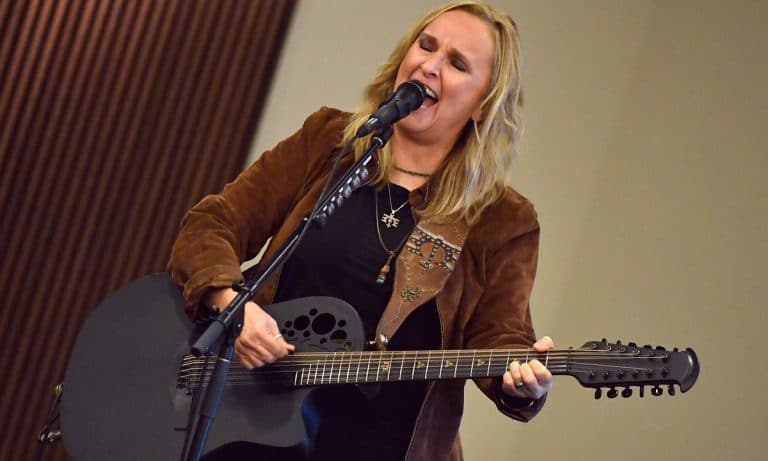
Melissa Etheridge Pleads Guilty To Marijuana Possession Charge

Back in October, Melissa Etheridge was busted for marijuana possession. As the Grammy-winning country singer-songwriter is an avid cannabis advocate, admitting to lighting up with her kids, this news shocked no one.

Border patrol stopped Etheridge’s tour bus, returning from Canada, and agents discovered marijuana oil aboard. Etheridge pleaded not guilty to the charges of possession at the time.

Now KYFR-TV is reporting that Etheridge will reverse course and plead guilty to misdemeanor marijuana possession charges in North Dakota. She will pay a $750 fine and serve unsupervised probation.

Thomas Dickson, Etheridge’s attorney, told the Associated Press the singer has a legal permit to use medical marijuana within the state of California. Should she meet the proposed orders handed down by the judge, the charge will be dismissed.

If Etheridge’s mug shot is any indication, it doesn’t seem like she’s sweating it.

Don't Miss Your Weekly Dose of The Fresh Toast.

Stay informed with exclusive news briefs delivered directly to your inbox every Friday.

We respect your privacy. Unsubscribe anytime.