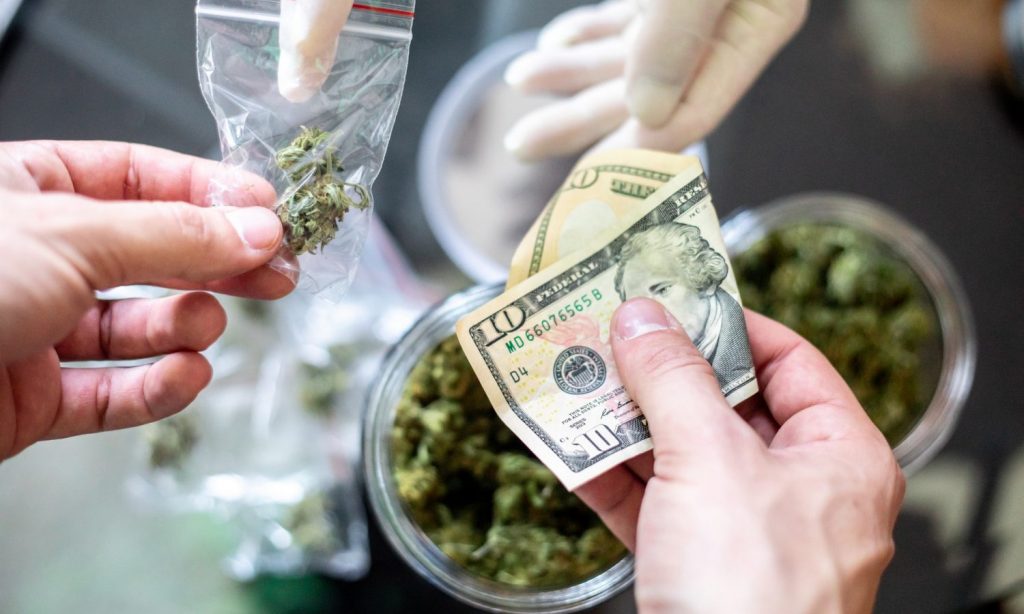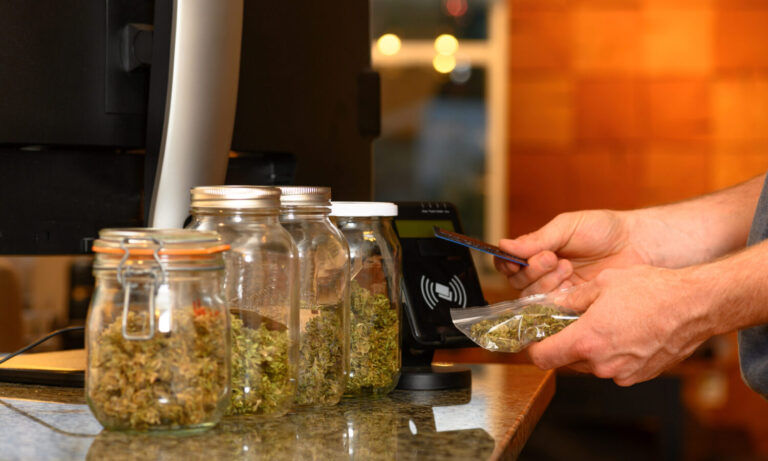
Cannabis sales in Canada totaled CA$382.4 million ($301 million) in December, representing an increase of 8.5% from November, according to Statistics Canada.
Sales were up 28.5% from a year ago, building on an increase in the number of stores and falling flower prices.
Hifyre IQ has estimated January sales to be 8% lower — 5.7% below the actual December level and up 29% from a year ago.
Ontario retailers sold the most cannabis, with sales rising 5% on a monthly basis and 68% year-over-year to CA$155 million.
In Alberta, Canada’s second-largest most populated province, cannabis sales increased 11% over from November and 3% on an annual level. Quebec’s cannabis sales increased 14% month-over-month and 9% year-over-year.
British Columbia saw a 510% growth in cannabis sales in December, compared to the month before, and 22% from a year ago.
Product Categories
Hifyre IQ estimated that product categories have seen a shift towards non-flower products, counting it at a record 30% in December compared to 28.5% in November.
Moreover, the data analytics provider projects that non-flower products decreased to 29.5% due to a reduction in the edibles category.
The bills aim to establish a Cannabis Control Board and create the Department of Cannabis Control for the daily oversight of cannabis operations as well as setting up various one-year business licenses.
“The Kentucky General Assembly finds and declares that it is in the best interest of the Commonwealth to legalize and regulate the possession, cultivation, production, processing, packaging, transportation, testing, marketing, sale, and use of medical cannabis and adult-use cannabis,” reads new legislation filed on Thursday by Kentucky Democrats to legalize cannabis sales to adults over 21, establish a medical marijuana program and expunge past convictions, reported Marijuana Moment.
The new bill would legalize possession of up to 1 ounce of marijuana in public and up to 12 ounces in a private space.
The bills, SB 186 and HB 521 sponsored by Senate Minority Floor Leader Morgan McGarvey, Sen. David Yates and Rep. Rachel Roberts, aim to establish a Cannabis Control Board and create the Department of Cannabis Control for the daily oversight of cannabis operations as well as setting up “various one-year business licenses.”
In a press conference, Rep. Roberts called the legislation a “comprehensive plan that Kentuckians deserve.”
McGarvey added that “Kentucky continues to fall behind in an area where we could be leading. It is 2022. It’s time we end the prohibition on cannabis in Kentucky.”
The Bluegrass State is already an important producer of hemp. According to the latest Hemp Report by the USDA, Kentucky has harvested approximately 1,400 acres of industrial hemp flora, with one of the highest yields per acre, about 2,000 pounds, only second to Washington state.
Highlights Of The New Bills
The Cannabis Control Board would be responsible for the oversight and regulation of the possession, cultivation, production, processing, packaging, transporting, marketing, testing, sale and use of cannabis products.
Moreover, the board would establish the number of licenses that may be issued within a list of 25 licensing categories, including cultivation, processing, and manufacturing; testing; retail sales; special events; on-site consumption; transportation; micro-businesses; and “any other category deemed necessary by the board” within the parameters of the new legislation.
In addition, the new legislation would expand funding for the treatment of substance use disorder and earmark a portion of local cannabis taxes to fund scholarship programs and grants for groups disproportionately impacted by the war on drugs.
If the bill is approved, it would establish separate licensing requirements for retail marijuana stores, marijuana testing, cultivation and manufacturing facilities.
A Delaware House committee has approved a bill that would allow adults 21 and older to purchase and possess up to one ounce of cannabis and five grams of cannabis concentrates, reported Marijuana Moment.
HB 305 filed by Rep. Ed Osienski (D) passed the House Appropriations Committee on Thursday. The Delaware Marijuana Control Act would regulate and tax marijuana in the same manner as alcohol. The new legislation would not legalize home cultivation and marijuana delivery services.
The legislation will create the position of Marijuana Commissioner who will establish health and safety regulations for marijuana cultivation and coordinate the Division of Small Business, Development and Tourism “so that potential businesses licensed under this Act have access to programs, particularly those that support small businesses owned by minorities, women, and veterans.”
If the bill is approved, it would establish separate licensing requirements for retail marijuana stores, marijuana testing, cultivation and manufacturing facilities. Licensing requirements would also differ between open licenses, social equity licenses and microbusiness licenses.
In addition, the bill would create the “Marijuana Regulation Fund” and the “Justice Reinvestment Fund.”
The Regulation Fund will consist of fees collected, penalties imposed, and taxes collected if the bill becomes an Act. It would create a “marijuana control enforcement tax on retail marijuana in the amount of 15%.”
Seven-percent of the tax revenue collected will be allocated to the Justice Reinvestment Fund, for projects dedicated “to improve quality of life for communities most impacted by the prohibition of marijuana and war on drugs era policies.
The legal market could also create more than 1,000 new jobs over five years if the policy is enacted, reported Marijuana Moment.
We may need more studies to back up the claims, but these recent findings join the many other studies showing that cannabis may be beneficial for preventing and treating diabetes.
While statistics say that men are more likely to get diabetes than women, when women do get it, the complications can be far worse than for men.
According to the Centers for Disease Control and Prevention (CDC), diabetes increases the risk of heart disease for women four times, and women have significantly worse outcomes from a heart attack compared to men. In addition, women are also susceptible to diabetes-related complications including depression, kidney disease, and blindness.
Photo by TesaPhotography via Pixabay
Now, a new study shows that when women consume heavy amounts of cannabis, it may help reduce the risk for diabetes.
The study, which was published in the journal Cannabis and Cannabinoid Research, was conducted by graduate students from the Texas A&M University School of Public Health, as well as a colleague at the Hofstra University. They looked at data taken from the National Health and Nutrition Examination Survey from 2013 to 2018 taken by around 15,000 participants. Most of the participants were white females, over the age of 40, and at least had graduated from college.
The researchers analyzed their cannabis use based on frequency and exposure. Light use was associated with smoking pot under 4 times a month, while heavy use was associated with those who consumed cannabis more than 4 times a month. Additionally, they checked their physician diagnosis for diabetes status, or checking their fasting blood glucose, plasma glucose, or hemoglobin A1C levels.
They found that the females who were heavy cannabis users had a smaller probability of having a diabetes diagnosis compared to the females who didn’t consume cannabis. Meanwhile, females who were light cannabis users were found to have no link to a diabetes diagnosis. When it came to the males, the researchers didn’t find any association between any cannabis use and diabetes.
Older Studies Show A Reduced Prevalence Of Diabetes Among Cannabis Users
There are older studies that support the hypothesis that cannabis use can be linked to a reduction in diabetes.
In 2012, a study published in the British Medical Journal found that adults who had a history of cannabis use had a lower prevalence when it came to type 2 diabetes. They were also found to have a reduced risk of contracting cannabis compared to people who didn’t have any history of marijuana consumption.
The researchers from the University of California, Los Angeles analyzed the link between cannabis use and diabetes mellitus (DM) for adults aged 20 to 59 in a sample of 10,986 adults. They grouped into non cannabis users, which made up 61% of the population; heavy users: those who consumed over 5 times in a month, light users: who consumed 1 to 4 times in a month, past cannabis users, which made up 30% of the population, and current cannabis users.
Before the results came out, the researchers already hypothesized that type 2 diabetes would be less prevalent in cannabis consumers since cannabis contains many cannabinoids that are anti-inflammatory and immunomodulatory.
Then they found that past and current cannabis users did indeed have a lower prevalence of diabetes, even after the researchers adjusted the results to compensate for social variables such as level of physical activity, ethnicity, etc. However, they didn’t find a correlation between other chronic disease and cannabis use. Additionally, past and current marijuana users reported that they were engaged in more frequent physical activity compared to nonusers though they also had higher triglyceride and total cholesterol levels.
“Our analysis of adults aged 20-59 years… Showed that participants who used marijuana had a lower prevalence of DM and lower odds of DM relative to non-marijuana users,” they concluded.
Photo by Towfiqu barbhuiya via Unsplash
“Prospective studies in rodents and humans are needed to determine a potential causal relationship between cannabinoid receptor activation and DM. Until those studies are performed, we do not advocate the use of marijuana in patients at risk for DM,” they warned.
In 2021, the results of a preliminary study revealed that CBD could be beneficial in reducing the glucose absorption from food, which then effectively reduces blood glucose levels. Before this study, the impact of CBD on alpha-glucosidase wasn’t really well understood. Alpha-glucosidase is an enzyme that helps the human body digest dietary carbohydrates as well as starches in order to produce glucose which the intestines then absorb, but this process causes a rise in blood sugar levels.
Individuals with type 2 diabetes are commonly prescribed alpha-glucosidase inhibitors, which work by slowing down the carbohydrate absorption in the small intestine. They then reduce blood sugar and insulin levels.
For the study, the researchers analyzed different CBD concentrations ranging from 10 to 1216 μM. They also studied the inhibitory effects of CBD using a yeast enzymatic assay together with molecular docking, and studied how stable it was in intestinal and gastric fluids through high performance liquid chromatography analysis.
They discovered that CBD has moderate inhibitory effects against alpha-glucosidase, and also found that it was stable in intestinal and gastric fluids. Additionally, they found that there was a beneficial association between high CBD levels with inhibiting alpha-glucosidase activity.
Why Cannabis May Work Well In The Fight Against Diabetes
We may need more studies to back up the claims, but these mentioned findings just scratch the tip of the iceberg when it comes to the amount of hopeful studies showing that cannabis may be beneficial for preventing and treating diabetes.
We already know that the endocannabinoid system among those who have diabetes or are overweight seems to be overactive, but consuming cannabis or CBD is a way to treat it and restore its balance.
As the cannabis market matures and comes online, sources tell Benzinga that equity and inclusion continue to lag and that industry efforts made in recent years often feel superficial.
Inclusion and Equity Still Lag
“The United States Cannabis Community has never made a legislative, ethical, or moral commitment to Black America,” said Scheril Murray Powell, Esq. at Doumar, Allsworth, Laystrom, Voigt, Adai, and Dishowitz LLP.
Powell, the Broward County Florida Medical Marijuana Advisory Board chairperson, calls for federal legislation to establish consistency in the market. She highlighted a range of critical parameters, including a non-vertically integrated marketplace, no license caps, community redevelopment provisions, license reselling scrutiny and bipartisanship.
Photo by Anete Lusina from Pexels
Roz McCarthy, founder and CEO of Black Buddha Cannabis and Minorities for Medical Marijuana, credits the progress made so far to the years of effort put in by advocates.
Had it not been the work of advocates from marginalized communities, McCarthy said, “I don’t think that cannabis as we know it would be working to create a more fair and equitable industry.”
Latoya Bellamy-Lockhart, VP of human resources at Jushi Holdings Inc said cannabis has been pitched as a remedy to past wrongs, primarily addressing adverse effects of the war on drugs while creating economic gains for marginalized communities. “In reality, it has cast a light on just how deep systematic racism runs through our country – we have failed to overturn draconian policies of the past.”
The sentiments are backed by years of industry data and reports.
A 2017 survey from Marijuana Business Daily noted that Black cannabis ownership was at 4.3%. The figures haven’t changed much since.
In a 2021 industry inclusivity report, MJBiz found that Black-owned ventures in Colorado (2.7%), Michigan (3.8%) and Nevada (5.1%) were vastly outnumbered by White-owned companies. Only Indigenous peoples saw less representation across the three states.
MJBiz reported that minority board representation declined from 28% in 2019 to 13.1% in 2021. Mack Audena, COO and managing partner for MBA Growth Partners said equity is crucial.
Photo by Priscilla Du Preez via Unsplash
He highlighted a February 2022 National Cannabis Equity Report done by the Minority Cannabis Business Association (MCBA) that aligned with Audena’s calls to lower entry barriers while addressing the lack of capital that Black and other minority-owned businesses receive. Audena said license caps and bans of the previously incarcerated also must be lifted.
While supporting inclusion, Audena said that non-race criteria, including veteran and socioeconomic status can also damage equitable efforts.
“All of these have good intentions and are meritorious, but they dilute the real social equity intent.”
Valda Coryat, CMO of Trulieve Cannabis Corp, supports removing barriers and calls for increased access to capital. “There is a growing need for professional support systems that provide help to minority entrepreneurs, and I would also like to see internships and co-op programs for minorities instituted within established brands and operators.”
On its investor website, the company’s diversity statistics include 42% minority workforce and 17% company leadership.
A National Rule Needed?
The MCBA notes that 15 of the 36 legalized medical use states have social equity parameters. Thirteen out of 18 adult-use states have done the same.
Amber E. Senter, chairman of the board and executive director of minority industry empowerment group Supernova Women advocates for equity regulations across California and noted that a nationwide model won’t work but that communication does. Senter commended Oakland and its Cannabis Regulatory Commission for listening to community feedback at monthly meetings.
“Oakland has been very intentional on making sure that they’re getting the feedback and hearing the operators’ issues,” Senter said.
While some progress has been made, many feel like the system is not creating an equitable marketplace. Still, success can come to a few.
“Even if systems aren’t set up the right way or the resources aren’t available…The chances are that some people like myself, I think in many ways are going to get lucky,” said Portland, Oregon-based cannabis brand LOWD CEO Jesce Horton, noting that luck begins with obtaining licensing in the space.
Photo by rez-art/Getty Images
Powell believes some discussions have highlighted promising inclusive regulations but often come up short when implemented.
“It is often the execution that falls short or the strategies of mainstream participants that the legislators did not anticipate which thwart legislative intent,” said the attorney.
Several sources believe that federal regulations would help create a national equity model.
“I hope that one day when legalization happens at a federal level, provisions are put into place to make sure that we don’t leave any man behind,” said Black Buddha’s McCarthy.
Advocates Picking Up The Slack
Until then, advocates and groups like the MCBA, M4MM and others push for equity and inclusion while holding companies accountable for their activity in the industry.
Minority cannabis advocacy group Cannaclusive has undertaken several endeavors recently, including Inclusivebase, a list of minority- and women-owned cannabis ventures, as well as The Accountability List, a living document tracking diversity, corporate social responsibility and other community efforts embarked on by cannabis brands.
DJ Howard, M4MM’s Florida state director, has an active hand in the Accountability List, including contacting companies, scouring social media, press releases and other materials to confirm findings.
Howard noted the importance of “making sure that we’re holding people and brands accountable for the work that they say they’re gonna do.”
As edibles continue to grow in popularity and more states legalize recreational weed, the need for quality culinary cannabis professionals will grow as well.
It’s safe to say the cannabis culinary palate has moved beyond brownies. In fact, the flavors and cuisine involving marijuana has become so exciting that several talented chefs have packed up their knives and left jobs at Michelin starred restaurants to pursue a life in culinary cannabis.
Accordingn to CNBC, edibles chefs normally make between $50,000 to $100,000 per year, depending on the experience level and job requirements. This salary range is similar to that of a restaurant chef. But unlike typical restaurants, which have faced a plethora of difficulties and red tape throughout the pandemic, the life of a cannabis chef seems to be infused with more opportunity every day.
In 2021, the documented legal sale of edibles continued to skyrocket, reaching almost$3.6 billion. This growth is expected to continue. “Sales of food and beverages infused with cannabis are expected to increase to an estimated 8.24 billion U.S. dollars by 2025,” according to Statista.
Photo by Steve Cicero/Getty Images
The market has grown so much that even higher education has grown hip to the developing need for cannabis chefs in the workforce. The American Culinary Federation (ACF) now offers a certificate that culinary students can earn in order to make them proficient in cooking with cannabis.
The “Specialized Certificate of Culinary Cannabis and Edibles” was created to prove that the chef possesses the “proficiency on the skills, knowledge and competencies for safely handling culinary cannabis and edibles,” according to the American Culinary Federation.
One of the biggest names in culinary cannabis right now is Andrea Drummer. This LA based chef is making waves and headlines with America’s first legal cannabis restaurant,Original Cannabis Cafe. This popular West Hollywood eatery “represents the first of what many potential legal cannabis cafes and lounges around the country could look like,” according toFood & Wine.
There is also great “side hustle” potential for cannabis chefs that can grow into blossoming businesses. The cannabis culinary world is churning out everything from private dinners to cannabis cookbooks, and the masses are biting.
Jessica Catalano is dubbed “the pioneer of strain specific cannabis cuisine,” and herwebsite goes in detail about the “hemptarian diet” she created. Catalano has turned legalized recreational marijuana into her culinary playing field – testing new waters and becoming successful in navigating these new waters. She has even published a popular cookbook “The Ganja Revolution: The Bible of Cannabis Cuisine.”
Chef Miguel Trinidad’s “99th Floor” is one example of a respected chef creating a lucrative side hustle by utilizing cannabis. The 99th floor is an exclusive private dinner club in New York City whosemission is “Destigmatizing Cannabis through the Universal Language of Food.”
99th Floor’sFacebook page also hints at a line of edibles that should be available in dispensaries soon. Now that New York has legalized recreational marijuana, chefs like Trinidad, who have been working with edibles and growing a local reputation, will have a leg up on the competition in this highly lucrative market segment.
The life of a chef is never dull, and thanks to legalized marijuana, it has become increasingly exciting in many states. As edibles continue to grow in popularity and more states legalize recreational weed, the need for quality culinary cannabis professionals will grow as well. Perhaps it is time to dust off that chef’s coat and get in on the ground floor kitchen.
A Senate committee in Hawaii passed a bill to allow people 65 and older to automatically qualify for medical marijuana, regardless of their condition, reportedMarijuana Moment.
The bill SB2718 would change the state’s existing medical marijuana law. Currently, only those with a debilitating medical condition can qualify for the program. The new bill would expand the scope of current law to include all seniors 65 and older.
The proposed Act acknowledges that medical cannabis has been demonstrated to positively help with often-recurring health issues, such as “insomnia, anxiety and stress”, “resulting in a better quality of life.” According to the lawmakers behind the bill, these problems have been “exacerbated by the pandemic, economic instability, and increasing uncertainty.”
The legislation passed the Senate Health Committee unanimously after the same committee approved a bill to set up a working group to study the therapeutic benefits of psilocybin mushrooms.
February brought good news for senior citizens who enjoy cannabis in the U.S. as well as for those who have not yet tried it.
On Tuesday, D.C. Mayor Muriel Bowser signed a bill into law that will expand access to the District’s medical marijuana program for people 65 and older. The bill establishes that applicants should be able to “self-certify that they will use cannabis for medical purposes in lieu of including a recommendation from their health care practitioner,” the administration said.
A new study shows that people with COVID-19 were more likely to develop a mental health condition when compared to people who never had the disease.
As the months and years pass, researchers are discovering more and more risk factors of COVID-19. A new study reveals that patients with the disease are at higher odds of developing a variety of mental health problems.
The study, published in the journal The BMJ, showed that the pandemic had an extra influence on mental health, aside from the expected stress of isolation and anxiety surrounding the disease. People who experienced COVID-19 showed higher odds of developing a mental health disorder when compared to people who never caught it.
The study was large, analyzing data of over 150,000 patients in the Veterans Health Administration. The only data that was analyzed was the one belonging to patients with no mental health diagnoses or treatment for at least two years before contracting COVID-19. Researchers found that patients with COVID-19 were 35% and 39% more likely to be diagnosed with depression and anxiety, respectively, in the months following infection than people who didn’t have the disease. Infected people were also 41% more likely to be diagnosed with a sleep disorder than uninfected people.
While most people who get COVID-19 won’t develop a mental health condition (only 4.4% and 5.6% of people in the study received diagnoses for a mental health condition), it’s still a connection between the two, one that should be paid attention to.
Other interesting results that are worth keeping an eye on include patients who had COVID-19 being more likely to turn to alcohol (20%), opioids (34%), and more for relief.
Odds are the majority of us experienced some mental distress during the pandemic. For some, coping with the disease responsible for the deaths of millions of people all over the world might have added some understandable extra stress.
A recent clinical trial conducted by Soroka University Medical Center and Israeli medical cannabis company Cannbit-Tikun Olam (TASE:TKUN) showed promising results, especially for treating post-traumatic stress disorder (PTSD), reported the Jerusalem Post.
Notably, a number of cannabis-medicated patients stopped or reduced their dosages of opioids by 52%, anti-psychotics by 36.9%, anti-epileptics by 35.7% and hypnotics and sedatives by 35.3%. Overall, over two-thirds of patients reported at least moderate improvement with no serious side effects, with 90.8% of treated PTSD patients being classified as therapeutic successes after six months.
Other benefits included a decrease in rage attacks, restlessness, nausea and sleep disturbances. Nearly half of the patients reported that their quality of life had improved during the time of treatment.
The study, conducted over several years, focused on 8,500 male and female Israelis, averaging 54.6 years old, using marijuana strains developed by Cannbit-Tikun Olam.
“In the past, we already demonstrated that treatment with medical cannabis products relieves symptoms and improves quality of life for patients,” said Lihi Bar-Lev Schleider the company’s head of R&D. “This is the first time that in-depth, organized and systematic analysis of a large amount of data on a very large group of patients was performed, and in which, without bias, the effect of the treatment for various indications was examined.”
In December last year, an exclusive and mutual collaboration agreement was signed by Cannbit-Tikun Olam and Teva Pharmaceuticals, wherein the former’s products will be distributed by the latter throughout Israel and the Palestinian Authority.
“The medical cannabis arena is developing and being professionalized at a dizzying pace in Israel, and there is more openness to it in Israel and worldwide,” Teva Israel CEO Yossi Ofek said.
“Today, it is clear to many in the pharmaceutical industry and in the medical community that the use of oils produced from specific cannabis strains may provide additional treatment options and respond to unmet medical needs of patients. I have no doubt that the medical cannabis oils Cannbit-Tikun Olam produces – according to Teva’s high quality and safety standards – will help us realize our goal of improving the lives of patients.”
The emergency legislation is meant to ease logistical burdens for medical marijuana patients and encourage people to get their cannabis from licensed dispensaries.
It is about to become much easier for senior citizens to register for medical marijuana in Washington D.C.
Mayor Muriel Bowser has signed a bill into law that will expand access to the District’s medical marijuana program in a series of ways.
Photo by rawpixel.com
For starters, people 65 and older can “self-certify that they will use cannabis for medical purposes in lieu of including a recommendation from their health care practitioner with their registration application as is required for all other applicants,” the administration said.
The law also extends the registration renewal deadline for other patients and creates a week-long medical marijuana tax “holiday” that happens to coincide with 4/20.
It is about to become much easier for senior citizens to register for medical marijuana in Washington D.C.
Mayor Muriel Bowser has signed a bill into law that will expand access to the District’s medical marijuana program in a series of ways.
For starters, people 65 and older can “self-certify that they will use cannabis for medical purposes in lieu of including a recommendation from their health care practitioner with their registration application as is required for all other applicants,” the administration said.
The law also extends the registration renewal deadline for other patients and creates a week-long medical marijuana tax “holiday” that happens to coincide with 4/20.
Senior Week is part of the Medical Marijuana Patient Access Extension Emergency Amendment Act of 2022, which Mayor Bowser signed into law last week.
There’s more: Patient and caregiver registrations issued through Sept. 30 will be good for two years, which is double the usual term; the registration fees are already waived through April 24 and medical cannabis products purchased at any of D.C.’s seven licensed dispensaries will be exempt from the 6% sales tax.
The emergency legislation is meant to ease logistical burdens for medical marijuana patients and encourage people to get their cannabis from licensed dispensaries, rather than the gray market vendors.