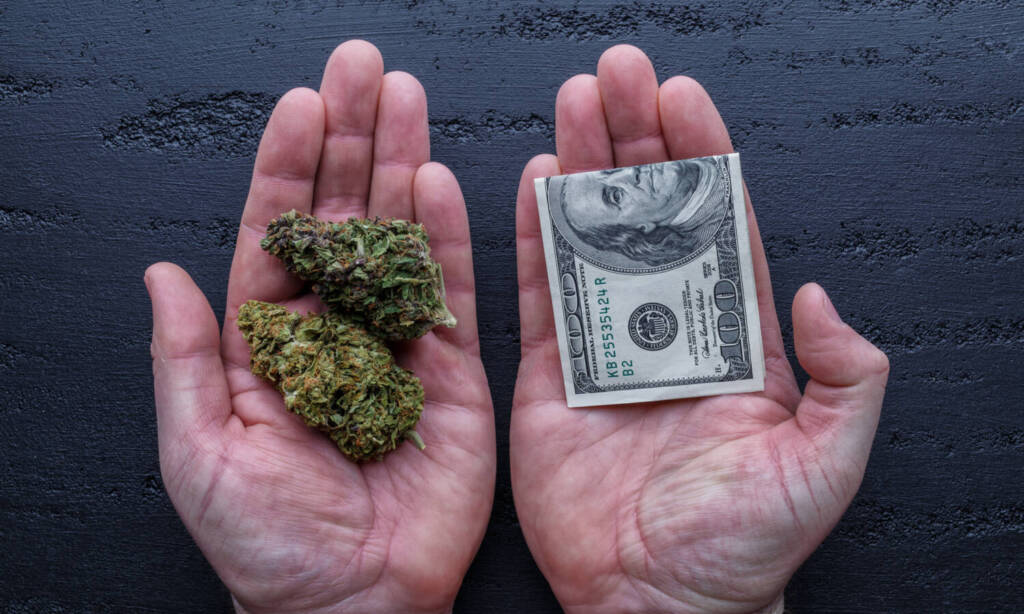
Meanwhile, several medical marijuana providers have openly complained that the state is taking too long to approve their requests to serve the legal market.
After missing a self-imposed deadline to open the state for legal marijuana sales, New Jersey Governor Phil Murphy (D) said the state is “within weeks” of having existing medical weed dispensaries sell recreational cannabis to adults 21 and older.
“If I had to predict, we are within weeks — I would hope in March — you would see implicit movement on the medical dispensaries, some of them being able to sell recreational,” Murphy said during his radio show on WBGO in Newark. “They’ve got to prove they’ve got the supply for their medical customers. I hope shortly thereafter, the standalone recreational marijuana operators.”
New Jersey voters overwhelmingly approved legalizing recreational marijuana in November 2020, but sales have not started after more than a year.
The New Jersey Cannabis Regulatory Commission (CRC), which is in charge of regulating the new industry, is still reviewing applications for licenses. The panel missed a self-imposed Feb. 22 deadline to open the state for adult-use cannabis.
So far, New Jersey has 23 medical cannabis dispensaries selling to the more than 120,000 registered patients in the state.
“One of the biggest deficiencies we’re seeing is a lack of municipal approval,” said Jeff Brown, head of the CRC at a meeting in January. “That’s an issue, and supply continues to be an issue. It’s the priority of the CRC to get recreational sales started as soon as we can, but we have to do it in a way that’s compliant with the law. We need the industry to get there.”
Meanwhile, several medical marijuana providers have openly complained the state is taking too long to approve their requests to serve the legal market. Some have even threatenedto lay off workers and destroy cannabis product if the adult market doesn’t open soon.
Because we can buy cannabis paraphernalia from the internet very quickly, people are wondering if subscription boxes are a worthwhile investment.
Smoking cannabis has recently become one of the most popular hobbies in many states. Like any hobby, equipment and accessories are necessary to enjoy cannabis use thoroughly.
This is particularly true if one wants to smoke cannabis outdoors, at a friend’s house, or even on the go. Unfortunately, as the industry is still growing, obtaining cannabis paraphernalia can be a hassle, and that’s precisely why there’s such a thing called smoking subscription boxes.
Photo by Prostock-Studio/Getty Images
What Are Smoking Subscription Boxes?
Smoking subscription boxes, or stoner boxes for short, are packages that consist of various smoking supplies. These may range from disposable rolling papers and snacks, to expensive, high-quality equipment like bongs and grinders. As you might imagine, the idea of receiving everything you need in one delivery seems very convenient and hassle-free, and indeed it is.
However, convenience is not the only advantage of smoking subscription boxes. The following are some other benefits of opting for stoner boxes over buying smoking supplies individually:
Pro #1: Products Are Generally Priced Below Retail Value
Yes, the contents of a smoking subscription box typically have a lower overall price than the retail value. Of course, some charge way above the usual price, but it’s a rare case.
Most packages have a price of around $3 to $100 a month, while their contents generally cost over $100 if you get them from a reseller. To explain further, here’s a closer look at the supplies you’ll get from smoking subscription boxes and their corresponding retail value:
Joints, Blunts, and Spliffs
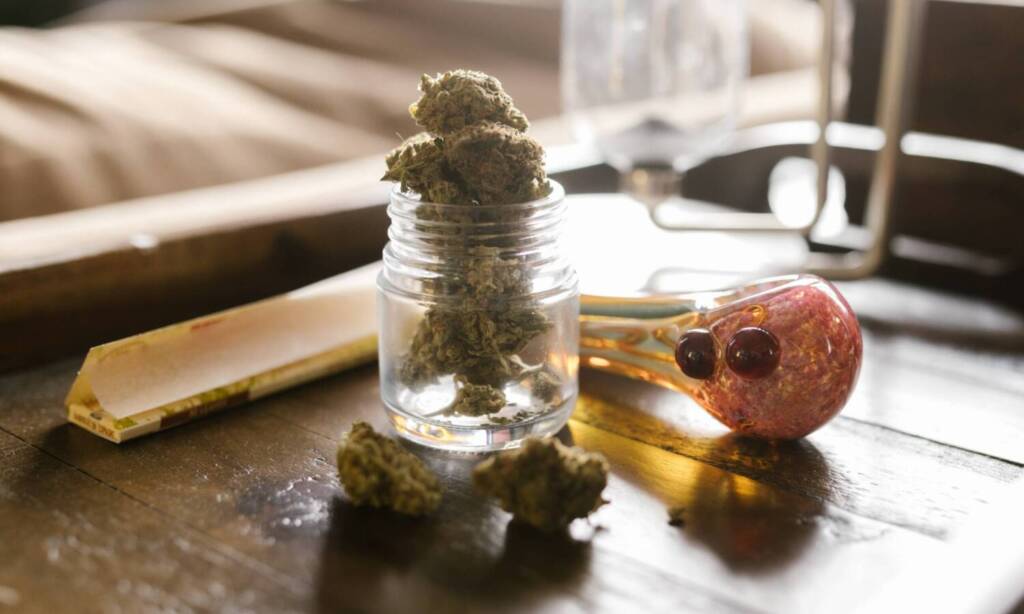
It’s no secret that joints, blunts, and spliffs are among the essentials of smoking cannabis. These are rolled papers that allow you to smoke cannabis directly.
Joints use tobacco paper, blunts use cigar paper, and spliffs are similar to joints, except they’re combined with tobacco leaf. They come in different shapes and sizes, though they typically cost $1 to $3 a pack. Most smoking subscription boxes that cost around $3 will have a couple of packs included in the package.
Ceramic, Glass, and Plastic Pieces
Ceramic, glass, and plastic pieces are similar to joints, blunts, and spliffs in that they also allow you to smoke cannabis directly. They also come in different shapes and sizes.
Photo by RODNAE Productions from Pexels
However, they’re much more expensive, with a retail value of $10 to $50. While you’ll rarely see these in a $5 subscription box, packages with a price of $10 and more should come with a couple of these pieces.
Bongs
A bong is essentially a type of cannabis glass paraphernalia but with a much more complex mechanism. It has a small bowl where you store the dried weed.
Upon lighting up the device, the smoke rises, which you can then inhale. Due to its relatively complex structure, bongs cost around $50 to $100. Surprisingly, stoner boxes with a price tag of less than $100 often include a bong, although it usually only comes as part of the subscription plan’s first-month package.
Bubbler
Bubblers are the more portable and lightweight version of bongs. The low-quality ones can cost as little as $10, while high-grade bubblers can be as expensive as $200.
Similar to bongs, they can come as part of packages that cost USD$100, but you can also find bubblers in subscription boxes priced at $10 to $20.
Grinder
Grinders are yet another essential accessory for when one wants to smoke cannabis. It’s a device normally made of metal or wood that breaks up the cannabis into a powdery substance, which allows you to roll or pack it into a joint, blunt, or spliff.
There are several types of grinders. Plastic and acrylic grinders can cost up to $15, electric grinders can be as high as $50, and metal grinders can cost up to $40.
You can find decent grinders included in $10 to $50 stoner boxes.
Vaporizers
Unlike grinders, vaporizers take concentrates rather than powder. It comes in various sizes, and you might be familiar with its smaller version called vape pens.
Vaporizers have gotten more popular recently, so there’s a good chance you’ll receive one if you ever opt for a smoking subscription box. Disposable vaporizers cost $5 to $10, and you’ll often find these in subscription boxes costing $10. However, some providers include vape pens in their $50 packages.
Photo by Jon Cartwright/Getty Images
As you can see, you can get more value from smoking subscription boxes as opposed to when you buy smoking accessories and supplies individually from resellers. Additionally, getting a subscription box is usually done online, so you don’t have to go to a physical store every time you need to restock.
Pro #2: You Don’t Have To Go On A Trip
Most smoking subscription box providers have a website where you can pay for their services.
Once you do, they’ll deliver the boxes to your home, meaning you no longer have to go on a trip to your nearby gas station whenever you want to restock on rolling papers.
The same goes for when you broke or shattered one of your glass pieces and want to buy a replacement. In a way, it also saves you money by cutting down on your gas expenses.
Pro #3: Pricing Is Typically Flexible
When you look into the website of a smoking subscription provider, you’ll find that they have two payment models, and as always, each option has advantages and disadvantages.
Here’s a closer look at what each model entails:
Monthly Subscription
The first one is a monthly subscription wherein you pay a certain fee every month, and they deliver the box or package to your front door regularly. Note that the frequency is not necessarily monthly, as some providers may deliver twice or thrice a month. With this model, you can collect coupons that can lower the costs of future packages.
One-Time Subscription
The second payment model involves a one-time payment that is usually more expensive than the fee in a monthly subscription. However, the box contains more items that generally cost more. With this model, you can get everything you need at once, and if you ever need to restock on supplies, you can always transition to a monthly subscription.
Pro #4: Customization Is Possible
Some experts argue that while it certainly is convenient and affordable, consumers have no control over what they can receive in their smoking subscription boxes, which is a considerable disadvantage. However, it’s worth noting that certain providers offer multiple options to their customers. Daily High Club, for example, offers several subscription options, such as:
Connoisseur V2
El Primo
RAWsentials
Therefore, while it may not be fully customizable, it is still possible. For example, you can choose between a box that contains glass pieces or a box with rolling papers.
You have to remember, though, that not all subscription providers offer multiple options.
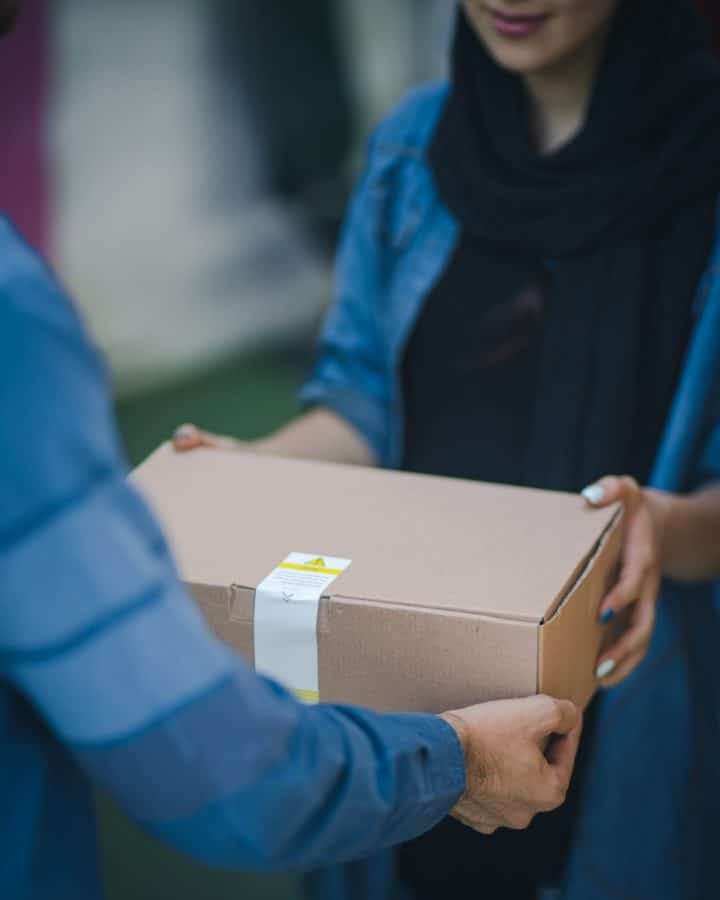
Pro #5: Shopping Is Discreet
Cannabis has always been a controversial topic in many industries. That’s why smoking weed in public will almost always guarantee that you’ll catch the attention of passersby.
The same goes for when someone delivers your cannabis paraphernalia at your front door.
Photo by RoseBox رز باکس via Unsplash
With smoking subscription boxes, you don’t have to worry about that. Usually, when you receive the package, the box has no distinct features that will point toward it being a cannabis accessory. Instead, most stoner box providers use packaging that looks as simple as possible, meaning you can shop for cannabis paraphernalia discreetly using this method.
Pro #6: You’re Always In For A Surprise
The best smoking subscription box providers hand-curate each item in their packages, meaning the contents of your boxes will often be unique and valuable.
Most importantly, because the contents of the box change every month, you’re always in for a surprise. While it may not be economically beneficial, there’s a charm in having no idea what you’ll get from your packages. After all, that’s the main point of subscription or mystery boxes.
However, as you might imagine, this can also lead to dissatisfaction, especially if you’re hoping to receive a particular item but did not.
Meanwhile, subscription boxes also have their disadvantages, including:
Con #1: Contents Might Not Be What You Need
Stoner boxes might be a worthwhile investment if you want to experience the sheer thrill of surprises. It’s not ideal if your objective is to get a specific item, and for several reasons.
One, subscription boxes are designed to provide consumers with a steady stock of smoking supplies. Thus, if you want to get a specific glass piece, you need to wait until the provider decides to include a glass piece on the package. If you don’t get it from the first delivery, you’ll have to wait at least several weeks to get it from the next package, which can be frustrating.
In short, smoking subscriptions are excellent for restocking smoking supplies but not for shopping accessories. On the bright side, certain subscription services offer different frequency options.
Examples of such options include monthly, bimonthly, biweekly, or quarterly.
Con #2: Getting A Fake/Counterfeit Product Is Always Possible
The cannabis industry is growing at a fast pace. While it is indeed beneficial both for consumers and entrepreneurs, this rapid growth also comes at a price. For starters, scammers are becoming rampant in the industry as they attempt to capitalize on the popularity of cannabis by selling fake or counterfeit products. The same issue exists within the subscription service market.
The good news is that smoking subscription services are safer compared to other markets in the cannabis industry. This is because they typically follow strict quality policies and protocols.
Moreover, it’s advisable to check if the service provider allows refunds and returns because suppliers of fake or counterfeit products don’t offer that feature.
Con #3: May Include Too Many Filler Items
Many subscription service providers include too many filler items in their packages. Filler items refer to products like stickers, mugs, and other things that aren’t necessary for cannabis use.
Granted, you might be getting these items for a lower price, but if you don’t need them anyway, then you’re essentially throwing money down the drain. On the bright side, there are still a few brands out there that don’t use this tactic, but it’s a matter of whether you can find them or not.
Photo by David Malan/Getty Images
FAQs
If you have other queries concerning smoking subscription boxes, here are answers to the most frequently asked questions by consumers:
Do smoking subscription box providers ship internationally?
It depends on the service provider. Some do, while others don’t. Those that do are likely to bill their customers in US dollars, regardless of your location.
Can you return or get a refund on your orders?
Again, it largely depends on the service provider. However, if they do allow refunds, you should send your request before the box has been shipped. As for returns, subscription service providers typically only allow it if the package is untouched or defective. You may also have to wait several days for the return, refund, or replacement.
How can you get a discount from these providers?
It was mentioned earlier that you could get discounts from subscription service providers. Usually, you must be a regular on a specific provider to be eligible for these discounts.
Do subscriptions renew?
If you use a credit card to pay for the transaction, the subscription is renewed automatically. However, in the case of a direct transfer, you need to renew manually.
Can you get cannabis from a subscription box?
Smoking subscription boxes do not include the actual cannabis for legal reasons. It only contains accessories and other smoking supplies like rolling papers.
Because one can now buy cannabis paraphernalia from the internet very quickly, people are arguing whether smoking subscription boxes are a worthwhile investment or not.
If you’re like everyone else, it may have crossed your mind that it’s not worth its price. With this guide, it should be apparent that smoking subscription services have their own charm. Besides, your decision will depend on whether it’s up to your preferences or not.
In Ireland, people with chronic pain are seeking legal access to medical cannabis, arguing that the current scheme is too restrictive.
Ireland’s medical marijuana program has only three qualifying conditions: plasticity associated with MS, nausea associated with chemotherapy and treatment-resistant epilepsy.
Photo by George Hodan via publicdomainpictures
What About Us? Campaign
Advocates suffering from chronic pain have launched the ‘What About Us’ campaign outside Leinster House, the seat of the Irish parliament in Dublin.
Supported by People Before Profit parliament member, Gino Kenny, the group is calling on the Department of Health to expand the use of medical cannabis to include those with chronic pain. “The program is too restrictive; it’s only benefiting a handful of people. We think it’s not fit for purpose, so it has to expand,” Kenny said.
Amy Brown, 29, was among those who gathered outside Leinster House. Brown told the RTE, local news, that she suffers chronic pain from endometriosis and the only effective relief for her is cannabis.
“I’m in agony today. I feel like there’s a screwdriver being twisted right above my left rib. I was actually getting sick in the car on the way up here…”
Brown said she wants cannabis to be made available for medical use because buying it illegally leaves her vulnerable to buying a bad or ineffective batch and also supports criminality.
Dr. Russell Banta, a researcher in chemistry at University College Cork, also traveled to Dublin for the demonstration. A cycling accident four years ago left him with dental, facial and neuropathic pain.
“If I could just go to a doctor and get a pharmaceutical-grade prescription and be monitored on it and find a strain that works best, that’s not psychoactive. I can just take a pill in the morning and go about my day, that’s the dream,” said Banta.
Photo by Roxana Gonzalez / EyeEm/Getty Images
Professional Support
Dr. Garrett McGovern, an addiction specialist at the Priority Medical Clinic, voiced his support for the expanded use of medical cannabis.
“There’s very little good quality research over here because the drug is illegal so, you know, we can’t have it both ways. We can’t say that there’s no evidence and on the other hand not invest in cannabis research. We have to find out both the positive and negative effects of this drug,” he said per RTE.
Benjamin Jenner shared a TikTok of his paralyzing cannabis experience with edibles. The video quickly went viral.
An Australian man was left paralyzed after eating an edible in Amsterdam, and now, millions of people know the story. Benjamin Jenner uploaded a TikTok video featuring a photo of him passed out in bed, looking petrified.
According to Jenner, he couldn’t feel any part of his body after consuming an edible, as if he were “sinking into a bed.” He discussed his experience from 2018 when he was backpacking through Europe and made a stop in Amsterdam. It was there where he bought a pot brownie.
“I had never tried marijuana as a joint or a brownie before as it’s illegal here in Australia so I definitely wanted to make the most out of my holidays by trying one,” he said. “I was only told to try a small section but it wasn’t kicking in, and because I don’t understand limits I naturally just ate the whole thing because it was so dense and nice, which was a big mistake.”
Situations like this are the most common amongst edible newbies, who think the initial portion they took is not enough to provide any effects. Edibles are absorbed through the stomach lining, a process that can take a few hours to experience.
“I felt like I was sinking into the bed and the mattress was swallowing me whole. It was so bad. I had my eyes closed and I genuinely could not move any part of my body even though I was conscious. I knew in my mind that I was clearly high, but my brain could not register to move any part of my body,” he continued.
According to Jenner, his TikTok prompted a surge of responses from people, who laughed and said they’d experienced similar things.
Edibles are finicky, taking their sweet time to kick in. Once consumed, the edible must go through the digestive tract and then be broken down, with some parts absorbed in the liver. It can take an hour or two for your digestive system to break down the edible, making it very common for people to overdose on them.
A new study shows that vaping can be harmful for people’s mouths, triggering gum disease and the production of bad bacteria.
Smoking has never been associated with positive oral health, but a new study, examining the relationship between vapes, cigarettes, and oral health, found that the habit can contribute to gum disease.
Published in the journal mBio, and conducted by researchers from New York University, the study found that people who vape have a unique oral microbiome that is different from nonsmokers and traditional cigarette smokers.
The study was conducted on a group of 87 people who smoked, vaped, or smoked regular cigarettes. Participants went to the lab to have their mouths analyzed twice, with their sessions occurring six months apart. Researchers took saliva samples and looked into the possibility of gum disease.
Researchers found that most people showed symptoms of gum disease, as everyone does after the age of 30, but that people who vaped showed evidence of “clinical attachment loss.” This is a symptom of gum disease where there is a separation between the gum and the tooth, creating pockets where bacteria can hide and thrive. In terms of microbiomes, vapers had a more similar environment to smokers, but also had bacteria like TNFα, known for causing inflammation and being linked with diseases like Alzheimer’s, depression, and more.
Deepak Saxena, one of the lead researchers, spoke with Interesting Engineering and discussed the findings. “Our thinking was that the microbiome [of e-cigarette users] will be similar [either] to the combustible cigarette users or to the non-smokers,” he said. This wasn’t the case. The study shows vaping creates a unique environment for bacteria, one that could affect people’s health in the future in ways that are not yet known.
While vaping and smoking are harmful to our health, the problem with vaping is that it’s an activity limited to mostly young people. Vaping has been marketed as a healthier alternative to cigarettes, touting the fact that it’s vapor and not smoke. But the truth is that these devices haven’t been around all that long, and there’s no way of knowing their long-term effects.
The South Dakota Senate green-lighted bills to legalize and tax marijuana as well as provide for expungements for low-level cannabis offenses, Marijuana Moment reported.
Sponsored by Sen. Michael Rohl (R), lawmakers advanced SB 3 in an 18-17 vote, late Wednesday. The measure cleared the Commerce and Energy Committee last week and is now heading to the House.
Photo by Bet_Noire/Getty Images
What’s In It
Once enacted into law, the bill would allow adults 21 and older to purchase and possess up to one ounce of cannabis from licensed retailers.
The proposal would not permit home cultivation that was on a ballot measure for which activists have been collecting signatures.
Voters in South Dakota approved legalization during the 2020 elections. However, the reform was canceled by the state Supreme Court following a challenge from Gov. Kristi Noem’s (R) administration.
According to Circuit Judge Christina Klinger’s ruling from last February, which Supreme Court backed, the initiative violated the requirement that constitutional amendments can deal with just one subject.
Under the new proposal, the state’s adult-use program would be regulated by the state Department of Revenue, which will also put rules related to issues such as transportation and registration into effect.
Local municipalities would be able to opt out of allowing cannabis businesses within their jurisdiction. In addition, those with a past felony conviction would not be allowed to hold a cannabis business license.
The licensing provisions of a separate bill, SB 150, which would take effect only if voters approve legalization at the ballot, would make it so that only existing businesses that currently hold liquor licenses would be eligible to enter the marijuana market.
Photo by powerofforever/Getty Images
“While we prefer the framework of SB 3, we were very pleased to see both SB 3 and SB 150 pass the Senate today,” Matthew Schweich, director of South Dakotans for Better Marijuana Laws (SDBML) told Marijuana Moment. “We are now one step closer to reaching a compromise and enacting a legalization law through the Legislature this session.”
Expungement & Tax Bills
On Wednesday, another measure to allow for automatic expungements five years after a person’s conviction for low-level marijuana offenses also advanced through Senate.
In addition, a Senate bill poised to set up a tax system for a regulated marijuana market also passed. The vote scheduled after the legalization and expungement measures was initially delayed due to the member’s motion to reconsider the approval of SB 3. The lawmaker did not insist on pressing for a revote after all.
The measure sets a 15% excise tax on marijuana products, with revenue going to a cannabis fund that would be subject to appropriations “through the normal budget process,” the text of the bill states.
Recreational Cannabis Still Off Limits
In the meantime, a bill intended to establish a tax policy if recreational marijuana became legal was rejected on Tuesday by the House. The bill that would set an overall 15 percent tax on cannabis was prescribed under the voter-approved 2020 initiative passed by the South Dakota House Taxation Committee last week.
Despite this setback, activists optimistically highlight that passing SB 3 to enact the broader reform is more important.
Noem told reporters last week that she’s” never been supportive of recreational marijuana,” but it’s a “debate that people in South Dakota are having.”
“There’re recreational bills here in the legislature that could be improved,” she said. “We’re talking about that.”
Recently, there have been two stories that came to my attention involving the police and drugs. The first is about a MET police commander, who wrote drug enforcement strategy, who took cannabis, LSD, and magic mushrooms. He is now facing “dismissal” due to his misconduct. The second story is about a Texas State trooper that was caught vaping a confiscated marijuana pen in his vehicle. All caught on dash cam.
Both of the individuals in question will either be disciplined or discharged completely.
Photo by Jose Maria Hernandez/EyeEm/Getty Images
While some were quick to chastise the officers in question, I thought to myself, “They totally should be taking psychedelics and cannabis!” In fact, I believe if this was adopted to a higher degree, we would probably have much better “police-citizen” relations.
This article will walk through my argument for why the police SHOULD be allowed to consume cannabis and even psychedelics, and why it would provide a net benefit to society.
The Job Is Dangerous
When you could be gunned down for simply putting on your uniform, life can be stressful. In fact, the position of “police officer” is often in the top 10 of most stressful jobs. Unfortunately, cops aren’t known for their “destressing” tactics and if we were to look at how the movies portray them, they are typically disgruntled alcoholics trying to drown out all the negative thoughts. Of course, this is not true for all the police, but it’s fairly safe to say that most cops don’t take too much care of their own mental health unless it’s required from them.
Furthermore, when you constantly live in a state of perpetual fear, you would begin to display some form of hostility towards the people you’re supposed to protect. If you don’t know whether the next person you stop has a gun or not, you’d be dumb to not be cautious. However, staying in this perpetual state of distrust negatively affects your responses. It’s the reason why so many unarmed individuals have been shot for holding a cellphone or something similar.
Overtime, a lack of sympathy and a sense of self-preservation might take root in the mind of the officers and when this happens, they are no longer effective deterrents of crime but rather another “element” the average person has to watch out for.
Most Cops Have Undiagnosed PTSD
While most people associate PTSD with a specific traumatic experience, the police suffer from a different kind of PTSD — cumulative PTSD. Police1.com explains this phenomenon:
Cumulative PTSD can be even more dangerous than PTSD caused from a single traumatic event, largely because cumulative PTSD is more likely to go unnoticed and untreated. When a catastrophic event occurs, such as an officer-involved shooting, most departments have policies and professionals to help an officer address and deal with the aftermath of an event.
However, the build-up of events that arise throughout an officer’s career generally do not warrant such specialized attention. As a result, an officer with cumulative PTSD is less likely to receive treatment.
In other words, due to “micro traumas”, many police officers are suffering from a form of PTSD which in turn affects their behavior. They become jittery, they make snap judgements and typically approach situations with a baseline thought that the people they are dealing with are “out to get them”.
Considering that these officers are meant to keep the public “safe” from criminals, it’s not ideal that they fear the interactions with the average citizen. This is why cannabis might be an ideal solution.
Photo by Felix Koutchinski via Unsplash
Cannabis For Cops!
Cannabis has shown to be effective in mitigating symptoms of PTSD and in some cases, help victims return back to a baseline of normalcy. The Veteran of Foreign Wars talks about a study that was regulated by the FDA:
Over the course of a year, the study found that cannabis users reported a greater decrease in the severity of their PTSD symptoms. They also were more than 2.5 times as likely to no longer meet the diagnostic criteria for PTSD as those who did not use cannabis.
While this might not completely remove the instances of PTSD, it does seem like a good way to deal with the underlying symptoms, especially for those undiagnosed with cumulative PTSD.
The fact of the matter is that cops need to have a means of “disconnecting” from the job. The “job” is an all-consuming position that can have corrosive effects on the individual. It reduces their ability to think critically and makes them less effective in doing their jobs correctly.
Therefore, while you can’t force cops to consume cannabis, you should at the very least give them the ability to use it as opposed to self-medicating with alcohol. Couple this with therapy and you may have a police force that works with its citizens as opposed to a force that fights the population.
Mushrooms For Cops
Cannabis is powerful against PTSD, however, psilocybin could completely break their PTSD cycles. Of course, in the case of the police, you don’t want to have cops tripping on shrooms on the job. But perhaps, after each month or quarter you could have a psychedelic assisted therapy session to deal with all of the accumulated trauma collected throughout the month.
Additionally, psilocybin makes you become more empathetic. In the end of the day, you want a police force that doesn’t just “enforce the law”, but guides citizens to be the best they can be according to the law. This means, being able to let someone go for smoking weed or doing drugs, especially if there is an apparent lack of violence.
In order to discern, the cops will need to have empathy. Psilocybin could help with this.
Photo by Sven Mieke via Unsplash
Yoga, Meditation, Breathwork For Cops!
The previous two options relied on drugs to help with the PTSD. However, perhaps – at the end of each work day, cops should be required to do at least 30 mins of breathwork, meditation, or yoga in order to deal with the things they face on the daily. These practices have been known to reduce stress and depression and thus, we should place an emphasis on the mental health of officers. This is the least invasive way for cops to work with their mental health issues.
Conclusion
I’m probably one of the people who is most “F&$# the Police” you would ever meet, however, I do think that we shouldn’t look at life as “black and white”. The police, ultimately, are working to protect those that cannot defend themselves. They aren’t the enemy, but after prolonged mental health stress, they could conclude that you are.
Helping cops deal with their stress and PTSD will provide a net benefit to society at large.
With states reaching different conclusions on the same question, the U.S. Supreme Court is now asking the top Justice Department lawyer to submit a brief.
The number of states where medical marijuana is permitted is nearing 40, with legal recreational cannabis also becoming more and more widespread. Nevertheless, the issue of workers’ medical marijuana compensation for injured employees is being approached from various angles, not unlike the United States’ patchwork of cannabis regulations.
The main setback in cases of employees seeking workers’ comp for medical cannabis expenses after being injured on the job is marijuana’s Schedule I status under the federal Controlled Substances Act (CSA).
With states reaching different conclusions on the same question, the U.S. Supreme Court is now asking the top Justice Department lawyer to submit a brief — a notable development in cases that seems to rely on an interpretation of the Supremacy Clause of the U.S. Constitution, Marijuana Moment reported.
A pair of medical marijuana compensation cases concerning Minnesota employees were discussed at a private conference on Friday wherein both were regarded as invalid according to a 2021 Minnesota Supreme Court ruling.
In the case of Susan Musta, who filed a petition with the U.S. Supreme Court in November upon the state’s highest court determining that her employer did not need to provide reimbursement for medical cannabis following her injury at a dental center, where she was working.
In a friend-of-the-court brief filed in December by Empire State NORML, the New York City Cannabis Industry Association and the Hudson Valley Cannabis Industry Association, justices were urged to take up an appeal out of Minnesota, using it to settle the conflict between state and federal cannabis laws.
Daniel Bierbach, the protagonist in a similar case, submitted his petition for a writ of certiorari (a process that seeks a judicial review of a lower court decision) months after Musta in January. The state Supreme Court made the same judgment.
While filings in both cases were distributed on February 2 for a Supreme Court conference that was scheduled on February 18, the justices are now asking the Biden administration to weigh in on the issue.
“The Solicitor General is invited to file a brief in this case expressing the views of the United States,” reads the latest entry in the dockets on both cases.
A new poll shows that marijuana support has been steadily growing over the years.
Legal marijuana in Florida has been a heavily debated topic. Despite the fact that legalization is still not on the map, a new poll shows how much voters want to have the option. According to the survey, about three-fourths of Florida voters support legalizing cannabis for adults.
The survey was conducted by the University of North Florida, which has conducted some of these polls in the past. This year’s poll had the highest marijuana approval, surpassing the 2019 poll by 19%. Governor Ron DeSantis has insisted he knows the voters will and they are mistaken. DeSantis has been leaning into more of a nanny state model for Florida than most other states.
Poll results indicate that 76% of voters stand in support of allowing adults to “legally possess small amounts of marijuana for recreational use.” Only 20% of poll voters opposed marijuana legalization. This support appeared regardless of race, political party, age, race and more.
Despite the overall embrace of marijuana, common trends of marijuana support did appear. For example, Democrats were more likely to support marijuana when compared to Republicans, with young voters being more likely to support it than older voters.
“Previous polls we conducted have shown support in the mid-60s for marijuana legalization but Floridians are now highly supportive of recreational marijuana,” said Michael Binder, UNF professor of political science.
The poll survey the opinions of 600 voters, who provided answers to some of the state’s leading economical and social concerns. Some of the topics addressed include the new abortion bill that was passed in the House of Representatives, the “Don’t Say Gay” bill, sports betting, and more.
The Grand Canyon State set another marijuana sales record as residents spent more than $1.4 billion on cannabis during the first year after voters approved recreational cannabis in November 2020 when nearly 60% of voters said “yes” to Prop 207, dubbed Smart & Safe.
Data from the Arizona Department of Revenue showed that the adult-use market has pulled in almost $650 million, even though sales only began on Jan. 22, 2021, reported Arizona Mirror. Medical marijuana, which has been up and running for some 10 years, brought in $752 million in 2021.
Interestingly, in December adult-use sales surpassed medical cannabis for the second time, bringing in almost $67.2 million, versus $53.5 million, respectively. Furthermore, December sales set a record for the third in a row, exceeding November sales of $64 million.
When adult-use cannabis sales started last January, they generated $11.4 million in about 10 days. At the time, Harvest Health, which has since been acquired by Trulieve Cannabis Corp., was the only dispensary ready for sales expected to start in March. Other marijuana shops didn’t waste any time jumping in and expanding their business to medical cannabis.
With Arizona collecting a 16% excise tax on recreational sales in addition to the standard sales tax, cannabis sales provided a notable tax contribution last year.
At the end of 2021, adult-use marijuana sales brought in more than $104.1 million in excise taxes, and tax revenue amounted to $113.5 million. Counting in medical cannabis sales taxes, cannabis sales in the state accumulatively contributed nearly $218 million to state funds.