Tuesday, May 5, 2026
Home Blog Page 334

Is Delta-8 THC Right For You

0

It’s become more and more commonplace to find Delta-8 THC products on the shelves of your local gas station or convenience store.

Upon walking into your local vape shop, you might have noticed some new products on the shelves called Delta-8 THC. Since it’s not CBD or the THC buds you’ve grown accustomed to, your curiosity starts to take over. This leads you to wonder what Delta-8 THC products offer that other forms of THC don’t. Similarly to its more popular counterpart Delta-9, Delta-8 THC consumption comes with its fair share of controversy.  So is Delta-8 THC right for you?

States like Colorado, Kentucky and Michigan have already gone as far as banning the sales of Delta-8 products. Why? Due to the fact that Delta-8 is produced by various companies each possessing their own process for producing the cannabinoid, there are little to no regulations for them to obey. Additionally, third party testing is often overlooked by companies producing delta-8 THC which opens up the risk for users to ingest unhealthy substances inadvertently. 

RELATED: R.I.P. Delta-8 THC: Why States And DEA Want It Banned

State Governments Are Starting To Ban Delta-8 THC
Photo by Christina Winter via Unsplash

Complicating matters even further is the fact that the World Health Organization (WHO) has stated that the guidelines of Delta-8 production are too vague. Taking that into consideration, getting a clear understanding on the legality of Delta-8 THC in your state or municipality is vital. Here are a few ways you can find out if Delta-8 THC is worth trying:

Are You Struggling to Find Normal THC Products?

Since Delta-8 products are federally legalized under the 2018 federal Farm Bill, it’s become more and more commonplace to find Delta-8 THC products on the shelves of your local gas station or convenience store. Taking that into consideration, Delta-8 THC could be seen as a suitable replacement should the good stuff not be readily available. Even better is the fact that most Delta-8 THC products can be found in both flower and concentrate form, providing users with the option to vape or smoke however they please.

Do Typical THC Products Make You Uneasy or Anxious?

Let’s say you don’t partake very often because for some reason getting high sends your anxiety through the roof. If that’s the case, Delta-8 THC could be just what the doctor ordered. Users who would typically experience anxiety after consuming regular THC products often report a more subdued experience after consuming Delta-8. This means experiencing less paranoia and fatigue, and more time to relax with your favorite snack or movie.

RELATED: Demand Is Booming For Delta-8

medical marijuana
Photo by LPETTET/Getty Images

Do You Need Help Relaxing or Sleeping After a Long Day?

Given the fact that Delta-8 THC is chemically similar to Delta-9 THC (the one we all know and love), the differences between the two are hard to distinguish right off the bat. The reality is that’s because they provide highly similar sensations. Both cannabinoids are known to produce a sensation of euphoria, and delight, along with a hint of drowsiness. Since Delta-8 THC provides that sensation without the anxiety, this helps make the case that it can serve as a fairly effective sleeping aid.

RELATED: What It’s Like To Get High On Delta-8 THC Compared To Regular THC

Ultimately, there’s only one foolproof way to tell if Delta-8 THC is right for you, and that’s to try it! That’s especially the case for those of us who’ve had less than stellar experiences with traditional Delta-9 THC. Consumers in states where Delta-9 THC hasn’t been legalized for recreational purposes will find that Delta-8 THC products offer nearly the same experience they’re used to without the hassle. Keep this in mind for the next time your jar runs dry.

Can You Use Your Medical Marijuana Card In Other States?

0

Medical and recreational marijuana programs have been enabled across the U.S. But is it okay to you use your medical marijuana card in other states?

The culture surrounding cannabis is changing fast. As more and more states legalize the recreational and medical use of the plant, what was accepted a year ago might now be totally different in your state of residence, prompting many to ask questions. For example, can you use your medical marijuana card in other states?

While crossing state lines with cannabis remains illegal — even if it’s medical — using your medical cannabis card in another state is possible if you’re informed about the local regulations. The answer depends on where you’re purchasing the cannabis and on that state’s medical cannabis reciprocity rules.

RELATED: 4 Tips For First-Time Medical Marijuana Patients

5 Great Podcasts For Traveling
Photo by Dino Reichmuth via Unsplash

Medical cannabis reciprocity basically allows patients to carry and use their medical cannabis while outside of their state without fear of punishment. The list of states with cannabis reciprocity includes: Alaska, Arizona, Arkansas, California, and more, according to this list published by Cannabis Doctors of New York.

Still, it’s a little more complicated than simply grabbing your medical marijuana card and buying some weed in these states. Each of these states has independent rules and regulations, with states like New Jersey having lax rules and others, like Arizona, having a more limited set of conditions, requiring patients to have specific conditions in order to meet the state’s medical marijuana program.

RELATED: Getting Medical Marijuana Can Sometimes Be Tricky — Here’s How To Navigate

States with a recreational marijuana program rulings in place, like Nevada and California, are easier. Medical marijuana cards are not necessary, since anyone over the age of 21 is able to purchase it.

In short, when trying to use your medical marijuana card outside of your state, do your research and keep the following things in mind: If you’re traveling to a state with legal medical marijuana, learn about their reciprocity rules and whether or not your medical condition fits with the state’s criteria.

RELATED: Cross State Lines With Marijuana, Get Your Child Taken Away

When considering crossing state lines with marijuana, think twice. Even medical marijuana remains illegal due to marijuana’s classification as Schedule I drug. When traveling somewhere with legal recreational marijuana, don’t worry. Just pack enough money.

This Vaccine Might Be Deemed ‘Obsolete’ In The Near Future

0

COVID-19 has caused us all to be very invested in the future of vaccines. Here is one vaccine that experts think will soon be ‘obsolete.’

COVID-19 vaccines were developed extremely fast. While at the start of the year there was only one to choose from, now, there are several vaccines that have earned emergency FDA approval and full FDA approval. The three main vaccines in circulation, at least in the U.S., are Pfizer, Moderna, and Johnson & Johnson. While the first two use mRNA technology, the latter is a viral vector vaccine. According to experts, this could mean the Johnson & Johnson vaccine is on its way to becoming obsolete.

When speaking to Yahoo Finance, the former head of Global Health and Healthcare at the World Economic Forum, Arnaud Bernaert, explained that viral vector technologies will soon become obsolete. It’s expected that mRNA vaccines will then dominate, becoming the vaccines that most people use in order to stay protected from a variety of viruses.

RELATED: Exposed To COVID-19? Whether You Get Infected Depends On This

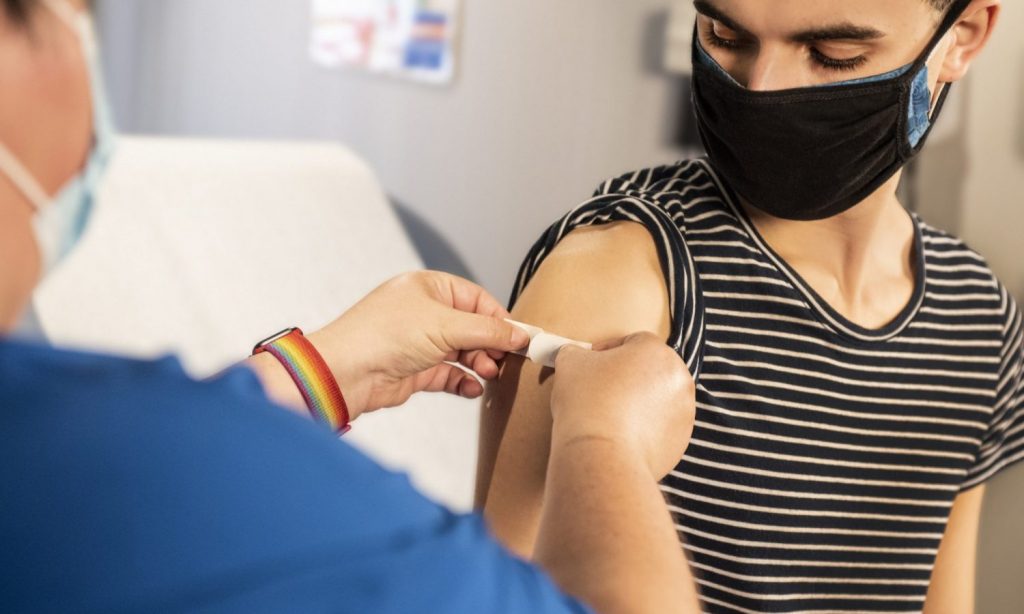
People Who Have Pfizer Vaccine And Get COVID-19 Have This In Common
Photo by Spencer Davis via Unsplash

“I think it’s game over. I think it’s mRNA or nothing. [Other technology] takes too long,” said Bernaert, adding that mRNA vaccines have long been praised for their low costs, safety, and capacity for rapid development.

Per the CDC, mRNA vaccines “teach our cells how to make a protein that triggers an immune response inside our bodies.” In contrast, vector vaccines are the vaccines most of us have grown up with. They function by introducing a controlled version of the virus into people; once the virus is in the cells, it instructs the body to produce antibodies and white blood cells. Currently, mRNA vaccines make up 60% to 70% of the market.

Another perk of the mRNA vaccines, and one that’s especially valuable given the state of the pandemic, is the capacity that these formulas have to adapt. Scientists are able to make small changes in these vaccines, addressing new variants and making them stronger and more resistant to different strains of the same virus.

RELATED: What’s The Deal With The AstraZeneca Vaccine?

Johnson & Johnson isn’t the only viral vector vaccine available on the market; AstraZeneca is also a viral vector, and it’s been widely used to vaccinate people in a variety of countries. Despite the hurdles that these vaccines have faced, they’re both safe and effective against COVID-19. Still, it appears that the use of mRNA vaccines is on the rise and that more and more companies will want to get involved with them.

Marijuana Use Among College-Age Hit Historic High

Among college students specifically, there was also a significant increase in the annual use of hallucinogens and a substantial and significant drop in current alcohol use.

By Maureen Meehan

Marijuana use among college-age hit historic high. Students and same-aged peers who are not in college took to cannabis in record numbers, according to survey results from the 2020 Monitoring the Future (MTF) panel study, reported by the National Institute on Drug Abuse (NIDA).

This represents the highest levels of marijuana use recorded since the 1980s.

8 Reasons Why College Students Use Cannabis
Photo by Alexis Brown via Unsplash

The Kids Are Alright

The survey also found that marijuana vaping and nicotine vaping leveled off in 2020 after sharp increases were reported every year since 2017 for both college students and same-aged respondents who are not in college. One might conclude that cannabis vaping decreased when the vaping crisis hit nationwide and health authorities found undisclosed additives and cutting agents like Vitamin E acetate in cannabis concentrates.

“That’s when I quit vaping. I have not and probably will not go back to it,” one Ohio college student told Benzinga, not wishing her name to be used, as cannabis is still illegal in the Buckeye State.

Psychedelics On The Rise, Alcohol Use Declines

Among college students specifically, there was also a significant increase in the annual use of hallucinogens and a substantial and significant drop in current alcohol use between 2019 and 2020.

“The COVID-19 pandemic dramatically changed the way that young people interact with one another and offers us an opportunity to examine whether drug-taking behavior has shifted through these changes,” said NIDA Director Nora D. Volkow, M.D.

RELATED: More College Students Are Seeking CBD For Pain And Stress Relief

“Moving forward, it will be critical to investigate how and when different substances are used among this young population and the impact of these shifts over time.”

NIDA, part of the National Institutes of Health (NIH), funded the MTF study, which has been annually tracking substance use among college students and noncollege adults ages 19-22 since 1980. The survey is conducted annually by scientists at the University of Michigan’s Institute for Social Research, Ann Arbor. The 2020 survey, based on responses collected online from 1,550 college-aged adults between March 20, 2020 through November 30, 2020, noted the following key findings:

College Students Seek CBD For Pain And Stress Management
Photo by tortugadatacorp via Pixabay

Marijuana use reached the highest level in over three-and-a-half decades in 2020.

Forty-four percent of college students reported using weed in 2020, compared to 38% in 2015 — a significant increase. For young adults not in college, annual marijuana use in 2020 remained at 43%, basically the same as 2018 and 2019.

RELATED: New Study Confirms No Relation Between Marijuana Legalization And Increased Teen Use

In contrast and worth mentioning, similar increases and record highs in marijuana use were not observed among 12th graders in recent years, with 35% of high school seniors reporting using marijuana in the past year in 2020, thus supporting a recent American Medical Association study that marijuana legalization laws are not associated with increased use among high school students.

Cigarette smoking is down, with only 4% of college students and 13% of non-college respondents reporting having smoked in the past month.

Non-medical use of amphetamines and opioid use continued to decline among college students and non-college peers.

This article originally appeared on Benzinga and has been reposted with permission.
Friday Before Labor Day Was Huge For Cannabis Sales

Just one year after the pandemic hit, as more people were able to get out and return to a less restrictive lifestyle, Labor Day weekend 2021 sales dropped 35% compared to 2020.

Cannabis consumers flocked to dispensaries on September 3, the Friday before Labor Day weekend, resulting in the third-largest day for cannabis sales in 2021. Unfortunately, that was the only good news for cannabis retail.

Overall, sales dropped in 2021 versus 2020 for the last weekend of summer. Analytics firms Headset and Flowhub both reported that sales dropped for the regions they cover. While wholesaler LeafLink saw an early jump in orders for the holiday, orders seemed to taper off as the weekend got closer.

ground cannabis on clear plastic bag
Photo by GRAS GRÜN via Unsplash

Headset

According to cannabis data and analytics company Headset, Labor Day weekend (September 3-6) actually saw a slight decrease (-3.2%) in average daily sales in comparison to the previous four weekends.

RELATED: Is Flower Losing Its Power?

On a positive note, though on Friday 9/3/21 alone, we see a different story. Sales on September 3rd, 2021 were up 10.3% over the previous four Fridays and drove this day to be the third-largest day of total US cannabis sales so far this year. All data for the US is from the following markets: CA, CO, MI, NV, OR, PA, WA.

Beverages For The Win

Headset said that for the full holiday weekend, the only categories to see sales growth over the previous four weekends were Beverages (+8.4%) and Edibles (+4.2%). “When we look at only Friday, September 3rd instead, all categories saw positive growth with Edibles (+15.1%), Capsules (+13.3%), and Vapor Pens (+11.2%). The category with the lowest sales lift was Concentrate with +2.8% growth over the previous four Fridays.”

Coupon Clippers

Dispensaries must’ve had an inkling that sales might be down because there was a slight increase in discounting over the entire holiday weekend. Headset said that the average discount over Labor Day Weekend 2021 was 13.7%, up from 12.3% over the previous four weekends — a relative increase of 11.8%. While Friday, September 3 was the highest sales day of the weekend, Labor Day itself (Monday 9/6) had the highest average discounts of 15.1%, up 27% over the previous four Mondays.

Green Wednesday Cannabis Sales Blow Away Black Friday
Photo by Ivan-balvan/Getty Images

LeafLink

On the wholesale side of the business, it seems dispensaries were planning ahead for a busy holiday. LeafLink said that sales increased 4.33% during the month leading up to the 2021 Labor Day holiday versus a 2.39% increase across the same period in 2020. Leaflink also said that the most significant GMV (gross merchandise value) percentage increase came during the week of 8/15, increasing 4.5% over the previous. Sales then leveled off for the rest of the weeks leading up to Labor Day.

RELATED: US Cannabis Sales Projected To Hit $28 Billion In 2022

Leaflink outlined the category demand as follows for the holiday:

  • Flower remained the most popular category in the month leading up to Labor Day, driving 36.33% of GMV compared to 35% of GMV in the month prior to Labor Day 2020 and 35.37% in the previous month.
  • The second most popular product category leading up to Labor Day 2021 was Cartridges, which made up 22.29% of GMV (about a 1% increase over the previous month). This is a slight drop over 2020 when Cartridges made up 24% of GMV in the month before Labor Day.
  • Flower saw significant growth during the week of 8/15, increasing 23% in GMV compared to the week before then grew another 9.9% in the following week. This could signify an increase in dispensaries stocking up on Flower in advance of Labor Day 2021.
  • Packaged Flower was the most popular subcategory, making up 17.47% of total GMV in the month before Labor Day, with Bulk Flower coming in second at 16.29%.

The most popular products in the month leading up to Labor Day in 2021 were:

  • Slurricane Packaged Flower – MUV (FL)
  • Gelato Cake Packaged Flower – District Cannabis (MD)
  • Wedding Cake Packaged Flower – Pacific Stone (CA)
  • Blueberry Indica Gummies – MUV (FL)
  • Moon Rocks Concentrates – UBaked (MI)

The most popular Cartridges in the month leading up to Labor Day 2021 were:

  • Biscotti – Platinum Vape (MI)
  • Sour Jack – MUV (FL)
  • Double Bear Honey Cart – Terrapin (PA)
  • Pink Lemonade – MUV (FL)
  • Pie Driver – Platinum Vape (MI)
5 Ways To Avoid Unhealthy Marijuana Habits
Photo by rez-art/Getty Images

Flowhub

Flowhub provides point-of-sale, inventory, and other dispensary analytics. That company found that on average, Labor Day normally outperforms the typical Monday by 17-27%. Unfortunately, Flowhub’s data agreed with Headset as this year’s Labor Day 2021 was right on par with (actually slightly less than) a typical Monday. Flowhub said that there didn’t appear to be any holiday bumps in sales or transactions for Labor Day Monday and sales dropped by 9% versus the 2020 holiday.

Maybe the pandemic lockdowns of 2020 caused consumers to buy more last year? Labor Day’s Monday 2020 sales increased around 10% versus 2019. Just one year later as more people were able to get out and return to a less restrictive lifestyle, Labor Day weekend sales dropped 35% compared to 2020. On average, Labor Day weekend outperforms the typical (median) weekend by 15-21%. Flowhub said that Labor Day weekend 2021 sales were 27% less than sales on a typical summer weekend.

This article originally appeared on Green Market Report and has been reposted with permission.
NY Cannabis: Sales Won’t Start Until 2023 Amid Regulatory Uncertainty

Poor liquidity and lack of banking reform will likely continue to limit institutional investor involvement in MSOs, regardless of bank policies, according to one analyst.

By Nicolas Jose Rodriguez

Shortly after former New York Governor Andrew Cuomo signed the Marijuana Regulation & Taxation Act (MRTA) legalizing adult-use cannabis on March 31, 2021, legislators created the Office of Cannabis Management (OCM) governed by a Cannabis Control Board (CCB) to oversee and implement the law.

Finally, after six months of inaction (and Gov. Cuomo resigning), the signing of the MRTA took place on September 1 under the state’s new Governor Kathy Hochul who duly appointed a chairperson for the NY Cannabis Control Board (CCB) and an Executive Director of the Office of Cannabis Management (OCM).

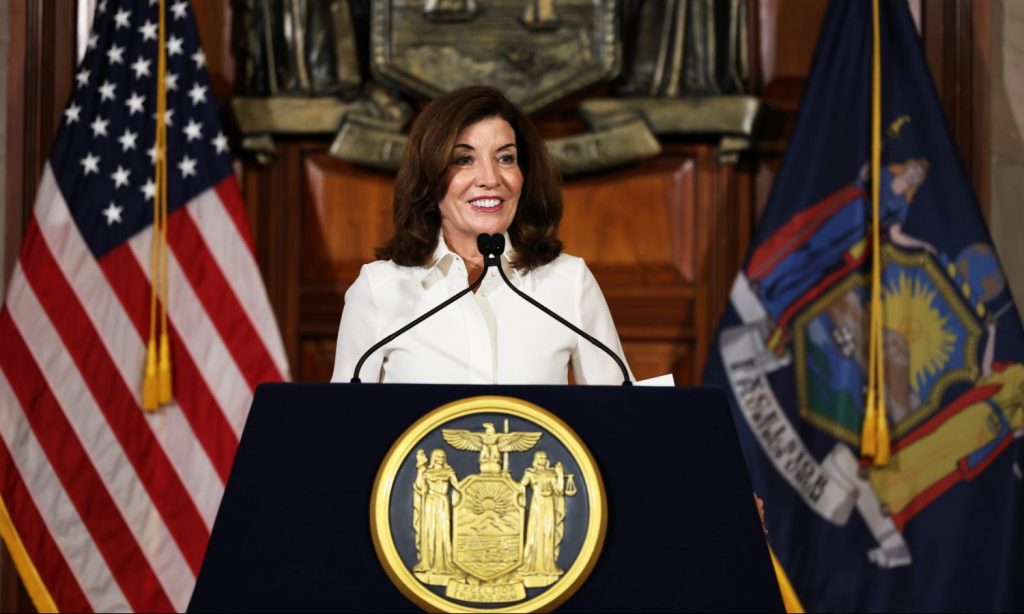
Kathy Hochul
Photo by Michael M. Santiago/Getty Images

Seemingly all good news for the industry, however, adult-use cannabis sales are nowhere near to becoming a reality.

New Chiefs in Town

Once the State Senate confirmed Gov Hochul’s nominee to chair the CCB, former Brooklyn assembly member Tremaine Wright, as well as her nominee for executive director of the OCM, Christopher Alexander, the hope was that the long-awaited legal cannabis industry, on track to be one of the largest in the country, would finally get underway.

Patience is a virtue.

Adult-use cannabis sales will not likely start until the first half of 2023, at the earliest,  predicts Cantor Fitzerald’s Pablo Zuanic.

RELATED: New York Senate Confirms Nominees To Get Marijuana Legalization Back On Track

Several questions “remain in the air,” such as the possible legal challenges to the proposed hybrid “two-tier” system and whether there will be cultivation caps established by municipalities and counties, allowing only one multi-state operator (MSO) to open a cannabis shop in towns.

According to Zuanic,“poor liquidity and lack of banking reform will likely continue to limit institutional investor involvement in MSOs, regardless of bank policies.”

With the MSOs ETF down 19% over the past three months (S&P500 +7%), and federal level action on the CAOA (Cannabis Administration Opportunity Act) unlikely until mid-2022,” Zuanic said that, for now, “state-level news will likely be the main catalyst for the group.”

cannabis insurance money
Photo by Yarygin/Getty Images

Key Questions For The Near Term

As of today, is not clear how many retail licenses will be issued and if there will be a cap on the number of stores allowed to be set up and, naturally, how these issues will impact current dispensary economics. There is also the question of dispensaries being permitted to sell cannabis flower and whether home delivery service will be allowed.

Cultivation: It is also not clear if there will be a cap on cultivation and, if so, how to expand capacity.

Another important set of questions has to do with industry access and market participation as in who will have priority in the licensing process. And, Zuanic pointed out that one wonders what the cost of doing cannabis business in New York is going to be.

RELATED: Will New York’s New Governor Kathy Hochul Get Legal Cannabis Moving? She Says Yes

According to the current rules regarding medical marijuana, those with newly issued cultivation/production licenses will not be allowed to own distribution/retail licenses. However, incumbent medical licensees will be allowed to own both retail and production licenses, which Zuanic warns could well end up being “a sticking point that may lead to lawsuits and delay the program’s start.”

This article originally appeared on Benzinga and has been reposted with permission.
Cannabis Case In Washington Upholds Residency Requirement

0

While this decision may set back any challenge to the residency requirement under the WA State Constitution, it does not settle open questions as to the residency requirements constitutionality under the US Constitution.

On July 23, 2021, the Thurston County Superior Court granted an order for summary judgment to the Washington State Liquor and Cannabis Board (WSLCB) in a lawsuit filed by Idaho businessman Todd Brinkmeyer challenging Washington state’s residency requirement for marijuana licensing. Because Brinkmeyer is not a Washington resident, he cannot own any stake in a licensed marijuana business, despite the fact that he has been approved as a financer in a retail license.

The order granting summary judgment stated that Brinkmeyer, the plaintiff, “failed to meet its heavy burden to establish that Washington’s Residency Requirement is unconstitutional under Washington’s Privileges and Immunities Clause [because] Plaintiff is not a Washington citizen and Article 1 Section 12 of the Washington Constitution, the Privileges and Immunities clause, does not apply to him.” While this decision may set back any challenge to the residency requirement under the Washington State Constitution, it does not settle open questions as to the residency requirements constitutionality under the US Constitution. 

marijuana
Photo by Photo by Elsa Olofsson via Unsplash

If you are looking for a comprehensive breakdown of the procedural history of the Brinkmeyer v. WSLCB case, look no further than Cannabis Observer which has kept outstanding records as this case has developed. Here is a summary of some major points in the case, as provided by Cannabis Observer:

  • June 2020 – Brinkmeyer, sued the WSLCB to overturn the state’s residency requirement. The lawsuit sought a declaratory judgment stating that the residency requirement violated the Dormant Commerce Clause (DCC) of the US Constitution, the Article IV and 14th Amendment’s Privileges and Immunities Clause of the US Constitution, the 14th Amendment Due Process Clause of the US Constitution, and the 14th Amendment of the Equal Protection Clause. The lawsuit also sought relief under the Washington State Constitution pursuant to the Privileges or Immunities Clause in Article I, Section 12.
  • July 2020 – The case is removed to federal court (United States District Court for the Western District of Washington) because the much of the relief sought was under the US Constitution and a federal court is better suited to decide these issues than a state court.
  • October 2020 – the federal court remands the case back to state court “pending final resolution of the state law claims.” The case then continued in Thurston County Superior Court.
  • June-July 2020 – Both Brinkmeyer and the WSLCB submit motions for summary judgment. The superior court grants the WSLCB’s motion for summary judgment solely for the claim under the Washington Constitution for relief under Article 1, Section 12.

According to Cannabis Observer, in issuing her order, the Honorable Mary Sue Wilson stated that “’issues related to the federal dormant commerce clause,’” could be advanced in a federal trial, as that court had ‘retained jurisdiction’ over that clause even as Brinkmeyer’s suit was returned to state court.”

RELATED: What Is Preventing Cannabis Legalization In The US?

The U.S. Constitution contains a passage, commonly referred to as the “Commerce Clause,” which provides that “Congress shall have Power . . . to regulate Commerce . . . among the several States[.]” The U.S. Supreme Court (“SCOTUS”) has long interpreted this clause to include a corollary or “dormant” Commerce Clause (the “DCC”) which has the effect of prohibiting states from enacting laws inhibiting trade among the states.

marijuana courts
Photo by jirkaejc/Getty Images

In a recent case, Tennessee Wine and Spirits Retailers Association v. Thomas, decided in 2019, SCOTUS invalidated a two-year residency requirement for Tennessee retail liquor stores. In applying the DCC to case at hand, the Court wrote “if a state law discriminates against out-of-state goods or nonresident economic actors, the law can be sustained only on a showing that it is narrowly tailored to advance a legitimate local purpose.” SCOTUS determined that “Tennessee’s 2-year durational-residency requirement plainly favors Tennesseans over nonresidents, and found that the law was not “narrowly tailored” to advance a legitimate local purpose and invalidated Tennessee’s residency requirement as unconstitutional.

RELATED: Federal Court Dismisses Case To Reschedule Marijuana But Provides Glimmer Of Hope

It remains to be seen as to whether Brinkmeyer continues his legal battle in federal court. Regardless of that outcome, the question remains as to whether or not Washington’s residency requirement would survive DCC analysis. My guess is that if a federal court were to consider the substance of Brinkmeyer’s DCC claim, it would find that Washington’s residency requirement is unconstitutional because it is not narrowly tailored to advance a legitimate local purpose.

Daniel Shortt is a corporate and regulatory attorney based in Seattle, Washington who works extensively with entrepreneurs in the cannabis industry. You can contact him at info@gl-lg.com or (206) 430-1336.

This article originally appeared on Green Light Law Group and has been reposted with permission. 
New Study Confirms No Relation Between Marijuana Legalization And Increased Teen Use

The study’s authors point out one limitation of this new research: recreational marijuana laws are a relatively new phenomenon.

By Natan Ponieman

new study published in the Journal of the American Medical Association found that marijuana legalization laws are not associated with increased use amongst high school students.

“Consistent with estimates from prior studies, there was little evidence that [recreational marijuana laws] or [medical marijuana laws] encourage youth marijuana use,” reads the paper.

Photo by Dương Nhân via Pexels

The study builds upon a previous paper that used data from the Youth Risk Behavior Survey (YRBS) for the period 1993-2017, which found that marijuana adoption was associated with an 8% decrease in the odds of marijuana use among high school students.

RELATED: Is There A Link Between Legal Marijuana And Teen Drug Abuse? New Study Has Answer

This earlier study used pre-legalization and post-legalization data from only seven states and pre– and post–recreational sales data from only three states. The new study included data from up to 2019, encompassing 10 legal adult-use states.

With these additional data, the study found that “medical marijuana law adoption was associated with a 6% decrease in the odds of current marijuana use and a 7% decrease in the odds of frequent marijuana use.”

Is Vaping Cannabis Really Worse For Teen Lungs Than Vaping Tobacco? 
Photo by Toan Nguyen via Unsplash

When it comes to recreational use, the new study found that prior to legalization, there was no association with marijuana use in the states analyzed. After two or more years, recreational marijuana law adoption was associated with a decrease in marijuana use.

RELATED: Teens More Likely To Binge On Weed And Alcohol If They Do This

The study’s authors point out one limitation of this new research: recreational marijuana laws are a relatively new phenomenon.

“As more post-legalization data become available, researchers will be able to draw firmer conclusions about the relationship between [recreational marijuana laws] and adolescent marijuana use,” concluded the authors.

This article originally appeared on Benzinga and has been reposted with permission.
Cannabis Causes Heart Problems

0

A new study has researchers concerned that the overall safety of the cannabis plant has been vastly exaggerated.

A body of evidence has surfaced lately showing that the cannabis plant might not be the healthy herb that many advocates once professed it to be. The main reason it may carry harmful effects, according to experts, is because smoking cannabis — that is, physically ingesting burnt plant matter into the lungs — comes with the same health hazards as smoking tobacco.  

However, the latest research published in the Canadian Medical Association Journal details a rather shocking revelation. It seems that regardless of how weed is consumed — whether it is smoked, vaped, taken orally, whatever — it can lead to an increased risk of a heart attack. The study shows that adult cannabis users under 45-years-old were at nearly double the jeopardy for a chest-gripping coronary than their non-using counterparts. Yep, Americans are going from doobie to defibrillator. 

Photo by Petri Oeschger/Getty Images

Scientists didn’t even set out expressly to study heart health as it pertains to cannabis. But while examining the health data from the Centers for Disease Control and Prevention (CDC) ranging from 2017 to 2018, they just so happened to find a correlation. Findings showed that out of the 17% of the adult cannabis users recorded, 1.3% had a heart attack within a month post-consumption. Meanwhile, only around 0.8% of the unstoned suffered a heart attack during that time. 

RELATED: Smoking Marijuana Is Not Good For Your Heart, Says American Heart Association

Now, it should be noted that the difference between the two is only 0.5%. Nevertheless, researchers are concerned that the overall safety of the cannabis plant has been vastly exaggerated. “There’s increasing evidence that this could potentially be harmful to you, both in the short term and the long term,” lead study author Dr. Karim Ladha, clinician-scientist and staff anesthesiologist at St. Michael’s Hospital and the University of Toronto in Canada, told CNN. 

RELATED: Demystifying Marijuana And Heart Health

All in all, this new research confirms that cannabis can affect the heart. It does this by causing an irregular rhythm. This can happen when the amount of oxygen a person’s heart needs to keep pumping away efficiently is increased. If it doesn’t get it, that’s when a heart attack can happen. Other studies conducted over the past few years have turned out similar results.

Marijuana Can Dramatically Alter The Shape Of Your Heart
Photo by mikroman6/Getty Images

Diehard cannabis advocates like Mitch Earleywine, a professor of psychology at the State University of New York at Albany, are, of course, questioning the authenticity of the study. “Let’s keep in mind the fact that it’s very easy to double a number if it’s very small in the first place,” he told HealthDay News. Earleywine even suggested that the poor diets of Americans, stress and a lack of exercise could have played a role in the results. Most days, we would be inclined to agree. However, contrary to his assessment, a connection was made between cannabis use and coronaries even after researchers eliminated other health data like smoking, drinking, and chronic illness.

RELATED: Vaping Could Be Worse For Your Heart Than Smoking Cigarettes

If anything, the results of this study further cosign the need for the federal government to conduct more marijuana-related research. It’s not that Americans really care that their vices might lead to a deterioration of health, but like in the case of alcohol and tobacco, they’d like to at least know for sure what their chances are before going too deep. We know that both of those legal substances cause various health issues, from cancer to heart disease, yet we ingest them with enthusiasm each day.

It only stands to reason that the American stoner will continue its path down the highway of happiness regardless of whether there is a sliver of a chance they could suffer a cardiac. But just to be safe, you might want to skip the cheeseburger when the munchies kick in.

Prior Cannabis Convictions Should Not Prevent Michiganders From Obtaining Marijuana License

One of the most important problems with the “moral clause” is its existence in the medical cannabis program, but not in the recreational.

By Nina Zdinjak

Senator Jeff Irwin (D) presented a new bill last week that aims to align licensing protocols for Michigan’s medical and adult-use programs by removing a “moral character” clause from the medical cannabis licensing policy.

If the bill, which is assigned to the Senate Judiciary and Public Safety Committee, becomes law, marijuana regulators in Michigan could no longer refuse to issue a medical cannabis license to someone based on “moral character and reputation” or previous cannabis convictions.

America’s Goal In 2021 Should Be Fewer Marijuana Arrests, More Research
Photo by Roman Budnyi/Getty Images

“It would seem to be especially important in the cannabis space that we open the door to the legal cannabis industry to folks who are very experienced in the illicit cannabis space,” Irwin said, adding it would be unreasonable to assume illegal cannabis sales would simply end.

RELATED: Michigan Report: Cannabis Billboards Up But Lawmakers Want Them Down

“I don’t think we want to exclude anyone who’s ever participated in the marijuana industry before it was legal from participating now that it is legal because that’s going to make it even harder for us to build the legal space and diminish the illicit space,” Irwin noted.

Moral Character Clause Invites Inequality And Corruption 

One of the most important problems with the “moral clause” is its existence in the medical cannabis program, but not in the recreational.

Irwin told Marijuana Moment in a phone interview on Monday that the subjective nature of the moral character clause “invites unequal application of the law, it invites favoritism, it invites corruption.”

To build a successful legal market “we need to keep the taxes low,” Irwin continued. “We need to keep the barriers to entry low. We need to welcome people who might have a marijuana conviction on their record into the licensed space. That’s all part of being successful as a state in making sure the majority of transactions are taking place in a safe and regulated legal space.”

RELATED: Michigan Cannabis Sales Near $1B In First Year Of Adult-Use Sales

Michigan cannabis sales hit a record $171 million in July, which in return brought more than $23 million in tax revenue funding the Great Lake roads, schools and counties.

The bill is co-sponsored by Senators Sean McCann, Stephanie Chang and Sylvia Santana, all Democrats, but according to Irwin, the bill should ultimately garner GOP support.

Last week, Irwin separately introduced the legislation to legalize the possession and cultivation of certain psychedelics.

This article originally appeared on Benzinga and has been reposted with permission.

Don't Miss Your Weekly Dose of The Fresh Toast.

Stay informed with exclusive news briefs delivered directly to your inbox every Friday.

We respect your privacy. Unsubscribe anytime.