Sunday, May 10, 2026
Home Blog Page 339

This Rare Condition Is More Common After Having COVID-19

0

A review of COVID-19 and the side effects of the Pfizer shot found that this rare condition is more common in people who’ve struggled with the disease.

COVID-19 is a condition that we’re only starting to understand. The virus impacts people in different ways, producing long-term effects that can manifest in unexpected forms, like recurring fatigue or chronic headaches. One of these rare side effects is myocarditis, an inflammation of the heart muscle.

While still rare, this condition is one that caused a lot of interest in people, especially after there were a number of cases linked to the Pfizer vaccine. A recent study found that the side effect of myocarditis is more common on people that experienced COVID-19 than on people who had the Pfizer shot.

RELATED: When Will Kids Under 12 Be Able To Get The COVID-19 Vaccine?

This Vaccine Makes It More Likely To Get Breakthrough COVID-19
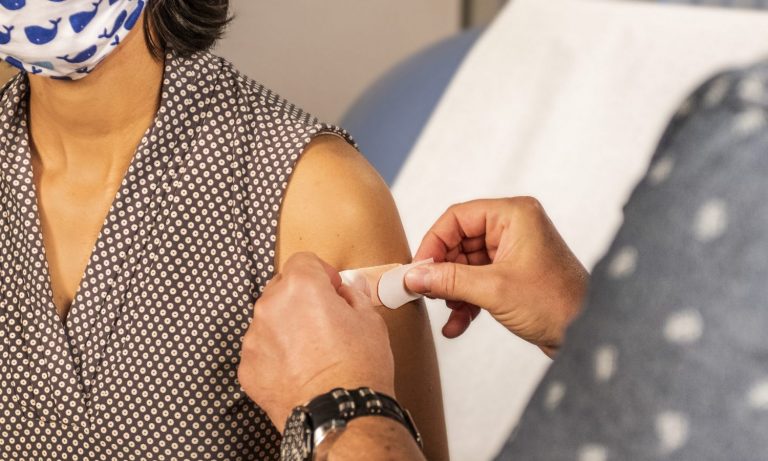
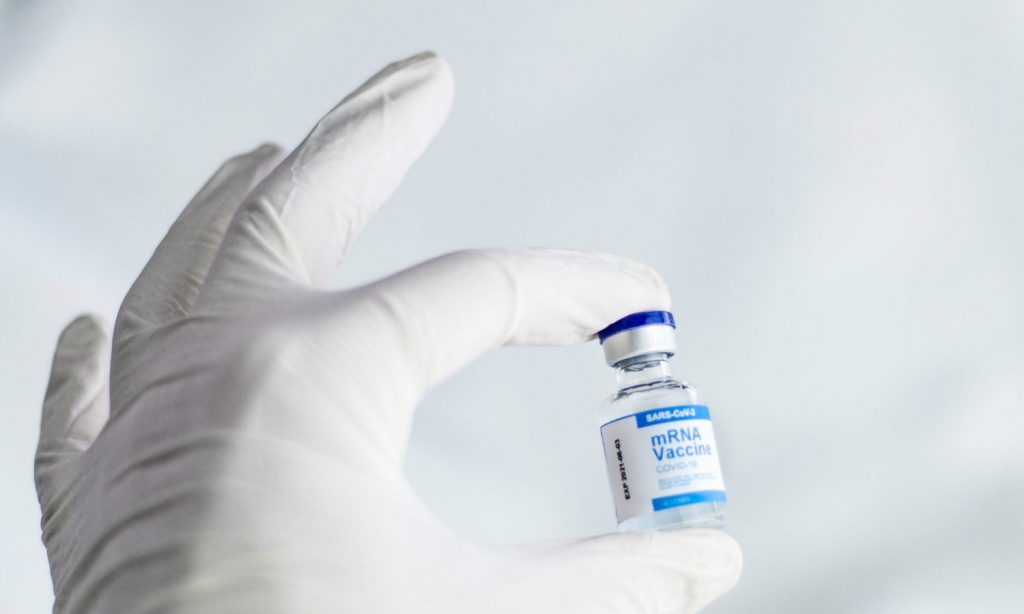
Photo by CDC via Unsplash

The study obtained its numbers from the electronic health records of over 2 million people who provided data on both COVID-19 infections and adverse vaccine reactions. The median age of people who developed myocarditis after getting the vaccine was 25, with 19 of the 21 cases belonging to males. Other rare side effects associated with the Pfizer shot include swollen lymph nodes, appendicitis, and shingles.

The study found that while myocarditis was more common in people who had been vaccinated, the risk was higher in people who had contracted the virus. “As the New York Times explains, “There were an extra 11 cases of the condition for every 100,000 people who had been infected with the coronavirus, compared with those who had not.”

Despite these risks, scientists are adamant about the vaccine’s success rate. “Coronavirus is very dangerous, and it’s very dangerous to the human body in many ways,” study co-author Ben Reis told the Times. “If the reason that someone so far has been hesitating to get the vaccine is fear of this very rare and usually not very serious adverse event called myocarditis, well, this study shows that that very same adverse event is actually associated with a higher risk if you’re not vaccinated and you get infected.”

RELATED: Vaccinated And Stressed Out? Here’s What You Can Do To Get Some Peace Of Mind

This investigation was launched following a number of myocarditis cases in young males who received the Pfizer vaccine, who, according to a review, could result in myocarditis in males ages 16 to 17 by a 1 in 5,000 chance.

While these cases of myocarditis should be monitored, getting the COVID-19 vaccine is still less risky than placing all of your bets on a very rare side effect.

When Are We Going To Start Arguing About Who Lost Mexico?

0

Yes, we should do all we can to help the Afghan people, but we have an even greater obligation to our neighbors and our own people to at least mention the Drug War.

Disclaimer: The views expressed in this article solely belong to the author and do not necessarily represent those of The Fresh Toast.

There is a major debate about the loss of Afghanistan, but for the most part, it has followed the Prime Directive: “Don’t mention the Drug War!”

Nonetheless, it seems relevant that Afghanistan is still the world’s largest opium poppy producer.

According to Reuters, “Despite the threats posed by Afghanistan’s illicit drug business, experts noted, the United States and other nations rarely mention in public the need to address the trade, estimated by the UNODC at more than 80% of global opium and heroin supplies.”

afghanistan
Photo by Mohammad Rahmani via Unsplash

So, we controlled the country? And our Drug War was subsidizing the Taliban?

And now we are rightly agonizing about leaving the very roughly 31 million Afghans at the mercy of ruthless thugs, who are literally halfway around the world. Meanwhile, last year The Washington Post reported that Violent Criminal Groups Are Eroding Mexico’s Authority And Claiming More Territory.

So, Mexico, with a population of approximately 126,014,024, more and more of the people are living under the effective control of murderous gangs on our border!

Americans are rightly anxious about the safety and freedom of the Afghan people we are leaving behind, but what about the freedom and safety of the people of Mexico, and Central America, and Colombia and Venezuela, etc.

SEE: Murder, Robbery, ‘Mountain Of Death’ Await Migrants Crossing Darien Gap

While our Southern border is the visible flashpoint for American politicians, it is the equivalent of the Kabul airport. An increasing number of people from around the world are trying to get to the United States via Mexico, which cannot even protect its own people.

SEE: Why Was Vice President Harris Greeted With Trump Campaign Signs In Guatemala?

While Mexico and most of Latin America have long had problems with corruption and general lawlessness, the Drug War has become existential threats to their governments’ control over their own territories. In fairness to them, the United States has seemingly lost control of some parts of major cities to Drug War violence.

Mexico's Cannabis Legalization Bill Will Boost Business, But There Are Concerns
Photo by John Coletti/Getty Images

If Mexico continues to lose control over its territory, and the international wave of refugees continues to be treated as a Mexican problem, it will have a major impact on both the American and Mexican economies. And, by the way, these people are human beings, and sometimes, quite literally, our brothers and sisters.

Yes, we should do all we can to help the Afghan people, especially those who worked with us, but we have an even greater obligation to our neighbors and our own people to at least mention the Drug War. But I really don’t think we can.

Richard Cowan is a former NORML National Director and author of CBD Wax and Its Benefits.

What Is Preventing Cannabis Legalization?

Senate rules require just a simple majority to pass a bill, but procedural steps along the way require a supermajority of 60 votes to end debate on bills.

Cannabis legalization in some form or another is legal nearly everywhere in the U.S.  As of August 2021:

  • Medical marijuana is legal in 36 states, 4 territories, and in the US Capitol, Washington DC. An additional 12 states have legalized the medical use of CBD derived from marijuana.
  • Adult use marijuana is legal in 19 states, 2 territories and Washington DC. 
  • Recent poll by Pew Research Center shows that 91% of Americans support some form of legalization with 31% supporting medical use only and 60% supporting medical and recreational.

Recently, Democratic Senators Chuck Schumer and Cory Booker circulated a draft bill to legalize marijuana in the Senate. The Democrats control the House while the Senate is split 50/50 between Republicans and Democrats. However, the tiebreaker is Democratic Vice President, Kamala Harris.

Chuck Schumer's Long-Awaited Federal Marijuana Legalization Bill Unveiled
Photo by Kevin Dietsch / Getty Images

At this point, cannabis is ubiquitous, popular, and the party that most openly supports cannabis legalization controls the legislative and executive branch of the Federal government. So why does cannabis legalization seem distant?

According to Forbes,  Schumer said at a recent press conference that, “We don’t have the votes necessary at this point. But we have a large majority of our caucus for it. We’re going to show it to the others and say, ‘Well, what don’t you like? What do you like? And we’ll see if we can get the support.’ We’re going to put our muscle behind it, all our effort behind it, and we’re going to get this done ASAP.”

It may seem perplexing as to why the Senate’s top Democrat is concerned about getting enough votes to move his proposed draft bill forward. Senate rules require just a simple majority to pass a bill, but procedural steps along the way require a supermajority of 60 votes to end debate on bills. This brings us to what makes Sen. Schumer state that he does not currently “have the votes” for his proposed cannabis legislation: the filibuster.

A filibuster is long-established tool (dating back to ancient Rome) that allows a lawmaker to slow down or block other lawmaker’s bill, resolution, or amendment from getting a vote by talking as long as they want. The debate can theoretically go on forever, blocking any final vote and essentially killing the bill, resolution, or amendment from advancing.

RELATED: Democrats Have A Year To Legalize Marijuana Nationwide

The filibuster is a powerful tool and to understand why, you first need to understand how the legislative process works in the Senate. Here is a helpful breakdown from Congress.gov:

To consider a bill on the floor, the Senate first must agree to bring it up – typically by agreeing to a unanimous consent request or by voting to adopt a motion to proceed to the bill, as discussed earlier. Only once the Senate has agreed to consider a bill may Senators propose amendments to it.

Perhaps the modern Senate’s defining feature is the potential difficulty of reaching a final vote on a matter. Most questions that the Senate considers – from a motion to proceed to a bill, to each amendment, to the bill itself – are not subject to any debate limit. Simply put, Senate rules provide no way for a simple numerical majority to cut off or otherwise impose a debate limit and move to a final vote. As a result, Senators can effectively wage (or threaten to wage) a filibuster – in effect, insist on extended debate in order to delay or prevent a final vote on most amendments, bills, or other motions.

In the 1970s, the Senate rules changed to allow Senators to trigger a filibuster simply by announcing they wanted to block a bill. This means that Senators no longer even needed to start talking to use the filibuster. As a result of this rules change, the image of a Senator orating for hours on end popularized by Jimmy Stewart in Mr. Smith Goes to Washington is a relic of the past.

We’re About To See If Senate Filibuster Will Ruin National Cannabis Reform
Photo by Drew Angerer/Getty Images

PBS News Hour put together a helpful five-step breakdown of how the filibuster works in the modern Senate:

  1. Any Senator can launch a filibuster.
  2. Senators need to give notice they intend to do this. Usually, they first give their party leadership a heads up. Then the most frequent formal step is simple: The senator stands and says “I object” when other senators try to move forward on the legislation.
  3. That senator can ask to speak, but does not have to speak, about their reasons for blocking.
  4. To end the filibuster, the full Senate must trigger a different super-weapon: “cloture.” Cloture closes debate, thus ending the filibuster. This is the 60-vote part. To get cloture, current Senate rules require a three-fifths vote of the Senate[.]
  5. If cloture passes, it dictates a maximum of 30 hours of debate and no more. Then there will be a vote on the actual measure the filibuster is seeking to block. If cloture does not pass, the bill remains in filibuster limbo as the Senate moves on to other business.

In order to pass a bill, only 51 votes are required when the full Senate is present. However, in order to get to the point where a bill could be voted on, the senators must get past the 60-vote threshold imposed by the filibuster rule. For Schumer to get legislation enacted, he would need the full support of all the Senate Democrats, plus ten Senate republicans. Mitch McConnell, the leader of the Senate Republicans, is not going to tolerate any efforts to support Senate Democrats, including a bill to federally legalize cannabis. McConnell is not opposed to all forms of cannabis. He was instrumental in legalizing hemp with the passage of the 2018 Farm Bill. When it comes to full-THC cannabis, McConnell has used the filibuster to block legalization measures.

RELATED: Filibuster Not Going Anywhere — What Does That Mean For Marijuana In 2021?

The more realistic pathway at this point may be for the Senate to do away with the filibuster as it currently exists. There is a push to reform the filibuster, though most of that support has come from other (more important) issues, including the protection of voting rights and the investigation of the January 6th insurrection. Although many Americans and lawmakers support legalization, that has not been a reason cited to end the filibuster. However, if the filibuster is invalidated then the likelihood of marijuana legalization increases greatly. There are also budget reconciliation measures that lawmakers can take to “sidestep” the filibuster, but we’ll cover that in another post as it is too complicated to tack on to this already long blog post.

To recap, despite being an incredibly popular political issue and despite having control of the House and Senate, it seems likely that any measure to legalize cannabis offered by Democrats is doomed to fail due in large part to the filibuster. If you are interested in contacting your congressional representative about marijuana, Norml has a webpage to do just that.

Daniel Shortt is a corporate and regulatory attorney based in Seattle, Washington who works extensively with entrepreneurs in the cannabis industry. You can contact him at info@gl-lg.com or (206) 430-1336.

This article originally appeared on Green Light Law Group and has been reposted with permission.  

Which City Smokes The Most Weed

Let’s not split hairs with numbers and just say a little under two-thirds of people use cannabis is U.S. cities that have legalization.

Interesting survey put out by the Olbg.com blog on the wildest cities in America.  The criteria for a city rank covers such variables as night life, casinos, marijuana use, alcohol consumption rates, adult entertainment establishments, and a few other Friday night favorites. While Las Vegas was hands down winner in the overall contest of debauchery, as far as weed consumption per population levels, Portland, Oregon and Indianapolis, Indiana came in numbers 1 and 2 for weed usage per resident.

Some interesting tidbits on the survey is that some of the states don’t have recreational cannabis approved, so there is no legal pathway to getting your hands on some juicy buds. Other states have medical programs, but some are just starting out, so to see the population numbers so high, no pun intended, seems like a good trend for future legalization in those areas.

Republicans From Legal Marijuana States Won’t Vote To Legalize Federally
Photo by Nathan Griffith/Getty Images

The second point that I find interesting is how close cities 1 through 10 are.  Portland leads the pack with a 64.72% of population that used marijuana, but in 10th place is Milwaukee, Wisconsin at 63.27%. That is a whopping 1.45% difference between the number one spot and 10 spot. So out of 100 people, you are looking at 1.45 difference in admitting they smoked pot. With a margin of era of probably 0.50% to 1%, you are left with almost identical numbers for the big 10 cites.

RELATED: Best States For Medical Marijuana Dispensaries

This is important as you can now say that (if you believe the data) that about 64% of city populations where cannabis is legal, used weed or tried it.  If you went down to spot #20 on the list, it may only be a 2% difference, or 2 more people in a 100-person survey, that separates #1 from #20. We get a good feeling that in legal marijuana cities, about 61% to 65% of the people are using cannabis or have used in in the post.

Let’s not split hairs with numbers and just say a little under two-thirds of people use cannabis is U.S. cities that have legalization.  It may not be statistically perfect, but you can’t get in trouble saying it as a ballpark.

Here is a link to the rankings.

This article originally appeared on Cannabis.net and has been reposted with permission.

More Women Switch Out Pharmaceuticals For Medical Marijuana

Researchers found that women were quicker than men to replace prescription painkillers with medical marijuana, even though males had more overall experience with weed.

When it comes to how Americans treat their various health conditions, more of them are now looking to medical marijuana in states where it is legal. The fear of opioid addiction, deadly overdose, and other downfalls of prescription drugs has, in ways, inspired a quest for safer remedies. 

However, it is women who are leading the charge, according to a recent study in the Journal of Women’s Health. 

While marijuana was once kept super-secret by those who used it, times have changed. More than half the nation now has laws on the books allowing it for medicinal purposes. And with all of the research that has surfaced in recent years showing how medical marijuana may be a viable alternative for opioids and benzodiazepines, more of the population is taking an interest in weed.   

You Won't Guess Which Canadians Are The Biggest Marijuana Users
Photo by LordHenriVoton/Getty Images

The latest study, which polled several physicians and patients, shows that more of the population has jumped on the medical marijuana bandwagon. And not just because it is fashionable either. They are going this way to protect themselves from the pharmaceutical fallout that has become so prevalent today. Americans are fully aware that tens of thousands of people die every year from prescription drugs, and they have no interest in becoming a statistic. 

Interestingly, researchers found that women were quicker than men to replace prescription painkillers and other drugs with medical marijuana, despite finding that males had more overall experience with cannabis. 

The majority of these weed-seeking women are using cannabis for pain relief, researchers said. Studies have found that medical marijuana may be an effective remedy for mild to moderate pain conditions and a safer alternative to both over the counter and prescription medicines. 

RELATED: Women More Likely To Use Psychedelics Than Men — Here’s Why

An article from Forbes suggests that they may be using medicinal cannabis to ease chronic pain in the pelvic area, typically brought about by “PMS and PMDD, endometriosis and some gynecological cancers.” 

A Lot Of Women Would Use Cannabis To Treat Gynecological Conditions
Photo by Priscilla Du Preez via Unsplash

It should come as no surprise that more women than men opt for medical marijuana as a replacement for prescription drugs. They are arguably the more intelligent species. The study does, however, suggest that finding out why women are making the switch to medical marijuana may require additional studies.

RELATED: Women With Menopause Now Turning To Cannabis For Treatment

As the study authors wrote, “The implication that women may conceptualize medical cannabis as complementary or alternative medicine merits further research, as this finding may be viewed as a consequence of patient experience with cannabis, and not only of shifting public attitudes toward it.”  

4 Tips To Help You Be More Confident

0

Your confidence level is closely tied to your self-esteem. Here are 4 ways to improve it.

Confidence levels can fluctuate on a daily basis. While some days we may be feeling confident and successful, others are different. Confidence levels also vary from person to person, with some people coming to it more naturally than others. It’s all tied to our self-esteem.

Our self-concept depends largely on how we were raised and our personalities. Common behaviors like people pleasing, feeling needy and engaging in negative self-talk are all reflections of it.

PsychCentral spoke with several experts on common insecure behaviors and how to cope with them. Here are 4 tips that can help you become more confident:

Keep track of insecure behaviors

5 Apps That Can Help You Journal
Photo by Daria Shevtsova via Unsplash

RELATED: Does Running Damage Your Knees?

It’s difficult to know if you’re insecure or are struggling with low self-esteem if you don’t keep track of these behaviors and notice how often they appear. While it’s difficult to simply try to find the root of your lack of confidence, it helps if you keep track of the most common behaviors you engage with and their triggers.

“It’s important to explore cognitions and the messages learned that initially created the negative core beliefs,” said Dr. Jan Roberts. “Understanding how low self-esteem evolves as a result of past internalized messages and cognitive processing can help [people] create new ways of perceiving their world around them.”

Set small goals

Breaking Down COVID's Newest Rules For Admins And Billing Specialists
Photo by everythingpossible/Getty Images

Setting small goals, like completing chores on your to-do list or pursuing personal hobbies, can help you feel more confident and like you’re achieving stuff. Keep track of these accomplishments and notice how you’ll start to feel more capable the more you keep up with the habit.

Small habits like voicing or finding something you like about yourself every day can also add up in the long term,

See a therapist

5 Ways To Make Teletherapy Work If You Live With Other People
Photo by Alexander Dummer via Unsplash

RELATED: Tired All The Time? Here’s What Might Be Happening

A therapist can help you find the root of your self-confidence issues, especially if you have a problem that’s debilitating or that affects other areas of your life. The right therapist can help you develop coping mechanisms for these behaviors, helping you form new ways of thinking that will help you grow into a more confident person.

Be kind to yourself

Increase Your Energy
Photo by Nicole De Khors via Burst

Try your best to avoid negative self-talk. While it’s difficult to control your inner dialogue, try your best not to verbalize it. Confidence issues tend to manifest in self-depricating jokes and having difficulty accepting compliments from others; if you try to minimize these behaviors, your inner dialogue will likely change and turn into something more positive and ultimately objective.

Are High State Marijuana Taxes Really The Cause Of The Tenacious Black Market?

0

As long as there is a spot of prohibition, there will be an opportunity for criminal organizations to capitalize.

Cannabis advocates have argued for years that legalization is the key to ending the black market pot trade. However, it’s been more than a decade since Colorado became the first state to legalize the leaf for recreational use, and the illicit marijuana market hasn’t gone anywhere.

Some reports show that 80% of California’s weed sales are still made in the black market, despite full-scale legalization. Nevertheless, this is not legalization’s fault, according to the advocacy groups. They blame high taxes as one of the primary reasons that black-market marijuana won’t die.

Marijuana Legalization Makes Black Market Weed Cheaper, Heroin More Expensive
Photo by Matthew Karila via Unsplash

“By raising the price of marijuana for consumers, these costs undermine a major competing purpose of legalization: elimination of the black market,” claims a political study published last year by Reason Foundation. “As demonstrated by alcohol and cigarettes, excessive taxation can influence consumers’ decisions to patronize the black market.” 

In many ways, statewide marijuana legalization, even without the high tax rates, has stoked black market commerce nationwide. Aside from an influx of unlicensed pot shops operating in legal states — making it challenging for legal operations to remain profitable — illegal growers are using the liberal pot laws to produce a surplus of illicit pot and export it to areas of prohibition.

As I pointed out in a 2018 column for Forbes, marijuana legalization makes the black market better in prohibition states. It allows pot consumers in places like Indiana and Kentucky, where weed is still as illegal as ever, to purchase several different strains, concentrates, edibles, anything really. This crucial part of the illicit trade has nothing to do with high taxes.

It’s all about demand. 

Taxation instead of criminalization is what cannabis advocates have spent decades trying to sell. It was the leading advantage long before anyone ever thought that weed would eventually go legal. “Can you imagine how much money the government would make if they would just legalize it?” was the typical spiel coming from the mouths of defenders of the doob. But now, they complain that the taxation scheme isn’t all it’s cracked up to be. Still, it’s not even that local and state governments are failing to generate substantial revenues by selling weed to adults 21 and over. Colorado continues to collect roughly $50 million a month from legitimate pot shops.

RELATED: Marijuana Legalization Makes Black Market Weed Cheaper, Heroin More Expensive

Nevertheless, the illicit pot trade doesn’t appear to be going anywhere soon. As we’ve seen over the years, states that have legalized marijuana for recreational use are not willing to give up tax dollars for the sake of crippling the black market. Illinois has one of the highest tax rates in the nation. Meanwhile, Colorado voters will decide later this year to increase pot taxes to boost out-of-school learning.

Will this hike drive more customers into the black market? Some industry experts argue that Colorado pot consumers are too invested in legal weed to return to the black market now. 

how the costco of cannabis will upend marijuana black market
Photo by Yarygin/Getty Images

“Even if taxes inch up and black market prices go down, an eighth of weed is still the same price — if not cheaper — as it was through a weed dealer in 2014,” wrote Herbert Fuego for the Denver Westword. “That’s good enough for most people who don’t smoke every day, and heavy users now find the most reliable concentrates at dispensaries.” 

Other cannabis industry officials admit that the black market pot trade is probably going to stick around a while. “I don’t think we’re ever completely going to eliminate the illicit market, I think that’s probably unrealistic,” Steve Hoffman of the Massachusetts Cannabis Commission told Politico. 

RELATED: Why The Black Market Continues To Thrive — And What Is Being Done About It

The real cause of the tenacious black market pot trade isn’t high taxes. It’s nationwide prohibition. Once the federal government legalizes it like alcohol and tobacco — something Senate Majority Leader Chuck Schumer is trying to do — more states will jump on board the trend, if for no other reason than the tax revenue. Schumer’s plan comes with a 25% tax rate, which some states worry will cause financial hardships. “If a national market is not rolled out carefully and in stages, large companies, particularly existing tobacco-focused companies, will be able to move into new markets immediately, displacing and pushing out smaller players,” wrote Colorado Attorney General Phil Weiser

It will be these large corporations, however, that stand the best chance at competing with a tax-free black market. 

In the end, adult-use marijuana laws in every state are the only way to effectively combat the black market. As long as there is a spot of prohibition, there will be an opportunity for criminal organizations to capitalize. Even when fully legal, just like with alcohol at the end of federal prohibition, illicit operations will continue to hang around for a while. Eventually, though, the people will pay to get their pot legally and the black market will become almost nonexistent. Almost.

Eating This Food May Help Prevent Wrinkles

0

This popular snack has been linked to less wrinkles and better overall skin health. And you likely have it in your pantry.

Wrinkles are inevitable. While there are ways of slowing them down and caring for them, they are a natural progression of growing older, with the dermis beginning to thin as we age up. Spending long percentages of time out in the sun or engaging in behaviors like smoking, speeds up this process. But certain behaviors, like moisturizing your skin and even eating certain foods, can slow down and prevent wrinkles.

New research suggests eating almonds on a daily basis may help reduce wrinkles and other signs of aging in post menopausal women. According to Eating Well‘s assistant nutrition editor, Dr. Jessica Ball, the vitamin E in almonds is one of the reasons why they’re effective against symptoms of aging.

RELATED: Eating This 5 Times A Week Can Extend Your Life

Almond Milk
Photo by Pezibear via Pixabay

“Vitamin E is a vitamin but it’s also an antioxidant,” she said. “This means it can help protect cells, including skin cells, from free radical damage. This not only improves the skin’s appearance as we age by reducing wrinkles and evening out pigmentation, but also it helps reduce the damage that can lead to skin cancer.”

The study, published in the journal Nutrients, was conducted by researchers from the University of California, who looked into the effects of consuming almonds and their effect on wrinkles, skin pigmentation, sebum production and skin hydration on women with Fitzpatrick skin type I and II. (This skin classification simply describes people’s complexion and their reaction to sunlight. For example, type I refers to people with pale white skin, blue/green eyes and blond/red hair.)

Researchers conducted a randomized controlled study that lasted 24 weeks, splitting participants into two groups. Women had a granola bar or a portion of almonds for snacks that amounted to 20% of their daily caloric intake. These results were then compared and analyzed for the study. Participants who snacked on almonds saw a reduction in their wrinkle severity by 16%. Unevenness in skin tone was also decreased by 20%.

RELATED: Muscle Cramps Could Be A Sign Of This Condition

While these results suggest that almonds do something for rejuvenating the skin, there are some caveats. The study was conducted on a small sample of women, who were all fair-skinned and burned easily.

With such little data, it’s difficult to know just what it is about almonds that might improve skin health. Still, there are worse things you can do than stock up on almonds. Aside from being delicious, the nut has plenty of vitamin E, which promotes eye and heart health, and much more.

Will New York’s New Governor Kathy Hochul Get Legal Cannabis Moving? She Says Yes

Although it’s unclear how quickly Hochul can roll out the state’s program in view of the little groundwork done by her predecessor, she has expressed her intent to move forward with the cannabis board and other appointments.

By Maureen Meehan

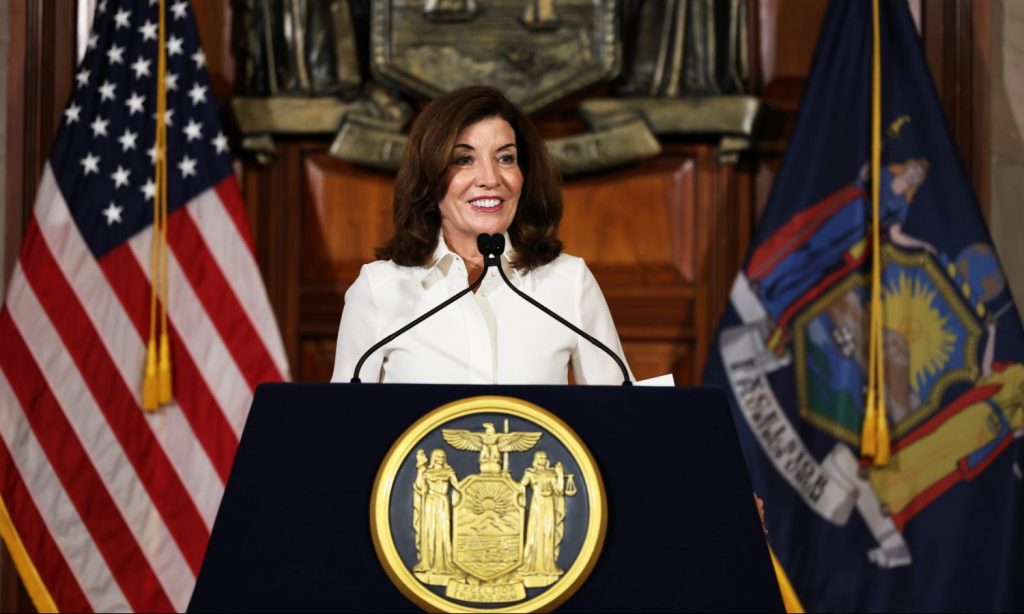
New York’s 57th governor, Kathy Hochul — sworn into office this week after embattled Andrew Cuomo resigned — said she is ready to move on the state’s potentially multibillion-dollar legal cannabis program ASAP, reports The New York Post.

The Background

New York’s legal marijuana program came into being on March 31, 2021 after years of wrangling and tense negotiations.

Kathy Hochul
Photo by Michael M. Santiago/Getty Images

At the time, the Marijuana Regulation and Taxation Act (MRTA) was roundly praised as among the best in the country in terms of the quantity of cannabis one can buy and possess, home grow, delivery, public consumption and social equity that includes automatic expungement and the reinvestment of up to 40% of weed revenue into communities targeted by the drug war as well as disadvantaged farmers and women.

This all sounded breathlessly exciting until everything suddenly stopped. Why?

Many New Yorkers opined that the cannabis program, like so much else in the Empire State, came to a stop or at least a long stall when Cuomo began the downward spiral toward his inglorious resignation after 10 years as governor.

Even before that, Cuomo was in a dispute with the state Senate over several issues and never nominated an executive director for the new Office of Cannabis Management nor appointees to the Cannabis Control Board. The hope was that the New York market would launch as early as spring 2022.

Enter Gov. Kathy Hochul

The former lieutenant governor, though known for being low-key (who wouldn’t be working under Cuomo?) obviously saw the writing on the wall when she tweeted in January 2021 that “It’s time to finally legalize recreational marijuana and create an equitable adult-use cannabis program that generates much-needed revenue for New York.”

And now Hochul’s chance has come.

Although it’s unclear how quickly Hochul can roll out the state’s program in view of the precious little groundwork done by her predecessor, the governor has expressed her intent to move forward with the cannabis board and other appointments, the Post reported.

The issue will be part of a private meeting to be held next week with Senate Majority Leader Andrea Stewart-Cousins, a staunch supporter of cannabis legalization.

“Nominating and confirming individuals with diverse experiences and subject matter expertise, who are representative of communities from across the state, to the Cannabis Control Board is a priority for Gov. Hochul,” the new governor’s spokesman, Jordan Bennett, told The Post.

“We look forward to working with the legislature to keep this process moving forward,” the Hochul rep said.

This article originally appeared on Benzinga and has been reposted with permission.

Here’s What Experts Say We Should Do To Contain The Pandemic By 2022

0

Dr. Anthony Fauci spoke with CNN and provided an estimate for the end of the pandemic.

In an interview with CNN, Dr. Anthony Fauci, director of the National Institute of Allergy and Infectious Diseases, said that there’s a clear plan for containing the pandemic by 2022, but that it’s “up to us” to contain it.

“If we can get through this winter and vaccinate the majority, overwhelming majority of the 90 million people who have not been vaccinated, I hope we could start to get some good control in the spring of 2022,” he said.

RELATED: When Will Kids Under 12 Be Able To Get The COVID-19 Vaccine?

This Vaccine Makes It More Likely To Get Breakthrough COVID-19
Photo by CDC via Unsplash

Dr. Fauci believes that by getting the vast majority of Americans vaccinated there could be a degree of protection for the majority of the community, as soon as Spring 2022, giving us all a semblance of normalcy and return back to our everyday lives.

Knowing that plenty of predictions like this have been made in the past, Dr. Fauci was clear in explaining that, if people don’t act quickly enough, another variant like Delta could pop up and derail the whole recovery process by a few months, as it is happening now. “This is a very wily virus. We thought we were going to have that degree of freedom as we got into the Fourth of July and the summer,” he said. “Then along comes the sucker punch with the delta variant, which is extraordinary in its capability of spreading from person to person.”

New variants emerge when the virus finds new unvaccinated bodies to contaminate, propagating and surviving in ways that prove more difficult for people to recuperate.

RELATED: 5 Questions You May Have About COVID-19 Boosters

Despite the apparent slow progression of vaccinations, the fact that the Pzifer vaccine has earned FDA approval means that more people will be open to getting their shot. States that have taken measures that promote vaccinations, like allowing indoor dining only to people who’ve been vaccinated and vaccinated events only, will all contribute to speedier vaccinations.

Don't Miss Your Weekly Dose of The Fresh Toast.

Stay informed with exclusive news briefs delivered directly to your inbox every Friday.

We respect your privacy. Unsubscribe anytime.