Stressed? Depressed? Tired? Sometimes our friendships take a back seat to our emotions. Here’s how to deal.
We’re all social creatures but maintaining and forging relationships takes time and effort. This is made even more challenging when you’re feeling depressed, like you can’t make the space for the important people in your life. Here are 4 ways to maintain relationships, even when you are tired.
Feeling sad and out of sorts can make everything social more difficult, from going to parties, to hanging out with friends, to answering a few text messages. While there’s no way to know what tips work for everyone, here are a few helpful suggestions that can help you stay a little bit more sane and like you’re caring for those you love in the best way you can.
Have a script for your alone time
Photo by Anthony Tran via Unsplash
Alone time is great, helping you recharge from social situations and allowing you to enjoy your own company, doing stuff you enjoy doing. Still, if you’re feeling depressed and off, it helps to give some structure to your alone time, scheduling in activities you enjoy and stuff that makes you feel energized and uplifted.
Having the COVID-19 experience under our belts, we’ve all learned how to spend more time alone but also, how easy it is to forget how to socialize.
While it’s difficult to remain invested in your hobbies and interests when you’re feeling sad, it’s important to break the cycle whenever you can. Schedule in activities you enjoy and friend hangouts, keeping you accountable for following through. While they might seem tough to achieve at first, you’ll be grateful once you do them.
Communicate with others in a way that makes you feel comfortable
Photo by Edward Jenner via Pexels
Being social doesn’t mean meeting with people face to face. While that is the best way of maintaining relationships, it also helps to communicate in other ways, whether that’s a phone call, Face Time or texting. If texting is too much sometimes, try something new, like writing an email to a friend.
If you’re finding it hard to respond to texts and get back to your friends and loved ones, the best thing you can do is to let them know. While an unanswered text can mean a thousand different things, a clear explanation clears everything up and will make you feel better, like there’s less pressure to deal with. You don’t need to get deeply into the details; a brief outline will do the trick.
Talk to a therapist
Photo by Kelly Sikkema via Unsplash
Lastly and most importantly, it’s very important to talk to a therapist if you feel like your problem is growing increasingly crippling. While therapy is expensive, modern technology has facilitated a few things, making it easier and much more affordable to schedule video or text therapy. The help and advice of an expert can make a significant difference in your life and can help you make the right decisions when it comes to managing your current situation.
This counterintuitive habit could help you be more creative and successful, from work to other aspects in your life.
We live in an overworked culture. Having multiple jobs and working hard is something that’s praised and that’s valued over having free time and enjoying other parts of your life. While work is necessary for making money and living, our culture’s obsession with it is a big problem. It makes us feel frustrated, like we’re not as good as other people, while also leaving us exhausted and depleted when adhering to these constricting standards.
We rarely talk about the perks of relaxation. Habits like midday naps, breaks in between tasks, or simply taking a moment for ourselves in the midst of our workday can elevate our moods and help us be more productive in the long run. While not all of us have the accessibility of a bed or a couch during the middle of the day, a large percentage of us can carve out five minutes to chill out.
What you do during these five minutes it’s up to you, whether you close your eyes and meditate or take deep breaths, but the benefits are all the same; if you use this time to relax and slow down the passage of thoughts in your brain, you’ll likely experience benefits like increased productivity and creativity.
To reap the best possible results, try to take your relaxation time as seriously as you can. Find a space where that’s quiet, where you won’t be disturbed, and set a timer for five minutes. Put yourself in a comfortable position, whether you’re sitting or laying down, close your eyes and take deep breaths, focusing on the movement of your body. If you find this challenging, try using a guided meditation app, which can make the process more directed.
If actively trying to relax isn’t your thing, you can also try daydreaming, giving your head free rein for a moment to think about whatever it wants to think about. Daydreams are usually filled with whatever it is your brain is occupied with, giving you an outlet to process all of your feelings and stressors.
You’ll notice if you have work afterwards or are doing something creative for yourself, whether it’s some writing, painting or drawing, that you’ll likely have some creative solutions and ideas to your problems.
Although the IRS has insisted that it isn’t a sign of imminent legalization, cannabis and crypto enthusiasts cannot help but remain optimistic.
Whenever the Internal Revenue Service (IRS) hosts an event in any business sector, it is usually a sign that the industry holds excellent potential for high revenues.
The cryptocurrency industry is currently worth $2.48 trillion, which is a leap from the $1 trillion value at the start of the year. The marijuana industry is $118.9 billion, which is a groundbreaking increase from $20.6 billion in 2019.
Despite the federal government’s reluctance to legalize and adopt both sectors, the revenue they generate which boosts the country’s economy cannot be ignored. Therefore when the IRS hosted the tax event for both sectors, crypto and cannabis enthusiasts wondered if it was a move towards legalization or federal support.
Photo by Nikolay Ponomarenko/Getty Images
The tax event
Last Wednesday, the IRS held a forum organized to discuss tax policies for cannabis and cryptocurrency businesses. The meeting was led by a representative of the National Association of Tax Professionals (NATP) and highlighted some issues relating to both companies.
Some of the issues discussed included permitting tax deductions as marijuana remains illegal at the federal level. Also, the issue of how different states tax cannabis and paying taxes on profit made from cryptocurrencies. During a discussion session at the event, there were discussions on the increasing support for marijuana legalization and the possibility for federal reform.
The publicity material for the forum stated that attendees would discover ways to prepare a tax return for “illegal” activities and understand when digital currencies should be declared as taxable income.
Tax professionals who sought to understand the crypto and marijuana markets were also part of the attendees. The event offered a higher-level overview of some of the unique financial challenges to both markets.
What do crypto and marijuana have in common?
Cryptocurrencies and marijuana have one challenge in common: federal prohibition. Until the federal government decides to legalize them, such forums will always be organized to explain how illegality works with taxes.
A more significant number of states in America still haven’t legalized marijuana in some forms. The illicit status under the Controlled Substances Act implies that cannabis businesses can deduct the standard costs like other regulated markets. The presenter at the event confirmed this to be true because it is in Provision 280E of the tax laws.
The presenter also emphasized that even if a company is labeled “illegal,” marijuana businesses are still required to pay federal taxes. He maintained that there are opportunities for few deductions when revealing the cost of goods for producers and retailers.
Photo by RODNAE Productions from Pexels
A slide from the IRS presentation showed a poll by Americans who are against marijuana prohibition. The presentation also offered an overview of the economic possibility of the cannabis market, which is of much interest to the IRS.
A summary of the statistics shared at the event is as follows:
Marijuana nationwide sales $17.9 billion
Sales are up by 67%from 2019
The legal cannabis market will be $23.8 billion in 2021
Total market value by 2026is at $90.4 billion
The projected reach by 2026 is $90.4 billion
90% of Americans support access to medical cannabis
68% of Americans voted YES so cannabis can be legalized.
The National Association of Tax Professionals was led by their accountant, who also led a panel discussion focused on the Senate’s efforts to legalize marijuana. Notably, the focus was on the contributions of Senate Majority leader Chuck Schumer who had passed a draft version to the Senate last month.
Photo by Sarah Silbiger/Getty Images
The accountant said that he believed that the efforts at the senate level are significant as conversations on legalizing cannabis are becoming “mainstream.” He further asserts that if America gets its legislation to regulate correctly, the next question and challenge will be to legalize it.
The IRS Tax preferences for states with legal cannabis markets
At the start of 2021, IRS Commissioner, Charles Retting, informed Congress that the agency prefers state-legal cannabis businesses to pay taxes electronically. This request resulted from the inefficiency of the current cash system, which is in place because cannabis is still federally illegal.
The IRS, like many other organizations and individuals who have called on the federal government to reconsider its stance, believe that the cash system poses a risk to workers.
Steven Mnuchin, the former Treasury Secretary, said in 2019 that he would prefer Congress’s approval of the legislation that resolves the marijuana banking challenge. He maintained that the IRS building cash rooms to pay taxes from cannabis businesses demonstrates the problem with the cash system.
Last year, the IRS shared updated guidance on tax policy for cannabis businesses, including instructions on how marijuana businesses without access to bank accounts can pay ample monies as taxes.
The update is a response to a report released last year by the treasury department. The inspector general for the department’s taxes had initially criticized the IRS for not adequately giving marijuana businesses who are taxpayers good advice on complying with federal tax laws. So the treasury department instructed the agency to create and publicize the guidance document focused on the cannabis industry and helpful to every entrepreneur in that sector.
The commissioner for Small Business/Self Employed Division at the IRS attended a marijuana-focused forum in December. At the event, he mentioned that the legalization discourse is gaining momentum. He also asserted that the movement would succeed in bringing state prohibition to an end.
The IRS holding an event about two fundamental but sadly still illegal markets in America is a positive sign. Although they have insisted that it isn’t a sign of imminent legalization, cannabis and crypto enthusiasts cannot help but remain optimistic.
One thing is sure about the future of the cannabis market in particular. Soon enough, it will become so big and bring in billions of dollars in revenue that the federal government cannot ignore. Until then, states, where marijuana is already legal are reaping the benefits. This situation should be a lesson to the federal government that with or without them, the marijuana and crypto markets will thrive.
The European country has a rather relaxed approach, as it allows the sale of cannabis that has a high CBD percentage and a less than 0.6% of THC, in dispensary-style stores.
In Italy, the Justice Committee of the Lower House approved a reform that decriminalizes recreational consumption of marijuana and allows home cultivation of up to four plants.
What remains to be done? The vote must be debated and ratified by the Upper House before becoming law.
If approved, Italy will become the first country in Europe to decriminalize the adult use of marijuana. And one of the pioneer states in legalizing home cultivation, after Spain, and the Czech Republic.
Photo by Caleb Miller via Unsplash
Increased penalties
According to ANSA, Mario Perantoni, president of the Chamber of Deputies and co-author of the bill, said, “The cultivation of no more than 4 female plants at home is decriminalized”.
However, the reform will increase the penalties for trafficking and sale of cannabis from six to 10 years.
The European country has a rather relaxed approach, as it allows the sale of cannabis that has a high CBD percentage and a less than 0.6% of THC, in dispensary-style stores.
In 2019, a study by the University of Magna Graecia showed that the legal market of cannabis took between €90 and €170 million a year from organized crime networks. In this context, allowing home cultivation in Italy would further reduce the participation of criminal gangs in the cannabis business, and allow Italians to access the plant without being prosecuted.
The COVID-19 booster shot is now available for a select group of people. Here are the most common side effects associated with it.
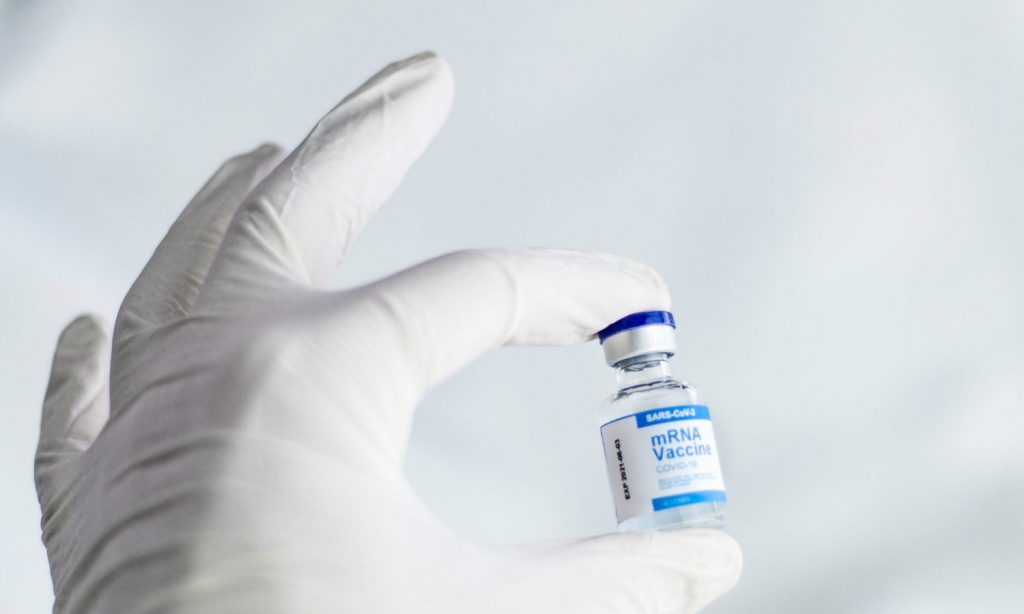
Americans are becoming eligible for the third round of COVID-19 shots. These much-debated vaccines are said to extend people’s immunity to the virus, hopefully curbing the spread of the Delta variant. And while many of us want to get a booster as soon as we’re able, These Are The People Who Might Need COVID-19 Booster Shots Most.
The first two rounds of vaccines weren’t exactly a joyful experience for a lot of folks who reported negative reactions. So, what are the side effects for this booster?
While there’s little data out there, Pfizer submitted some research on their trial of the COVID-19 boosters. The main side effects associated with this shot are similar to the reactions of the first couple of rounds with the vaccine. Here are some of the main symptoms that have been recorded and documented by experts.
Pain at injection site
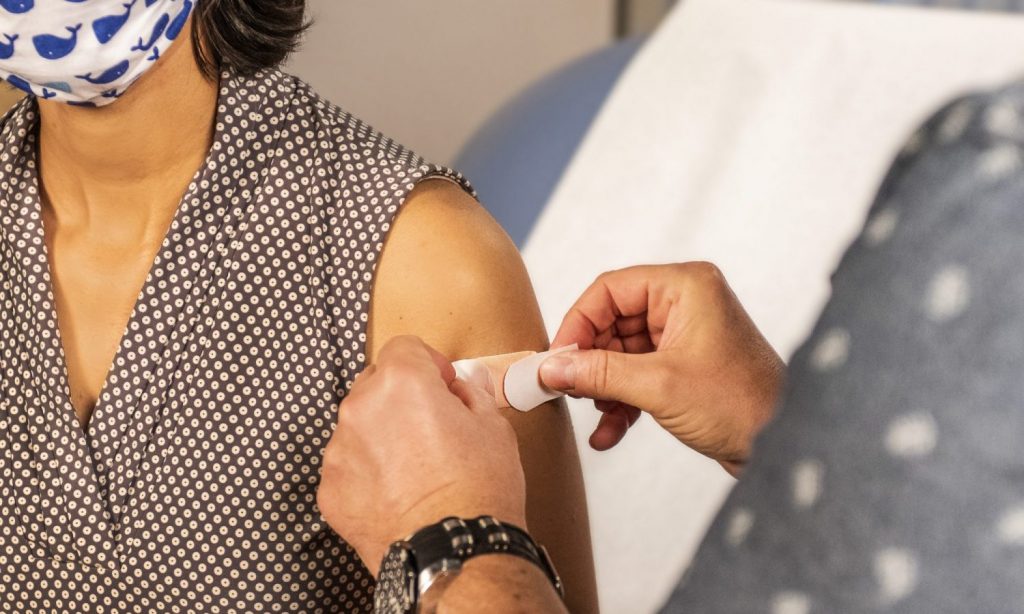
Photo by CDC via Unsplash
Per Pfizer’s data, pain at the site of injection was the number one side effect reported. Per the Centers for Disease Control and Prevention (CDC), the best way to treat this is to apply a cold, wet wash cloth at the site of injection and to move your arm, even if it really doesn’t want to.
Fatigue
Similar to the first and second dose, fatigue was also reported on the trials of the third shot. It was the second most common side effect reported, but it’s not known if the fatigue was stronger or weaker than the one experienced during the first two shots.
Muscle pain is a very common side effect of a wide variety of vaccines, including COVID-19 boosters. In order to treat this, avoid ibuprofen, acetaminophen and the like, since these can lessen your body’s response to the vaccine. To treat these aches try to get plenty of rest and to stay hydrated.
The most uncomfortable side effect of the COVID-19 vaccine are definitely the chills and fever. Be prepared for this reaction, and make sure the day following your vaccine you have plenty of time to rest and watch TV.
A safe assumption to make is that you’ll likely feel very similar to the way in which you felt when you got the first and second COVID-19 shots. While not fun, it’s also discomfort that will pass within a couple of days and that your body has coped with before, meaning that there are no surprises.
These habits are simple and don’t take much work, which is what matters most. Here are 5 weekend habits for a more productive week.
When it comes to your productivity during the week, we tend to focus on the week itself, starting Monday. On the weekends, we tend to sleep in late and delay all sorts of responsibilities, which is perfectly respectable. This article isn’t meant to shame you; weekends are very important for resting, and if you want to sleep in late then that’s totally okay.
These weekend habits are simple and can be adopted without much hassle.
Do a weekly check-in
Photo by Daria Shevtsova via Unsplash
Whenever you have time on the weekend, do a check-in with yourself. Write down in your phone or a notebook the highlights of your week, including the good and the bad. These check-ins can help you take stock of your emotional situation, and can help you reorient your life and prioritize your goals.
Questions that can help you get started include: What are my long-term goals? What do I want to accomplish this week? What was good about this week? What can I improve?
Try your best to disconnect
Photo by Konstantin Dyadyun via Unsplash
We have a very co-dependent relationship with our phones. Try your best to avoid checking your emails and to disconnect as best as you can from your devices over the weekend. While it’s difficult to steer clear of social media, it does help to fill your day with other activities, even if you’re at home watching TV or smoking a joint.
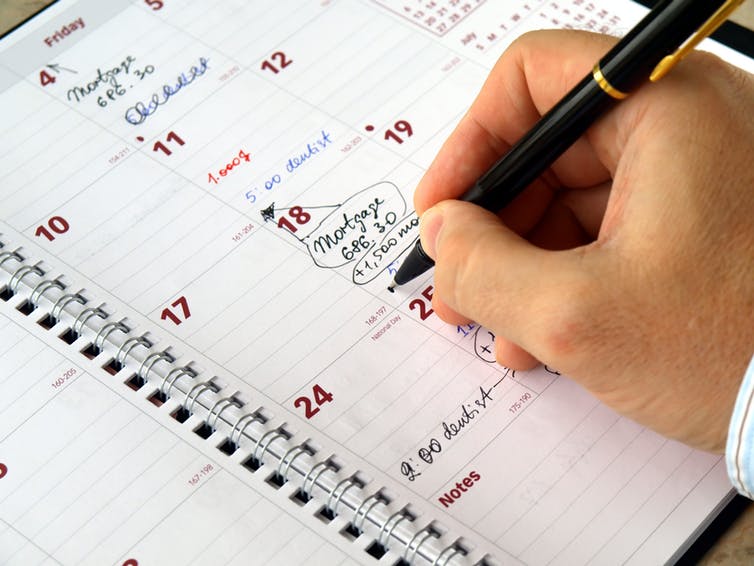
Take an hour or 20 minutes out of your weekend to make plans for your week. Schedule tasks and events ahead of time, whether that means weekend trips or work meetings. While difficult, make sure to not work during this amount of time, using your time only to plan things.
While we sometimes leave chores for the weekend, try to get these done during your week to give you more free time to relax. While some chores are unavoidable and it might be too much to ask to get them done during the week, a helpful tip could be to split them up during weekdays, making these tasks more manageable. While you may still have to rearrange a thing or two during your weekend, it won’t take up your entire Saturday.
Bond with others
Photo by jens johnsson via Unsplash
It’s very easy to spend your weekend as a puddle in bed. While necessary sometimes, it’s also important to bond with others during your weekends and to spend time outside, whether you’re having a drink alone at a restaurant or going to the movies. If you’re feeling too drained, check in with your important connections via text or phone call. It’s important to remain active through your weekend, including your social relationships.
It’s become more and more commonplace to find Delta-8 THC products on the shelves of your local gas station or convenience store.
Upon walking into your local vape shop, you might have noticed some new products on the shelves called Delta-8 THC. Since it’s not CBD or the THC buds you’ve grown accustomed to, your curiosity starts to take over. This leads you to wonder what Delta-8 THC products offer that other forms of THC don’t. Similarly to its more popular counterpart Delta-9, Delta-8 THC consumption comes with its fair share of controversy. So is Delta-8 THC right for you?
States like Colorado, Kentucky and Michigan have already gone as far as banning the sales of Delta-8 products. Why? Due to the fact that Delta-8 is produced by various companies each possessing their own process for producing the cannabinoid, there are little to no regulations for them to obey. Additionally, third party testing is often overlooked by companies producing delta-8 THC which opens up the risk for users to ingest unhealthy substances inadvertently.
Complicating matters even further is the fact that the World Health Organization (WHO) has stated that the guidelines of Delta-8 production are too vague. Taking that into consideration, getting a clear understanding on the legality of Delta-8 THC in your state or municipality is vital. Here are a few ways you can find out if Delta-8 THC is worth trying:
Are You Struggling to Find Normal THC Products?
Since Delta-8 products are federally legalized under the 2018 federal Farm Bill, it’s become more and more commonplace to find Delta-8 THC products on the shelves of your local gas station or convenience store. Taking that into consideration, Delta-8 THC could be seen as a suitable replacement should the good stuff not be readily available. Even better is the fact that most Delta-8 THC products can be found in both flower and concentrate form, providing users with the option to vape or smoke however they please.
Do Typical THC Products Make You Uneasy or Anxious?
Let’s say you don’t partake very often because for some reason getting high sends your anxiety through the roof. If that’s the case, Delta-8 THC could be just what the doctor ordered. Users who would typically experience anxiety after consuming regular THC products often report a more subdued experience after consuming Delta-8. This means experiencing less paranoia and fatigue, and more time to relax with your favorite snack or movie.
Do You Need Help Relaxing or Sleeping After a Long Day?
Given the fact that Delta-8 THC is chemically similar to Delta-9 THC (the one we all know and love), the differences between the two are hard to distinguish right off the bat. The reality is that’s because they provide highly similar sensations. Both cannabinoids are known to produce a sensation of euphoria, and delight, along with a hint of drowsiness. Since Delta-8 THC provides that sensation without the anxiety, this helps make the case that it can serve as a fairly effective sleeping aid.
Ultimately, there’s only one foolproof way to tell if Delta-8 THC is right for you, and that’s to try it! That’s especially the case for those of us who’ve had less than stellar experiences with traditional Delta-9 THC. Consumers in states where Delta-9 THC hasn’t been legalized for recreational purposes will find that Delta-8 THC products offer nearly the same experience they’re used to without the hassle. Keep this in mind for the next time your jar runs dry.
Medical and recreational marijuana programs have been enabled across the U.S. But is it okay to you use your medical marijuana card in other states?
The culture surrounding cannabis is changing fast. As more and more states legalize the recreational and medical use of the plant, what was accepted a year ago might now be totally different in your state of residence, prompting many to ask questions. For example, can you use your medical marijuana card in other states?
While crossing state lines with cannabis remains illegal — even if it’s medical — using your medical cannabis card in another state is possible if you’re informed about the local regulations. The answer depends on where you’re purchasing the cannabis and on that state’s medical cannabis reciprocity rules.
Medical cannabis reciprocity basically allows patients to carry and use their medical cannabis while outside of their state without fear of punishment. The list of states with cannabis reciprocity includes: Alaska, Arizona, Arkansas, California, and more, according to this list published by Cannabis Doctors of New York.
Still, it’s a little more complicated than simply grabbing your medical marijuana card and buying some weed in these states. Each of these states has independent rules and regulations, with states like New Jersey having lax rules and others, like Arizona, having a more limited set of conditions, requiring patients to have specific conditions in order to meet the state’s medical marijuana program.
States with a recreational marijuana program rulings in place, like Nevada and California, are easier. Medical marijuana cards are not necessary, since anyone over the age of 21 is able to purchase it.
In short, when trying to use your medical marijuana card outside of your state, do your research and keep the following things in mind: If you’re traveling to a state with legal medical marijuana, learn about their reciprocity rules and whether or not your medical condition fits with the state’s criteria.
When considering crossing state lines with marijuana, think twice. Even medical marijuana remains illegal due to marijuana’s classification as Schedule I drug. When traveling somewhere with legal recreational marijuana, don’t worry. Just pack enough money.
COVID-19 has caused us all to be very invested in the future of vaccines. Here is one vaccine that experts think will soon be ‘obsolete.’
COVID-19 vaccines were developed extremely fast. While at the start of the year there was only one to choose from, now, there are several vaccines that have earned emergency FDA approval and full FDA approval. The three main vaccines in circulation, at least in the U.S., are Pfizer, Moderna, and Johnson & Johnson. While the first two use mRNA technology, the latter is a viral vector vaccine. According to experts, this could mean the Johnson & Johnson vaccine is on its way to becoming obsolete.
When speaking to Yahoo Finance, the former head of Global Health and Healthcare at the World Economic Forum, Arnaud Bernaert, explained that viral vector technologies will soon become obsolete. It’s expected that mRNA vaccines will then dominate, becoming the vaccines that most people use in order to stay protected from a variety of viruses.
“I think it’s game over. I think it’s mRNA or nothing. [Other technology] takes too long,” said Bernaert, adding that mRNA vaccines have long been praised for their low costs, safety, and capacity for rapid development.
Per the CDC, mRNA vaccines “teach our cells how to make a protein that triggers an immune response inside our bodies.” In contrast, vector vaccines are the vaccines most of us have grown up with. They function by introducing a controlled version of the virus into people; once the virus is in the cells, it instructs the body to produce antibodies and white blood cells. Currently, mRNA vaccines make up 60% to 70% of the market.
Another perk of the mRNA vaccines, and one that’s especially valuable given the state of the pandemic, is the capacity that these formulas have to adapt. Scientists are able to make small changes in these vaccines, addressing new variants and making them stronger and more resistant to different strains of the same virus.
Johnson & Johnson isn’t the only viral vector vaccine available on the market; AstraZeneca is also a viral vector, and it’s been widely used to vaccinate people in a variety of countries. Despite the hurdles that these vaccines have faced, they’re both safe and effective against COVID-19. Still, it appears that the use of mRNA vaccines is on the rise and that more and more companies will want to get involved with them.
Among college students specifically, there was also a significant increase in the annual use of hallucinogens and a substantial and significant drop in current alcohol use.
Marijuana use among college-age hit historic high. Students and same-aged peers who are not in college took to cannabis in record numbers, according to survey results from the 2020 Monitoring the Future (MTF) panel study, reported by the National Institute on Drug Abuse (NIDA).
This represents the highest levels of marijuana use recorded since the 1980s.
Photo by Alexis Brown via Unsplash
The Kids Are Alright
The survey also found that marijuana vaping and nicotine vaping leveled off in 2020 after sharp increases were reported every year since 2017 for both college students and same-aged respondents who are not in college. One might conclude that cannabis vaping decreased when the vaping crisis hit nationwide and health authorities found undisclosed additives and cutting agents like Vitamin E acetate in cannabis concentrates.
“That’s when I quit vaping. I have not and probably will not go back to it,” one Ohio college student told Benzinga, not wishing her name to be used, as cannabis is still illegal in the Buckeye State.
Psychedelics On The Rise, Alcohol Use Declines
Among college students specifically, there was also a significant increase in the annual use of hallucinogens and a substantial and significant drop in current alcohol use between 2019 and 2020.
“The COVID-19 pandemic dramatically changed the way that young people interact with one another and offers us an opportunity to examine whether drug-taking behavior has shifted through these changes,” said NIDA Director Nora D. Volkow, M.D.
“Moving forward, it will be critical to investigate how and when different substances are used among this young population and the impact of these shifts over time.”
NIDA, part of the National Institutes of Health (NIH), funded the MTF study, which has been annually tracking substance use among college students and noncollege adults ages 19-22 since 1980. The survey is conducted annually by scientists at the University of Michigan’s Institute for Social Research, Ann Arbor. The 2020 survey, based on responses collected online from 1,550 college-aged adults between March 20, 2020 through November 30, 2020, noted the following key findings:
Photo by tortugadatacorp via Pixabay
Marijuana use reached the highest level in over three-and-a-half decades in 2020.
Forty-four percent of college students reported using weed in 2020, compared to 38% in 2015 — a significant increase. For young adults not in college, annual marijuana use in 2020 remained at 43%, basically the same as 2018 and 2019.
In contrast and worth mentioning, similar increases and record highs in marijuana use were not observed among 12th graders in recent years, with 35% of high school seniors reporting using marijuana in the past year in 2020, thus supporting a recent American Medical Association study that marijuana legalization laws are not associated with increased use among high school students.
Cigarette smoking is down, with only 4% of college students and 13% of non-college respondents reporting having smoked in the past month.
Non-medical use of amphetamines and opioid use continued to decline among college students and non-college peers.