Cases of breakthrough COVID-19 are rare, but they’re going to become more popular as long as the Delta variant spreads.
The threat of breakthrough COVID-19 is keeping us all on edge, especially those who are most susceptible of getting sick. While all vaccines that are currently circulating in the U.S. provide sufficient protection from the virus, there’s one vaccine that provides less protection and leaves people more exposed to the disease.
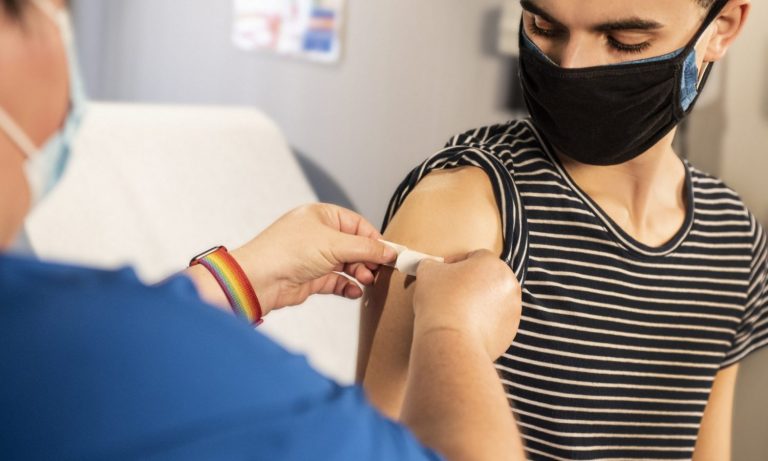
Data collected by the Centers for Disease Control and Prevention (CDC) reveals that the Johnson & Johnson vaccine showed the highest case of post-vaccination COVID. Still, it’s important to know that any vaccine can’t completely protect people from COVID-19.
Stats show that in D.C., 151,000 people received two doses of Pfizer, 124,700 received two doses of Moderna, and 24,000 had Johnson & Johnson (viaLive Science). Recipients of the Johnson & Johnson vaccine had 0.32 of breakthrough COVID-19 infections compared to 0.2% and 0.13% of Pfizer and Moderna respectively. While there are different rates of vaccinations per state, they have reflected these same stats.
“No vaccines are 100 percent effective at preventing illness in vaccinated people. There will be a small percentage of fully vaccinated people who still get sick, are hospitalized, or die from COVID-19,” according to the CDC. Still, this happens in all manner of diseases, especially with one as spreadable as COVID-19.
While breakthrough COVID-19 is scary, vaccines were never intended to be 100% effective. As the virus mutates and continues to change into more spreadable variants, it’s important for people to get vaccinated and not take breakthrough COVID-19 as license to disregard vaccinations altogether. The more people get vaccinated, the fewer odds the virus has to mutate and the sooner the pandemic can truly end.
The psychedelics space is heating up, and major players have taken notice.
The market is bolstered by a growing number of decriminalization movements across the United States, as well as an increasing number of market participants, including names like COMPASS Pathways PLC (NASDAQ:CMPS), Field Trip Health Ltd (NASDAQ:FTRP), Cybin (NYSE:CYBN), Enveric Biosciences Inc (NASDAQ:ENVB), Hollister Biosciences (OTC:HSTRF) and Revive Therapeutics (OTC:RVVTF).
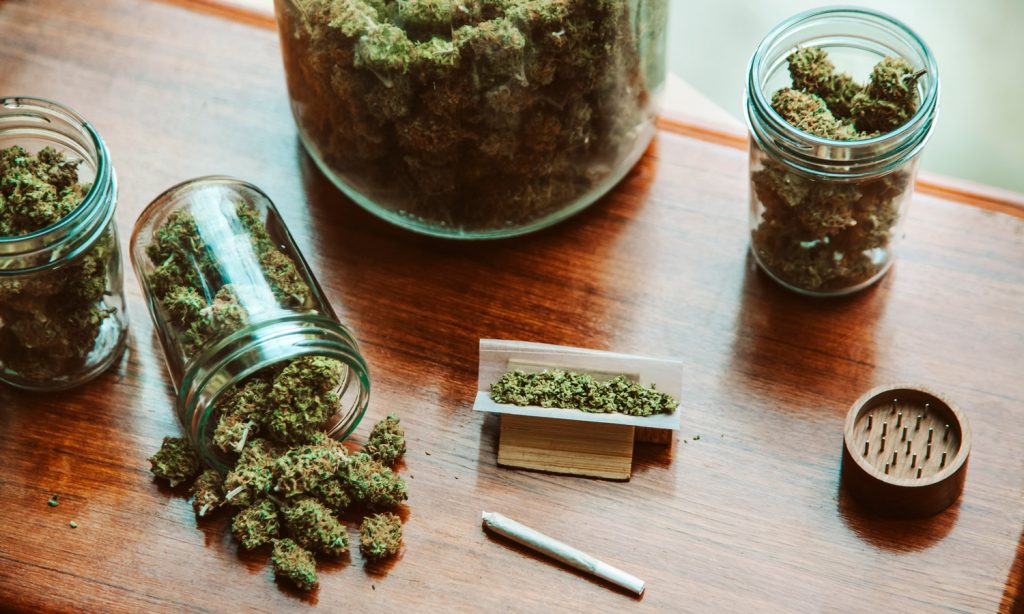
Photo by krencin via Pixabay
Cannabis companies are joining the market, as are notable leaders from the marijuana space. Notable names include former Canopy Growth Corp (NYSE:CGC) CEO Bruce Linton, now a director for Toronto’s Mind Medicine (MindMed) Inc (NASDAQ:MNMD) and chairman of the advisory board for Red Light Holland (OTC:TRUFF), a brand focused on truffles.
In June of 2020, Aurora Cannabis (NYSE:ACB) co-founder Terry Booth left his cannabis venture. In doing so, Booth has shifted attention towards psychedelics, investing in Red Light Holland. Booth also joined Psyched Wellness Corp.’s board in May.
What’s The Appeal Of Psychedelics?
Those who spoke to Benzinga for this article believe that the interest in the emerging space stems from creating a medical impact as well as cannabis regulatory frustrations.
Linton told Benzinga his interest in the market was two-fold.
One, the decision was driven by a belief that Linton could provide a more significant medical impact with psychedelic substances.
The other reason “was cannabis had really stupid rules and policies around it for quite a long time,” said Linton, who prefers proper regulation over decriminalization.
Ronan Levy, executive chairman of psychedelics therapy company Field Trip, elaborated on cannabis and psychedelics’ regulatory appeal.
“For entrepreneurs in the cannabis industry, with the regulatory, reputational and legal risks inherent to cannabis, one’s appetite for uncertainty has to be even greater,” said Levy.
He touched on why psychedelics have a clearer legal understanding than cannabis.
“The legal environment for psychedelics is much more transparent than cannabis, with psychedelics being driven by scientific and academic research seeking regulatory approvals, rather than grassroots political efforts as in the case of cannabis,” said Levy, noting how the situation allows for easier market participation.
Photo by Nathaniel Paluga, Wikimedia user Drpaluga
While not downplaying marijuana findings, Levy stated that psychedelics research is more persuasive due to a currently larger body of lab studies.
The executive chairman discussed the medical impact as well, positing that cannabis entrepreneurs have likely been inspired by seeing the change marijuana and psychedelics have had on patients.
“It would seem natural for cannabis entrepreneurs to see past the stigma of psychedelics to the potential for creating real, meaningful impact and change,” Levy said.
What To Consider
Operators and company leaders tend to agree that the psychedelics demographic could equal or surpass the wide stretch of cannabis and stated that the segment is just taking shape.
“I don’t think there’s a specific demographic that can benefit but more-so specific ailments that we know these substances can be effective for,” said Josh Bartch, president and CEO of Mydecine Innovations Group Inc (OTC:MYCOF).
Bartch, who said his company considers consumers patients, said those receiving treatment could include those with terminal illnesses as well as those living with PTSD.
With such a wide range of potential patients, psychedelics operators believe the market is just picking up, with a lot to learn and more coming.
“Even though there is an incredible amount of excitement today, the game hasn’t even started yet,” said Field Trip’s Levy.
Noting that regulations are still largely uncertain, like cannabis, Levy advised, “Make sure that whatever business opportunity you are pursuing in psychedelics, that you are playing the long game.”
Mydecine’s Bartch noted that a wide range of treatments could create confusion for newcomers. Offering up a solution, the president and CEO said, “Make sure you have a specific focus on what you’re ultimately trying to accomplish.”
Bartch added, “Evaluate the other players in the space that are also trying to accomplish that or similar goals and make sure that your team drastically outperforms them.”
A new survey shows how cannabis has impacted our workouts during the pandemic. Here’s the breakdown of THC and CBD users.
COVID-19 has affected a big part of our lives. Even though 2021 has been, in many ways, a return back to normal, the pandemic is still ongoing, and we’ve learned a few habits that we’ll incorporate into our new normal, including the way in which we consume our cannabis. While the pandemic clearly facilitated more weed smoking, a new study found that it also made it more common to work out while high.
The study, conducted by fitness review website FitRated, surveyed over 1,000 people who incorporate cannabis in their workouts. The survey, taken between April 22-28, 2021, specifically asked participants about cannabis-fueled workouts during the height of the pandemic and how their usage has changed since the pandemic began. Depending on whether it was THC or CBD, those surveyed used cannabis in different ways.
Results show that THC users consume cannabis before or during their workouts, using it as a stimulant or tool to focus. CBD users consume cannabis after their workouts, taking advantage of the compound’s restorative properties.
When asked about cannabis use before workouts, the majority of people said they discovered a method that works best for accomplishing their workout routine. When asked whether cannabis made them too lethargic to work out, 46% of participants said that it didn’t. Forty-one percent of THC users said that cannabis helped them get motivated enough to exercise.
Photo by Luke Chesser via Unsplash
When speaking about breaking personal records, 62% of THC users said they broke personal records after using cannabis. Half (50%) of CBD users said the same. By a small margin, CBD users were able to workout for longer periods of time (48 minutes vs 45 minutes from THC users). When it comes to workout intensity, 62% of cannabis users of all types said that their workouts with cannabis were more intense than if they were working out with it.
While being an enlightening read, the study crystalizes some of the main differences between working out with CBD and working out with THC. Both are motivators, but THC seems to make workouts more intense and focused, while CBD helps with recovery.
Cannabis could be just the thing to get you motivated to get back to moving.
We believe Kathy Hochul may view cannabis as a popular initial (or near term) issue to champion at the start of her term thus gaining an initial win under her belt.
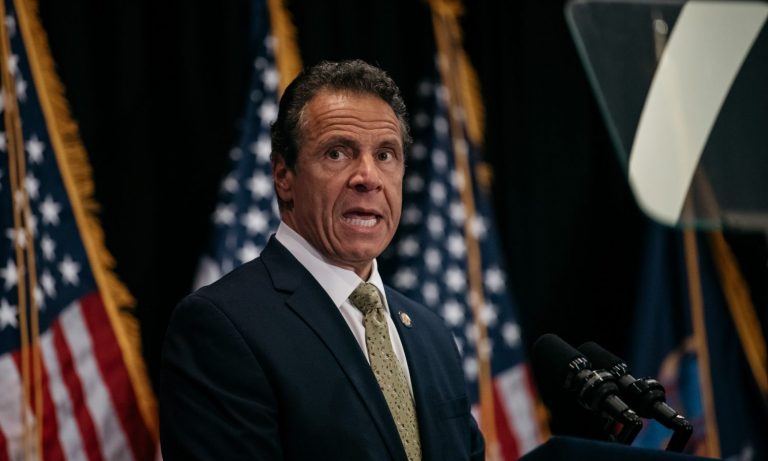
New York Governor Andrew Cuomo announced plans to step down as of August 24. Mr. Cuomo will be replaced by Kathy Hochul, the Lt. Governor of New York. We believe this transition likely puts the New York rollout of recreational cannabis back on track and may even accelerate the time line of initial sales from the original summer 2H/22 targets. Prior to the Governor Cuomo news, many industry participants were beginning to believe a 2023 start was most likely.
Despite passing legislation in March, Mr. Cuomo has always been a reluctant supporter of cannabis legislation and in recent months, the timing of a rollout became uncertain as he and other state leaders politicized the issue leveraging cannabis to get other topics prioritized. Most recently, the Governor and Senate leaders have jockeyed over who will be appointed to lead the Office of Cannabis Management and the Cannabis Control Board. Both sides supposedly are looking to win favor for other issues with appointees. Meanwhile the two state offices are integral in setting legislation and giving operators sufficient transparency to fund the build-out of assets and future capacity.
Photo by KC Kratt via WikiMedia Commons
For her part, Ms. Hochul has historically not been an avid supporter of cannabis legislation but appears to be a realist and this winter, endorsed the law highlighting the New York’s budget deficit and social equity causes as motivation. Ms. Hochul is expected to be more cooperative than Governor Cuomo and we believe the new Governor may view cannabis as a popular initial (or near term) issue to champion at the start of her term thus gaining an initial win under her belt.
As for operators, we believe any fast tracking of legislation will be positive particularly for the ten companies with existing medical licenses. As we have previously noted, the 10 existing medical license holders get significant and sustainable competitive advantages under New York’s law including vertical integration and the permitting of additional dispensaries beyond the state quota. Given that New York is expected to quickly become one of the largest cannabis markets in the U.S. (we estimate ~$2B by 2025) and the fact that in almost all new markets existing operators benefit from early mover advantages, we expect each of the 10 license holders to generate outperforming revenues and profits in the near term if they buildout assets.
Meanwhile, if any of the licenses are put up for sale we expect these to be some of the most sought-after assets in U.S. cannabis and to garner a premium takeout price well-beyond the valuation of current operators. We expect any new licenses issued to also be highly sought after particularly anything permitting New York City access or cultivation/production at scale and believe all MSOs will look to quickly enter the market.
Photo by Alex Azabache from Pexels
Investment Highlights:
Governor Cuomo departure may accelerate cannabis roll-out or at least steady the timeline.
• NY cannabis legislation passed in March however recent progress has stalled.
• State expected to quickly be one of largest markets in US. Within the law there are significant competitive advantages for existing operators.
• 10 existing operators. Publics: Acreage, Columbia Care, Cresco, Curaleaf, iAnthus, Goodness Growth, Green Thumb, Medmen/Ascend.
• Expect advantages to translate to outperforming results and premium valuations.
• Continue to believe new licenses will be sought after even as less valuable.
It challenges the conventional wisdom that the federal ban on marijuana gives legalization states free rein to discriminate against outsiders in their local cannabis markets.
A Vanderbilt legal paper published in the Boston University Law Review called “Interstate Commerce in Cannabis” shows that shipping cannabis to other states may already be legal and more plot twists lie ahead for the cannabis industry.
The day the earth stood still is how science fiction may classify the new legal review from Robert Mikos of Vanderbilt Law. To sum up the legal review of the current marijuana industry, Mikos concludes a few things, per say:
Photo by Khwanchai Phanthong from Pexels
Interstate commerce is probably already legal due to the Dormant Commerce Clause (DCC) in the US Constitution.
From the abstract:
It challenges the conventional wisdom that the federal ban on marijuana gives legalization states free rein to discriminate against outsiders in their local cannabis markets. It also debunks the justifications states have proffered to defend such discrimination, including the notion that barring interstate commerce is necessary to forestall a federal crackdown on state-licensed cannabis industries. The Essay concludes that the restrictions legalization states now impose on interstate commerce in cannabis likely violate the Dormant Commerce Clause (DCC). The Essay also examines the ramifications of this legal conclusion for the future of the cannabis market in the United States.
Full legalization will create an industry with a few dominant players due to economies of scale and bulk prices.
Areas that have lower costs of labor and electricity will see an uptick in job creation and business volume, whereas areas with higher labor costs and fixed costs will see growing and harvesting jobs to cheaper states. From the abstract:
It suggests that without the barriers that states have erected to protect local firms, a new breed of large, national cannabis firms concentrated in a handful of cannabis-friendly states is likely to dominate the cannabis market. This development could dampen the incentive for new states to legalize cannabis and further diminish minority participation in the cannabis industry. To address these concerns, congressional legislation may be necessary, because individual states have only limited capacity to shape the national market and the firms that compete therein.
Photo by Cavan Images/Getty Images
Full legalization will be a step backwards for social equity and economic empowerment movements as states have only so much power to create “protective” businesses avenues for these applicants…
…and the Federal government would have to step in and help if real growth is to be seen for SE and EE applicants.
State decisions to ban outsiders from owning or participating in cannabis industries would most likely not stand up to legal challenges…
…as we have already seen this in states like Maine. The discriminatory actions by the state to limit licenses to residents only will be overturned by Federal fair-trade practices and interstate commerce rules. From the conclusion of the paper:
The state laws that maintain these local industries, however, are legally questionable. The discriminatory restrictions states have imposed on interstatecommerce in cannabis are likely unconstitutional under the DCC. For one thing,Congress has not suspended the operation of the DCC’s nondiscrimination default rules. The federal ban on all marijuana commerce simply does not give legalization states license to discriminate against outside cannabis firms and investors. In addition, states lack a credible legitimate rationale for quashing interstate commerce in cannabis when they permit intrastate commerce in the same. In short, to the extent that states allow any commerce in cannabis, they likely must put outside firms and investors on an equal footing with locals.
If you are in the industry, some of the paper’s conclusions about large MSO’s and economies of scale taking over are well discussed points. State rules for local ownership have already been challenged in court and overturned. Yes, social equity and economic empowerment candidates may be left in the dust with full legalization unless the federal government steps in.
Photo via pxhere
One curious argument not looked in the paper is that if cannabis’s margins have a “race to the bottom,” where grow operations will move to cheaper areas based on labor costs, electricity, and water, what happens when U.S. federal legalization hits the U.N.? Yes, areas with lower labor and production costs may gain marijuana jobs, but what happens when much cheaper places like Mexico, Brazil, Colombia, and Costa Rica begin to export their cannabis production? It won’t be a U.S. race to the lowest costs, but an international race to the bottom. Based on how fruits, vegetables, car parts, lumber, and other international businesses work, the U.S. may not be the biggest or best cannabis producer on the planet.
Once the U.S. federally legalizes the plant, then the U.N. will have to change its drug treaties and now 163 other countries will be able to grow cannabis and export it without fear from the U.S. judicial or financial system.
Can cannabis farmers in the Emerald Triangle grow cheaper marijuana than Mexican farms just south of San Diego? Conventional wisdom says, no.
Will a cannabis company willfully ship cannabis across a state line and document it in order to challenge the legal standing that marijuana, although a Schedule 1 drug, cannot gross state lines under the Schedule 1 CSA rules? Probably not because of Schumer’s recent introduction of the CACO legalization bill. The industry will wait and see how the voting and lobbying goes for that bill, many are hoping for a pleasant surprise with the likes of Amazon and conservative billionaire Charles Koch now supporting cannabis legalization.
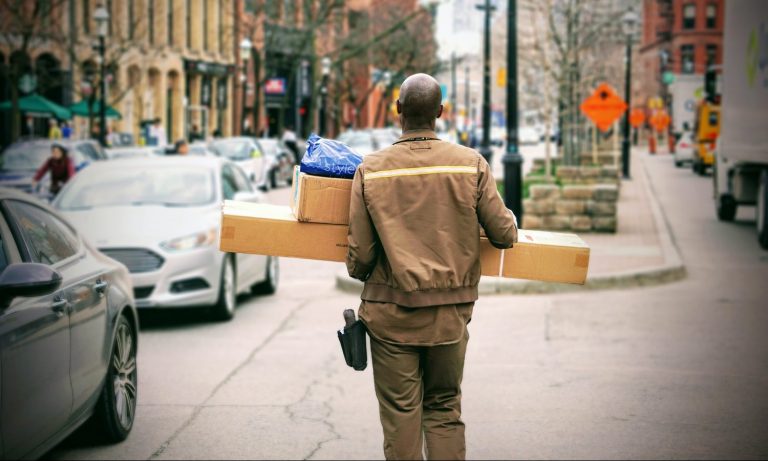
Time will tell if anyone ships cannabis with the intent to get caught and challenged the Schedule 1 rules with the Dormant Commerce Clause, but if you are caught selling cannabis and sending it through the mail or UPS, I would certainly show this legal paper to my lawyers.
The paper is an easy 40-page read that you can check out here, and it is written for non-lawyers to understand as well. It is a must read for cannabis enthusiasts and pro-cannabis legal advocates.
Dating in today’s world involves asking a lot of questions, including those referencing the COVID-19 vaccine. Here’s how to broach these sensitive topics.
Dating has been heavily affected by the pandemic. While not all of us steered clear of meeting others in person, a large percentage of people added virtual dates to their roster, breaking their COVID-19 protocols only after they were vaccinated. Nowadays, on a first date, you’ll likely reach the awkward moment where you ask each other whether you’re vaccinated or not, getting an inkling towards the other person’s approach to the pandemic.
The rise of COVID-19 has also brought a rise of wellness and health-related questions into dating, with the previous year and people’s experiences playing a role in people’s conversations. The New York Times spoke with several experts, who explained the best ways to broach sensitive topics like whether or not someone has the COVID-19 vaccine, their safety measures, and mental health status.
While a lot of people get into the details of their vaccine as soon as possible, including it in their profiles or discussing it over texts, others take a more cautious approach. There’s not a wrong way to approach the topic, but Dr. La Keita Carter says that a question like “Tell me what you think about the vaccine,” is a good starting point.
Topics like mental health aren’t usually ice breakers, but this year, all bets are off. Asking about someone’s experience during the pandemic and their mental health is a nice thing to do, and might be easier than avoiding the elephant in the room. Asking them straight out with an open question like “How did the pandemic affect you?” or simply opening up a bit and sharing your own experiences without going overboard could be a good way to get to know each other.
Dating in this climate is not the easiest of things to do, so it’s important to be kind to yourself and date as often as you feel comfortable with. Some people may achieve this comfort with more ease than others, and that’s fine. Take your time.
This is an interesting switch. The most sought-after weed exchanging hands at the U.S.-Mexico border is coming from the green fields of California and being sold in Mexico, instead of the other way around.
According to a Washington Post source who happens to be a cannabis dealer in Mexico City, California-imported weed dominates a booming boutique market in Mexico rather than weed from traditional sources such as the Sinaloa cartel or the newly independent “ethical growers.”
Photo by Filip Gielda via Unsplash
“The demand here for American weed has exploded,” said the WAPO source who spoke on the condition of anonymity for obvious reasons. “It’s aspirational for many of my clients. They want to be seen smoking the best stuff, the stuff rappers brag about smoking.”
No More Flinging Weed Across the U.S. Border
Gone are the days when Mexican pot smugglers catapulted bushels of weed across the border using the world’s largest slingshots, or stuffed vacuum-packed bricks into fruit shipments to slip across one of the longest (1,954 miles) and most frequently crossed land borders in the world.
Several hundred yards from the busy Tijuana border, Josh Bubeckowner, of the Urbn Leaf cannabis dispensary, estimates some 55% of his customers are Mexican nationals, he told WAPO.
California Weed: Nobody Grows It Better
“Nobody is going to grow cannabis better than California probably ever,” Bubeck said.
He noted that back in Mexico, especially for younger smokers, the appeal is clear: “You’re showing ‘This is what I’m about. I’m a bad ass. I got this from America.’”
For years, legalization advocates in Mexico argued that the country could easily establish a wildly profitable cannabis industry, but legalization came faster to parts of the U.S. — mostly importantly California — than its neighbor to the south.
This July, Mexico’s supreme court struck down laws that criminalized the cultivation of cannabis for personal use but have not yet approved legislation that would allow a commercial marijuana market to be set up, making it illegal to buy or sell cannabis and as impossible to regulate the quality of Mexican cannabis products available on the illegal market, noted WAPO.
Meanwhile, Mexico still grapples with the task of setting up a legal framework for a plant that grows like a weed in the Mexican countryside.
Young adults are the most resilient to COVID-19. They’re also the least likely to get it. Here’s why it’s important for them to get vaccinated.
Of all demographics, young adults are the least likely to get the COVID-19 vaccine, according to the Centers for Disease Control and Prevention (CDC). These stats are likely due to young people thinking that their systems are better able to cope with the virus, which is true in theory. With COVID-19 cases on the rise and the more contagious Delta variant running loose, it’s more important than ever for every person who’s able to get their vaccine.
In order to reach herd immunity, every person that qualifies needs to get their vaccine. The sooner this is achieved, the better odds we have at preventing the development of new variants and keeping everyone safe.
Not only are vaccines safe and effective, they’re also pivotal in keeping your community safe, especially people that are immunosuppressed or have comorbidities to contend with. Here’s why young and healthy people should get their vaccine as soon as possible:
Vaccines are safe and effective
Photo by CDC via Unsplash
COVID-19 vaccines were developed in a short amount of time, but they’re incredibly safe. Their development was the outcome of years of successful medicine. And while the process was sped up due to the nature of the virus, the FDA and CDC have treated the vaccine as if it were any other, approving only the shots that were effective and safe for the majority of people.
Reports of breakthrough COVID-19 are also rare. According to the CDC, while it is possible to get COVID-19 with a vaccine, having the shot makes it less grave and likely to result in hospitalization. At the same time, the vaccine reduces your odds of spreading the virus to other people.
Side effects are manageable
Photo by Polina Tankilevitch via Pexels
As is the case with every vaccine ever made, the COVID-19 vaccine has a few side effects. It’s common to feel flu-like symptoms after receiving it, even fever and pain in the location of the injection. This is due to your immune system developing a strong reaction to the virus, and thus developing more immunity.
Side effects like blood clots, which have been reported with the Johnson & Johnson vaccine, are very rare. When it comes to claims like the vaccine damaging fertility or producing effects that will appear long term, according to the CDC, they are not based in any scientific evidence and are dangerous misinformations to spread around.
While young people may think that they’re safe from the virus, getting the vaccine affects their community. When going through daily life, there’s interactions with people of all kinds and ages, from parents to grandparents, to friends that are immunocompromised. By getting the vaccine, everyone is keeping each other safe, eliminating sources of infection.
Vaccines are free and easy to get
Photo by Mat Napo via Unsplash
No matter the state, vaccines are supposed to be free. There won’t be a bills mailed after getting the shot. Depending on your location, vaccines are also easy to get. For finding a vaccination site close to them, people should visit vaccines.gov.
A recent report from Flowhub finds the U.S. cannabis industry is worth $61 billion. However, much of the industry will be forced to change once Uncle Sam gets in on the mix.
Ask any longtime supporter of the cannabis legalization movement, and they’ll tell you, ready or not, that a taxed and regulated pot market is all the country needs to turn around hard economic times. Think about all the money the federal government can make from tax revenue alone, they often say.
The only problem is those people are the ones refusing to pay the taxman. In Canada, the cannabis trade presently has a 1.1-billion-gram surplus of weed that they cannot sell because many customers have continued to purchase from the black market. Some would even say that illicit sales have set the Canadian pot market up for failure. Of course, this begs the question: Is the United States cannabis market doomed to suffer the same fate?
Photo by Aditya Chinchure via Unsplash
Stockpiles of Canadian weed are going bad before it has a chance to be sold. Around 500 tons of quality retail cannabis has been destroyed over the past couple of years. Sources credit the disaster to the fact that 50% of the weed purchased in the northern nation is still coming from the black market. That’s right, despite having a legit source for buying pot, people would rather get it from their neighborhood street dealer. Why? Because it is cheaper, and people can maintain their anonymity. Some folks do not want to make their pot use public, legal or not. Unfortunately, the loyalty to the black market is sabotaging the profits of Canadian cannabis companies.
In the United States, we’ve seen a similar allegiance to the black market in some states that have legalized for recreational use. California, Illinois, and Massachusetts continue to struggle with illicit pot sales. Some say it’s the expensive startup costs and licensing fees creating the problem. There are, of course, too, all those marijuana consumers — the same ones that asserted back in the days of prohibition that weed could be economic salvation if it was just taxed — who have flat out rejected the idea of paying taxes on something they can still get cheaper from a dude down the street.
But it takes two to tango.
Meanwhile, the federal government is looking at the Great Cannabis Experiment and wondering how it will take it nationwide and make it profitable. Sure, they say ending prohibition is in the interest of social equity and repairing damages from the drug war. Still, the reality is they want to uncover the magic plan that will make legal marijuana as much of a boon to the U.S. of A as alcohol and tobacco. So far, it seems that everyone involved is coming up short.
If you remember, industrial hemp, which was legalized once again back in 2018, was also supposed to provide an enormous financial boost to the country. It was going to be used for food, paper, tires, and everything else. But it hasn’t been able to find any traction. There are oversupply issues, high processing costs, and no new markets. It seems the nation isn’t ready to embrace it just yet.
Photo by Hillary Kladke/Getty Images
Still, financial experts say the United States cannabis market isn’t headed for the same economic troubles as Canada.
“There needs to be a sense of caution when looking at Canadian cannabis companies relative to their U.S. counterparts who are very profitable and continue to grow,” Korey Bauer, chief investment officer and portfolio manager of the Cannabis Growth Fund from Foothill Capital Management, told Market Watch. “Valuations look much better in the U.S. at these current levels.”
A recent report from Flowhub finds the U.S. cannabis industry is worth $61 billion. However, much of the industry will be forced to change once Uncle Sam gets in on the mix. States do not have any federal controls and are mostly left to legalize how they see fit — for now. Senate Majority Leader Chuck Schumer is pushing a bill this year that, if passed, would create national controls. Pot prices will conceivably get more expensive once marijuana goes legal nationwide.
It’s conceivable that this could create a similar surplus situation to what is happening up to the north in Canada. Let’s just say your neighborhood marijuana dealer isn’t likely going out of style anytime soon.
Edibles should be properly wrapped and stored for a longer shelf life. Here are some basics to get you started.
Edibles are fun and delicious, producing strong highs that can last for long periods of time. When used correctly, edibles can produce long highs that are manageable and perfect for daytime use, eliminating some lung damage and perhaps saving you some money. Still, since edibles are food, it’s important to know how to preserve them for best flavor and effect.
Here’s how to store your edibles and keep them as fresh and delicious as possible.
Store them in an airtight container and a cool space
Photo by Devanath via Pixabay
Edibles vary greatly in flavor and type. Edible candies lastly last longer than chocolate, so it’s important to store each in the right place.
Candies and gummies likely have a coating of sugar, which extends their shelf life. As long as you control their exposure to air and temperature, these edibles should last for a good amount of time, for 6 to 9 months, with the harder the candy the longer the shelf life. Wrap them carefully and tightly and place them in an airtight container like a Ziploc bag or a mason jar, and place them in a cool and dry place in your pantry.
Chocolates have a shelf life of up to a year when stored properly. They should be wrapped in tinfoil and stored in a cool and dark place, like your pantry. Make sure to label them properly, since you don’t want to confuse your THC chocolate with your normal chocolate.
Freezing and refrigerating extends shelf life but affects flavor
Photo by Sarah Pender/Getty Images
Your fridge is always an option, adding an extra couple of months to edibles, but know that flavor and texture might be affected. When storing chocolate in the fridge, a white coating may appear, but this is simply reaction from the chocolate’s sugar rising to the surface after having been exposed to the cold and absorbing some moisture. It doesn’t affect flavor and isn’t harmful.
For best performance, store your edible in an airtight container in the fridge and take it out a couple of hours before you eat it, to regain best texture and flavor.
Home-made vs. store bought
Photo by Kari Shea via Unsplash
Store bought edibles have to comply with several guidelines provided by the state, meaning that the majority are shelf-stable for long periods of time. Home made edibles and condiments are a different story, only lasting for a couple of months in the freezer if stored and prepared correctly.
Some basic storage guidelines include properly packaging your foods in glass containers, jars or wrapping them in tinfoil. Every time you grab a piece make sure to use a clean spoon and knife, since a dirty utensil could result in cross contamination and mold.