Monday, May 11, 2026
Home Blog Page 364

There’s Probably Too Much THC In Your Marijuana

0

Legal marijuana products contain extraordinary levels of THC, which could cause dependence and mental health issues with habitual use.

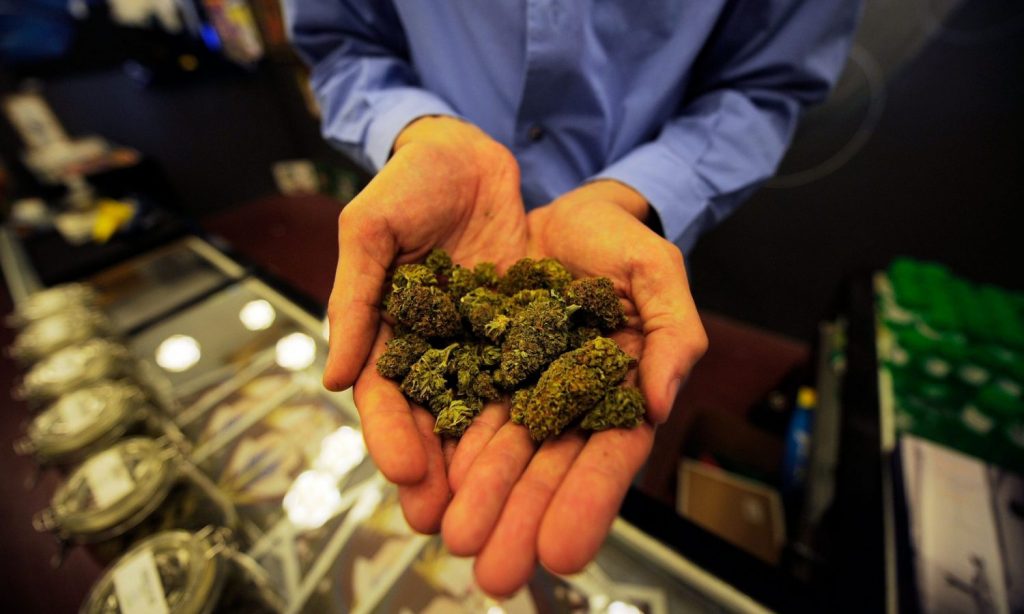
The marijuana you see in stores today isn’t like what the hippies rolled in the 70s. If you follow cannabis news, you have likely heard some version of that sentiment by a public health official. In 2019, U.S. Surgeon General Jerome Adams claimed that today’s cannabis “ain’t your mother’s marijuana” but was three times stronger than weed in the 1990s. Yes, there is probably too much THC in your marijuana.

Marijuana advocate and Canadian author Dana Larsen actually calculated how strong today’s cannabis would be if you accepted similar lawmaker sentiments throughout history. That includes claims by 2002 White House Drug Czar John Walters, who said that cannabis at the time was 30 times stronger than what baby boomers smoked, and President Joe Biden, who once argued that comparing 1990s weed to cannabis in the 60s was like “comparing buckshot in a shotgun shell to a laser-guided missile.”

New Study Suggests Today's Marijuana Is Too Strong
Photo by Thought Catalog via Unsplash

Using all of these historical statements would mean that today’s cannabis is 12,600 times stronger than it was in the 60s, according to Larsen’s calculations. And while that is highly unlikely, we shouldn’t discount how and why cannabis potency has changed in the past decade or so.

RELATED: Is Marijuana Stronger Now Than It Was In The 1960s?

The Colorado Department of Public Health and Environment (CDPHE) released a study last year that examined THC concentrations of weed products sold in legal dispensaries. The report was requested by the Colorado General Assembly. Longitudinal reports like this that are focused on markets in Colorado and Washington provide great insight into the state of legal weed and its effects on consumers, as the two states were the first to legalize recreational cannabis.

RELATED: Federal Health Experts Express Concerns Over Strong Marijuana

Growers in both illicit and legal markets have emphasized THC potency over the past 25 years, as consumers associate higher THC levels with getting the most bang for their buck. A 2016 study found cannabis samples seized by the DEA increase from about 4% THC in the 1990s to approximately 12% in 2014.

FDA Issues Draft Guidance For Cannabis Research
Photo by Cavan Images/Getty Images

But the recent CDPHE report noted that cannabis flower in Colorado contained an average of 19.6% THC per gram with potency reaching 35% in some strains. A 2020 study added that over 92% of products sold in retail marijuana stores contain THC levels at 15% or higher. Edible potency actually decreased because Colorado regulators instituted policy changes that set maximum THC concentration to 10 mg per dose, and only allowed 100 mg THC per package.

Those who consumed THC concentrates (i.e. dabbing) used cannabis more frequently day to day compared to flower users.

RELATED: Marijuana Is Stronger Than Ever, But Don’t Get Too Excited

Previous research found that THC levels in medical marijuana products were two to three times stronger than what doctors recommended for pain relief patients. The study’s authors noted that levels up to 5% THC were sufficient in long-term pain management with minimal side effects.

Marijuana Legalization Makes Black Market Weed Cheaper, Heroin More Expensive
Photo by Matthew Karila via Unsplash

When THC is too strong, it can lead to dependence problems for users. A recent study noted that 30% of marijuana users have some form of cannabis use disorder. Research published in May 2020 added that high-potency cannabis doubles your risk for developing anxiety disorders.

“Our ability to make unbiased, evidence-based statements on the potential health effects of marijuana products containing high THC concentration is limited until further scientific research can be conducted and the evidence shared or published,” the CDPHE report’s authors concluded. “Therefore, in the best interest of public health, we suggest funding research to answer these questions.”

Exercising In The Summer Can Burn More Calories And Build Muscle

0

Yeah, we all sweat more when it’s hot outside. But did you know we also burn more calories compared to colder months? Here’s why.

Some of us welcome the colder months with open arms, knowing that our bodies burn more calories during the winter to stay warm. But now we know that it’s kind of the same thing during the hotter months.

Thanks to Best Life, which dug up an old 2010 Spanish study, we know that it’s not our imagination that way more sweat pours off us when we exert ourselves during the summer. The study, published in the journal Applied Physiology, Nutrition, and Metabolism, found that cyclists who exercised in 104-degree weather burned more fat and increased more muscle than those who did the same exercise at the same intensity at 68 degrees. You don’t say?

This Is The Best Time Of The Day For Exercise
Photo by Luke Chesser via Unsplash

Best Life explains why:

“Given that exercise already makes your body temperature rise, your body also burns more calories as it tries to cool your body temperature in extreme heat, a process known as thermoregulation. A person’s average body temperature is between 98°F and 100°F, which is a pretty narrow window. If it falls any lower than 95°F, you could suffer from hypothermia. If it gets any higher than 107.6°F, you could get brain damage or even die. So when you raise your body temperature in extreme heat, your body needs to work harder to achieve homeostasis.”

RELATED: How Being A Couch Potato Changes Your Personality

And of course, if you don’t stay hydrated, over exerting yourself in the heat can be dangerous to your help, causing dizziness, nausea and even fainting. So if you do decide to sweat it out in the summer heat, make sure to take care of yourself. You may want to look killer in a bikini, but your body just wants to be healthy.

President Biden Lied When Campaigning In Support Of Medical Marijuana

Biden doesn’t need Congress to get serious about investigating in medical marijuana. All he must do is instruct the head of the Department of Health and Human Services to get the ball rolling on the marijuana rescheduling process.

President Joe Biden talked a big game with respect to marijuana reform during his campaign. Yet, it turns out that, consistent with the job description of a greasy political figure, none of his pro-pot promises were devised of any substance. Biden said prior to the 2020 election that he was all for expanding cannabis research and legalizing medical marijuana. Yet, his administration just opposed a bill that would force the U.S. Department of Veterans Affairs (VA) to launch clinical trials investigating the benefits of vets using cannabis to tame PTSD and chronic pain. 

Earlier this week, a handful of bills pertaining to veterans was discussed by a U.S. Senate committee. One of those measures was designed to study medical marijuana for military veterans. However, a written statement provided by the VA’s Acting Deputy Under Secretary of Health for Community Care, Mark Upton, shows that the Biden Administration is not in favor of such a move. 

Joe Biden Isn’t Senile — He’s Just Hard Of Learning When It Comes To Weed
Photo by Drew Angerer/Getty Images

Upton claims the VA is already doing enough to study the medicinal benefits of cannabis for veterans and that the proposal, introduced by Chairman Jon Tester and Senator Dan Sullivan, “is redundant to the extent that VA is already examining risks and benefits of cannabis in treating PTSD and chronic pain.” The medical marijuana study Upton is referring to is one looking into “CBD to treat PTSD where CBD is used as an add-on treatment to standard of care psychotherapy.” Upton says the results of this research should be made available sometime in 2022.

RELATED: Do Cannabis Legalization Efforts Suggest Joe Biden Is A Pawn For Big Pharma?

The Biden Administration’s thoughtful opposition to examining medical marijuana for vets is interesting considering that the Democratic Party supports these ideas. The Democratic platform explicitly states that they “will decriminalize marijuana use and reschedule it through executive action on the federal level,” as well as “support legalization of medical marijuana.” But it’s beyond the first 100 days, and we still haven’t seen a semblance of cannabis reform in the executive branch. Even Vice President Kamala Harris admits, “we haven’t yet taken that on.” 

RELATED: Biden’s Anti-Marijuana Stance Is Perfect For America Right Now

Listen, Biden doesn’t need Congress to get serious about investigating in medical marijuana. All he must do is instruct the head of the Department of Health and Human Services to get the ball rolling on the marijuana rescheduling process. This is how cannabis could quickly become a Schedule II drug instead of its current Schedule I — something that Biden claims to support — putting the herb into a drug classification with medicinal function.

Under Biden’s direction, the HHS and the Justice Department would downgrade the Schedule listing of the cannabis plant together. The move would not legalize marijuana; it would simply make it easier to research the pros and cons of the plant and give it a fair shot at becoming a regulated drug under federal controls.

Medical Marijuana Patients Can Get Into Trouble Without Proper Packaging
Photo by LPETTET/Getty Images

But if the Biden Administration isn’t even prepared to allow the VA to conduct research, there’s a good chance that medical marijuana isn’t on the president’s radar. Right now, the fate of cannabis reform at the federal level doesn’t seem promising. Although Senate Majority Leader Chuck Schumer has vowed to take on nationwide legalization, Republican obstruction will likely stand in the way.

To that end, Schumer and Biden seem to want different outcomes when it comes to cannabis. One wants it fully legal; the other supports ending criminal penalties. It remains to be seen how the two will come to terms on weed once it finally takes center stage. All we know is, for now, medical marijuana and any research possibilities will remain stagnant a while longer.

5 Marijuana Questions You’re Too Embarrassed To Ask

One of the most popular questions from people who’ve never tried marijuana before is “what does it feels like to be high?”

Marijuana and the way in which it’s viewed has rapidly evolved over the last couple of years. The drug is now legal in different countries and certain parts of the U.S., and with that comes a reevaluation of it, from the creation of new products, to the study of the plant’s medicinal and recreational abilities.

While most of your marijuana questions can be answered by conducting a thorough Google search, it helps when you have a list of questions that guide you and hold your hand. While marijuana has become increasingly popular over the years, if you don’t know someone who introduces you to it and provides you with your first joint, you may have a lot of stereotypes and information to parse through in order to get answers.

Here are 5 seemingly obvious yet common marijuana questions and their (hopefully helpful) answers:

Smoking More Weed Gets You Higher — Until A Point
Photo by Alex Moiseev via Unsplash

How does it feel to be high?

One of the most popular questions from people who’ve never tried marijuana before is “what does it feels like to be high?” While every person experiences highs in a different way, with some reporting positive experiences and others not so much, marijuana highs are known for their haziness, their giggly fits, the paranoia that they sometimes produce and the deep conversations that they tend to result in. While the experience is often compared to being drunk, marijuana allows you to retain more physical and mental control. (Check out Weed 101: What Does It Feel Like To Be High? And Differences In Marijuana Highs: Flowers, Edibles and Concentrates)

What are marijuana strains?

Businesses Are Better In States With Legal Marijuana
Photo by Zummolo/Getty Images

There are different kinds of marijuana strains, producing different highs. While the marijuana world has traditionally split its cannabis into indicas and sativas, this categorization isn’t as accurate as some would like, with most strains nowadays being a hybrid of the two plants. The best way to get an accurate predictor of your high is to ask your budtender about the properties of the weed they’re selling, letting them know of the high that you want to experience.

What’s the difference between vaping vs. smoking weed?

While you’re consuming the same cannabis through both methods, there are differences, and cannabis users tend to pick a lane and stick to it. Flower smokers might prefer the ritual of preparing their joints or packing their bowls, while vape users might enjoy the discretion that comes with their device. The main difference that exists between these two methods is that vapes use their cannabinoids more thoroughly, meaning that you can get high while inhaling less cannabis than if you were smoking flower. Here’s How To Use Every Single Drop Of Liquid From THC Cartridges.

Where is cannabis legal in the US?

Grading The Presidential Candidates On Marijuana: Overall Rankings
Photo by wildpixel/Getty Images

RELATED: The Laws And Regulations On Hemp CBD In All 50 States

While cannabis is legal in different states across the U.S., if you’re not keeping up with the news it’s tough to keep track of them, especially when you account for medicinal or recreational marijuana. You can find plenty of maps online, like this one, that is updated whenever a state legalizes the herb to let you know which states have medicinal, recreational or mixed legal marijuana systems in place.

Is marijuana bad for your health?

There’s mixed opinions on marijuana and its negative side effects. While some believe that marijuana addiction is not possible, some experts believe that marijuana addiction is real, particularly is users are spending the majority of their time smoking weed do so to the detriment of other more productive activities. Still, this belief is based on the stereotype that people who consume marijuana are rendered useless after doing so, while evidence points to the contrary. More and more people of all ages show that  they can use marijuana regularly and still maintain active lifestyles and stable jobs.

Oregon Senate Approves Sales Tax Hike On Marijuana Consumers

The measure now moves to the House for consideration and, based on the vote in the Senate, is likely to pass unless constituents make their voices heard in opposition.

On June 23, 2021, the Oregon Senate approved on a vote of 23-6 a measure (SB 864) that, if passed by the House of Representatives and signed by Governor Kate Brown, will allow cities and counties to raise their portion of the sales tax on marijuana items sold in recreational dispensaries from 3%, as allowed under current law, to 10%. This means that the total tax applied at the time of sale could increase from 20% to 27%, representing a 35% tax hike to Oregon recreational cannabis consumers.

While the bill, if it becomes law, will not automatically result in a tax increase, it will allow the governing bodies of cities and counties to raise the marijuana sales tax within their own jurisdictions, much like current law. However, if past experience is predictive, it is nearly certain that most or all local governments will take the necessary steps to enact the tax increase. Customers who present current, valid OMMP cards at the time of sale will continue to be exempt from this tax.

RELATED: These States Have The Highest Cannabis Sales Taxes In America

When It Comes To Cannabis Tax, Here Are The States That Win
Photo by 400tmax/Getty Images

The measure now moves to the House for consideration and, based on the vote in the Senate, is likely to pass unless constituents make their voices heard in opposition. If you’d like to make your voice heard, you can use this online tool to look up your representative. The legislative session is set to expire on Sunday, June 27, 2021, so time is of the essence.

Kevin Jacoby is an attorney at Green Light Law Group. He has focused his career on advising small to medium-sized businesses both in litigation matters and in all aspects of administrative compliance and employment relations. In addition to business-to-business litigation, Kevin has devoted a significant amount of his practice to administrative law.

This article originally appeared on Green Light Law Group and has been reposted with permission.  
Cannabis Licensee Residency Requirements (Which Are Dumb) Are Probably Unconstitutional

The Dormant Commerce Clause prohibits state legislation that discriminates against interstate or international commerce. Our favorite example? Residency requirements in the case of cannabis business ownership.

One interesting thing about cannabis law is how so much of it ties into “first principles”, or bedrock tenets of the U.S. Constitution. We lawyers spend our days papering deals and suing folks (always with good cause) and defending clients from lawsuits (which are always B.S.), so we seldom revisit first principles.

But these principles include massively important things like conflicts in law arising from the Constitution’s Supremacy Cause (favoring the federal government), versus the states’ “reserved” rights under the Tenth Amendment. In the case of today’s blog post, the Constitutional issue is the Dormant Commerce Clause (“DCC”) as it relates to cannabis residency requirements. A federal court in Missouri just put a freeze on those requirements.

Cannabis Unionization Efforts Continue To Grow Across Several States
Photo by Kevork Djansezian/Getty Images

Before I get going on this, I’d like to confirm I’m not a litigator and I’m certainly no great Constitutional law scholar. The closest I get to either of these things is: 1) writing tough letters before handing a file to one of the very smart litigators we are lucky to have at the law firm, and 2) teaching a Cannabis Law & Policy course here at the local law school. Other than that, I mostly give people business advice and help them solve problems out of court.

Anyway, the dormant commerce clause (“DCC”) is a fascinating little point of law we’ve been noodling on this blog since at least 2015. The DCC is sourced from the U.S. Constitution, but is not actually written there. Instead, the DCC is a judicial doctrine that courts have inferred from the (non-dormant) Commerce Clause in Article I. Briefly, the DCC prohibits state legislation that discriminates against interstate or international commerce. Our favorite example? Residency requirements in the case of cannabis business ownership.

RELATED: Cannabis And NFTs: Collectible Art Or Regulated Ads?

In addition to arguing that these nativist requirements are legally questionable, our position generally has been that restrictions on residency are a bad idea. They are terribly hard to draft (and often drafted by lawyers without business chops, to boot); they are harder to enforce; and they seldom achieve their desired, protectionist results. People game them like crazy! But if you goal is to prevent someone from taking a loan from their out-of-state grandmother to launch a small business, or if you want to ensure that minority communities with limited access to capital have an even smaller chance at succeeding, then residency requirements, I suppose, are great.

When we do find ourselves working in residency requirement states (like Washington) what we’ve generally found is that there is simply more work for lawyers and regulators, while industry suffers. In my view, Oregon was basically a fiasco until residency requirements were abolished back in 2016. Everyone ought to follow suit. Eventually, they will. And eventually, cannabis program residency requirements will go the way of federal cannabis prohibition.

marijuana
Photo by Cavan Images/Getty Images

Anyway, back to this federal court ruling. Given what I’ve written above, I was happy to see this important decision come down a few days ago. On June 21, the U.S. District Court for Western District of Missouri, Central Division, preliminarily enjoined (blocked) the local regulatory body from enforcing that state’s ill-conceived 51% residency ownership requirement. The court’s basic rationale is that Mark Togo, the plaintiff suing to strike down the residency requirement, is likely to prevail at the end of this lawsuit on DCC grounds. Because of this ruling, the Missouri Department of Health and Human Services (DHSS) is not allowed to enforce the residency requirement against Mr. Togo or anybody else until the case is fully adjudicated or settled.

RELATED: California’s Absurd Stance On CBD Cosmetics

I’ll be interested to see if DHSS pursues the time-honored administrative strategy of slow-walking transactions during the pendency of litigation, or if the agency will stand down on this bozo rule. The latter course of action is what Maine followed last year. That state was also sued on a DCC theory with respect to its residency requirement. In response, the state (on advice from its lawyers) decided to cease enforcement of residency rules altogether. Presumably, Maine is now like Oregon or California or Nevada or any of the other common sense states that don’t discriminate against their neighbors.

Is the Missouri lawsuit ultimately going to succeed? Hard to say. Like I said, the ruling is promising in that the court feels Mr. Togo is likely to prevail (and the court only required that he post a $10,000 bond, which is small as far as these things go). That said, other plaintiffs in other states have failed. In Oklahoma, for example, a federal judge recently threw out one of these DCC lawsuits by a Washington plaintiff, holding that the state is protected from the lawsuit by the Eleventh Amendment. So it’s possible we are teed up for a circuit split, as the litigators say.

We’ll keep you posted on this interesting topic. In the meantime, for more on cannabis and the dormant commerce clause, check out the following blog posts:

Vince Sliwoski is an attorney at Harris Bricken, a law firm with lawyers in Seattle, Portland, Los Angeles, San Francisco, Barcelona, and Beijing. This story was originally published on the Canna Law Blog and has been reposted with permission.

Driving High On Marijuana Might Not Be As Dangerous As This

0

DUID cases involving marijuana get tossed out of court a lot of times in legal states simply because impairment cannot be proven.  

Ever since states started legalizing marijuana for this reason and that, law enforcement agencies, politicians and anyone else dead set against a pot-progressive America has stood up against the herb. They’re worried that it might lead to an uptick of dangerous drivers on the road. Yep, stoned driving is the new enemy of the nation’s sober soldiers, even though there is no actual proof that operating a vehicle under the influence of marijuana is all that treacherous.

In fact, a new study finds that while driving stoned isn’t necessarily the safest thing a person could be doing, it is actually a lot less hazardous than driving with a head full of prescription drugs.

Could CBD Cause Impaired Driving?
Photo by William Krause via Unsplash

Researchers of the Lambert Initiative for Cannabinoid Therapeutics at the University of Sydney recently set out to get to the bottom of the effectiveness of zero-tolerance cannabis laws. In some parts of the world, it’s against the law to even drive with THC in your system, even though the presence of it doesn’t necessarily mean the driver is impaired. There is no valid device for detecting cannabis impairment, which is why there is so much controversy surrounding stoned driving. Nobody can tell who is driving high and who isn’t. So, 16 states have made it illegal to test positive at all.

RELATED: How CBD And THC Affect Your Driving, According To Landmark Study 

However, this particular study, which was published in the International Journal of Drug Policy, shows that driving under the influence of marijuana isn’t as risky as doing it with many other highly prescribed medications “such as antidepressants, opioids and benzodiazepines.” The study shows that drivers motoring around town on prescription drugs are more than twice as likely to have a traffic accident than sober drivers. Stoned marijuana users behind the wheel were only approximately 1-1.4 times as likely to be in an accident than their sober counterparts – showing that while marijuana isn’t exactly safe to use on the roadways, it is more so than opioids and benzos.

“Road safety risks associated with medicinal cannabis appear similar or lower than numerous other potentially impairing prescription medications,” the study authors wrote. “The application of presence-based offenses to medicinal cannabis patients appears to derive from the historical status of cannabis as a prohibited drug with no legitimate medical application. We conclude that in medical-only access models, there is little evidence to justify the differential treatment of medicinal cannabis patients, compared with those taking other prescription medications with potentially impairing effects.”

US Goes To Mars, But Still No Effective Marijuana Breathalyzer
Photo by LeslieLauren/Getty Images

Interestingly, antidepressants, opioids and benzodiazepines are used by tens of thousands of Americans every day who have no qualms whatsoever about driving with them in their system. Why? Because they were prescribed by a doctor, and a medical professional wouldn’t dare give them a drug that could impair their ability to drive. Yeah, right.

RELATED: Here’s What You Should Know If You’re Caught Driving While High

Even though these medications come with warnings urging patients to avoid operating motor vehicles or heavy machinery, the labels are mostly ignored. Meanwhile, law enforcement agencies in states where marijuana is legal are hellbent on busting drivers under the influence of drugs (DUID). These offenses come with a lot of the same repercussions as getting busted for driving drunk. There are heavy fines, loss of license and even drug classes.

The only solace is that since there isn’t a standard detecting device for THC impairment, these cases can be (and should be) fought in a court of law. DUID cases involving marijuana get tossed out of court a lot of times in legal states simply because impairment cannot be proven. Unfortunately, these punishments cannot be avoided in zero tolerance states.  

RELATED: US Goes To Mars, But Still No Effective Marijuana Breathalyzer

Other research published over the years has turned up similar results. In the end, it appears that zero-tolerance laws need to be reconsidered. Indiana recently amended its zero-tolerance policy to provide motorists with an affirmative defense for testing positive for THC. While far from perfect, it at least gives motorists with THC in their system a fighting chance at avoiding a DUID conviction.

The Best Time To Submit A Job Application

0

You have little control over how your job applications are received, but timing can play an important part. Here’s the best time to do it, according to experts.

Unemployment has been steadily improving across the U.S. Still, due to the economic stress prompted by the past year, a large percentage of people remain on the lookout for jobs. Job hunting is a difficult process, mainly because almost everything appears to be out of your control. But according to some hiring experts, when you decide to submit a job application can have an important impact. Here is the best time to submit a job application.

RELATED: 5 Apps To Help You Land Your Next Job

TikTok Also Wants To Be A Job Search App
Photo by Harry Cunningham via Unsplash

The Huffington Post spoke to several recruiting and HR experts who explained some facts that remain in your control when applying to job postings. Several said that the best time to submit an application was either early morning or late at night.

“The early bird gets the worm,” said job search strategist Ashlee Watkins. “I’ve checked applications at all times of the day, but typically the initial check of my applications was first thing in the morning.”

By submitting your application early in the morning or late at night, you’ll allow yourself to stand out, separating yourself from the herd. Being seen first is not much in the grand scheme of things, but it’s a significant boost when so many people are applying for the same job. When paired with the right job experience, it can be a determinant in getting a job interview.

Photo by Dylan Gillis via Unsplash

Other factors that help are the amount of time the job posting has been open. Generally, the sooner you apply for the job, the better your odds. If the posting has been on the website for over a month, it’s likely that the company already has a pool of qualified people after the position.

RELATED: 32% Cannabis Job Growth In 2020, Despite COVID-19

Although the hiring process is never easy, one good thing that the internet has supplied us with is the ease of finding job postings. And while it may seem that the competition for jobs is fierce right now (and it is), you can try your best to stand out in any way possible.

Did Your COVID-19 Vaccine Work? This Will Let You Know

0

COVID-19 vaccines are very effective but this test can provide some certainty for those who need it.

COVID-19 vaccines are very effective in curbing the spread of the virus and most of its variants. The majority of people who’ve been vaccinated can rest easy, knowing that the vaccine has done its job and that they have significant protection against the infection. But, if for some reason you really want to know if the vaccine was effective, there’s a specific test that can help you get some peace of mind.

There’s a wide variety of antibody tests out there, but an Elisa test is the one most experts recommend for the most accuracy. When taking this test two weeks after you’ve been fully vaccinated, it will provide you with a glimpse of the antibodies in your system. An Elisa test is different than a typical antibody test, which would measure only antibodies that were developed when there was an infection, not a vaccine reaction.

RELATED: This Demographic Is Less Likely To Get Vaccinated, Says CDC

This FDA Approved COVID-19 Self-Test Is Available On Amazon
Photo by Mufid Majnun via Unsplash

While an antibody test might be interesting in terms of wanting to know what’s going on in your body, experts discourage the majority of people from taking them.

Dr. Akiko Iwasaki, an immunologist, spoke to the New York Times and explained why: “Most people shouldn’t even be worrying about this. I feel a little bit hesitant to recommend everybody getting tested, because unless they really understood what the test is doing, people might get this wrong sense of not having developed any antibodies.”

RELATED: COVID-19 Long-Haulers: Here Are The Most Common Symptoms

For people who have to deal with an autoimmune disease, these tests can provide them with some peace of mind and can also give them protection in different situations, like having some leverage when being asked to return to in-person work.

Despite the differing opinions that there are on these tests, results may not be as conclusive as some would like them to be. “Positive results may also occur after a COVID-19 vaccination, but the clinical significance is not yet known, nor is it known how good this test is at detecting antibodies in those who have been vaccinated,” reads the Quest Diagnostics website, one of the makers of an FDA approved COVID-19 antibody test.

Cannabis Unionization Efforts Continue To Grow Across Several States

Efforts to unionize cannabis have been underway for roughly a decade, with United Food and Commercial Workers noted as a leader in the movement.

By Andrew Ward

Cannabis workers continue to unionize in an increased fashion across several states.

The latest example came on Tuesday when the United Food and Commercial Workers (UFCW) announced that cannabis cultivation workers employed at Cresco/Sunnyside in Fall River, Massachusetts, had voted overwhelmingly to approve their first union contract.

Rhode Island Cannabis Workers Go Union
Photo by Add Weed via Unsplash

The UFCW 328 agreement secures guaranteed pay increases, fair scheduling policies, offers important workplace protections and strengthens retirement benefits and employee discounts. Cresco cultivation workers will see up to an 18.7% pay increase over the next three years.

Molly Balbuena, a three-year employee of Cresco in Fall River and a member of the negotiating team, said she was proud that her colleagues stuck together.

“We are so excited to have secured the better future and collective voice we were looking for when we formed our union with UFCW. We urge all cannabis workers to come together and say Union Yes!”

On Monday the UFCW Local 5 in California announced it had unionized its first weed industry workers in an agreement that includes over 500 cannabis manufacturers and lab workers from Santa Rosa-based companies CannaCraft Manufacturing and Sonoma Lab Works.

RELATED: Rhode Island Cannabis Workers Go Union

On June 15, 2021, 39 agriculture workers at Adelanto, California-based Tikun Olam Cannbit Pharmaceuticals Ltd (TLV: TKUN) voted to join the Teamsters Local 1932. The Teamsters said it was “the first Agricultural Labor Relations Board election victory for cannabis workers in Southern California.”

Pandemic Fuels Surge In Cannabis Union Efforts Across America

Efforts to unionize cannabis have been underway for roughly a decade, with UFCW noted as a leader in the movement.

Incremental and notable milestones have been reached, including 2019’s unionization of workers at Philadelphia’s Pennsylvania Medical Solutions, a subsidiary of GOODNESS GROWTH HLDGS INC. (OTC:GDNSF).

finding business opportunities in the cannabis industry
Photo by FatCamera/Getty Images

The pandemic saw efforts surge across various states. MJBizDaily reports that the uptick was brought on by job security fears, increased protection for labor organizing and more aggressive union targeting of the industry.

This year has seen agreements reached in several states, including Massachusetts, Rhode Island and Colorado.

RELATED: Why Unions Might Hit The Cannabis Industry Soon Enough

In February, ten members of Somerville, Massachusetts’ Liberty Cannabis joined UFCW Local 1445 in February 2021.

In April, workers at Portsmouth, Rhode Island’s Greenleaf Compassionate Care Center joined UFCW Local 32.

In May, Longmont, Colorado-based employees at Union Harvest and Nature’s Root Labs also agreed to joined UFCW.

The Colorado agreement is considered “a first of its kind, across-the-board unionized CBD joint venture that sets a precedent for even more workers in the industry to unionize,” according to a UFCW press release.

This article originally appeared on Benzinga and has been reposted with permission.
Don't Miss Your Weekly Dose of The Fresh Toast.

Stay informed with exclusive news briefs delivered directly to your inbox every Friday.

We respect your privacy. Unsubscribe anytime.