Monday, May 11, 2026
Home Blog Page 375

Drinking THC: What To Know Before You Try

As with all THC products, reading labels carefully, asking questions, and understanding how cannabis affects the body are all important steps before partaking in the compound.

With new cannabis-based beverages hitting the market, dispensaries are seeing a rise of individuals asking for the liquid delivery method. Citing a $4.4 billion legal cannabis market, the Long Beach Business Journal stated that liquid-based cannabis sales are set to skyrocket.

“According to data from Seattle-based cannabis analytics firm Headset, sales of cannabis-infused beverages increased 40.3% last year compared to 2019 across all states where recreational cannabis is legal, meaning the submarket slightly outperformed in terms of growth the overall cannabis market, which increased 39.4% in the same time period.” 

Aluminum Cans Can Reduce Potency Of Cannabis Drinks
Photo by skeeze via Pixabay

For the average consumer looking for new ways to consume cannabis, liquid-based offerings can be exciting. With THC-infused beverages taking off in dispensaries and beyond, here are three things to know before you indulge.

THC-based drinks can be tricky  

Cannabinoids in THC pose a challenge in liquids, such as alcohol. Not easily mixed into a liquid, CBD and THC are fat-soluble, creating barriers when making their presence in drinks a reality for many companies. Rolling Stone reported in April 2020 that after research, THC-infused drinks had their day, with more companies exploring partnerships and offerings. 

When combined with alcohol THC can pack a punch

According to a 2015 study published by the American Association for Clinical Chemistry (AACC), any amount of alcohol can raise levels of THC in the blood. Interestingly, it’s not just alcohol that has an effect on THC. A 2018 study by Northwestern University found that coffee had an effect on metabolism and THC as well.

RELATED: Why Cannabis-Infused Drinks Are Hit Or Miss

When THC was combined with coffee, the body’s metabolites and a decrease in neurotransmitters within the body — making a stark change to what THC does to the body on its own. While it’s not legal in the United States to mix THC with alcohol for sale, many are skirting the law, marrying the two on-site in bars, or in other methods- like using hemp or cannabinoid-based ingredients that don’t feature THC. 

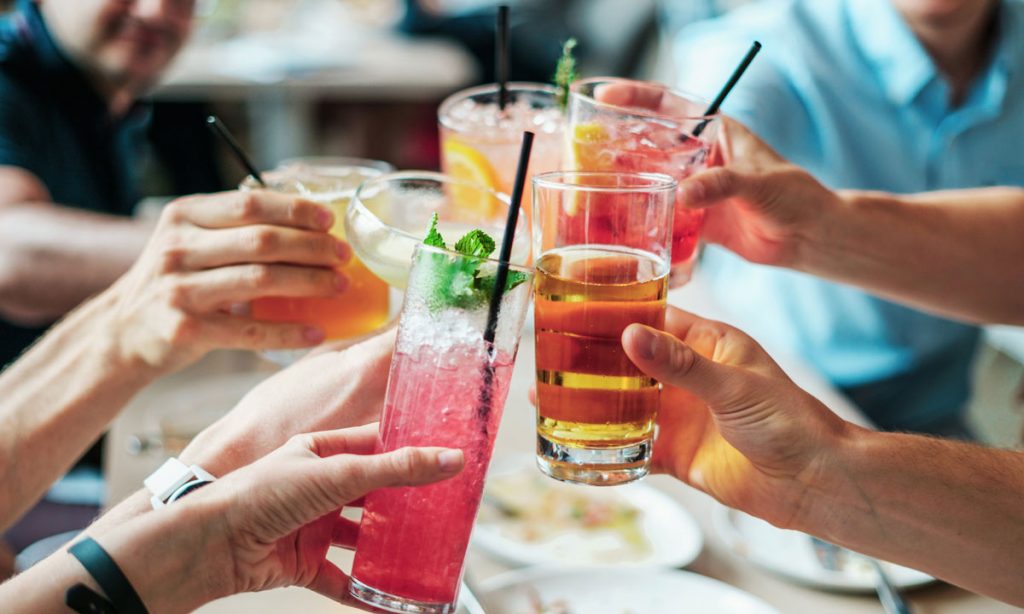
summer cocktails
Photo by Lisa Fotios via Pexels

The high can take patience to achieve

Drinking and eating cannabis-infused products takes longer to feel an effect, depending on consumption method. This can often lead to individuals having a poor experience with edibles — especially if an individual overdoses.

RELATED: Women Are Overwhelmingly The Main Buyers Of This Cannabis Product

Reading labels carefully, asking questions at the dispensary, and understanding how cannabis affects the body are all important steps before partaking in THC. If you’re not feeling the way you think you should, consult the product’s packaging, and don’t be afraid to reach out to ask questions where you purchased the product. Simply taking more of the product can have undesirable outcomes, such as paranoia, an upset stomach, and more. 

Data Says Marijuana Legalization Saves Lives

The stress, economic uncertainty, and isolation brought about by the pandemic likely had more to do with the uptick than anything.

Since marijuana legalization began happening in the United States, the narrative spewing from the mouths of advocates has been one suggesting the demise of prohibition has been great for the American condition. Many of them hang on research suggesting cannabis can help reduce alcoholism. However, anti-drug warriors are convinced marijuana legalization is connected to an increase in alcohol-related deaths. It’s a potential threat to public health that they fear could consume more of the population as marijuana legalization continues to spread nationwide. 

A new study from Well Being Trust shows that Colorado, one of the first states to legalize marijuana for recreational use, has experienced a 13% increase in alcohol-related deaths over the past couple of years. Researchers believe there are several reasons this has occurred, most of which is connected to how alcohol has been intertwined in the American culture. “With alcohol, it’s something that we have socialized and normalized a bit more in our society than we have other aspects of our mental health,” explained Dr. Ben Miller in an interview with The Denver Channel. “We’re not likely to talk about heroin as much as we are to talk about bourbon.” That’s true.

Cirrhosis, Alcoholism, And Underrated Cannabis Treatment Options
Photo by Moussa Idrissi from Pexels

Despite the popularity of alcohol and the relaxed attitude toward its consumption, the drug is responsible for killing around 90,000 Americans every year. Yet, we live in a time when drinking is attached to nearly every social function known to man — from after-work festivities to sporting events — and no one really seems to consider that they might be doing themselves harm.

Drinking typically starts at a very young age, too, which is statistically shown to increase the risk of health problems. Alcoholism is a progressive misalignment. Someone who starts drinking socially as a teen could develop alcohol use disorder. Somewhere around one in eight drinkers (12.7% of the population) meets the criteria of a problem drinker. Still, those who oppose marijuana legalization think that’s what is driving people to engage in more problematic drinking. 

“With weed, comes booze,” Tweeted Kevin Sabet, president of the anti-drug organization Smart Approaches to Marijuana (SAM). 


Although Sabet’s post, which was made for sharing the study from Well Being Trust, did not elaborate further, his stance is clear: Marijuana legalization is a detriment to the public health of Americans. In a recent article for the Ripon Society, Sabet explains the reasoning behind his largely unpopular opinion. 

“Marijuana legalization has been a hot topic of discussion in a handful of states across the country,” Sabet wrote. “Of course, those only skimming the headlines may not realize that more legalization efforts have failed than have been successful in recent years. But what’s truly concerning, and potentially setting us up for decades of harms, is the fact that these legalization efforts are running ahead of the data and ignoring red flags.”
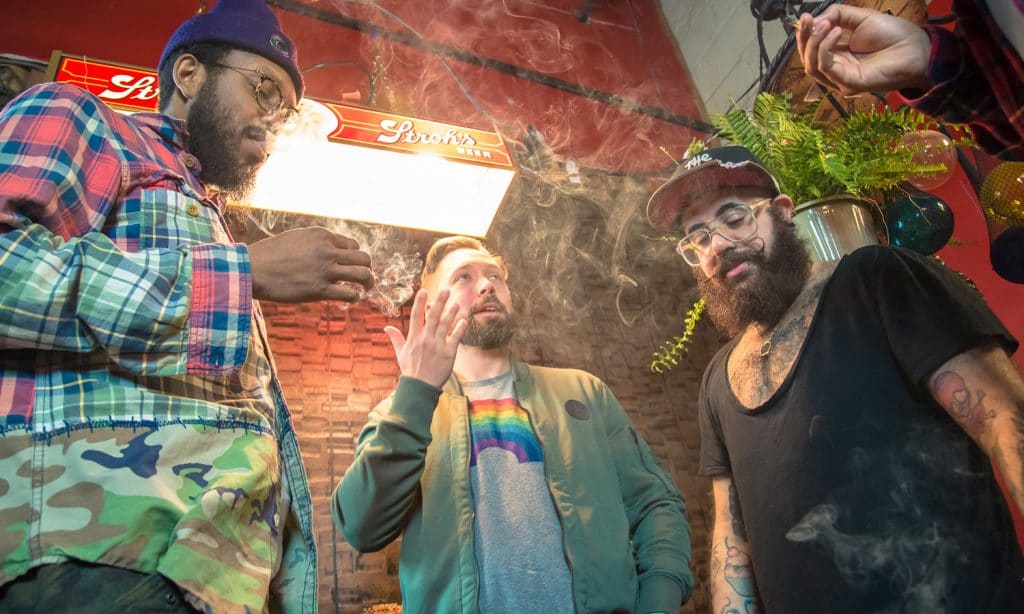
Can CBD, Psilocybin Help Fight Alcohol Abuse?
Photo by crotography/Getty Images

While some of Sabet’s complaints about the legalization of cannabis are commendable, it is a bit of a stretch to even vaguely argue that marijuana legalization may have had something to do with an increase in Colorado’s alcohol-related deaths. It probably didn’t. By the study author’s own admission, the stress, economic uncertainty, and isolation brought about by the pandemic likely had more to do with the uptick than anything. Well Being Trust never actually even pointed to marijuana legalization as being part of the problem. But in Sabet’s mind, it is all connected.

 RELATED: Legal Cannabis Might Help Stop Alcohol-Related Deaths

It’s why Sabet argues that decriminalization is a better option for the country than full blown legalization. Eliminating criminal penalties versus establishing a taxed and regulated market would prevent otherwise law-abiding citizens from getting jammed up in the criminal justice system without encouraging the use of another drug and ultimately contributing to its normalization.

Young People Believe Alcohol Will Kill You Faster Than Marijuana
Photo by Shopify via Burst

“It’s important to note marijuana decriminalization is the removal of criminal penalties for low-level marijuana use. This means putting an end to arresting folks for simply using or possessing small amounts of the drug,” Sabet wrote. “This policy, paired with expungements of previous records and increased funding for treatment, is a policy worthy of support,” he added.

RELATED: Marijuana Is Replacing Alcohol During The Pandemic And May Have Long Term Benefits 

President Biden supports the concept of decriminalizing marijuana and other drugs, but that might not be enough for Senate Democrats. Senate Majority Leader Chuck Schumer plans to introduce legislation this year designed to legalize marijuana nationwide. Schumer will attempt to make this happen without including Big Alcohol and Big Tobacco as part of the conversation. Although preventing large corporate drug slingers from getting into the pot industry pleases opposing forces, like Sabet, those lobbies have already infiltrated the cannabis scene and are working to get policy drafted in their favor. 

“After years of laying the groundwork that would invariably allow the corporate addiction giants to enter the marijuana industry, leading legalization advocates are now trying to rewrite history,” Sabet wrote. “For the sake of the health and safety of future generations, we must halt the commercialization and normalization of marijuana.”

The Moment Prince Harry Realized He Needed Therapy

In a new series, Prince Harry talks about his traumatic experiences and the reason why he decided to get therapy.

Prince Harry and Meghan Markle have steadily grown into some of the world’s most prominent mental health advocates. In the new Apple TV+ series “The Me You Can’t See”, Harry spoke about his mental health, which was heavily impacted by his mother’s death and his upbringing. He spoke about how Meghan convinced him to go to therapy and get treatment for the unresolved issues of his childhood.

Oprah Winfrey teamed up with Harry to produce the docuseries, which touches upon different mental health issues that affect people from all over the world. The two icons guide the conversations by providing insight on the issues that have affected them and the struggles they face in their every day lives.

RELATED: The Terrible Way Young Prince Harry Found Out He’d Never Be King

Meghan Markle's Oprah Interview Drives The Internet Wild
Photo by Harpo Productions/Joe Pugliese via Getty Images

Harry revealed that he started attending therapy four years ago with the goal of healing from his past, prompted by a discussion he had with Markle.

“When she said, ‘I think you need to see someone,’ it was in reaction to an argument that we had,” said Harry. “When my mum was taken away from me at the age of 12, I didn’t want the royal life,” he said. “I was so angry with what happened to her and the fact that there was no justice at all, nothing came from that.”

Harry talked about the way in which his trauma manifested throughout his life, how he relied on drug and alcohol use in order to cope with his feelings and to process his mother’s death. “From 28 to 32 was a nightmare time in my life,” he said. “I would find myself drinking not because I was enjoying it, but because I was trying to mask something.”

In the episode, Harry undergoes treatment for his PTSD. On camera, he goes through a process called eye movement desensitization and reprocessing therapy (EMDR) where patients cope with trauma by recalling a traumatic experience and engaging in a sensory task.

RELATED: Meghan And Harry’s Oprah Interview Drives Twitter Wild

Prince Harry opened up a bit about his past, how London was one of his triggers since he associates it with his mother and his upbringing, and making his mother proud. “Not only do I know that she’s incredibly proud of me, but that she’s helped me get here. And I’ve never felt her presence more as I have done over the last year.”

You Probably Shouldn’t Have A 1000mg Marijuana Edible

Marijuana, while mild in comparison to other drugs, still packs enough of a punch in some cases to bring on a wealth of misery.

Marijuana is legal in a lot of places. Rest assured, that means there’s a stoner bro sitting around in a frat house somewhere staring down at a 1000mg cannabis edible while his college buddies double dare him to eat that sucker all at once. And in the spirit of the party culture, he’s probably going to do it, too. Little does he know, it’ll be worse than the worst mistake he’s ever made. 

Although most states require cannabis dispensaries to sell edibles with a limited amount of THC (usually 10mg per serving), it’s common to find these products packaged with 10 servings — the equivalent of 100mg of THC. For the newcomer to the world of edible pot, 100mg is going to put them on their backside in a matter of hours and will likely induce enough panic to swear them off drugs forever. 

Why Do Some People Not Get High From Eating Edibles?
Photo by Sarah Pender/Getty Images

Seriously, even 50mg can invoke dark horrors for a newbie. That’s one of the reasons “responsible use” advocates often suggest that beginners start by ingesting 5-10mg to test the waters and then increase the dose in a few hours as needed. Because once you ingest 100mg of edible THC, there’s no turning back. And, once it kicks in, you’re going to want to turn back, and fast. 

There’s nothing stopping a consumer from buying multiple packages of pot edibles and devouring it in one setting. There have been accounts of pot journalists, many of which believe documenting their drug use makes them the next Hunter Thompson, eating 500mg to 1000mg of THC and sharing their experience with their readers. You can find these articles all over the internet, and they are written in such a way that cautiously suggest that a person shouldn’t be afraid.

But you should be terrified. 

While consuming copious amounts of THC might be okay for some, it’s not the most practical move for most. Forget about all the stuff you’ve heard about pot users being more active, creative, and functional. Eating 1000mg of weed will almost assuredly lead to drooling fear, total inactivity, a loss of creative control and you won’t even be able to pronounce the word functionality. 

RELATED: How To Avoid Going To The Emergency Room For Marijuana Overdose

The good news is consuming ridiculous amounts of pot probably won’t kill you. But that’s not to say you won’t wish you were dead. A non-life-threatening THC overdose can cause rapid heart rate, trouble breathing, extreme paranoia, confusion, loss of motor skills, anxiety, and ultimately a nagging fear that you’re about to swallow your tongue and be sucked into hell. Thirty-eight-year-old Bart from Louisville, Kentucky learned this the hard way. He told the Fresh Toast that he’s still scared of edibles to this day. 

brown bread on white ceramic plate
Photo by Pot Head Coffee via Unsplash

“One night, these girls came over and made pot brownies for our band. We each had three before rehearsal. But they gave me the munchies, so I actually ate four more about an hour later,” he said. “That was a huge mistake. I kept getting higher with each passing hour. It was like, just when I thought I couldn’t get any more stoned, the brownies found a way to get me. I mean, it was fun for a while, but then it got so intense that I couldn’t deal with it anymore. I needed it to end.”

Exhausted, Bart says that’s when his buzz went in for the knockout. “My eyes were strained — that was one of the weirdest aspects of it. I thought I was going to end up with a lazy eye in the morning. There was also a hallucinogenic effect. I kept seeing angry versions of myself while the room spun around me. Honestly, I thought I was losing my entire mind. And there was no sleeping it off either. I was wound so tight with anxiety that I just sat in my closet all night, hanging on for dear life. I’m still leery about taking edibles. On the upside, I’m proof that weed can’t kill you.”

RELATED: Why You Need To Be Careful Using Edibles The First Time

Some people get so freaked out after the overindulgence of pot edibles that they will call 911 or beg someone to do it for them. Nothing good can come from this. Depending on where they reside, calling in the calvary can bring about trouble with the law or the arrival of a massive hospital bill weeks later. “My hospital bill was close to $2000,” says Tara from Cincinnati, Ohio, who went to the ER one night after having a massive panic attack from edibles. “All they did was give me a dose of benzodiazepine to calm me down. They sent me home a few hours later.”

How To Choose and Buy Edibles Like A Pro
Photo by Vyshnavi Bisani via Unsplash

All in all, it’s probably best to avoid consuming such large doses of THC – especially anywhere close to 1000mg — if you haven’t built up the tolerance to handle it. There is no shame in starting slow and low. It’s not a competition. You’re not going to be more spiritually enlightened if you eat more weed than the next guy. So, don’t be a hero. And don’t let verbiage like “legal” and “safer than alcohol” fool you either.

Marijuana, while mild in comparison to other drugs, still packs enough of a punch in some cases to bring on a wealth of misery. When used in moderation, however, pot edibles are rather enjoyable. So, to the bro whose buddies are daring him to scarf down that 1000mg of pot, walk away right now and live to get high another day 

You don’t need the hassle.

Mexico Fails To Legalize Marijuana As Drug War Chaos Grows

0

If the Mexican military is deeply corrupt and now effectively controls the national government under its incompetent President, we are in a new phase of our Latin American disaster. 

Disclaimer: The views expressed in this article solely belong to the author and do not necessarily represent those of The Fresh Toast.

In 2018, the Mexican Supreme Court found the country’s marijuana laws unconstitutional and ordered Congress to draft new laws. Congress has had to request several extensions, but now it has failed to meet another deadline, just as it seemed close to agreement on new laws. 

SEE: Latin America Moves Toward Legalization From Argentina To Mexico, With Some Absurd Exceptions 

For Americans, this problem may seem familiar, but in Mexico, the stakes are much higher.  

SEE: Don’t Mention The Drug War Or We Might Have To Deal With The Real “Crisis At The Border” 

Mexico's Cannabis Legalization Bill Will Boost Business, But There Are Concerns
Photo by Jezael Melgoza via Unsplash

Of course, the pandemic has hit Mexico much harder than the U.S. At one point they reportedly ran out of death certificates. But in a country where thousands of people are killed every year in the Drug War, and thousands more simply disappear, it is just another tragedy.   

While the Mexican government still controls the major cities, there are large areas where the gangs (not “cartels”) terrorize the people who are not allowed to own guns, which the gangs get from the U.S., financed by selling drugs, which are illegal.  

Unfortunately, Mexican President Andres Manuel Lopez Obrador (AMLO), has been a disaster. He is sort of a left-wing Trump. Latin America has a word for this: personalismobut it is new to Mexico (and to the U.S., until recently). In post-Stalin Russia, it was called the Cult of Personality. 

SEE: Republicans Have Built A Cult Of Personality Around Trump That Glosses Over His Disgraced Presidency 

While AMLO campaigned against Mexico’s deeply embedded corruption, last year he ignored the pandemic to meet with the mother of El Chapo, the gangster now in a U.S. prison. 

SEE: Mexican President Ignores Coronavirus Restrictions To Greet El Chapo’s Mother 

And while Mexico, unlike most of Latin America, has never had a military dictatorship, last year the government’s dependence on the military became embarrassingly obvious. Last October, the U.S. arrested former Mexican defense minister Salvador Cienfuegos at the Los Angeles airport. Because the U.S. does not trust the Mexican government, Washington did not notify Mexico City beforehand. 

Mexico Pushing To Make CBD A Supplement
Photo by MariaLR via Pixabay

Mexico was “outraged”, supposedly because this somehow violated its sovereignty, etc, and demanded that the general be sent back to Mexico where he would be tried for corruption. The U.S. agreed, perhaps in a deal for Mexico to arrest a major gang leader. 

SEE: Exclusive: Mexico Agreed With US AG Barr To Arrest Drug Capo In Deal For General AND: US Drops Case Against Ex-Mexican General After Pressure 

However, when the general was safely back in Mexico, he was “exonerated” in January. The U.S. was not pleased, but this absurdity clearly demonstrated the power of the Mexican military.  

SEE: Mexico Will Not Charge Former Defense Chief With Drug Trafficking 

Now AMLO faces another embarrassment.  

SEE: Mexico worries about scorn if another drug lord is released  

Meanwhile in the “real world”, the pandemic continues, so the U.S. is sending vaccines to Mexico, the Republicans are denouncing President Joe Biden’s “border crisis” and demanding that VP Kamala Harris go to the border for a photo op with the “big, beautiful wall” that Trump repeatedly claimed Mexico would pay for. And Mexico is caught in the middle, but it is still struggling with the easiest part, legalizing marijuana. 

As an old and largely unrepentant Drug Warrior, Biden cannot recognize the increasing damage being done to our increasingly vulnerable neighbors. Harris is going to Central America, even more vulnerable and corrupt than Mexico, but she cannot even mention the Drug War. If the Mexican military is deeply corrupt and now effectively controls the national government under the incompetent AMLO, we are in a new phase of our Latin American disaster. 

Richard Cowan is a former NORML National Director and author of Different CBD Extracts, What To Choose? 

Asian Americans Embracing Marijuana Legalization Despite Cultural Hurdles

Cannabis started to gain a positive rep after the medical community began to pay close attention to its effective compounds, and now the Asian community has joined the weed “revolution.”

Certain things have taken the world by storm and still haven’t been embraced by the Asian community — not because they aren’t “good enough,” but because they are not culturally accepted. However, there has been a shift in the way Asians view, receive and utilize cannabis. To strengthen marijuana’s place in the Asian community, one must understand what led to this shift.

Asian Americans and the cannabis discourse

The Asian culture is a largely conservative space that had previously shunned cannabis and drug use. The pressure from the United Nations treaties, which the West promoted, birthed an era of cannabis prohibition in Asia, making it difficult for cannabis companies to penetrate the Asian market.

Asian Americans
Photo by Mason Wilkes via Unsplash

For example, people who lived in South Korea in the early 80s faced decades in prison for cannabis possession. Currently, smokers can face up to five years in jail with fines starting at $40,000 to more than $50 million. The South Korean government also threatened to arrest its citizens for marijuana usage in other countries where recreational cannabis was legal. Now the people from the ’80s and the prior generation accepted these rules by discouraging their children from using “drugs” because they feared the pitfalls of addiction and public humiliation associated with a jail term.

Young Asians who migrated to America felt the burdens of making their parents proud and not disappointing them by using cannabis. From one Asian generation to another, the same message was preached: “cannabis is dangerous.”

With the enormous potentials cannabis offers and the younger Asian generation wholesomely embracing it, one has to wonder: Why is there so much focus on cannabis such that the “taboo” has become the most talked-about phenomenon?

The pandemic and an awakening to the value of cannabis

Globally, we have lived through a pandemic that has resulted in the separation of families and friends. The impact of the COVID-19 pandemic caused a massive shift in the way we live, such that people now know they need to be healthy to avoid becoming vulnerable to the virus.

Research has shown that cannabis has strong anti-inflammatory properties, protecting your immune system even with the virus gaining tentacles. With these proven remedies from cannabis, the Asian community could longer deny its impact, which has led to many people embracing it despite cultural hurdles.

The Worst Marijuana Strains Of All-Time?
Photo by Ramille Soares via Unsplash

The Asian community realized that what works and what makes an impact on their wellness trumps cultural preferences at the end of the day. Through the years, cannabis has also had a bad reputation. The lousy rep happened because of the ignorance of people on the potentials cannabis offers.

Cannabis started to gain a positive reputation after the medical community began to pay close attention to its effective compounds, and now the Asian community has joined the cannabis “revolution.”

Changing tide: why they chose cannabis

The new cannabis wave with Asian communities originated from Asians in the diaspora who experienced the positive and uplifting impact of cannabis firsthand in a foreign land. While they still had the initial skepticisms they imbibed from home; they started to experiment, research, and adopt an open-minded approach towards marijuana.

They saw cannabis as their opportunity to break free from the conservatism that prevented them from harnessing the benefits marijuana offered. The cannabis sector is the fastest-growing market in the United States of America, with a 100% job growth in the last three years.

RELATED: Why Religious People Are Less Likely To Use Marijuana

Due to its growing medicinal value and diverse medical applications, more states in America are legalizing cannabis, making it a more socially acceptable substance. The cannabis industry in America is projected to be worth over $90 billion by the year 2026. Such statistics give Asians in the diaspora confidence in the future of marijuana.

Asian leaders and people venturing into the cannabis market 

The Asians accepting cannabis doesn’t end with social acceptance, as more and more leaders and people are taking the bold step to invest in the marijuana sector.

Most notable are former business analysts Mia Park and Dae Lim, who moved from the analytical sector to selling craft cannabis. The partners launched a collection of cannabis edibles mixed with Asian flavors such as milk tea, sour yuzu, and lychee. Additionally, the CFO of Papa and Barkley, Zeeshan Hyder, exited the banking sector to contribute to the financial aspect of cannabis companies.

Photo by rawpixel.com

These are a few Asian business leaders and people who have awakened to the tremendous impact of cannabis on health and the economy and joining the community. It is difficult to provide an exact number on the number of Asian-Americans who have gained employment in cannabis companies.

But there are records to show that more people of Asian descent are getting out of traditional work and pursuing careers in cannabis. Interestingly, the Asians born in the ’80s against cannabis are begging to reach out to the younger generation for CBD remedies for some common ailments.

RELATED: Marijuana Is Legal Almost Everywhere, Yet Weed-Related Busts Increase

From arthritis to chronic pain and nausea, some members of the older Asian community are beginning to embrace the value of cannabis as a plant-based medicine. They are beginning to appreciate the beneficial aspects of the marijuana plant, leading to a cultural shift regarding marijuana amongst Asians.

Although a sudden mindset transformation on the value of marijuana will not happen, this gradual move from Asian-Americans is laying a good foundation for the future.

Bottom line 

The conservative nature of the Asian community towards marijuana deprived them of maximizing its advantages for many years. But unlike in the past, young Asian-Americans who have been exposed to the health and economic-boosting impact of marijuana are beginning to change that narrative.

They are quitting traditional jobs to join cannabis firms and create cannabis products because they have seen how cannabis contributes to American society and economy. As they embrace cannabis despite cultural hurdles, they are paving the way for the future generation to accept and become innovative with marijuana.

This article originally appeared on Cannabis.net and has been reposted with permission.

Marijuana Is Legal Almost Everywhere, Yet Weed-Related Busts Increase

0

Most of the 5,000 marijuana-related arrests from last year probably won’t end in a prison sentence. Some won’t even lead to a conviction.

Although marijuana is legal in more than half the United States for medicinal and recreational use, that hasn’t stopped gung-ho federal drug agents from cracking down on it. The latest report from the Drug Enforcement Administration (DEA) finds that its cannabis eradication team was busy last year, seizing millions of cannabis plants and dragging thousands of offenders to jail. 

The DEA’s annual Domestic Cannabis Eradication/Suppression Program Statistical Report shows the agency, together with state and local police departments, seized more than 4.5 million cannabis plants last year (about a half-million more than in 2019) while arresting 5,000 people for various pot-related offenses. 

The Hemp Standard Is 0.3% THC — And That Should Be Changed
Photo by Bloomberg Creative Photos/Getty Images

“In 2020, the DEA continued its nationwide cannabis eradication efforts, providing resources to support the 127 state and local law enforcement agencies that actively participate in the program,” the agency declared. “This assistance allows the enhancement of already aggressive eradication enforcement activities throughout the nation.” 

But weed is mostly legal, so what gives?

There’s no doubt that many of the people busted last year on federal marijuana charges were breaking the law. Cannabis remains a Schedule I dangerous drug in the eyes of our old Uncle Sam, despite some states legalizing it. 

It’s no secret that cannabis growers, even those in legal states, often bend the rules (or disregard them altogether) to feed the black market. Just look at the Emerald Triangle, a section of Northern California forestry across Mendocino, Humboldt and Trinity counties. Many weed farmers in those parts still aren’t with the legal sector — and they don’t plan on joining it anytime soon. With more states going legal, that could help explain the influx in busts last year. There are more cannabis plants being grown everywhere, legal, and otherwise.

Emerald Triangle: Does The Best Weed In The World Really Grow There?
Photo by Olena Ruban/Getty Images

DEA agents aren’t just sitting around, updating their resumes, and thinking about what they’re going to do when marijuana finally goes legal nationwide. No, agents will keep busting pot offenders that stand outside the law until the federal government legalizes and strips them of their funding. 

RELATED: It’s Time To Disband The DEA

Should the average pot consumer worry?

For the most part, law-abiding cannabis users are safe from the DEA. Still, cannabis advocacy groups warn that marijuana is still far from off-limits when it comes to the role of federal law enforcement.

“While marijuana enforcement is arguably not the same priority that it once was for the DEA — likely because of changes in state policies and in federal budgetary guidelines — this does not mean that the agency is content to look the other way at violations of federal marijuana law,” NORML Deputy Director Paul Armentano said in a statement.

RELATED: America’s Goal In 2021 Should Be Fewer Marijuana Arrests, More Research

“There are still several thousands of Americans arrested for federal marijuana violations each year — even at a time when some seven in ten Americans believe that the plant ought to be legal for adults to use and possess.” 

America’s Goal In 2021 Should Be Fewer Marijuana Arrests, More Research
Photo by Roman Budnyi/Getty Images

Most of the 5,000 marijuana-related arrests from last year probably won’t end in a prison sentence. Some won’t even lead to a conviction. Federal prosecutions for marijuana trafficking have been on the decline for years.  

A report from the U.S. Sentencing Commission finds that federal prosecutions for weed-related offenses have been drying up since around 2012. Marijuana isn’t as big of a deal to prosecutors anymore. No, they are focused on putting away drug dealers who sling the hard stuff; most of their efforts are spent prosecuting federal methamphetamine cases. For those pot-offenders who go to jail, the report finds that most are sentenced to an average of 18 months. Again, these are people convicted of marijuana trafficking, not simple possession.

Why Do Some People Not Get High From Eating Edibles?

0

For those undergoing surgery or using cannabis for pain relief, they may not be able to tap into the therapeutic value of the plant due to their body’s inhibition to process THC like normal.

I remember the first time I ate too many brownies, which sent me into a world of intense visuals, deep body highs and cottonmouth like never before.

Most people who eat edibles feel the effects of it, but there is a class of human that seems to be immune to edibles — and scientists aren’t quite sure why.

There are theories — theories we’ll discuss in this article.

What To Use For Edibles When You Don't Feel Like Baking For Hours
Photo by Joyful via Unsplash

However, the implications of this discovery reaches much further than the inability of an individual to get high from 11-hydroxy-THC, and could impact things like our standardized drug tests of impairment, cannabis medicine, and much more.

Throughout the rest of this article, we’ll also be taking a closer look at these issues.

Are you Ediblocked?

The term “ediblocked” comes from the Boston Globe article, which was the inspiration to writing this article. I rather enjoy the term and also can see that this can be extended to other substances.

For example, I once took LSD with a group of psychonauts where one person in particular said, “I don’t get it, this to me feels like I do when I’m smoking weed!”

I looked at the man with my pupils dilated, seeing all sorts of stuff swirl about while the walls breathed and thought to myself, “This dude is a caveman!” Of course, he wasn’t and in all likeliness he experienced something similar to an “ediblock”.

But what makes the discovery so important is that it illustrates that “standardized tests of impairment” fail to take into consideration that people process drugs differently.

Of course, making a test that can adapt to the individual’s biochemical makeup is still only science fiction at this point, but it also shows us that many people who might have been “deemed impaired” by law enforcement could have been more sober than the officer putting the cuffs on.

Here’s a snippet from one of the guys in the Boston Globe article:

“They couldn’t stop laughing — they were all having a great time,” recalled McDonald, a 55-year-old cannabis cultivator from Ontario, Canada. “And I got absolutely nothing from them. I was sitting there with my arms crossed, like, ‘aw man … everybody’s Hoverboard works except for mine.’ ”

This is a guy named Al who first discovered that he was immune to edibles when his friends ate a bunch of high potency cannabis cookies. Al says he starts “feeling” the effects of THC by the 700-milligram marker which would send most people into a deep bodied charged trip.

RELATED: What To Do If Your Marijuana Edibles Aren’t Getting You High

It could also be the reason why some people seemingly can consume ungodly amounts of THC while being okay-ish.

For some of you, the idea of being immune to edibles does not seem like a big deal, but for those undergoing surgery or using cannabis for pain relief, they may not be able to tap into the therapeutic value of the plant due to their body’s inhibition to process THC like normal.

How does one become “ediblocked”?

Right now researchers aren’t 100% about the reason but they hypothesize that it could be something to do with a particular liver enzyme responsible for processing THC. As opposed to “inhibiting THC”, they argue that these people simply have more efficient processing capabilities in the liver.

The Boston Globe spoke with Dr. Staci Gruber, director of the Marijuana Investigations for Neuroscientific Discovery programs at McLean Hospital:

“While no studies have directly examined those with ultra-high tolerances to marijuana edibles, Gruber and other researchers have a compelling hypothesis: People with an unusual variation of a key liver enzyme could essentially be too efficient at processing ingested THC, turning the compound into its “active” high-causing metabolite and then its inactive waste product before the active form can enter the bloodstream or brain. It’s also possible other people’s enzymes make them unusually inefficient at performing this process, with little THC getting metabolized in the first place.

“’It’s almost as if they’re skipping the intermediate step’,” Gruber said of people with uncommon subtypes of the CPY2C9 gene, which encodes the enzyme that shepherds THC through its three-step metabolic transformation. “You’re breaking it down so fast it doesn’t have an opportunity to create the psychoactive effect.”

How To Get Edibles To Affect You Faster
Photo by Tree of Life Seeds via Pexels

Why this becomes a problem for the individual cannabis consumer comes down to how we test “impairment” in society. Most of the modern tests do not account for liver enzymes and the ability to process THC better.

People like Al, can eat 500 mg and be stone-cold sober. Yet if he was pulled over by a cop, tested for THC in the saliva or blood — he’s be deemed “impaired”.

RELATED: Why You Need To Be Careful Using Edibles The First Time

According to the Boston Globe: “The research casts doubt on biological marijuana tests widely used by researchers, doctors, police, and employers, which look for those same metabolites but don’t account for the apparently vast and hard-wired variations in metabolic rate between individuals. (In Massachusetts, most suspected stoned drivers are evaluated by officers with so-called “drug recognition expert” certifications, a process that typically includes a saliva or blood test for THC.)”

The issue from a medical perspective

This is not just about getting high either. For people who use cannabis as a medicine, it could mean that if you have a higher presence of the CPY2C9 Gene — you may need heavier doses of cannabis to take effect.

The problem is that, taking too much could send you into an 8-hour long trip, according to Harvard Medical School instructor and cannabis expert Dr. Peter Grinspoon. Or 18-hours in my case.

RELATED: How To Get Edibles To Hit You Faster

I guess my CYPY2C9 gene likes to take his time. But then again, I had close to 20 brownies in a span of 2 hours, so my THC levels were probably far exceeding 1gram.

Are High-CBD Hemp Flowers The Next Big Thing In Cannabis?
Photo by BATCH by Wisconsin Hemp Scientific via Unsplash

“Grinspoon said the phenomenon illustrates how little we understand the body’s cannabinoid system, thanks in part to longstanding federal restrictions on studying marijuana,” reports the Boston Globe. “This is something that, with appropriate research and smart people working on it, we could understand and maybe even fix,” he said.”

And he’s right!

The federal government with their anti-freedom policies have hindered cannabinoid research for decades in the name of “safety” and now science has to play catch-up.

It once more illustrates how government’s approach to drugs is not only outdated, but potentially dangerous to individuals who consume cannabis both medically and recreationally.

I wonder where we could have been in terms of cannabis medicine if the government didn’t decide to stifle research and information?

This article originally appeared on Cannabis.net and has been reposted with permission.

This Is A Key Trait Of Highly Intelligent People

Social gatherings are picking up steam. But those who are highly intelligent may prefer to skip the post-pandemic parties.

Many of us have had to get used to being alone during the pandemic, but there is one subset of people who likely enjoyed the solitary confinement. Researchers have found that highly intelligent people really enjoy being alone. According to the research, intelligent people experience lower satisfaction when they socialize more frequently with their friends.

A 2016 study published in the British Journal of Psychology theorizes that this result is due to evolutionary psychology. Researchers suggest intelligence was a development that occurred when people were exposed to unique challenges and had to find ways of solving them.

Spending The Holidays Alone? Here's How To Make The Most Of It
Photo by Anthony Tran via Unsplash

The results are contradictory to the evidence we’ve accumulated over the years, where many studies and polls have found that socialization and having friends and people to trust are key to people’s happiness.

RELATED: Many People Have Abandoned This Daily Hygiene Routine During The Pandemic

According to the study, the more intelligent the person, the more likely they were to solve the problems on their own. The less smarter the person, the happier they’d be when surrounded by friends, ultimately feeling better when surrounded by people to help them solve problems.

Now's The Time To Get High Alone And Do Weird Stuff
Photo by Toa Heftiba via Unsplash

The study analyzed over 15,000 responses from people between the ages 18-28, using the National Longitudinal Study of Adolescent Health, a survey that measured life, satisfaction, health and intelligence. For the majority of respondents, surrounding themselves with friends was key to their satisfaction.

RELATED: The Stress Level Of This Demographic Has Skyrocketed During The Pandemic

Researchers theorized that, aside from evolutionary reasons, smarter people preferred to be alone for aspirational reasons. The smarter the person, the likelier they are to be focused on their long term goals, meaning that hanging out with other people distracts them from their objectives.

Still, one study isn’t enough to make blanket statements about highly intelligent people and others with a more average IQ. A lot of people prefer to be alone and are not geniuses.

Canadian Cannabis Sales Reach $246.7M

Retail sales were negatively affected by COVID lockdowns, while new stores and lower prices provided a boost.

By Nina Zdinjak

New data from Statistics Canada revealed that Canadian cannabis sales in March improved 65% year-over-year reaching CA$298.1 million ($246.7 million), reports New Cannabis Ventures.

According to the outlet, this was the “slowest year-over-year growth” since recreational sales in the country began in late 2018. First-quarter sales improved only 1.8% sequentially.

US Cannabis Sales Projected To Hit $28 Billion In 2022
Photo by Ivan-balvan/Getty Images

RELATED: Why The US Cannabis Industry Is Better Positioned Than Canada To Go National

The data analytics provider, Hifyre IQ, had projected April sales would improve around 4% hitting CA$309 million. This implies a 73% growth from the same period of a prior year.

Retail sales were negatively affected by COVID lockdowns, while new stores and lower prices provided a boost.

RELATED: Growing Pains: What’s Next For The Cannabis Industry In Canada

Breaking down sales data by province, Ontario improved the most gaining 121% year-over-year. Sales in Alberta improved 10% from the same period of 2020 and in British Columbia 12%.

Cantor Fitzgerald’s Pablo Zuanic provided an update on sales growth and market share trends by company and province. Based on this, most of the biggest Canadian cannabis players such as Aurora Cannabis (NYSE:ACB), Canopy Growth (NASDAQ:CGC), Organigram (NASDAQ:OGI) and Tilray (NASDAQ:TLRY), had seen their best sales in Ontario.

This article originally appeared on Benzinga and has been reposted with permission.

Don't Miss Your Weekly Dose of The Fresh Toast.

Stay informed with exclusive news briefs delivered directly to your inbox every Friday.

We respect your privacy. Unsubscribe anytime.