Thursday, May 7, 2026
Home Blog Page 378

Cannabis Is Stealing Workers From Just About Every Other Industry

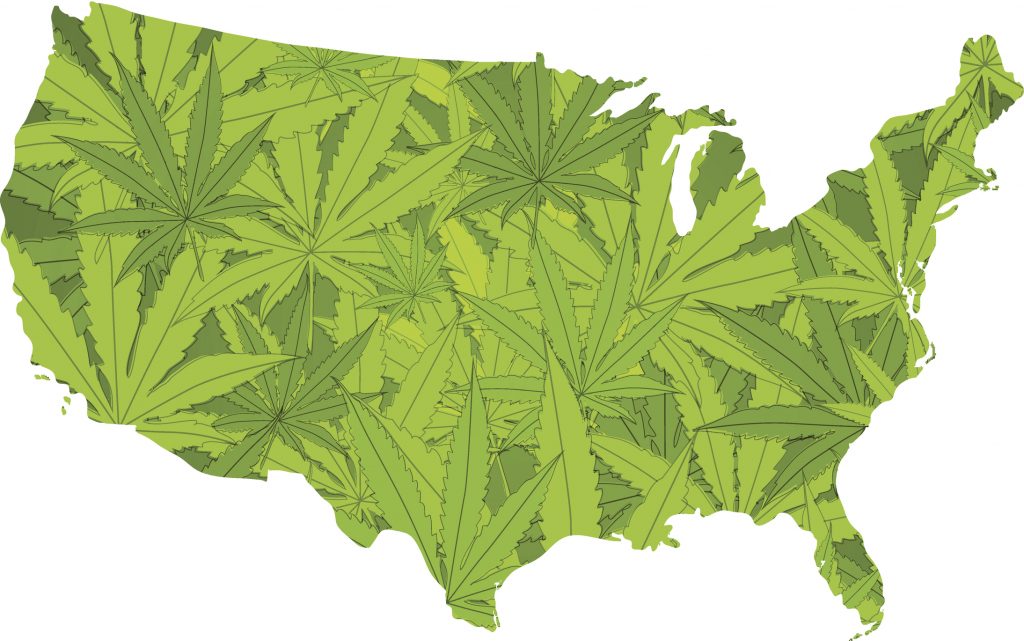
Unsurprisingly, California comes in first in the number of total cannabis jobs at 58,000, with Colorado and Florida nearly tied for second.

Job growth for the United States in April 2021 might not have quite matched expectations with a disappointing increase of 266,000 jobs and an unemployment rate rise for the first time since 2020, but executive search and staffing firm Cannabiz Team’s latest Cannabis Industry Salary Guide for Q2 2021 tells a different story for the cannabis market.

With 320,000 full-time cannabis jobs in the U.S., the cannabis industry ranks as the fastest-growing industry in America. As cannabis legalization spreads, projections have cannabis hitting $35 billion dollars in sales and providing 500,000 full-time jobs by 2024. Cannabiz’s report covers the rising demand for skilled staff, how this is driving compensation, and how big-name MSO’s are starting to scout outside of the industry for top-dollar talent.

Increased Demand For Top Talent As Cannabis Industry Salaries Continue To Surge
Photo by
Darren415/Getty Images

At present, adult-use cannabis is legal in 17 states and D.C. and medical marijuana is legal in 36, with Connecticut, Minnesota, and Hawaii poised to follow suit. This not only means heightened demand for products, more growing operations, and production facilities coming online, and more business owners applying for licenses, but more jobs all around. Cannabiz’s Q2 jobs guide highlights where the “hot jobs” are in this expanding market, including those within supply chain management, large-scale cultivation, product and brand development, finance and accounting, administrative infrastructure, and retail.

RELATED: Increased Demand For Top Talent As Cannabis Industry Salaries Continue To Surge

Cannabis salaries are up across the board in these sectors and others, with double-digit increases for experienced managers and C-suite executives. The report attributes these increases to competition and a shortage of employees with specialized cannabis experience or transferable skills.

New recruits from outside the industry are coming from all corners of the U.S. economy, most significantly from the food and beverage, pharmaceutical, agricultural, medical supply, CPG, technology, and retail industries. John Deere, Proctor and Gamble (NYSE: PG), and Tesla are among the country’s largest companies from which multi-state cannabis operations are sourcing recruits.

Unsurprisingly, California comes in first in the number of total cannabis jobs at 58,000, with Colorado and Florida nearly tied for second with 35K and 31K total cannabis jobs respectively. Oklahoma and Pennsylvania hover at the bottom of the “Top Cannabis Jobs” list by state with 17K and 16K respectively.

RELATED: 32% Cannabis Job Growth In 2020, Despite COVID-19

With a cannabis company’s Chief Financial Officer’s earning potential placed at a high of over $400,00 a year according to Cannabiz data, it’s easy to see where those double digit increases fall, especially since jobs at the public-facing retail end, say for a budtender, top out at a high of around $40,000 a year. Lower-paying jobs did see a salary increase as well, though only in the single digits — a gap that stands to narrow as legalization, investment, and expansion maintains momentum for the cannabis industry.

This article originally appeared on Green Market Report and has been reposted with permission.

Marijuana Reform: Free Allen Russell

In 2019, Mr. Russell was caught up in a local raid and the police seized 43 grams of marijuana. He’s now been sentenced to life in prison.

The insanity of the war on drugs needs to stop. Sixteen states and the District of Columbia have legalized marijuana for adult recreational use. Roughly 40% of Americans live in jurisdictions where some form of marijuana use is legal– that’s over 130 million people. Marijuana companies trade on stock markets.

Former Congressman John Boehner, once a staunch opponent of legalization (“unalterably opposed” were his own words), now makes millions promoting marijuana. The industry generates billions of dollars of revenue and taxes and employs thousands of people. Susan Collins now supports providing marijuana businesses access to banking through the SAFE Act, and banks can hardly wait to start making money on fees, etc.

allen russell marijuana war on drugs

Legalization activists are winning the war. But lives are still lost daily.

Seventeen years ago, Allen Russell pleaded guilty to burglary charges and became a felon. After serving over 8-years in prison, Mr. Russell pleaded guilty to being a felon in possession of a weapon, which added another felony to his record, and he served a couple more years in prison.

RELATED: How Marijuana Reform Intersects With Policing And Racial Justice

In 2019, Mr. Russell was caught up in a local police raid and the police seized 43 grams of marijuana.

Forty-three grams of marijuana. That’s roughly 1.5 ounces.  Here, in Oregon you can possess 8 ounces of marijuana in your home and up to an ounce on your person without any worry of legal trouble from state or local police.

Life sentence without eligibility for probation or parole.

That was the sentence imposed by the trial court in Mississippi.

That was the sentence affirmed by the Mississippi Supreme Court earlier this week, on May 11.

illinois pot offenders how to get your marijuana offense wiped clean
Photo by FatCamera/Getty Images

You read that right: this happened a week ago. Mr. Russell is going to spend the rest of his life in prison, with no chance of release, because of 43 grams of marijuana. The sentencing court relied on his two prior felony convictions to conclude that Mr. Russell was a “violent habitual offender” and thus deserving of a life sentence with no eligibility for probation or parole. That ruling was found correct on appeal. Make no mistake, the prior felonies are no small matter. But 43 grams of marijuana. That’s all it took for a court to decide that Mr. Russell should spend the rest of his life in prison.

RELATED: Twista, Berner, And Chris Webby Discuss Racial Bias In Cannabis Arrests

No matter how hard you squint, you won’t glimpse justice in this sentence. But the institutionalized racism of the war on drugs rests in plain sight.

Mr. Russell is not even 40 years old. He’s going to be in prison for the rest of his life: watching the country legalize marijuana, watching Mr. Boehner get richer, watching Wall Street make money on marijuana stocks, watching banks profit from marijuana, watching it all from a prison cell. All because he was a felon found with 43 grams of marijuana.

This is cruel and unusual punishment.

Jesse Mondry is an attorney at Harris Bricken and this article was originally published on the Canna Law Blog and was reposted with permission.

Minnesota Votes To Legalize Adult Use Cannabis

For Minnesotans, this is the first time any cannabis legislation for adult use has been approved.

On Thursday, Minnesota’s House of Representatives voted in favor (72-61) of HF 600, a bill that would legalize cannabis for adults 21 and over. Unfortunately for the state’s residents, the next step for the bill is getting Senate approval and Majority Leader Paul Gazelka (R) has said the Republican caucus is strongly opposed.

This is despite the fact that a recent poll shows that there’s growing support for legalization in the state. Seventy percent of Minnesotans said they were in favor of legal cannabis, which has grown from just 30% in 2014. Eighty-five percent of Democrats want legal marijuana, while only 37% of Republicans say yes. Thirty-eight percent of Republicans in the state have just said no.

Minneapolis Mayor On Canada Marijuana Legalization: We Want In
Photo by Flickr user Doug Kerr

Karen O’Keefe, director of state policies at the Marijuana Policy Project said, “Minnesotans have suffered far too long under prohibition. Rather than continuing to waste resources on enforcing this failed policy, the Senate should heed the will of the voters and pass legislation to legalize cannabis for adults. Legalization would create thousands of jobs and hundreds of millions in tax revenue, and it would reduce unnecessary stops, searches, and arrests that unfairly and unequally target Black Minnesotans.”

The legislation was sponsored by House Majority Leader Ryan Winkler and it would legalize possession and cultivation of limited amounts of cannabis, while setting up an equitable, regulated system for cannabis sales. It includes funding for community renewal along with cannabis industry training and start-up funding. The grants would focus on individuals facing barriers to education or​ employment, areas with elevated rates of poverty, workers with less than three years of experience, and farmers.

RELATED: What Does A Conservative State Medical Marijuana Program Look Like?

For Minnesotans, this is the first time any cannabis legislation for adult use has been approved. The Democrat-controlled House chamber voted to approve the measure, thus sending the bill to the Republican-majority Senate for further consideration. Still, the bill had received approval from 12 separate legislative committees.

“It’s time for Minnesota to become a leader in the midwest when it comes to sensible marijuana policy,” said NORML State Policies Manager Carly Wolf. “Not only would the passage of this bill allow police and courts to reprioritize their limited resources toward fighting serious crime rather than interacting with otherwise law-abiding Minnesotans over low-level possession offenses, but it would also provide relief to thousands suffering the collateral consequences of a marijuana arrest and conviction. I strongly encourage members of the Senate to follow the will of their constituents, a majority of whom support this policy change, and consider this common-sense remedy to the failed policy of prohibition.”

This article originally appeared on Green Market Report and has been reposted with permission.

GOP Congressmen File Marijuana Legalization Bill, But Don’t Get Too Excited

It remains to be seen how Democratic lawmakers plan to deal with the cannabis debate in 2021. But rest assured, the battle won’t be easy.

Although Republicans are expected to make it a challenge this year for cannabis reform on Capitol Hill, a couple of Congressmen of the GOP in the House of Representatives have come forward with a bill aimed at legalizing marijuana nationwide.

Before you get too excited, it’s not the super-hyped comprehensive cannabis reform measure that Senate Majority Leader Chuck Schumer has been promising to introduce “soon.” This one is a seemingly competitive measure aimed at helping military vets, enhancing research, and making weed a legitimate part of national commerce. 

Somebody Should Let Federal Government Know Americans Want Legal Marijuana
Photo by Kindel Media from Pexels

U.S. Representative David Joyce (R-OH) and Don Young (R-AK), both members of the Congressional Cannabis Caucus (CCC), recently submitted the Common Sense Cannabis Reform for Veterans, Small Businesses, and Medical Professionals Act. The bill is designed to end federal marijuana prohibition, yet it emphasizes medical marijuana research, access for veterans, and opening interstate cannabis commerce where permitted. It would remove cannabis from the Controlled Substances Act, allowing it to be taxed and regulated like other legal drugs. The Food and Drug Administration and the Alcohol and Tobacco Tax and Trade Bureau would oversee the industry. Marijuana would basically be treated like beer and cigarettes.  

RELATED: We’re About To See If Senate Filibuster Will Ruin National Cannabis Reform

Lawmakers with the CCC say it is time.

This cannabis “legislation answers the American people’s call for change and addresses our States’ need for clarity by creating an effective federal regulatory framework for cannabis that will help veterans, support small businesses and their workers, allow for critical research and tackle the opioid crisis, all while respecting the rights of States to make their own decisions regarding cannabis policies that are best for their constituents,” Joyce said in a statement. “I look forward to working with my colleagues on both sides of the aisle to get this bill signed into law so that we can enact sensible and meaningful cannabis reform that will improve lives and livelihoods.”

Why 2021 Should Prove The Year Of Federal Cannabis Legalization
Photo by gradyreese/Getty Images

With the latest Pew poll showing 91% of the American population in support of full-blown legalization, cannabis advocates hope that Congress will finally get serious about revamping pot policy. “With an overwhelming majority of Americans supporting the end of cannabis prohibition, it’s clear that our country has a mandate to create a legal industry that supports both medical and adult-use,” said Steve Hawkins, executive director at the Marijuana Policy Project.

RELATED: Somebody Should Let Federal Government Know Americans Want Legal Marijuana

Unlike the bill that Schumer and crew have promised, the CCC’s measure doesn’t touch on expunging past pot convictions and repairing damages brought on by the drug war. That’s something the advocacy groups hope will be reconsidered as the bill makes its way through the legislative process.

“MPP is hopeful that subsequent negotiations and versions of this bill will include robust social justice and equity provisions to address the devastation caused by prohibition and the failed War on Drugs,” Hawkins said. “Federal legalization must be drafted and regulated to provide social and economic justice for the millions of lives upended by discrimination and unequal enforcement. By including those most harmed, we can build an equitable, well-regulated, and inclusive cannabis industry from the ground up. 

Congress Looks At Bill To Research Marijuana Legalization
Photo by wildpixel/Getty Images

The Common Sense Cannabis Reform for Veterans, Small Businesses, and Medical Professionals Act has a good shot at passing the House of Representatives. Although by a slim margin, the Democrats still control the lower chamber, and they’ve passed a cannabis-related measure (SAFE Banking Act) in the past month. The problem is the bill is going to meet some resistance if it reaches the Senate. Majority Leader Schumer seems rather focused on the cannabis reform concept he’s got up his sleeve, so he might not want to complicate things by putting a competing proposal on the docket. 

RELATED: Marijuana Is Bipartisan, But That Doesn’t Mean Federal Legalization Is A Sure Thing

Although the Senate is also dominated by Democratic control, it is by an even slimmer margin than in the House. It’s a 50-50 split with Vice President Kamala Harris being the tiebreaker. This makes passing a cannabis reform measure of any kind extremely difficult. Primarily because of the filibuster — an old Senate rule requiring a 60-vote supermajority on controversial issues.

It remains to be seen how Democratic lawmakers plan to deal with the cannabis debate in 2021. But rest assured, regardless of whether it is the Common Sense Cannabis Reform for Veterans, Small Businesses, and Medical Professionals Act or whatever bill Schumer proposes, the battle won’t be easy.

Can COVID-19 Vaccines Be Mix-Matched? UK Study Has Answer

Researchers believe it’s possible that adverse reactions to a mixed schedule of COVID-19 vaccines may be more prevalent in younger age groups.

By Vandana Singh 

Preliminary data from a U.K. clinical trial testing the benefits of mixing and matching COVID-19 vaccines showed that participants who received a mixed schedule of vaccines incurred more frequent reactions than those on standard non-mixed schedules, reports CNBC.

What Happened: The trial named the Com-Cov study led by the University of Oxford and is examining the immune responses of trial participants given a dose of the Oxford-AstraZeneca Plc (NASDAQ: AZN) vaccine followed by the Pfizer Inc (NYSE: PFE) – BioNTech SE (NASDAQ: BNTX) shot and vice versa.

This COVID-19 Vaccine Side Effect Suggests You May Already Have COVID
Photo by CDC via Unsplash

The study aims to evaluate the feasibility of mixing and matching COVID-19 vaccines and whether this could be a viable route to increase the flexibility of vaccination campaigns.

Some of the reactions reported among participants receiving a mixed vaccine schedule included chills, fatigue, feverishness, headache, joint pain, malaise, muscle ache, and pain at the injection site.

The adverse reactions were found to be short-lived, and there were no other safety concerns.

The data was recorded among participants aged 50-years and above. Researchers of the study believe it’s possible that adverse reactions to a mixed schedule of COVID-19 vaccines may be more prevalent in younger age groups.

RELATED: Are Employers Allowed To Issue COVID-19 Vaccine Mandates For Employees?

Trial Results: In the Lancet international medical journal, researchers of the trial reported that when given at a four-week interval, both of the alternating vaccine schedules of the Oxford-AstraZeneca vaccine and the Pfizer-BioNTech vaccine induced more frequent reactions following the second dose than the standard non-mixed schedules.

“The results from this study suggest that mixed dose schedules could result in an increase in work absences the day after immunization, and this is important to consider when planning immunization of health care workers,” he added.

RELATED: What To Do If You Missed Your Second COVID-19 Shot

Matthew Snape, the trial’s chief investigator, said it was important to underline the fact that there were no safety concerns, adding it remained unclear whether the immune response will be affected.

vaccine
Photo by CDC via Unsplash

“We hope to report these data in the coming months. In the meantime, we have adapted the ongoing study to assess whether early and regular use of paracetamol reduces the frequency of these reactions,” Snape said.

The trial initially recruited 830 volunteers aged 50 and above.

In April, researchers expanded the program to include the Moderna Inc (NASDAQ: MRNA) and Novavax Inc (NASDAQ: NVAX) COVID-19 vaccines in a new study, dubbed Com-COV2. It added a further 1,050 volunteers to the program.

Price Action: Shares of MRNA are trading 0.37% lower at $152.11, BNTX share is down 3.05% at $180.52, PFE stock is +1.36% at $40.23 on the last check Thursday.

This article originally appeared on Benzinga and has been reposted with permission.

People Who’ve Lost Their Sense Of Smell Are Coping By Following This Therapy

One side effect of COVID-19 includes the loss of smell and taste. For some, this can last for months.

One of the most striking symptoms of COVID-19 is the temporary loss of smell and taste. For a subset of people, these symptoms can last for months, creating great stress and anxiety.But something called “smell therapy” is helping them cope.

Also known as olfactory retraining or smell training, research suggests it’s an affordable, non-invasive and convenient way to treat the loss of smell.

COVID-19 Loss Of Taste And Smell — How Long Does It Last?
Photo by Louis Hansel @shotsoflouis via Unsplash

Smell therapy is simple: It consists of exposing the person to strong scents, like eucalyptus, rose, lemon and cloves, for a period of 15 to 20 seconds, twice a day. These smells are supposed to evoke the four primary smells: floral, fruity, aromatic and resinous.

In a study published in the journal Laryngoscope, researchers found that after a period of 12 weeks, participants reported better recognition of smells when compared to those who didn’t follow the smell tests.

RELATED: What To Do If You Missed Your Second COVID-19 Shot

“It’s important that you understand that, for example, this is a rose smell you’re supposed to be smelling,” otolaryngologist Dr. Raj Sindwani told Self. “The idea is for you to try and think about what roses smell like and what they look like by combining visual imagery with the stimulation of the isolated scent.”

Despite the research, the way in which the olfactory system works is not wholly understood. In a system that’s functioning normally, the odor particles in the air signal the receptors in the sinuses, which then send a signal to the area of smell in the brain. Viral illnesses can harm these receptors.

RELATED: COVID-19 Symptoms Tend To Appear In This Order

Smell therapy is supposed to engage the brain in the act of smelling, engaging neuroplasticity, helping it to grow, reorganize itself and create new pathways and links related to smell.

While the majority of people who suffer from COVID-19 and lose their sense of smell regain it in a couple of weeks, this isn’t the case for everyone. For some, their smell comes back slowly and may never fully recover. Smell therapy might help speed the recovery process along, providing these people with a sense of control.

Somebody Should Let Federal Government Know Americans Want Legal Marijuana

The U.S. is in a unique position right now to make drastic policy changes that will continue to benefit the country for decades to come.

You or someone you know wants the United States government to legalize marijuana. In fact, it’s more likely than not that most of the people you rub elbows with on any given day support ending federal pot prohibition.

The latest poll from the Pew Research Center finds that 91% of the population now thinks Uncle Sam should end cannabis criminalization across the board and allow it to be used for therapeutic purposes. They also think it should be taxed and regulated like alcohol and tobacco. This means only 1 in 10 Americans believe marijuana should remain classified as an illegal drug, and that most of the population considers it ridiculous to keep policing it. 

Which State Will Legalize Marijuana First In 2020- Kentucky, Ohio Or Indiana?
Photo by RobinOlimb/Getty Images

So, hey, someone should let the federal government know that the country is primed for legal weed. Because the inner workings of that rusty machine are not likely to come to terms on this issue anytime soon.

Although FiveThirtyEight recently declared that both parties want legalization, the article fails to mention that, while a bipartisan issue, pot doesn’t have strong enough support to go off without a hitch. And that’s the reason the federal government isn’t on board.

As we pointed out last week, just because marijuana reform is a hot topic that crosses party lines, doesn’t mean federal legalization is a sure thing. The problem is there is no new blood to truly motivate the cannabis debate. It’s mostly the same small group of bipartisan supporters. 

It could be said that not enough Republicans want it, or not enough of the right ones. Furthermore, not every Democrat feels strongly about efforts to reform pot laws. Even Pew found discrepancies in the support threshold that will undoubtedly jam up the cannabis cause. Lawmakers can’t agree on marijuana. They certainly can’t when it pertains to how it should be used. 

RELATED: Marijuana Is Bipartisan, But That Doesn’t Mean Federal Legalization Is A Sure Thing

“While both Republicans and Democrats differ greatly on whether marijuana should be legal for medical and recreational use, there are also age divides within each party,” Pew reported. “A 63% majority of Republicans ages 18 to 29 favor making marijuana legal for recreational and medical use, compared with 53% of those ages 30 to 49 and 48% of those 50 to 64. However, only about a quarter of Republicans 65 and older (27%) say marijuana should be legal for both.” 

Whew!

The Disconnect Between Cannabis Companies And Consumers
Photo by Nataliya Vaitkevich from Pexels

If your head is spinning a little after reading the above paragraph, imagine those whirling, confusing pieces of data with faces and a mouthful of opinions. It makes perfect sense why prohibition hasn’t been repealed. The politicians in charge of changing the national drug policies just can’t figure out how or why to focus energy on legal pot. They’re not even sure if God wants them to do it. Never mind that several states have already legalized pot for adult use, and many are enjoying a great deal of success; the boys and girls on Capitol Hill remain apprehensive about marijuana. It’s just one of the reasons that Congress is considering a bill this session designed to study statewide legalization for the next ten years, rather than just get on with it. 

No doubt, Uncle Sam’s foot is-a-dragging.

RELATED: We’re About To See If Senate Filibuster Will Ruin National Cannabis Reform

Nevertheless, Senate Majority Leader Chuck Schumer is going to attempt to end marijuana prohibition soon. He’s just waiting for the right time to slide a bill into the Senate circus. It’s an admirable fight — it really is — but, as we mentioned above, Congress is a garbled mess right now, a political kitchen with too many cooks, most of which have little to no experience in cannabis, trying to prepare the menu for how the pot industry will be allowed to take shape. It remains to be seen whether that will leave legal weed the business equivalent of a Michelin restaurant or an ant-infested picnic table littered with a half-eaten bologna sandwich and some chips. 

Chuck Schumer’s Senate Balancing Act Could Impact Marijuana Reform
Photo by Sarah Silbiger/Getty Images

Perhaps waving a wad of cash around Capitol Hill would help move the cannabis issue along. A recent study shows that legal weed could contribute $92 billion to the national economy this year. But the money probably won’t matter. The IRS is going to get their share one way or another.

Meanwhile, states are starting to base unemployment benefits on a person’s willingness to find a new job to make up for the one they lost due to COVID-19. The United States is in a unique position right now to make drastic policy changes that will continue to benefit the country for decades to come. It’s just whether Congress will see that marijuana should be part of the plan.

Can Cannabis Reduce The Stigma Around Mental Illness

 With marijuana use and mental health both wildly stigmatized, perhaps there are solutions in place that are as simple as having a conversation.

Millions of Americans are coping with mental health issues. Often undiagnosed or misdiagnosed, those who suffer in silence with mental illness issues often remain silent due to the stigmatization that shrouds depression, anxiety, and other psychiatric disorders.

Two perspectives on cannabis and mental health

Olivia Alexander, the founder of Kush Queens, an online retailer in CBD and Cannabis products, shared recently that she questioned growing a business and leading a team while addressing using cannabis for her mental health. “It’s a hard thing to admit that some days you can’t cope with daily life without cannabis,” Olivia explains online. CBD and cannabis helped ease the symptoms of Olivia’s bipolar disorder and Olivia found that she was more successful using cannabis than without.  

Movember
Photo by Victor ilunga via Pexels

But, there’s another side to the story. Dr. Elinore F. McCance-Katz believes that substances like marijuana can carry mental health risks. Speaking in 2018, she shared, “As a clinical psychiatrist specializing in addiction, as someone committed to treating people with substance use disorders, as a concerned American — I cannot stress enough how understated the risks and consequences tied to marijuana consumption are in our nation’s dialogue.” Dr. McCane-Katz listed risks such as a decrease in IQ and a “predisposition to mental illness” as risks that society needs to address.

Interestingly, a 2016 study demonstrates no loss of IQ in British teens who consumed marijuana. 

Marijuana users lost about four IQ points over the course of the study. But their abstinent twin siblings showed a similar pattern of decline, suggesting that the loss of mental sharpness was due to something other than pot…” – The American Association for the Advancement of Science

Two wildly-different perspectives lead to one, gigantic question: At what point do rewards outweigh risks? 

Dressing Up To Work From Home Has Surprising Effects On Your Mental Health
Photo by Yasmina H via Unsplash

Mental Health: The figures involved

The National Alliance on Mental Illness (NAMI) shared powerful statistics around mental health that may offer more insight: 

  • Approximately 1 in 5 adults in the U.S. (46.6 million) experiences mental illness in a given year.
  • Serious mental illness costs America $193.2 billion in lost earnings per year.
  • 7.8% of adults in the U.S. — 19.4 million — had at least one major depressive episode in 2019. 
  • Only 44.8% of adults in the U.S. with a mental illness received treatment in the past year. Among adults with a serious mental illness, 65.5% received mental health services in 2019.
  • Suicide is the 10th leading cause of death in the U.S., and the 2nd leading cause of death for people aged 10–34.

Steps to a solution

It may currently be a stretch to stay that cannabis can eliminate the stigma of mental illness, but it certainly has the power to empower and start conversations that can lead to healing. Ljubica Kostovic from TRNTO believes that perception is already changing in CBD and cannabis, with individuals more willing to use for pain, anxiety, and PTSD.

RELATED: Marijuana Reduces Symptoms Of Anxiety, Depression, And Stress

He shared, “Cannabis has been used for medical purposes for thousands of years and has been used to treat mental health conditions for over a century — its full legalization on a federal level presents a unique opportunity for us to explore.”  

Cannabis Does Not Lead To An Increase In Suicidal Behavior
Photo by Anemone123 via Pixabay

With marijuana use and mental health both wildly stigmatized, perhaps there are solutions in place that are as simple as a conversation. Twisp House of Cannabis in Washington recently hired a 74-year-old woman named Sonja, as they noticed many of their older patrons wanted to speak to someone who was currently or had been in their place.

RELATED: Mental Health Gut Check — When Do You Talk To Someone?

Undergoing certification, Sonja is hoping to eliminate the stigma of cannabis by sharing her story and the benefits of marijuana with adults who may not have asked before, a tactic often used in the mental health community that allows for greater inclusion and trust.  

Stories are an incredible balm, aren’t they? When individuals feel safe in sharing, it allows others to do the same. 

Brain Fog? Here Are 5 Ways To Cope

Brain fog is a common affliction among the pandemic. Here are some effective ways to deal.

The coronavirus pandemic has felt eternal, but in the grand scheme of things, it’s progressed pretty quickly. More and more people are getting vaccinated and we’re nearing the day when things will go back to normalish. Still, the world has changed, and it’s expected that we feel as if we’re emotionally exhausted without knowing the exact source.

Brain fog is hard to define, but it encapsulates this feeling of tiredness and lack of productivity and energy. Quarantine brain basically. Brain fog is not a mental condition, but it’s produced by things like lack of sleep, stress and chaos — things that we’ve had our fill of over the past year.

Here are 5 ways to cope with brain fog:

Create the space for breaks

Photo by Vladimir Kudinov via Pexels

When spending the majority of time at home, it’s common to finish your work day at 7pm. Sometimes, these aren’t hours spent focused doing what you’re supposed to do, but on working, spending time on social media, getting distracted and then working again.

Do your best to break this cycle, creating the space for breaks. These can include preparing some lunch, going for a walk, for a run or reading something away from your computer. Breaks with intent stimulate your mind and improve your mood. They will help you get rid of brain fog and to come back to work with a more creative and purposeful approach.

Socialize

Most Americans Receive Marijuana Education From Friends, Not The Industry
Photo by Nqobile Vundla via Unsplash

RELATED: 5 Tips To Help You Get Work Done When You’re Working Remotely

Socializing varies in difficulty depending on the person. For some, it’s easy while for others it’s draining, requiring them to make an effort to hang out with friends and loved ones. When experiencing brain fog, it’s very important to see other people and talk to them, getting some much needed perspective. Ease into the process slowly, especially if you’ve spent the past year alone, but make it a priority.

Stay active

Don't Trust CBD Workout Gear
Photo by Andrew Tanglao via Unsplash

Staying active not only breaks up the monotony of your day, it also helps you have some structure. Try your best to be active at least once a day, whether that means going for a brief walk around the neighborhood, to stretching in your yoga mat.

Be positive with yourself

How To Relax When You Don't Know How
Photo by Haley Phelps via Unsplash.

RELATED: How To Keep Your Space Organized When Working From Home

We tend to talk down to ourselves a lot. It’s a bad habit that’s very harmful and difficult to shake off. Try your best to have some compassion for yourself, reminding yourself that it’s okay to go through an adjustment period when going through strange circumstances. Which is basically what this entire year has been.

Focus on your routine

5 Things That’ll Help You Schedule Sex Without Killing Romance
Photo by rawpixel.com

The pandemic has forced us to rework and rebuild our routines time and time again. Brain fog is a sign that you should work on your routine again, switching it up in a way that feels fresh and invigorating. Incorporate activities that make you happy in your day to day life, going on walks in lieu of commutes or using the extra time in the mornings to do something that makes you feel happy and relaxed.

Thyroid-Related Headaches And CBD: A New Solution To An Old Problem

Study after study is finding that not only does CBD oil help with headaches, but also pain related to inflammation and anxiety.

It’s often said that there is nothing like the exhaustion of a thyroid condition. The endocrine system, when not in working order, can wreak havoc on many functions within the body. Functions like:

  • Metabolism
  • Menstrual cycles
  • Body temperature
  • Blood Pressure
  • Mood

In fact, according to the American Thyroid Association, the complex relationship between thyroid disease, body weight, and metabolism is being studied more and more. With so many bodily functions relying on one teeny gland, the function of the thyroid is paramount to your well-being — mind, body, and spirit.

Should Chronic Pain Patients Use Metered Doses For Most Effective Treatment?
Photo by Andrea Piacquadio via Pexels

A 2018 study published in the journal Frontiers in Pharmacology researched cannabis use for self-medication in Germany, Austria, and Switzerland and found that, “10.2% of patients reported using it for migraine headache symptoms…with low doses tending to alleviate migraine while higher doses even triggering headaches. These findings call for creating a highly specific prescription for individual patients, which might be required for a safe and successful treatment plan.”

To put it plainly, cannabis works but needs to be personalized to help alleviate symptoms in a way that’s personal and efficient.

Thyroid replacement medication and CBD

Many who have lost a thyroid due to cancer or other diseases know the juggle of ensuring that the proper dose of thyroid medication and regulation is present in their body. But often with thyroid replacement therapy comes the dreaded headaches and the soul-crushing, vomit-inducing migraines that accompany thyroid issues.

RELATED: What Impact Does Cannabis Consumption Have On Our Hormones?

And even those not on thyroid replacement medicine experience severe migraines. In fact, the International Headache Society estimates 30% of individuals with an underactive thyroid (also known as hypothyroidism) experience headaches, while Mayo Clinic also states that hyperthyroidism, (or an overactive thyroid) can cause migraines as well. So, what’s a headache sufferer to do?

CBD Market Set To Grow 700 Percent By 2020
Photos: geralt via Pixabay; rgbspace/Getty Images

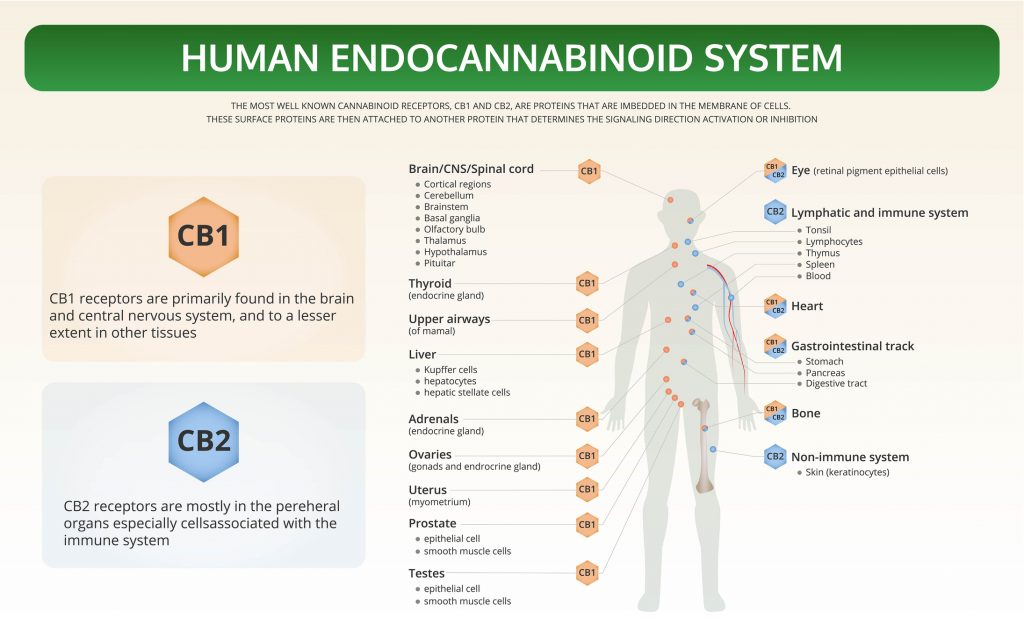
Patients who experience thyroid-based headaches also face other thyroid-related complications like anxiety, inflammation, and joint pain. With CBD available on the market in almost every state, study after study is finding that not only does CBD oil help with headaches but pain related to inflammation and anxiety as well, especially since they stimulate the endocannabinoid system.

Understanding the Endocannabinoid System

Often called a network of receptors or sensors, the endocannabinoid system regulates the body’s environment. The receptors communicate internally from the brain to the nervous system about pain, heat, cold, and other stimulants. Cannabis and CBD oil contains cannabinoids that directly help the endocannabinoid system by heightening the function of the receptors, often enhancing natural levels of cannabinoids. Think of it this way: Your body has serotonin and other reactions to stimulation that it creates naturally. Cannabis and CBD oil mimic what your body already creates to give it a little extra “oomph.”

RELATED: 9 Scientific Strategies To Harness The Endocannabinoid System

By utilizing CBD oil or cannabis during a headache, the pain isn’t being “numbed” as much as it’s being “managed” by giving the body exactly what it already produces. That’s why medication like pain killers, which block the pain, tend to not work in long periods of use. Cannabis and CBD jump-start the body’s own reaction system to remind it to do what it knows best: Thrive.

Don't Miss Your Weekly Dose of The Fresh Toast.

Stay informed with exclusive news briefs delivered directly to your inbox every Friday.

We respect your privacy. Unsubscribe anytime.