Thursday, May 7, 2026
Home Blog Page 379

Study Now Finds Marijuana Legalization Decreases Property Value

0

The latest study goes against the grain of previous research that shows how property values increase with the onset of legalization.

Marijuana legalization is happening across the United States. Naysayers have predicted that a veritable apocalyptic moment is coming on the heels of the movement, screaming about how ending marijuana prohibition would increase crime, minor consumption rates and contribute to the overall decline of civil society. Yet, the only thing that most of these people have proved is that they are no Nostradamus.

Marijuana legalization is working for the most part, and it hasn’t led to any drastic uprising in dread and downtrodden. However, if there has been a downfall to this progress, it’s that it seems to be lowering property values in neighborhoods that open dispensaries. 

A recent study in the journal Regional Science and Urban Economics found that Washington state, one of the first jurisdictions to legalize for recreational use, has experienced a decline in property values in districts with cannabis dispensaries. Researchers found a 3-4% decrease in property values in homes that were .36 miles from retail pot shops. Although the study focused specifically on Washington state, it provides a glimpse into what might be expected nationwide as legalization spreads. 

Why Investors Are Taking A Closer Look At Cannabis Real Estate Nationwide
Photo by Kindel Media from Pexels

The potential for crime is the reason property values are taking a hit. Although the study authors didn’t find any evidence of increased criminal activity due to marijuana legalization, they discovered more crime in spots where pot was sold. “While we find no evidence of a general increase in crime in Seattle, WA, there is a significant increase in nuisance-related crimes in census tracts with marijuana dispensaries relative to other census tracts in Seattle,” they wrote.

The latest study goes against the grain of previous research that shows how property values increase with the onset of legalization. In 2017, the University of Wisconsin found that property values rose by around 8% (around $6k more) in parts of Denver, Colorado, within one mile of a pot dispensary.  

“Our results indicate that retail conversion has a large positive impact on neighboring property values after controlling for property attributes and neighborhood characteristics,” researchers wrote.

 RELATED: Will Americans Tolerate Marijuana Odors As Legalization Progresses?

Two years later, a study from Clever Real Estate also found that property values in legal states were worth in upwards of $6,000 more than in prohibition states. The conclusion was that legal weed was positive for landowners. “States that legalize recreational cannabis see an immediate bump in home values following legalization, even without retail dispensaries opening up,” the report reads. 

So why would property values suddenly decrease in states where weed has been legal for years? 

Presumably, it’s because property values only increased in those parts of the country following legalization due to the overall attraction of living in an area where marijuana could be bought like beer. 

Some Massachusetts Landlords Are Trying To Ban Edibles, But Can They?
Photo by bymuratdeniz/Getty Images

There’s no denying that there has been a novelty to marijuana legalization that has prompted the stoner culture to move to states where their drug of choice doesn’t come with legal repercussions. But now, the novelty could be wearing off since legal weed is just a way of life in some states. The excitement of buying weed without the cops jumping out of the bushes and marching everyone to jail has faded, and cannabis businesses are viewed as normal, just like any other. Furthermore, citizens have likely decided that they don’t want to live too close to the marijuana scene.

RELATED: Why Investors Are Taking A Closer Look At Cannabis Real Estate Nationwide 

Sometimes normal is enough to do damage to property values. A 2016 report from Realtor.com shows that all sorts of the typical neighborhood features can drag down the value of a home by several points. Hospitals, shooting ranges, power plants, funeral homes, cemeteries, homeless shelters, strip clubs, and bad schools were all credited for destroying property values. Most folks do not want to live next to cruel reminders of immorality, their own mortality, or the combination of the two.

Other studies have found that liquor stores, drug treatment centers, and even convenience stores also lower property value. These operations are often considered magnets for crime, which makes them less than appealing when someone looks to that area to buy a home. 

There are a few things that communities with pot dispensaries can do to prevent property values from tanking. The main thing is working together to create an environment that benefits the entire neighborhood. Keeping lawns mowed, clean and nicely landscaped is a great start. It also doesn’t hurt to try working with local law enforcement to see what can be done to provide added security. Pushing the city for infrastructure repairs (fixing busted sidewalks and potholes) can also increase property values. Communities need to work together to ensure everyone’s best interests are looked after. Only then can they begin to balance out any negative connotations.

5 Most Common Embarrassing Sex Questions Experts Are Asked

Sex experts get their fair share of embarrassing questions. Here are 5 of the most common.

While sex has become a more openly discussed topic, your level of comfort with the topic depends on audience and personality. For some, it’s very easy to be honest about sex but for others it’s just the opposite. The majority of us fall in the middle of this spectrum; we’re aware of sex and talk about it with the right crowd, but some questions make us blush.

We scoured the web and compiled a list of the most common and embarrassing questions people have about their sex lives. Masturbation and vibrators abound. Check out 5 of our favorites:

Can a penis really be broken?

5 Tips To Help You Manage Nighttime Anxiety
Photo by Andrea Piacquadio from Pexels

Broken penises make great fodder for tv shows and sex columns. While the penis is not a bone it can be injured and, yes, fractured. “It is possible to fracture a penis due to trauma during particularly vigorous sex or masturbation,” ob-gyn Alyssa Dweck told Women’s Health. “The erect penis is engorged with blood. Forceful bending of the erect penis during aggressive sexual play, can lead to this serious injury.” Let’s move on, please.

What to do when a condom gets lost in a vagina?

Stealthing
Photo by kerryank via Pixabay

RELATED: 4 Sex Therapists Reveal The Questions They Get Asked Most

Condoms lost inside vaginas are very common and stressful. Still, as most sex experts will tell you, avoid panicking. There’s not much you can do except fish the condom out and make sure it’s intact, that way there are no pieces left inside of you. Says Dweck, “Even if you think there is no spillage of contents, if you are not using another form of contraception such as the pill or IUD, I recommend emergency contraception ASAP if you don’t desire pregnancy.” Also, if you don’t know whether your partner has an STD, get tested at your earliest convenience.

Can you pee during sex?

cbd water is the next big thing
Photo by TapisRouge via Pixabay

It’s common to feel like you want to pee during sex, but, according to experts, it’s very unlikely. “While it is possible to leak urine during sex, especially if the bladder is really full, I suspect this is actually not urine at all but rather female ejaculation which can occur during orgasm,” says Dweck.

Can you masturbate too much?

Many People Have Abandoned This Daily Hygiene Routine During The Pandemic
Photo by Adrian Swancar via Unsplash

RELATED: 4 Ways Cannabis Can Stimulate Your Sex Life

According to sex educator Francisco Ramirez, it’s okay and normal to masturbate, no matter how many times you do it. “Unfortunately, long-standing shame around masturbation has led many of us to be somewhat skeptical, or uncomfortable, about masturbation, especially frequent masturbation or instances where solo sex is more common than partnered sex,” he told The Huffington Post.

If your masturbation habits interfere with your daily life and relationships then a break is worth considering.

Do vibrators desensitize vaginas?

A Lot Of Women Would Use Cannabis To Treat Gynecological Conditions
Photo by Priscilla Du Preez via Unsplash

Nope. According to sex educator Eva Bloom, while it’s common for people to develop patterns when masturbating, making it more difficult to orgasm when trying new activities, as long as you switch up your technique you should be fine.

Increased Demand For Top Talent As Cannabis Industry Salaries Continue To Surge

The burgeoning industry continues to seek diversity among its employees, as evidenced by the opportunities within all cannabis verticals for minority candidates.

By Jelena Martinovic

With 320,000 full-time cannabis jobs in 2021, legal adult-use cannabis in 17 states and D.C., and medical marijuana in 36 states, the U.S. cannabis industry continues to prove its strength and resiliency.

Seeking to provide a clearer picture of the industry, cannabis-focused executive search and staffing firm CannabizTeam has released its 2021 Cannabis Industry Salary Guide – Second Quarter Update.

marijuana industry
Photo by Heath Korvola/Getty Images

The report looks into salaries for the most popular positions within the cannabis space and examines hiring trends.

The updated salary guide also highlights changes in the cannabis industries over the past period.

“The future is bright, and we look forward to our continued role in placing exceptional talent at the industry’s leading companies,” CannabizTeam founder and CEO Liesl Bernard disclosed.

RELATED: Cannabis Industry Job Growth Up 50%

Some of the hottest jobs in cannabis are leadership positions, including director of distribution, director of cultivation, vice president of product development, chief financial officer, vice president of human resources, and vice president of retail, the report writes.

  • Other key findings of the report include:
  • Over the past couple of years, cannabis salaries spiked due to increased demand that outpaced supply. In 2020, the median executive salary grew by 10%, with the trend continuing in the first three months of 2021.
  • The highest paying position in both 2020 and 2021 was chief executive officer, with an average base salary of $315,450 and $350,300, respectively, representing an 11% increase year-over-year.
  • Chief operations officers followed, earning an average of $232,700 in 2020 and $257,100 in 2021.
  • The lowest paying jobs in cannabis were trimmer and brand ambassador, with an average annual wage of $32,250 and $33,500, respectively, in 2020. Over the ongoing year, salaries increased by 5% to $34,000 for trimmers and 6% to $35,550 for brand ambassadors.
Photo by Bulat Silvia/Getty Images

Hiring Trends: Diversity, Temp Workers & Non-Cannabis Talents

The burgeoning industry continues to seek diversity among its employees, as evidenced by the opportunities within all cannabis verticals for minority candidates.

The trend of hiring temporary workers is also evident, especially for hard-to-fill jobs and to cover full-time employees on health or family leave.

RELATED: 32% Cannabis Job Growth In 2020, Despite COVID-19

The temp markets in California, Arizona, Illinois, Michigan, and Oklahoma are utilizing temp jobs to check out the new staff before permanent hiring.

2020 also saw C-suite cannabis positions filled by seasoned experts from outside the cannabis industry for the first time.

Many cannabis businesses strengthened their teams by hiring beverage experts. Food experts followed suit.

Other industries that yielded cannabis talent include pharmaceuticals, as well as agriculture, medical supplies, consumer packaged goods, technology, and retail sectors.

California still tops the U.S. booming cannabis job market with 24,000 new jobs created in 2020 and a total of 58,000 people working in the industry. Gross sales amounted to $3.7 billion in the Golden State.

Other states that made it to the top ten are Colorado, Florida, Arizona, Washington, Michigan, Oregon, Illinois, Oklahoma, and Pennsylvania.

Find the full report here.

This article originally appeared on Benzinga and has been reposted with permission.

The Disconnect Between Cannabis Companies And Consumers

Ultimately, you want to make a “black market competitive weed” where the price maybe is elevated due to regulatory costs, but still very accessible to blue-collar consumers.

There is a reason why roughly 80-90% of the weed purchased in Canada is still from the black market — price.

When cannabis was illegal, it was one of the cheapest drugs available on the planet. In fact, in “Walk Hard: The Dewey Cox Story,” they poke fun at how “not dangerous” it really is.

Of course, when it was illegal it didn’t have the sophisticated processes of cultivation like we have today in the legal market. It also didn’t have all of the strict regulation which elevates the cost to consumer.

Demand For Weed Surges, Prices Skyrocket
Photo by stockstudioX/Getty Images

Yet since cannabis has been legalized officially, the price per gram has been increasing. While this trend will not hold for too much longer — especially after the U.S. enters officially into the cannabis marketplace — there are some new brands trying to “get the money!” from stoners.

Some might argue, “Reg – the cost of production, regulations, quality – it all matters in terms of price” and I’m right there with you – of course it does!

However, the elevated costs are not a matter of the plant itself but rather the new industry rules that are driving up the price. Things like not being able to grow outside for instance forces companies to grow indoors.

RELATED: It’s Not All About Potency: What Cannabis Consumers Need To Look For In Their Weed

Indoor cultivation has a large carbon footprint and elevated costs of production. Sure, it gives you fantastic weed, but a greenhouse would be able to achieve the same results as any indoor grow operation (if not better) while drastically cutting costs of operations. Namely in climate control and lights.

But everything I’m mentioning is related to the “unmovable” items. By unmovable I’m referring to things that the cannabis companies themselves cannot change whether they like to or not. For example, if a particular state has rules in place that requires all cannabis crops to be tested before being sold; this is something that a legal company cannot circumvent.

Legal weed is just more expensive

Because of all of the aforementioned issues, the average stoner must accept that legal weed is just more expensive.

That’s okay. Stoner’s do not have a problem paying 15-20% more for their weed if they know they can get high quality and easily accessible weed with a robust catalog of products.

Hell, stoners would probably pay up to 30% more.

The problem is that the average person in the United States makes roughly $900 a week or $3600 a month.

how much does weed cost
Photo by Kirill Vasilev / EyeEm/Getty Images

If you’re making that much money, you’re most likely renting your place. So let’s say that at least 25% of the income is spent on rent, which is roughly $900. Some might say, “Dude I pay $450,” but I’m using averages here so don’t be a d**k about it.

RELATED: Whoa! New Report Finds This Many Americans Consume Cannabis

But if you take a closer look at how many people get paid minimum wage in the U.S., a 2019 survey placed that number at 58.1% of wage workers or 82.3 million people in the U.S.

That is, they make a whopping $7.25 per hour. This is roughly between $58-$72 per day. On a six day work week we’re talking about $350 — $432 a week. That’s about “half” of the average earnings of the entire population.

Now the $450/month or even $350/month rent starts looking steep.

Why it’s important to understand the situation of 82 million Americans

The reason I’m writing this article is to illustrate the disconnect between cannabis companies and a significant portion of the US population.

These “blue collar” workers take up a lump sum of cannabis consumers. In fact, this demographic have some of the heavier consumers within it.

And when you’re sitting on $1500-$2000 per month, with elevated costs of living — a $20 joint is not cheap!

Yet frequently you see dispensaries and companies try to pitch “premium cannabis” selling joints and blunts at $100 per pop. Even the price of premium pre-rolls or raw cones can creep up quickly.

Despite Layoffs, Cannabis Industry Job Growth Continues To Boom
Photo by rawpixel.com

Sure, these dispensaries and companies are making money and yes there are people willing to spend on this.

But these companies are also alienating a large portion of their potential consumer market and is the reason why the vast majority of weed still comes from the black market.

Why spend $160 an ounce when $90 an ounce would do?

What companies should be doing to win the cannabis game

If you’re thinking about venturing into the cannabis marketplace, I challenge you to create the “Average Jane Dispensary” which caters to the Average Jane and Joe’s of the world.

In these “Blue Collar Dispensaries” you aren’t trying to sell the Premium Weed that everybody is promoting on Instagram, but rather ‘good weed’ that gets the job done.

You want a weed between 8%-15% in THC that will give you enough of a buzz, but not floor you like the hyper elevated THC-strains.

You’ll want to have a robust crop, preferably a hybrid with indica characteristics on the buds — short, fat and stocky. You’ll want to have a decent curing time, but it doesn’t have to be as elaborated as premium strains.

Here's Where Consumers Draw The Line At Where Cannabis Is Sold
Photo by CasarsaGuru/Getty Images

Ultimately, you want to make a “black market competitive weed” where the price maybe is elevated by 10-20% due to regulatory costs, but still very accessible to these blue-collar stoners.

Who is going to be the Walmart of Weed?

Right now, there is not a single brand that has honed in on one of the largest consumer groups within the cannabis space. The first company to master the art of cheap-yet-effective weed, will win the marijuana game simply because of the sheer volume of consumers within this demographic.

If this doesn’t happen, the blue collar stoner will continue to buy from the streets because when it comes to breaking the law and paying for food, it’s far more cost effective to break the law…if you’re not caught.

RELATED: Do Cannabis Legalization Efforts Suggest Joe Biden Is A Pawn For Big Pharma?

This year, the United States will probably try to make a push for Federal legalization. I’m not sure if it’s going to happen with Old Touchy Joe at the helm, but then again, I have been surprised in the past as well.

I know that President Joe Biden caters to Pharma and not to the “average Joe” as he claims in his campaign promises, so odds are that the blue collar worker will still need to buy illegally post federal legalization — at least for a few years more.

This article originally appeared on Cannabis.net and has been reposted with permission.

We’re About To See If Senate Filibuster Will Ruin National Cannabis Reform

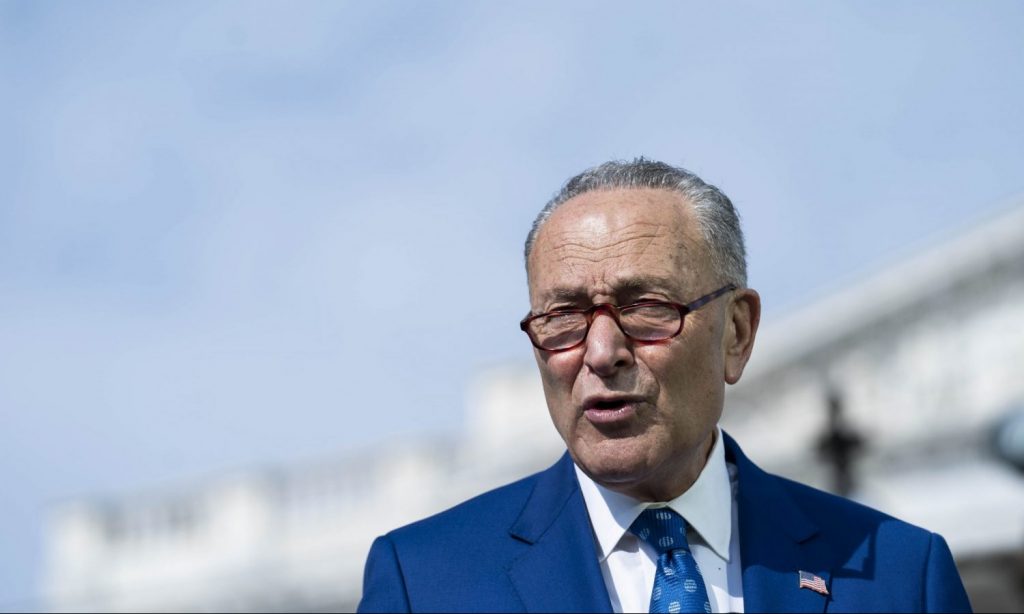
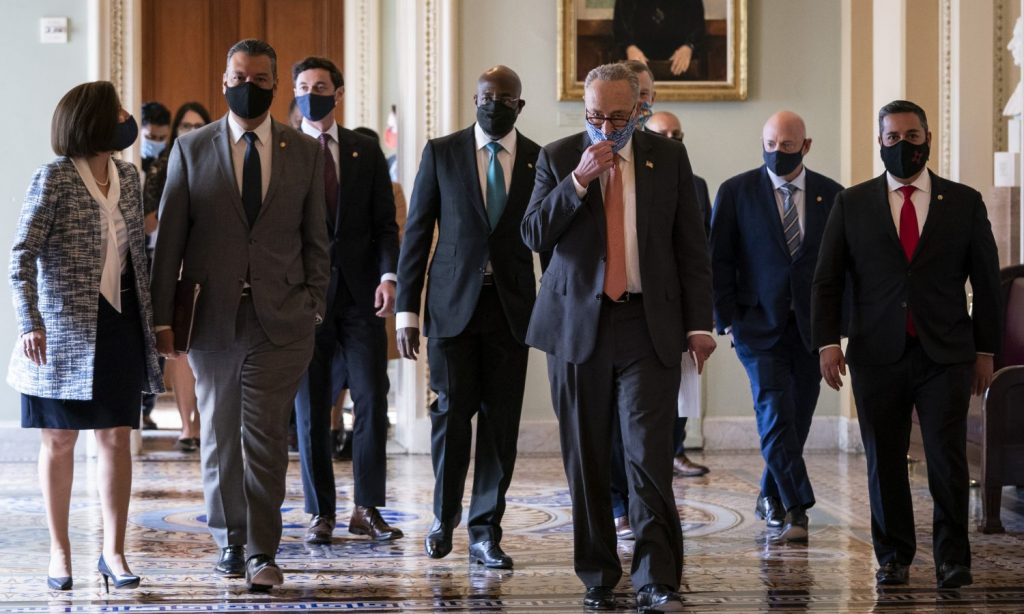
Chuck Schumer and crew have been talking a lot of smack this year about how they will introduce a comprehensive cannabis reform bill, and how it’s going to pass.

There has been a lot of chatter during President Biden’s first 100 days in office over this thing called a “filibuster” and how it will prevent the Democrats from legalizing marijuana at the national level. However, we’re about to enter a time when cannabis advocates, pot industry executives, and lobbyists will get to see firsthand just how much of a crude destructor this old Senate rule is going to be for the course of federal marijuana reform. Welcome to the next 100 days.

The Democrats have done an excellent job for America so far. They are responsible for passing a huge $1.9 trillion coronavirus relief bill to keep the nation from sinking into the gutters. At the same time, vaccinations are happening without issue, and businesses are starting to get their footing on the steps back to normal. But this progress was made relatively quickly, considering that it only took a simple majority to pass it through budget reconciliation. They didn’t need any Republican support, which is a good thing because they didn’t have any. And the fight is far from over. 

Congress To Vote On Nationwide Marijuana Legalization In December
Photo by Esther Kelleter / EyeEm/Getty Images

Now is the time when Senate Democrats need to be prepared for war. In the next 100 days, President Biden will want to chip away at his agenda — affordable healthcare, ending gun violence, tackling the opioid crisis, etc. — but not much of it will have the capacity for movement under the filibuster.

This rule dictates that most legislation needs a 60-vote supermajority to pass. The Democrats might control the Senate, but only by a 50-50 margin, with Vice President Kamala Harris being the tiebreaker. Democrats absolutely need Republicans to have their backs. It’s the reason Senate Majority Leader Chuck Schumer is trying to play nice, extending a political olive branch to Republicans.

RELATED: Chuck Schumer’s Senate Balancing Act Could Impact Marijuana Reform

“I’m trying, in this month and next month, to do two things. No. 1, put some bipartisan things on the floor that show the Republicans but my colleagues as well that we mean we’re serious that we want to do bipartisanship when we can,” Schumer said during a recent interview with The Ezra Klein Show. “But second,” Schumer continued, “we’re also going to put on the floor some of the things that don’t have bipartisan support.” Enter cannabis reform. 

Chuck Schumer’s Senate Balancing Act Could Impact Marijuana Reform
Photo by Sarah Silbiger/Getty Images

Schumer and crew have been talking a lot of smack this year about how they will introduce a comprehensive cannabis reform bill, and how it’s going to pass. In February, Senator Schumer, Senate Finance Committee Chairman Ron Wyden, and Senator Cory Booker announced that they were going after federal marijuana prohibition, making it a high priority for the Senate. Since then, cannabis advocates have heard how the bill would be designed somewhere between full-blown legalization and decriminalization; how it would cater to small businesses and it is coming “soon.” 

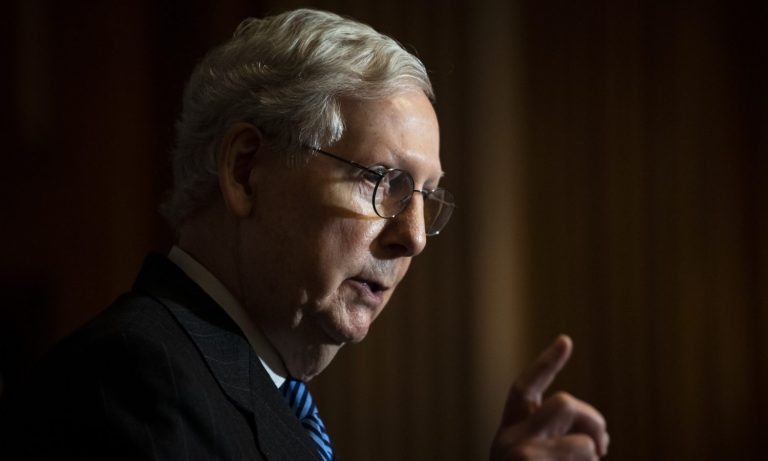
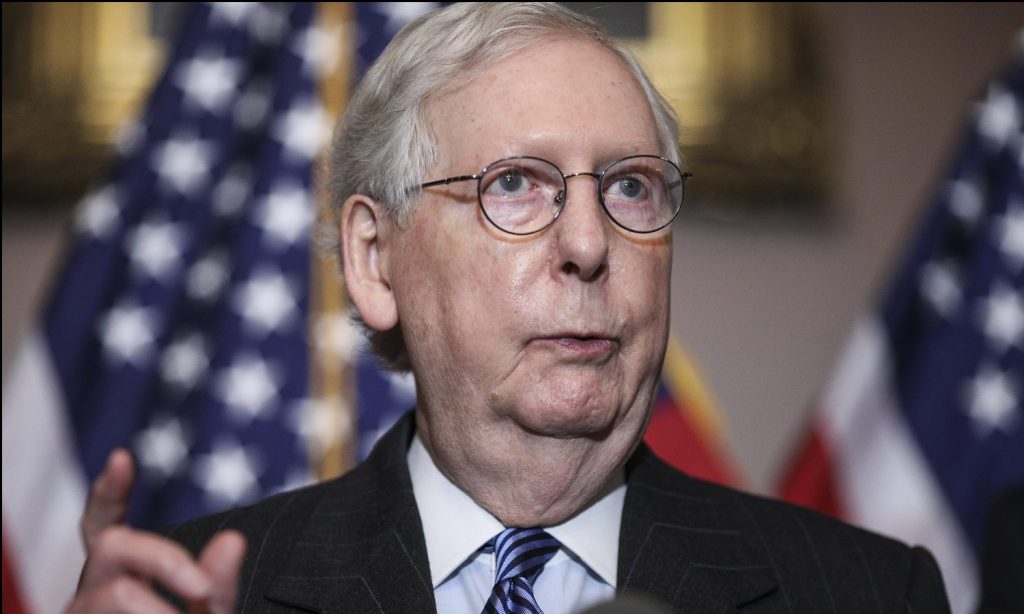
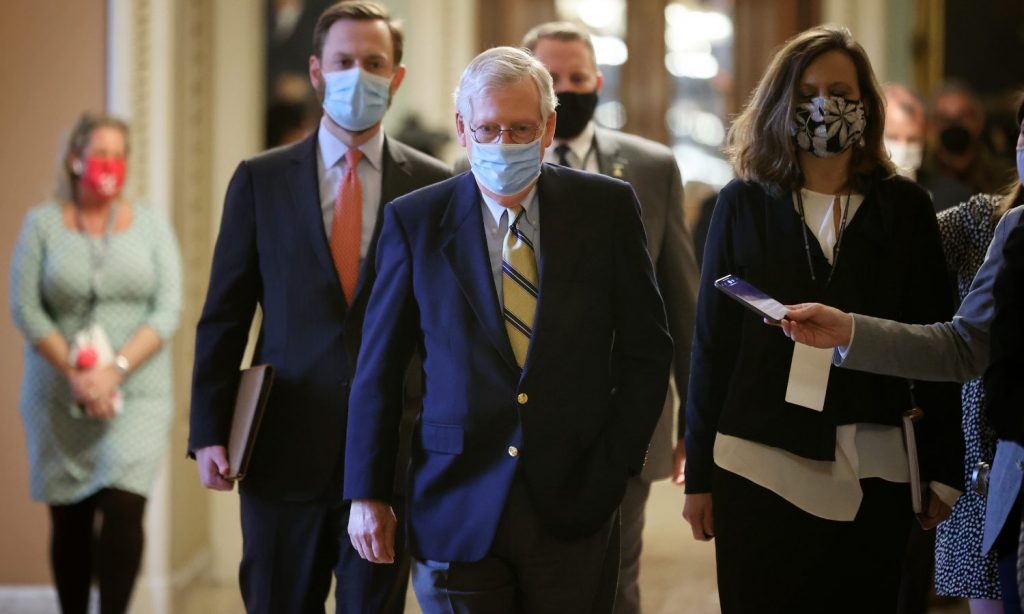
Marijuana is undoubtedly one of those issues that Schumer is talking about when he mentions putting some things on the floor that don’t have bipartisan support. Even though cannabis crosses party lines in Congress, it’s mostly the usual suspects (politicians who have supported it for years). There’s not enough new blood on board to make it a sweeping issue. Not with the filibuster hanging overhead. Senate Minority Leader Mitch McConnell is prepared to go scorched earth Senate to seek revenge on Democrats over the election and how they’ve gone about furthering their agenda.

RELATED: Marijuana Is Bipartisan, But That Doesn’t Mean Federal Legalization Is A Sure Thing

Furthermore, Schumer recently learned that not even his own party was entirely on board with revamping the nation’s pot laws. At least a few have come forward as of late to express a lack of interest. Rest assured, Schumer is counting votes to weigh his chances. 

As The Fresh Toast has mentioned countless times, Schumer and his Democratic-controlled Senate face immense challenges in passing any cannabis-related bill in 2021. Not even a modest cannabis banking measure known as the SAFE Banking Act is a sure thing. If the Senate goes for all the marbles — full-blown legalization –—the bill would inevitably make it through committee and be put on the Senate floor for a vote. But it is there that it will die at the hands of the filibuster, no doubt. Senator McConnell is frothing at the mouth to shut down this effort and more. 

Does Democratic Senate Really Have Enough Power To Legalize Marijuana Nationwide?
Photo by Drew Angerer/Getty Images

Schumer has some options this year if he wants to pass a cannabis reform bill. But none of them are going to be easy. One: He can gather the necessary votes to destroy the filibuster and just pass the bill without Republican interference. Two: He could negotiate Republican votes in favor of his pot bill in exchange for more palatable terms on other measures the party plans to push through with budget reconciliation. Three: Try to get cannabis reform approved for budget reconciliation, and hope that it doesn’t get repealed the next time Republicans come to power. 

RELATED: Congress Considers Bill To Research Marijuana Legalization Across Country

Schumer must also work to get his party on track. Democrats are still somewhat divided on critical issues, from raising the minimum wage to $15 per hour to changing the nation’s pot laws. Schumer might be the new majority leader, but he’s certainly no Mitch McConnell. During his time as Majority Leader, McConnell proved to be a blood-thirsty shark, chock full of the guts and hammer-fisted political power to paint his portrait of America. Schumer now has that big, bad Senate title, but without the respect and clout.

It’s going to take some time before he can work the Senate with savoir faire. Unfortunately, marijuana reform could suffer if he fails to get tough and start playing the game. Let’s hope we see a better fight in Schumer in the next 100 days. If not the filibuster is going to eat him. 

Did COVID-19 Boost Medical Marijuana Use?

The need for medical marijuana has seemingly changed, as many individuals are now looking for a stress-reliever and a similar form of “dopamine” to help endure the pandemic.

By Taneia Surles

Due to the ongoing COVID-19 pandemic, many people, including newcomers to medical marijuana, have changed their reasons for using it. The virus is stressful for millions, if not billions of people worldwide, which has led many of them to resort to different options to find the contentment they once had pre-COVID. Thanks to alternative health options such as medical cannabis, many people can find relief for their ongoing stresses from the pandemic.

Based on data provided by healthcare technology company Veriheal and other sources, the use of medical marijuana has changed for many users since early 2020, when the pandemic officially took hold in the United States.

Here's What You Should Know About The New Strain Of COVID-19
Photo by Max Bender via Unsplash

The increase in unemployment rates, the introduction of virtual learning for previous in-person students, losing direct contact with a support system, and the threat of being evicted have led many to resort to medical marijuana to ease their stresses surrounding the pandemic. Many individuals who had not previously been diagnosed with a mental illness began to show symptoms throughout this pandemic, leading to a significant increase in the need for mental health services and medications.

For those who prefer alternative health options, medical marijuana was the chosen method to ease their stresses and other possible mental health symptoms. For Veriheal, a CannaTech company that helps its customers receive a medical marijuana card, they have seen a drastic change in why their customers are pursuing medical cannabis.

According to the data provided by Veriheal, the number one reason or “effects desired” for individuals wanting medical marijuana was “happy/bliss,” with “relief/pain-free” being the second reason. Typically, most medical marijuana users suffer from chronic pain or mental illnesses that they can alleviate with medically prescribed cannabis. The need for medical marijuana has seemingly changed, as many individuals are now looking for a stress-reliever and a similar form of “dopamine” to help endure the pandemic.

RELATED: Medical Marijuana Is Booming Amid The Coronavirus Pandemic

This Is How Our Bodies Will Change After Spending Months Indoors
Photo by Vlada Karpovich via Pexels

Here is some additional information pulled from Veriheal’s data:

  • Pennsylvania currently has the highest demand for medical cannabis compared to other states, with the possible reason being that the state is medical-only.
  • The city of New York has the highest demand for medical cannabis as a city. It is to be noted that at one point during the pandemic, New York City had the highest number of confirmed COVID-19 cases.
  • The number one reason males use medical cannabis is to be happy (42%), while women use it primarily for relief (39%). As mentioned earlier, the two primary uses for medical marijuana during the pandemic are happiness/blissfulness and pain relief.

RELATED: Moms Are Using Marijuana More Than Ever During Pandemic

The data provided from Veriheal helps to give insight into how the future will look for medical marijuana. Even with the introduction of COVID-19 vaccines, there is no set-in-stone date when the pandemic will end. With this in mind, being happy or blissful may continue to be the top reason why people are pursuing medical marijuana for the near future.


This article originally appeared on Green Market Report and has been reposted with permission.

Will The COVID-19 Vaccine Mess Up Your Menstrual Cycle?

Women have been reporting changes in their menstrual cycles after getting the COVID-19 vaccine. Here’s what health experts are saying.

There are many predictable reactions that can occur when you get your COVID-19 shot, like fever, chills and more. Other side effects, like impacted menstrual cycles, are being reported, prompting many questions.

Among the reports that are being released, women have explained heavier periods than usual and significant period delays after getting their COVID-19 vaccine. Does the vaccine really impact peoples periods or are these just coincidences?

Medical Cannabis Helps Severe Dysmenorrhea
Photo by BJI/Lane Oatey/Getty Images

There’s not a lot of research out there on the COVID-19 vaccine having an impact on menstrual cycles, but dozens of women have submitted reports of heavier and altered cycles on the CDC’s Vaccine Adverse Event Reporting System. This surveillance program is one where anyone can report their side effects after getting the shot, so, as of this writing, the evidence is considered anecdotal.

Doctors have different theories as to why this might be happening, but none of them are very strong. When it comes to experiencing more pain during menstrual cycles, one theory is that vaccine pains can compounds period pains, resulting in an experience that is overall more uncomfortable and difficult to manage.

RELATED: Many People Have Abandoned This Daily Hygiene Routine During The Pandemic

Stress is another factor that could have a hand. “Menstrual cycles can be altered or influenced by many factors, including stress, poor sleep, exercise, and some medications. It wouldn’t be that unusual for some women to notice, after receiving the vaccination, changes in their period, such as it coming on earlier, or having a heavier flow, or noticing more cramping than they usually have,” Dr. Gloria A. Bachmann told Health magazine.

menstrual cycle
Photo by Nadezhda Moryak from Pexels

For the time being, there’s no way of knowing if the vaccine could have a direct influence on your period. During vaccine trials, heavy bleeding or irregular cycles weren’t reported as any of the side effects. Still, it’s assumed that if there are changes with your cycle, they are temporary and should return to normal within the coming month. It’s important to visit a doctor if they persist.

RELATED: COVID-19 Symptoms Tend To Appear In This Order

Despite the fears and stories, experts are adamant about the importance of getting the COVID-19 shot. Whether you have your period or are put off by the potential side effects, it’s important to make your appointment to get your shot as soon as you’re able.

Forced Labor And Cannabis

While no industry should consider itself exempt from the risk that its supply chain will be contaminated by forced labor, agricultural production is of particular concern.

In recent weeks, I have spoken to several entrepreneurs interested in growing cannabis in Africa for exportation to the United States and other markets. It is not hard to see their attraction to the idea: The areas in question have suitable climates to grow cannabis, while inputs such as land and labor are relatively inexpensive. There is still a way to go before it becomes as straightforward to import hemp to the United States as it is to bring in oranges, but importation of raw materials is the logical direction to follow if market forces are heeded.

As the cannabis industry continues to internationalize, it would do well to pay attention to the issue of forced labor. Enforcement activity against the importation of goods made using forced labor has become a major focus area for U.S. Customs and Border Protection (CBP). The cannabis industry has the opportunity to get things right from the start, avoiding the pitfalls encountered by companies in other sectors.

cannabis and forced labor
Photo by AlenaPaulus/Getty Images

By way of background, U.S. law prohibits the importation of “goods, wares, articles, and merchandise mined, produced, or manufactured wholly or in part in any foreign country by convict labor or/and forced labor or/and indentured labor under penal sanctions” (19 U.S.C. § 1307). In turn, forced labor is defined as “all work or service which is exacted from any person under the menace of any penalty for its nonperformance and for which the worker does not offer himself voluntarily.” 

This prohibition has been on the books for a long time, but in recent years has really come to the forefront. In addition to the ethical imperative of doing all they can to avoid becoming complicit in forced labor, U.S. importers also have to be concerned about the potential for supply chain disruptions, fines, and even jail sentences.

RELATED: What Is Bioengineering Marijuana And Why Are People Doing It?

For business opportunities overseas, cannabis companies must keep forced labor concerns front and center. Obviously, any suggestions that forced labor is being used by a supplier must raise immediate red flags. However, CBP is demanding much more from importers, as those who find themselves the target of a CBP “focused assessment” (audit) are learning.

The necessary work begins at home, with companies establishing proper internal policies on forced labor. Relevant staff must receive training on the subject. Supplier vetting must incorporate forced labor risk assessments. Contracts with suppliers must specifically prohibit the use of forced labor and ensure access to internal or third-party auditors.

How Hemp Can Be Used To Clean Up Oil Spills
Photo by Lukas via Pexels

While no industry should consider itself exempt from the risk that its supply chain will be contaminated by forced labor, agricultural production is of particular concern, as demonstrated by some recent forced labor cases. Back in December 2020, the Supreme Court heard arguments in a case brought against U.S-based Nestlé and Cargill by six Malians “who claim they were kidnapped and sold to cocoa plantations along the Ivory Coast as children.” A couple of months earlier, CBP issued a forced labor finding against a stevia producer in China’s Inner Mongolia region. However, cannabis companies need to pay attention to all the products they import, not just cannabis itself. This includes goods such as clothing and smokers’ accessories.

RELATED: 7 Challenges Facing The Cannabis Industry In 2021

Undergoing a CBP audit is unlikely to be a pleasant experience for any company, but preparing for the eventuality of one is essential for a successful outcome. Moreover, there is no reason to expect CBP will cut cannabis companies any slack. As they say, however, forewarned is forearmed.

Fred Rocafort is a former diplomat who joined Harris Bricken after more than a decade of international legal experience, primarily in China, Vietnam, and Thailand. This article originally appeared on the Canna Law Blog and has been reposted with permission.

Marijuana Social Clubs Are The Last Major Step For Legalization

No one has considered copying the Dutch model where people can buy small quantities of cannabis and smoke it on site or take it home.  

Disclaimer: The views expressed in this article solely belong to the author and do not necessarily represent those of The Fresh Toast. 

There are three major steps in the legalization of marijuana: Stop arresting people for possession of marijuana, even if they are not white; Take marijuana sales out of the black market with hard drugs; The establishment of venues where marijuana can be consumed in the presence of other actual human beings to see if the Universe will implode. 

On 420, the Mayor of Denver signed an ordinance that would legalize places where customers could bring their own weed to smoke, as well as clubs that could sell small amounts of weed to be smoked there. But no one seems certain about when it will go into effect. Well, as the saying goes, if the people will lead, the leaders will follow. There are already a number of “smoke-easies” where patrons can BYO their weed in Denver. 

Why Cannabis Consumption Lounges Have Failed To Takeoff
Photo by Photography Life via Unsplash

Similarly, Nevada’s legislature seems likely to authorize “consumption lounges”. New York’s new marijuana law leaves that issue to the local authorities, so New York City can and will almost certainly allow it. In any case, it seems  likely that both cities will have venues where patrons can legally consume their legal cannabis. 

SEE: Federal-Level CBD Advertising Laws 

Of course, the Dutch did all that in the 1970s, but apparently they live on another planet, because no one in any other country on Earth has even considered copying their model where people can buy small quantities of cannabis and smoke it there or take it home.  

But wait until they hear about Barcelona! 

Barcelona has taken maximum advantage of a loophole in Spanish law. There are a large number of “Cannabis Social Clubs” that really are “Clubs”, but they are very friendly for strangers. Some of them are really lavish. It remains to be seen how many will survive the pandemic, which has devastated Spanish tourism. 

SEE: Guide cannabis clubs in Barcelona AND: How To Join A Cannabis Club In Barcelona In 2020 – A Complete Guide 

For me, the key point is the word “social”. In the bad old days, I used to joke that there was a lot more smoke than sex in closets. But now I say, no more lies and no more closets. Marijuana has always been a “social drug” like alcohol, but without the violence. (The Dutch  police are almost never called to “coffeeshops.”) It is hard to imagine anything more “social” than sharing a joint or bong, but the pandemic will require improved “social hygiene.” 

When Jefferson wrote the Bill of Rights he included Freedom of Assembly in the First Amendment. (Congress shall make no law respecting an establishment of religion, or prohibiting the free exercise thereof; or abridging the freedom of speech, or of the press; or the right of the people peaceably to assemble, and to petition the Government for a redress of grievances.) 

The term ”smoke-filled room” is actually 101 years old. According to Wikipedia: “The origin of the term was in a report by Raymond Clapper of United Press, describing rumors of the process by which Warren G. Harding was nominated at the 1920 Republican National Convention.” Of course, it was tobacco smoke. 

Photo by Flickr user Dominic Milton Trott

Ironically, Dutch cannabis venues are called “coffeeshops” simply because it was easy to get a license to sell coffee. But most people don’t understand the historical importance of “coffee houses” as social, political, and business venues. (Lloyds of London began in a coffeehouse.)  

Like coffee houses, cannabis social and political venues will evolve among free people everywhere, but may not always be popular with the government. As Wikipedia reports, “Charles II later tried to suppress the London coffeehouses as ‘places where the disaffected met, and spread scandalous reports concerning the conduct of His Majesty and his Ministers’, the public flocked to them.” 

SEE: Why Conservatives Should Support Marijuana Legalization 

Whatever they are called, we certainly need places where “the disaffected” can meet and enjoy cannabis and the rights of a free people.  And no one will really be free, until everyone is free.   

Richard Cowan is a former NORML National Director and author of  CBD Help You To Quit Smoking? 

Marijuana Can Be Addictive ⁠— Here’s How To Spot The Signs Of Cannabis Use Disorder

Spotting the symptoms of marijuana addiction isn’t all that simple. Here’s what you should know.

Years of research has proved that the marijuana plant provides far more benefits than side effects. The majority of people can use cannabis without developing an addiction to it. Still, it is possible to develop a marijuana addiction, one that can be limiting and harmful to people’s lives.

Cannabis use disorder (CUD) affects about 30% of marijuana users, impairing their lives to a degree that affects their relationships and overall health.

is cannabis addiction real
Photo by Sharon McCutcheon via Unsplash

According to the Diagnostic and Statistical Manual of Mental Disorders (DSM-5), the manual used by mental health practitioners to diagnose mental health conditions and disorders, a person must meet two out of 11 requirements to be diagnosed with CUD. These are extensive and include marijuana cravings, the development of interpersonal problems due to cannabis use, or using the plant when in a dangerous situation.

RELATED: Is Marijuana Addictive? Let’s Discuss

Among marijuana users, the ones more likely to develop an addiction are adolescents. Studies show how important it is to understand cannabis use in adolescents. Since their brains are still developing, copious marijuana use could impact their future and their brain’s make up.

youths smoke less weed adults smoke more following marijuana legalization
Photo by Jamie Grill/Getty Images

Other factors that increase the odds of developing a reliance on marijuana include people coping with mental health conditions like depression and anxiety and the influence of genetics.

RELATED: Research Finds CBD Effective At Treating Cannabis Use Disorder

It’s difficult to spot symptoms of marijuana withdrawal. They include irritability, nervousness, aggression, sleep disturbances, headaches and more. People who are addicted to cannabis have similar experiences to those who are addicted to cigarettes, finding themselves fidgeting or needing to increase their dose over time in order to have the same experience they used to. Like all addictions, if someone finds themselves having arguments with their family or putting themselves in dangerous situations because of marijuana, it’s very possible they have a problem.

RELATED: Is Cannabis Withdrawal Syndrome Real?

In order to manage this condition, it’s important to stop your usage for a period of time and to monitor your body’s response to it. If you’re unable to get through a period of a week or two without using marijuana, you might need to get professional help from a psychologist or psychiatrist. Common treatments include the use of Cognitive Behavioral Therapy (CBT), which is the first resource used for treating different kinds of addictions.

Don't Miss Your Weekly Dose of The Fresh Toast.

Stay informed with exclusive news briefs delivered directly to your inbox every Friday.

We respect your privacy. Unsubscribe anytime.