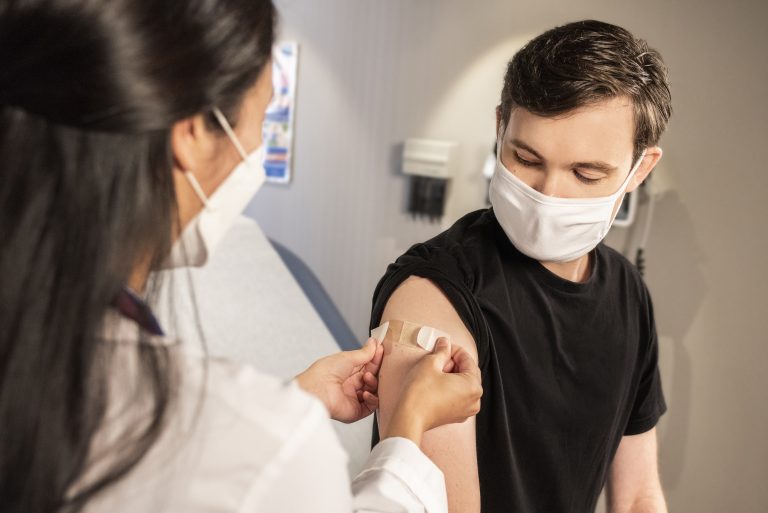
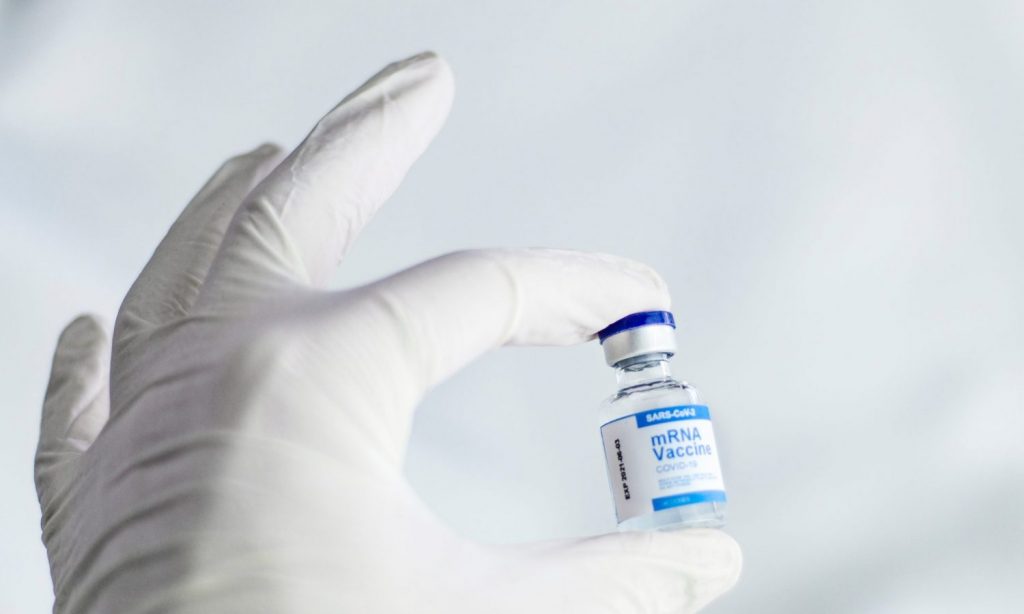
New data highlights a particular side effect that may indicate whether the person who got the vaccine suffered from COVID-19 in the past.
The COVID-19 vaccines are no stranger to side effects. Now that more than 200 million people have received at least one dose of the vaccine, large percentages of them have reported reactions such as headaches, sore muscles, chills and a light fever. According to new research, there’s one vaccine side effect that might indicate whether you’ve already had COVID-19.
The study analyzed over 947 people who’d received their COVID-19 vaccine and were monitored for side effects. Out of this group, 265 participants had suffered from COVID-19.
Photo by rawpixel.com
Out of all the participants, those who’d suffered from COVID-19 in the past were more likely to have experience swollen lymph nodes. Less than 1% of participants that had experienced COVID-19 reported these changes versus 4% of participants who had had COVID-19.
While swollen lymph nodes were the most prominent side effect associated with people who’d already experienced COVID-19, other symptoms were also recurring, including fever, muscle pain, fatigue and joint pain.
Overall, participants who had COVID-19 were more likely to report side effects when compared to people who hadn’t had the illness before. Still, despite this data, when patients were analyzed 15 minutes after receiving their vaccine, health care workers weren’t able to spot any differences in symptoms between people who’d had COVID-19 and people who hadn’t.
As we learn more about the disease and more data is available, we learn more about the vaccines and their effect on our bodies, topics that have provided ample room for discussion and speculation. Despite new variants of the virus and new batches of information, the vaccine remains a safe and efficient way of curbing the spread of the virus and finding our way back to normal.
Canada has already legalized pot; Mexico is likely to legalize it soon. The U.S. must not fall behind.
By Lauri Kibby
President Biden is not there yet. Neither are Republicans in Washington. But the wave of momentum toward nationally legalized cannabis only continues to mount. It is time lawmakers in the Capital get on board with what a majority of the American citizens they represent want.
There are signs of progress. The U.S. House recently passed a bill to decriminalize cannabis at the federal level, the first of its kind. When Democrats won control of the Senate this year, the change paved a potential path for legislation in that chamber as well. Senate Majority Leader Chuck Schumer (D-NY) said this month he intends to soon introduce a federal cannabis legalization bill.
Photo by Fokusiert/Getty Images
At the state level, the pace of acceptance is escalating. November ballots in Arizona, Montana, New Jersey and South Dakota all approved the legalization of recreational use – though South Dakota’s law is currently held up in the courts. More states are following suit this year, including New York, where legalization was signed into law in March.
Already, 35 states and Washington, D.C. regulate the production, sale and use of marijuana for medical purposes. Fifteen of these states also allow adult recreational use, according to the National Conference on State Legislatures.
Change has developed quickly. A decade ago, no states permitted recreational use. Today, more than 40% of the U.S. population lives in a state where some form of cannabis is legal.
A Gallup poll this year showed that 68% of U.S. adults support federal legalization. Strengthening public support is reflected in soaring cannabis sales.
The U.S. marijuana industry is now valued at more than $18 billion, supporting the equivalent of at least 300,000 full-time jobs, according to the 2020 Marijuana Business Factbook. The legal market in California, the nation’s largest, reached $4.4 billion in sales, up from $2.8 billion a year earlier.
Photo by Ivan-balvan/Getty Images
Sales in Colorado topped $2 billion last year, up from $1.7 billion in 2019, while Washington state exceeded $1.4 billion, up from $1.1 billion. Oregon and Illinois each eclipsed the $1 billion threshold as well.
States’ need for new sources of tax revenue amid the pandemic provides an extra incentive to increase the size of the legal sector. The same argument applies to the debt-laden federal government.
In addition to tax revenue, medicinal benefits, and freedom to choose, legalization would enable law enforcement to focus on serious crimes. Federal regulation would also refocus oversight to consumer-related issues like product safety.
Based on our discussions with capital markets, we are confident that a growing pool of prominent investors and lenders would enter the cannabis space when nationally legal, expanding its scope, creating more opportunities for cannabis companies, expanding public markets, and contributing to the U.S. economy. We currently see acceptance in the debt markets as competition to lend increases resulting in more competitive terms.
Canada has already legalized pot; Mexico is likely to legalize it soon. The U.S. must not fall behind.
And while Republicans in D.C. are still publicly opposed, legalization efforts indicated a different sentiment with three deep-red states voting approval: Alaska, Montana and South Dakota.
Photo by strelov/Getty Images
Legalization’s success at the ballot box so far will lead to more success; it is clear Americans stand for it, jobs now increasingly depend on it, and there are clear taxation benefits.
To be sure, Kings Garden would benefit from federal legalization. I do not apologize for that. We have invested in developing safe, high-quality products that the consumer wants. Opening up free markets, a mainstay of the U.S. economy, will only ensure fair and balanced competitive markets.
It is time lawmakers do their part.
Lauri Kibby is co-founder and chief financial officer of Kings Garden, California’s preeminent cannabis cultivation, processing, distribution and manufacturing company.
This year’s loot featured a lot of wellness and health oriented presents, including vitamin therapy for treating hangovers, sleep tracker headbands, liposuction and more.
The 93rd Academy Awards aired last night, looking very different than they traditionally do. Held two months later than usual and in a different venue that allowed for social distancing measures, this year’s awards show honored the best movies of the year all the while reminding viewers of the importance of the cinematic experience.
Despite the smaller and more casual event, the show tried its hardest to remain as fancy as possible, including the traditional swag bags.
This year Oscar gift bags were delivered to nominees in a very pandemic way: Postmates. But regardless of delivery method, items in the swag bag have an estimated value of over $200,000.
Photo by Carlo Allegri/Staff/Getty Images
“We did want the bags to feel like they had a bigger purpose than just, ‘here’s a bag full of free stuff,’” Lash Fary, founder of the company that assembles the gift bags, told Fortune. “All of the bags that we’ve been doing have been from female-owned businesses, Black-owned businesses, disabled entrepreneurs, and companies who give back—even ones that you wouldn’t necessarily think give back.”
This year’s loot featured a lot of wellness and health oriented presents, including vitamin therapy for treating hangovers, sleep tracker headbands, liposuction sessions, free stays at luxury hotels and resorts, and more. Continuing the Oscar tradition of providing guests with high quality weed paraphernalia, the swag bag included a Hollowtips 24 karat gold vape pen.
Perhaps the most controversial and 2021 item of the bag was a non-fungible token (NFT) of the late Chadwick Boseman. Made by artist Andrew Oshea, the NFT was auctioned off with 50% of proceeds donated to the Colon Cancer Foundation.
In one of the night’s biggest upsets, Anthony Hopkins won the Best Actor award over Boseman, a move that appeared to surprised the Oscar programmers, who shuffled the order of the awards show in hopes of closing out the program with Boseman’s big awaited win. Things clearly didn’t go according to plan. Still, Oscar attendees will always have that NFT printout.
The lawsuits come on the heels of a Thursday decision by the Florida Supreme Court to stop a 2022 recreational marijuana ballot initiative in a 5-2 ruling.
The state of Florida legalized medical cannabis in 2016 by way of a constitutional amendment, enabling the formation of a fully legal medical cannabis program. The initiative was approved with 71% of the vote.
In spite of this, Miami’s city government has refused to allow cannabis dispensaries,The Miami Herald reported.
State Vs. Federal Law
State lawmakers never established zoning restrictions to regulate where dispensaries can be opened or created new laws, and instead “relied on an internal legal opinion that the change to the Florida Constitution was moot because federal law continues to categorize marijuana as an illegal substance with no medicinal value,” the report said.
Now, two businesses looking to open medical cannabis dispensaries downtown have filed lawsuits against the city of Miami. They question the city’s decision that federal regulations are a higher authority than the Florida Constitution.
On the other hand, other local governments have set zoning regulations that dictate locations where dispensaries are allowed. The state boasts an estimated 270 dispensaries.
The company MRC44 has been asking for city authorization to open a dispensary since 2019, and it recently got Miami’s zoning board on its side in an appeal, the Herald reported.
While commissioners were supposed to settle the issue on Thursday, they postponed the decision, as another company filed the same type of suit in Miami-Dade Circuit Court on Wednesday.
Photo by Del Adams via Pexels
Both companies argue they should have the right to open dispensaries in any place in Miami without municipal permits simply because the city has no medical cannabis ordinance.
“We will address it court,” City Attorney Victoria Méndez said Thursday, adding “I feel that there’s a discrepancy or a conflict between state and federal law, and I just want to ask a court of law to opine on that.”
Florida Supreme Court Shuts Down Adult-Use Initiative
The lawsuits come on the heels of a Thursday decision by the Florida Supreme Court to stop a 2022 recreational marijuana ballot initiative in a 5-2 ruling.
The court ruled the Make It Legal Florida reforminitiative, supported by hundreds of thousands of voters, is “affirmatively misleading,” reported Marijuana Moment.
The initiative was deemed misleading due to the fact it claims adult-use cannabis would be lawful in the state without recognizing it would continue to be illegal on the federal level.
Because of this ruling, cannabis advocates in the state are starting from zero, which means drafting another measure and collecting signatures again in the hopes of getting a proposal before voters in 2022.
A study found a man’s clothing can suggest their level of reliability and how they are viewed by other people.
The subject of men and cheating is the backbone of many magazines and websites. There’s no clear way to know what makes someone cheat and what doesn’t because, sadly, life can’t be so easily reduced. But there is a study that claims that men who wear a particular item of clothing are more likely to cheat, so take that as you will.
In the study, published in the journal Personality and Social Psychology Bulletin, researchers found men who wear flashy shirts emblazoned with big, pricey logos are less “trustworthy” and more likely to be “promiscuous,” surprising no one. According to the study, the more muted the shirt, the more trustworthy the person.
Photo by rawpixel.com
The journal explains the origins of the study, which is based on the evolutionary theory suggesting women seek men who have resources. In today’s world, wealth, which can be expressed through clothing, is one of these resources. It’s not a foolproof theory, but it is one which has inspired several studies like this one and is used as reference for many other social theories.
The study was led by Dr. Daniel Kruger and was conducted by the University of Michigan, focusing on two models of shirts from the brand Ralph Lauren: one with a small logo and another with a larger one. Researchers then asked the men which shirt they preferred and the social situation in which they would wear it, whether that was a family gathering or a party where they could meet a potential partner. Men were then rated for their choices by other men and women.
Photo by skynesher/Getty Images
“Luxury displays featuring exaggerated size, coloration, and sound may indicate relatively greater investment in mating effort,” said Kruger. “Large luxury product logos enhance social competitiveness and mate attraction, whereas small logos enhance perceptions of trustworthiness and reliability.”
Research concluded that men who own large logos appeared to be more invested in mating attraction than in becoming parents. They appeared to be more invested in short term relationships over long term. Men and women who voted for these results appeared to share the same opinions.
While wearing a different model of a polo shirt may seem like something simple and not very telling, the study reveals that the way in which people present themselves lend themselves to interpretation, and that display of luxury goods is associated with sketchy stuff. In short: don’t wear the polo with the big logo.
Any serious conversation about social and racial justice in America must include a conversation about our nation’s drug laws and the impact they have had on specific communities.
The most recent wave of successful legalization efforts has demonstrated the effectiveness of pro-cannabis reformers to frame cannabis policy as a civil rights and racial justice issue. Between November 2020 and April 2021, seven additional states approved laws to fully legalize adult-use cannabis. Thus far, 18 states plus DC have voted, either by ballot initiative or via the legislative process to do the same.[1] State cannabis reform is putting social justice front and center.
The structure of the new laws in states likes Virginia, New Jersey, and New York—to name a few—have put centerstage a recognition that the war on drugs was and is a racist institution that purposefully harmed communities of color for decades. Drug reform laws were thus designed to right some of those wrongs and to rehabilitate and empower the victims of the drug war and the communities (both demographic and geographic) from which they hail. Reform advocates have expanded the policy space beyond criminal justice reform to include economic policy. With the community investment opportunities that new revenues will enable, legalization is just the beginning of a cannabis opportunity agenda focused on equity.
New York’s three-pronged approach to equity
The legalization framework in New York illustrates this trend. The main focus of New York’s cannabis reform law, titled the Marijuana Regulation and Taxation Act, is racial and social justice. Each part of the Act addresses specifically how reform will benefit communities and people who have been disproportionally impacted by cannabis criminalization.
The first part New York’s plan is automatic expungement of cannabis-related convictions that are now legal so that people are not left behind in the new legal landscape. The Act expunges convictions for possessing cannabis, cannabis consumption, and other offenses from any point in time. Though the idea of expunging records is not new, only some states have made the process automatic. Illinois and Vermont preceded New York in including automatic expungement but most of the other states, including Michigan and California, that have enacted cannabis reform only authorized expungement or sealing of records by petition. New York previously sealed the records of over 150,000 people with cannabis-related convictions in 2019.
Photo by Talaj/Getty Images
Automatic expungement is crucial for addressing the disproportionate effect of the war on drugs on Black and Latino Americans. This past year in New York City, 94% of those arrested for cannabis-related charges were people of color, even though cannabis consumption varies little by race. An automatic process also ensures that cannabis reform is effective in reaching all those impacted by criminalization, including people without the resources to petition for expungement. In New York, 107,639 convictions are estimated by the state to be eligible.
Second, New York has also taken steps to ensure that people disproportionately affected by cannabis criminalization have access to the new economic opportunities presented by reform. The primary way that they hope to include such communities is through ensuring that half of all cannabis licenses go to social equity applicants—people who are from communities disproportionately impacted by prior laws, minority and women owned businesses, disabled veterans, and struggling farmers.[2] Other states have adopted similar programs, with varying degrees of success. Massachusetts was the first state to adopt a state-wide social equity plan for licensing and has two programs to provide guidance and prioritize license review for those most impacted by the war on drugs.
But in 2019, three years after passing cannabis reform, only two social equity applicants for cannabis licenses had been approved out of total the 105 provisional and 79 final licenses issued. The legal cannabis market is monopolized by white distributors, with 81% of businesses being owned by white people. The barriers to entry for people of color are high, with some states forbidding those with felony convictions from obtaining a license and setting high application fees. The racial disparity in the legal cannabis market continues the disproportionate impact of criminalization on communities of color. By setting specific goals for equitable cannabis licenses, the New York plan will hopefully ensure more economic opportunities for people affected by cannabis criminalization, particularly Black and Latino New Yorkers.
Third, the plan also prioritizes investment in communities disproportionately impacted, recognizing the long-term effects of the war on drugs. High rates of incarceration for drug-related convictions have contributed to wealth disparities between communities of color and white communities, leading to fewer public resources and a lack of economic opportunities. New York anticipates receiving $350 million in yearly tax revenue and has committed to dedicating 40% to reinvestment. The money will go to the Community Grants Reinvestment funds, which include grants for local governments and community organizations to fund programs in communities disproportionately impacted.
Photo by FatCamera/Getty Images
The funds can be spent on a variety of social programs including adult education and mental health and substance abuse treatment. They can also be spent on economic equity programs like job placement and skills services, financial literacy, and community banking. Reinvestment grants can also help address the impacts of criminalization by funding legal services for people with prior cannabis convictions that face barriers to workforce reentry.
How states that legalized early are adopting equity measures
Each of the new states to legalize and prioritize issues of racial justice and social equity seek to build on the efforts—or lack of efforts—from prior states. The earliest jurisdictions to legalize such as Colorado, Washington, Oregon, Alaska, and DC often discussed issues of race in the initiative campaigns. Explanations, particularly in communities of color, about the effects of the drug war and how removal of criminal penalties would have significant benefits helped build the coalitions that passed those referenda. However, the initiatives themselves were severely lacking in proactively addressing issues of justice and equity. Many of the early legalizing states have subsequently passed reforms including social equity programs for minority cannabis business ownership and record expungement to combine criminal justice and economic opportunity elements into a comprehensive social justice effort.
States like Illinois, New York, New Jersey, and others have recognized something critical to a comprehensive justice conversation: cannabis expungement is not enough. Expungement is important (automatic expungement more so), but expungement only fixes one day in a person’s life: the day he or she is convicted of a crime. Expungement does not inherently fix all of the missed economic, educational, wealth-building, and social opportunities that occurred because of a criminal record.
Several states have recognized that investment in the individuals and communities hit hardest by the war on drugs is essential to addressing this nation’s disastrous history in this area. California will invest $30 million this year, $40 million next year, and $50 million each year after into communities disproportionally impacted, a significant number that nevertheless pales in comparison to the approximately $140 million New York plans to invest yearly. The challenge now for states is to identify how to target such investment and ensuring that there are sufficient revenues to accomplish it. That challenge involves designing tax policy that is sufficient without being punitive. It also involves combining data on arrests and other law enforcement activities with a sensitivity to the fact that the geography of the drug war’s past may not be the same geography of the drug war today.[3]
Limits at the state level and how Congress can strengthen equity
For states seeking to ensure that newly forming cannabis markets include business opportunities for people affected by the drug war, there is a major obstacle: access to capital. Prohibition at the federal level means that borrowing funds to start a small business is not an option. As long as cannabis remains a Schedule I controlled substance under federal law, small businesses will largely continue to operate on a cash-only basis. A further squeeze on any small cannabis business is that banking services, if they are available at all, come at costs that only the largest market actors can absorb. There are two ways Congress can fix this and make it possible for license carve-outs to foster small business as intended. One would be establishing clear protections for banks to provide services to cannabis businesses in states where it is legal. The other would be, of course, to remove cannabis from Schedule I of the Controlled Substances Act.
On the community reinvestment side, Congress should pay close attention to the programs states are developing. In particular, New York’s investment commitment is significant. Investment in communities that were targeted in the war on drugs has the potential to touch on many different aspects of racial inequality.
Photo by Roman Budnyi/Getty Images
Whether it’s unemployment, housing, the racial wealth gap, poor health outcomes or other issues, Congress and the administration can build on successful programs in the states. Cannabis legalization has provided a rare instance of clarity and consensus around a key social justice issue—a need to right historical wrongs. Tax revenue from cannabis sales alone won’t be enough to do the job. But it will create valuable laboratories of equity-building and community reinvestment in the states, the evidence from which Congress can use to make meaningful moves toward equity through its spending powers.
Ultimately, the fight for drug reform in America is a civil rights and racial justice issue. Any serious conversation about social and racial justice in America must include a conversation about our nation’s drug laws and the impact they have had on specific communities. At the same time, as more states reform their cannabis laws, they must take the lead of states like New York and others and prioritize issues of racial justice and equity not just in criminal justice terms, but in the economics as well.
[1] The ballot initiative that passed in South Dakota is currently in a protracted legal battle regarding its constitutionality, and the DC ballot initiative has been blocked from implementation by a congressional appropriations rider.
[2] Social equity applicants are defined as people of low income who have, or have a close relative who has, a cannabis related conviction.
[3] One important challenge that states and other jurisdictions have and will need to work through is avoiding using dated—yet still important data indicators—that could lead to targeting investment funding to neighborhoods that no longer maintain a population targeted by the drug war. A neighborhood that has gone through extensive gentrification would be whiter, wealthier, and possibly older than it was 10 or 20 years ago. And while historic data on arrest rates could suggest that neighborhood should qualify for such support, the economics and demographics of that neighborhood today would not make it a prime target. Similarly, within neighborhoods undergoing gentrification, investment decisions must be made to ensure that those individuals and groups intended to benefit from such programs are the actual beneficiaries of those programs.
Tremors are uncontrollable, unintentional movements that affect a limb or a part of it. It’s one of the most common movement disorders and it can happen anywhere in the body. They usually affect the arms, vocal cords, head, legs, and torso.
Tremors can also occur intermittently or during separate times after breaks, but they can also be constant or sporadic. Those at most risk for tremors are older and middle-aged adults but it can happen to people at any age and of any gender. Though tremors are not life-threatening, they tend to be embarrassing and can make life difficult while basic everyday and work tasks challenging and sometimes even impossible.
Tremors are typically caused by problems within parts of the brain that are responsible for movement control. Though there are no known causes for most kinds of tremors, some are inherited genetically. They can also be caused by certain neurological disorders such as strokes, multiple sclerosis, Parkinson’s disease, or traumatic brain injury.
Photo by Astrid860/Getty Images
There are different types of tremors that fall into two categories: resting tremor or action tremor. To treat it, medications are usually prescribed such as beta-blocking drugs, anti-seizure medications, tranquilizers, Botulinum toxins, medications for Parkinson’s disease, ultrasound, and in extreme cases where patients don’t respond to treatment, surgery.
How Cannabis Helps
Studies have shown that cannabis can help with different types of tremors.
The latest study was conducted by researchers from the Department of Neuroscience at the Faculty of Health and Medical Sciences from the University of Copenhagen. The results, which were published in the medical journal Nature Neuroscience, revealed that cannabis was beneficial for patients suffering from pathological tremors.
The researchers discovered that the cannabinoids within the plant interact with the astrocyte, a star-shaped cell located in the spinal cord which reduces tremors. For the study, the researchers used a mouse model to demonstrate how cannabis reduces tremors caused by neurodivergent disorders or traumas, which lead to involuntary shaking in the limbs or the head. It affects some 200,000 people a year within the United States alone.
“We have focused on the disease, essential tremor. It causes involuntary shaking, which can be extremely inhibitory and seriously reduce the patient’s quality of life. However, the cannabinoid might also have a beneficial effect on sclerosis and spinal cord injuries, for example, which also cause involuntary shaking,” explains Jean-Francois Perrier, PhD.
“We discovered that an injection with the cannabinoid WIN55,212-2 into the spinal cord turns on the astrocytes in the spinal cord and prompts them to release substance adenosine, which subsequently reduces nerve activity and thus the undesired shaking. These findings may result in the development of targeted treatment with little or no side effects. In probing astrocytes to understand the biological effects of cannabis, the researchers take a novel approach as earlier studies have focused primarily on neurons,” he says.
“One might imagine a new approach to medical cannabis for shaking, where you – during the treatment of cannabis-based medicinal products – target the treatment either at the spinal cord or the astrocytes – or, at best, the astrocytes of the spinal cord,” explained Eva Carlsen, PhD, who also worked on the study. “Using this approach will avoid affecting the neurons in the brain responsible for our memory and cognitive abilities, and we would be able to offer patients suffering from involuntary shaking effective treatment without exposing them to any of the most problematic side effects of medical cannabis.,” she says.”
Another study, this time from January 2020, found that one dose of CBD was beneficial in reducing anxiety and tremors among people with Parkinson’s disease. These tremors were found to be triggered by anxiety.
Photo by TheDigitalArtist via Pixabay
This is not surprising since CBD is a well-known anxiolytic, but milder treatment options without side effects are necessary because Parkinson’s tends to affect the older population. CBD has been shown to be safe and have minimal effects, making it an excellent treatment alternative. “This is the first study that shows the anxiolytic effects of CBD in patients with PD and its ability in attenuation of the tremor amplitude in anxiogenic situations,” says the researchers.
Dr. Allan Frankel MD even blogs about his experience of a cannabinoid known as THC-V found to be extremely effective in helping his 70-year old patient who was struggling with essential tremors. According to him, it was the most severe type of essential tremors that he had come across in his 39 years of work. Because it was so extreme, the patient was hardly able to walk and kept getting thrown off by the tremors, unable to swallow food and even write her name.
Within 24 hours of consuming sublingual THC-V, she displayed almost normal speech while showing that she had been able to gain better control of her tremors. She was also able to eat, which shows how cannabis can be life-saving for many. He also notes that the THC-V was also effective in taking the edge off the THC effects.
Using CBD For Tremors
When medicating with cannabis for tremors, stay away from THC which is not recommended for the elderly population especially those who do not want to get high. CBD is different, though if you’re younger you can feel free to experiment with products that have a combination of CBD and THC.
CBD is extremely helpful in calming down the body and mind, which is why it’s so beneficial for anxiety reduction, convulsions, stress and anxiety, and of course, tremors. For this reason, we’re seeing a rise in the use of CBD for Parkinson’s disease, multiple sclerosis, and other similar disorders that can cause tremors.
It’s not easy being green, or is it? In honor of Earth Month, cannabis companies look closely at their environmental impact.
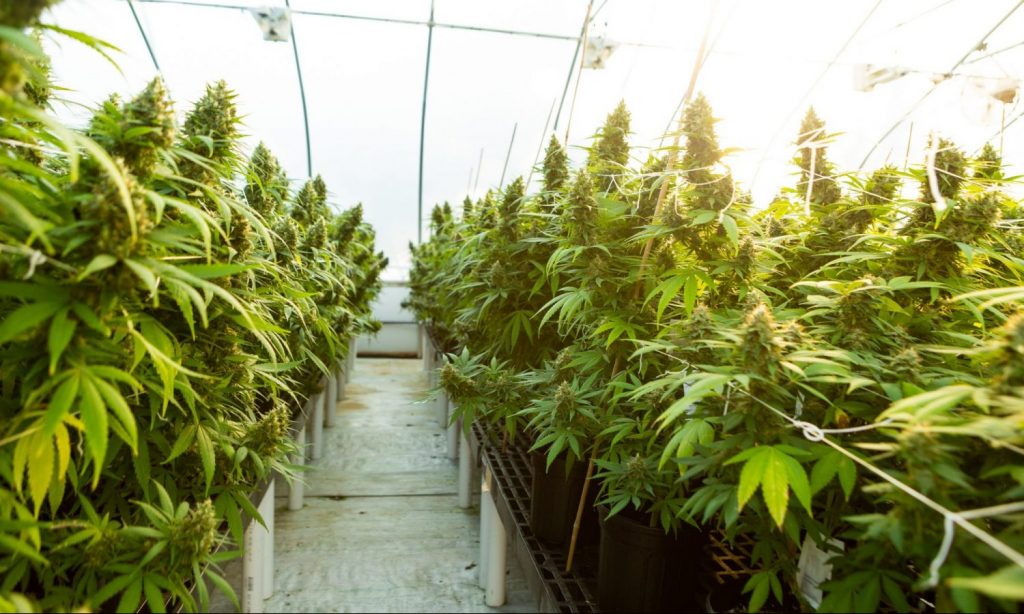
An industry revolving around growing plants seems like it would be ‘green,’ but cannabis cultivation and distribution is energy and resource-intensive. Cultivators tend to use hundreds of plastic tubs and fiberglass containers to grow these plants and need to use lots of water and electricity in order to keep an operation running. Legal cannabis production in the United States consumes enough electricity annually to power 92,500 homes for a year, and that number will only increase as the industry expands.
According to the Southwest Energy Efficiency Project (SWEEP), indoor cultivation operations utilize ten times more energy per square foot than a typical office building. The nature of growing cannabis is complex and for the most part, incredibly wasteful, but between regulations around cultivation and child-proof packaging, cannabis companies ironically have fairly limited options for “going green.”
To truly make a difference, we must start with restructuring various policies in place. Non-profits in the cannabis space and agricultural world have an eye on this issue and are looking for solutions. The Resource Innovation Institute (RII) is a non-profit organization with a mission to advance resource efficiency to cultivate a better agricultural future. Yesterday, RII released its ‘Cannabis Energy & Environment Policy PrimerFor Federal, State and Local Policy Makers and Regulators’ providing detailed information and guidance on energy and environmental operational matters. This is meant to help policymakers who may want to consider how plant waste can be processed through methods like composting or decreasing the impact on landfills.
Just as changing regulations for a Schedule 1 substance is ongoing, the cannabis industry is also focused today on adopting and advancing new methods and technologies to make a positive impact for the industry’s tomorrow.
Adopt Sustainable Cultivation Methods
Cannabis cultivation can have a range of environmental impacts, from air quality to land use to light pollution and more. Lightshade, a vertically integrated dispensary chain in Colorado reduced its cultivation’s water usage by 1.2 million gallons this year by introducing a water recirculation system. This system recycles and treats captured irrigation water from the plants, increasing water use efficiency and reducing the burden on the municipal water system. Nick Drury and Dan Banks, Lightshade Directors of Cultivation Operations, have made sustainability a mission in Lightshade’s cultivations.
Last week, Lightshade began working with Cascade Energy and Resource Innovations to identify better energy management practices at Lightshade’s five indoor and greenhouse cultivation facilities. By executing the Xcel Energy Strategic Energy Management Program, Lightshade is hoping to gain valuable insight on how cannabis cultivation facilities use energy and ways to improve energy use practices. This is the first program to truly illuminate where cultivation facilities can reduce waste, enabling companies to reduce energy costs or increase energy efficiency.
Energy is generally the highest controllable cost for indoor growers. Indoor cannabis cultivation uses significant amounts of energy, mostly driven by intense horticultural lighting, heating ventilation and air conditioning (HVAC), and dehumidification systems. One technology several cultivators lean on is switching to LED lighting. These solutions can not only improve THC levels and yields, they also contribute to a 37% savings in lighting energy consumption and 25% overall energy savings as reported in a recentSacramento Municipal Utility District study on LED technology.
Some operations are leaning on new LED light innovations to conserve energy, while others leverage Full Spectrum Light, a combination of the sun and HPS lights. Lost Coast, a new cannabis flower label in Colorado uses this combination because they believe it allows for strong growth and full expression of the plant. Utilizing the sun in tandem with HPS lights also reduces the cultivation’s energy usage. Lost Coast is leveraging clean cultivation processes that take advantage of indigenous microorganisms to produce fertile soils with a high output. No chemical fertilizers that can kill micro-organisms, destroying long-term sustainability potential, or pesticides that can seep into the earth, contaminating soil, water and other vegetation. Instead, they are using hand-made, all-natural plant inputs, using living soil within a natural microbiological ecosystem.
Photo by Remedy Pics via Unsplash
Avoiding pesticides completely and putting in the effort required to bring a living ecosystem into your garden allows Mother Nature to work her magic, effectively strengthening all phases of plant growth. This means a few different things. Not only is the process more sustainable, but there’s also a bit less upkeep required for the cultivator in the end, and more relying on nature to run its course. So what’s the benefit of buying flower grown this way? Higher quality terpene profiles, flavors, aromas, and most importantly, a clean and enjoyable smoking experience.
Engage Vendors for Sustainable Materials
Next to toilet paper and paper towels, isopropyl alcohol was also flying off of the shelves during the pandemic. ISO is often used for killing germs on your glass pipe or bowl after a stranger takes a puff, making it an essential part of any group smoke session with friends. Even before rubbing alcohol was out of the picture for everyday use, Moose Labs introduced a germ-preventing solution called the MouthPeace. The MouthPeace is a physician-backed device made for a safer and cleaner smoking experience. Made with high-quality platinum-cured silicone, the MouthPeace creates a sanitary barrier between users’ mouths and their pipe, joint, or vape, preventing germ spread at the source.
Even though MouthPeaces are essentially face masks for your bong or joint, they are far from becoming the next PSA of floating masks in the ocean. The MouthPeace itself is reusable, eliminating the need for rubbing alcohol and cotton swabs between users. Plus, it’s made with silicone, an arguably better material for the environment compared to plastic. Silicone is a hybrid material, meaning that it needs both natural resources and fossil fuels for production. Silicone is a bit better than plastic, especially if the item in question is going to be reused over and over since it’s also a more long-lasting material that can withstand extreme temperatures. Silicone can also be recycled, it doesn’t degrade into small pieces making it ocean-friendly, and it doesn’t release any toxins in the air when burned.
Each MouthPeace comes with replaceable activated carbon Filters which use and triple-layer filtration to remove resins and tar particles from each inhale. The replaceable filters are sustainable as well, made from recycled, biodegradable materials.
In honor of Earth Day, from April 22nd to May 22nd, Moose Labs is donating 10% of proceeds made on the ‘Earth’ colored MouthPeace to the Earth Island Institute, a non-profit conservation group. This is kicking off the company’s ‘Colors for a Cause’ initiative where a portion of proceeds made on specific MouthPeaces are going towards a designated nonprofit.
Test and Deploy Eco-friendly Packaging
For some brands, sustainability isn’t just about what you do to make a certain product eco-friendly, the packaging plays a major role as well. Consumer packaging is a major avenue of creating waste that takes many forms in cannabis through child-proof packaging, disposable vape batteries, plastic doob tubes, security bags, RFID tags, etc. Most of this packaging is necessary in order to meet certain mandates, but there are opportunities to make sustainable decisions through careful selection of packaging materials and exploring reuse or recycling options.
Rules vary per market, but several dispensaries in Colorado even allow you to bring back your empty plastic bottles so they can be re-used and/or properly recycled. If that’s not an option for you, next time you’re shopping for cannabis in the dispensary, aim for products that come in packaging made from glass, hemp plastics, or recycled plastics.
Photo via Ready Made by Pixels
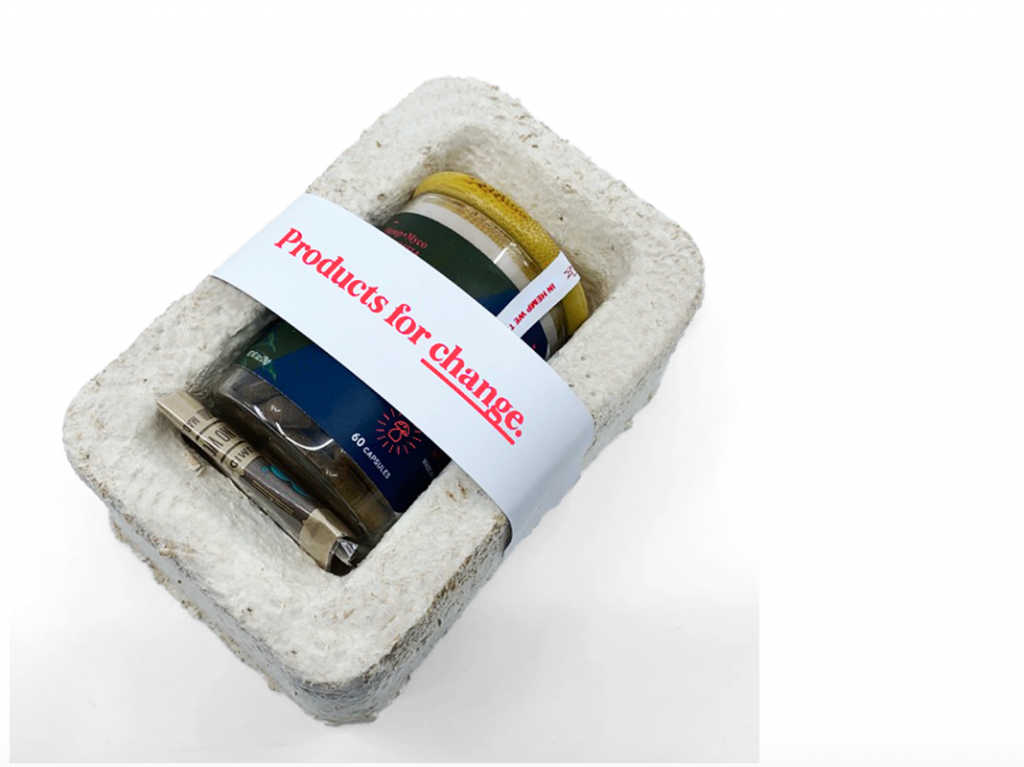
While there may be a lack of sustainable options due to tight regulations for THC products, hemp companies have a little more wiggle room. Advocates for Cannabis (A.F.C), a full-spectrum hemp product company is experimenting with packaging made from hemp mushrooms. A.F.C creates “Products For Change” that are derived from organically cultivated, non-GMO and pesticide-free hemp. The company prides itself on exceptional quality control from soil to oil, working collaboratively with industry-leading growers, scientists, and extractors to produce cGMP (Current Good Manufacturing Practices) compliant products. The woman-owned company launched A.F.C Hemp + Myco-Immunity Capsules in March that come in high-quality reusable glass jars. The glass “keep jar” is protected by biodegradable mushroom packing material and hemp fiber as opposed to cardboard or plastic.
“Our uniquely tactile unboxing experience brings consumers closer to nature, so they can not only benefit from consuming these superfoods in a familiar capsule format, they can also touch packaging grown from mushrooms, feel the hemp fiber, and then re-use the practical jar to minimize waste. This is all part of the idea of a ‘new’ luxury – a product that makes sustainability sexy,” said Anna Addison, CEO & Co-Founder of A.F.C.
Earth Day, Every Day
During this Earth Day, the industry’s collective focus on the increase in the production of plant-based medicines and food crops can be realized while also reducing our carbon footprint and impact on the environment. At this point, every little step we take matters, as long as it’s a step in the right direction.
Not all cannabis accessories are required for a smoke session. But there are some that can add a dimension to your weed consumption while also looking super cool.
Cannabis accessories range widely. You can go from basics, like rolling paper and grinders, to items geared for more recurring cannabis users, like bongs and pipes. Now that marijuana is growing more and more popular, out come different types of accessories, some that seasoned users haven’t even heard of.
While these items don’t make the bread and butter of the cannabis experience, they are useful when in the right context, adding a different dimension to your cannabis usage and accommodating different kinds of people. They’re also very cool.
Here are 5 cannabis accessories you don’t need but probably still want:
Tips for joints serve two purposes: keeping things more sanitary and looking very cool. While we might be reducing their duties a bit, joint tips won’t make or break your weed experience, but they might add some fun to your sessions. These tips are reusable, resulting in less waste, and will provide you with a different feel in your mouth, something nice for those who don’t appreciate getting paper or a little bit of weed stuck to their lips. The brand Meraki makes tips that reusable and dipped in terpenes, featuring a hippy look thanks to their use of wood. RAW makes glass tips that are also reusable and are perfect for people who prefer the feel of glass pipes.
Sure, you don’t need an electric lighter that works like the lighters that used to be in your car 15 years ago, but it sure is cool. Seth Rogen’s Houseplant produces grade A weed and cannabis accessories, all coming stylishly packaged and looking nothing like old school weed paraphernalia.
Omura is another brand that places a lot of importance on design, producing beautiful looking vaporizers that look more futuristic than weedy. Offering products that contain both THC and CBD, Omura’s vaporizers are more expensive than other vaporizers but come with all of the perks associated with them. They use a Flowerstick instead of vape oils, which can be filled with your favorite cannabis flower, adding a dimension of customization that a lot of cannabis users will appreciate.
There are a lot of cannabis infused drinks, with a lot of variability, making it difficult to choose between drinks that are tasty and that also get you high. One trustworthy option includes Lagunitas Hi-Fi Hops, which is made by Lagunitas brewery but contains no alcohol since mixing alcohol and THC isn’t yet legal. Still, since the drinks contains hops it feels pretty beer-y, featuring over 5 mg of THC, CBD or a mix of both depending on the type of drink you purchase.
If you’re looking for a truly gorgeous looking pipe, bong or weed tray, look no further than Keith Haring’s collection of weed paraphernalia. Haring Glass sports the traditional Haring designs so beloved by skateboarders and stoners, printed in devices you can get high with. They might be expensive but they will make your house look cool, which might just be worth the investment.
Health experts predict that another round of the COVID-19 vaccine is necessary to extend protection.
Now that more and more people are getting their COVID-19 vaccines in the U.S., a large percentage of the population is wondering whether they’re done with the virus forever or if their immunity will at some point fade away. All evidence points to the latter.
MD Özlem Türeci, co-founder and chief medical officer of BioNTech, believes it is very likely that most people will need to get inoculated on a yearly basis.
In an interview with CNBC, Türeci said that the COVID-19 shot will likely be like a flu shot. “We see indications for this also in the induced, but also the natural immune response against SARS-CoV-2. We see this waning of immune responses also in people who were just infected and therefore [it’s] also expected with the vaccines.”
Moderna and Pzifer vaccines are highly effective at curbing the spread of the virus, having around 91% and 95% of efficacy of protection. There’s not enough data to say how long this will last, but, thanks to preliminary data and over a year of having lived with the virus, experts know that the vaccines’ effects last for a minimum of six months.
“We are studying the durability of the antibody response,” David Kessler, Biden’s administration’s COVID response chief science officer, said during a White House press briefing. “It seems strong, but there is some waning of that, and no doubt the variants challenge … they make these vaccines work harder. So I think for planning purposes, planning purposes only, I think we should expect that we may have to boost.”
New strains of the virus are a cause for concern for hospitals and people, changing the composition of the virus and increasing its spread. Still, there’s no reason to think that the vaccine isn’t as effective for an altered version of the virus when it’s 95% effective at curbing the spread of the original strain of the virus. mRNA vaccines, like Moderna and Pzifer, have a leg up when it comes to addressing virus variations, being easier to adapt in the future and accommodate other symptoms of the disease.