Tuesday, May 12, 2026
Home Blog Page 507

Teens Are Struggling With Mental Health Amid COVID-19

One of the first reports looking into the effects that the pandemic has had on teens shows that they’re feeling scared and isolated.

The pandemic feels as if it’s been going on for years, even if it’s only been around for a few months. While there are no studies or statistics looking into the imprint of the virus and the isolation we’ve experienced, there’s evidence of stress everywhere, from the thousands of parents whose kids are driving them crazy, to the vast amount of stress baking that’s apparent on our social media feeds.

One demographic that hasn’t been all that discussed is teenagers. These young adults have been forced to miss out on important stepping stones, the kind of social experiences that we remember for years to come, such as the end of the school year, graduation and prom.

A recent survey commissioned by the National 4‑H Council shows that the coronavirus had already affected many teens in the early stages of the pandemic, highlighting their struggles with mental health, such as anxiety, depression and fear of the future.

RELATED: Fake Instagram Accounts Are Becoming More Popular During Quarantine

The survey, conducted by Harris Poll, compiled answers from 1,500 teenagers between the ages of 13 and 19. Results show that 7 out of 10 of them said that the pandemic had caused them to struggle with their mental health in one way or another; 64% of respondents believed that the experience of COVID-19 would have a significant impact on their futures.

Parents Are Paying Experts To Have The Sex Talk With Their Kids
Photo by Klaus Vedfelt/Getty Images

Other results show that factors like schoolwork and the urge to repress their feelings are causing teens significant amounts of stress. In order to cope with these feelings, many teens are pretending that they’re okay by isolating themselves, not discussing their feelings or spending most of their waking hours online in order to stay connected and informed.

RELATED: Moms Are Using Marijuana More Than Ever During Pandemic

These are stressful times for any person, whether they’re kids, teens or adults. Steven Meyers, CEO of National 4H Council, explained to the Huffington Post that these results shouldn’t cause a panic since they’re not diagnostics provided by mental health professionals; they’re simply a snapshot of what teens were going through during the early period of the virus in the U.S..

During these troubling times it’s important for everyone to be open about their emotions, voicing them with people they trust and trying to cope with them in the best way they can. It’s important for parents to be available to their kids, asking them how they’re feeling when necessary. It’s also important to spend time together in person, no matter how busy and stressful life gets. Says Meyers, “These interactions are important for reinforcing connection, creating routine, and providing in-person interaction that may not otherwise occur.”

FDA Steps Up In Ongoing Coronavirus Health Crisis

There is expanded and increased availability of at-home tests — a step forward in the common goal of making sure that more Americans are tested for COVID-19.

The U.S. Food and Drug Administration (FDA) announced recently a new round of updates on home coronavirus tests in the battle against COVID-19. In the same breath, the FDA announced another list of tests will be discontinued as the battle against SARS-CoV-2 enters another front against the deadly virus. There is a focused push on these serology (antibody) tests posted as recently as June 4

The FDA maintains a dedicated FAQs page, to keep both health professionals and the general public regularly informed as the COVID-19 battle continues. For this latest announcement, the FAQ’s have been updated to reflect the new available information. 

As part of the next phase, there is expanded and increased availability of at-home tests, among those commercially available — a step forward in the common goal of making sure that more Americans are tested for COVID-19. The FDA announced Emergency Use Authorization (EUA) of new in-vitro tests, as well. The newest information will provide Americans with more updates about testing, as well as other news the FDA is unveiling.

FDA Has Approved A New At-Home Test For COVID-19
Photo by Paul Biris/Getty Images

Here are the largest takeaways of the newest measures put in place by the FDA: 

Testing changes

As testing for COVID-19 improves in recognizing the virus or past virus, the FDA continues to examine test accuracy. Some tests were withdrawn because the manufacturer indicated that they were no longer available or being currently manufactured. Additionally, tests were withdrawn from use because the manufacturing company had voluntarily withdrawn its test from the EUA consideration process by the FDA. 

Serology Testing

The FDA is supportive of at-home testing and has authorized several COVID-19 tests for home collection of specimens to be sent to in-state test centers for subsequent processing and to generate test results. Under the guidelines for serology testing, manufacturers can offer their COVID-19 test for at-home self-collection if the EUA issued by the FDA governing self-collection is specifically authorized. In addition, COVID-19 tests for at-home self-collection may be used as part of an Institutional Review Board (IRB) approved study.

RELATED: What New Guidelines For Serology Testing Mean For COVID-19

According to the FDA, several states have authorized the ongoing creations of test centers to collect results for COVID-19 tests. Those states, according to the FDA online updates, are Connecticut, Maryland, Mississippi, Nevada, New Jersey, New York and finally, Washington state. 

To date, The FDA has worked with 400 test manufacturers to develop the antibody tests, who have submitted or indicated their intent to submit EUA tests to the FDA, to help develop tests that detect the COVID-19 virus, or antibodies to the virus.

RELATED: FDA Has Approved A New At-Home Test For COVID-19

The FDA has authorized 113 tests under EUAs, which include 100 molecular tests, 12 antibody tests, and 1 antigen test.

Members of the public can submit questions about the (FDA) templates via CDRH-EUA-Templates@fda.hhs.gov, or they can submit comments regarding the templates to the public docket established for the guidance.

It’s Time To Disband The DEA

It’s not just that the DEA has failed to keep Americans safe from drugs, gangs, cartels and violence, it has actively made matters worse.

Racism in America is not confined to the criminal justice system, it is embedded in all aspects of our society, but the continued killing of Black men and women by police and law enforcement personnel has lead to a breaking point. The video of George Floyd’s murder is particularly gruesome and has lead to nationwide protests which seeking to bring meaningful and major changes to American police departments. George Floyd has “changed the world.”

Minneapolis and various other US cities are seriously considering defunding Though much of the focus has been on the protests and police responses, federal law enforcement agencies have been resisting change in less obvious but equally sinister ways.

Buzzfeed News first reported that the Department of Justice expanded the Drug Enforcement Administration’s (DEA) jurisdiction in response to these protests. According to a DEA memorandum, the agency requested to expand its jurisdiction beyond federal drug laws to include the enforcement of “any federal crime committed as a result of protests over the death of George Floyd.” The DEA justifies its position by claiming people are violently reacting to yet another murder of a Black man at the hands of police. Now, the DEA does not even need to suspect a drug crime has been committed to take action against protesters.

The DEA has been waging a War on Drugs that has disproportionately impacted Black people for nearly fifty years. George Floyd was killed over a counterfeit $20 bill, not an alleged drug offense, but the DEA has influenced racial policing that the world now protests.

The DEA should be defunded or, better yet, disbanded, as we suggested way back in 2015. It has failed to address the drug problem and it is beyond saving. It’s not just that the DEA has failed to keep Americans safe from drugs, gangs, cartels and violence, it has actively made matters worse.

In 1973, Richard Nixon created the DEA to enforce US drug laws and to coordinate drug controls. The drug problem in the US has not improved and is much worse today than when the DEA was formed. In 1973, 1.1 out of 100,000 deaths in the US were attributed to unintentional drug overdoses. In 2018, the CDC reported that 19.1 out of 100,000 were attributed to unintentional overdoses. Drug War Facts reports that in 1973 there were 328,670 arrests for drugs out of 9,027,700 total, meaning that 3.6% of all arrests were for drugs. In 2018 there were an estimated 1,654,282 arrests for drugs out of 10,310,960 accounting for 6% of all arrests. Americans are now 19 times more likely to overdose on drugs and about 5 times more likely to be arrested for drugs than they were the year the DEA was created.

RELATED: ICYMI: DEA And Cannabis Research Still Lousy Bedfellows

The DEA’s repeated failures to mitigate or reduce drug-related deaths has not limited its scope or its budget. The DEA has infiltrated state and local police departments across the country and exerted its regressive enforcement policies nationwide by pouring resources into police departments. According to a report from the Government Accountability Office (GAO), the DEA’s focus shifted over time from its original mission of disrupting and dismantling major drug trafficking organizations to a focus on the “seamless continuum” of drug trafficking which includes “street-level drug gangs and other local community programs.” The GAO also found that the DEA devoted an increasing amount of resources to state and local law enforcement over time.

everything you need to know about the deas refusal to declassify marijuana
Photo by Don MacKinnon / Stringer via Getty Images

In 1986, the Anti-Drug Abuse Act solidified the DEA Task Force Program. These task forces allow the DEA to work with local law enforcement to enforce both state and federal drug laws. A 2015 article in Criminal Justice Matters by Rebekah Delsol outlined how these tasks force influenced racial profiling across the country:

The current understanding of racial profiling developed out of the ‘drug courier profile’ that was created in the mid-1980s by the [DEA] in an effort to combat interstate drug trafficking under the rubric of the ‘war on drugs.’ The DEA trained local law enforcement officials to look for ‘indicators’, based on a drug courier profile, that included race as well as behavioural clues such as nervousness or the use of rental vehicles. There was no evidence that that African-Americans and Latinos/as were more likely to use or transport drugs than their white counterparts, yet the DEA training materials described and pictured predominately minority faces. The targeting of minorities for traffic stops, searches and fines thus became common practice and embedded in policing policy and structure in police forces across the country.

The DEA linked criminal drug activities to minorities and then spread this biased profiling across the country.

The DEA and its racist policies are embedded in federal, state, and local drug enforcement. The Washington Post reported in 2019 that not one of 179 “defendants arrested in DEA reverse-sting cases in the Southern District of New York were white, [and] all but two were Black and Latino.” The ACLU reported that in 2013, a DEA task force in San Francisco’s Tenderloin District resulted in 37 federal prosecutions. All 37 defendants were Black even though 40 percent of those engaged in the Tenderloin drug trade are not. The US attorney dismissed the case against these 37 people after a federal district court judge found substantial evidence of racially selective enforcement and ordered the police department to produce further discovery. These are just a few examples of a much larger problem.

RELATED: Reality Check: What The Feds Get Wrong About Marijuana

The Drug Policy Alliance has long tracked racial disparities in the War on Drugs. Nearly 80% of people in federal prison and 60% of people in state prisons for drug offenses are Black or Latino. In addition, Black people and Native Americans are more likely to be killed by law enforcement than other racial or ethnic groups.

The DEA’s existence conflicts with the simple premise that Black Lives Matter. The DEA has endangered and ruined Black lives throughout its history, while never succeeding in its statutory role of preventing drug use and stopping the drug trade. Now the DEA is trying to arrest protesters who seek to ensure that America’s “crime fighters” finally stop endangering those they are sworn to serve and protect. The DEA encompasses all that’s wrong with policing in America. Shutting down the DEA will not immediately fix everything, but it would be a huge step in the right direction.

It’s time we disband the DEA.

Daniel Shortt is an attorney at Harris Bricken and this article was originally published on the Canna Law Blog.

Why Some People Don’t Get High The First Time They Smoke Marijuana

People need to be exposed to the drug repeatedly until their body understands what it’s supposed to feel. Experts call this a “sensitization period.”

The first time people smoke weed is always a weird experience. While some might get paranoid, giggly or immediately stoned, there’s a large group of people who smoke weed and then feel… nothing. Despite what we know of marijuana tolerance — the more you’re exposed to cannabis the less it affects you — this phenomenon of not feeling anything the first few times you toke affects more people than you might imagine.

Experts have different theories as to why this happens.

One of the most prominent theories states that in order for people to experience weed properly, they must first learn how to do it correctly. People need to be exposed to the drug repeatedly until their body understands what it’s supposed to feel. Experts call this a “sensitization period,” when THC interacts with the cannabinoids in your system a few times in order to activate them and to produce that high feeling.

RELATED: How To Stop Coughing So Hard From Marijuana Smoke

It may take a couple of sessions before you smoke and know that you are actually high versus feeling what you think you should be experiencing.

First timers could also have an issue with the smoking part of things, maybe inhaling cannabis but keeping the smoke in their mouths, which prevents the THC from making its way to your bloodstream.

Formula For Friendship
Photo by Matheus Ferrero via Unsplash

There’s not one definitive answer when it comes to cannabis and its effect on our bodies, but it’s always hard to do something for the first time, whether that’s smoking weed or getting a tattoo. Your expectations, the people you’re with, and your biology will have a hand in your first couple of experiences with weed, which is why it’s important to be patient and open minded.

RELATED: Smoking Marijuana For The First Time: A Beginner’s Guide

When first using marijuana, start off slow surrounded by people you trust. Put your phone on silent to minimize extra sources of stress. Once you start smoking, pause between puffs for 20 to 30 minutes and monitor your feelings closely, that way you can make sure you get high but not too high. Because that sucks, too.

This CEO Says Marijuana Will Be Federally Legal By 2022

“I’ve seen some really large numbers in terms of the amount of cash flow that would come into the government as a result of just a normal excise tax regime.”

State lawmakers have proposed marijuana legalization as a needed economic injection following the coronavirus pandemic. Should states continue to legalize, one top cannabis executive believes the feds will soon be forced to end prohibition nationwide within the next couple years.

“My assumption is that 2022, for me, is the magic number,” Canopy Growth CEO David Klein told CNBC’s Jim Kramer. “I think, as you watch more and more states move to legalization for medical or rec, you really bring in almost two more senators each time who are really going to feel compelled to not make criminals out of the people in their state who are doing what’s legal in their particular state.”

Kramer had asked Klein whether state and local governments will leverage cannabis to uplift slashed budgets and down economies. New Mexico Gov. Michelle Lujan Grisham expressed regret in April the state had not legalized cannabis before the coronavirus hit the United States. She later added that marijuana would likely have funded programs the state cut due to the pandemic.

RELATED: Is Legal Marijuana The Economic Relief America Needs Post-Pandemic?

Pennsylvania and New York lawmakers have also suggested marijuana as a possible tax revenue solution to looming budget deficits. Republicans in Pennsylvania described recreational cannabis as “inevitable” in the state post-pandemic. No doubt the weed-related revenue numbers legal states enjoy look attractive to those in distressed states. Colorado, which approved adult-use marijuana in 2012, surpassed $1 billion in cannabis revenue last year and collected more than $133 million in taxes and fees between January and May this year.

Divided Government Is The Reason Marijuana Isn’t Getting A Fair Shake
Photo by Joshua Sukoff via Unsplash

“The revenue opportunity is huge,” Klein said. “I’ve seen some really large numbers in terms of the amount of cash flow that would come into the government as a result of just a normal excise tax regime.”

Klein previously served as chief financial officer at Constellation Brands, the beverage giant behind beers like Corona and Modelo, which has invested $4 billion into Canopy Growth. Canopy founder was ousted as CEO last year and Klein took over In December.

RELATED: Consumers Require Better Education On Cannabis 101 From Marijuana Industry

“You know, not to mention that it doesn’t make sense that cannabis isn’t legal already,” Klein added. “Alcohol prohibition [ended] 87 years ago, and [I’m] not really sure why cannabis was left off that list.”

Based on his comments, Klein is still educating himself in his new role on America’s checkered marijuana history. Alcohol prohibition ended in 1933. The Marihuana Tax Act, which effectively started cannabis prohibition in America, was signed into law in 1937.

Fake Instagram Accounts Are Becoming More Popular During Quarantine

‘Finsta’ accounts allow people to be more open and creative than they would be in real life. Here’s why they’re taking off in lockdown.

Instagram is by far the most popular social media app, but it’s also the one that is most effective in creating a feeling of isolation among its users. Scrolling down your Instagram feed can feel like everyone you know is beautiful, involved in a loving relationship, constantly traveling and living their best lives. No wonder people are choosing to carve out richer spaces for their mental health.

‘Finsta’ is a term that has become more popular across generations. Short for “fake Instagram,” these accounts started out with celebrities who wanted to keep their privacy and teens trying to hide their “real” accounts from their parents. But now, they’re common for people of all ages. They’re usually kept private and can be used in different ways, from groups chats to posting unflattering photos and, more recently, showing off skills picked up in isolation.

It makes a lot of sense for people to find ways of expressing themselves online when there’s a pandemic going on. The stress and boredom in the current situation has increased our already high use of social media. During the first months of the pandemic, it was very common to see a lot of users taking up Instagram challenges, from drawing carrots on their screens, to doing push-ups, to then doing more Instagram Lives and joining TikTok. Anything to starve off boredom.

RELATED: Finstagrams: Inside The New Social Trend

“People are turning to screens and technology to get their social needs met that they can’t get in ‘real life.'” psychology professor Chris Ferguson tells Business Insider.

instagram chief says app is not listening in on you for targeted ads
Photo by Digitalpfade via Pixabay

Now that social distancing guidelines are lifting and people are coming to terms with the fact that they’ll likely be spending more alone time than usual, there’s been a rise of Instagram accounts dedicated to hobbies.

Bustle reports that some people are choosing to create side accounts in order to avoid crowding other people’s feeds. “Not everyone is going to want to look at my food every night, I know that,” explains one user. “I like the idea of putting this kind of content out there into an anonymous space, it makes me feel more creative and open and there’s this sense of possibility, like I might connect with someone I don’t know who finds my page because we share the same interests.”

RELATED: Finstas Are Great For Self-Expression But Bad For Dating

These side accounts are spaces where people can feel like they’re doing something productive with their time, whether that’s cultivating a hobby or developing a new way to connect people with their business. It helps that social media is a place for socialization and connectivity, which is what we’re craving most of.

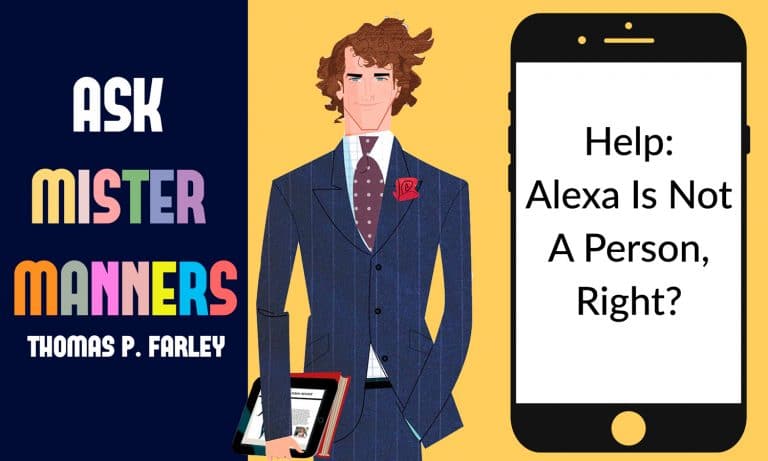
Ask Mister Manners, Thomas P. Farley: ‘My Son’s A Freeloader’

My adult son moved back home to quarantine with our family, but he’s not pitching in for household expenses, even though he makes good money. What can I do?

Etiquette tips on how to interact in today’s world. Have a question for Mister Manners? Send your queries to info@whatmannersmost.com and look for replies in the coming weeks. 

REUNITED AND IT FEELS SO RUDE

Q: I have a 26-year-old son who’s moved back home to North Dakota to wait out the pandemic with my husband, our 15-year-old daughter and me. He’s been working remotely here since March and makes good money. Unfortunately, it never dawns on him to chip in for anything. I’m not expecting rent, and to be candid, we’re thrilled to have this bonus time with him. But is there any way I can gently suggest he begin chipping in for household expenses?

A: Though it has been years since your son was a teen, it would seem it didn’t take long for him to revert to the mindset of being your dependent again. Old habits die hard and apparently, now that he’s back in the abode of Mom and Dad—albeit as a salaried young professional—he’s presumed he can have his cake and eat it, too. 

Clearly, the idea of his taking on even a modest part of your monthly spending has yet to occur to him. By extrapolation, I highly doubt he’ll pick up on your feelings through subtle hints. 

RELATED: Ask Mister Manners, Thomas P. Farley: ‘Will They Call Me Racist?’

All of which means the time for tiptoeing around this issue has passed. Instead, I would have a loving conversation with him, reassuring him of how much you enjoy having him back on the homestead. From there you can explain that since he is a fully grown, wage-earning, milk-drinking, washer-using, steak-eating, Netflix-watching member of the household, you’d welcome his taking part in ongoing expenses. He’ll still be shelling out far less than if he were living on his own, but the funds he’ll provide should help contain your monthly budget while also easing any concern that your continuing generosity has gone unappreciated. 

Last but not least, he’ll also be setting an example for your daughter should she decide to move back home as an adult in (gulp) 2031.

NOT READY FOR THE NEXT STEP

Q: I work for a small dance school in northern California. We’ve been conducting classes for students on Zoom, but my boss recently sent a group text to my fellow teachers and me letting us know she expects us to be instructing in-person again next week. This thread quickly became awkward, with some people responding how excited they are to return, and others expressing concern. I have an older person in my household, so I’m in the latter camp. What’s the best way for me to have my feelings heard?

A: After so many months away from your place of work, it is easy to see why you might have mixed feelings about returning. With the vast majority of the U.S. population under stay-at-home guidance for the better part of spring, you and millions of others now find themselves on the cusp of summer, emerging from hibernation like tardy daffodils suddenly coming to life — and yet still not sure it’s safe to bloom.

threesome apps are real but do they work
Photo by rawpixel.com

The decision to head to back work is an individual one, a choice to be undertaken thoughtfully. And while I appreciate your boss’s desire to return to business as usual, given that yours is a small organization, I might have suggested she handle the reopening with more sensitivity. 

Rather than a group text — which always results in a chaotic chorus of voices — she could have started with an informational email to everyone detailing the new precautions and guidelines your school will certainly be implementing. Presuming that her teachers’ physical and emotional well-being are as important to the school as the institution’s financial well-being, she could also have scheduled a call to speak with each of you individually. This would have been her opportunity to hear your thoughts and concerns. 

RELATED: Ask Mister Manners, Thomas P. Farley: ‘A Home-Wrecker Lives In The Apt. Above Me’

Ultimately, it will be your choice whether you are prepared to return to the studio. And though I’m certain your students must miss working with you in-person, I appreciate that you are also being mindful of a potentially at-risk senior citizen back home. All of which equates to a conversation far more nuanced than you could ever hope to achieve by text. Therefore, although your boss chose to begin the conversation with everyone via smartphone blast, in this instance, I think you’ll find a pas de deux works far better than a do-si-do.

Mister Manners, Thomas P. Farley, is a nationally regarded expert who appears regularly in the media to discuss modern-day etiquette dilemmas — from how to split a check fairly to how to get a word in edgewise. Follow Thomas on Facebook, Twitter and Instagram. And for more insights, listen to his brand-new podcast, “What Manners Most,” which will be focused exclusively on Coronavirus-related etiquette for the foreseeable future.

I Disagree With My Loved Ones On Social Distancing Guidelines—What Should I Do?

The pandemic has created a lot of rifts between family members and friends. Here’s what you can do to avoid them.

As time passes and the pandemic evolves, we learn more about the virus and begin to adjust to our new lives. As cities reopen, people’s different experiences feed in to their opinions on what’s going on. Within the same country, you may have people wearing masks every time they leave their houses and people who aren’t required to do the same. Then there’s the individual ways in which people cope, which have caused serious rifts between roommates, close friends, couples, and family members.

Since states are adapting their social distancing guidelines and reopening their economies, it’s important to remember that the virus hasn’t changed. No cure has been found. In order to care for your health and the health of others, it’s important to follow your state’s guidelines and to apply some common sense.

While everyone is allowed to have their own opinion, it’s hard to understand these differences in times of stress. Here’s what you can do in order to avoid conflict with a loved one over pandemic safety measures:

Learn where they’re coming from

The first step in resolving any type of conflict is to use your empathy. Try to have the willingness to see the other person’s perspective. Understand what’s making them anxious or act a certain way. What helps most is the way in which you communicate. Avoid having fights over social media and try to hold these discussions over the phone or in person. Stay calm and be as understanding as possible. That way you’re more likely to get a similar response.

Be vulnerable

5 First Date Rules You Should Forget About
Photo via rawpixel.com

RELATED: Coronavirus Tracing Apps Could Pose A Threat To Your Personal Data

In order to have someone be open and vulnerable with you, you have to be vulnerable and open yourself. Express what’s making you anxious about your friend’s or family member’s response and why it’s a source of concern for you. Even though it’s hard, try to avoid pulling out scientific facts and trying to win the argument.

Have these conversations with your close relationships

Save your breath and avoid trying to save every person in the world, or getting them to think the way that you do. People will react differently to the pandemic, with some taking it more seriously than others. Focus on your close relationships, the people that are truly affecting you and that you’re concerned over.

Be clear about your boundaries

5 Therapy Apps You Can Use When You Need To Talk To An Expert
Photo by Andrea Piacquadio via Pexels

RELATED: 4 Positive Habits We’ve Picked Up During Lockdown

If your parents want to board a plane and visit you, let them know that you don’t feel safe doing that and that you’re concerned over their health. Be aware things are evolving rapidly and that what you might be feeling right now might change within a couple of weeks. Talk it out with your loved ones, see where they’re coming from, establish a boundary and negotiate. Maybe you can meet up with friends if you’re all wearing masks, or visit your family members if you have a space where you can quarantine yourself.

Don’t try to control other people

At the end of the day, people are going to do what they want to do. As long as they respect your boundaries and your safety, you can only do so much in terms of protecting them and in trying to get them to understand your point of view. Be vulnerable and open, sharing your concerns. Then leave them be.

Two Celebs Are Working To Empower Black Marijuana Owners

The two celebrities will use their platforms to lift up black owners in the cannabis industry through incubator programs and advocacy initiatives.

Two celebrities aim to spearhead more diverse representation in the cannabis space. This week, rapper Method Mad and former NBA basketball player Al Harrington announced new programs that would usher more black ownership into the industry. These initiatives accompany the nationwide protests against systemic inequalities following the police killing of George Floyd in Minneapolis. The civic demonstrations have shined a new spotlight on diversity access and opportunity in multiple business sectors, including cannabis.

“Personally, it is essential that we use our brand to help bring awareness to the social, systemic and economic injustice in communities that have struggled with oppressive mass incarceration and racially biased policing policies,” Method Man said in a statement.

RELATED: The Role Marijuana Legalization Can Play In Fighting Racial Injustice

Method Man launched a new social conscious cannabis brand called TICAL, which stands for “Taking Into Consideration All Lives.” It is also the name of Method Man’s 1994 debut album. TICAL sold product from its first three marijuana strains—“Gelato, “Cake,” and “Crusher”—to four black-owned dispensaries in California last weekend. Method Man, who owns a 20% stake in TICAL, will use the business to promote advocacy against racism in law enforcement and promote cannabis legalization.

Al Harrington, meanwhile, plans to make 100 black individuals into millionaires through the cannabis industry. Harrington, who is the CEO of Viola Brands, labeled it his mission and will launch an incubator program the helps transition black market marijuana business into legal, licensed ventures. Cannabis entrepreneurs say it’s “nearly impossible to get a license” in legal marijuana states, but black market products might have “million dollar valuations” if they received effective marketing and retail placement, Harrington said in an interview with CNBC.

al harrington all my best teammates smoked marijuana
Photo by Rob Carr/Staff/Getty Images

“A lot of brands that are on the black market that has a lot of credibility and unbelievable following, have market share, but they just don’t know how to get into the legal market,” Harrington said.

Multiple state lawmakers have referenced legalization as a possible solution to boost local economies in the wake of the coronavirus pandemic. That can’t happen, Harrington said, unless diversity program that lift up communities of color are included.

“That is something I will continue to harp on; continue to bring awareness to because once again, I feel like the war on drugs was aimed towards our community, and they used cannabis as pretty much the main drug to continue to lock us up,” Harrington said “All this money being made now, we’re not represented; we’re not there. I feel like we pioneered this industry.”

RELATED: 13 Rappers Who Are Dominating The Cannabis Industry

Diversity representation in the cannabis industry is far from ideal. A study released by Denver policymakers just last week showed about 75% of licensed dispensary owners in the city were white. Only 12% of business owners were Hispanic and 6% were Black or African American.

“This study sadly confirmed what was widely suspected,” executive director of Denver’s Excise and Licensing division Ashley Kilroy said in a statement. “Just like what has been seen across the state and in other legalized markets across the U.S., Denver does not have a diverse marijuana industry.”

Consumers Require Better Education On Cannabis 101 From Marijuana Industry

A new comprehensive survey found many consumers still need help understanding basic cannabis concepts like THC and alternative delivery methods.

Despite various efforts by numerous companies big and small, education remains the biggest obstacle in the cannabis industry, a new survey conducted by Oasis Intelligence found. The firm’s research showed the majority of legal consumers still lack foundational knowledge about marijuana’s effects, risks, and benefits. One explanation? The number one resource customers use when seeking out information about cannabis and potential products is their friends.

The survey places stark contrast between the conversations occurring inside cannabis spaces and how people discuss marijuana at home.

RELATED: Cannabis Beverage Market To Hit $1.82B By Year’s End

“We inside the industry have a real advantage when it comes to understanding the plant from a scientific, regulation and usage perspective that is generally a requirement for those in the space,” Oasis Intelligence co-founder Laura Albers told The Fresh Toast. “However, when it comes to the average consumer, we see the needs for education are not about more advanced topics that the industry may prioritize—think terpenes, minor cannabinoids gaining popularity or even the endocannabinoid system.”

According to the Oasis study, over 70% of people are unfamiliar with terms like the “entourage effect” and “endocannabinoid system.” Instead, Albers said, many are still grasping the basics. Subjects that most interest consumers include different available products, CBD:THC ratios, and alternative consumption methods. A significant portion of consumers still seek more understanding around tetrahydrocannabinol, or THC.

5 ways cannabis can improve your summer
Photo by McKinsey via rawpixel.com

Put simply, many customers still require education in Cannabis 101. The good news is that customers prefer to learn while visiting dispensaries and view budtenders as indispensable assets. That isn’t what always happens, though. Most people find the majority of information through Google searches, cannabis websites, and online video platforms like YouTube. But friends remain the biggest marijuana resource, as 43% of people rely on social circles to keep them informed.

“Cannabis is a unique category where previous personal experience counts tremendously,” Albers said. “It’s a relatively new shopping experience for the masses and the stories of taking too much of an edible can make a person less confident about how exactly to engage with cannabis.”

RELATED: Why The Pandemic Could Be A Boon For Cannabis Education

The Oasis Intelligence report surveyed more than 20,000 current and prospective customers across every states, representing one of the most comprehensive profiles of modern cannabis consumers to date. The results indicate that the majority of modern consumers support many social justice initiatives, including legalization, expungement for marijuana-related crimes, and social equity programs that invest in communities disproportionately affected by the War on Drugs.

But the survey shows education is still essential in determining purchasing behavior by consumers. While the industry prides itself on cutting-edge research and deeper knowledge about the cannabis plant, many of the people these businesses serve still need help with the fundamentals.

“Best advice is to begin at the beginning and while messaging can, and should, expand into details for the more curious set, continue to beat the drum of Cannabis 101,” Albers said. “We know that consumers are going to online search and YouTube for video content as the first line of personal research so ensuring strong SEO and creating more video info-tainment will help enormously.”

Don't Miss Your Weekly Dose of The Fresh Toast.

Stay informed with exclusive news briefs delivered directly to your inbox every Friday.

We respect your privacy. Unsubscribe anytime.