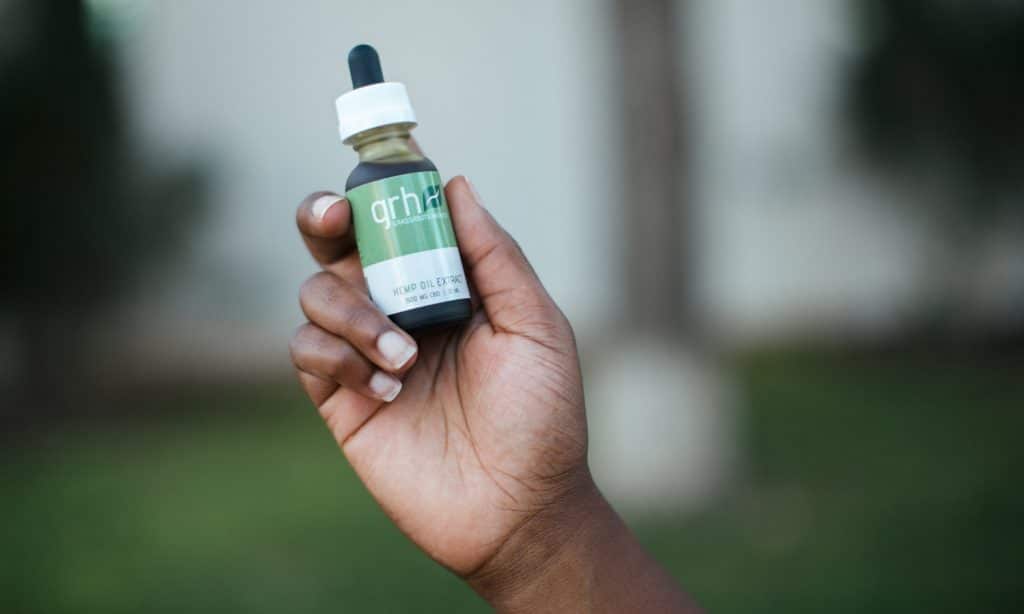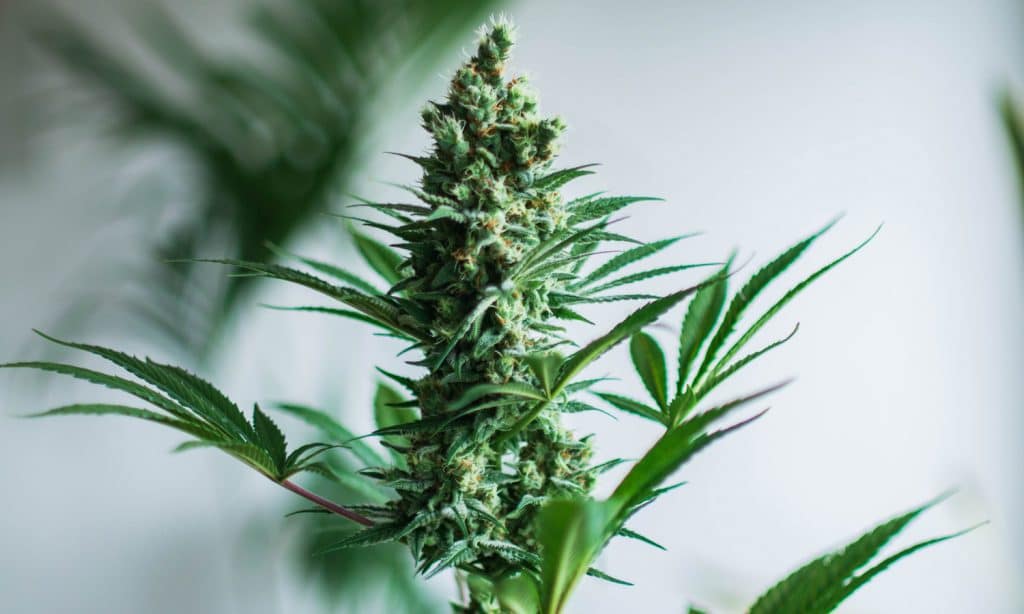
CBD has demonstrated benefits for different health issues, but could it help people lose weight? Here’s what experts think.
CBD is one of the most important compounds of cannabis, making up around 40% of the plant’s extract. Following THC, it is the second most abundant cannabinoid within the cannabis plant. Although human trials and studies on CBD have been very limited due to the legal status of the plant, many users are wondering if the compound could help people lose weight.
According to Healthline, CBD has been associated with many health benefits, with some studies suggesting that there’s a connection between it and weight loss.
Studies conducted on animals show that CBD interacts with two receptors that play important roles in metabolism and food intake. One of these studies looked into rats for a period of two weeks. These animals were split into two groups and injected with a daily dose of CBD. The rats in the first group were injected with larger doses than the second group. Although both groups of rats lost weight, the first group experienced a more pronounced drop, indicating that the amount of CBD in their system played an important role in the study.
While studies like these sound incredibly promising for CBD and its effect on weight loss, the issue is complicated and there’s not enough information out there to draw conclusions.
One study on humans said that CBD oil increased children’s appetite. The study in question was a survey where parents of kids with epileptic seizures answered some questions. These said that, although CBD oil drastically reduced their kids’ seizures, 30% of the children experienced more hunger when ingesting CBD oil.
Although more research and experiments on human subjects might show a connection between CBD and weight loss, currently, there’s not enough data out there to make an educated guess. It’s also unlikely that a compound on its own would have a more important effect on people’s weight when compared to their diet and exercise levels.
Like most things CBD, positive results should follow when the compound is used as a compliment to a healthy lifestyle.
If you are part of the two million people who live in public housing, your situation involving marijuana isn’t that much different than those living in apartments or rental houses across the country.
Marijuana is now legal for adult use in more parts of the United States. But that doesn’t mean that people who use cannabis for whatever reason have the same freedoms as, say, someone who uses alcohol. Although weed is now supposed to be a part of mainstream society, there are still plenty of snags in the system preventing people from using the herb, even where it is legal, in a manner that doesn’t set them up for hardships and troubles that they’d rather not endure. One of those snags is the inability to consume legal cannabis in public housing properties.
It was announced recently via a report from the Chicago Sun-Times that even though Illinois is set to launch its legal pot market at the beginning of 2020, people living in public housing will not be allowed to partake inside their homes or anywhere else on the property. A notice from the Chicago Housing Authority (CHA) indicates that since marijuana remains an outlaw substance in the eyes of the federal government, marijuana use in federally subsidized housing units is strictly prohibited. “The CHA can TERMINATE all assistance … if you, a member of your household, or a guest or person under your control is found engaging in drug-related criminal activity, including the use and/or possession of marijuana for medical or recreational purposes,” the notice reads.
If you are part of the two million people who live in public housing, your situation involving marijuana isn’t that much different than those living in apartments or rental houses across the country. Most property owners do not allow tenants to smoke weed inside of their homes. This is usually covered in the lease someplace, either under the no-smoking policy or with the rule banning the use of all illegal drugs. It doesn’t matter if marijuana is legal at the state level unless a property is advertised as “marijuana-friendly,” a property manager can toss you out on your ears for it.
Photo by Tunatura/Getty Images
But public housing units are a bit different. They are subject to monthly inspections and other governmental snoop tactics that require a tenant to be on his or her toes. If maintenance or anyone involved with the property even think they smell marijuana lingering in your home, it could be enough to bring about some unwanted heat. It is for this reason that it is necessary for marijuana users who reside in public housing to exercise a little savoir-faire when it comes to how they catch a buzz.
And rule number one of this “us vs. them“ sneak maneuver is to reinvent the way you consume cannabis.
You see, getting caught with weed is really just one part bad luck and about three parts stupidity. Caution is king, so the first thing you will probably have to do is stop smoking marijuana. But this doesn’t mean that you have to stop using it altogether.
Fortunately, in the case of states like Illinois where marijuana is now legal for adults 21 and older, there are a variety of pot products on the market that are smoke-free and do not come with a pungent odor that is bound to lead to eviction. For those living in public housing, these THC-infused goodies are going to become your best friend. Items like edibles, beverages and even vapes can provide the user with a means to getting stoned clandestinely without putting themselves at risk. We recommend visiting your local dispensary and discussing the many non-smoking options they have available.
Avoiding trouble for marijuana in public housing really is as simple as not “smoking” it and advertising personal business to those who might rat you out. And there are plenty of those people out there. But if you must smoke weed and are willing to risk the consequences, we would recommend reading our guide on “How To Smoke Marijuana In An Apartment Without Getting Evicted.”
Sorry, Keeping Up With the Kardashians fans, it looks like you’ll be seeing less of Kourtney Kardashian on the reality TV show.
While promoting KKW Fragrance Diamond collection with her sisters Kim and Khloe Kardashian, Kourtney revealed that she’s not saying goodbye to the show for good, but she is possibly stepping away. “I just decided to spend more time as a mom and put more of my energy there,” the mother of three told Entertainment Tonight. “But I’m not saying goodbye.”
“I think you’ll have to see more of it on the new season, season 18,” she added. “It isn’t airing yet but it’s being filmed… currently, in this room.”
While Khloe said she hopes Kourt decides to stay, she admitted that the show can and will go on. “We definitely love Kourtney and we’ll miss Kourtney and whatever she decides to do, but people come, people go all the time in this family,” she admitted. “I feel like it’s a revolving door, so Kourtney might leave this week, [but] she’ll be back. They all come back.”
Kim and Khloe were then asked if they’d be down to do a spinoff show like the old days, to which Kim replied: “Kim and Khloe take… Calabasas. That’d be amazing. We can live in the condo with all of our kids and see how that goes.”
However, Kourtney made it clear that she wanted no parts of that idea. “Not for me,” the Poosh creator replied.
Justin Bieber was not impressed with the Popeyes Chicken sandwich.
On Thursday (November 7), the 25-year-old singer took to Instagram Story to give his review of the oh-so-popular and always sold-out sandwich to his 121 million Instagram followers.
“I gotta see what all this hype is about,” he said as he showed the three sandwiches he picked up. “All this hype on the Popeyes chicken sandwich. Let me see what we got here”
It only took one big bite for Justin to issue a verdict. In his second Instagram Story video, he said while chewing, “It’s good but it’s not worth the hype.”
While he wasn’t a fan of the sandwich, Justin did say he loved one thing from the fast-food joint. “Sweet tea’s bangin’ though,” he shared.
Synthetic cannabinoids do not taste like cannabis, do not provide the same high, and in a frightening number of cases, cause nasty side effects, including psychosis and death.
Lab-made cannabinoids — molecules meant to mimic natural compounds found in cannabis upon the body — are a relatively new group of drugs. They found their way out of research labs and onto the streets, starting to notably appear in the 2000s. Going by many names, including early brand “Spice,” it is also unfortunately referred to as “synthetic marijuana” by law enforcement, legislators, media, and the public.
Fact is, the name is a dangerous misnomer, as synthetic cannabinoids do not taste like cannabis, do not provide the same high, and can even be life threatening.
The connection of synthetic cannabinoids to marijuana isn’t a completely unfounded one. These compounds came about through the work of chemist John W. Huffman. Many compound names will start with his initials, such as JWH-108, a molecule popular, in part, because it’s one of the easiest cannabinoids to synthesize. Huffman wasn’t looking to create a marijuana-like high; his research focused on endocannabinoid receptors, which in addition to being responsible for cannabis’s psychoactive effects, is also related to inflammatory pain.
Marijuana’s high is often described as anywhere from calming to uplifting, and is usually a pleasant experience, although too high a dose has caused anxiety and panic in some. On the other hand, the effects of synthetic cannabinoids include intense highs, anxiety, nausea and vomiting, rapid heartbeat, and heavy body highs sometimes causing immobility or muscle spasms. In some cases, consuming these chemicals causes psychosis and possibly death. Cannabis on the other hand, has shown promise in the opposite direction, promoting health and possibly reducing inflammation, pain, and anxiety.
Photo by Kitt_KS via Pixabay
Some consumers of synthetic cannabinoids report developing a “spice” habit, where they become dependent on increasing amounts of the substance and experience physical and mental withdrawal symptoms associated with hard drugs — a phenomena not typically tied to cannabis. Law enforcement, social workers and health care professionals have expressed having far more concern over the use, consequences, and difficulty in detecting and treating overdoses of synthetic cannabinoids than of marijuana.
The ability of synthetic cannabinoid makers to skirt drug laws, often by continuously altering the molecular structure ever so slightly, has contributed to its low cost and wide availability. Its cheap price, odor dissimilar to cannabis, and the fact that it often goes untested in mandated drug screenings makes it a popular drug of choice among the poor, homeless, and youth, as well as those subject to random drug tests. For many consumers of these substances, their circumstances make cannabis out-of-reach.
Given the differences between cannabis and products containing synthetic cannabinoids, there seems to be little reason to call these products “synthetic weed” as there’s really no association with marijuana. “Synthetic weed” is not a different form of cannabis; it’s not cannabis at all. Products like Spice, K2, and C-Cigs, are addictive, potentially lethal, and produce a high unlike cannabis. The connection is uninformed at best and disingenuously deceptive at worst.
Hockey players are turning to cocaine and molly more than ever, showcasing nationwide trends in drug use.
The Athletic recently reported what everyone in professional hockey calls the “secret everybody knows” — the NHL has a drug problem. Playing in the NHL is notoriously bruising and taxing on your body. Hockey players have been known to drink a six pack, light a joint, or pop pills to take the edge off after a game. And their choice of painkillers isn’t getting any better.
Marijuana use remains common in the sport, as many players live in Canada or states with legal cannabis. For some, that’s still enough, but a growing number of players now reach for something harder. According to The Athletic, cocaine ranks as the drug of choice for many younger hockey players. Molly (the pill form of MDMA) is also on the rise.
“It’s really the secret that everybody knows,” a former NHL player said. “Guys are just popping molly on the weekends or before a team Halloween party or whatever.”
One veteran NHL player told The Athletic that 10 years ago booze was everywhere. Cocaine was rarely seen or mentioned in locker rooms. But the change is unrelated to the sport. “It’s not like it’s a hockey thing. It’s a culture thing,” the player said.
Photo by Bruce Bennett/Staff/Getty Images
The Washington Post reported in 2017 American cocaine use is up nationwide, thanks to a boom in Colombia’s production of the illegal coca crop since 2013. According to a 2017 National Survey on Drug Use and Health, young Americans who tried cocaine for the first time rose 61% between 2013 and 2015. Most devastating is that “the number of overdose deaths involving cocaine almost doubled” between 2014 and 2016, the Center for Disease Control and Prevention’s National Center for Health Statistics found.
Recent studies show that for those addicted to cocaine, marijuana could provide help. Canadian researchers found in a 2017 study “that cannabinoids may play a role in reducing cocaine-related craving symptoms.” Meanwhile, Scripps Research Institute scientists discovered last year that cannabidiol (CBD) could help “reduce the risk of relapse among recovering drug and alcohol addicts,” including cocaine users.
Researchers have been questioning whether or not marijuana can relieve the overactive fear system of PTSD sufferers and studies seem to point to yes.
Cannabis use among veterans with post-traumatic stress disorder (PTSD) has been on the rise since the early 2000s. As more studies and research are conducted on the connection between cannabis and relieving symptoms of PTSD, it is safe to say that veterans have been onto something, at least when it comes to reducing fear and the recurrence of negative flashbacks.
We all have a fear system. That is, when we encounter something scary, our heart may race at a heightened pace, we might clench our fist and other muscles might tighten or contract. But once that fear passes, our heart rate returns to a normal rate and our muscles go back to a relaxed state. We go back to doing whatever it was before fear crept in.
Unfortunately, those suffering from PTSD have a fear system that is almost constantly in overdrive. The previously mentioned symptoms of encountering something scary never really stop; they come and go as they are triggered. Researchers have been questioning whether or not marijuana can relieve this overactive fear system and studies seem to point to yes.
Dr. Kerry Ressler of Emory University says that in recent years, researchers have been examining and studying the effects of THC (the psychoactive compound in marijuana) on traumatized mice. He concluded that most of these mice appeared “less anxious, more calm,” due to THC’s powerful impact on soothing the nervous system.
Another study conducted by researchers at the National Institute on Alcohol Abuse and Alcoholism revealed that people who received THC during extinction therapy saw long lasting reductions in anxiety. Extinction therapy is a session that coaches and trains the brain to stop reacting to something that once triggered a fearful response.
While this study concluded that THC works best when it is given immediately after exposure to trauma, it still has proven to be effective even when combined with other forms of therapy.
This week’s music features a cover by Sam Smith, La Roux’s last single and Nicki Minaj’s return to music, which also marks her debut in Reggaeton.
This Week’s Music is a weekly column that discusses the weeks’ best, worst, and most interesting songs. We try to select songs of different artists and genres to keep things interesting and to please a variety of music fans.
This week’s music features a cover by Sam Smith, La Roux’s last single and Nicki Minaj’s return to music, which also marks her debut in Reggaeton. Have a listen.
Pop
Sam Smith – I Feel Love
Doing a Donna Summer cover is basically just asking for trouble, especially when the song is “I Feel Love,” but this is Sam Smith and he somehow makes it work. The vibrant disco style fits well with whatever he’s doing now, which can be summarized as supremely gay music. It’s a fun experiment and I approve.
“International Woman of Leisure” is La Roux’s latest single. The song will be featured in her next album, “Supervision,” which is slated for release on February 2020. Despite the kind of hilarious and ridiculous name, the song is a upbeat break up anthem that’s fun and cool, if not a little reigned in.
Nicki Minaj & Karol G – Tusa
It was only a matter of time before Nicki Minaj jumped aboard the Reggaeton train, pulling out a single with Karol G, one of the biggest female Latin singers in recent memory. “Tusa” is fun, blending Raggaeton and hip hop easily. The two genres go well together, resulting in a proper song instead of a mish mash, which is what tends to happen on these occasions. I can’t say I’m impressed by Nicki Minaj’s Spanish, but hey, she tried and I’ve heard worse.
Just like any other job fair, an event hosted by cannabis industry representatives is an excellent way for people to hone in on the right opportunities and submit their resume to dozens of companies itching to hire.
Each time a state legalizes marijuana for recreational use, tens of thousands of brand spanking new jobs are created. This is perhaps one of the most exciting aspects of the cannabis movement for those people who have dreamed for years about earning a living working with weed.
It can be difficult, however, to track down job openings in the cannabis trade. Sure, a real eager beaver can beat the streets in hopes of finding gainful employment in the field of ganja — they can even scour the internet for cannabis firms looking to fill positions in their neck of the woods. But the best, and perhaps the easiest way to find work in the world of weed is to hit the job fairs.
Just like any other job fair, an event hosted by cannabis industry representatives is an excellent way for people to hone in on the right opportunities and submit their resume to dozens of companies itching to hire. This is where even unskilled workers can go to find decent paying positions in cultivation centers, dispensaries, not to mention paraphernalia manufacturers and cannabis kitchens. Some of the leading jobs recruited during these events are budtenders, managers, sales representatives, growers and bookkeepers, according to the Vangst Talent Network.
But just because companies are hiring people to grow and sell marijuana doesn’t mean a job candidate should go in unprepared. These firms have invested millions of dollars for a chance to make it in the ever-changing business of cannabis, so it stands to reason that they want the best people on their side. Most of these companies would even prefer that their employees not stay baked all day. So maybe the best tip we can offer someone heading to a cannabis job fair is don’t go stoned.
As hypocritical as it may sound, most states require cannabis workers to be felony free – even if the conviction was only for marijuana. In some cases, a job applicant convicted of a pot-related crime could be blacklisted from the scene. States like Illinois are pushing to change this aspect of cannabis employment.
Even if you don’t have a record, it is probably best not to discuss any illegal activity. If you’re gunning for a position as a cultivator, it’s okay to talk about growing techniques and other details pertinent to the job. But revealing that your weed supplies the entire Southside of Chicago isn’t necessary.
Photo by FatCamera/Getty Images
Beyond that, someone interested in nailing down a position in the cannabis trade should ditch the tie-dyed shirt, clean themselves up and go in with a professional attitude. Always dress for success during these events and be polite. Crowds can be huge, and companies are literally talking to hundreds of people, so making a great first impression is essential. Please and thank you go a long way.
Regardless of whether you have any experience with cannabis or not, it is necessary to arrive at a job fair with a resume and be prepared to interview on the spot. A strong candidate will be ready to give interviewers an “elevator pitch,” which is a 30-60 second spiel that tells them what makes you the best person for the job.
This shows companies that you have confidence and some sense of what you are trying to achieve. Not everyone who shows up at these events will be that ready to conquer. The ones who are, however, stand a better chance of going to the top of the pile.
Also, be sure to collect business cards from interviewers and don’t be afraid to make follow up calls. No one has ever been discounted from the hiring pool because they showed too much initiative and enthusiasm.
If you need some motivation to help get you off the couch and to a cannabis job fair, just know that most positions come with a starting wage of between $12-16 per hour. A report from Glassdoor finds that cannabis workers earn 11 percent more than the median U.S. salary of $52,863. And there is significant growth potential in the cannabis trade, as well. The person starting out at $12 per hour today as a laborer in a cultivation center could be quickly promoted and earn higher wages.
If raised properly, the American Pit Bull Terrier will not be the “aggressive” breed it is so often known for. In fact, they are extremely friendly, even with strangers.
The American Pit Bull Terrier is recognized as a purebred dog breed by the United Kennel Club and American Dog Breeders Association, but not the American Kennel Club. So, don’t expect to cheer on the APBT at the Westminster or National Dog Show.
Strength, confidence, and happy-go-lucky are all characteristics of the American Pit Bull Terrier. Eager to please, believe it or not, this breed makes for an ideal family pet. If raised properly, the American Pit Bull Terrier will not be the “aggressive” breed it is so often known for. In fact, they are extremely friendly, even with strangers.
It is true, the American Pit Bull Terrier has as much strength as any breed, but it is only when raised to be a fighter, neglected or abused, it will act violently.
Here, we find — what is more common than not — sweet and kind American Pit Bull Terriers of Instagram.
Overheated phones, laptops and tablets are a common occurrence. Here’s how you can prevent this from happening.
No matter what electronic device you’re using — handheld or desktop — you’ve definitely experienced overheating. This happens frequently, when you use your device for long periods of time, when you have several tabs open, or when you’re using a lot of apps at the same time. Playing games, watching videos, and using apps that enable your location and camera are among the dozens of reasons your device may be running hot.
Kevin Beck, Lenovo’s Senior Competitive Analyst, compares an overheated device with eating a really spicy hot sauce. The hotter the sauce, the harder it gets for your brain to process things and function properly. Beck explained to Mashable that all electronic components produce heat and have a built in tolerance for it. Nowadays, with laptops and phones becoming smaller and thinner, developers have to figure out ways of preventing and managing overheating in ways that don’t affect performance.
While errors in design or age may affect a device’s propensity to overheat, it helps if you know how to counteract this issue. Here are 6 things you can do to prevent your device from overheating.
By powering off your device, you’ll allow all the parts in it to momentarily shut down and stop producing heat for a few minutes. Wait for your system to feel cool to the touch and then turn it back on. If there are no underlying issues with the device, this trick should bring your device back to normal.
Electronics and the beach are a bad combination. Aside the fact that sand is scratchy and bad for screens, direct sunlight is terrible for devices, causing them to crash and overheat. This tends to happen a lot to our phones, which, when receiving sunlight, store it up and retain it.
Sometimes your devices overheat because the screen is on with the highest brightness setting. Lower the brightness to a level that’s still comfortable, and make sure to set your settings so that the screen turns off a few seconds after it stops being used.
GPS, Bluetooth and Wi-Fi are some of the features that consume the most battery power and that lead to overheating. It’s easier to turn off all of these features if your phone is the one that’s overheating, since you can still use its basic features without them.
All phones and laptops offer ways of knowing which apps, websites, and programs are consuming the most battery power. These programs are usually the ones that are also overheating your phone, so make sure to force quit them and check if your phone cools down after a minute or two.
Your phone and laptop case could prevent air from flowing freely in your device, especially when you’re charging them and they’re receiving extra heat. If you think your case might be causing extra heat, make sure to remove it when you’ve plugged in your device to an outlet.