Friday, July 3, 2026
Home Blog Page 728

This Is How Marijuana Banking Could Be Revolutionized This Year

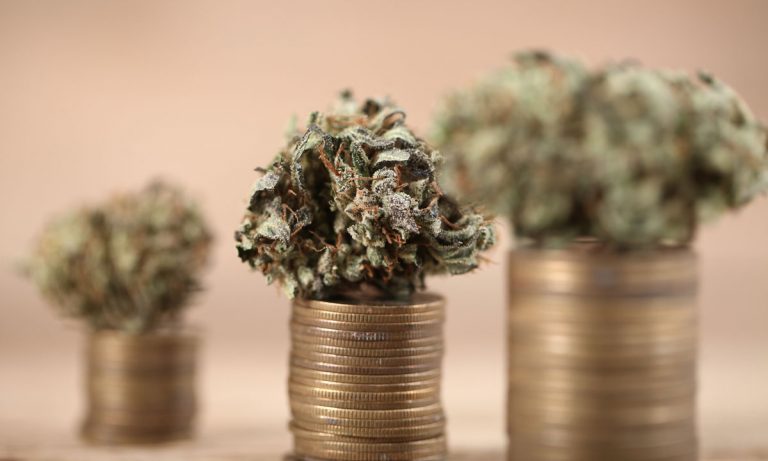
This could be the year when marijuana businesses finally get to stop socking away loads of cash as if they were in the show “Breaking Bad” and open up a bank account. A Congressional panel in the U.S. House of Representatives advanced piece of legislation earlier this week intended to legalize banking services for the cannabis industry. It is a move that could signal the real support of Capitol Hill concerning this and other marijuana reform measures, or their true colors could soon be revealed.

The bill (SAFE Banking Act) is relatively simple. It would give the banking industry permission to deal with companies that grow and sell marijuana without the risk of federal prosecution. Right now, even though no financial institution has been put through the ringers for accepting cannabis funds, banks are still at risk of getting busted for money laundering when opening accounts for a business sector that remains against the law in the eyes of the federal government.

RELATED: Why Intellectual Property Will Be A ‘Big Differentiator and Value Creator’ In Marijuana Business

The word on the street is that the measure will have no trouble finding the traction needed to pass on the House floor, yet it remains uncertain just how well-received it will be in the Senate.

Lawmakers are hoping for the best.

“I feel really confident that we will pass this in the House in the next few weeks. I think it will pass with an overwhelming vote, Democrats and a lot of Republicans as well,” U.S. Rep. Jim McGovern, one of the leading gatekeepers in the House, told a Boston Herald Radio Program on Wednesday. Still, McGovern added, it could take the Senate until the end of the year to embrace the idea.

“I think that there’s bipartisan support in the Senate on this as well and I would expect something to happen this year,” he said.

It is true that some cannabis operations already have access to financial services, but the situation isn’t always under the best conditions. These dealings essentially allow dispensaries to use credit card machines but leave them short when it comes to establishing payroll, paying bills, and making huge cash deposits. The SAFE Banking Act would remedy all of these problems by making relationships between banks (large and small) and cannabis operations completely legitimate.

Cannabis industry advocates say the bill is desperately needed.

RELATED: New York State Only Pretends It Wants Diversity In Cannabis Companies

“The SAFE Banking Act would go a long way toward improving safety, transparency, access, and justice in the cannabis industry,” said Aaron Smith, executive director at the National Cannabis Industry Association. “The amendments agreed upon in committee should solidify the already overwhelming support for this legislation in the House. The cannabis and financial services industries have been waiting for clarification and protection for far too long, and we are confident the House would approve this bill if allowed to vote on it without further delay.”

There is still a chance the banking bill could fail. At this juncture of the legislative process, anything is possible.

Although McGovern feels good about gaining support in the Republican-dominated Senate, we still haven’t heard from Senate Majority Leader Mitch McConnell on whether he will allow it. If he does, there is a good chance that the state of marijuana reform could get interesting soon on the Hill.

Rosie O’Donnell Slams ‘Mean’ Kelly Ripa; Priyanka Chopra Nearly Got Cold Feet Before Marrying Nick; Nicolas Cage Files For Annulment 4 Days After Wedding

Rosie O’Donnell Slams ‘Mean’ Kelly Ripa

Rosie O’Donnell is opening up, for the first time, about the 2006 incident with Kelly Ripa and Clay Aiken. In Us Weekly’s exclusive excerpt of Ladies Who Punch: The Explosive Inside Story of The View Opens a New Window. , O’Donnell, 57, details what happened behind the scenes.

In November 2006, Aiken joined Ripa as a cohost on Live With Regis and Kelly, and the two did not hit it off. At one point, he put his hand over her mouth and she said, “I don’t know where that’s been, honey!” O’Donnell responded to Ripa’s comment the next day on The View, saying it was “a homophobic remark.” She added, “If that was a straight man, if that was a cute man, if that was a guy that she didn’t question his sexuality, she would’ve said a different thing.”

In the new tell-all book, written by Ramin Setoodeh, O’Donnell explains why she defended Aiken:

A few days before he went on Live he had been a guest on The View. “He had come into my dressing room, crying about whether or not to come out. And I sat down with him and I talked to him. He was inching his way out in the way so many born-again Southern Christians have to. I hugged him. Not only do I feel the twenty-years-older mother thing, I feel the twenty-years-old younger-gay thing.” When she saw Ripa on TV that day, Rosie couldn’t bottle her anger.

“So I had just held a crying boy and then watched him be gay bashed by Kelly Ripa,” Rosie said.

After the show, Rosie heard from Aiken. First, she said that he thanked her for defending him. And second: “I didn’t know how to come out, so you just did it.”

As he left her dressing room, Rosie promised Aiken a shield of protection. “Nobody is going to ask you about this on the show,” she said. “And if they do, just let this d-ke take care of it.”

But Aiken had no idea that Rosie would make his sexual orientation a talking point after the Ripa incident. “I didn’t see it the same way that she did,” he said. “The truth is she outed me in a way, because I had not been out yet. When she said the words, ‘If that was a straight man,’ she was confirming that she knew that I wasn’t. That was the worst day of my life. I don’t think I’d had a moment more devastating to me. I remember feeling like shit that day and totally defeated. But I definitely wasn’t mad at her.” Aiken said that Rosie later helped him officially come out on the cover of People in 2008, by introducing him to her publicist.

“I think Kelly Ripa is mean and she doesn’t like me, and she has never wanted to discuss what happened. She wanted to have this weird feud.” Rosie said that under normal circumstances, she would have bonded with Ripa through her All My Children lineage. “She’s the girl from Pine Valley. She and her husband met on the show. That’s my f–king sweet spot. I would have loved her my whole life.” The two never mended fences after the View incident. “I see her at concerts sometimes,” Rosie said. “She just looks away.”

In the end, Rosie was most upset with The View executive producer for connecting the call. The show hadn’t done that before. “Bill Geddie thinks that makes good TV—two women fighting.” Rosie confronted them about it. “I said, ‘Excuse me Bill, that would be the first time that you sabotaged me live on the air. It will not happen again. If it does happen again, I will not be on the show.” Rosie paused for dramatic effect. “When it happened again, I left.”

Ladies Who Punch: The Explosive Inside Story of The View will be released on Tuesday, April 2.

Priyanka Chopra Said She Nearly Got Cold Feet Before Marrying Nick Jonas

On a recent episode of “Watch What Happens Live,” host Andy Cohen asked if Jonas cried when he saw Chopra in her custom Ralph Lauren dress. “He cried. I cried. He cried,” Chopra started. “It was just like, it happened so fast. And I had a freak-out moment right before I walked down the aisle. I was about 40 minutes late, because I was just like, ’75-foot train. Do I even know what I’m doing?’ Like, a full freak-out moment. But then that door opened, and I saw his face, and…” Chopra then motioned a tear going down her cheek with her finger. Seeing Jonas was enough to assure her she absolutely was making the right choice marrying him.

She also told Cohen that they did go over budget with their wedding, planned the entire thing in just a month and a half, and that Jonas cried the most during the vow exchange.

Nicolas Cage files for annulment 4 days after getting married

According to court documents, Entertainment Tonight is reporting that actor Nicolas Cage has filed for annulment, four days after getting married. Cage and wife Erika Koike began dating last April and applied for a marriage license and tied the know on Saturday. The actor has requested a divorce if an annulment isn’t possible.

Nicolas Cage has filed for an annulment four days after getting married, according to a report.

The “Face/Off” star filed for an annulment from wife Erika Koike on Wednesday. Entertainment Tonight reported, citing court documents.

The court record also shows that the 55-year-old actor has requested a divorce if an annulment isn’t possible.

According to ET, the former couple — who started dating last April — applied for a marriage license and tied the knot on Saturday in Las Vegas.

This is Cage’s fourth marriage. He previously was married to Patricia Arquette from 1995 to 2001.

Following their split, he started dating Lisa Marie Presley. The pair wed in August 2002, but they filed for divorce just three months after their secret wedding in Hawaii, according to People.

Cage went on to marry Alice Kim, a waitress working at a restaurant he frequented, in 2004. They had a child together named Kal-El. Kal-El was Cage’s second child after Weston, who was born in 1990 to the actor’s then-girlfriend Christina Fulton.

Cory Booker Promises Historic Cannabis Reform If Elected President

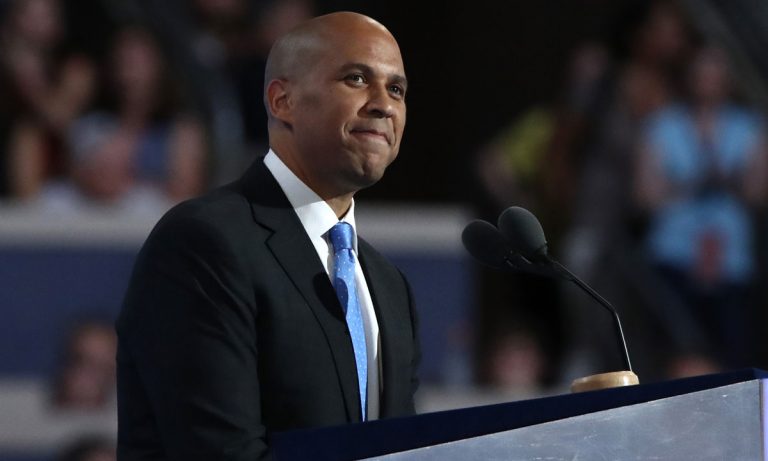
Sen. Cory Booker (NJ-D) continues to try ways that might break him out from the pack in a crowded Democratic presidential primary, and one of those ways is promising serious cannabis reform if he was elected into office. Booker, who’s also been a leader in criminal justice reform overall, announced during a CNN town hall Wednesday that he’d “absolutely consider mass pardons for marijuana offense.

“The War on Drugs has been a war on people,” he said.

RELATED: Minorities Accounted For 90% Of New York Marijuana Arrests In 2018

“There is no difference in America between using and even selling marijuana between blacks and whites. But if you’re African-American in this country, you’re almost four times more likely to be arrested for that,” Booker added. “And by the way, when you get arrested for marijuana in this country, it is like getting a lifetime sentence… you can’t get a business license. You can’t get jobs. You can’t get a loan from a bank. It’s like a lifetime sentence, compressing your economic well-being.”

Booker also noted the hypocrisy in such policy around marijuana, being that it’s something two out of the past three presidents have admitted consuming. He explained that a desire to tip the scales in a more balanced favor for American, especially those in black and brown communities, is why he re-introduced his Marijuana Justice Act legislation, which would remove cannabis from the Controlled Substances list, earlier this month.

But Booker emphasized that even if the measure was successful that his efforts wouldn’t stop there.

“I’m hoping all of us, when we talk about marijuana legalization or decriminalization, in the same breath, we’ve got to talk about expunging the records of everyone who is still suffering,” he said.

RELATED: Cory Booker Is Once Again Trying To Legalize Marijuana At The Federal Level

When CNN host Don Lemon asked Booker directly if that meant considering mass pardons and commutations for those with marijuana offenses, the senator responded affirmatively.

Absolutely,” Booker said. “One of my focuses as president of the United States will be to balancing the scales of justice and having a criminal justice system that reflects our highest ideals.”

You can watch the full clip below.

Walgreens Will Sell CBD In 1,500 Of Their Stores

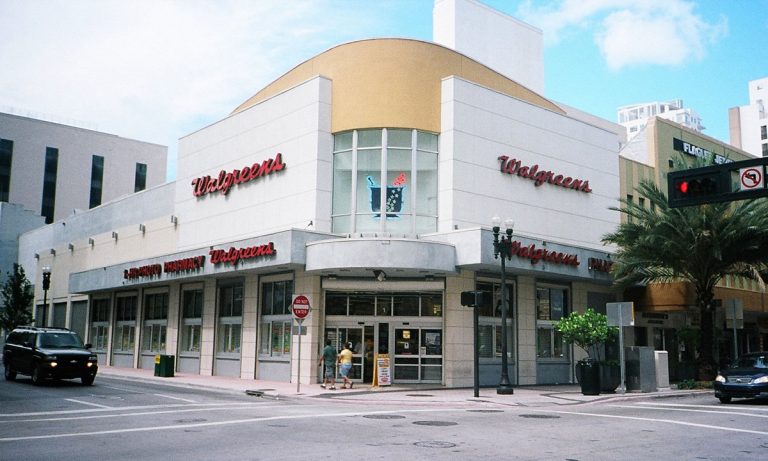
A week after CVS announced their partnership with Curaleaf, Walgreens releases a statement claiming that they’re also getting involved with the cannabis industry, specifically with CBD health products.

According to CNBC, Walgreens will carry CBD creams, patches and more in 1,500 stores throughout different states, including Colorado, New Mexico, Vermont, Tennessee, Indiana, Kentucky, Oregon, Illinois and South Carolina.

“This product offering is in line with our efforts to provide a wider range of accessible health and wellbeing products and services to best meet the needs and preferences of our customers,” says Brian Faith, spokesperson for Walgreens.

RELATED: 6 Mainstream Businesses Betting On CBD

Now that two of the largest drugstore chains in America have invested on CBD’s capabilities for beauty and health, we can expect these type of products to be featured more prominently in all sorts of drugstores and pharmacies.

CBD’s presence in foods and drinks is still a point of contention, all heavily regulated by the FDA, so the compound’s presence in supermarkets and food based businesses might take a while longer. Still, all of these businesses associating themselves with CBD serve as reminders that cannabis is a business with staying power, changing mentalities and getting people more informed in the meantime. It’s only a matter of time before the government and responsible parties catch up to this idea.

Chris Evans Has ‘Chilled Out On Weed,’ But Not Acting

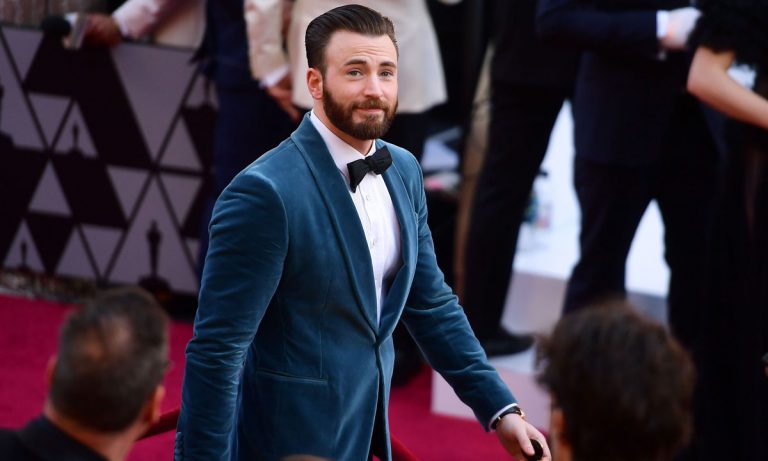
Sorry kids, but Captain America used to smoke weed. In a recent Hollywood Reporter profile, Chris Evans revealed how he “used to love [weed],” though he’s dialed the habit back in recent years.

“You know, I’ve chilled out on weed,” Evans told THR. “I used to love it, but now I think it’s the one thing that gets in my way. It zaps your motivation.”

RELATED: ‘I Don’t Feel So Good’ Meme Is Perfect After ‘Avengers: Infinity War’

In the cover story, Evans was reflecting on how much his life has changed since when he first moved to Hollywood in hopes of becoming an actor. He lived in what THR characterized as “Hollywood’s freshman dorm, the legendary Oakwood Apartments complex in Toluca Lake.” Reminiscing on those days, he recalled how welcoming all the young, but “thirsty” actors were, teaching each other the ropes including where to pick up weed. “You had to know that, back then. You couldn’t just walk into a store,” Evans said.

Now thanks to California’s recreational marijuana laws, Captain America could just enter a dispensary if he wanted. But the aspirational pursuit of being one of Hollywood’s leading men just doesn’t coincide with what Evans sees the cannabis lifestyle.

“I think apathy kind of bleeds in, and you start to think, ‘Well, I’m not apathetic, I just don’t feel like doing that.’ And it’s like, no—you would feel like doing that if you weren’t stoned,” he said. “And, you know—I’m 37. I can’t be smoking weed all the time. That’s crazy.”

RELATED: How Will Marvel Replace Actors After The Next ‘Avengers’ Movie?

All the comments coincide with the upcoming release of Marvel’s Avengers: Endgame this April. By all accounts, it seems like this movie will be the last in which Chris Evans dons the Captain America costume. But he also emphasized that comments of his forthcoming retirement have been greatly exaggerated.

“I never said the word ‘retire,'” he said. “It’s a really obnoxious notion for an actor to say they’re going to retire—it’s not something you retire from.”

Saying No Means Saying Yes To The Black Market

As I have discussed on previous occasions, I have operated an I-502 State legal retail Cannabis shop in Central Washington State, in my hometown of Ellensburg, since August 2014.

In those very early days, the Black Market was chuckling at the total ineptitude and ineffectiveness of 502 and beyond any reasonable doubt kicking our collective backsides. Prices were crazy and variety and consumer choice was an absolute joke. I myself had six (6) items on my “menu”, two types of pre rolls and four types of flower. And here’s the kicker…It was $30-$35 per gram out the door after all applicable State taxes.

So in the very beginning, we were no competition at all. But due to good old capitalism, this situation began to change in a very real way at the conclusion of the first quarter 2015. (More on this later, but even though our legislature preached early on their collective commitment to eradicating the Black Market, their policies and burdensome tax structure in Washington State have made this noble effort much more difficult to achieve.)

RELATED: Denver Dispensary Caught Red-Handed Trying To Have Its Cake And Eat It Too

In the interest of full disclosure, I am an Economics major from Central Washington University in Ellensburg, Washington, class of 1982. So I do understand market forces, consumer benefits of competition, laws of supply and demand and economies of scale.  However, even though I was a college student, my experience in marijuana, and therefore marijuana as an industry and a business, my working knowledge was practically zero.  In the very beginning,  I certainly did not consider myself a crusader against the evils of the Black Market. I was just trying to survive the strangling restrictions of my State’s regulatory framework and the choking tax burden that was upon us at the time. But I did quickly come to understand that competing with and and ultimately exterminating the Black Market, is and should continue to be one of our industry’s primary goals.

To a certain degree, there will more than likely always be a Black Market. As long as the definition of minor is 21 years of age in our State, there will be a Black Market of sort. However, while this is an aspect of the continued viability of what we call the Black Market, there are other factors that are within our control and it’s these conditions and items that we need to remain focused on.

In Washington State at this time, probably at least in part due to an oversupply of Cannabis but that’s another topic for another article, the prices are more than a match for the illicit market. Even though our State has sales tax AND a 37% rate of excise tax, by far the highest in the country, our out the door prices of product are lower than what illegal prices were on the street prior to 502.

The product is tested for a myriad of conditions and chemicals as well as moisture and THC, and much more so it’s a very good bet it is safe for the end consumer. The very fact it is taxed heavily at both the State as well as Federal level, is a selling point at least to those not currently in the industry!

In Washington State for example, our industry is contributing $250,000,000 per year to Medicaid. The guy selling weed to a minor in the unlit corner of the local grocery store parking lot doesn’t give a flying flip about what chemicals may be present in their product. They certainly don’t give a hoot about whether their “customer” is of age or not. And quite obviously, they do not nor have they ever contributed anything to anyone’s tax rolls.

RELATED: Marijuana Packaging Laws Are Causing More Harm Than Good

My point is we are competing, and winning handily where we are allowed to compete. Even with the huge tax burdens and the myriad of rules and regulations and restrictions, legal Cannabis in Washington State is viable and strong. And yet the Black Market still exists and in many locales is still successful.

The primary reason illegal Cannabis distribution still exists is due to bans and moratoriums across our State. Politicians, mayors, city councils, city managers, county commissioners, the public in general foolishly believe in many towns, municipalities, counties dotted all across Washington State they can say no to the existence of Cannabis in these areas. This is dangerous and foolhardy for anyone to believe that a government entity can merely say no and Cannabis will stay away. I have told many Cannabis haters who have said no to the State legal retail Cannabis industry coming to their town or county that in fact they have made the Black Market viable and healthier in their general locales.

Let me repeat that last statement: if anyone says no to legal, 502 State legal shops in their towns, you are inadvertently saying welcome to illicit Cannabis businesses.

You have to choose which way and under what conditions Cannabis is going to be made available to the people of your city or town. You can choose the bright lights of a compliance driven, product tested, taxed and regulated industry or you can choose the dark, untested, unregulated world that is the Black Market in which they sell to kids, include chemicals in the processing of their product that can do in many cases irreparable harm and/or contribute nothing good to society and communities.

Shortsighted, ill informed and under educated individuals are making these same types of frankly dumb decisions for the “good” of their citizens every day across the USA. It is past time we assign blame where and on whom it belongs.

RELATED: Here’s What Canopy Growth Investors Need to Know About the Houseplant Dea

When and where we are currently allowed to operate, we are dominating the overall market, the primary exemption being sale to minors by non State licensed individuals. It’s interesting to me as a political advocate in our State that has seen our industry achieve nearly undreamed levels of sales and by extension, tax revenues, that Congress will not change the rate of taxation for any reason, even the very achievable goal of the further eroding of illegal Cannabis sales.

The free market is powerful and has been successful in spite of and certainly not in any way due to politicians input. Regulation, compliance and public safety is and should be the Congress’ purview. However, all need to remember the stated goals of our legalization of Cannabis, one being the protection of our youth from predators in the Black Market.

The backdrop of all that we do, all that we discuss and all policy and regulations that we put in place should be the ultimate destruction of illicit Cannabis sales. Period. If regulators and lawmakers have and keep this idea in mind at all times as it relates to promoting a successful Cannabis industry in the Evergreen State, we in the legal Cannabis industry will be able to hammer the Black Market into a state of submission.

This story was originally published on Green Market Report.

You Can Now Buy CBD On Walmart’s Website

Back in October 2018, the Canadian division of Walmart said that it was exploring the idea of selling cannabis-based products on their shelves, sending shares of Walmart Inc. (NYSE:WMT) up roughly 3% despite no concrete plans to do so anytime soon.

A few months later in the U.S., the Agriculture Improvement Act of 2018, a.k.a. the Farm Bill was passed. This made a legal distinction between cannabis and hemp and defined hemp as “any part of the Cannabis sativa L plant, including all derivatives and extracts such as cannabidiol (CBD), provided that the plant contains less than 0.3% tetrahydrocannabinol (THC).”

RELATED: Is CBD A Rising Star Or Just Popular Fad?

Fast forward to today, and you can buy CBD supplements on Walmart.com, buy CBD beauty products on Ulta.com, and it’s rapidly spreading across the country in retailers ranging from Neiman Marcus and Sephora to CVS and Walgreens.

CBD at Walmart

CBD Ultra Dropper 1500 mg from Procana Laboratories on Walmart.com

Currently, Walmart.com only offers a limited selection of CBD products from only two brands – Procannaand Medterra. That said, there’s a little of everything.


You can get CBD tinctures for humans or for animals. You can also get CBD softgels for humans or for animals. Also, surprisingly, you can get a disposable CBD vape pen.

RELATED: Drug Manufacturer For CVS And Walgreens Launches Line Of Hemp Supplements

It is worth noting that all of the CBD products available through Walmart are sold and shipped by discount vitamin seller VitaSprings, which also sells a wide variety of other vitamins and nutritional supplements through the Walmart Marketplace.

Conclusion

Chances are, it will be a little while before Walmart itself begins selling CBD. That said, there seems to be another major retailer going green every day. After all, shares of Walgreens Boots Alliance Inc.(NASDAQ:WBA) are already up and it has been one hour since the news broke.

This story was originally published on Daily Marijuana Observer.

Fast Food Chain Wants To Personalize Munchie Cravings

0


Capitalizing on our need for our desires to meet immediately, this fast food chain wants to personalize munchie cravings. McDonald’s wants to revolutionize drive-thrus by offering their patrons a menu that’s personalized and that changes depending on factors like the weather, current restaurant traffic, and trending menu items.

Techcrunch reports that McDonald’s recently acquired Dynamic Yield, an investment that rumoredly cost them over $300 million, making it the company’s largest acquisition in over 20 years. Dynamic Yield is a company known for its partnerships with e-commerce and travel websites in order to develop an Amazon-like personalized experience for users.

RELATED: 5 Sneaky Ways McDonald’s Tries To Get You To Order More Food

Dynamic Yield’s technology will be used to develop a McDonald’s drive-thru menu that’s personalized, capable of recommending orders depending on each user’s interest, the weather, and more. The feature was tested on several locations throughout 2018 and is planned to roll out within the US in 2019. International markets will presumably adopt these features soon after.

If successful, McDonald’s will incorporate this technology into their self-serve kiosks and mobile app software, making it even harder for you to resist a late McDonald’s craving.

Via Dynamic Yield:

Dynamic Yield will play a critical role in McDonald’s digital transformation, allowing it to become even more focused on the customer by deploying our technology in outdoor digital Drive-Thru menu displays, as well as other digital customer experience touchpoints, such as self-order kiosks and the McDonald’s Global Mobile App.”

The company has a history of being cutting edge. McDonald’s was the first central international fast-food restaurant. And it had the first drive-thru window. The restaurant chain has experimented with ways to speed up service and cut down on costs and order-taking errors. McDonald’s was among the few fast-food chains that experimented with order-taking kiosks, putting them in place in 2015.

So, fast food chain wants to personalize munchie cravings? How can you say no to a Big Mac if your app knows your tastes so well?

The White House Lying About Marijuana And Fentanyl?

For the past few years, one of the greatest new-level propaganda schemes to come spewing from the mouths of local anti-marijuana squads is that fentanyl is being found in black market pot supplies. And while these claims have been mostly discounted, that hasn’t stopped leading White House officials from perpetuating the scam. It was just last week that one of President Trump’s leading experts on the opioid crisis warned that people who use marijuana should be afraid. So why is the White House lying about marijuana and fentanyl?

“People are unwittingly ingesting it,” said Kellyanne Conway, who serves as the administration’s czar on the opioid epidemic. “It’s laced into heroin, marijuana, meth, cocaine, and it’s also just being distributed by itself.”

RELATED: Federal Government Suggests Marijuana-Laced Fentanyl Is A Concern

It is true that fentanyl is being used as an additive to black market dope supplies. There is evidence of it turning up in drugs from heroin to cocaine and even methamphetamine. This is happening, or so it has been said, because fentanyl, a substance that is up to 50 times more potent than heroin, is a cheap way to cut these drugs. Yet, considering the bizarre drug mixtures found in the United States over the past year, chances are people are seeking out fentanyl-laced drugs to achieve a unique, speedball type of buzz.

But drug experts argue that no weed is being sold like this in the underground.

“It’s crazy that this story is coming out from our leaders,” Dan Ciccarone, an epidemiologist at University of California, San Francisco, said in an interview with BuzzFeed News. “It shows that concerns about fentanyl have reached the level of moral panic. Fear outweighs rational evidence. There is scant evidence for cannabis laced with fentanyl.”

If the White House is pushing the murderous marijuana narrative to scare the living bejeezus out of the American population, it’s a solid plan. The opioid crisis is a lean, mean killing machine, responsible for dumping somewhere between 45,000 and 70,000 bodies every year. Some of the latest statistics show that fentanyl is responsible for a significant chunk of the death toll. And it’s a problem that is growing and spiraling more out of control with every passing year.

But even the U.S. Drug Enforcement Administration (DEA), a federal law enforcement agency that would love nothing more than to Make Marijuana Dangerous Again admits that fentanyl-laced marijuana is not something it has seen. Earlier this month, the DEA ‘s senior chemist, Jill Head, said a deadly drug mixture of this kind would contribute to a more cataclysmic death count than what the nation is presently witnessing. Marijuana is used by 22 million people across the United States.

So why is the White House lumping weed in with it fentanyl spiel? Well, it turns out that it is just pulling misinformation that was reported by the National Institutes on Drug Abuse (NIDA).

RELATED: White House Confirms Secret Anti-Marijuana Committee Exists

Last year, NIDA director Nora Volkow said: “Fentanyl is being used to lace a wide variety of drugs, including marijuana.” However, this claim was based solely on “anecdotal reports” from local police departments—none of which have been substantiated in any way. In fact, many of these reports were eventually determined to be false. The lesson here is we can’t trust police to be drug experts.

“There’s this mistaken belief that law enforcement are experts on the drugs they are seizing,” Northeastern University drug policy expert Leo Beletsky told BuzzFeed News. “That’s just not the case, and that’s part of the problem.”

How Medical Marijuana Can Help With ADD And ADHD Focus

Attention Deficit Disorder and Attention Deficit Hyperactivity Disorder (ADD/ADHD) is a chronic condition that affects over three million people per year.

From hyperactivity to impulses and inattentiveness, ADD and ADHD are most common in children but can persist in adult years. The chronic conditions is not curable, although treatment is available. Unfortunately, for some people, current treatment hasn’t been effective.

So what’s the next best contender? According to research, cannabis.

RELATED: How Marijuana Could Help Patients Quit Their Anti-Anxiety Meds

A 2013 study published in the Journal of Substance Use & Misuse found that people were self-medicating, in order to deal with and manage hyperactivity and impulsive—two major components of ADD/ADHD.

The study surveyed about 280 cannabis users and the main finding was that a higher proportion of users reported experiencing symptoms of ADD/ADHD when they were not self-medicating. This finding led researchers to push for more resources to study the link between the endocannabinoid symptom and cannabinoid.

Following the findings of the 2013 study, researchers in Germany sought to closely examine the relationship between cannabis and ADD in 30 patients. In the 2015 study, the researchers examined traditional treatment resistant patients from 2012 to 2014.

There were 28 male patients (as ADD/ADHD is more common in male) and two female patients, between the ages of 21-51 with the average age being around 30. In all 30 cases, patients reported improvements in a variety of ADD/ADHD symptoms including concentration and impulsivity. In other cases, patients saw an improvement in sleep. All patients used some form of cannabis flower and in eight patients, they used dronabinol, a THC drug used to treat nausea and vomiting.

RELATED: Why Blunts Are Bad For You: It’s Not About The Marijuana

Although the case study was small, researchers confidently concluded cannabis is “an effective and well-tolerated” treatment option – especially for patients where traditional pharmaceuticals fall short.

In reality, it should be no surprise that cannabis is a strong ally for people with ADD and ADHD. A study from almost 10 years ago examined the relationship between those with ADD/ADHD and dopamine levels.

People with the chronic condition experience lower levels of dopamine, the neurotransmitter responsible for mood and motivation. However, THC is known to increase dopamine quantities as well as the transmission of dopamine. Do you see the connection?

The most common ADD/ADHD treatments like Ritalin and Adderal may help sufferers concentrate or improve cognitive functions, but they have been noted to cause unappetizing side effects like nausea or vomiting. You know what’s good for that?

Cannabis.

Don't Miss Your Weekly Dose of The Fresh Toast.

Stay informed with exclusive news briefs delivered directly to your inbox every Friday.

We respect your privacy. Unsubscribe anytime.