Friday, July 3, 2026
Home Blog Page 734

The Cannabis Industry’s Top 12 US Multi-State Operators

Multi-state operators are cannabis companies that span across multiple legal cannabis states. They have many significant advantages over single-state operators within the cannabis industry. Multi-state operators own cultivation facilities, extraction/processing facilities, and cannabis retail venues in some of the most highly populated, affluent cities across the states that have legalized cannabis for medical or recreational use.

These entities are usually structured as holdings companies with separate state subsidiaries that hold state licenses for seed to sale activities. They are often a combination of joint ventures, management/ ownership agreements, and outright opened properties. These companies, while not permitted to bring cannabis and cannabis-derived products across state lines, but they can share intellectual property, equipment, branding, and employees across states.

Green Market Report has compiled a list of some of the largest MSO’s in the country. Many of the companies are in the middle of major acquisitions which haven’t technically closed, which makes ranking these companies difficult. These deals are being recognized for the most part and included in the company statistics. It’s also challenging to define which company is the largest as that depends on the metric being reviewed. Active states versus licensed states or operational dispensaries versus square footage of cultivation.

The valuations are based on figures from Yahoo! Finance.

Multi-State Operator Number of Operating States Number of facilities and/or licenses across states. Notes Valuation
Curaleaf(CURA.CN)(CURLF) 13 states, mostly in Florida 39 dispensaries, 12 cultivation sites, and 9 processing sites &71 stores expected by 2020 $4 billion valuation
Acreage Holdings(ACRG.U)(ACRGF) 12 states operational, 19 states licensed 68 retail dispensaries in 12 states, 21 cultivation licenses $1.9 billion valuation
Harvest Health & Recreation Inc.(HARV.CN)

(HRVSF)

16 states 70 dispensaries, 13 cultivation facilities, and 13 manufacturing in 2019. Licenses for 200 facilities, 123 retail locations. Harvest Health acquired Verano in $850m all-stock deal. $721 million valuation
MedMen(MMEN.CN)

(MMNFF)

12 states 78 licenses for retail locations, 30 operational stores, and 11 cultivation/manufacturing licenses $1.8 billion valuation
iAnthus(IAN.CN)

(ITHUF)

11 states 56 retail locations and 14 cultivation and processing facilities. The company acquired MPX Bioceuticals in $835 million deal. $1 billion valuation
Grassroots 11 states 15 dispensaries under operation, 62 licenses. The company has raised $165 million.  Private
Green Thumb Industries(GTII.CN)

(GTBIF)

10 states Licenses for 71 retail locations, 11 manufacturing facilities. Acquired Beboe Brands recently $2.8 billion
Cresco Labs(CL.CN)

(CRLBF)

7 states 16 retail locations and 10 production facilities $200 million valuation
Golden Leaf(GLH.CN)

(GLDFF)

3 states 7 retail locations, 3 cultivation facilities. Terminated Terra Tech merger $59 million valuation
4Front Ventures 2 states 2 dispensaries with plans to expand to 7 in 5 states. Merging with Cannex Capital (CNNX) $300 million (est.)
TerraTech(TRTC) 2 states 6 operational dispensaries, licensed for an additional 2 stores.  5 cultivation facilities $100 million valuation
Trulieve(TRUL.CN)

(TCNNF)

2 states 25 dispensaries in Florida, 1 in California and Massachusetts is said to be soon. 2 cultivation facilities  $1.3 billion valuation


Curaleaf is the largest based on valuation. Acreage Holdings is the largest with regards to the number of states it has licenses with. MedMen has the most retail licenses at this time, but Harvest Health has the most open dispensaries at this time. Licenses though aren’t a guarantee that an actual business will open.

MSO Advantages

Advantages for multi-state operators include the ability to react to market trends, avoiding and mitigating problems based on experiences from other states and developing brand recognition at the national level. The most significant advantage is in acquiring state licenses due to having already established licenses and standard operating procedures. States like to see companies that look experienced and have a track record of following compliance requirements. Thus, big established companies have a leg up on local small players when it comes time to award licenses.

However, all this expansion comes at a cost. Seaport Global Securities analyst Brett Hundley wrote, “Most MSOs are operating in the red today while having to access capital on secondary OTC or Canadian stock exchanges.”  He went on to say, “All of the U.S. MSOs have been running around grabbing the best real estate in the U.S., setting up vertical operations state-by-state and cornering the market!” Hundley recently initiated coverage on the group and he had more buy ratings than neutral. He wrote, “We see two large U.S. market opportunities coming into play, with the dispensary recreational market potentially being worth $36B and the medical/ingredient market potentially being worth $58B.”

Investor Checklist

Green Market Report talked to attorney and investment specialist, and author of The Green Regulatory Arbitrage: A Case For Investing In U.S. Multi-state Vertically-Integrated Cannabis Companies David Wenger about investing in multi-state operators.

“The investor should have a second look at those multi-state plant touching companies,” says Wenger, “That’s where a lot of the value is going to be added and driven from in this industry because everyone else is trying to get a piece of that pie that is being basically earned at dispensaries.”

“I’m very positive overall about the multi-state model but especially in the limited license restricted states, but I caution investors,” explains Wegner, “Especially over the last few weeks we’ve seen certain players come to the market say that they’re multiple-state operators and what they are is just an investment fund that holds minority holdings in multiple states. I just caution people to do further digging to make sure you investigate things from multiple sources and make sure that they’re corroborating what you’re hearing from the company.”

Indeed, things can get complicated within multi-state operators; Many acquisitions get announced with great fanfare, but then if the deal goes cold, it is usually quietly brushed under the rug. The cannabis industry is becoming famous for its whirlwind marriages and shotgun divorces. Look for the announcement that says a proposed acquisition actually closed.

Another thing that can be confusing to investors who are trying to make investment decisions is the high expense levels for the MSO’s at this time. Many of these companies are in the empire building stage and that can be very expensive. Plus due to onerous rules and regulations, cannabis businesses can often take months to generate revenue as the companies wind their way through various hurdles.

“It takes money to make money,” said Acreage Holdings Inc. (ACRG.U) President George Allen. He noted that the company is deep in the process of expansion and that doesn’t come cheaply. However, a successful MSO will be one that spends its money wisely. Acreage recently acquired the California dispensary Kanna for $11.5 million, but Allen said that a similar business located not very far away had a price tag that was several times that amount. So while the company wants to grow it will only do so if the price is right.

The Membership of Net Losses

“There’s always strength in size, but that doesn’t always mean they are profitable,” said Gary Rosen of Marcum Advisors.” Right now, that is certainly the case. Most of the MSO’s are reporting net losses. Normally that would cause an investor to worry, but at this stage, the cannabis industry is an emerging one. These companies are spending a lot to get established. Acquiring licenses, setting up cultivation facilities and even making the right hires are all expensive steps.

It may be months, if not years before MSO’s can be analyzed in the way of quarterly comparisons since each quarter is vastly different from the preceding one. However, if some MSO’s continue their high cash burn rates before the revenue can catch up, they will be forced to either raise more money, sell off assets or begin layoffs. After only 12 weeks of business, Cannabis NB was forced to lay off 60 employees. Demand for the product wasn’t the issue, but a lost crop and a lack of proper licensing sent the company into a fast downward spiral.

The Big Get Bigger

There were protests recently at the SXSW festival in Austin, Texas against “corporate cannabis” as small operators are increasingly forced out of the industry.  They don’ have the deep pockets to weather the long runway to profitability that the larger companies have. The larger MSO’s can afford high tech solutions and the latest software to analyze sales and inventory data. They can afford the latest technology in cultivation processes. Small single state businesses are finding it harder to compete and even harder to decline acquisition offers in the millions.

The MSO’s believe that when the country fully legalizes, a national footprint will be the key to becoming an industry leader. The small operator may not survive in the short term. It could follow the pattern of the beer industry, which was initially known for local beers and breweries. Then for years, major brands were the only beers for sale. It’s only been within the last 10 years that craft beers have made a comeback. Craft cannabis will have to fight to hold its place against corporate cannabis.

This article originally appeared on Green Market Report.

Justin Bieber And Hailey Baldwin Put Their Wedding On Hold Indefinitely; Did Kit Harington Just Let A Massive ‘Game of Thrones’ Spoiler Slip?

Justin Bieber and Hailey Baldwin Have Put Their Wedding on Hold Indefinitely

Hailey Baldwin and Justin Bieber have already sent out three save the dates for their second wedding that they keep rescheduling. They are not about to send any more for now, People reports, but that isn’t because they’re giving up on having a religious ceremony for family and friends. (Bieber and Baldwin got married legally at a New York City courthouse in September.)

“They will still have a wedding eventually, but this is not their focus right now,” a source close to Bieber told People. “They haven’t sent out any new save the dates. They will wait until Justin feels better and is excited about planning their wedding again.”

RELATED: 10 Surprising Celebrities Who’ve Come Out As Cannabis Fans

Bieber is focused on getting treatment for his mental health, and he’s doing it on both the East and West Coast. He and Baldwin are in Los Angeles right now, and Bieber is said to be “confident” that he will get better.

“Hailey isn’t putting any pressure on him at all,” People’s source said. “She only wants him to focus on his mental health.”

Jon Snow may have let a massive ‘Game of Thrones’ spoiler slip out

In a recent interview with Variety, Kit Harington revealed how long the entire journey of his character Jon Snow was, from the first years through the early stages of Game of Thrones fame, and culminating with all the attention he got thanks to that epic episode where the whole world saw Snow die. For the Watch.

RELATED: ‘GOT’ Star Warns Fans: Don’t Believe Everything You Read About Final Season

Harington also said that shooting season 8 has taken an emotional toll on all the cast. He says the last season was a nine-month shoot “in extreme weather and just in heaving f—ing costumes.” And here is where things get interesting:

I was there the whole time this year. I felt a bit like people were coming in and out, and Jon Snow was just f—ing there the whole time. You have these in-jokes, and these relationships that thrive for eight years. That’s a long time for those jokes to be going, and they never felt old or tired. In the last season, I was like, these are getting tired now. And I think they got tired because we could see the end coming. That’s a way of emotionally detaching from something: relationships very slightly starting to strain, just on the edges, just frayed. Now everyone loves each other again.

If Harington was there the whole time then he can’t die any sooner than the series finale.

Pete Davidson and Kate Beckinsale Are Now Making Out in Cars

Kate Beckinsale and Pete Davidson’s honeymoon phase continues. Just weeks after the two were photographed French kissing in Madison Square Garden during a game, the two were shot yesterday making out in the back of a car while being driving on Sunset Blvd in West Hollywood. Ah, romance!

One day after their Madison Square Garden makeout session made headlines, E! got a report on that status of Beckinsale and Davidson’s relationship in early March. “Kate’s very into Pete,” an insider told the outlet. “You wouldn’t necessarily put them together, but it’s working for now. She’s excited about getting to know him and hoping to spend more time with him.”

Beckinsale finds Davidson really, really funny, which has truly helped him win her over. “He always has her laughing and that’s a good feeling to have,” the source said. Even when they’re on opposite coasts, “they talk a lot and never run out of things to say,” the source said.

New Interactive Netflix Series Lets You Choose The Fate Of Bear Grylls

After the success of “Black Mirror: Bandersnatch”, Netflix is taking the “choose your own adventure” storytelling style to new levels, by literally making you choose the fate of crazy person Bear Grylls.

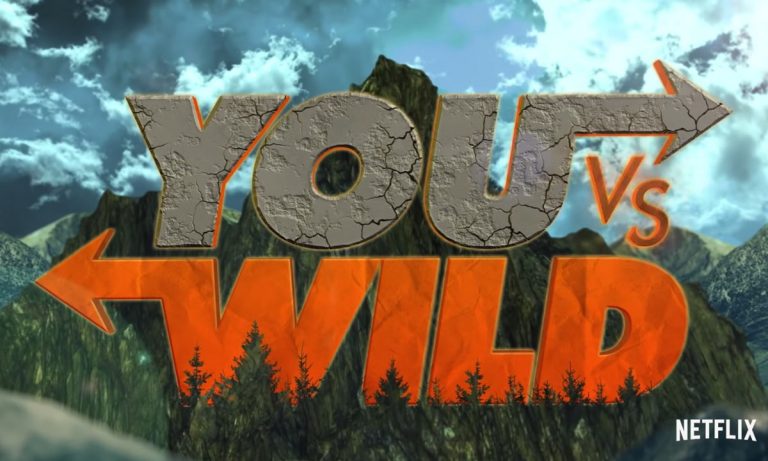
“You vs Wild” is Netflix’s new interactive series, which makes viewers follow Grylls as he explores nature and gets involved in tons of dangerous stuff. Classic.

The show is described as an unscripted outdoor survival show, where you’ll see Grylls travel through snow, sand, forests and all sorts of dangerous locations. You, as the viewer, will have to make decisions for Grylls, selecting how he’ll overcome specific obstacles and scenarios. You’re properly trained for this, right?

The show premieres April 10 with eight interactive episodes.

RELATED: Netflix Wants To Buy Its Own Movie Theaters Now

“You vs Wild” is the first show of its kind, cementing Netflix’s investment in this kind of storytelling that’s a sort of a midpoint between video games and TV shows. Although “Bandersnatch” was praised for its creativity, a lot of critics couldn’t get completely behind the “choose your own adventure” style, claiming that it works best for a video game or a novel than a scripted story.

Bear Grylls’ has made a career out of this type of content, which has been very successful all over the world. Netflix’s new format could act as a functional vehicle for something that’s exciting and that doesn’t demand much cohesiveness when it comes to story. One thing’s for sure: no matter the reviews of “You vs Wild”, no other network or streaming site is doing what Netflix is doing.

Billionaire Mark Cuban Says If He Were To Start A Business Today, It’d Be This

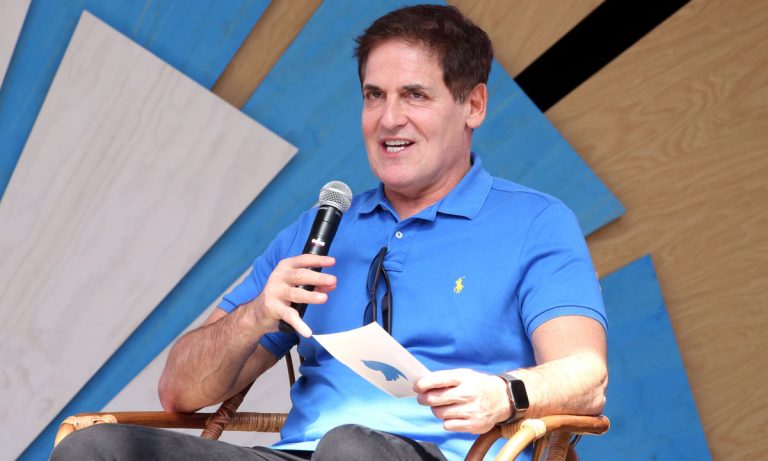
He may be done spearheading new businesses, but that doesn’t mean billionaire entrepreneur and “Shark Tank” judge Mark Cuban doesn’t know a killer concept when he sees it.

Cuban told Recode’s Peter Kafka that if he were to start a business today he’d build it around Alexa and Google Home. Both based on Artificial Intelligence.

“If I was 15 or 20 or 25, and you know, back in the day when I was working as a bartender and started a company, I would learn … because Alexa skills and scripting Alexa skills is really, really easy. But everybody thinks it’s really, really hard. And so that disconnect is a great opportunity,” said Cuban.

Scripting, by the way, is essentially coding for voice commands.  Scripting is the new HTML. Or something.

RELATED: 3 Business Icons Share Their Coolest One-Minute Life Hacks

“As big as PCs were an impact, as big as the internet was, AI is just going to dwarf it,” adds Cuban. “And if you don’t understand it, you’re going to fall behind. Particularly if you run a business.”

He says there’ll be a day when people take AI for granted, like we do the internet.

“But if you don’t know how to use it and you don’t understand it and you can’t at least at have a basic understanding of the different approaches and how the algorithms work, you can be blindsided in ways you couldn’t even possibly imagine.”

RELATED: How To Delete Every Conversation Your Amazon Alexa Has Recorded

And if you’re the type who’s afraid of the robots taking over, Cuban says new technology comes with new problems.

“That happens with every technology. Just look at the internet. “What a great way for everybody to communicate. The world is gonna be a better place because of the internet. Facebook, oh my goodness, right? We’re gonna get social, our friends will be able to connect.’ There’s always a downside.”

Let These ‘Old Fat Lesbians’ Teach You How To Smoke Weed

Brands pay hundreds of thousands of dollars to make social media posts go viral, but two “fat, old lesbians” have achieved that goal in just three weeks. How’d they do it? By smoking weed out of homemade apparatuses.

Since opening the Instagram account @420oldfatlesbians (what a great name) earlier this month, the account has gained nearly 70,000 followers, all eager to watch the goofy, good-natured fun videos from Sue and Lee. And for good reason too! The shades-wearing gals are absolutely hilarious, smoking out of hers-and-hers bongs and summoning the marijuana spirits through their “weed-ja board.”

https://www.instagram.com/p/Bu7KuMdHAbf/

Their deadpan humor found on their Instagram page, which also included one adventure of them “breaking out” of the “hawrspital,” is aimed at changing opinions around who uses cannabis. In an interview with NBC News, Sue said they started the account because they were “tired of the stigmas on weed, on lesbians, fat people, old people,” adding that “people need to just be who they are and not worry about what others think.”

The couple has been together for 12 years and married for four, but they dodged the age question by saying they were “in our third trimester of life.”

RELATED: Why Do We ‘Like’ Instagram Posts Of Hot And Famous People?

“When I was a kid, there is no way I would have looked forward to seeing myself as stoner lesbian on Instagram,” Lee told The Stranger. “It’s pretty cool though.”

Check out some of our favorite posts.

https://www.instagram.com/p/Bu4El9Eh45C/?utm_source=ig_embed&utm_campaign=embed_loading_state_control

https://www.instagram.com/p/BvFoNW_Fl-v/

https://www.instagram.com/p/Bu7KuMdHAbf/

https://www.instagram.com/p/BupAydhhdRU/

Consumers Are Replacing Pharmaceuticals With Medical Marijuana

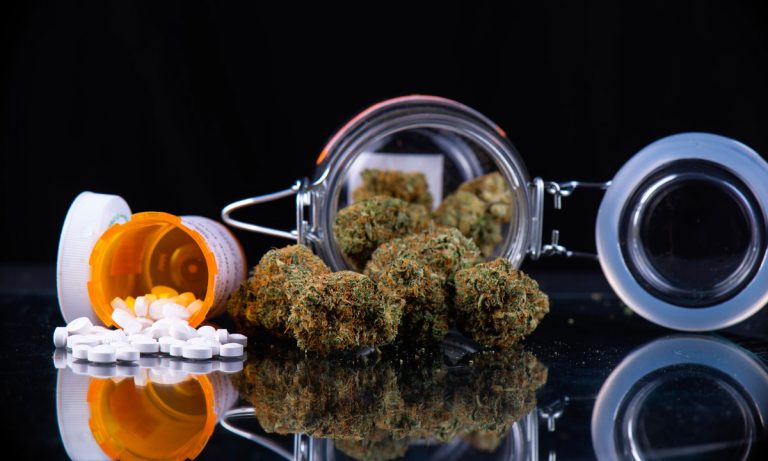
If you’re given the option to consume pharmaceutical medications like addictive opioid painkillers or a natural alternative form of medicine like cannabis and/or CBD, which one would you choose and why?

Overdoses due to prescription drugs is the top leading cause of accidental deaths in America. Over the years, prescription drugs, especially opioids have been used, overused, and abused. Unfortunately, it has moved from a crisis to a full-blown nationwide epidemic.

Although certain U.S. states have taken a stricter approach regarding the prescribing and re-filling of opioid orders, the consumption of these addictive and harmful painkillers continues. However, as more states, regions, and countries legalize cannabis, numerous cannabis consumers are choosing to transition away from pharmaceutical medications including opioids and move towards cannabis instead. Why is this the case though, how many people are really making this switch, and what impact have legal cannabis programs had on the consumption of opioid painkillers?

Increasing Number of Legal Cannabis Programs & Cannabis Consumption Over Opioids

Despite the accumulation of opioid overdoses over the years, on the bright side, various states have moved forward with cannabis legalization measures. By now, more than half of America’s fifty states have legalized cannabis to some degree. Whereas, America’s northern neighbor, Canada, has already federally legalized the plant. As a result, many people who have had the option to use opioids as their painkiller of choice also have the option to purchase and consume cannabis products.

RELATED: More Than Just THC: A Pharmacologist Looks At The Untapped Healing Compounds Of Marijuana

In recent years, certain states that have medical and/or recreational cannabis programs in place have experienced decreases in the number of opioid overdoses. Specifically, one study found that U.S. states with operating medical cannabis programs had much lower state-wide opioid overdose mortality rates. Then, another study discovered that the incorporation of effective medical cannabis programs resulted in a decrease of 1,826 daily doses for opioid pain alleviation filled per doctor each year. How many people are actually taking advantage of consuming a natural medicine like cannabis as opposed to opioids though?

Research Findings that Support the Consumption of Cannabis Rather Than Pharma Meds

To learn more about the link between substituting pharmaceutical medications like opioids with cannabis and cannabinoids like Cannabidiol (CBD), survey data was collected from 271 individuals who were enrolled in Canada’s MMPR program.

Specifically, the 271 participants were patients who purchase medical cannabis from Privateer Holding’s owned-Tilray. About 63 percent of patients mentioned that they consume cannabis in place of traditional pharmaceutical medications. Then, around 30 percent of participants replaced opioids with cannabis, 16 percent replaced benzos with cannabis, and 12 percent replaced antidepressants with cannabis.

Why is this though? Most participants chose the more natural route because cannabis delivers less negative side effects and because it’s safer as compared to many pharma meds. However, some participants picked cannabis because it was more effective in treating their primary symptoms. Overall, though, the majority of participants expressed that cannabis is an effective treatment method for different medical conditions, and pain and mental health struggles were at the top of the list as reasons for consuming cannabis.

Besides pharmaceutical medications, numerous participants chose to use cannabis over other commonly-consumed substances like tobacco, alcohol, and other illicit drugs. In particular, 25 percent of participants chose cannabis over alcohol, 12 percent replaced cigarettes/tobacco products with cannabis, and three percent replaced illicit drugs with cannabis.

Additional Noteworthy Research Findings

In addition, not only are the operation of numerous medical and recreational cannabis programs beneficial and useful to those participating in them, but the existence of such programs has helped people transition away from addictive opioids. Aside from the research findings mentioned above, a 2019 study was conducted recently and published in the Harm Reduction Journal, which focused on surveying 2,000 adult Canadian medical cannabis patients who were registered with Tilray.

It was discovered that 70 percent of Canadian participants consumed cannabis as a substitute medicine for different prescription drugs. In particular, 59 percent of participants who consumed cannabis as an opioid replacement medicine reported complete opioid termination. Whereas, roughly 20 percent of cannabis consumers expressed that they decreased their standard opioid usage by at least 75 percent.

When the Canadian participants were asked why they switched to consuming cannabis rather than pharma meds, their main reasons consisted of cannabis’s safety profile, the plant’s few adverse side effects, and the efficacy of cannabis for symptom management purposes.

Additionally, the Canadian cannabis study’s researchers released the following statement about the reported findings:

“The findings provide a granular view of patient patterns of medical cannabis use, and the subsequent self-reported impacts on the use of opioids, alcohol, and other substances adding to a growing body of academic research suggesting that increased regulated access to medical and recreational cannabis can result in a reduction in the use of and subsequent harms associated with opioids, alcohol, tobacco, and other substances.”

Let’s rewind to 2016 when it was found that 80 percent of medical cannabis users reported substituting cannabis in place of prescribed medications, especially patients with pain-related conditions.

Now, fast forward to this year when interesting findings were released in BDS Analytics’ latest consumer surveys report. In the report, it was mentioned that opioid drug usage declined up to 30 percent in states with functioning medical cannabis programs.

Plethora of Cannabis’s Medicinal and Therapeutic Benefits

Although opioid painkillers are often prescribed to this day, cannabis and various cannabinoids can naturally combat and relieve pain and many other symptoms without delivering significantly negative side effects.

Some benefits of cannabis and the widely consumed cannabinoid, CBD include but aren’t limited to the following: analgesic, anti-inflammatory, anti-spasm, anti-epileptic, anti-anxiety, anti-depressant, antioxidant, anti-tumoral, and neuroprotective benefits.

RELATED: Marijuana Won’t Solve Opioid Crisis But Could Be Part of the Solution

On a similar note, the following statement was released about cannabis’s benefits over those of opioids: “Cannabis can be an effective treatment for pain, greatly reduces the chance of dependence, and eliminates the risk of fatal overdose compared to opioid-based medications. Medical cannabis patients report that cannabis is just as effective, if not more, than opioid-based medications for pain.”

If you’re given the option to consume pharmaceutical medications like addictive opioid painkillers or a natural alternative form of medicine like cannabis and/or CBD, which one would you choose and why? Let us know in the comments below!

New Jersey Makes Huge Stride In Legalizing Marijuana

New Jersey has finally taken a step forward in the long, arduous journey to legalizing recreational marijuana by advancing a new piece of legislation. The proceedings were “testy” and included some “back-room wrangling,” according to the Associated Press. But questions remain if the measure will ultimately pass and reach Gov. Phil Murphy’s desk.

After the marathon-like hearing, the measure closely resembles what Murphy has previously presented. Instead of taxing sales percentage of cannabis products, New Jersey would join Alaska in taxing cannabis at a per-ounce rate ($42 per oz). The bill also includes a provision that would allow towns to add an addition 3 percent tax in some cases, though those details aren’t known at the moment.

RELATED: What States Will Legalize Marijuana In 2019?

Should the legislation pass, New Jersey would become the 11th state to legalize recreational marijuana use. According to NJ.com, leaders in both the New Jersey Senate and Assembly are short the necessary votes to pass the bill at the moment. Murphy, who boldly claimed he’d legalize recreational marijuana during the state’s gubernatorial race, has been under fire recently for not doing enough to fire up lawmakers and get the votes in order. Murphy instead wants to rely on a high-minded, merit-based politics to get the job done.

“I won’t get into if it’s five (votes short) or 10 or three or none,” Murphy said. “I’m not a big believer in transactional politics. I believe my role will be to say, ‘Listen, from my perspective as the chief executive of the state, let me tell you why I think this is an imperative.’”

RELATED: Beto O’Rourke Was An Early Supporter Of Marijuana Reform

This is setting up to be a historic vote, which should take place on March 25, the final possible day for a vote. NJ.com reports that lawmakers have made progress on acquiring the necessary votes, but they still need to swing a couple more votes in the Senate and Assembly.

If legislators miss the March 25 deadline or fall short in the votes, the next time New Jersey would discuss legalizing recreational cannabis wouldn’t be until after the November election, according to State Senate President Stephen Sweeney.

NASA Astronauts Are Plagued By Herpes, Says Study

If space isn’t scary enough for you, rest easy because scientists have discovered that there’s actual space herpes.

The journal Frontiers in Microbiology recently published an article that mentions how NASA astronauts aboard the International Space Station and other space shuttles have been plagued by the resurgence of herpes. Turns out the stress of space travel causes the dormant virus to flare up.

According to the study, more than half of astronauts (53 percent) who have undergone short term space shuttle flights are showing signs of herpes. To gather this data, researchers took samples of blood, urine and saliva before and after the astronauts boarded their trips. They theorize that exposure to micro gravity, cosmic radiation and the force of take off and flight deeply affect subjects’ immunity systems, making them more sensitive to viruses and bacteria.

RELATED: Space Scientists Say They’ll Be Using Pee To Grow Food On Mars

The study also reveals that astronauts’ immune cells become less effective during flight and up to 60 days after the original trip. “NASA astronauts endure weeks or even months exposed to microgravity and cosmic radiation—not to mention the extreme G forces of take-off and re-entry,” says the study’s senior author, Dr. Satish K. Mehta. “This physical challenge is compounded by more familiar stressors like social separation, confinement and an altered sleep-wake cycle.”

It’s not surprising that space travel makes the human body more sensitive to viruses and diseases. Despite the fact that the effects analyzed are minor in the grand scheme of things, these results are factors that need to be accounted for when it comes to planning longer trips in space.

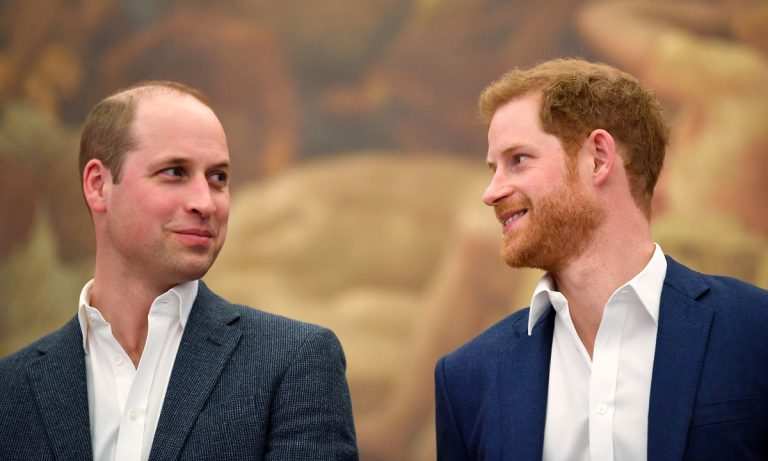
This Is The One Thing Prince William And Prince Harry ‘Can’t Stomach’ Doing Together

It’s been reported that the royal Duchesses, Kate Middleton and Meghan Markle, are feuding, causing a riff between their husbands. But as it turns out, the tension between the two couples may actually be stemming from Prince William and his brother Harry. At the very least, it’s adding fuel to the already growing fire.

The Sun‘s Dan Wootton reports exclusively that the bonded brothers are having such a hard time being around one another, they “cannot even stomach keeping their charitable projects together as they separate their households.”

RELATED: Prince Charles Made Prince William And Duchess Kate Wait 5 Years Before Allowing This

The death of their mother, Princess Diana, cast both young men into the spotlight. But now, Harry is in the spotlight for a completely different reason: his Hollywood wife.  Wootton says as a result, “a gulf” has developed between the brothers “since Meghan empowered Harry to be the new-age celebrity royal he’s tried to become for years.”

As a future king, William wants to take a more serious approach, anchored in realism and keeping away from gimmicks.

Wootten says we can expect things to escalate, specifically the bid for media attention, after Meghan has her baby and returns from maternity leave later this year.

“I’m all for it,” says Wootten. “At least Wills seems to want to show up for work at the moment, even if it is to beat his bro.”

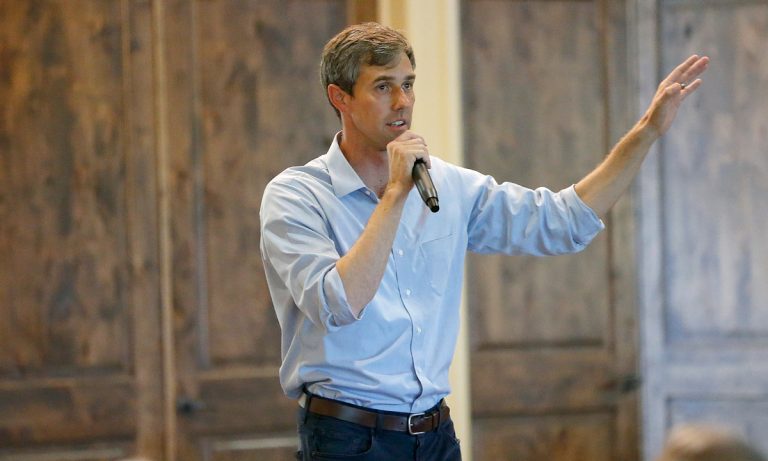
Beto O’Rourke Was An Early Supporter Of Marijuana Reform

Although the latest pool of Democratic presidential candidates has come out in support of marijuana legalization at the national level, there is some concern that many of them are bandwagon jumpers and will not actually bring about any substantial change if they were to take office.

But some of them, including Beto O’Rourke, have been huge supporters of drug reform long before it was cool to do so.

A recent report from Vox shows that O’Rourke’s earlier support for pot reform goes as far back as 2009 when he called for “an honest, open national debate on ending the prohibition of narcotics” as a member of the El Paso City Council. He was one of the driving forces behind a resolution demanding that Congress take a serious look at the legalization of drugs as a means for weakening Mexican cartel operations linked to increased violence, including a slew of murders.

“If our drug laws were different, I will absolutely guarantee you that our body count would be different,” he said.

RELATED: Beto O’Rourke Calls For Marijuana Legalization Ahead Of Expected Presidential Run

In 2011, O’Rourke and council colleague Susie Byrd published a book called Dealing Death and Drugs: The Big Business of Dope In the U.S. and Mexico, which not only pointed out how the War on Drugs has been an absolute failure, but it also detailed their support for marijuana legalization.

“The only rational alternative to the War on Drugs is to end to the current prohibition on marijuana,” the book reads.

In the past, O’Rourke has gone up against City Council members who opposed a more progressive approach to drugs and has cosponsored nearly two dozen drug reform bills during his political career.

In fact, his work in the area of drug reform has landed him above average ratings with nation cannabis advocacy group NORML. The group even endorsed him as a candidate during his bid for Senate.

RELATED: Texas Politician Beto O’Rourke Joins Willie Nelson For Weed Tune Jam Session

While O’ Rourke was unsuccessful in beating Senator Ted Cruz last year for a spot in the upper chamber, he is now gunning to become the next president. And if that happens, he wants to make nationwide marijuana legalization a priority. The United States “should end the federal prohibition on marijuana,” he said last week in Iowa.

It is important to point out that O’Rourke is only interested in legalizing marijuana. He said last year that “heroin and cocaine and fentanyl” should remain outlaw substances.

Don't Miss Your Weekly Dose of The Fresh Toast.

Stay informed with exclusive news briefs delivered directly to your inbox every Friday.

We respect your privacy. Unsubscribe anytime.