Thursday, June 18, 2026
Home Blog Page 891

Snapchat Is Having A Rough Time And Is Forced To Shut Down Snapcash

Peer to peer payment technologies are on the rise with trustworthy apps such as Venmo, PayPal and Zelle. It’s a tough business to be a part of when you don’t have the numbers or the credibility, as demonstrated by Snapchat which will soon be terminating Snapcash.

TechCrunch made this discovery thanks to a code buried on the Snapchat Android app, which stated that Snapcash will no longer be available after an unknown date. The website contacted Snapchat for comment and the company replied confirming that Snapcash’s services would on August 30th, and so would their partnership with Square Inc.

Via TechCrunch:

“Yes, we’re discontinuing the Snapcash feature as of August 30, 2018. Snapcash was our first product created in partnership with another company – Square. We’re thankful for all the Snapchatters who used Snapcash for the last four years and for Square’s partnership!”

Aside from the low amount of users that Snapchat has been reporting, TechCrunch claims that Snapcash had a reputation for being used to pay for erotic content and for the services of adult performers. These rumors are unconfirmed but closing a service to avoid a PR scandal sounds like a good explanation behind this decision.

Snapchat is still trying to survive, developing it’s services and trying to become a more commerce oriented application. While the company has been forced to let go of employees, it’s still planning to introduce new features that allow users to shop within the app. Snapchat’s Android code contains a feature called “Eagle”, which would gives users the ability to scan a barcode with the app’s camera, showing them the results on Amazon. It’s not known if this feature will debut any time soon.

A Vet Shares How To Tell a Dog Or Cat’s Age

0

Jesse Grady, a vet, shares how to tell a dog or cat’s age.

“Just how old do you think my dog is in dog years?” is a question I hear on a regular basis. People love to anthropomorphize pets, attributing human characteristics to them. And most of us want to extend our animal friends’ healthy lives for as long as possible.

It may seem like sort of a silly thing to ponder, born out of owners’ love for their pets and the human-animal bond between them. But determining a pet’s “real” age is actually important because it helps veterinarians like me recommend life-stage specific healthcare for our animal patients.

There’s an old myth that one regular year is like seven years for dogs and cats. There’s a bit of logic behind it. People observed that with optimal healthcare, an average-sized, medium dog would on average live one-seventh as long as its human owner – and so the seven “dog years” for every “human year” equation was born.

Not every dog is “average-sized” though so this seven-year rule was an oversimplification from the start. Dogs and cats age differently not just from people but also from each other, based partly on breed characteristics and size. Bigger animals tend to have shorter life spans than smaller ones do. While cats vary little in size, the size and life expectancy of dogs can vary greatly – think a Chihuahua versus a Great Dane.

Human life expectancy has changed over the years. And vets are now able to provide far superior medical care to pets than we could even a decade ago. So now we use a better methodology to define just how old rule of thumb that counted every calendar year as seven “animal years.”

Based on the American Animal Hospital Association Canine Life Stages Guidelines, today’s vets divide dogs into six categories: puppy, junior, adult, mature, senior and geriatric. Life stages are a more practical way to think about age than assigning a single number; even human health recommendations are based on developmental stage rather than exactly how old you are in years.

Dog breed and its associated size is one of the largest contributors to life expectancy, with nutrition and associated weight likely being the next most important factors for individual dogs.

But this still doesn’t answer the question of how old your individual animal is. If you’re determined to figure out if Max would be graduating from high school or preparing for retirement based on how many “dog years” he’s lived, these life stages can help. Lining up canine and human developmental milestones over the course of an average life expectancy can provide a rough comparison.

In a similar manner, the joint American Association of Feline Practitioners-The American Animal Hospital Association Feline Life Stage Guidelines also divide cats into six categories: kitten, junior, prime, mature, senior and geriatric. Since most healthy cats are around the same size, there’s less variability in their age at each life-stage.

Figuring out how old Buddy is in dog years or Fluffy is in cat years allows a veterinarian to determine their life-stage. And that’s important because it suggests what life-stage-specific health care the animal might need to prolong not just its life, but also its quality of life.

Physicians already apply this very concept to human age-specific health screenings. Just like a normal human toddler doesn’t need a colonoscopy, a normal puppy doesn’t need its thyroid levels checked. An adult woman likely needs a regular mammogram, just like an adult cat needs annual intestinal parasite screenings. Of course these guidelines are augmented based on a physician’s or veterinarian’s examination of the human or animal patient.

And as is the case for people, your pet’s overall health status can influence their “real age” for better or for worse. So next time you take your pet to the veterinarian, talk about your animal’s life stage and find out what health recommendations come with it. Watching out for health abnormalities and maintaining a healthy weight could help your cat live long past the literal “prime” of its life.

Jesse Grady, Clinical Instructor of Veterinary Medicine, Mississippi State University

Starbucks Will Open Its First US Deaf Friendly Store This Fall

0

Starbucks announced plans to open its first Singing Store in the U.S., a café designed specifically for the deaf community. The store is opening in Washington D.C., where all baristas will be versed in American Sign Language (ASL). While the store will appeal to all customers, it will promote accessibility and offer employment to the Deaf and hard of hearing community.

“The National Association of the Deaf applauds Starbucks for opening a Signing Store that employs Deaf and hard of hearing people,” said Howard A. Rosenblum, CEO of the National Association of the Deaf. “Starbucks has taken an innovative approach to incorporating Deaf Culture that will increase employment opportunities as well as accessibility for Deaf and hard of hearing people, while at the same time educating and enlightening society.”

https://www.instagram.com/p/BlbDMxNHw1H/?taken-by=starbucksnewsroom

According to Starbucks, the store will employee up to 25 deaf, hard of hearing and hearing partners from across the country to work at the Signing Store with a requirement that all be proficient in ASL. Says Starbucks:

The idea to open a Signing Store in the U.S. was inspired by a similar Starbucks Signing Store which opened in Kuala Lumpur, Malaysia in 2016 with nine Deaf partners. Starbucks partners in the U.S. voiced the opportunity to create a similar third-place experience for the Deaf and hard of hearing community in the U.S., and traveled to Malaysia last July for the first-year anniversary to understand design modifications and gain knowledge to create the best possible store experience for Deaf and hard of hearing customers in the U.S.

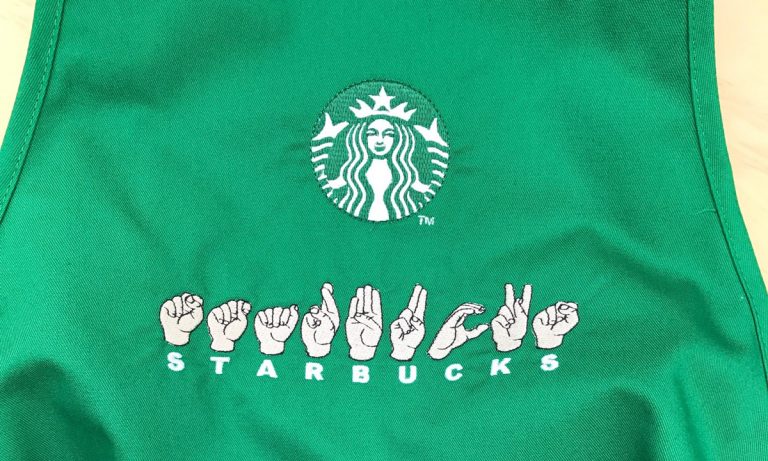
Deaf baristas will have special ASL aprons (embroidered by a deaf supplier), and hearing partners who sign will have an “I Sign” pin. According to the company, the Singing Store “will also incorporate aspects of Deaf Space, including an open environment for communication and low glare reflective surfaces. For customers new to sign language, the store will offer communication options for ordering and receiving beverages at the hand-off counter.”

The Signing Store is scheduled to open in early October.

Will The Empire Or Garden State Legalize Weed First?

The latest big question looming as New Jersey continues to drag its feet in adult-use cannabis legalization is this: will New York now get there first? And if New York does go first, what will it mean for the New Jersey marketplace once it opens?

It’s true, New Yorkers don’t often have call to cross into New Jersey. Maybe that’s where their family lives or they’re shore lovers. Perhaps the casinos call every now and again or a football game can’t be missed. But what experts think will really draw the Big Apple crowd to the Jersey side is legal cannabis, according to NJ.com. That draw would mean even heftier tax revenue for the state, but that’s only if it legalizes first.

Plenty of Northern New Jerseyans commute to New York for work, entertainment and shopping every day, and though Gov. Phil Murphy is more gung-ho about cannabis legalization than NY Gov. Andrew Cuomo seems to be, Cuomo has been warming up to the idea of cannabis legalization in a big way recently. Plus, Cynthia Nixon of  “Sex And The City” fame is planning a run against Cuomo in the coming gubernatorial primary and part of her platform is the legalization of cannabis in NY state.

Likely because he is soon facing off with Nixon in a high stakes election, Cuomo recently commissioned a study into what cannabis legalization in New York would look like. Well, the study is complete and the results came back positive. New York is pregnant with the need for legalization. The study showed that the benefits to recreational allowance outweighed the negatives and the once anti-marijuana Cuomo appears to have been convinced.

NJ’s Murphy ran on a partial platform of cannabis legalization, touting that he’d have it legalized in his first 100 days in office. Those days have come and gone, and Murphy has fixed up and expanded medical use, but legalization is proving a harder sell to the State Senate. They’re reportedly getting closer to an agreement, but only time will tell.

Whichever state does end up coming in first will likely reap some extra tax revenue from residents of the other, but either way it’s a win and either way both states seem to be leaning in the direction of imminent legalization, so there is much to celebrate in the way of cannabis on both sides of the Hudson River.

Dem. Lawmaker: ‘Marijuana Should Be Legal In All 50 States’

The political support for cannabis legalization grew louder over the weekend, thanks to Rep. Tim Ryan. The Ohio Democrat called for marijuana to be legalized in all 50 states in an op-ed for CNN.

“As co-chair of the House Addiction, Treatment, and Recovery Caucus, I’ve been hesitant to support legalizing marijuana in the past,” Ryan wrote. “But after meeting with countless Ohio families and youth whose lives have been irreparably harmed by a marijuana arrest, I find the social and economic injustices of our marijuana policy too big to ignore.”

Ryan added that believes “no person should be sentenced to a lifetime of hardship because of a marijuana arrest.” He called such action “morally wrong” and “economically nonsensical.”

“That is why I am calling for an end to marijuana being used as an excuse to lock up our fellow Americans,” he wrote. “Marijuana should be legal in all 50 states.”

Ryan emphasized the need for Americans to invest in a country that would boost everyone. To support his views Ryan referenced studies that demonstrate how legalizing marijuana could impact financially. In fact, marijuana legalization could save “save $7.7 billion in averted enforcement costs and add $6 billion in additional tax revenue — a $13.7 billion net savings. Not to mention the reported 782,000 jobs it could create on day one.”

A massive improvement Congress could make, according to Ryan, is to pass the Marijuana Justice Act. The bill would remove marijuana’s designation as a Schedule I drug, which would eliminate criminal penalties for those who distribute marijuana.

“The War on Drugs failed the American people,” Ryan concluded. “It is time for us to take the necessary steps to right our nation’s wrongs. We cannot afford to leave people behind and money on the table.”

Birthing This Many Kids May Increase Alzheimer’s Risk By 70%

The number of times a woman gives birth can greatly affect her chances of developing Alzheimer’s Disease, according to a new study.

The research, which was done on more than 3,500 women in South Korea and Greece, found that women over the age of 60, who birthed at least five kids, may be 70 percent more likely to be afflicted by the disease than those who have given birth to fewer children. On the flip side, women who had experienced one or two incomplete pregnancies were much less likely to develop Alzheimer’s than women who had never been pregnant at all.

“Based on previous research, we expected that pregnancy with childbirth may be associated with the risk of Alzheimer’s disease,” study author Dr. Ki Woong Kim, a neuropsychiatrist at Seoul National University, told CNN. “However we were quite surprised that incomplete pregnancy was associated with the lower risk of Alzheimer’s, which we did not expect at the beginning of our research.”

In the United States alone, 5.5 million people are living with Alzheimer’s — 3.4 million of which are women.

So, what gives? It appears to be a result of estrogen cycles during pregnancy.

“In animals, early pregnancy was associated with improved cognition while late pregnancy and early postpartum with impaired cognition,” Kim told CNN. “In both animals and humans, estrogen is neuroprotective when it is modestly elevated while neurotoxic when extremely elevated.”

Kim told CNN that by the third trimester, estrogen levels can spike “up to 40-fold higher” than during a woman’s menstrual cycle. However, within four days of giving birth, estrogen levels for most women quickly drop back to normal.

And this may be the problem, according to Kim, who says too many births may have a negative effect on women by continually exposing them to dramatic peaks and valleys of estrogen levels.

The takeaway here is that more research needs to be done, as women can be more susceptible to Alzheimer’s for multiple reasons.

James Hendrix, who directs the global science initiatives for the Alzheimer’s Association, agrees with the need for more research. He tells CNN he feels that it’s premature to suggest hormones are the main culprit.

Data Says Women Consume More Marijuana Edibles Than Men

Edible consumption is not only gaining traction along with cannabis legalization, but women seem to be enjoying them more than men.

The Fresh Toast – Hold the brownie – data says women consume more marijuana edibles than men!

A new report from market research firm High Yield Insights reveals that when it came to edibles, consumers are “more likely to be lighter users (using one time or less per month), newer to using (less than five years), female, college educated and high-income earners.”  The report also found that today’s edible consumer is just as likely to self-identify as a medical user.

Related Story: 8 Things You Need To Know About Eating Marijuana Edibles

“To anticipate the cannabis market’s direction, companies need to understand the customer’s mindset and purchase journey. We’re finding many customers are receptive yet ill-informed or hesitant due to unsatisfactory first experiences,” said Mike Luce, co-founder of High Yield Insights. “Customer journeys may be well-worn paths in traditional consumer packaged goods but are relatively new in cannabis. By understanding how consumers make decisions, manufacturers are better able to identify ways to improve the purchase experience and, ideally, enhance their product lines.”

Green Market Report points to the fact that a gummy from a woman-owned company called Wana Brands is the number one best selling edible in Colorado.

Related Story: What Is The Safest Way To Consume Cannabis

Nancy Whiteman, Founder & CEO of Wana Brands, tells GMR that “Every day, consumers are learning more about the benefits of CBD and are seeking out this cannabinoid.”

Even If You Live In A City You Should Make Time To Surround Yourself With Nature

It’s been known since forever that nature is good for our health, and that spending time near water and trees makes us feel good and relieved. A British study revealed that people who live on coastal communities reported feeling healthier than those who lived further away from the sea. Does that mean that living in a city is less healthy than living in nature? How much “nature” does a person need to feel healthy?

While there are no scientific answers, the relationship between wellness and nature exists, and it’s very important no matter where you live. According to Popular Science, for people in cities, nature is necessary because the greenery absorbs pollution and eases their stress by separating them from loud noises and overpopulation.

According to Catharine Ward Thompson, professor of landscape architecture at the University of Edinburgh, urban parks allow people to “get away from home” and to be in a place where they can separate themselves from their responsibilities and demands. She also says that these spaces give people the opportunity to refocus, allowing themselves to be immersed by the sights, sounds, and smells of nature, which in turn distract them without demanding their attention.

Visiting a park, lake or a forest can also make us more active. When working out in these spaces, time passes by faster because of the views, prompting people to have more fun and put more effort in our exercise. Breathing in the fresh air has also been linked with stronger immune systems.

For us to reap the benefits of nature it’s important to visit these spaces frequently. A survey conducted in the U.K. said that people who spend more time outdoors reported feeling like their lives had more meaning than others who reported not caring much about nature. But in order for us to want to go to parks, they must be engaging. These spaces should feature bathrooms, benches and fauna we can frolic in! (Okay, at least touch).

For now, it seems like including nature into our everyday lives is the future of urban design. William Sullivan, another professor of landscape architecture, believes that including nature in everyday designs will satisfy our need to be in contact with it and will also contribute to the preservation of the environment.“We’re going to have a really significant opportunity to redesign urban spaces to be nature-rich. That will reduce flooding and reduce the urban heat island effect and improve air quality and store much more carbon than we’re currently storing in cities—and in doing so reap all these other cool benefits for human health and wellbeing.”

Inside The Cannabis Machine As Canada Goes Legal

It’s been a monumental 20 years in cannabis reform. Aside from the U.S. having 30 states with medical marijuana laws, nine of which have also legalized adult use, Uruguay legalized cannabis as a country and now Canada is poised to become the first industrialized country to legalize the plant for recreational use.

Canada’s Prime Minister Justin Trudeau has set October 17 as the official opening day for the newly legalized marijuana marketplace and the country as a whole seems to be thrilled. However, there are still some who are wary and there are a few remaining questions that need to be answered.

Health insurance companies are at the top of the list of worriers. Sun Life Financial is the second largest of its kind in the country, and they are just now dipping their toes into covering medical marijuana, which has been legalized in Canada for over 17 years. Reuters reported that on top of being late to the party, they’re only offering to cover certain conditions under certain circumstances, and that’s after paying a premium. One of their arguments is that the price for medical grade cannabis is higher than that of many of the pharmaceuticals that it’s meant to replace.

There are other concerns in the air that have lived and breathed since cannabis became a feasible question and then a viable solution post-prohibition. As drug war proponents watch the walls tumbling down, they are still clinging to questions like stoned driving. And in Canada, legislation has yet to go through to allow peace officers to determine a driver’s impairment level. To be fair, a good, as in functioning, roadside test for recent cannabis use has yet to materialize.

Banishing the black market is one of the war cries of cannabis legalization proponents, and with Canada’s plans to have a low, across the board 10 percent tax on recreational they could be well on their way. However, as pointed out in The Motley Fool, the black market doesn’t have any taxes to worry about or overhead expenses even. Certainly not more than those who are going above board.

It will be up to the people of Canada to make this monumental move to legalize recreational weed a safe and productive one. Things to remember include that the taxed and regulated cannabis is also tested for purity and potency; never get behind the wheel while stoned, just wait it out; going through the proper channels for cannabis moves the movement forward; and, now is the time to be on the cutting edge, not to mention the right side, of history.

George Michael Tried To Kill Himself Four Times; Khloe Kardashian Apologizes For Using R-Word On Instagram: ”I Will Do Better”

The 2016 death of George Michael was put down to natural causes. But in emails seen by The Sun, his lover Fadi said George killed himself, adding: “It took five attempts.”

George Michael lay dead for 24 hours after he killed himself, according to sensational new claims by his lover.

Fadi Fawaz now suggests the star died on Christmas Eve 2016 in a fifth suicide attempt. He previously said he did not find George, 53, dead until Christmas Day.

Fadi, 45, made the claims in emails seen by The Sun. He wrote: “I’m sick and tired of people asking me what happened on Christmas Day.

“Well let me tell you, George died on his mother’s birthday, so that might answer a few questions.

“Not to mention it took five attempts to manage to end his life. I think it’s important for the story.”

George’s mum Lesley Harrison was born on December 24, 1938, and died after a cancer battle in 1997.

Jobless hairdresser Fadi has said he found George’s body at home in Goring, Oxon, at lunchtime.

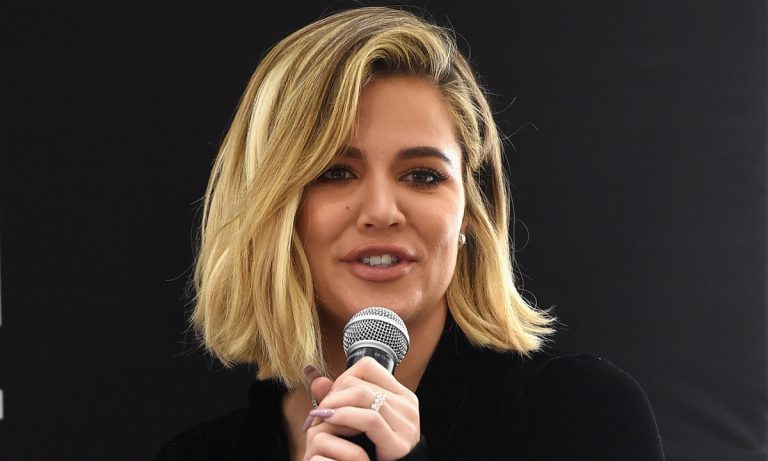
Khloe Kardashian Apologizes for Using the R-Word on Instagram: ”I Will Do Better”

On Friday, the reality star was called out for using the R-word while do an Instagram Livestream with sisters Kourtney and Kim Kardashian.

The Twitter user told the 34-year-old, “You should pay more attention to your word choices especially since you have a huge following and don’t know who you could be offending. If True had a disability you would use a different word.”

Don't Miss Your Weekly Dose of The Fresh Toast.

Stay informed with exclusive news briefs delivered directly to your inbox every Friday.

We respect your privacy. Unsubscribe anytime.