Thursday, June 18, 2026
Home Blog Page 892

Lebanon Wants To Legalize Medical Marijuana

Lebanon is the latest country trying to cash in on cannabis. The Lebanese government wants to legalize medical marijuana to support their country’s struggling economy, based on recommendations from a global consulting firm.

According to the United Nations Office on Drugs and Crime, Lebanon was the world’s third-largest producer of illicit hashish — the psychoactive waxy resin formed when the cannabis plants’ trichomes (resin glands) are concentrated and compacted into a solid brown ball or brick — in 2016.

Currently, Lebanon is a source for trafficking, according to seven percent of United Nations’ member states who contributed to the 2018 World Drug Report, issued by the UNODC. According to the report, Lebanon supplies cannabis resin to the neighboring countries in the Near and Middle East/Southwest Asia.

“Hashish and marijuana are readily available on the black market in Lebanon,” said a source in Lebanon, who wished to remain anonymous. “Lebanon has always been a narco-democracy. Religious groups and organized crime control the cannabis trade. The government is in on the conspiracy too, just like in Mexico, but they have plausible deniability. The country’s religious leaders hypocritically allow this to go on.”

Overcoming Lebanon’s corruption issues will be instrumental in rebuilding the economy, Raed Khoury, Economy and Trade Minister, told Bloomberg. Transparency International’s graft ranking has lowered Lebanon to 143rd place out of 180 countries.

Miss Leah Mansour, 21, is an activist from Lebanon. The topic of her college thesis was medical marijuana. Her late grandfather, who had stage four cancer, was the source of her inspiration. He was treated illicitly in Lebanon with black market marijuana.

“The landscape in Lebanon is difficult to obtain cannabis in large enough quantities to make enough oil to have lasted my grandfather for a month. Most of it is exported. I am hoping legalization will change that. Unfortunately, my beloved grandfather passed away, but so many are still in need,” she said.

Lebanon is so famous for its exported hashish that their proprietary strain of Red Lebanese is a favorite in the coffee houses of Amsterdam. (Thievery Corporation have a song that subtly refers to it, called Lebanese Blonde.)

Why legalize when black market business is booming?

According to Bloomberg, global consulting firm, McKinsey & Co. was hired to suggest ways to boost Lebanon’s economy. The report they provided, which went up the chain to President Michel Aoun, contained various recommendations, including becoming a provider of medicinal marijuana.

The McKinsey report “evaluated the economic impact of shifting Lebanon’s illicit market to a regulated market for medicinal use,” according to Business Insider.

Keeping up with the Joneses

Lebanon’s neighboring country, Israel, is a global leader in medical cannabis research. “Tikkun Olam,”  Hebrew for “Heal the World” continues to be at the forefront of medical marijuana research in Israel.  Israeli organic chemist Dr. Raphael Mechoulam, 87, is world-renowned for his work in the isolation, structure elucidation and total synthesis of Δ9-tetrahydrocannabinol, the central active principle of cannabis. The hashish that Dr. Mechoulam experimented on, however,  came from Lebanon.

Lebanon’s Minister of Economy and Trade, Raed Khoury, said the quality of his country’s cannabis is the “best in the world,” and predicted medical cannabis could become a billion-dollar industry, in an interview with Bloomberg earlier this month.

Eastern Lebanon’s Beqaa Valley is its most important agricultural area, and the epicenter of illegal cannabis cultivation. The region’s temperamental tribes have a reputation for preventing trespassers. They have armed patrols to protect their cash crop, according to The Guardian.

Their controlling interest in the nation’s growing operation may soon come under fire if, “Lebanon’s fractious parliament can push a legalization bill through, and open the country’s cannabis fields to international export markets,” according to Business Insider.

However, religious divisions could diminish the McKinsey report to a “theoretical exercise,” said Sami Nader, head of the Levant Institute for Strategic Studies in Beirut, to Bloomberg.

“The effort is laudable,” Nader said. “But anything that touches the economy will need political consensus in Lebanon, because we don’t have a functioning democracy.”

Legal or not, cannabis in Lebanon continues to flourish as a cash crop.

New Cannabis ‘Concussion Pill’ Showing Success

A new “concussion pill” made with cannabis is demonstrating signs of success, which is great news for any NFL athlete or veteran who’s been afflicted by brain trauma.

The pill utilizes a combination of hemp-derived cannabinoids and an NMDA amino acid anesthetic to improve cognitive functions. Rodents with traumatic brain injury showed significant cognitive progress when using the combination compared to those treated with a single agent.

The project started back in 2016, when Scythian Biosciences Corp. of Toronto delivered a $16 million grant to the University of Miami to embark on a five-year study to examine the effects of combing CBD and NMDA antagonists for the treatment of traumatic brain injury and concussions. Scythian, which is aiming to become a front-runner in the medical marijuana industry, and researchers believe this combination “could reduce post-injury brain cell inflammation, headache, pain, and other symptoms associated with concussion,” according to a press release.

“There needs to be more systematic research in this field in order to study the neuroprotective properties of CBD, and to improve treatment for those sustaining mild-to-moderate TBI (traumatic brain injury) and concussion,” said Gillian A. Hotz, Ph.D., professor of neurological surgery and director of the KiDZ Neuroscience Center at The Miami Project and the University of Miami Sports Medicine Institute concussion program.

The pre-clinical trial showed no adverse effects in the combination therapy or when utilizing its individual components.

“The results were statistically significant and encouraging,” Scythian’s Jonathan Gilbert, who is the caretaker of the University of Miami partnership, told UPI. “This evidence strongly suggests further testing is warranted on medical cannabis’ potential in the treatment of trauma to the brain.”

Phase two of the study will involve a few human participants, who will likely be administered compounds in pill form. The participants will be broken into one control group and two groups of TBI patients: acute and chronic.

Following that phase, the results will be analyzed and address any safety concerns before moving on. Once clear, researchers will begin phase three: a full-scale clinical trial over the next three years. They will determine the effectiveness of the pill using various injury models with FDA oversight. In June, the FDA approved Epidiolex, the first cannabis-derived drug of its kind, which treats rare forms of epilepsy.

“The potential is enormous and extraordinary,” Gilbert told UPI. “It may someday be mandatory equipment on the sidelines of every football, baseball and soccer game, from youth leagues to professional organizations, ready to protect people of all ages from the brain’s immediate inflammatory response to trauma. It could also become standard treatment in emergency rooms and ambulances so first responders can administer it to patients within the ‘golden hour’ after an injury: a critical window of opportunity.”

5 First Date Ideas That Allow You To Take Advantage Of The Summer

Summer provides amazing opportunities for a lot of activities, dating included. It’s much easier to have fun on a date when the weather gives you the chance to do other things aside from eating in restaurants and having a few drinks in a bar.

First dates are naturally awkward, where people would rather commit to having a drink instead of doing something that demands more interaction. “Action dates”, while being potentially more scary, are much more exciting than traditional ones, providing each person a memorable moment that, no matter the outcome, will be remembered in the future. “Building an emotional connection through an exciting and fun first meeting is far preferred to what is a more traditional ‘date,’ and the summer weather provides endless first-date ideas,” relationship expert David Bennett told Bustle.

With summer, you can take advantage of the weather, incorporating the good things about it into your dating life. Here are 5 first date ideas that are exciting, not too awkward, and well suited for the summer.

Boat rides

https://giphy.com/gifs/parks-and-recreation-ron-swanson-finale-5yLgocAcF0DYJHZtQqs

If you’re located near a river, lake, or ocean then there’s probably an opportunity for you to take a boat ride. These rides provide a great and different setting for a date, giving you ample opportunities to talk and also giving you some distracting scenery that’ll help you get by those awkward first date silent pauses.

Amusement parks

https://giphy.com/gifs/awolthemovie-awol-3og0IyeC3SwvAQQgZq

Julie Spira, CEO of Cyber-Dating Expert, tells Bustle that she believes that amusement parks are the best places for a first date, bringing “out the inner child in both of you.” Amusement parks can be thrilling and romantic, be either riding the roller-coaster or the Ferris Wheel. Arcades can also be fun because it gives both of you the opportunity to play and be competitive.

A walk in the park

https://giphy.com/gifs/sleepless-in-seattle-13rARGWTmiLngs

While this idea is much more muted than the previous entries on this list, it works as a nice compliment to dinner or drinks, giving you both the opportunity to walk around and enjoy a beautiful and summer-y background. “Step far away from the across-the-table/interview-like coffee shop date while still keeping it super casual and brief with a walk in the park and a bit of ice cream ‘cause, yassss, summer,” love coach Jessica Elizabeth Opert told Bustle.

Outdoor movie or concert

Movies and concerts are always great for first dates, especially if you’re a little shy and anxious. These settings allow you to bond with someone over a mutual interest while also giving you some room to let go of your nerves. After the event, it’s a good idea to have a coffee or dessert and discuss what you both thought of the film or the concert.

Mini-Golf

https://giphy.com/gifs/happy-gilmore-mini-golf-putt-dVLAuRFgEsjCw

Mini golf is always fun, providing tons of opportunities for bonding and playful exchanges. Bustle also recommends Topgolf, where the holes are oversized and the game is more like bowling. On these places, food and drinks are also provided.

Tilray Is The First IPO Cannabis Stock And It’s Soaring

The future for cannabis on the world stage keeps getting brighter. In the latest developments, Tilray, a producer of premium cannabis, became the first company to start an initial public offering on Nasdaq, giving their stock a 30+ percent boost and lifting up the cannabis industry as a whole.

Tilray is based in Canada’s British Columbia, however, they are governed by the U.S. entity Privateer Holdings. They raised over $150 million in revenue in the IPO and plan on using the funds to further expand their production.

They aren’t the first cannabis company to enter into the U.S. stock exchange, but they are the first to do so with an IPO, and that could go a long way in further legitimizing and normalizing the marijuana sector.

John Kagia is an analyst for New Frontier Data, a cannabis market research firm. He told the Associated Press, “It’s another high-profile marker of how the cannabis industry is maturing and professionalizing.”

The company may be trading in the U.S., but they aren’t doing any business within its borders as cannabis remains a Schedule I drug, making it illegal across the board on a federal level. On the plus side, states have been able to vote in their own laws and now well over half of the country has access to either medical or recreational cannabis, but the federal scheduling still keeps some important players at bay, like banking institutions and savvy Canadian pot producers.

Canada is set to implement their legalization statutes in October, launching a whole new industry. They have had medical marijuana for some time, but they will be only the second country in the world to have adult use cannabis legalized across the board.

Once the U.S. finally lets go of the crumbling vestiges of a failed drug war, we should see the extreme scheduling go by the wayside and also see cannabis become legal in all 50 states. It sounds ambitious, but if our neighbors to the north have taught us anything about cannabis dealings, it’s that the plant can and should be legalized broadly, regulated and safe for all.

Excitingly, Tilray won’t be simply doing business in Canada and trading in the U.S. The company is on the cutting edge of legally transporting cannabis to other countries. For example, they were the first to export medical marijuana to places in Europe, Africa, South America and Australia.

Cannabis is becoming ripe for global commerce as the hottest “new” commodity and Tilray had the wherewithal to see it coming and grab onto the reins early.

4 Ways To Store Your Wine So It Won’t Cook In The Summer Heat

In my younger and wilder days, I kept my burgeoning wine collection in my bedroom closet. At the time, it was the only real option I had: my five or six cases weren’t enough to merit a more permanent solution, but I’d learned that leaving wine out in my shared living room risked not just spoilage but also pillage. What I learned is that while a climate-controlled storage facility might be ideal, you can store wine in just about any situation with a little diligence and ingenuity.

Wine Fridge Or Rack

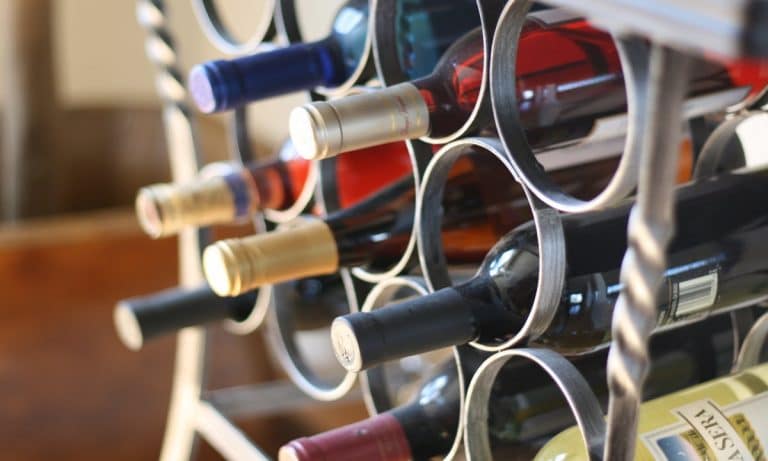
Temperature is the single biggest threat to your wine, and it can be the hardest to control in a small apartment or shared space. A dedicated wine fridge might be a luxury that you either can’t afford or don’t have space for, but it’s the single best solution if you can make it work. Failing that, I recommend a place in your apartment that’s as cool as you can manage, and also that gets some airflow.

In that circumstance, a wine rack can be a better option than wine boxes, which tend to trap hot air. Because hot air rises, the lower to the ground you can stash your wine, the better.

Dark Location

Direct sunlight is also dangerous, not just because it’ll heat the wine, but because it’ll damage it. Thus, a dark location is also critical, especially if you don’t have thick shades or curtains on your windows. If you can’t manage that, at least try to keep the wine bottles themselves covered with an opaque (but lightweight) material.

I’d also strongly encourage you to not store your wine in the kitchen. Appliances put off more heat than you’d expect, and while you might not expect it, kitchen cabinets can get real hot in the summer time.

Consistent Temperature

Another thing to consider is how extreme the temperature swings will be. While raw heat is bad for wine, so too are extreme temperature swings in either direction, so don’t just throw all your bottles in the freezer. A constant temperature is clearly best, but as long as the wine isn’t changing more the 10 or so degrees in an hour, there’s some wiggle room.

Invest In Proper Storage

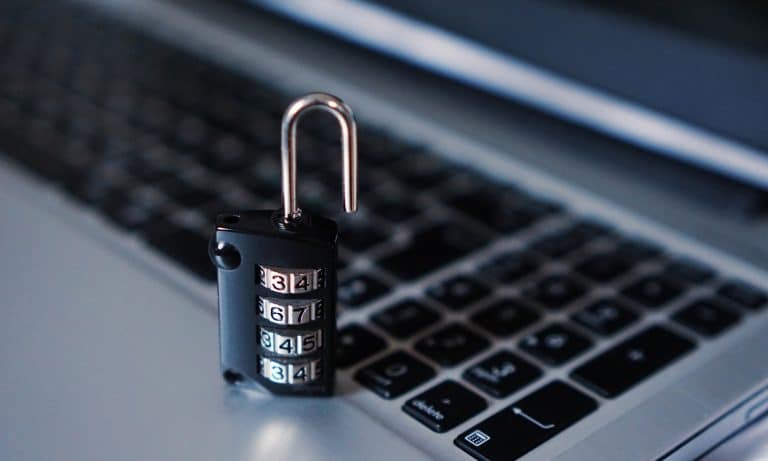
Lastly, it’s worth asking yourself if now might not be the time to invest in a more serious solution. If your wine collection means enough to you that you don’t want to risk it, then spending a bit of money up front on a fridge, or on renting storage space, might be a worthwhile investment. That’s what I ended up doing, and not only did it keep my wine safe from the elements, it also came with a lock, just in case of thirsty roommates.

How Tech Companies Are Losing Executives To Cannabis

Tech wizzes and executives from companies like Amazon and Groupon are leaving their prominent careers — that many have worked hard for all their lives — to join the Green Rush. And they’re making good moves; getting into the cannabis marketplace early on is the best way to invest time, energy and money.

It is estimated that the cannabis industry will be pulling in $75 billion in sales by 2030, which is enormous growth from the current $10 billion dollar market and will be in a relatively short amount of time. Projections are likely to increase when cannabis is legalized federally, and with our neighbors to the north having legalized adult use and with a deflated and failed drug war on our hands, that may not be too far off.

The cannabis startups that are attracting players from the likes of Microsoft, Lyft and Apple are the ones that have set themselves up to be major players in the unfolding landscape. Though cannabis may be entering a more corporate than hippie driven era, it’s still the Wild West in a lot of ways, and smart entrepreneurs are shooting from the hip.

Take Natasha Pecor for example. She spent much of her working life in high profile positions at Yelp and then Amazon; now she is the Vice President of the San Francisco startup Eaze and has been for two years. Eaze is a delivery service company for the cannabis sector and is the umbrella company of several different pot products. They also are always looking for ways to give back to the communities that they serve.

Cannabis businesses have a reputation for philanthropy that extends to veterans, low income individuals and the very ill. It’s likely for that reason alone why many smart executives and techies are coming over to the business of cannabis. It could also be that this fresh, newly legitimized industry is appealing on a broad spectrum, from still being a little edgy and cool to cannabis being a medical miracle that’s spanned ages and is coming to fruition once again in the U.S. and across the planet.

Whatever it is, we have built it and they have come. The cannabis world has opened up from insiders, activists, lobbyists and politicians to the world at large: designers, coders, warehouse managers, CEOs and the talented minds of Silicon Valley.

No Workers’ Comp For Widow Because Late Husband Had Weed In His System

A Colorado family is currently being denied half of their late patriarch’s workers’ compensation benefits because legal marijuana was found in his system after he died.

Adam Lee worked as an electrician at the Loveland Ski Area ski and snowboarding resort. Unfortunately, in December of 2017, in the course of his duties, Lee was fatally crushed under a ski escalator conveyor belt, called, The Magic Carpet, while trying to fix an apparent malfunction. After Lee was stuck, which subsequently caused the Magic Carpet  to stop, it was restarted and repeatedly run — seven times in all — with Lee still trapped underneath.

Under 2016 Colorado Revised Statutes’ title eight — Labor and Industry: Workers’ Compensation and Related Provisions, Limitation on payments – use of controlled substances, outlines that workers compensation may be reduced if the use of a controlled substance contributed to the cause of the accident.

Specifically, “Non-medical benefits otherwise payable to an injured worker are reduced fifty percent where the injury results from the presence in the worker’s system, during working hours, of controlled substances, that are not medically prescribed.”

The coroner’s toxicology report stated that Lee had 41 nanograms per milliliter of tetrahydrocannabidiol (THC) in his system; however, it does not specify if the marijuana he consumed was medical or recreational, or if he was high or inebriated while at work, before the tragic accident.

THC usually stays in a user’s system for an average of 30 days (depending on a user’s unique metabolism, and other factors, such as diet and exercise.).

It is reasonable to speculate whether the magic carpet’s original mechanical failure, and it’s repetitive operation while Mr. Lee was tragically trapped underneath it, caused his untimely demise, rather than the THC in his system.

It is unknown at this time if his widow and the mother of his three children, Mrs. Erika Lee, plans to sue the manufacturer of the Magic Carpet or Loveland Ski Area, which operates it.

Meanwhile, Mrs. Lee is devastated. Compounding her grief and loss, her late husband’s workers’ compensation agency, Pinnacol decided to reduce the benefits she is entitled to by half — a loss of income of approximately $800 per month — per title eight.

Mrs. Lee is appealing their decision. An upcoming hearing before an administrative law judge is scheduled.

“I’m scared, and I have no idea how we are going to make it,” Mrs. Lee said during an exclusive interview with Denver’s KMGH-TV. “We don’t know if we will get any money at all, so I’m just looking at right now just how to survive. I am very frustrated with the system.”

Half Of Women Prefer To Spend Time With Their Dog Than Other People

0

It’s hard to define the love we have for our pets. But Purina did their best to put a percentage behind those feelings, specifically pertaining to dogs, with their 2018 Pets and People Survey.

Nearly all of the more than 1,000 dog owners surveyed (95 percent) said they considered their dog as a member of the family.

Other key findings: 62 percent said their dog helps them de-stress after a long day at work, and 55 percent believe their dog provides emotional comfort after receiving bad news.

https://giphy.com/gifs/barkpost-mwJX5dRdsrefu

The survey also found dogs have been the wingman for 15 percent of men who want to pick up chicks, while half of women surveyed said they preferred time with their dog over time with their partner…or any other family member, for that matter.

Among Millennials age 18 to 34 years old, more than half (56 percent) said they have purchased birthday cakes for their dogs, and 77 percent said they feed their dogs before they feed themselves.

https://giphy.com/gifs/butterball-SKyGFL5E9YiSQ

Who’s a good boy?

This Roomba Knockoff Can Be Hacked Into A Home Security Device

There’s this paranoia that surrounds in-home smart appliances, but most of the time these fears have no basis in reality. While those who hate technology may say, “I told you so” every time an Alexa laughs without a prompt, most people don’t care about these things, placing more value in the positive things that the device provides. But sometimes these fears have some sort of basis, leading to devices that could seriously violate your privacy.

It was reported that Diqee Camera Robotic Vacuum Cleaner, a Chinese Roomba knock-off, has some serious vulnerabilities that could give hackers the opportunity to turn your vacuum cleaner into an in-home surveillance device. Since the vacuum cleaner comes equipped with wi-fi and an HD 360 camera, the fears of being monitored are very plausible.

According to TechCruch, this vulnerability can give a hacker access to your devices’ camera by having your vacuum cleaner’s MAC address.

“Like any other IoT device, these robot vacuum cleaners could be marshalled into a botnet for DDoS attacks, but that’s not even the worst-case scenario, at least for owners. Since the vacuum has Wi-Fi, a webcam with night vision, and smartphone-controlled navigation, an attacker could secretly spy on the owner and even use the vacuum as a ‘microphone on wheels’ for maximum surveillance potential.” Leigh Anne Galloway, cybersecurity lead at Positive Technologies, tells TechCrunch.

So, you know, be careful with what you purchase. It’s okay to trust technology and to be optimistic for the future, but it’s also important to buy devices from companies you trust, which hopefully have a good track record. And even then, you can never be too sure.

What I Eat: Chris Ballew

For the man who made the phrase “millions of peaches” internationally known, he certainly came around to the idea of eating homegrown and healthy later in life.

Chris Ballew, the singer/songwriter for the band The Presidents of the United States of America, who also fronts his Seattle-based kids rock band, Caspar Babypants, says when he thinks of how he used to eat before gigs on tour in the 90’s, he cringes.

“I ate terribly,” he sighs. “I drank beer a lot, ate white starchy foods – tons of pizza.”

As a result of the unbalanced diet, Ballew says he had physical breakdowns and terrible eczema and that he slept poorly and got sick regularly. “I didn’t put two and two together,” he says, “and no Western doctor did for me either.”

caspar babypants
Photo by Brian Kasnyik

Ballew, who frequents an Emerald City naturopath, has mostly cut out wheat, dairy, eggs and sugar.

“But I still rock a CHEESEBURGER every once in a while! Or a sweaty 7-11 microwave burrito late at night,” he admits when asked about his preferred vice.

The Presidents don’t tour nearly as much as they used to – though they’re known to headline the occasional arena – so Ballew spends much of his time writing, recording and performing his Caspar Babypants songs. And because his audience is filled with families and children, he often plays gigs early in the day. But what does he eat before them?

“My breakfasts are a big deal,” he says. “I love a bowl of cereal with fruit – it’s a good fiber hit, a good energy hit. I’m not too big into the eggy, cheesy complicated breakfasts.”

And it’s clear Ballew has done his research as to why.

“The delivery system for vaccines,” he explains, “includes egg whites. So almost everybody who’s received vaccines is in some degree intolerant to eggs.”

And after the gig?

“I love a ginormous lunch,” he says. “Sometimes I go to the local PCC Co-cop and get an entire chicken and just dive in. I’m all about meat and vegetables and quinoa.”

It doesn’t take Ballew long (or much arm twisting) to admit that if he were to pick one food item that people would change in their diets, it would be America’s over dependence on sugar.

“I think sugar should be criminalized,” he says. “And taxed heavily. Just like tobacco. I think the sugar issue is just about to break like tobacco did in the 70’s – sugar is just killing us, it’s killing us. If I were a more radical person I would firebomb cupcake places.”

Save

Don't Miss Your Weekly Dose of The Fresh Toast.

Stay informed with exclusive news briefs delivered directly to your inbox every Friday.

We respect your privacy. Unsubscribe anytime.