

From Knocking on Front Doors to Wandering Suburbs, Experts Say Urban Growth Is Changing How Alligators and Humans Interact
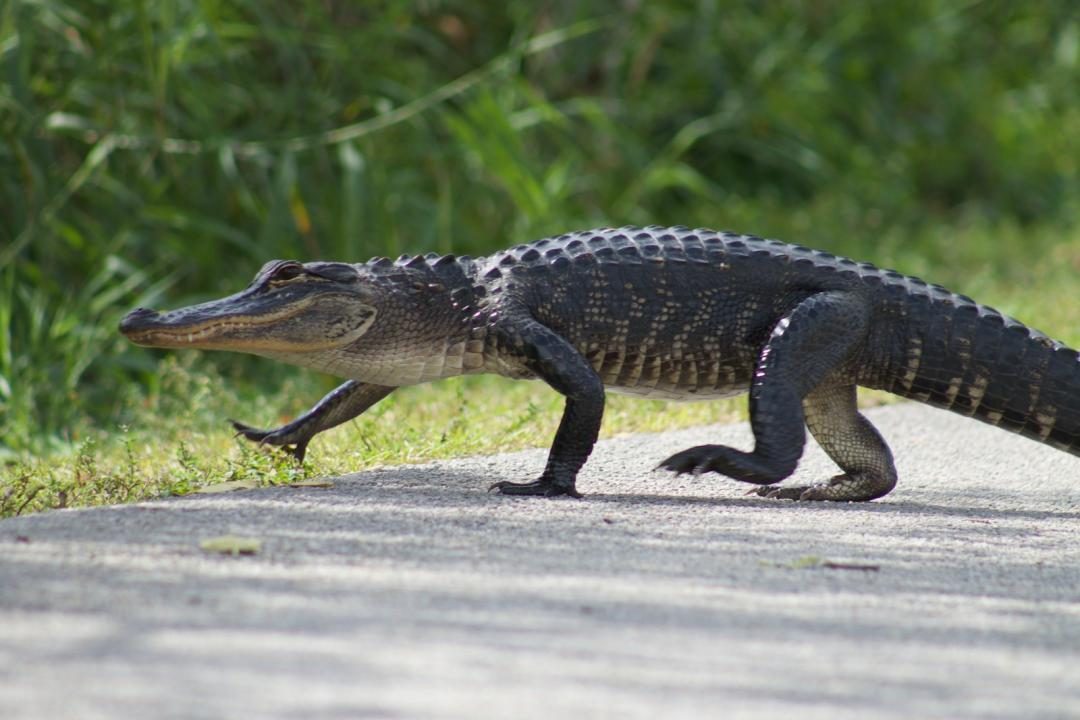
If it seems like alligators are popping up in neighborhoods more often than ever before, you’re not imagining it. Crazy alligator encounters are on the rise. In recent months, social media has been flooded with videos of giant gators lounging on front porches, strolling through suburban streets, appearing at front doors and even startling homeowners who thought they were opening the door for a package delivery.
While some of these encounters have become internet sensations, wildlife experts say the trend reflects a serious reality: as cities expand into wetlands and natural habitats, alligators are becoming increasingly comfortable navigating human neighborhoods.
The latest examples seem almost too bizarre to believe.
RELATED: Can Cannabis Help Relieve Back Pain
Last month, a South Carolina homeowner opened the front door to discover a large alligator “posted up right at the front door,” prompting animal control officers to call state wildlife officials because the reptile was too large to handle alone. Officials joked the alligator had “no intention of following instructions,” but safely relocated it away from homes.
In Texas, one homeowner heading out for an early morning walk mistook a large alligator curled up on the porch for an Amazon package until the screen door bumped into it. Police responded and safely removed the unexpected visitor.
Florida has produced perhaps the strangest stories. Security cameras have captured alligators appearing to “knock” on front doors, while another homeowner found two large alligators battling each other on a back porch during mating season. The footage quickly spread online, reminding residents in parts of the Southeast, wildlife sometimes arrives literally at the doorstep

Unfortunately, not every encounter ends with a funny viral video.
Florida recently experienced three alligator attacks within a single week, including one fatal attack on a 31-year-old woman swimming in the Econlockhatchee River. Wildlife officials emphasize serious attacks remain rare, averaging only about eight unprovoked bites each year in Florida, but they also note mating season and increased human activity around waterways can elevate the risk of dangerous encounters.
So why are alligators showing up in neighborhoods more often?
The biggest reason is simple: people continue building homes where alligators have lived for thousands of years. Across Florida, Georgia, Louisiana, Texas and the Carolinas, residential developments increasingly surround retention ponds, lakes, canals and marshes providing ideal alligator habitat. As wetlands are fragmented by roads and subdivisions, alligators frequently move between ponds in search of food, territory or mates, often crossing streets, golf courses and front lawns along the way.
Another factor is many alligators gradually lose their fear of people. Wildlife agencies repeatedly warn residents never to feed alligators intentionally or accidentally. Once a gator begins associating humans with food, it becomes much more likely to linger near neighborhoods, docks and parks, creating potentially dangerous situations.
Part of what makes these prehistoric reptiles so intimidating is their physical ability.
RELATED: Ukraine Turns to Medical Cannabis to Support Veterans
Despite their bulky appearance, alligators can sprint at speeds of up to 20 to 35 miles per hour for short distances on land—far faster than many people realize. Fortunately, they tire quickly and cannot sustain those bursts over long distances. In the water, however, they are exceptionally agile swimmers, using their powerful tails to accelerate rapidly toward prey.
Their bite is even more impressive. Scientists have measured the American alligator’s bite force at roughly 2,000 pounds per square inch (psi), among the strongest ever recorded in the animal kingdom. Those crushing jaws allow them to crack turtle shells, seize large fish and overpower deer, wild hogs and other prey with astonishing efficiency.
Fortunately, attacks on people remain uncommon. Wildlife experts recommend staying well away from any alligator, keeping pets leashed near freshwater, avoiding swimming at dawn or dusk in areas where gators are present and never feeding them. Even seemingly calm animals can react with incredible speed if startled or protecting territory.
As urban development continues expanding across the Southeast, these encounters are likely to become more common. For many residents, spotting a six-foot alligator crossing the street or lounging beside a neighborhood pond has become almost routine. Still, experts remind the public while the videos may be entertaining, alligators are wild apex predators deserving both respect and plenty of distance.
What was once an occasional wildlife story has become a regular headline, illustrating how America’s growing communities are increasingly sharing space with one of North America’s oldest—and most powerful—survivors.
