

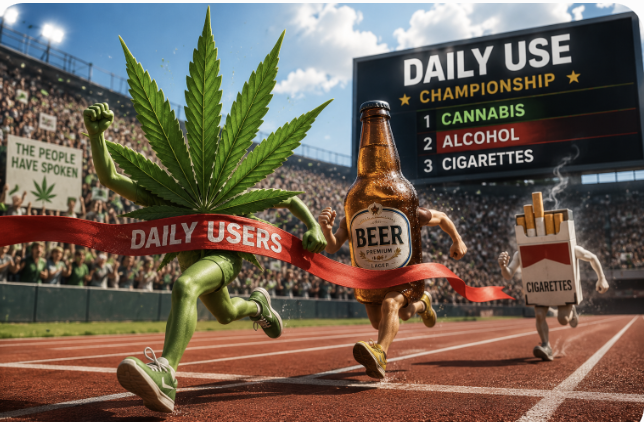
Federal study finds more Americans now use cannabis daily than alcohol or cigarettes, signaling major shifts in healthcare, consumer habits and the economy
For generations, the classic picture of unwinding after a long day was almost cliché—a cigarette on the porch or a drink at the neighborhood bar. Today, the image is changing. Cannabis becomes America’s new daily health habit.
A new federal study from the National Institutes of Health (NIH) found for the first time, more Americans report using cannabis every day or nearly every day than drinking alcohol or smoking cigarettes on a daily basis. It’s a milestone reflecting how dramatically attitudes toward marijuana have shifted over the past two decades, as legalization has expanded and public acceptance has grown.
The finding is about more than changing lifestyles. It could represent a meaningful shift in the nation’s health, healthcare spending and economy.
RELATED: The Great Backyard Revival: Cannabis Is Becoming the New Summer Entertaining Trend
Unlike excessive alcohol use, which contributes to liver disease, several cancers, heart disease and thousands of preventable deaths each year, or cigarette smoking, which remains the leading cause of preventable death in the United States, many adults report using cannabis as an alternative rather than an addition. While cannabis is not risk-free, researchers continue to examine whether replacing heavy drinking or tobacco use with regulated cannabis products could reduce some alcohol- and smoking-related illnesses over the long term.
The possibility has captured the attention of healthcare experts. Fewer alcohol-related emergency room visits, declining rates of smoking-related disease and lower healthcare costs associated with chronic illnesses could become important public health benefits if substitution continues. Researchers caution cannabis carries its own risks—including impaired driving, cannabis use disorder in some individuals and respiratory concerns when smoked—but many believe the overall public health equation deserves continued study.
The answer is increasingly medical as well as recreational.
National research consistently shows anxiety, insomnia and chronic pain rank among the leading reasons adults use cannabis. One large survey found nearly half of medical cannabis users reported using it to help manage anxiety, almost as many cited sleep problems, and more than four in ten reported chronic pain as a primary reason. Other studies continue to identify pain, anxiety and sleep disorders as the three most common conditions driving regular cannabis use.
This helps explain why daily cannabis consumption continues to rise. Someone using marijuana to ease chronic back pain, improve sleep or manage anxiety is far more likely to consume it consistently than someone using it solely for social occasions. For millions of Americans, cannabis has become less like a weekend indulgence and more like part of an evening wellness routine.
RELATED: The Magic of EDM and Cannabis
The economic effects are becoming just as noticeable.
The alcohol industry has already begun adapting to changing consumer preferences. Beer sales have softened in recent years, while cannabis markets continue expanding across legal states. Beverage companies are investing in hemp- and cannabis-infused drinks, recognizing younger consumers increasingly view a low-dose THC beverage or edible as an alternative to a second cocktail.
The tobacco industry faces similar challenges. Cigarette smoking has steadily declined for decades because of education campaigns and growing awareness of its health risks. While many people continue to use both nicotine and cannabis, some consumers report replacing part of their tobacco use with cannabis products, creating another headwind for traditional cigarette manufacturers.
Meanwhile, state governments are benefiting financially. Legal cannabis markets now generate billions of dollars in sales annually and hundreds of millions in tax revenue. Those funds are frequently directed toward schools, infrastructure projects, public health initiatives and substance abuse treatment programs, creating new revenue streams which simply did not exist a generation ago.
RELATED: Is Cannabis And Alcohol Use Bipartisan
Employers have also begun adapting. As cannabis becomes more common among adults, companies continue refining workplace policies balancing employee rights, safety and productivity. Human resources departments, insurers and healthcare providers are all navigating a landscape where cannabis has become increasingly mainstream.
None of this suggests cannabis is harmless or appropriate for everyone. Like alcohol and prescription medications, responsible adult use remains essential. Researchers continue studying its long-term effects, appropriate dosing and potential risks, particularly among adolescents and young adults.
Still, the federal findings mark a remarkable cultural turning point.
Not long ago, daily cannabis use was viewed as a fringe behavior. Today, it has quietly surpassed both daily drinking and cigarette smoking. Whether driven by changing laws, improved access, medical needs or evolving consumer preferences, millions of Americans are redefining what “winding down” looks like.
The evening beer hasn’t disappeared. Neither has the occasional cigarette. But for a growing number of Americans, the new daily ritual is unmistakably greener—and the healthcare system, consumer economy and public conversation are evolving right along with it.
