Friday, December 19, 2025
Home Blog Page 1156

Why Is Canada’s Top Cannabis Manufacturer Doubling Production?

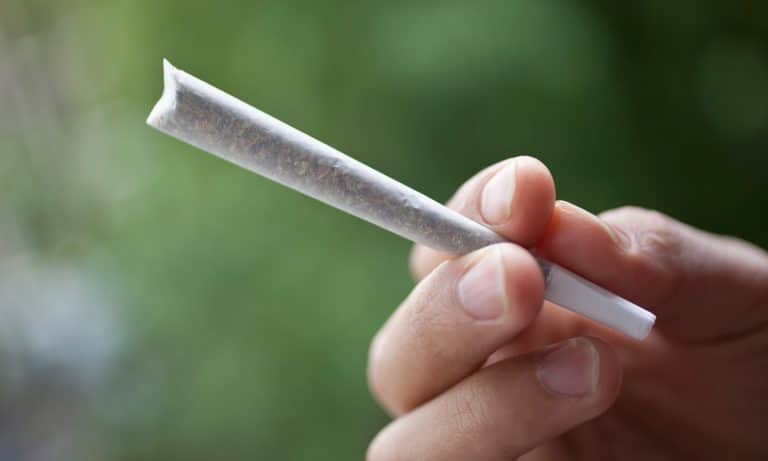
The largest licensed producer of medicinal cannabis in Canada has purchased additional land next to its existing greenhouses to expand to more than double the size in less than a year.

Canopy Growth Corp’s subsidiary, Tweed Farms Inc. expects to lay out around $21 million to do property upgrades. Their farm is a flower farm that was purchased for $9 million. In October, Canopy plans to start building fences and installing security cameras.

The legalization of recreational marijuana usage is set for just under a year from now. This is driving licensed producers to be in a heightened frenzy as they hurry to supply what’s expected to be a significant shortage.

Licensed to produce 31,000 kilograms of cannabis and cannabis related products, Canopy’s aiming to triple that number by July 2018, the deadline set by the federal government to make weed legal across the board.

This new deal gives Canopy 450,000 square feet of greenhouses that can be immediately joined with the existing 350,000 square foot facility. They are also adding another 200,000 square feet worth of additional greenhouses on the existing property.

250,000 square feet alone should be able to annually produce 10,000 kilograms of cannabis. With an average of (C)$8 a gram, that means that the single large greenhouse could pull in (C)$80 million per year.

The company is also expanding its headquarters to a former chocolate factory in Ontario and are creating indoor grow spaces in Alberta, New Brunswick and Saskatchewan.

Out of the approximate 200,000 medical marijuana patients in Canada, Canopy covers around a third of the market; they expect some 3 million Canadians to use legal, non-medicinal pot next year.

On the tourism and export fronts, they are expecting that within three years around half of the cannabis revenue will come from visitors and businesses outside of Canada.

Canopy has been exporting medical cannabis products to German pharmacies for over a year, has a majority stake in a Chilean medical marijuana company seeking final licensing and has a 10 percent stake in an Australian company. It has also partnered with two Brazilian medical marijuana facilities. Federal prohibition has so far kept them away from the US market.

Here’s Why Marijuana Can Have A Huge Impact On Leukemia Patients

Leukemia is the cancer attributed to attacking bone marrow and blood. Most importantly, leukemia attacks white blood cells, which are part of the immune system. A healthy immune system = strong protection against infections.

To be clear, Leukemia is an umbrella term for a wide variety of diseases. It can be chronic or acute and can be classified by its rate of progression or by the type of wbc’s that are impacted. The body’s own cannabinoid system, the endocannabinoid system has already proven to be receptive to forms of cannabis since the body carries it’s own cannabinoid receptors. And, it just so happens that these receptors are also found on white blood cells, which is positive news for leukemia patients, according to researchers.

A study from a research team in Virginia, published in 2002, revealed that THC and other cannabinoids have the “potent” ability to induce apoptosis in numerous human leukemia and lymphoma cells. That is, these compounds are capable of Programmed Cell Death (PCD) or in layman’s terms: cell suicide. The study also showed that THC has the ability to change the expression of the genes involved in the mitogen-activated protein kinase (MAPK), which is the pathway that leads to the uncontrolled growth in cancer. THC’s ability to manipulate this gene explains the cell suicide.

Another study from researchers in 2005 showed that THC has the power to evoke noticeable effects in six hours after its administered. In 360 minutes, the anticancer agents of THC had already begun to kick in. Also, in the three leukemia cell lines that were studied and tested, researchers revealed that cell suicide appeared in all three: 100 percent effective.


Ruby Is A New Type Of Chocolate

0

It’s been 80 years since the last naturally-hued chocolate was introduced (white). Now, Ruby is a new type of chocolate now and people are curious

Chocolate production company Barry Callebaut has revealed the “don’t call it pink” chocolate as the newest  variety to join milk, dark, and white:

The fourth type in chocolate offers a totally new taste experience, which is not bitter, milky or sweet, but a tension between berry-fruitiness and luscious smoothness. To create Ruby chocolate no berries or berry flavor, nor color, is added.

The color comes from the ruby cacao bean which is unique because “the fresh berry-fruitiness and color precursors are naturally present. The cocoa beans are sourced from different regions of the world.”

Okay, we won’t call it the “P word”, but you know, this ruby chocolate has coincidentally debuted at a time when “Millennial pink” is being splashed all over everything, from gin to iPhones.

https://www.instagram.com/p/BYqfcjJBulm

And in a phone interview with Bloomberg, Barry Callebaut CEO Antoine de Saint-Affrique said of the “not Millennial pink” chocolate: “It’s natural, it’s colorful, it’s hedonistic, there’s an indulgence aspect to it, but it keeps the authenticity of chocolate. It has a nice balance that speaks a lot to millennials.”

Sure, Jan.

Barry Callebaut’s ruby chocolate was revealed at an exclusive launch event in China on Tuesday.

Whoopi Goldberg Has A Message For Jeff Sessions About Cannabis

Another day and another notable figure announces themselves as a new combatant in the cannabis industry’s fight against Attorney General Jeff Sessions. Today it’s Whoopi Goldberg who recently asked her fellow citizens to squash Sessions’ efforts to end the country’s medical marijuana programs.

“I’m writing to you with an urgent request: that you join me in telling Congress to protect lawful medical marijuana patients and programs from Attorney General Jeff Sessions,” Goldberg wrote in a NORML blog post.

U.S. Representative Dana Rohrabacher introduced protect states’ right to maintain medical marijuana programs. The proposal, called “Respect State Marijuana Laws Act of 2017,” would create a wall between the state and federal levels and would provide immunity for businesses operating according to state laws.

Goldberg explained that since 2014 that spending bills have “included a provision protecting those who engage in the state-sanctioned use and dispensing of medical cannabis from undue prosecution by the Department of Justice.”

“The amendment, known as Rohrabacher-Blumenauer, maintains that federal funds cannot be used to prevent states from ‘implementing their own state laws that authorize the use, distribution, possession or cultivation of medical marijuana,’ ” Goldberg continued.

Goldberg of course founded the cannabis line Whoopi & Maya, aimed specifically at women’s needs in the marijuana industry. As she explained in the post, “I started my company Whoopi and Maya so that women suffering from debilitating menstrual pain could find relief from a safe, natural product rather than turning to potentially addictive and dangerous pharmaceutical drugs.”

If interested, learn more about the amendment here and you can write a letter to Congress here.

Cleveland Browns’ T.Y. McGill Charged With Marijuana Possession

According to reports, Cleveland Browns defensive tackle T.Y. McGill was charged with marijuana possession last weekend. He received a misdemeanor charge from North Carolina law enforcement. His court date is scheduled for Oct. 24.

As the Charlotte Observer first reported, an Alcohol Law Enforcement agent spotted McGill in a hotel valet area with what he described as “a small amount” of marijuana. Though McGill initially denied it was cannabis, he soon became cooperative.

McGill was just claimed by the Browns last Sunday after he was dropped Saturday by the Indianapolis Colts, the team where he spent his first two years in the NFL. McGill attended NC State and was in Charlotte for the team’s kickoff game against South Carolina. NC State lost the game 35-28.

Now McGill is subject to further punishment and scrutiny from the NFL itself, which has been strict in reprimanding players’ marijuana usage.

“We are aware of the citation and have spoken to TY directly. Those conversations will remain internal,” a Cleveland spokesman wrote in an email to the Observer.

Man Crushed To Death While Attempting A Selfie With Elephant

0

Ashok Bharti had been trying to take the perfect selfie with an elephant in India when the animal turned on him and killed him. Forest officials from Odisha’s Sundargarh county claimed that the elephant had been agitated before.

“We were trying to drive away the tusker [elephant] with the help of local people. But suddenly a person present there among locals, went nearer to the tusker and tried to take a photograph of the elephant on his mobile phone. He was also trying to take a selfie with the elephant when it turned on him.”

These news fit with a current trend in India where people put themselves in danger over the perfect selfie, making it the number-one country where people have died because of this reason. Since 2014, 49 people have died over selfies, with 19 of these deaths taking place in India. The trend has become so pervasive that Mumbai and other cities have declared several areas as no selfie zones. These places are areas where authorities believe tourists and residents might be at risk, like coastlines, or places near cliffs that have no handrails and barriers.

Ashok Bharti was taken to Roukerla Hospital by forest officials and locals after being attacked by the elephant, where he was shortly pronounced dead by doctors. Forest JK Mohanty will compensate Bharti’s family due to the incident.

Why Does Marijuana Give Me The Munchies? Here’s The Science

0

Ask anybody — from a hardcore chronic cannabis consumer to a ardent abstainer of the herb — to name one of the main side effects of marijuana and you’ll usually get the same answer. Munchies.

And it’s true. Cannabis promotes appetite. That powerful urge to eat is actually the herb doing its job.

For those who have battled through chemotherapy and lose their appetite have found cannabis to be the only medicine that helps. Same with patients suffering from wasting syndrome, AIDS and other ailments in which your body’s desire for nutrients is low of non-existent.

For some recreational consumers not fighting a disease, there is the tendency to binge eat resulting in undesired added pounds.

For years, scientists struggled to understand the physiology of how THC, the active psychoactive ingredient in cannabis, stimulated appetite.

According to a 2015 Yale study, what is basically happening is this: Neurons in the brain that are normally involved in suppressing appetite were being tricked by THC. Lead author Tamas Horvath of the study explains it this way:

“It’s like pressing a car’s brakes and accelerating instead. We were surprised to find that the neurons we thought were responsible for shutting down eating, were suddenly being activated and promoting hunger, even when you are full. It fools the brain’s central feeding system.”

The research from Horvath and his team is interesting because it may help explain what compels some people to overeat even when they are not hungry.

“By observing how the appetite center of the brain responds to marijuana,” Horvath explains, “we were able to see what drives the hunger brought about by cannabis and how that same mechanism that normally turns off feeding becomes a driver of eating,” said Horvath.

Researchers have known for decades that using cannabis increases appetite even when you are fully sated. It is established science that activating the cannabinoid receptor 1 contributes to overeating. Nerve cells called pro-opiomelanocortin (POMC) neurons have been found to be key drivers of reducing eating when full.

These neurons are found in the hypothalamus, the part of the brain that associated with base instincts like sexual arousal and feeding. Horvath theorizes that the POMC neurons normally work by sending out a chemical signal telling the brain, you’re sated, stop eating. But cannabis interrupts the natural course of action.

In 2014, a team of European researchers also investigated the munchies mystery. The study, conducted on labratory mice, found that cannabinoids activated the brain’s olfactory center, making mice more sensitive to smells. Other earlier research suggests cannabinoids were spiking dopamine levels in the brain that stimulated appetite.

So will if this is the case, why aren’t all cannabis consumers obese?

While marijuana generally promote appetite, the cannabinoid receptors in your brain eventually become desensitized or trained. At least that is what one Harvard study indicated.

“The most important finding is that current users of marijuana appeared to have better carbohydrate metabolism than nonusers,” says Murray Mittleman, an associate professor of medicine at Harvard Medical School and the author of the study. “Their fasting insulin levels were lower, and they appeared to be less resistant to the insulin produced by their body to maintain a normal blood-sugar level.”

The War On Drugs Is Holding Science Back From Helping Patients

Alcoholism is a relentless condition—90 percent of patients suffer a relapse within three years. But Dr. Ben Sessa believes he’s identified a substance that could help improve these outcomes. There’s just one problem: war on drugs makes it exceedingly difficult for him to conduct research into the treatment.

That’s because the substance is MDMA, a Schedule 1 controlled substance, which is classified in both the United Kingdom and the United States as “having no medical benefits” and is thus so strictly regulated that it is almost impossible for clinical researchers to study.

Even though Dr. Sessa is a renowned clinical psychiatrist with 20 years of experience and the backing of a respected university, it’s taken him six years to get the study off the ground. The special license required to work with controlled substances cost him nearly $40,000 and took two years to acquire. The requisite lab security equipment and law enforcement monitoring cost another $50,000.

His team also had to apply for a range of regulatory approvals, ethics review boards, pharmacy permissions, and legal and medical licenses. These hurdles increased the cost of Dr. Sessa’s research by a factor of 10. Last month, he finally announced the commencement of his study, which will continue to be subject to scrutiny by officials overseeing the implementation of drug control policy.

Dr. Sessa’s experience may sound like a tall tale of irrational and inefficient regulation, but his story is all too real—and far from unique. For 50 years, and in the name of the war on drugs, policymakers have prioritized law enforcement over medical research. The result? A war on drugs that is still raging, and half a century of suppression of scientific research and discovery.

Although this incursion on people’s right to enjoy the benefits of scientific progress is one of the lesser-known costs of the war on drugs, its consequences are both severe and long-lasting. By labeling MDMA, among other substances, as Schedule 1, governments have created a huge barrier to scientific research, depriving the world of possible breakthroughs in health and knowledge. Reform is badly needed.

Take cannabis, for example. Despite the nearly 4,000 years of history during which cannabis was used for medical purposes—and despite the fact it is currently used for medicinal purposes in 29 states as well as the District of Columbia—in the United States today, cannabis, too, is a Schedule 1 controlled substance. Any U.S. researcher who wishes to further society’s understanding of cannabis is thus faced with a dispiriting gauntlet of regulations.

It doesn’t have to be this way. Not so long ago, MDMA was utilized in psychotherapy to facilitate communication. (While the substance is popularly known today as “ecstasy,” researchers back then called it “empathy.”) LSD, too, was once used to treat an array of health issues—from alcoholism to cluster headaches—and was studied in over a thousand clinical papers in the 1950s and ’60s.

However, since the UN Drug Control Conventions of 1961, 1971, and 1988 imposed severe restrictions on even the medical and scientific handling of certain substances, research into their medical value has all but disappeared. Right now, in countries around the world, researchers in this field are confronting Kafkaesque bureaucracies that are delaying and disrupting their work.

Countering the oppressive impact of drug policy on science will require a long-term commitment to serious and expansive reform. But there are things policymakers can do as interim steps.

National governments could reclassify substances such as MDMA, cannabis, and LSD to less restrictive schedules, which would put them under more feasible regulatory control and open up options for scientific research—while still being in compliance with the abovementioned conventions. Governments and policymakers could also lift the outrageous licensing fees charged to scientists for research into controlled substances, and could simplify and expedite licensing approvals for academic research into controlled substances.

Ultimately, though, policymakers on both the national and international levels need to take a hard look at the way the war on drugs is holding the world’s researchers to ransom. We’ve already let more than 50 years’ worth of research slip through our fingers; enough is enough.

This piece was originally published by the Open Society Foundations. The original may be viewed here.

Washington Study: Legalized Marijuana Didn’t Increase Youth Usage

The kids, as they say, are quite alright in Washington state. Any preceding worry that legalizing recreational cannabis would drive increased usage appear misguided, according to a new study from the Washington state legislature’s think tank.

As the Seattle Times first reported, youth marijuana use and cannabis-abuse treatment admission have not risen in the state since implementing cannabis laws three years ago. Under stipulations from Initative-502, the state’s marijuana law, the Washington State Institute for Public Policy (WSIPP) must periodically administer cost-benefit analyses regarding the legalization of cannabis. This can run anywhere from prenatal usage to driving while high.

“In these initial investigations, we found no evidence that I-502 enactment, on the whole, affected cannabis abuse treatment admissions,” the study states. “Further, within Washington State, we found no evidence that the amount of legal cannabis sales affected cannabis abuse treatment admissions.

“We found no evidence of effects of the amount of legal cannabis sales on indicators of youth cannabis use in grades 8, 10, and 12,” the study also states.

The study comes following Attorney General Jeff Sessions condemnation of Washington’s cannabis law, a statement that was later criticized by Governor Jay Inslee and State Attorney General Bob Ferguson. Inslee and Ferguson emphasized that they’d like to meet with Sessions to better explain how the state’s laws and systems work with regards to cannabis.

However, the study did report that those living in Washington counties with increased levels of legal sales were considered more likely to consume marijuana. They also were more likely to consume cannabis more frequently, as based on state telephone surveys.

But as Adam Darnell, the lead researcher and author of the study, told the Seattle Times, “It’s not earth-shattering that people were using more of a product they’re buying more of.”

9 Gushing Celebrity Moms Share Their Kids’ Back To School Pics

Doesn’t matter how old your kid is, if you’re the parent, you are beyond thrilled that they are heading back to school. Perhaps they are entering kindergarten, mixing it up in the classroom for the first time. Or maybe you’re just sick of them being in the house all summer and those tears you’re shedding are ones of relief.

The start of a new school year levels the playing field for all moms, famous or not — it’s a time when we grab our cameras and take as many snaps as we can before the kids realize it’s super uncool. Here are 9 celebrity moms who dote on their offspring  just like everyone else.

Jessica Simpson

Daughter: Maxwell

https://www.instagram.com/p/BYeCBHugRTZ

Kelly Ripa

Son: Joaquin

https://www.instagram.com/p/BYqLr20jvZ_

Jennie Garth

Daughters: Lola and Fiona.

https://www.instagram.com/p/BYeT2EDBTyc

Jessica Alba

Daughters: Haven and Honor

https://www.instagram.com/p/BYWzU4oBjSF

Busy Philipps

Daughter: Birdie

https://www.instagram.com/p/BYgPNzIhDL1

Jamie Lynn Spears

Daughter: Maddie

https://www.instagram.com/p/BXlDvNsD6hB

Rebecca Romijn

Daughters: Dolly and Charlie

https://www.instagram.com/p/BYJArLkHRhP

Victoria Beckham

Son: Brooklyn

https://www.instagram.com/p/BX8mJo0Fnkq

Katherine Heigl

Daughter: Nancy

https://www.instagram.com/p/BYOIMJ_DOpr


Don't Miss Your Weekly Dose of The Fresh Toast.

Stay informed with exclusive news briefs delivered directly to your inbox every Friday.

We respect your privacy. Unsubscribe anytime.