Monday, April 27, 2026
Home Blog Page 144

Congress Smacks Russia About Marijuana

In a rare bipartisan act, Congress smacks Russia over marijuana prisoners, now if they could be this united here at home


Nothing brings people together than a common enemy. Congress, which delights in fighting among themselves has united in issuing another message to Russia. Now if they can bring the same support back home for SAFE Banking and rescheduling. Want to see unified, now Congress smacks Russia about marijuana and everyone is happy.

Russia has been a thorn for decades but with the recent invasion of Ukraine, they have been at the forefront of foreign policy.  From threats of withholding energy to veiled insinuations of nuclear attacks, Putin has been rattling the global stage.

Like their frenemy China, Russia has a conservative view of marijuana. Possession of up to 6 grams (or two grams of hashish) is an administrative offense, punishable by a fine or detention of 15 days. Possession of larger amounts is a criminal offense and being an important US, UK, or EU citizen caught bring additional complications.

Russia has become isolated in part of the world and is seeking allies in their war. Moscow has wrote off the debts of African states worth more than $20 billion. Many who also have very conservative views of marijuana.

Russia is also the home of vodka with the regular citizen taking 17 shots of vodka per month, the highest in the world. So, the population of the country does like forgetting its troubles and enjoying a little chill time.


Congress Approves CBD Use For Military Members
Photo by uschools/Getty Images

RELATED: What’s The Largest Country In The World’s Take on Marijuana?

The U.S. House unanimously passed a resolution calling for the release of Americans wrongfully detained in Russia and expressing support for those imprisoned like Marc Fogel.

The resolution, from Representative Michael McCaul (R-TX), calls for the immediate release of Wall Street Journal reporter Evan Gershkovich and BorgWarner executive Paul Whelan. It also expresses support for people like Marc Fogel and sympathy for and solidarity with the families of citizens wrongfully detained.

Now if Congress would just look inward toward federal marijuana laws in the United States. Currently there are two key issues facing Congress and the White House. First is the bi-partisan Secure and Fair Enforcement (SAFE) Banking Act, which the cannabis industry sees as a financial necessity. The bill was introduced by Senator Jeff Merkley (D-OR), Senator Steve Daines (R-MT), Representative Dave Joyce (R-OH), and Representative Earl Blumenauer (D-OR). Senators Chuck Schumer (D-NY) and Cory Booker (D-NJ) have strongly expressed support and in Congress and Nancy Mace (R-SC) has championed the bill in the past.


burnout is now an official medical condition
Photo via rawpixel.com

Rescheduling marijuana has been something this administration has committed to doing but so far has not made a major move.  Showing the grassroots bipartisan support, GOP Representative Greg Steube (R-FL) introduced a bill to push the democratic White House and Biden forward.

RELATED: The Science Behind Marijuana And Gaming Performance

The American Medical Association and other global science and health organizations recognize the value and data of cannabis as a medical health and agree on it as a less dangerous recreational activity than alcohol or cigarettes.  Congress’s move toward Russia is to be applauded while the industry waits for quicker, positive stuffs on US soil

Marijuana And Memory

Everyone has issues with their memory – but does marijuana make it worse?


Everyone forgets things. Where are your keys, the name of a former teacher, an appointment, it is just a fact of life.  But when does it become an issue and does marijuana play a part?

Memory and other thinking problems have many possible causes, including depression, an infection, or medication side effects. Sometimes, the problem can be treated, and cognition improves. Other times, the problem is a brain disorder, such as Alzheimer’s disease, which cannot be reversed.

As we age, it’s normal to forget things once in a while, but memory problems make it hard to do everyday things like driving, using the phone, and finding your way home. Forgetfulness can arise from stress, depression, lack of sleep or thyroid problems. Other causes include side effects from certain medicines, an unhealthy diet or not having enough fluids in your body (dehydration). Taking care of these underlying causes may help resolve your memory problems.

brown wooden blocks on white surface

It is clear alcohol causes memory issues, but what about marijuana?  The imagine of a regular user of cannabis is laid back, forgetful and chill….is it a stereotype or is there fact behind the image?

There’s no question marijuana can produce short-term problems with thinking, working memory, executive function, and psychomotor function (physical actions that require conscious thought, such as driving a car or playing a musical instrument). This is because marijuana’s main psychoactive chemical, THC, causes its effect by attaching to receptors in brain regions that are vital for memory formation, including the hippocampus, amygdala, and cerebral cortex. THC is what gets you “high”.

Memory impairment from marijuana use occurs because THC alters how the hippocampus, a brain area responsible for memory formation, processes information. Chronic THC exposure may hasten age-related loss of hippocampal neurons. Most research has been animal focused and more needs to be done for researchers and scientists to have a clear picture.

RELATED: Dementia and Marijuana

Long-term cannabis consumer may develop brain fog, lowered motivation, difficulty with learning, attention span difficulties. Symptoms are typically reversible, though using products with higher THC content may increase risk of developing cognitive symptoms.

Alcohol primarily disrupts the ability to form new long–term memories; it causes less disruption of recall of previously established long–term memories or of the ability to keep new information active in short–term memory for a few seconds or more. Alcohol can also cause a blackout resulting in a temporary lost of memory.

Can Marijuana Help Regrow Human Brain Cells?
Photos: GDJ via Pixabay; herbalhemp via Pixabay

There is an alcohol-related ‘dementia‘ (ARBD). If a person has alcohol-related dementia they will struggle with day-to-day tasks due to brain damage caused by heavy, regular over many years.

RELATED: Why Gen Z Is Putting Down The Beer And Picking Up Marijuana

Research indicates brain receptors called cannabinoid 1 receptors begin returning to normal after 2 days without cannabis, and regain normal functioning within 4 weeks of stopping the drug.

If you have something major you need to engage 100% on, slow up on consuming so you can be at the top of your game.

Medical Marijuana Supports Veterans


When the American Revolution broke out in 1775, the colonists weren’t fighting under a single flag. Most regiments participating in the war for independence fought under their own flags. In June of 1775, the Second Continental Congress met in Philadelphia to create the Continental Army, a unified fighting force, with the hopes of a more organized war against its the British. This led to the creation of what was, essentially, the first “American” flag, the Continental Colors. Another color key for the country is green since medical marijuana supports veterans.

The VA says sources vary on the first Flag Day observances, with Hartford, Connecticut, claiming the earliest in 1861. National recognition of Flag Day came later, with President Woodrow Wilson issuing the first presidential proclamation establishing a national Flag Day in 1916. The holiday wasn’t signed into law until 1949, when Congress approved legislation designating June 14 of each year as Flag Day.

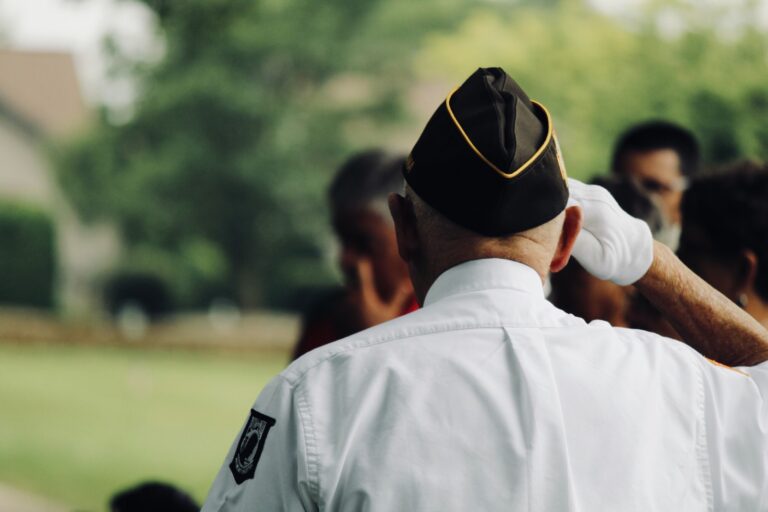
You can’t look at flag day without thanking all the military since the Revolution including Vietnam, Iraq and other battles/wars.  The acceptance of medical marijuana has been a benefit for our soldiers to help them with the scars of battle.


grayscale photo of man in black jacket and pants holding rifle


RELATED: Science Says Medical Marijuana Improves Quality Of Life

Marijuana supports the military in at least two major ways, PTSD and pain management. At some point, 7 out of every 100 Veterans (or 7%) will have PTSD. Currently, Veteran Administration (VA) doctors cannot provide or recommend medical marijuana for veterans as the federal status for cannabis remains a Schedule 1 substance, making the drug illegal in the federal government’s eyes. Because of this, veterans should never bring any type of marijuana into a VA facility, even when provided through a state-sanctioned medical marijuana program.

However, veterans participating in a state-sanctioned medical marijuana program will not be denied VA benefits, according to the Department of Veterans Affairs. VA providers are able to discuss cannabis use with veteran patients and adjust care and treatment plans as needed. Veterans are encouraged to discuss medical marijuana use with their VA providers as part of their confidential medical record.

The VA will not pay for medical marijuana prescriptions from any source, nor will VA providers complete paperwork or forms required for a veteran to participate in a state-approved medical marijuana program.

man in black crew neck t-shirt wearing white goggles

A study adds more evidence to the theory that THC has a positive effect on Post-traumatic stress disorder (PTSD). Published in the journal Neuropharmacology and conducted by researchers from Wayne State University, the study found that the combination of a specific type of therapy and moderate amounts of THC were particularly beneficial for people with PTSD.

Being a soldier is tough work in some difficult environments.  Their bodies take a beating and as time goes by, it can lead to pain. Cannabinoids have shown significant promise in basic experiments on pain. Peripheral nerves that detect pain sensations contain abundant receptors for cannabinoids, and cannabinoids appear to block peripheral nerve pain. Even more encouraging, basic studies suggest that opiates and cannabinoids suppress pain through different mechanisms. If that is the case, marijuana-based medicines could perhaps be combined with opiates to boost their pain-relieving power while limiting their side effects.

RELATED: Dementia and Marijuana

Today and every day is an opportunity to thank veterans for what they do for the country.

Taiwan And China Share At Least On Thing – Bad Marijuana Policy

Things are getting increasing tense between China and Taiwan. China believes Taiwan is a breakaway from the country and insists united with the mainland. The citizens of Taiwan can see the their adversary from Kinmen Island (roughly 200 miles from the capital Taipei). Kinmen is only 6 miles away from China. Taiwan believes in its independence and it is a sovereign country.  Under the previous US administration, China began making bolder moves to encourage Taiwan to “return to the fold”.  Taiwan has strongly resisted and is working to rally allies to their cause. Taiwan’s economy is driven by a heathy manufacturing sector including electronics, machinery, petrochemicals, and information and communications technology products. Taiwan produces over 60% of the world’s semiconductors and over 90% of the most advanced ones. All critical to the world’s computing.

While they battle, China and Taiwan share things in common, including bad marijuana policy.

group of people on china town

China’s penalties for being caught with cannabis are severe. Offenders run the risk of receiving the death penalty for being in possession of just five kilograms or more. Additionally, strict sentences are imposed; anything from five years imprisonment to a life sentence. The government identified marijuana as a dangerous narcotic drug, and illegal to possess or use it. However, the cultivation of cannabis for industrial purposes (hemp) has never been prohibited in China. Medical marijuana been around for about two thousand years using the cannabis seed. Today the seeds are primarily used for a laxative. The country has a population of 1.4+ billion and in 2017, the most recent source, states they have 24,000 citizens who consume. China tightly controls information with their own versions of Amazon (Alibaba), Google (Baidu) and Facebook (WeChat) which are highly censored.

In Taiwan under the Narcotics Hazard Prevention Act, those found guilty of using marijuana face a maximum penalty of three years in prison. Possession with intention to sell carries a minimum sentence of five years with a fine of up to $164,000 USD. Today, only four types of medicine containing THC are permitted for patient use and are tightly controls.  Taiwan’s population is 23.5 million with under 250,000 who consume.  These are mostly young people who receive their information from global social media. This helps them avoid the government messaging on the ills of marijuana as they have access to global social media.

RELATED: TSA And Cannabis: What You Need To Know


marijuana leaf
Photo by Anton Petrus/Getty Images

According to observational data published in the Journal of the American Medical Association (JAMA) Network Open, patients suffering from pain, cancer, anxiety, and insomnia report significant, sustained improvements in their health-related quality of life following the use of medical marijuana. Medical marijuana is legal in 40 states and recreationally in 23 since it has science and data to verify the use.

Europe’s take on medical marijuana is with no unique list of pathologies that can be treated with cannabis-based drugs, they see it as not a cure, but rather a palliative treatment.  Medical marijuana is legal in large parts of Europe, but recreational is just becoming popular.

RELATED: Understanding The Importance Of Marijuana Studies And Outcomes

China and Taiwan’s conservative culture toward marijuana is startling since Eastern Medicine uses a more holistic approach incorporating plants and other aspects toward health.

Perhaps their shared animosity toward marijuana could be a starting point for discussions of common ground and finding more benefits for both sets of citizens.

Which is Better For You, Technology or Marijuana?

So – alcohol, cigarettes, technology and marijuana are all in a poll…


Cigar smoking is thought to have started with the Mayans. Cigarettes, or mini cigars, grew out of the cigar form. The term ‘cigarette’ was invented in France in 1830, and boy, did it catch fire.  From the 1950s to the early 80s, cigerettes were the most popular and tobacco companies were trusted.  Since then, well, use has dropped but profits are still up. In fact, while smoking as somewhat fallen out of favor, the world’s six largest cigarette manufacturers made profits (before income taxes) of more than $55 billion USD.

The American Psychiatric Organization (APA) is trying to figure out what people think to help them with their addictions.  People were asked their opinions on cigarettes, marijuana, alcohol, technology and more.

The Effects Of Smoking Low-THC, High-CBD Cannabis
Photo by OpenClipart-Vectors via Pixabay

“It is clear that we have gotten the message through that cigarettes are dangerous and addictive,” said APA President Petros Levounis, M.D., M.A. “We can help prevent more Americans from other potentially addictive behaviors, like drinking alcohol and technology use. We can also make sure that people know about our current safe and effective treatments for both substance use disorders and the behavioral addictions. Addiction treatment works.”

In the poll marijuana is viewed as less addictive and more safe.  As cannabis is becoming legal in more areas and benefits of medical marijuana are being accepted by the health community, the public is “chilling out” about marijuana. Another fascinating reveal of the data is on a daily basis, more people use marijuana (13%) than alcohol (7%).

Opioids are used daily by 4% and are viewed as dangerous as cigarettes and alcohol. Fentanyl is a potent synthetic opioid drug approved by the FDA, but black market versions  hit the streets in force. Fentanyl use has sprung up in small towns and big cities.  Downtowns including San Francisco and Seattle are collapsing with wide spread opioid abuse causing havoc in the streets and neighborhoods.  Seattle City Council, with help from the Mayor’s office voted 5-4 to rejected making it hard drugs illegal.

A big surprise of the survey is how poorly technology faired.  Tech was viewed as somewhat safe but definitely addictive (75%). The APA has to figure out a new way to combat the new since it has caused mental health issues, especially for school age kids. iPhones, social media and streaming continuing to draw in eyes and brains.

RELATED: Science Says Medical Marijuana Improves Quality Of Life


RELATED: Why Gen Z Is Putting Down The Beer And Picking Up Marijuana

The APA is launching a public awareness initiative on addiction and substance use disorders that will last throughout the year, beginning this month with vaping, focusing on opioids later in the summer, alcohol in the winter, and technology next spring.

Can You Be Allergic To Marijuana?

Allergies can be all year round and 24/7 making them difficult to fully enjoy your day.  There are normal allergies like pollen, strawberries, dust mites, peanuts, animal fur and bee and wasp stings.  Then there are wacky allergies like water, coins, sunlight, and sweat. But can you be allergic to marijuana?

Some people have an alcohol allergy or intolerance.  Alcohol allergy is more rare and more severe, but intolerance isn’t a barrel of fun.  Globally we spend over $40 billion a year to treat allergies in one way or another.

With more and more people using cannabis recreationally or medically, it is natural allergies would pop up.  With 45+ million consuming in Canadian and the US, you are going to a number who find it has an unfortunate side effect.

a man holding his hand up in front of his face

RELATED: Science Says Medical Marijuana Improves Quality Of Life

Allergy to marijuana is considered rare, but a reports of allergies to marijuana have been documented. It’s estimated perhaps up to 10% of people may have an allergy or a reaction to marijuana or THC. The number may increase as the plant legalization and use grows.

How do know if you are allergic to marijuana?  Common sense to start with, if you consume and you have an onset of reactions, it is a major clue. The best way to diagnose an allergy is to perform a challenge in a safe setting with a trusted doctor.

Symptoms from a cannabis allergy may include

  • Asthma symptoms such as wheezing
  • Hives
  • Skin rash
  • Swelling/watering/itching eyes
  • Sore throat
  • Shortness of breath
  • Nasal symptoms such as sneezing
  • Anaphylaxis in rare cases

Symptoms of a marijuana allergy can range from mild to severe. Most marijuana allergy symptoms occur immediately in adults; less frequently, they can be delayed for hours. Adults with a marijuana allergy usually show symptoms within hours or days after first being exposed to cannabis. While it is rare, it is possible to experience anaphylaxis after exposure to marijuana. It’s important to recognize your symptoms and seek medical attention immediately if you suspect a severe allergic reaction.

medical marijuana
Photo by Visivasnc/Getty Images

If you think that you have developed an allergy to marijuana, the best thing to do is avoid it. This means no longer smoking weed or consuming edibles, as well as refraining from touching it and having any secondhand exposure to it.

RELATED: Nauseous? Marijuana Might Provide Immediate Relief

This isn’t currently a clinical treatment for marijuana. Marijuana allergy is not curable however, some individuals grow out of it throughout adulthood. Symptoms may become less severe over time.

The Imagine Of Today’s Marijuana User Is Not What You Think

Think you know the answers – well….

The 70’s show was popular enough to have a new spin off called the 90s show on Netflix.  The antics of the kids usually involved either sex, marijuana and goofy drama.  But it also showed something more…the changing faces of those who use marijuana.  The “hippie” in the show was Leo, who runs the Fotohut is chill and plays into all the stereotypes. He is  played by stoner icon Tommy Chong.  But almost everyone else in the show also winds up using during the show, and that is the foreshadowing of things to come.

workplace coworkers
Photo by fauxels via Pexels

It seems in the over 18 set, white people (53.6%) use more cannabis than black people (45.3%). What is unfortunate since across all 50 states, on average, black people are 3.6 times more likely to be arrested on marijuana charge.

Additionally, 68% of conservative voters support federal cannabis according to a study this year. Congresswoman Nancy Mace (R-SC), has been a leader in the bipartisan efforts in Congress toward federal legalization.

RELATED: Science Says Medical Marijuana Improves Quality Of Life

The generation most excited for legal cannabis is Gen-Xers at 93%. They agree that cannabis use has many health benefits and can be good for the mind and body.  Gen-Xers were born between 1965-80 and represent about 65 million people. They are also the age to craft and implement policy decisions both locally and federally.

Millennials are the largest age group (22%) are are voting and soon will decide on major issues like marijuana legalization, climate change, housing and more. An estimated 92% of them are believe cannabis should be legal and available.


Study: Older Adults Are Using Cannabis At Higher Rates
Photo by rawpixel.com

A new report in the journal JAMA Internal Medicine found cannabis use in adults 65 and older increased by 75 percent over a three-year period. Among the 65-plus population, 4.2% used marijuana in 2018 versus 2.4 % in 2015. In 2006, usage in the age group was only 0.4%, the report states. Seems that are fast growing demographic.

Marijuana has not only helped seniors medically, but also to better engage in intimate relationships. They are not alone, results of this study, published in the National Library of Medicine, contrast and establish new evidence within the literature. Demographic results indicate that the people who use cannabis are of a wide range of ages, from a variety of occupations, and have differing cannabis use preferences. The inclusion of LGBTQIA + respondents is a strength of this study. Overall, results indicated that both men and women perceived that cannabis use increased their sexual functioning and satisfaction, particularly increased desire and orgasm intensity.

RELATED: Why Gen Z Is Putting Down The Beer And Picking Up Marijuana

With 88% of the country believing cannabis should be legal in some form, it seems part of the public are using it to relax, destress or for medical issues along with just having some fun.

Science Tosses Cold Water On Psychedelics

Psychedelic plants and mushrooms have been used for a thousand years. Long part of indigenous medicinal traditions, it wasn’t part of modern research until 1938.  In recent years, there has been an explosion in for profit businesses who push for legalization. The Psychedelic Drugs Market is anticipated to reach a valuation of  $11.82 billion US by 2029 from $4.87 billion US in 2022. Recently the Journal of American Medical Association (JAMA) published an article, and, it seems, science tosses cold water on psychedelics.

Veterans of the  boom – bust – and sort of boom marijuana industry pivoted starting in 2019 to jump into building psychedelic companies and brands. Investors who have seen slow returns on companies like High Times and Tilray have been wooed into the next big thing which, they say, will have a quicker return.

human anatomy figure below white wooden ceiling


RELATED: Science Says Medical Marijuana Improves Quality Of Life

The crux of the issue is the research. Anecdotal information is abudant with millions swearing to the effectiveness of treatment.  But that is not science, and there is not data to verify claims. In the 1950-60s there was a  period of scientific and cultural exploration.  Psychedelic research was slowed significantly decreased starting in the 70s with governmental interventions.

man in black crew neck t-shirt wearing white goggles

There are issues the recent article in the  JAMA that need to be resolved for government always it become fully mainstream. We have highlighted three in this article.

How Reliable Are The Studies?

The double-blinded randomized controlled trial (DB-RCT) remains the gold standard method for determining if an intervention is efficacious. However, psychedelic drugs’ intense psychoactive effects make blinding difficult and render trials susceptible to expectation effects.  Psychedelic are very personal so looking at a groups of blind data is very difficult, making it even harder to see trends, patterns, benefits and warnings.

What Are The Risks

The challenges of rigorous trial design and the “moral panic” that accompanied the first wave of psychedelic research make separating the true risks of psychedelic drugs from myth and misinformation difficult. Classic psychedelic drugs cause acute and dose-dependent increases in heart rate and blood pressure, but they do not seem to have significant nonpsychiatric medical risks.4 In terms of psychiatric risks, there is concern that individuals with a diagnosis, or immediate family history, of a psychotic or bipolar disorder may be at increased risk of adverse events (eg, prolonged psychosis), but more research is needed.

Another arguably underappreciated risk of psychedelic therapy concerns the possibility of major life changes after the experience.

What Are the Challenges of Scaling Psychedelic Therapy?

Questions remain regarding the societal impact of psychedelic drugs as they are scaled up from research trials to clinical practice. Another critical issue is the high cost of current psychedelic therapy models, which typically involve 2 clinicians for the 6- to 8-hour dosing sessions, bookended by approximately 10 to 15 hours of talk therapy.

RELATED: Dementia and Marijuana

Anything that is a healthier and a more natural solution for physical and mental ailments is a positive. It is important for global research to invest in solutions that will benefit millions.  Equally important is people understand science will make things more effective if allowed to explore and research.

Marijuana Is Not The Cause Of The Fentanyl Crisis

Don’t blame marijuana for fentanyl sweeping the nation and endangering millions


Fentanyl has become the thing parents warned us about.  Easily addictive, it can wreck a person’s life within a few months. Fentanyl is a synthetic opioid that is up to 50 times stronger than heroin and 100 times stronger than morphine. From Oregon to Alabama, hot spots are cropping up and cities, police and healthcare are trying to figure out a response.

There are two types of fentanyl: pharmaceutical fentanyl and illicitly manufactured fentanyl. Both are considered synthetic opioids, both can be be deadly.

Anti-cannabis proponents in media and government say marijuana use leads to harder drugs including heroin and fentanyl.  Science says it is not true and scientists are exploring what more medical marijuana can do as a benefit for humanity.

Roaring 2020s 'Will Be Fueled By Weed' As Cannabis Experts Predict Regulatory Shakeups
Photo by smodj/Getty Images

RELATED: Does Marijuana Play A Role In Mass Shootings?

Fentanyl and other synthetic opioids are the most common drugs involved in a fate overdose. Even in small doses, it can be deadly. Each day 150+ people die from fentanyl related overdosesRecent cases are linked to illicitly manufactured fentanyl, which is distributed through illegal drug markets for its heroin-like effect. It is often added to other drugs because of its extreme potency, which makes drugs cheaper, more powerful, more addictive, and more dangerous.

Marijuana is fully legal in 23 states and medically legal in 40. According to the National Institute on Drug Abuse (NIDA), there has yet to be a drug overdose death solely attributed to cannabis. The Centers for Disease Control and Prevention also states that while symptoms of too much THC might include extreme confusion, emotional distress, increased blood pressure, heart rate, severe nausea, or unintentional injury, “a fatal overdose is unlikely.”


burnout is now an official medical condition
Photo via rawpixel.com

There has been reports of a marijuana laced with fentanyl, which is why you should purchase from legal retailer if possible.

Medical marijuana can be used as an effective and non-additive pain reliever over opioids. Invasive surgery is traumatic to the system resulting in significant pain.  Opioids have been used, but medical marijuana has been shown to work effective and not be addictive, and helps with recovery.  More research is being conducted to explore this approach.

But cannabis use is associated with reduced risk of exposure to fentanyl among people on opioid agonist therapy during a community-wide overdose crisis.

Marijuana is also recognized by the American Medical Association as having benefits for ailment as varied as nausea to cancer.

RELATED: Are Women The Answer To The Weed Rebound?


Change How You Consume Marijuana During Air Quality Alerts

Over 100 million people are under and air quality alert, you might want to change how you consume marijuana.


Canadian wildfires have exploded and hundreds of millions of Canadians and Americans are under an air quality alert.  Eastern Canada, the northeast US from Virginia to Maine are blanketed with thick smoke. New York City is recorded as having the worst air quality in the world yesterday. Masks, closed windows on hot days and air purifiers are in demand, so maybe it is time to change up how you consume marijuana.

Joints and pre-rolls are the most popular form of cannabis use and represent a significant portion of sales.  But smoking in an already comprised environment could cause short and long term problems that spoil the experience.

edibles
Photo by HighGradeRoots/Getty Images

RELATED: Heat Waves And Weed: 5 Ways Summer Heat Can Affect Your High

“The particulate matter that’s in this haze is significant because it does irritate the bronchioles, or the small tubes that go down into your lungs and connect to the alveoli, which are the sacs that allow you to breathe,” Dr. Bob Lahita, director of the Institute for Autoimmune and Rheumatic Disease at St. Joseph’s Health, told CBS News. “That gets irritated in people without asthma, but if you have asthma, chronic obstructive pulmonary disease, congestive heart failure or anything that involves your lungs or even your heart, you should stay indoors.”

Smoking, be it cigars, joints, or cigarettes are irritants to the lungs. Smoked marijuana, regardless of how it is smoked, can harm lung tissues and cause scarring and damage to small blood vessels.  With such current poor air quality, you are likely to have more coughing and hacking, definitely a downer for your chill.  There are lots of way to consume marijuana including edibles and oils that can send you on the journey.

RELATED: Cannabis Basics: 8 Ways to Enjoy Marijuana Without Smoking It

Another example of the current atmosphere disruption is travel. Smoke from wildfires in Canada is a serious problem for airlines. It has created conditions that cause more delays than rain or fog, the Federal Aviation Administration said. That’s because airlines rely on advanced navigation systems on the planes and on the ground, according to the FAA’s Kevin Morris.

Don't Miss Your Weekly Dose of The Fresh Toast.

Stay informed with exclusive news briefs delivered directly to your inbox every Friday.

We respect your privacy. Unsubscribe anytime.