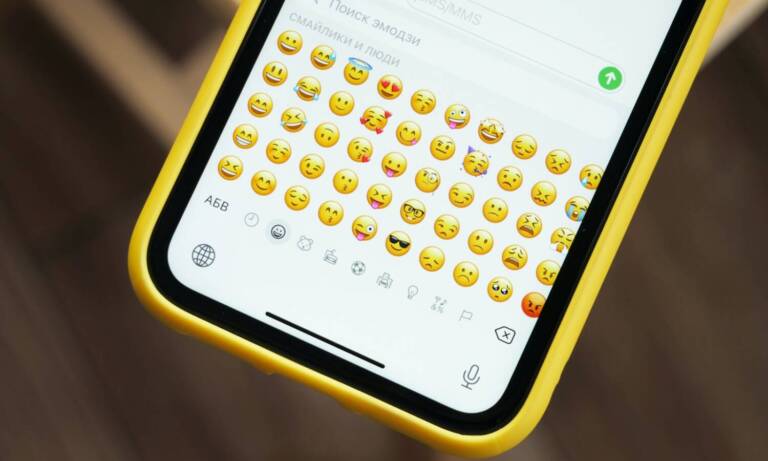
Even though the list of emojis isn’t an exhaustive one, it’s fascinating to see that the DEA pays attention to the way drugs are discussed, even digitally.
As a method of fighting back against overdose deaths, the DEA recently began the “One Pill Can Kill” campaign. The driving source of motivation behind the new campaign is to provide an opportunity for the media, parents, teachers, educators, and community organizations to raise awareness about counterfeit prescription drugs.
As part of the campaign, the DEA is helping to teach parents signs to watch for that can help them indicate when their children are discussing illegal drug use. If the point of the program is to teach the mentors of teens and young adults the coded language they use to discuss drugs, then it makes complete sense why emojis would be one of the program’s core focuses.
Here are some key takeaways about the DEA’s findings regarding the way emojis are used to discuss drugs amongst teens and young adults.
Photo by Minty via rawpixel.com
When Emojis Are Most Often Used For Depicting Drug Use
The fact that emojis are used to depict specific types of drugs and actions likely isn’t much of a surprise to most people. Still, it may come as a surprise to see just how many different types of activities related to drug use can be depicted solely using emojis.
For instance, according to a graphic shared by the DEA, emojis are used to depict all sorts of drugs from meth to marijuana. There are also emojis that depict the potency levels of drugs, like bombs or flames along with some that are shared just for the purpose of dealer advertising like plugs or stacks of cash.
Platforms Where Emoji Use Is Common
Knowing what emojis are used for the purpose of depicting drug use is helpful, but that insight is limited. The only way this insight can be leveraged is by knowing what mediums teens are using to discuss drug use.
According to the DEA, the platforms range from long-standing entertainment platforms like YouTube to newer social media platforms like TikTok. The most widely used platform for criminal drug network activities is Snapchat, followed by Facebook Messenger and Instagram.
Some examples of emojis that are commonly used on these platforms that may depict drug use include the P Button emoji, to represent Percocet, or the 8 ball, which is used to refer to cocaine.
Glaring Omissions By The DEA
It would be hard to miss out on the obvious ones like a tree meaning marijuana or a mushroom emoji depicting shrooms. That being said, it’s somewhat surprising that some of the less obvious, still widely used emojis like a gas container which depicts high potency marijuana or the eyeball emoji for must see products that are being advertised.
Another oversight from the DEA’s powerpoint is the use of the Canadian maple leaf as a universal signal for drug use. One could be left to wonder what our neighbors to the north think of the DEA confusing the emblem of their flag for a pot leaf.
Even though the list of emojis isn’t an exhaustive one, it’s fascinating to see that the DEA pays attention to the way drugs are discussed, even digitally. Since the book is out on the fact that the DEA is watching, it’s fair to question if drug dealers and their customers will take things offline in the near future like back in the old days.
The idea is to signal to the business community and to employers that because Colorado has legalized cannabis, the state should be following the same laws and rules that apply to prescription drugs.
Colorado employers would be prohibited from denying employment or firing workers because of their off-the-clock cannabis use and on-the-job medical marijuana consumption under a measure introduced last week.
What’s In The Bill
House Bill 1152, co-sponsored by Rep. Brianna Titone (D) and Rep. Edie Hooton, (D) would consider exceptions for those who work in dangerous fields or jobs requiring fine motor skills, The Colorado Sun writes.
Photo by Dylan Gillis via Unsplash
The issue has been one of the focal points in Colorado, following the passage of Amendment 64 in 2012, which legalized the sale and use of recreational cannabis.
“Marijuana is legal in Colorado,” Titone said. “And what people do in their spare time that doesn’t impact their work shouldn’t really be a problem for them. They should be able to enjoy the legal things that we have here in Colorado and not be penalized for it.”
Titone and Hooton emphasized that using cannabis can be grounds for job termination, addressing the case of Colorado Supreme Court ruling in favor of an employer, Dish Network who fired worker Brandon Coats after he tested positive for cannabis.
“The whole idea is to signal to the business community and to employers that because we have legalized cannabis, we should be following the same laws and rules that apply to alcohol and prescription drugs,” Hooton said.
Photo by José Antonio Luque Olmedo/Getty Images
What’s Next?
Considering that a similar measure was dismissed in 2020, pushback from employers with drug-free workplace policies is expected. The Colorado Chamber of Commerce also hasn’t disclosed its official position.
“The National Federal of Independent Businesses has historically opposed any legislation that would (allow) the use of marijuana on the property of the employer or cause an employee to test positive for any prohibited drug or prohibit any authority of the employer to perform random drug tests,” said Tony Gagliardi, who leads the Colorado chapter of the group. “Marijuana remains illegal under federal law.”
Nevertheless, Titone intends to present the measure as a way for Colorado-based employers to quickly find workers.
House Minority Leader Chris Holbert, (R), who opposes the concept, highlighted that Amendment 64’s provision clarified that “employers can have a 100% drug-free policy in their workplace, and that, in my opinion, should not be infringed upon.”
The amendment’s provision states: “Nothing in this (ballot measure) is intended to require an employer to permit or accommodate the use, consumption, possession, transfer, delay, transportation, sale or growing of marijuana in the workplace to affect the ability of employers to have policies restrict the use of marijuana by employees.”
Meanwhile, House Bill 1152 will have to wait for its first committee hearing, which is yet to be scheduled.
A new study showed strong connections between weight loss and proper sleep habits.
A new study found links between weight loss and an activity we normally do, one that doesn’t ask for much effort. Published in the journal JAMA Internal Medicine, the study showed that people who slept more could cut significant calories from their days.
The study was conducted on a group of people who were overweight and sleep-deprived. These people were sleeping about six hours a night and were asked to comply with an eight-hour and a half schedule for two weeks.
Study results showed that these people decreased their caloric intake by an average of 270 calories. In some cases, participants decreased their caloric intake by 500 calories per day.
“This is almost like a game-changer for weight loss or weight maintenance,” study author Dr. Esra Tasali told CNN. “A small intervention you can do to yourself to increase or preserve your sleep duration so you are not sleep deprived can have a significant impact on healthy weight.”
Researchers did some calculations and showed that by simply sleeping over eight hours a night, some of their patients could lose 26 pounds in the span of three years. One of the perks of the study is that it was conducted outside of a laboratory, showing how people’s bodies reacted to this simple change.
Experts have some theories as to why this weight loss occurs, mostly pointing towards the hormones ghrelin and leptin, which regulate hunger and the feeling of being full. Ghrelin stimulates hunger and increases when people are sleep-deprived, resulting in them eating more. Leptin is the hormone responsible for letting our bodies know we are full. It’s a hormone that decreases with sleep deprivation, resulting in us feeling more hunger at awkward times.
Photo by Weiquan Lin/Getty Images
Despite the fact that the study was conducted on people who were overweight, experts believe that a regular sleep schedule is a good thing for maintaining a healthy weight. Being sleep deprived increases cravings for junk foods, carbs, demand more food to fill full, and can even mess with people’s insulin resistance.
So, the next time you’re stressing out over sticking to a diet and keeping up with your workouts, start from the ground up. Focus on healthy eating and on clocking in your eight hours of sleep every night.
The utility said employees will report to management if they find that a local power company is using its services to provide electricity to state-legal cannabis businesses.
After Gov. Tate Reeves (R) signed a bill to legalize medical marijuana in Mississippi, the Tennessee Valley Authority (TVA), a main supplier of electricity to the state’s northern region, announced that since it is a federally-owned utility company, it must adhere to federal drug laws. So, off with the lights.
In a document obtained by the Daily Journal (and confirmed by the TVA), the federal agency states that “Given this important point, TVA will not direct any federal resources or funds to the cultivation and/or distribution of marijuana.” The statement is unclear if municipal companies that receive TVA power can serve electricity to legal cannabis facilities.
Tupelo Water & Light, a municipal-owned utility company in Northeast Mississippi that receives power from the TVA, did not acknowledge any official communication from the TVA on medical marijuana.
Meanwhile, “the utility said its employees will report to management if they find that a local power company is using TVA services to provide electricity to state-legal cannabis businesses,” reported Marijuana Moment.
U.S. Rep. Steve Cohen (D) pushed back against the TVA’s stance, telling Marijuana Moment on Tuesday that medical marijuana “has been legalized in the majority of our states generally by the people’s votes…TVA should not discriminate against legal businesses that need utilities,” Cohen said.
“TVA needs all the business they could get as their rates are way too high already and many want to leave TVA,” Cohen added.
A federal rider continually approved by Congress since 2014 prevents the Department of Justice from spending money to interfere with the implementation of state medical cannabis laws, but it does not affect TVA.
A recent report revealed that more than 40% of U.S. drivers who use both alcohol and marijuana reported driving under the influence of one or both of the substances, according to a new study.
Researchers used data from 34,514 drivers aged 16 and up who reported past-year alcohol and cannabis use. They answered questions as part of the National Survey on Drug Use and Health from 2016 to 2019.
While more than half of respondents said they did not get behind the wheel while intoxicated, 42% admitted they did.
The study also found drivers who used both substances were nearly three times more likely to drive while under the influence of marijuana and more than 3.5 times as likely to drive under the influence of both alcohol and cannabis.
Previous studies have concluded that both alcohol and cannabis can impair cognitive function and motor coordination, making it dangerous for anyone under the influence to get behind the wheel, especially younger drivers with less experience.
“Alcohol and cannabis are two of the most common substances involved in impaired driving and motor vehicle crashes in the U.S.,” Priscila Dib Gonçalves, author of the study and researcher in the Department of Epidemiology at Columbia Mailman School, said in a statement.
“Examining the effect of simultaneous alcohol and cannabis use on self-report driving under the (DUI) of alcohol-only, cannabis-only, and both substances using a nationally representative sample could contribute to better understanding the impact in adolescents and adults,” Gonçalves added.
Photo by R+R Medicinals via Unsplash
Driving High Is Less Dangerous Than Drunk Driving
While drunk driving dramatically increases the chances of getting into an accident, researchers from the National Highway Traffic Safety Administration found no evidence to suggest the same was true of marijuana use, according to a National Highway Traffic Safety Administration’s report, “Roadside Survey of Alcohol and Drug Use by Drivers” that concluded it was about as safe as driving while sober once variables are adjusted for.
A new report sheds some light on cannabis sales. While flower remains the top product being sold, other products are creeping in.
As marijuana becomes more popular, crowds are embracing new products. While marijuana flower remains the top product up for sale, other markets are growing.
As tracked by cannabis data platform Headset, marijuana flower sales grew from $4.92 billion in 2020 to $5.49 billion in 2021, according to Headset. Still, its share of the market fell, with pre-rolls, edibles, and more taking a cut.
The report, provided by MJBizDaily, reveals a variety of interesting findings. Marijuana flower sales experienced a price drop across states like California, Colorado, Michigan, Nevada, Oregon, and Washington. This is expected, with prices increasing the minute states launch legal markets, and then a price drop once the market finds its footing and normalizes.
It appears shoppers are becoming more knowledgable of the products they purchase, with dispensary workers reporting flower-buying habits shifting according to things like terpenes and other cannabinoids. These trends fluctuate depending on location; for example, on the East Coast, consumers purchase according to potency.
“The one thing that’s consistent is that the primary purchase decision is potency,” said Mike Bibbey, vice president of Ethos Cannabis, a marijuana retail business in Massachusetts and Pennsylvania.
In markets like California and Colorado, which have the most robust cannabis business in the country, shoppers are growing more sophisticated with their tastes, willing to pay high prices for the best quality of cannabis. “Customers are increasingly sophisticated – if they want something on the high end that’s been really well-produced and tastes good, they’re willing to pay up,” said Steve Gutterman, CEO of Falcon Brands, a cannabis company based in California.
When asked about the differences between flower and other types of cannabis products, Gutterman is a believer of flower and in the tradition of cannabis. “At its core, flower provides a social experience that other things don’t,” he said.
What can we expect from legalization in 2022? Benzinga Cannabis Insider brought together three renowned cannabis advocates to talk about the prospects of federal legalization in 2022, state-by-state legislation and what to expect from federal policy reform and what financial trends this long-awaited process might unleash.
Sarah Chase, executive director of the Council for Federal Cannabis Regulation (CFCR), Tom Zuber from Zuber Lawler, one of the top law firms working in the cannabis industry and Brady Cobb, lawyer and CEO of Bluma Wellness/One Plant, joined Benzinga‘s Javier Hasse and Elliot Lane. They began with the various cannabis bills in Congress and their impact in the cannabis industry.
Photo by Dmitriy83/Getty Images
Step-By-Step: Trade-offs Of An Incremental Pathway
Zuber called the regulatory landscape confusing and said he would be satisfied with the SAFE Act passing this year. “There are such a plethora of acronyms out there and it’s hard to keep track, a new one seems to arrive every quarter, but there are a few key ones that we’ve been focused on I think the SAFE Act has been with us since I don’t know, Clinton was president.” He highlighted that there seems to be a momentum to tackle banking reform. The SAFE Act would allow cannabis companies access to federal banking services.
He added that the States Reform Act “would legalize cannabis at the federal level or at least decriminalize it and that would have implications for banking and the interstate commerce of cannabis. He said the big question is whether to “wait for that big enchilada” or try and take the milestone victory and go for the SAFE Act.
Likewise, Cobb said he would be satisfied with the SAFE Act, noting that winning begets winning. “In today’s world of instant gratification and social media (…) things do not happen instantly. Everyone is very Veruca Salt in “Charlie and the Chocolate Factory” and that’s not how DC works. DC is about incrementalism, inch-by-inch.”
Empowering social equity and access to capital is vital, Cobb said. From a political standpoint, he sent kudos to Rep. Nancy Mace (R) for filing the State’s Reform Act and receiving the support of “some real companies in American industry” including “the Koch brothers” and Amazon. He emphasized the importance of achieving bipartisan support.
“When I first started lobbying in the senate we focused primarily on Senate republicans because that’s who we needed to flip, it was a very cold reception in those offices back in 2015 and it wasn’t until you saw some of the east coast states like Florida (…)l that we’ve got a little bit of a warmer reception (…) I think we really need to focus as an industry on what safe’s going to do from a crime prevention standpoint from a social equity funding,” Cobb added and referred to the SAFE Act as uniformly known in congress as the bill that has the “highest chance of passing. The CAO is DOA.”
In terms of expungements, Cobb referred to the HOPE Act and recalled that “over 90 percent of the convictions that people have on their records are at the State level,” and therefore action is needed “because “you can’t force a state under the principles of federalism to do that.”
In agreement with Cobb, Chase considered that “one of the best ways to operate in DC is by being gently persistent. She noted the CAO should be discussed in more detail. “Even though it doesn’t reference medical use cannabis (…) it creates a pathway that’s more feasible” to “deal with regulation in a responsible and reasonable way,” Chase said. “Human health and safety aspects” will be regulated by the FDA and the CAO Act creates “a pathway for medical research for Pharma. The pharmaceutical route would include more safety data about dosing and effectiveness and efficacy.”
Photo by smodj/Getty Images
Raising The Bar
“If we are talking about social equity it is going to be much more difficult for small businesses to access the standards of federal legislation,” Cobb said adding that it is going to be “much harder for those applicants to enter the space when they got to get an FDA license to be able to conduct business as opposed to a very large federal excise tax. States Reform Act is the most passable piece of cannabis legislation that I’ve seen thus far solely because the larger the Republican caucus [are] on a libertarian standpoint, largely okay with states’ rights.”
Chase said that despite the burdens brought by regulations to the industry, these “ensure good standards and good practices in a number of different ways” and “eliminate a lot of corporate liability too with a big cost-saver.”
Chase said she views the U.S. Small Business Administration “stepping in to grant microloans to small and medium-sized businesses” as a step “to be able to really start to put the wheels of government into funding some of the businesses.”
Amazon And Charles Koch In Support Of The States Reform Act: What does it mean?
On January 25, Amazon.com, Inc. announced its support for the Republican-backed congressional bill that would legalize cannabis at the federal level and allow states decide how and whether to ban or regulate it. Congresswoman Nancy Mace’s (R) States Reform Act, released in November, was the first bill issued by the Republicans and it created quite a stir at the time.
Cobb noted that having one of the “most powerful and largest companies in the world jumping into the cannabis fray to support legalization” is “a great barometer from an overall standpoint of where we are as an industry and regards the States Reform Act as “very attractive because vests most of the authority with the state-level folks.”
Zuber focused on the endorsement of libertarian billionaire Charles Koch. “I think it’s a big deal that Koch came out in support. He’s such a powerful backer of Republican candidates across the country.” He mentioned the close ties between Koch and Republican members of Congress and his support of cannabis legalization as a milestone. “I find the Koch endorsement of cannabis legalization to be even more exciting [than Amazon’s], I think it’s a bigger milestone.”
Photo by lucky-photographer/Getty Images
Bluma’s CEO pointed at the fact that in an election year, the Republicans did a good job incorporating cannabis regulations which have normally been in the Democrats’ camp. “I think Republicans are smart enough to sense that that’s an opportunity to both follow through on states rights and libertarian principles” and “seize a win ahead of the midterms.”
Zinger’s Ask
After providing feedback to the detailed considerations of guest speakers, Hasse and Lane opened the floor for questions from folks on to the live stream.
Q: Can we get some clarification surrounding safe banking? Visa and MasterCard recently stated they will not support the industry until federally legal. Does SAFE include consumer credit/debit card use?
Cobb explained that the SAFE Act “will trigger FinCEN and treasury to update their anti-money laundering guidance.” He explained that one of the biggest problems with cannabis, banking cannabis, and credit card processors is that “if they facilitate a transaction they’re technically triggered into potential anti-money laundering guidance” and could have some liability in those compliance departments of the banks as well as credit card companies. “That’s just a risk they can’t take given the volume of business that they do. SAFE will trigger that review and the updated FinCEN guidance will be what will hopefully provide cover fire for credit card processors, and potentially, U.S. exchanges.” He advised people interested in cannabis reform to pay attention to the SAFE Act.
Q: What would you suggest regular people can do to push legalization forward?
The experts concurred that, although writing and calling legislators is not usually regarded as an impactful measure, it can move the curve on the Hill. Chase explained that legislators are not used to the cannabis industry and they need to see and interact with cannabis workers and patients to gauge the benefits of federal legalization. “Open the doors, let them see your work. Education is the key because it will destigmatize, legitimize and normalize this industry,” Chase advised.
Cobb agreed that letters and calls can have a “massive impact” when staff reports to legislators about them. “If people are writing and talking about how this is directly affecting their lives, and how they want to have the opportunity to do that (…) It absolutely matters.
“You can’t underscore how important that is and if you’re not doing it already start it now because now we’re dealing with all of our natural predators, alcohol, tobacco, and pharma who are watching what we do very closely as an industry, they’re very good at making the phone rings, and they have about a 60-year head start in lobbying,” Cobb explained.
Chase emphasized the need to extend advocacy narrative beyond the recreational use of cannabis and provide a holistic perspective of the industry for decision-makers to thread the needle.
“If there are any MSO folks out there that are listening from the C-suites of any cannabis operators (…) have your local state and federal representatives come to your farm and spend the time to not only see how it’s cultivated, [also to] see the level of sophistication that you’re operating with,” Cobb added.
A new subvariant of Omicron has appeared, becoming the dominant strain in different countries. Here’s what you should know about it.
A subvariant of the Omicron COVID-19 variant, known as stealth Omicron, has recently appeared. Officially known as BA.2, the variant has popped up in several countries, including the United States. How dangerous is the new variant and how worried should you be?
In Denmark, the new variant quickly became the dominant strain, suggesting stealth Omicron has a higher rate of spread than the original. Despite this, scientists stress that there’s no reason to panic; it appears that the new variant is not more dangerous than standard Omicron and that current vaccinations should provide sufficient protection.
CNN spoke with Dr. Leana Wen, who explained that, since the subvariant is more transferable, it could become the dominant strain in the country, as it’s happened in other places. “The best-case scenario is that we have enough people protected here in the US due to vaccination and recent infection that BA.2 does not cause a substantial rise in cases. We could continue on the track to experiencing a lull in case numbers over the spring and summer. Another scenario is that BA.2 blunts the sharp drop in cases that we are seeing, and we end up having a more prolonged fourth wave than we would have with BA.1 alone,” she explained.
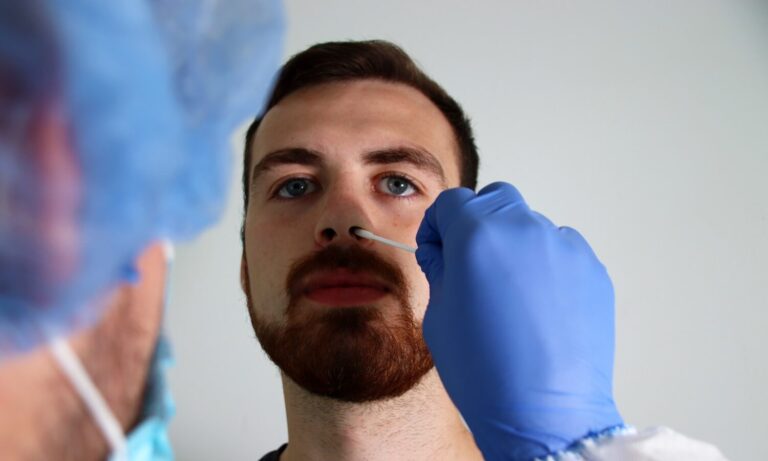
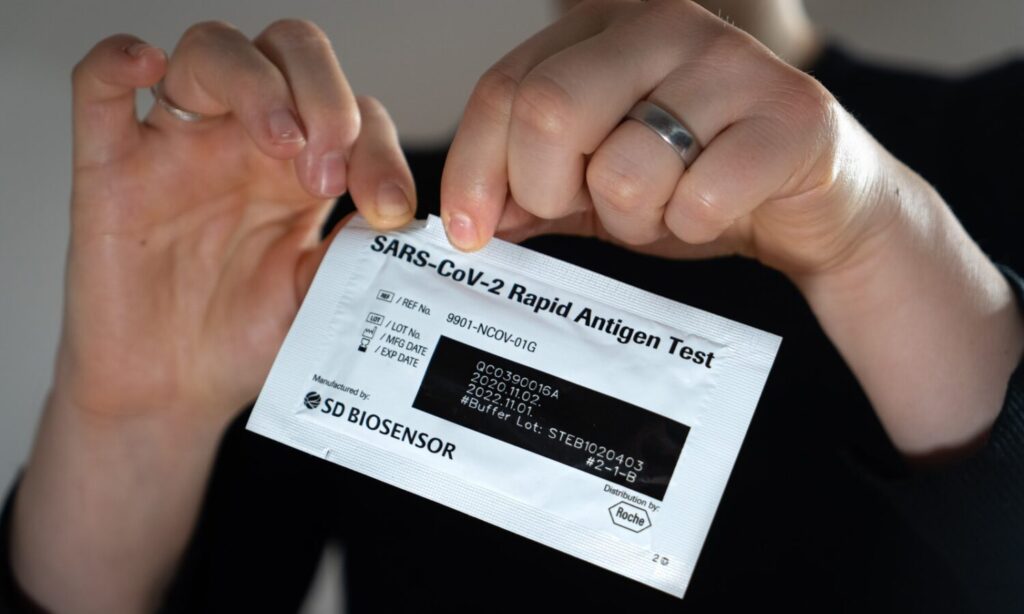
While catchy, the nickname “stealth Omicron” isn’t all that accurate. Prevention explains that the original version of Omicron, known as BA.1, is missing one of three target genes generally tested in PCR tests. When testing Omicron cases, doctors are able to spot these cases in PCR tests since there’s an absence of that target gene. BA.2 doesn’t have this mutation, allowing for the stealth nickname to catch on.
How do you protect yourself against it?
Photo by Noah via Unsplash
Not much has changed with the appearance of the new variant. Reliable preventative measures like being fully vaccinated and wearing a mask in indoor spaces remain the most efficient ways of protecting yourself against the virus. “I would also predict that there would be significant protection with BA.2 if you had BA.1.,” explains Dr. Thomas Russo, professor and chief of infectious disease at the University at Buffalo in New York. “I don’t see this moving the dial significantly in terms of posing a new, huge problem.”
More than half of programmers who use cannabis on the job do so because it provides assistance in thinking of creative solutions to problems that arise.
There are a variety of reasons that could cause someone to want to get a little high during the workday. That’s especially true for people working in tech.
Since many tech jobs allow their staff to work remotely, many of them have the opportunity to indulge their temptation without their employer knowing. A recent study conducted by the University of Michigan revealed that more than one-third of software programmers are choosing to consume cannabis while on the job.
Here are some of the reasons why.
Photo by José Antonio Luque Olmedo/Getty Images
To Make Tasks More Enjoyable
Programming can be a lonely, somewhat dull job. Whenever the job gets boring it becomes easier to become disengaged with it which can lead to making preventable mistakes. That’s why it can be helpful to have something handy that makes programming tasks more manageable, or even fun. That’s where marijuana comes in for many programmers.
According to thestudy, 61% of respondents said their motivation for consuming cannabis on the job was that it makes programming tasks more enjoyable. It’s not surprising considering the isolated, monotonous nature of the job.
To Problem Solve
When problems that don’t have a clear solution arise, finding an alternative fix can feel impossible. Some people have an easier time than others doing so which is where cannabis becomes a reliable tool for developers seeking solutions. That’s why cannabis has been increasing in popularity among software programmers. The creative spark it provides can make the job of a developer immensely easier.
More than 50% of programmers who use cannabis on the job do so because it provides assistance in thinking of creative solutions to problems that arise. Since that’s the case, it’s fair to wonder how much of a role cannabis played in getting some of your favorite websites or apps online.
To Help Overcome Anxiety or Stress
Whenever people face an overwhelming amount of stress on the job it’s natural to want a magic pill to provide some relief. For many developers, that magic pill may be a bong rip or a vape hit.
Even though wellness isn’t the main motivation for cannabis use on the job for developers, it’s still the reason why at least a quarter of respondents in the study claim to use marijuana. There are a variety of situations on the job that can lead to anxiety, too, so having a resource that’s capable of reducing the anxiety and stress of it can be instrumental to success.
Photo by Vlada Karpovich via Pexels
The UoM study regarding the marijuana consumption of tech workers was the first of its kind. This only increases curiosity about the cannabis consumption patterns of employees in other industries.
Since the motivation for the study was that drug testing policies are a mainstay in the sector that contributes to hiring shortages, other industries facing similar challenges may be interested in funding more of these types of studies. The impact they could have on drug-testing in the future could be tremendous.
With massive continued growth on the horizon, now is a great time to snag one of the many exciting careers in the cannabis industry.
Arecord number of Americans quit their jobs last year, and a lot of them started working in cannabis. Between 2020 and 2021 there was a 32% employment increase in the cannabis industry, which now employs nearly 321,000 Americans according to the Washington Post.
Cannabis is one of the fastest growing employment sectors. In fact, according to WaPo, the U.S. now has more legal cannabis workers than dentists, paramedics or electrical engineers.
Sure, 321,000 jobs looks like a drop in a bucket compared to the11.3 million natural gas jobs, or 1.6 million Walmart employees. Still, the 32% employment increase means cannabis is creeping up rather quickly on these juggernaut industries that fuel the economy and hold strong influence in turn.
Photo by Ivan-balvan/Getty Images
Even with this massive increase in employment there are still a growing number of available jobs in weed. This boom of employment opportunity, in a time when a large segment of the population is looking for a fresh start, leaves us with a big question mark: What are the hottest jobs in cannabis right now?
Top Paying Jobs
People are flocking to careers in weed for many reasons. And money is at the top of that list. Here are some of the top paying jobs in cannabis that are in demand as the market continues to expand.
Master Grower
A master grower is a job for someone who is wizards at making the best marijuana on the market. “They are responsible for cultivating the strains of marijuana plants which will later be sold to clients. The best grow masters are in high demand. And, they can earn upwards of $100,000 per year,”according to CNBC.
Chief Financial Officer (CFO)
Every good business needs a top notch Chief Financial Officer (CFO) to maximize its profitability and efficiency. With cannabis companies and dispensaries being such new enterprises, it is often wise to choose a seasoned and talented CFO to help guide the way to financial success.
Since this position requires many credentials, and often years of experience as a CFO, it is no surprise that annual salaries can be upwards of$260,000-$330,000.
Photo by oatawa/Getty Images
Extraction Lab Manager
A large amount of marijuana is not smoked. THC must be extracted in order to turn marijuana into tinctures, oils or edibles. The need for extraction continues to grow, but it is not easy work. “This involves the extraction technician to work closely with flammable, explosive and dangerous substances like butane, ethanol and carbon dioxide,” according toIndeed. This complex and hazardous work is why these jobs come with a hefty salary.
Entry Level Opportunities
The highest paying jobs in cannabis are not the only hot jobs in the market. According toglassdoor, there are several entry level jobs in cannabis that are enticing and in high demand.
Trimmer
As the demand for marijuana increases, so does the need for trimmers. It is the trimmer’s job to cut around the leaves and thick stems in order to get to the “heart” of the precious flower, or “nug.” Trimmer jobs can pay hourly or by the pound. They are another good position for those looking to get their foot in the door, especially those who are not big on retail or customer service.
Budtender
Dispensaries were declared an “essential business” throughout the pandemic. A budtender position is great for someone who has a bit of retail experience and is looking to get a foot in the door in the cannabis industry. You can learn a great deal about strains, brands and marijuana culture as a budtender.
Photo by mikroman6/Getty Images
Delivery Driver
Delivery driving was a huge job throughout the pandemic, and the new for recreational marijuana delivery drivers still persists today. According to Glassdoor, delivery drivers still rank among the hottest jobs in cannabis right now.
Careers On The Rise
From marketing to culinary, nearly every career specialty can find a home in weed. Some such jobs are quite interesting, on the rise and highly desirable.
Marketing Lead
Just because marijuana is booming does not mean it has gotten less competitive. All brands in this industry are fighting for the top spot. This is where marketing comes in.
Great marketing can make or break a brand. Since recreational cannabis is still new and many brands are still very young, it is an exciting time to join or create a marketing team from the ground up.
Edibles Chef
The marijuana edibles market continues to grow in the recreational marijuana world, and they don’t cook themselves. Edibles chefs are growing as the market expands. What once was pot brownies served at festivals has turned into a menu that would test even the limits of even Willy Wonka’s imagination.
Photo by Sarah Pender/Getty Images
Cannabis Sales Reps
Once marketing is created, a brand needs someone to get the product into the buyer’s hands. Cannabis sales reps act like many other sales reps, as they work to build the critical partnership between buyers and growers.
Sales rep jobs are almost always commission-based, and can be a great opportunity for a social and eager individual who has a passion for spreading the word about good weed.
If you recently left your job or have become interested in a career in the realm of cannabis, you will want to know the best way to get noticed and hired.
“Showing up at cannabis-industry conferences and events, which are easy to find online, is ‘crucial,’” Karson Humiston, CEO of Vangst,told Fortune. “Job seekers can get right in front of the leading companies, which can drastically cut down on the time it takes to find a job.”
So there you have it. Put yourself out there and get noticed! With massive continued growth on the horizon, now is a great time to snag one of the many exciting careers in the cannabis industry.