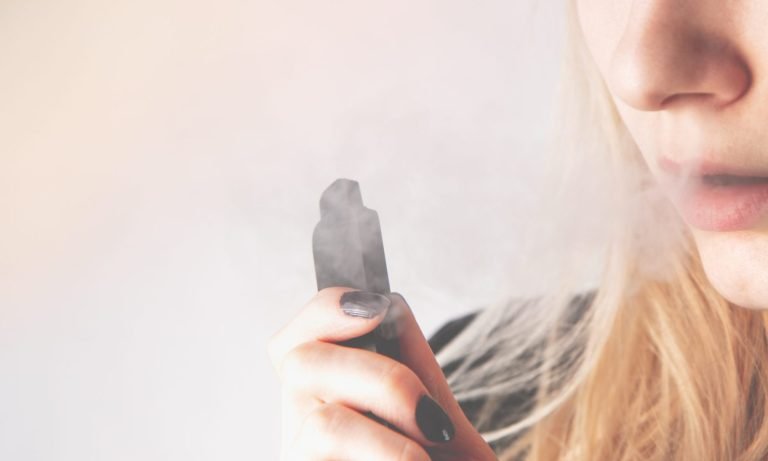
Vaping in teens is growing more and more prominent. A new study shows that the vaping rate has doubled in teens over recent years.
More teens are vaping these days than ever before. And now, a new study reveals that this troubling trend could result in a variety of health issues over the long run.
The study, published in JAMA Pediatrics, found that between 2013 and 2020, the vaping rate had doubled in teens. Researchers analyzed data from over 200,000 teens in Canada and the United States. Teens in their senior year of high school were more likely to vape when compared to younger teens and preferred vaping to smoking cannabis flower — something that’s of interest to researchers since it could potentially expose teens to bigger risks over the years.
Cannabis extracts, such as the ones that are present in vapes, dabs, and more, contain a higher amount of THC per dose. Study author Carmen Lim told CNN in an email that, “Not only it is linked to poorer cognitive development in adolescents, it could increase risk of dependence, other substance use and many other health, social, and behavioral problems later in life.”
We’ve often talked about the risks of cannabis abuse in teens, a concern that plagues marijuana advocates and opposers. Marijuana’s effect in the adolescent brain is different than the one it has on adults, correlated to damage in learning, memory, problem solving skills, and their overall attention spans.
Aside from all of this information that has been gathered over the years, vaping has been linked with a variety of risks that make it more dangerous than smoking THC or cigarettes. It has been linked with cases of EVALI, a lung condition that’s present in people who regularly vape, especially those who regularly vape cannabis.
The cannabis landscape is tough to navigate nowadays, especially since the drug is going through a phase of revision and researchers and healthcare workers are emphasizing on many of its medicinal effects. Still, when it comes to teens, the data is clear; cannabis affects them differently and the substance should be viewed as any other risky substance.
Researchers may be closer to developing the equivalent of a breathalyzer for detecting marijuana in a person’s system, according to an article published this week in the journal Science Translational Medicine.
At the moment, the gold standard for detecting marijuana usage is to measure THC, the active ingredient in cannabis, in the blood or urine. But those tests can take days to process and unlike alcohol, THC can linger in the bloodstream for days, said Hakho Lee, Ph.D., director of the Biomedical Engineering Program at Harvard University and senior author of the new study, as reported by the American Association for the Advancement of Science (AAAS).
Photo by JasonDoiy/Getty Images
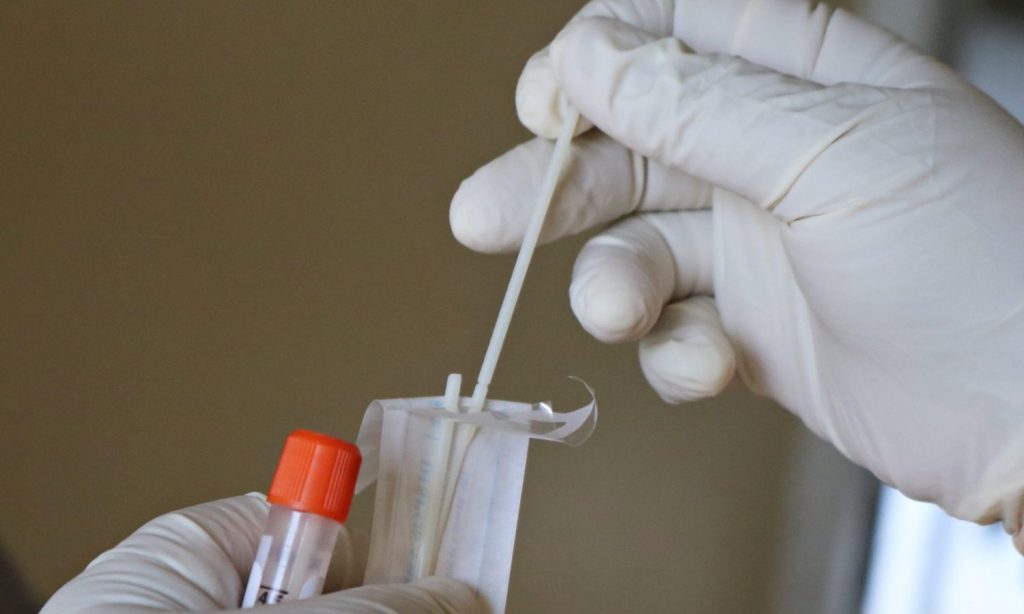
There are some existing saliva tests for THC, but they are limited by issues like slow processing time or giving “binary” results (yes/no). To enable quick on-site THC quantification, the scientists behind the research developed a rapid assay for oral THC analysis called EPOCH, which is similar to a breathalyzer and allows assay completion within 5 minutes.
“With marijuana becoming more accessible, it is important for public safety to have an objective way to tell whether a person is under its influence,” Lee said.
The initial testing accurately picked up THC in saliva samples from all users of the plant within about three minutes. The researchers eventually plan to expand their test to detect drugs, such as oxycodone and other synthetic opioids.
“Since our device is a platform technology, we could readily detect different targets by switching capture [molecules],” Lee added.
The number of Republicans in favor legalizing marijuana in some form or another is growing. Here’s a list of 10 that have recently shown their support.
The majority of Americans favor cannabis legalization in some form. This statistic combined with other new perspectives on cannabis has several republicans in congress speaking out in favor of marijuana legalization.
A number republicans have recently supported or vocalized their continued support to further cannabis legalization. Some live in states where cannabis is a major industry, while others are seeking medical marijuana approval for veterans.
There are several reasons for the shift among some conservatives. Regardless of their personal motivations, republicans are vocally changing their tune on cannabis. Here is a list of 10 notable republicans in congress that have backed some form of marijuana legalization.
Photo by Bet_Noire/Getty Images
Dave Joyce, Ohio
Joyce isco-sponsoring a GOP plan that would regulate marijuana like alcohol and enable the Department of Veterans Affairs to prescribe cannabis treatments to veterans, according to NPR.
Joyce proposed the bill, known as “Common Sense Cannabis Reform for Veterans, Small Businesses, and Medical Professionals Act.” The legislation is the first of its kind by a republican congressman, and its sentiments have the potential to begin shifting Republicans’ stance on cannabis reform.
Don Young, Alaska
Don Young was the other co-sponsor of the cannabis reform bill with Joyce. “This bill isn’t perfect, but it takes important steps to safeguard our personal liberties and freedom,”Young tweeted in regards to the Bill. Young has also called on his fellow congressmen on both sides to unite on this bill to help move in the direction of what he sees as liberty.
Today, I helped the House pass the most significant #cannabis reform legislation in decades – the #MOREAct. This bill isn’t perfect, but it takes important steps to safeguard our personal liberties and freedom. THREAD: pic.twitter.com/3ey5RcY0VP
“Congressman Mast has been a longtime advocate for federal decriminalization of marijuana,” said a spokesman for Mast.
Photo by matt_benoit/Getty Images
Matt Gaetz, Florida
Matt Gaetz, also of Florida, voted for the MORE act as well. Gaetz has been publicly vocal about his opinions on Marijuana, and says it is time for his fellow republicans to change their tune on cannabis.
“The American people do not support the policies of incarceration, limited research, limited choice and particularly constraining medical application,”Gaetz said.
Greg Steube, Florida
Greg Steube is a third Florida congressman who supports cannabis legalization. Steube did not vote in favor of the MORE Act, but has supported other cannabis legislation.
Steube is particularly vocal about veterans having access to medical marijuana, and has recently passed amendments in support of Veterans’ use of state-approved medical marijuana programs.
Tom McClintock, California
Tom McClintock has a unique position on marijuana as a Republican in a blue state with a long cannabis history. The Republican representative for a region of California known for its cannabis agriculture, McClintock stands with his constituents on the issue of cannabis.
During a 2003 debate when he was running for governor, McClintock said in regards to Proposition 215, which legalized marijuana, “The people of California spoke clearly on that subject. The federal government has no right to intervene.”
Guy Reschenthaler, Pennsylvania
Guy Reschenthaler was the co-sponsor of the SAFE Banking Act, which gives banks permission to do business with the cannabis industry. Recently, he has re-introduced the “Clean Slate” law with great momentum. This law would help seal conviction records, including non-violent marijuana offenses.
Photo by Kindel Media from Pexels
Thomas Massie, Kentucky
Thomas Massie has a long track record supporting cannabis, especially as it pertains to gun ownership. Massie was also quoted saying he believes the first party to fully endorse marijuana will gain significant popularity and favor.
When asked by Fox Business about cannabis legalization, Massie said,“The first party that does this—and I don’t understand why either party won’t do it—is going instantly gain 10 points in the general poll on which party versus the other.”
Denver Riggleman, Virginia
Denver Riggleman was recently defeated by his democratic opponent in November. Before he left office he joined in voting for the MORE act. Since leaving office, Riggleman has stayed in the spotlight and campaigns for the Veterans Cannabis Project.
“The states should be in charge of their own marijuana legislation, it shouldn’t be the federal government,”said Riggleman.
Justin Amash, Michigan
Congressman Justin Amash also voted in favor of the MORE Act as a Republican. Since then, Amash has shifted to the Libertarian party, but his views on marijuana legalization have stayed the same.
The marijuana bill:
Better to tax marijuana like alcohol than keep it illegal, which amounts to an infinite tax.
Better to have some regulation of marijuana than the current maximal regulation: prohibition.
Better to let people buy marijuana than put people in prison for it.
“Better to tax marijuana like alcohol than keep it illegal, which amounts to an infinite tax,” Amash tweeted in December 2020. “Better to have some regulation of marijuana than the current maximal regulation: prohibition..”
Enjoying a good book is a habit that needs to be cultivated in order to be wholly understood. Here are some tips that can help you get started.
Weed is one of the most malleable substances out there. It can be used for a variety of activities, from watching movies, to going to parties, to working out better. Reading is probably one of the toughest activities you can do while high, asking some engagement from your brain that, if some factors are off, might be too difficult to achieve. Here is how to read while high.
Similar to doing any other activity while high, what you really need to do in order to succeed is to practice. Marijuana can add a lot of layers to reading, making the experience more enjoyable or even helping you reconnect with it if you’ve been having a hard time focused on full books.
Just like listening to music and reading, getting high and reading can help craft a better mood. Once you hit that stride you’ll see that you’re more relaxed and engaged with the story and that the weed is helping you get in the right zone. Here are some tips that’ll help you read while high:
If you’re just starting out pairing weed and books, you don’t want to kick it off with dense literary novels. Try something that feels easy to for you, going back to something you used to read when you were young or a genre that’s simple and compulsive, like romance or horror. Good ideas are the Harry Potter books or something by Stephen King. A graphic novel can also make for a really good starting place.
Let go of the “right way to read”
Photo by Thought Catalog from Pexels
Reading lends itself to very ritualistic behaviors. Some people prefer to read paper books and can only read when they’re surrounded by total silence. While there’s no judgment, you’ll have more success if you’re able to read while in a variety of situations. Train yourself to read in different places, even if it’s only for 5 or 10 minutes at a time. When high, try your best to read and enjoy yourself, avoiding stress if your mind can’t hold on to all of the words that are on the page.
The strain you’re smoking will have an impact on your reading experience as a whole. Try to avoid sleepy strains, since they’ll make a relaxing activity even more relaxing and you’ll fall asleep, which is great but doesn’t really serve the purpose of this article. Choose a strain that’s cerebral yet contained, something that will help you feel creative but also grounded. Ask your budtender for a light indica or a sativa that doesn’t produce too much anxiety.
Watch your dosage
Photo by Brian Lundquist via Unsplash
When starting on your weed reading journey, watch your dosage, taking a couple of puffs to see how your body takes to this new experience. You can always smoke later if you need more, but it helps to start off slow. Happy reading!
The legislation requires the DEA to license outside of the National Institute on Drug Abuse (NIDA) to ensure that there is an adequate supply of cannabis products to study.
A bipartisan group of federal lawmakers introduced a bill on Thursday to remove barriers to conducting research on marijuana. The bill will allow scientists to access cannabis from state-legal dispensaries.
The Medical Marijuana Research Act, filed by Rep. Earl Blumenauer [D-OR] and Rep. Andy Harris [R-MD] would ease the process by which researchers apply for approval to study cannabis and it would place deadlines on federal agencies to consider the applications in a timely manner.
Photo by boonchai wedmakawand/Getty Images
“This legislation would remove barriers for research into cannabis and facilitate access to an increased supply of higher quality medical-grade cannabis for research purposes,” said Blumenauer.
“Congress is hopelessly behind the American people on cannabis, and the quality of our research shows why that is an urgent problem,” Blumenauer toldMarijuana Moment. “Despite the fact that 99 percent of Americans live in a state that has legalized some form of cannabis, federal law is still hamstringing researchers’ ability to study the full range of health benefits offered by cannabis, and to learn more about the products readily available to consumers.”
Scientists ‘Jumping Through The Hoops’
“Because cannabis is a Schedule I substance, researchers must jump through hoops and comply with onerous requirements just to do basic research on the medical potential of the plant”, Blumenauer said at the House on Thursday.
The Medical Marijuana Research Act amends the Controlled Substances Act to establish a new, separate registration process, specific for marijuana.
Streamline the often-duplicative licensure process for researchers seeking to conduct cannabis research;
Facilitate access to an increased supply of higher quality medical-grade cannabis for research purposes;
Ensure that research on cannabis and other potentially beneficial marijuana-derived substances is based on sound science;
Reduce the regulatory barriers associated with marijuana research.
The legislation requires the Drug Enforcement Agency (DEA) to license outside of the National Institute on Drug Abuse (NIDA) to ensure that there is an adequate supply of cannabis products to study.
Representatives Debbie Dingell [D-MI], Steve Cohen [D-TN] Morgan H. Griffith [R-VA], Barbara Lee [D-CA], and Ed Case [D-HI-1], co-sponsored the bill.
There are key differences between edibles and smoke marijuana, from their dosage to effects. Here are 7 of the most important ones.
If you’ve been consuming marijuana for a while, you know that consumption methods can greatly affect your high. While both edibles and flower contain THC, the highs they produce are different.
It’s all up to the person. While some enjoy a healthy mix of both, the majority choose a path and stick to it. People who prefer edibles tend to be older, taking advantage of powerful results while avoiding the hassle and damages of smoking. Those who smoke joints don’t need as much expertise or planning, resulting in a loose and less committed experience.
Here are 7 of the main differences between smoking flower and consuming marijuana edibles:
While smoking cannabis is like taking a walk through a vivid park, ingesting an edible is like eating an glitter bomb. There’s a scientific explanation behind this bad metaphor. According to Green Entrepreneur, when cannabis is ingested, the THC is metabolized by the liver, transforming itself into 11-hydroxy-THC. For some reason, this compound is up to four times faster in crossing the blood-brain barrier than average THC. This is why edibles are associated with intense, vivid and hallucinatory experiences.
Both require different dosages
Photo by Matt Moloney via Unsplash
Edibles require more experienced users because their dosage is so damn complicated. If you’ve ever prepared your own batch of edibles and have tried to figure out what’s in them, you know what I mean.
In legal markets, 10mg is the standard dose for an edible, which typically delivers mild effects. It’s also important to account for your tolerance and experience.
Smoking weed kicks in way faster
Photo by Greg Raines via Unsplash
Inhaled marijuana takes 10 to 20 minutes to kick in, lasting for an hour or so before the effects start to fade. Edibles take up to two hours to kick in, and their effects can last for a couple of hours. This is why dosage and experience is so important when ingesting edibles. If you get it wrong, you’ll feel sick for a long time.
As we’ve mentioned before, edibles are tough to dose, taking a long time to kick in. This opens the door for a lot of waiting and not knowing what to do, making it very common for people to have an edible and to eat more thinking that they never got high in the first place. Don’t do this. Edibles take a while to kick in and favor a paced approach, giving it a couple of tries to fully understand the way they affect your body.
They produce different effects
Photo by PeopleImages/Getty Images
An overdose on edibles is not the same as an overdose on flower. While the latter may force you to nap for a half-hour in order to relax and escape a bout of paranoia, ingesting a large dose of edibles could result in a really unpleasant time.
They’re absorbed differently by the body
Photo by Volodymyr Bondarenko / EyeEm/Getty Images
Smoked weed is absorbed through the bloodstream, which is why it’s fast-acting. The THC in edibles is absorbed through the stomach lining and then processed by the liver, taking a long time to process and having long-lasting effects.
There’s no clear “best” method
Photo by Petri Oeschger/Getty Images
While inhaled cannabis is easier to administer and control, you’ll always have to reckon with the negative side effects of smoking, especially if you’re a regular consumer. On the other hand, while edibles are harder to manage, they’re also discreet and won’t affect your health negatively. In fact, you could even stay away from sugary treats. Nowadays, there’s plenty of delicious edible options.
Which word does not belong in this group: Sex, hate, alcohol, firearms, CBD or tobacco?
Well, opinions differ, right?
According to the Cellular Telecommunications and Internet Association (CTIA), a non-profit trade organization that monitors and reports content violations on sex, hate, alcohol, firearms and tobacco (SHAFT), the word grouping is fine… that is, all five concepts belong.
Photo by We Are/Getty Images
CBD Under The SHAFT Umbrella
In July, the CTIA classified CBD under the SHAFT umbrella, which means that CBD can no longer be promoted via SMS messaging. It is now considered in the same category as hate speech, alcohol and guns.
These newly-imposed SMS marketing restrictions add to the confusion in the hemp and cannabis industries. While Congress gave the green light to legalize hemp and hemp-derived products back in 2018, the FDA still needs to create clear guidelines or policies regarding hemp-derived CBD.
The solution: Fight against being censored and stamped with a hateful classification.
First Step – Form A Coalition, Launch A Petition
Stripped of an important marketing tool, more than 20 CBD brands (including Prima, Foria, Recess, Miss Grass, Onda, Quim, Plant People and many more) have joined together in a coalition. Their first task was to launch a petition advocating for:
Passage of the S.1698 Hemp Access and Consumer Safety Act, whichshould create legal and regulatory pathways for the nationwide sale of hemp-derived extract products like CBD supplements, creams and balms.
Urge the FDA to move forward with regulatory actions that would distinguish hemp-derived CBD from cannabis and create a regulatory framework for companies to ensure compliance and protect consumers with clear guidelines and standards.
Photo by IRA_EVVA/Getty Images
Benzinga wanted to learn more about the struggles CBD companies have had since CBD was put on the SHAFT list so we reached out to Jessica Assaf, CEO & co-founder of Prima as well as Jon Brandon, CEO & co-founder of Foria.
Prima is a Los Angeles, California-based CBD wellness brand that makes skincare and supplements with hemp CBD and therapeutic botanical ingredients. Foria is also a CBD company with a primary focus on sexual wellness, which according to claims, is the first to launch CBD products specifically designed for that purpose.
SMS — More Than Important Part Of Marketing Strategy
“SMS was a very important marketing tool and channel for us, as it enabled us to connect 1:1 with our customers. This misclassification also impacts our ability to get into certain retailers, as well as our ability to advertise,” Assaf told Benzinga.
Previously SMS messaging was a key component of Foria’s marketing strategy, helping them reach customers they might not otherwise have found, Brandon added.
“The classification of CBD as SHAFT content is not only inaccurate, but it’s unjust,” they both agreed, noting that CBD censorship by the CTIA is adding to misinformation around CBD and limiting important education.
Even without the SHAFT regulations, CBD companies are already facing challenges, especially when it comes to reaching and educating consumers, due to a lack of clear regulations by the FDA.
“Restrictive and widely disparate policies have been implemented by independent organizations like CTIA on how Facebook, Amazon, Google, Shopify, TikTok, Twilio and many more, can market, communicate and sell their hemp-derived CBD products,” Brandon explained.
Photo by rawpixel.com
These platform restrictions have left CBD brands with few options for marketing and educating people. The confusion around CBD has been present for a long time, mostly, because the compound can also be found in the cannabis plant, which contains THC. But, it is important to note that while THC can get you high, CBD cannot and does not. It is a non-intoxicating compound also found in hemp.
CBD has been “safely used for years as a natural remedy for better sleep, reducing stress, minimizing menstrual cramps, aiding skin health, relieving pain, and for general anti-inflammatory purposes,” Brandon pointed out.
A Higher Goal — CBD Destigmatization
“The petition is only the beginning for the CBD Brand Coalition,” said Assaf, adding that their goal is to remain as an ongoing coalition and to hold quarterly meetings to talk about the most important matters in the industry.
The major issue is now the new SMS restriction, Assaf said, adding that they will also collaborate on a campaign around Facebook’s limitations. The petition already has more than 13,600 signatures.
“What’s so special and unique about this initiative is that it is the first time (in a long time, or ever) that a group of some of the biggest CBD and cannabis brands is choosing collaboration over competition, joining forces to spread awareness about an issue that affects us all,” Assaf explained.
“Our goal is much bigger than the SMS matter,” she added. “We are on a mission to destigmatize CBD and advocate for regulations that legitimize and validate the industry and end the legal ambiguity that restricts what we can do. We all believe wholeheartedly in the therapeutic potential of the cannabis plant and we want to open up more people’s eyes to its role in health and wellbeing.”
Fall is the perfect time to enjoy the pretty leaves, pumpkins, and so many other autumnal things. Here are few ideas that pair perfectly with weed.
Autumn signals not just cooler weather, but falling leaves, Halloween, pumpkin spice and sweaters, to name just a few. Even though the weather is substantially cooler this time of year, it’s a great time to enjoy the beautiful outdoors, while at the same time, getting cozy inside. And as weed connoisseurs know, all of this can be improved with a joint.
Weed lends itself to a variety of activities, from solo experiences to group fun. Here are 5 fall weekend activities to do while high.
Board games
Photo by Flickr user John Morgan
Board games can always be made better with the help of a little weed, and you can add to all of this enjoyment by scheduling your board game play sessions among friends during this time of the year, which is perfect for staying in and cozying up. The list of board games you can play while high is endless, from something chill and easy-going like Monopoly, to something more in-depth, like a Dungeons and Dragons session that can be made all the more real and entertaining with marijuana. Plus, most games allow you to snack while engaging your competitor.
Fall is the season of Halloween, making it very likely for your local theater to be playing great Old School horror movies. If that’s not your cup of tea, you can also do some research and look into the films that your streaming services are providing, like Hulu, which has a special section called Huluween featuring a bunch of scary movies that range from comedies to slashers to gore.
Hiking
Photo by Eddy Billard via Unsplash
Hiking is one of the best fall activities in the world, lending itself perfectly to the fall weather. By adding weed into the mix, you’ll be contributing a deeper appreciation for your surroundings and nature. You’ll enjoy the exercise more, as well as the colors and the smells. Just make sure to choose a hike that’s not too crazy; you don’t want to get high and then get lost.
If you have kids or young siblings, high trick or treating can be very fun and can add a dimension of fun to a traditionally not-so-fun activity for anyone over the age of 12. As long as you keep things under control, you should be able to have a good time, appreciating the innocent enthusiasm of young children with a renewed intensity.
Haunted houses
Photo by Steven Weeks via Unsplash
Haunted houses are not for everyone, but they can be entertaining experiences if you’re in the right mindset and joined by the right people. Choose reliable friends for your haunted house experience and be mindful of how much weed you ingest; the right dosage can make or break the whole thing. Make sure you’re comfortable with the haunted house you’re going to and have fun! There are few things as stressful and therapeutic as some controlled fear with a sprinkle of weed.
Recruiting diverse students is only part of the goal. Schools must intentionally create inclusive learner-focused and empowering environments to assist underrepresented in medicine (URM) students feel at home and to thrive.
In hindsight, 2020 is appearing to be a pivotal time in medical education. Last year saw the emergence of: the SARS-2 COVID-19 pandemic, social upheavals, the decision by the National Board for Medical Examiners (NBME) to make the United States Medical Licensing Examination (USMLE) Step 1 examination pass/fail, increased numbers of applications to medical schools especially from racial and ethnic groups underrepresented in medicine (URM), and the increasing recognition by so many well-meaning people in medicine and healthcare of the importance of diversifying our medical school classes. All of these developments make now the best time to make our admissions actions match the rhetoric.
URM students add important benefits to medical school classes and these have been widely published. URM students are more likely to return to medically underserved communities to practice. They have a better understanding of and compassion for the issues their future patients face for they come from the communities they will serve. URM students bring their unique perspectives, life stories, and grit to the medical school classes they join and, thus, enhance the academic experience of their medical school classes. These URM students help their classmates learn about their diverse cultures and help their classmates become comfortable and familiar with cultural mores different from theirs. In so doing, URM students help improve the cultural competency of the entire class.
The importance of diversity extends to patient care outcomes. Minority patients have a higher acceptance of — and trust in — their physicians who are of the same race and ethnicity leading to positive health outcomes for them. With the ongoing COVID-19 pandemic, these URM physicians are, indeed, the lifeline for their under-resourced minority patients.
The proliferation of diversity, equity, and inclusion (DEI) officers recently appointed at most organizations is evidence that academic medical centers recognize the importance of diversifying the physician workforce. Many medical specialties have followed suit and established DEI committees to help recruit URM students to their programs. For many years now, many schools and organizations seem to agree to diversify their medical school classes and residency programs, but the outcomes vary and have not shown a significant increase in the numbers of URM candidates selected. For example, for the 2020 allopathic medical school entering classes, only 1,767 of the 22,197 matriculants identified as Black or African American. In 2018, only 5.0% of active physicians identified as Black or African American compared to 13.4% of the 2019 United States population who identify as Black or African American.
The role of pipeline programs:
To increase the number of competitive URM applicants to medical school, medical schools must establish effective pipeline programs:
They should recruit URM young people from the communities surrounding their schools and hospitals and beyond
Expose them to the STEM fields, provide academic enhancements, mentorship, and professional guidance
Provide necessary resources, inclusive and affirming learning environments, and effective role models. Many URM students are first generation college students whose parents are not knowledgeable about the ins and outs of higher education to guide their academic pursuits and many attend low resourced schools
Provide general instruction in critical/analytical reasoning skills, tutoring in foundational concepts in STEM disciplines, preparation for the MCAT, and opportunities to be mentored by physicians
Diversity is an accreditation requirement:
Diversity of medical school classes is such an important outcome that the Liaison Committee on Medical Education which accredits all allopathic medical schools in the United States and Canada included this as an accreditation requirement, standard 3.3. Many schools work to increase the numbers of URM students in their classes as a result. Some schools have made some significant strides. However, the pace of diversification is slow, and many schools go after the same small cohort of URM applicants who possess competitive Medical College Admissions Tests (MCAT) and science grade point averages (GPA). Unfortunately, many medical schools use both the MCAT and GPA, in large part, to select their entering classes. These two metrics are therefore seen as the “gate keepers”, limiting URM applicants’ chances of matriculating at medical schools.
Photo by FatCamera/Getty Images
MCAT scores do not predict the quality of medical care an applicant will end up providing to their patients following their training. MCAT scores do not predict one’s ability to work effectively in teams or predict the level of advocacy a medical student, resident, or practicing physician will have for their patients or their service to vulnerable communities. Lastly, MCAT scores do not predict empathy. Yet, some schools base their selection mainly on applicants with stellar scores. MCAT scores predict performance on standardized exams. MCAT scores are a range and seem to have a “threshold effect”. Many medical schools have been able to recruit students with “modest” MCAT scores (middle range scores) and have posted excellent student outcomes. Schools need to move away from this heavy reliance on the MCAT score.
Balancing each applicant’s personal attributes, experiences, and academics
Each school has its unique mission and should aim to recruit broadly qualified students who embody their mission and who will serve the increasingly diverse nation in a culturally adept manner
MCAT and GPA should be used as a part of this holistic review
Recruiting diverse students is only part of the goal. Schools must intentionally create inclusive learner-focused and empowering environments to assist URM students feel at home and to thrive. Recruiting and retaining URM staff, faculty, and administration are equally important in helping URM students develop this sense of belonging which will increase their chance of flourishing.
Morehouse School of Medicine has been able to achieve these outcomes. The school embodies diversity at all levels, uses holism in its medical school applicant selection, creates a nurturing and welcoming learning environment, and has demonstrated successful outcomes for her students regardless of their socio-demographic descriptors and entering academic metrics.
Ngozi Anachebe is the Sr. Associate Dean, Admissions & Student Affairs at Morehouse School of Medicine.
As marijuana becomes legalized in more and more states, the role of teen drug use continues to be worth discussing.
Marijuana abuse in teens is a concerning topic for all, whether you support legalization of the plant or oppose it. While marijuana creates few risks for adult users, it has a different impact on the brain of teens, which is still growing and developing.
Legal marijuana doesn’t appear to trigger more cannabis use in teens, but research shows that some concern is warranted. A recent study published in JAMA Pediatrics suggests teen brains are more vulnerable to marijuana and opioid addiction, making these users more likely to get hooked on drugs when compared to young adults.
Photo by Dương Nhân via Pexels
Instead of limiting the study to nicotine, alcohol, and cannabis, like previous studies of this type, researchers from the National Institute on Drug Abuse looked for a wide variety of drug use, such as painkillers, cigarettes, tranquilizers, stimulants, marijuana, alcohol and more. They specifically studied two groups of young people: ages 12 to 17 and 18 to 25.
Overall, the younger the subjects were, the more likely it was for them to grow a dependency on the substance. When comparing marijuana statistics, researchers noted that teens were 11% more likely to develop an addiction when compared to young adults, who came in at only 6%. Within three years of their initial use of the drug, 20% of adolescents were more likely to grow dependent on it. Young adults didn’t report this same behavior.
While it’s possible that people with a greater predisposition for drug addiction seek out these experiences from a young age, one of the senior authors of the study, Dr. Nora Volkow, told the New York Times that cannabis and other drugs are likely to have an impact on a developing brain and that drugs like cannabis are more likely to alter synaptic connections in younger brains, leading to stronger memories of pleasure and reward.
Another study suggests that while cannabis provides anxiety relief for adults, it might create the opposite effect in teens. It found that young users with cannabis abuse disorder had high levels of TPSO, a brain protein that’s been linked with depression, Alzheimer’s disease, and brain inflammation. While researchers were adamant that results don’t immediately link cannabis with anxiety in teens, they recommend more research to be conducted.
As marijuana becomes legalized in more and more states, the role of teen drug use continues to be worth discussing. But, while cannabis use shouldn’t be encouraged in teens, marijuana programs across the country could make it more difficult for teens to access these drugs. Legal marijuana is likely to limit black market marijuana, which tends to be lower quality and easier to access.