Sunday, May 10, 2026
Home Blog Page 332

Oral Ingestion Or Sublingual Drops: Which Is The Best Way To Consume Marijuana?

0

Comparing oral intake of cannabis and sublingual intake is not a case of which is better or worse; it is about the experience that you wish to have at that time.

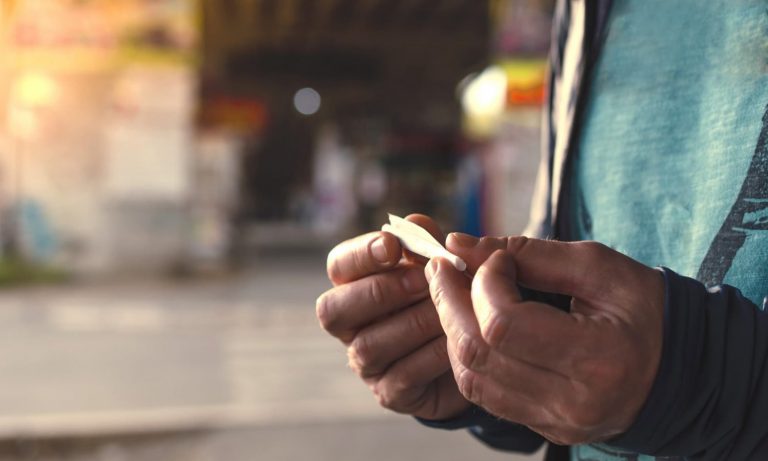
Smoking is the oldest and most common way of consuming cannabis, with the process of grinding, rolling, and lighting the joints being social rituals in the cannabis culture. However, not every cannabis user is comfortable with smoking thereby necessitating the need for other means of consumption.

Two of the most popular alternatives to smoking cannabis are oral intake and sublingual intake. While both methods of intake involve the mouth, they have a lot of differences. This article will discuss everything that you need to know about oral and sublingual intake of cannabis, as well as the best intake method for you.

CBD Edibles Not All They Claim To Be
Photo by SageElyse/Getty Images

What Is Oral Intake Of Cannabis?

Oral ingestion of cannabis involves consuming the product in the form of an edible. It entails drinking, eating food that has been infused with cannabinoids, as well as popping cannabis capsules. Edible cannabis can take the form of cannabis juices, marijuana cookies, and cake, gummy sweets, pizza, coffee.

Regardless of the form that it takes, orally ingested cannabis goes into the stomach where it undergoes metabolism before entering the bloodstream. Due to the metabolic process that edibles undergo, orally ingested cannabis has a longer onset than every other form of consumption. While in the body system, the liver converts the THC contained in the cannabis into 11-hydroxy-THC, which is a very potent metabolic byproduct, with a great psychotropic effect.

Characteristics Of Oral Intake of Cannabis

High Potency: The effect of orally ingested cannabis is quite potent, as 11-hydroxy-THC has a more intense effect than other forms of THC. This means that you experience that hard-hitting and satisfying high. This is why taking edibles appeal to some individuals.

Longer Onset: Edibles usually take a while before it gets into the bloodstream, which explains why it takes longer to hit. After consumption, the food undergoes metabolism traveling through your gut and liver. This longer onset appeals to some people, as the build-up to the high offers a different thrill on its own. Orally-consumed cannabis typically takes up to 90 minutes or more to start working, giving you ample time to settle down.

Long Duration: Not only do they take a longer period to set in, edibles also offer a longer duration of high. This is due to the potency of 11-hydroxy-THC when it enters the bloodstream. The effect of orally-consumed cannabis usually lasts between six to eight hours. The way it works, you enjoy three hours of peak concentration which is followed by a few hours of less intensity.

Reefer Madness Crowd Discovers CBD With Predictable Results
Photo by Elsa Olofsson via Unsplash

What Is Sublingual Cannabis Intake?

Sublingual intake refers to the absorption of substances by placing them underneath the tongue. Sublingual cannabis intake entails placing cannabis in form of oil, extracts, tincture or strip, under your tongue in order for it to gain direct entrance into your bloodstream.

The reason these substances need to be placed under the tongue instead of swallowed is because there is a collection of capillaries connected to the arterial system located beneath the tongue. As a result, this serves a route that gives cannabinoids fast access to the bloodstream. Due to this means of entrance into the bloodstream, sublingual intake does not undergo metabolism. This gives it a faster onset than oral intake of cannabis.

Characteristics Of Sublingual Cannabis Intake

Quick Onset: Sublingual intake of cannabis shares a similar onset period as smoking and vaping. Owing to the direct entrance to the bloodstream, cannabis ingested this way takes effect in a matter of minutes.

Controlled Effect: The effect of sublingual cannabis products is controlled, in the sense that the THC is not broken down into a more potent form. This is because the cannabis does not come in contact with your liver, which can convert it to 11-hydroxy-THC. This means that with sublingual cannabis products, you get a high that is proportionate to the quantity that you took.

RELATED: CBD Vaping – What’s the Difference Between CBD E-Liquid And CBD Oil?

Short Duration: Compared to orally-consumed cannabis, the psychotropic experience gotten from sublingual cannabis lasts for a shorter duration. The high gotten from it usually lasts about an hour or two. With sublingual cannabis, you can enjoy your high for a few hours, and go on with the rest of your day.

What To Do If Your Marijuana Edibles Aren't Getting You How
Photo by Margo Amala via Unsplash

Similarities Between Sublingual Cannabis & Orally-Consumed Cannabis

Through The Mouth: Both methods involve taking the cannabis through the mouth. While oral intake involves eating, drinking, and swallowing cannabis, sublingual consumption involves placing it under your tongue for quick absorption into your bloodstream.

RELATED: How Long Will Your Marijuana High Last? What Researchers Get Wrong

Discretion: The two methods are quite discreet and can be consumed without the limitations that come with smoking. You can take both on a trip back home, with the effects hitting just as you arrive at your place. For cannabis enthusiasts with health concerns, any of these methods serve as a better alternative to smoking.

Dual Functionality: Both methods of consumption are effective for recreational use, as well as for medical purposes.

Differences Between Sublingual Cannabis & Orally-Consumed Cannabis

The distinctions between these two methods of cannabis consumption are evident in their characteristics.

Onset: The effect of sublingual cannabis hits within a few minutes due to its quick absorption into the bloodstream. Orally-consumed cannabis however takes between 60 to 90 minutes, before it starts working due to the longer route that it takes.

RELATED: The Most Popular Marijuana Consumption Methods

Duration: The high gotten from orally-consumed cannabis lasts longer than sublingual cannabis. While orally-consumed cannabis keeps you high for up to eight hours, sublingual cannabis lasts only for an hour or two.

Intensity: Due to the metabolic process which it goes through in the body, the effect of orally-consumed is quite intense. Sublingual cannabis does not give such intensity, as the experience is quite similar to the effects of smoking cannabis.

Comparing oral intake of cannabis and sublingual intake is not a case of which is better or worse; rather, it is about the experience that you wish to have at that time. If you are looking for a quick high that would wear off fast, then sublingual cannabis is your best bet. For a slower high that gives you a wholesome experience, orally-transmitted cannabis gets the job done.

This article originally appeared on Cannabis.net and has been reposted with permission.

Will Fall Travel Plans Be Impacted By COVID-19? Here’s What Experts Know

0

COVID-19 cases are on the rise as we enter the fall season. Here’s what experts predict may happen.

The travel industry has been through it over the past year. While there’s been an improvement in travel ever since the vaccine was introduced, with the rise in COVID-19 cases, things aren’t looking too great for Fall travel plans.

The Huffington Post spoke with several travel experts who shared their opinions on the matter. Here’s what they had to say.

All methods of travel will be less popular

Labor Day: What Does The CDC Advise In Terms Of Travel & Social Gatherings
Photo by Gerrie van der Walt via Unsplash

Willis Orlando, of the website Scott’s Cheap Flights, explained that travel bookings are already experiencing a dip. “All summer long, there was steady momentum towards a return to normal-ish demand for travel, particularly domestically,” he said. “But in the last couple of months, this momentum has sputtered out.”

RELATED: This Simple Habit Can Help You Be A Happier And More Successful Person

It’s expected that international travel will also become less popular, which is significant since international travel hasn’t even come close to making a full recovery yet. Val Anthony, the lead research analyst from Tripadvisor explained that, “This August, 84% of travel booked by Americans on Tripadvisor was domestic, with just 16% international.”

While bookings are likely cheaper, it’s important to remember that international travel is likely to ask for a negative COVID-19 test upon return to the U.S. and, depending on the country you’re traveling to, a test for entry.

Vaccination rates will impact travel

5 Things To Do If You Get COVID-19 While Traveling
Photo by Lukas Souza via Unsplash

A lot of people will likely turn to road trips, which have experienced a boom over the past year due to the pandemic. Road trips are one of the safest travel options for travelers, limiting contact between other people. They’re likely to become options for people to get together over Thanksgiving and other holidays.

Places with plenty of hospitalizations and COVID-19 cases are likely to get less travelers as well since people would most likely avoid staying in a place with little access to hospitals and stressful situations for going out.

But people will still travel

Travel Is Getting A Much Needed Boost From Older People Who've Been Vaccinated
Photo by Vidar Nordli-Mathisen via Unsplash

Despite the rising COVID-19 cases, travel has been increasing over time and it’s not likely to stop. With the vaccine around, the majority of people will consider air travel safe. Measures like face masks, thorough cleaning of airplanes, and asking for vaccine confirmation for restaurant reservations and other social activities will prevent the spread and make people feel safer, allowing them to do more stuff than last year.

RELATED: 5 Small Ways To Improve Your Work Productivity

When it comes to fall travel plans, it’s important to be aware of your level of risk and the place you’re going to. Be flexible with your travel plans and keep in mind that a pandemic is still going on and that it’s important to be courteous to others.

Minnesota Court Rules Hemp-Derived Cannabinoids In Liquid (But Not Leaf!) Form Unlawful

This means businesses or people who process, manufacture, sell, or possess any hemp in liquid form may be subject to criminal liability.

We don’t write about criminal cases often, but a recent decision from the Minnesota Court of Appeals caught my eye because of its potential impact on the people of Minnesota and businesses engaged in processing, manufacturing, possession, or selling of Hemp/CBD in Minnesota. This ruling affects manufacturers, processors, sellers, distributors, and consumers of any liquid form of Hemp/CBD.

Let me explain. State troopers executed an arrest warrant at a home in Brainerd, Minnesota. The officers found the defendant at the home and observed cannabis smoking paraphernalia (a pipe, rolling papers, a grinder, and a torch lighter) and a plastic tote box. The officers then obtained a search warrant and found three pounds of a “leafy plant material” and 89 vaporizer cartridges containing an “amber-colored liquid.”

The defendant was tried and convicted of a possession of a controlled substance, namely marijuana, and other offenses not relevant here.

Despite Vaping Illness, Support For Marijuana Legalization Reaches All-Time High
Photo by HighGradeRoots/Getty Images

The defendant appealed the marijuana convictions. Among his arguments were that the State failed to prove beyond a reasonable doubt that the substances he possessed had a delta-9 THC concentration that was greater than 0.3% on a dry weight basis. Defendant relied on a recent amendment to the Minnesota statute defining marijuana to expressly exclude hemp. Defendant contended the state failed to prove that he possessed marijuana as opposed to hemp.

The appellate court agreed, in part, upon its review of the evidence. But the court distinguished between “leafy plant material” and tetrahydrocannabinol in liquid form. As to the former, the court ruled that the State’s forensic scientist did not have an adequate basis from which to conclude the leafy plant material was marijuana rather than hemp. The court reversed defendant’s conviction related to the “leafy plant material.”

So far so good for the Minnesota Public Defender’s office, which ably represented the defendant on appeal.

But the appellate court took a different view of the vaporizer cartridges because of a quirk in Minnesota’s controlled substances law. To understand the court’s reasoning, it is important to understand that Minnesota has separate statutory definitions for “marijuana” and for “tetrahydrocannabinols”. I’ll skip parsing the statutes and go right to the conclusion:

“Unlike the definition of marijuana, the inclusion of tetrahydrocannabinols in Minnesota’s Schedule I does not make any exception for hemp or for a substance or mixture that has a concentration of delta-9 tetrahydrocannabinol that is 0.3 percent or less on a dry-weight basis.”

Because the State established that the vaporizer cartridges contained some amount of tetrahydrocannabinols, the State’s evidence was sufficient to uphold defendant’s conviction.

What this means is that a “liquid mixture” containing tetrahydrocannabinols is a Schedule I controlled substance under Minnesota law. The state does not have to prove that the mixture contains delta-9 tetrahydrocannabinol in a concentration greater than .3 percent on a dry weight basis.

RELATED: Hemp Litigation: DEA Sued Again

Although perhaps the appellate court may be commended for its by-the-book approach to statutory interpretation, the effect of this ruling leads to terrible practical results. It is now lawful to possess cannabis in the form of “leafy plant material” that contains a delta-9 tetrahydrocannabinol in a concentration less than .3 percent on a dry weight basis. (Hemp, in other words). But it is a crime to possess a “liquid mixture” containing tetrahydrocannabinol, regardless of its delta-9 THC content.

RELATED: Hemp-CBD Legislation: Will Congress Boost Hemp Total THC Limit To 1%?

This means businesses or people who process, manufacture, sell, or possess any hemp in liquid form may be subject to criminal liability. Presumably a “liquid mixture” containing tetrahydrocannabinol includes tinctures, beverages, and possibly certain cosmetics and other products. As this case shows it certainly includes vape cartridges.

What’s the fix? I expect an appeal to the Supreme Court is likely. But a quicker and more certain result would be for the Minnesota legislature to amend the definition of tetrahydrocannabinol to exclude hemp. That should be done whatever happens with this case.

Jesse Mondry is an attorney at Harris Bricken and this article was originally published on the Canna Law Blog and was reposted with permission.

Doing This Could Help Curb Some Of The Side Effects Of Sitting

0

This easy tweak to sitting could help you develop better posture and improve your mobility and flexibility.

There’s a lot of harmful habits that can damage and shorten our quality of life. One of the most common is sitting, which has been equated to smoking in terms of the harm it does to your body. This is concerning since a lot of us spend the majority of our time sitting down.

According to evidence and health experts, sitting down on the floor is associated with having a better posture, improving your flexibility and mobility.

RELATED: This Common Habit Could Increase Your Risk Of Heart Disease

College Students Seek CBD For Pain And Stress Management
Photo by tortugadatacorp via Pixabay

In our culture, sitting down on the floor is something we don’t do often, associating it with something that children do or as something we do with a specific purposes, like stretching or practicing yoga. But Dan Buettner, founder of the term Blue Zones (which refers to the regions of the world that are associated with longer lives) says that in Japan people have a different approach.

“The longest-lived women in the history of the world lived in Okinawa, and I know from personal experience that they sat on the floor,” he said in an interview with Well and Good. “I spent two days with a 103-year-old woman and saw her get up and down from the floor 30 or 40 times, so that’s like 30 or 40 squats done daily.”

While sitting on the floor might help your body stay more flexible and mobile, the fact that you have to get up is probably what results in most benefits. Findings from a study on the benefits of the sitting rising test support this, claiming that people who performed poorly were up to six times more likely to die earlier than participants with positive results.

RELATED: Here’s How You Can Protect Your Body From Hours Of Sitting

Sitting is something we all have to do, whether we like it or not, so it’s best not to stress too much over it. What you can do, whether you sit on the floor or on a chair, is to keep an eye on your posture. Sitting on the floor incorrectly can reduce blood circulation, contribute to poor posture and add extra stress to your joints, so it’s important to keep an eye on how you feel and to stop if you start experiencing pain.

No matter where you’re sitting, it’s important to change positions often and to stand up and stretch. Going on a short walk could also help, contributing to a more active lifestyle.

Marijuana May Give A Speech Impediment

0

If you find that your speech is altered from time to time, your cannabis use could be to blame.

Anyone who has ever been sidelined by high potency cannabis edibles understands that it can sometimes be challenging to carry on a conversation once the THC starts running through the old veins, like Allyson Felix going for the gold. But, hey, most cannabis users understand that pure, unadulterated catatonia can be par for the course. But, according to a new study, marijuana may give a speech impediment. 

It might be shocking to learn that weed can potentially discombobulate motor skills and have a lasting effect on their speech. Yep, data hints cannabis might be making stoners talk funny. 

talking
Photo by Aarón Blanco Tejedor via Unsplash

Researchers at the Centre for Neuroscience of Speech at the University of Melbourne claim they have found a connection between cannabis use and changing speech patterns. “Speech is sensitive to brain health. Changes that occur from drug use can lead to changes in behaviors and cognitive/motor acts, even in otherwise healthy adults,” study co-author professor Adam Vogel told PsyPost. 

The study, published in the journal Drug and Alcohol Dependence, examined a small group of adults who had a history of cannabis use. In contrast, they also recruited another group with no record of drug use. To ensure the results would only mark the effects of cannabis, researchers weeded out those participants who had also dabbled in opioids or other recreational drugs, like cocaine and methamphetamine. Taking it a step further, individuals who reported using alcohol and tobacco were also separated from the pack. In the end, they found speech changes in cannabis users. 

RELATED: Scientists Issue Guidelines Over Safe Cannabis Use

“Our digital analysis of speech shows there may be a signal differentiating individuals with a history of recreational cannabis use from healthy controls, in line with similar findings from gait and hand function studies,” researchers wrote.

To come to this conclusion, researchers had the participants engage in several simple vocal tests. One was an unprepared one-minute dialogue of their choosing. Other tests involved the ability to sustain vowel sounds, quickly repeating pa-ta-ka, reciting the days of the week, and reading various other passages. The results showed that the speech of cannabis users had a greater level of variability than non-users.  

RELATED: Negative Health Effects Of Marijuana Shouldn’t Deter Federal Legalization

The kicker, however, is that researchers cannot be sure if cannabis use alone is to blame. After adjusting for the false discovery rate, they concluded that it was unclear whether cannabis use altered speech or not. In fact, study authors admit the results were mostly speculation. 

marijuana
Photo by Photo by Elsa Olofsson via Unsplash

“Data for this study are derived from a single time point, that is, subjects were not followed over time. We are making assumptions that the differences we observed between groups (cannabis vs. non-drug users) were the result of cannabis use and not something else we haven’t accounted for,” Vogel declared.

So, if you find that your speech is altered from time to time, just know that your cannabis use could be to blame. But we wouldn’t worry about it too much. Remember, most people you encounter these days will not shame anyone for sounding a bit phonetically deranged. With more than 22 million cannabis users in the U.S. each month, chances are nobody will even notice.

Legalization Momentum: Courts Expunge 362K Marijuana Cases In NJ, Arrests Drop 90% In VA

0

The reduction in arrests indicates that public policy is working as intended and in a way that is consistent with post-legalization observations from other states

By Franca Quarneti via El Planteo

Marijuana legalization is gaining momentum in the United States, which is increasingly evidenced by decriminalization, reduced sentences and drops in cannabis-related arrests.

For example, in New Jersey, the courts have dismissed or annulled 362,000 cases related to marijuana. In addition, in the Richmond, Virginia area, cannabis-related arrests dropped by 90%.

Who Is Really Getting Busted For Marijuana Possession?
Photo by vladans/Getty Images

Courts dismiss cannabis cases in New Jersey

According to data provided by the New Jersey Judiciary, the state’s courts annulled or dismissed some 362,000 marijuana-related cases since July 1.

150,000 residents are now eligible to have their marijuana-related records automatically expunged by the courts. And, in case those records were not automatically cleared, people can still file an appeal for review with the court.

RELATED: Al Harrington, Drake, Killer Mike Ask Pres. Biden To Pardon All Non-Violent Cannabis Offenders

As reported by the National Organization for the Reform of Marijuana Laws (NORML), these new measures come after the New Jersey Supreme Court issued an order to dismiss and expunge marijuana-related offenses.

New Jersey is not the only state where this is taking place: In Illinois, authorities expunged 500,000 records, while in California, 200,000 others were expunged.

90% fewer marijuana arrests in Richmond, Va.

According to Ganjapreneur, cannabis-related arrests dropped by more than 90% in the city of Richmond, Virginia since the state’s cannabis law went into effect on July 1 and there were only 25 arrests. In contrast, during the same period last year there were 257 arrests.

RELATED: How The Cannabis Industry Can Help Expunged Individuals Enter The Legal Market

Speaking to the Richmond Times-DispatchJean Michelle Pedini, director of NORML and executive director of the state chapter, explained, “The reduction in arrests indicates that public policy is working as intended and in a way that is consistent with post-legalization observations from other states.”

Olympic Cannabis Ban To Be Re-Examined After Sha’Carri Richardson Disqualification

0

One of the justifications for the suspension of Richardson — that cannabis was potentially performance-enhancing — was roundly rejected by scientists.

By Maureen Meehan

The World Anti-Doping Agency (WADA) announced Tuesday that it intends to review the status of cannabis on its banned substance list, following last summer’s exclusion of track star Sha’Carri Richardson from competing at the Tokyo Olympics after she tested positive for cannabis in her home state of Oregon, where marijuana is legal.

The scientific review will be conducted by a group that advises WADA in 2022.

Sha'Carri Richardson
Photo by Patrick Smith/Getty Images

RELATED: Olympics Begin, Blame Game Continues At Fed Commission Hearing Over Sha’Carri Richardson Suspension

“Following receipt of requests from a number of stakeholders, the (executive committee) endorsed the decision of the List Expert Advisory Group to initiate in 2022 a scientific review of the status of cannabis,” a WADA statement read. “Cannabis is currently prohibited in competition and will continue to be in 2022.”

Fastest Runner In The World

When Richardson tested positive for cannabis during the U.S. Olympic Track & Field Trials in June, she was given a one-month suspension that essentially wiped out her results – an extraordinary 10.86-second 100m dash – that had qualified her for a spot on the Olympic team.

Outcry Then And Now

The suspension sparked anger as well as an outpouring of support for Richardson among the cannabis industry and all sectors of society, including several members of Congress. Soon thereafter, rose a call for a review of cannabis’ status from numerous organizations, including the White House via the U.S. Office of National Drug Control Policy (ONDCP), which told Benzinga at the time that it would “ask WADA to gather additional information on its cannabis policies.”

Prior to the Tokyo Olympics in July, the White House was in pursuit of a meeting with WADA to discuss cannabis’ position as a banned substance, said the ONDCP press secretary.

A Little Science, Please

One of the justifications for the suspension of Richardson, 21 — that cannabis was potentially performance-enhancing — was roundly rejected by scientists.

RELATED: Sha’Carri Richardson: World Anti-Doping Agency Claims US Consistently Pushed For Cannabis Prohibition, Is Anyone Surprised?

“It is so ironic that now they are using that argument when in fact all these years there has been been very little scientific research done about the benefits of cannabis,” Dr. Peter Grinspoon, Harvard Medical School instructor and cannabis expert, told Benzinga at the time. “Cannabis research was essentially prohibited so no one really knows where the US Anti-Doping Agency came up with these standards. Cannabis meets none of them.”

This article originally appeared on Benzinga and has been reposted with permission.

Hospitalizations Cause FDA To Issue Warning On Delta-8

The FDA is concerned that some manufacturers may use potentially unsafe household chemicals to make delta-8 THC through a chemical synthesis process.

On Tuesday, the Food & Drug Administration (FDA) issued a warning about delta-8 THC noting that the product hasn’t been evaluated or approved by the agency. Granted, the FDA’s opinion on anything cannabis-related is received with a healthy dose of skepticism. The FDA still hasn’t made any determination on CBD after years of discussion and research.

The 2018 Farm Bill that essentially legalized hemp specifically called out the exclusion of delta-9 THC. Manufacturers seized on that and decided that delta-8 could slip through the loopholes since it wasn’t named in the bill. Delta-8 THC is one of over 100 cannabinoids produced naturally by the cannabis plant.

It doesn’t pack the punch of a delta-9 high, but consumers say it gives a light buzz. Delta-8 though isn’t easily extracted from the plants, and so it’s typically manufactured from hemp-derived cannabidiol (CBD). As such, the FDA is concerned that these products get labeled as hemp-derived and some consumers may think there are no psychoactive effects like other hemp products. The products are also marketed as having therapeutic qualities, which the FDA notes are unsubstantiated claims.

delta-8 THC marijuana
Photo by Animaflora/Getty Images

Adverse Side Effects

What is troubling are the reports of adverse side effects. In the waring notice the FDA said that from December 2020 through July 2021, it had received adverse event reports from both consumers and law enforcement describing 22 patients who consumed delta-8 THC products and 14 who went to a hospital or emergency room for treatment. Nineteen of these patients said they had eaten delta-8 THC food products. The adverse events included vomiting, hallucinations, trouble standing, and loss of consciousness.

RELATED: How To Know If Delta-8 THC Is Right For You

In addition to that, the FDA said that the national poison control centers received 661 exposure cases of delta-8 THC products between January 2018 and July 31, 2021, 660 of which occurred between January 1, 2021, and July 31, 2021. Of the 661 exposure cases:

  • 41% involved unintentional exposure to delta-8 THC and 77% of these unintentional exposures affected pediatric patients less than 18 years of age.
  • 39% involved pediatric patients less than 18 years of age
  • 18% required hospitalizations, including children who required intensive care unit (ICU) admission following exposure to these products.
delta-8 thc cannabis
Photo by Thanasis/Getty Images

Added Chemicals

The FDA noted that the natural amount of delta-8 THC in hemp is very low, and also additional chemicals are needed to convert other cannabinoids in hemp, like CBD, into delta-8 THC through a synthetic conversion. The FDA is concerned that some manufacturers may use potentially unsafe household chemicals to make delta-8 THC through this chemical synthesis process.

RELATED: R.I.P. Delta-8 THC: Why States And DEA Want It Banned

Also, additional chemicals may be used to change the color of the final product. Since these products are unregulated the manufacturing of delta-8 THC products may also be taking place in unsanitary settings.

Children Targeted

The FDA has also pointed out that the products are showing up in packaging that is appealing to minors. “These products may be purchased online, as well as at a variety of retailers, including convenience stores and gas stations, where there may not be age limits on who can purchase these products. As discussed above, there have been numerous poison control center alerts involving pediatric patients who were exposed to delta-8 THC-containing products. Additionally, animal poison control centers have indicated a sharp overall increase in accidental exposure of pets to these products.”

This article originally appeared on Green Market Report and has been reposted with permission.

People Angry Over Nicki Minaj’s Vaccine Tweets

Minaj was cognizant of the criticism leveled against her and returned each volley with the wit and sass that her fans have come to expect and cherish.

By Phil Hall, Benzinga Staff Writer

Nicki Minaj seems to have hit a few off-key notes with a recent tweet regarding the COVID-19 vaccine, bringing criticism from the likes of Dr. Anthony Fauci, Britain’s Prime Minister Boris Johnson and TV broadcasters Joy Reid and Piers Morgan.

What Happened: The glamorous rapper wound up in the center of the vaccine kerfuffle ahead of Sept. 13’s Met Gala, which Minaj declined to attend because the fashionista event required its A-list guests to be fully vaccinated and she has yet to receive her vaccine shots.

Nicki Minaj
Photo by Michael Loccisano/Staff/Getty Images

“They want you to get vaccinated for the Met,” she Tweeted, adding, “if I get vaccinated it won’t for the Met. It’ll be once I feel I’ve done enough research. I’m working on that now. In the meantime my loves, be safe. Wear the mask with 2 strings that grips your head & face. Not that loose one.”

Minaj followed that statement with another tweet concerning a family friend who reportedly had an unexpected side-effect to the vaccine.


“My cousin in Trinidad won’t get the vaccine cuz his friend got it & became impotent,” she tweeted. “His testicles became swollen. His friend was weeks away from getting married, now the girl called off the wedding. So just pray on it & make sure you’re comfortable with ur decision, not bullied.”

She then returned to Twitter to insist she was not advocating against vaccines, responding to a fan’s message by tweeting, “A lot of countries won’t let ppl work w/o the vaccine. I’d def recommend they get the vaccine. They have to feed their families. I’m sure I’ll b vaccinated as well cuz I have to go on tour, etc.”

What Happened Next: Somehow, Minaj’s tweeted were viewed by several prominent individuals as being a rallying cry against vaccinations.

Photo by Alex Edelman-Pool/Getty Images

Dr. Fauci, the director of the National Institute of Allergy and Infectious Diseases and the chief medical adviser to President Joe Biden, called out Minaj’s tweet about her cousin’s friend, explaining during a CNN interview that there is no evidence of the unusual side-effect she described while complaining, “She should be thinking twice about propagating information that really has no basis except a one-off anecdote, and that’s not what science is all about.”


Prime Minister Johnson was asked about Minaj’s tweets during a press conference and he drew a blank, acknowledging, “I’m not familiar with the works, or as familiar with the works of Nicki Minaj as I probably should be” – although he quickly voiced his support for the efficacy of COVID vaccines.

But Chris Whitty, chief medical adviser to the U.K. government, was more direct, stating, “There are a number of myths that fly around, some of which are just clearly ridiculous and some of which are clearly designed just to scare. That happens to be one of them. That is untrue.”


Minaj’s tweets also brought criticism from MSNBC’s Reid, who pointed to Minaj’s Twitter audience of 22 million followers and complained, “For you to use your platform to encourage our community to not protect themselves and save their lives, my God sister, you can do better than that! You got that platform – it’s a blessing that you got that. The people listen to you – and they listen to you more than they listen to me!”

As for Morgan, he also questioned her comments but took it into more personal drubbing by calling her “one of the rudest little madams I’ve ever met” and claimed she “refused to say hello to my three young sons” during a guest appearance on “America’s Got Talent” because she insisted that she was ‘too busy.’”

RELATED: Here’s Why Young And Healthy People Should Get Their COVID-19 Vaccine

What Else Happened: Minaj was cognizant of the criticism leveled against her and returned each volley with the wit and sass that her fans have come to expect and cherish.

With the British leadership, she playfully took on an Anglophile vibe by jesting, “I love him even tho I guess this was a diss? The accent ugh! Yassss boo!!!” She also did a comic audio recording with a comic audio recording where she addressed Johnson as a former Oxford classmate of Margaret Thatcher.

RELATED: This Vaccine Might Be Deemed ‘Obsolete’ In The Near Future

With Reid, she was less jolly, tweeting, “This is what happens when you’re so thirsty to down another black woman (by the request of the white man), that you didn’t bother to read all my tweets. “My God SISTER do better” imagine getting ur dumb ass on tv a min after a tweet to spread a false narrative about a black woman.”

Minaj suffixed her comments by calling Reid a “lying homophobic coon.”

As for Morgan, Minaj countered: “Sir I’ve never met you. I know… we all look alike. ‘Rudest little madam.’ I like it. Has a special ring to it. Thanks Pierce. Love the accent. I’d love to come chat. Scones. Tea. Clown nose & big red shoes for you. Lmk babe.”

While Minaj appeared to overlook Dr. Fauci’s remarks, she nonetheless made it clear she never used social media to dissuade people from being vaccinated and even offered a tweet asking her Twitter followers which vaccine was the best, which brought more than 7,000 responses.

This article originally appeared on Benzinga and has been reposted with permission.

Can You Get The Flu Shot And COVID-19 Vaccine At The Same Time?

0

At the start of the year, medical experts suggested that people getting the COVID-19 shot should wait 14 days before getting any other shot. Here’s what they’re saying now.

Cool weather makes it easier for viruses to spread. When it’s cold out, the majority of people prefer to spend as little time indoors as possible, usually meeting up with friends in indoor bars, apartments or places where they can do stuff. With COVID-19 (or any virus) in the mix, this creates the perfect breeding place for contagion.

Is it possible to have the flu shot and the COVID-19 booster at the same time? When you’re a kid and you’re getting vaccinated, it’s common to get different shots, one after another. But is it the same with COVID-19.

Is It COVID-19, Allergies Or The Flu? Here's How To Know
Photo by Kelly Sikkema via Unsplash

COVID-19 booster shots will start to become widely available on September 20. A few months ago, the Centers for Disease Control and Prevention (CDC) used to recommend a wait period of 14 days between the COVID-19 vaccine and any other vaccines, making us all a little wary of its possible interactions with other elements. Add that to the surprisingly debilitating side effects of the shot, and it’s okay to ask yourself if your two shots should overlap, or if you should prize COVID-19 above the flu shot.

RELATED: 5 Questions You May Have About COVID-19 Boosters

Fortunately, following the full approval of the COVID-19 vaccine, health experts are now sure that it’s very very unlikely for there to be adverse reactions when getting multiple vaccines at a time.

“Experience with other vaccines has shown that the way our bodies develop protection, known as an immune response, after getting vaccinated and possible side effects of vaccines are generally the same when given alone or with other vaccines,” says the CDC.

RELATED: This Rare Condition Is More Common After Having COVID-19

The COVID-19 vaccine is pretty new, so some wariness is understandable, especially if you coped with some intense side effects during your first or second time getting the shot. The answer is up to you; while it’s totally safe to get both shots, adverse side effects might be more likely, and both of your arms might hurt a bit. 

Still, the flu shot remains a priority. Getting that immunization will give you some peace of mind, making it less likely to catch a disease during the winter time, in a moment when there’s a variety of viruses on the rise.

Don't Miss Your Weekly Dose of The Fresh Toast.

Stay informed with exclusive news briefs delivered directly to your inbox every Friday.

We respect your privacy. Unsubscribe anytime.