A viral TikTok hack claims to clear up nasal congestion with an herb you likely have in your kitchen. Here’s what experts think about it.
TikTok is no stranger to advice from how to take care of your mental health, to chaotic ideas to get back at your ex. A new hack claims to help ease people’s nasal congestion by sticking a garlic clove up their nose, resulting in viral videos of people doing just that. Aside from the gross factor, is there any truth to these statements?
Nasal congestion dries up your mouth, creates pressure in your head and makes everyday activities like breathing and eating very difficult. Still, sticking a garlic clove up your nostril seems like a pretty extreme course of action, no matter how desperate you are.
The TikTok videos suggest that peeled garlics are able to clear your nostrils in gross detail. Medical experts say that this isn’t accurate and that it could actually result in medical complications.
Dr. Anthony Del Signore explained to Self Magazine that the reason why mucus comes out of your nostrils when you place garlic cloves in them is due to your nose responding to an obtrusion there. “You’re not really cleansing the nasal cavity. Essentially what’s happening is it’s causing a caustic irritation in the nasal cavity,” he said. The nostrils grow inflamed and the mucus is the way of coping with the irritation.
Image by Joseph Mucira via Pixabay
A more concerning issue is the fact that garlic cloves are the perfect shape for an object to get lodged up your nose. A blocked nasal passage could result in difficulty breathing and even an infection. If you’re sick and your system is already dealing with an infection, introducing a garlic clove up your nose might multiply bacteria and makes matters worse.”Bacteria love organic things,” says Dr. Del Signore.
Next time you see a TikTok that recommends something that goes against your base instincts, don’t listen to it. No matter how congested you are, there’s never a good enough reason to put up a garlic clove inside your body.
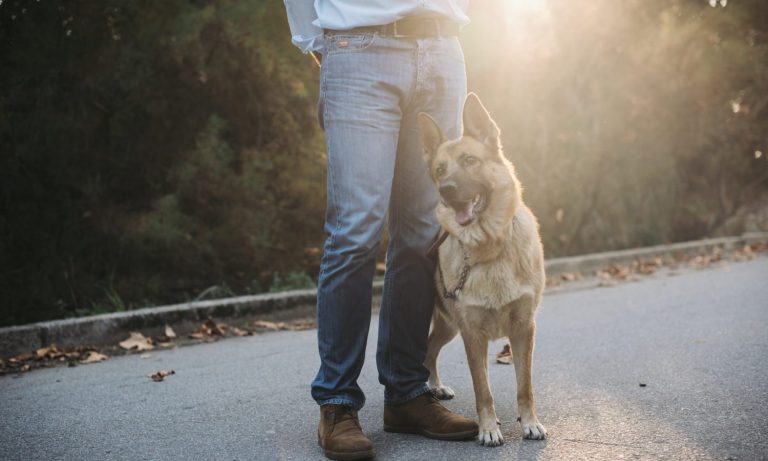
Drug sniffing dogs are becoming more and more irrelevant as marijuana earns legal status across the U.S.
K9 units, also known as police or sniffing dogs, are used to track scents and spot suspicious smells. In the age of legal marijuana, their services are becoming more and more irrelevant, with different states having to retire them due to the legal complications they provide. Retiring police dogs isn’t as ominous as it sounds; these guys are simply given up for adoption or sent to a different state to do their work.
Police dogs are trained to sniff out narcotics, cannabis among them. Dog alerts give police officers probable cause to conduct a search. With legal marijuana programs in place, this becomes an issue, because dogs can’t discern between a large amount of cannabis or a single joint — or even between cannabis and other forms of illegal narcotics.
All dogs that have been trained by police officers to sniff out marijuana will likely be retired once their state legalizes cannabis. It’s unlikely that these dogs will be able to be retrained; dogs won’t likely be able to forget a smell or stop a response they’ve been trained to learn all of their lives. In order to continue using K9 units, new dogs must be brought aboard and trained to alert police officers to the presence of drugs like cocaine, MDMA, heroin, and any other illegal substance.
While it’s sad to rob dogs out of their life’s purpose, according to a report published by Reason, dogs are pretty bad at sniffing out drugs. One example they provide is Lex, a drug-sniffing dog based in Illinois. The dog alerted for narcotics 93% of the time but was wrong in over 40% of cases. This is a troubling statistic, one that indicates that dogs simply provide ample opportunities for cops to search people and cars.
Photo by RichLegg/Getty Images
Police dogs are also biased towards their handlers, picking up on their cues even if there are no drugs around. This gives handlers too much power and the ability to search people without having probable cause.
With legal marijuana programs in place, states like New Mexico have been forced to retire their sniffing dogs. These can be adopted by their handlers or donated to a different state that has no legal marijuana program yet. Other states, like Colorado, have ruled that police need to establish probable cause before launching K9 units. Hopefully, sometime soon, more and more police dogs can retire. We wish them a lot of naps and treats.
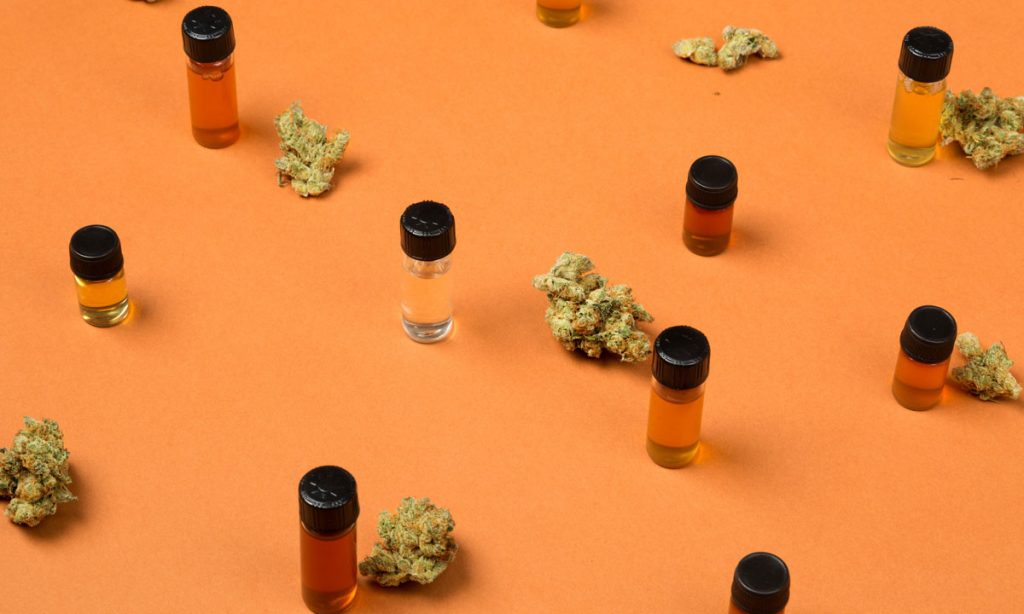
As the popularity of concentrate consumption increases, so has demand for new, sophisticated products created to consume concentrates.
July 10 or Dab Day is keeping the summer party going at dispensaries. The holiday celebrates the idea that 710 looks like “OIL” upside down. (Admittedly, it’s a stretch, but hey cannabis consumers are entitled to party whenever they want.)
Dab Day, also known as Oil Day, celebrates products derived from cannabis, including extracts and oils. Even with the pandemic last year, sales still increased for these products.
Photo by Ivan-balvan/Getty Images
710 Data
Cannabis data and analytics company Headset reported that on Dab Day 2020 (7/10/20) total US cannabis sales increased by 5.0% over an average of the previous four Fridays. Canadian cannabis markets saw a larger sales increase with 10.3% growth over the same time frame. Both US and Canadian cannabis customers made sure ‘Dab Day’ lived up to its name in 2020. In both countries, concentrates had by far the strongest single-day sales growth of all product categories.
In comparison to the previous four Fridays, Canadian concentrate sales increased by 40.6%, with Pre-Rolls (+11.5%), Edibles (+10.9%), Vapor Pens (+10.1%) also seeing some positive growth. Concentrate sales increased by 48.6% in the US, with Vapor Pens (+8.0%) as the only other category enjoying positive growth. Headset said that all data for the US is from CA, CO, MA, MI, NV, OR, PA, and WA unless otherwise noted. All data for Canada is from AB, BC, ON (private only), and SK.
In the US, rosin products had the strongest growth, increasing in sales by 115% over the previous four Fridays. Badder/Budder (+70%) and Live Resin (+60%) were the next most successful segments. In Canada, the top three performing Concentrate segments were: Hash (+86%), Shatter (+49%), and Live Resin (+38%).
Leaflink also tracked sales in 2020 for Dab Day. Sales through LeafLink increased by 5% during the month leading up to 7.10. Despite oil being the celebrated product, flower was the most popular product category during the month leading up to 7.10 – during this time, flower products made up 33% of LeafLink’s market share. However, pre-rolls experienced the biggest lift – during the month leading up to 7.10, this product category saw a 12% bump in orders through LeafLink. Interestingly, it looked like many decided to celebrate Day Day by buying pre-rolls with a little dab flavor.
Photo by Shopify Partners via Burst
710 Discounts
Retailers are never one to miss a holiday and offer a bargain to get shoppers into the doors. Headset reported that Dab Day was a fantastic day for American concentrate fans to stock up on products. In the US (CA, CO, NV, OR, PA, WA) the average discount on concentrates grew by a whopping 60%, rising from 12.0% during the previous four weeks to 19.2% on 7/10/2020.
To kick off Dab Day, One Plant Florida is hosting patient appreciation events outside of its eight retail locations. Celebrated annually throughout the cannabis industry on July 10, Dab Day received its name because the number 710 upside down spells OIL. On Saturday, July 10, attendees can enjoy delicious bites from a local food truck, live music, and an array of different vendors at One Plant’s locations in Avon Park, Bonita Springs, Boynton Beach, Fern Park, Jacksonville Beach, Ocala, Port St. Lucie and St. Petersburg, Florida.
710 Products
As the popularity of concentrate consumption increases, so has demand for new, sophisticated products created to consume concentrates. Here are a few to check out:
G Pen Roam
The G Pen Roam seamlessly combines sleek design with advanced technology while still preserving the experience of traditional dabbing. Optimized to the user’s preference, the Roam heats up within seconds to 600 – 800 degrees Fahrenheit. It delivers the best flavor with a full quartz tank, and its custom temperature settings melt all forms of concentrate material to perfection. Engineered for ultimate ease of use and portability, the glass hydro-tube with removable silicone mouthpiece is enclosed in a durable aluminum housing and is magnetically connected to the rechargeable 1300MAH lithium-ion battery.
G Pen Connect
A revolutionary alternative to conventional concentrate consumption, the G Pen Connect elevates and simplifies the process through cutting-edge technology and modern design, delivering high-density, quality vapor production without the hassle of a torch and exposed nail. G Pen teamed up with Cypress Hill’s B Real to introduce Dr. Greenthumb’s x G Pen Connect
Higher Standards Heavy Duty Mini Beaker
In addition to a removable Glass Bowl, this dual-use water pipe is equipped with a 45-Degree Quartz Banger, a Carb Cap, and a Large Tool to accommodate concentrate consumption.
Having your coffee is a pretty straightforward process but, according to science, there’s a better way to enjoy it and reap stronger results.
Coffee is the ultimate morning ritual. While there are many variables to a positive morning — showers, breakfast, a good night’s sleep — coffee is one that makes it or breaks it for many of us. There’s something special and effective about that first sip of coffee, waking you up and brightening your mood. From an energy perspective, there’s a whole science to how coffee works, including an amount of time you’re meant to wait before you drink it.
The Huffington Post spoke with health experts, who determined that the best time to have your coffee is about an hour after you first wake up. It has a lot to do with cortisol and our production of this hormone first thing in the morning.
Your body naturally produces cortisol, the stress hormone, when you first wake up. This hormone does much of what coffee does, waking you up and giving you energy to carry on with your day. By waiting a bit to introduce caffeine into your system, you’ll be giving your body some room to experience the caffeine buzz it craves while also preventing the odds of getting jittery.
“There is some science behind isolating caffeine and peak cortisol so they don’t go head to head and have negative compounded effects in the body [like the jitters],” says Tracy Lockwood, dietitian and author. “You basically want the caffeine in the coffee to shine as a solo artist and not be influenced by the strong effects of cortisol.”
Photo by Matthew Henry via Burst
While having your coffee first thing in the morning will provide you with some energy and motivation, it’ll be a briefer and less powerful experience than if you were to wait for the effects of cortisol to stop waking your body up. The fact that coffee has become such an ingrained part of our morning routines might also make the experience more predictable, consistent and even dull for your body.
There’s no right way to have coffee. What works for one person might not work for another. But if you’re interested in having a different morning experience, looking for a longer caffeine burst, try to delay that first cup of coffee, especially if what you’d like to feel a sustained burst of energy.
One might wonder if lawmakers in Illinois had any idea just how much recreational cannabis sales would bring into the state’s coffers when, less than two years ago, they decided to legalize it. They probably had some idea, seeing that the state ended the previous fiscal year with more than $317 million in cannabis taxes, according to 23 WIFR.
In May 2019, the General Assembly approved the Illinois Cannabis Regulation and Tax Act, which went into effect in January 2020, making Illinois the eleventh state to legalize recreational marijuana and the first in the nation to do so through a state legislature rather than a ballot initiative.
Photo by Hillary Kladke/Getty Images
A bold move, one might say, but a smart one: tax figures for just six months of sales for 2020 surpassed $52.7 million. Not even the global pandemic prevented the ever-booming market from taking off.
This May alone, cannabis sales in the state hit $116 million, which is $1.5 million higher than in April, according to the data from The Illinois Department of Financial and Professional Regulation.
Splitting The Taxes
Total reported sales since the program began in January 2020 amount to more than $1.7 billion. Taxes, which vary depending on the potency of the cannabis product, can reach as high as 40%.
Tax earnings are divided up in several ways, with more than a third going into Illinois’ general revenue fund. Another 10% go to the state’s backlog of unpaid bills; 8% to law enforcement and 2% are earmarked for cannabis-related public safety campaigns.
A quarter of every cannabis tax dollar goes to the Restore, Reinvest and Renew (R3) program by law, while local governments have the right to grab up to 3% of additional sales tax.
Cannabis businesses need to remain vigilant and consider whatever regulatory measures can be taken to mitigate losses caused by fires.
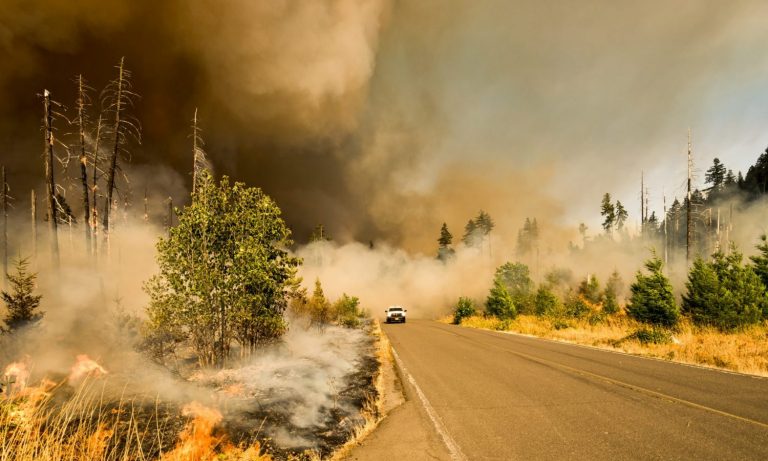
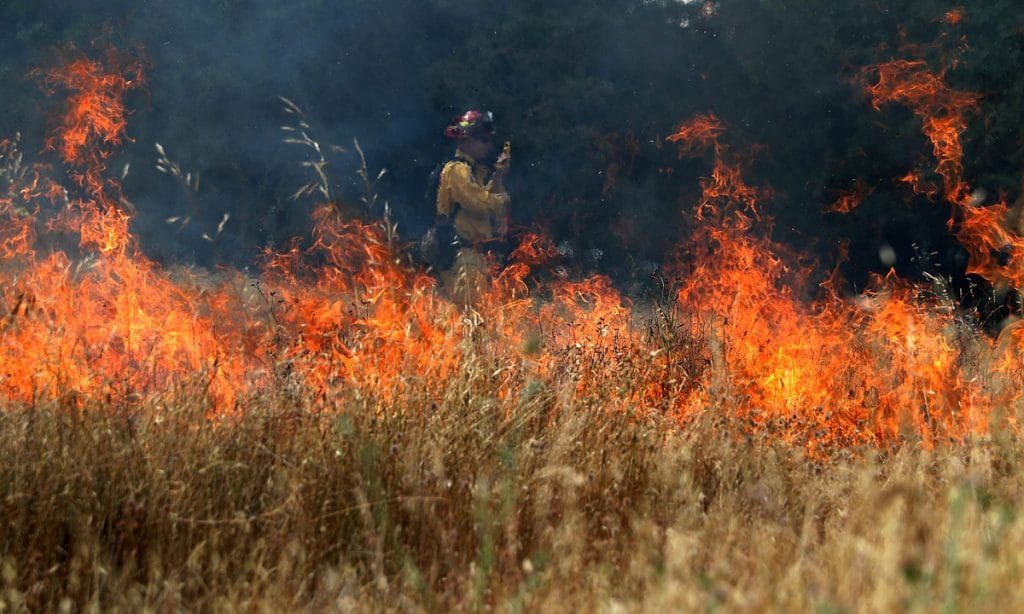
Summer’s here, a massive heatwave just hit the west coast, and fire season is right around the corner. This is the harsh reality for west coast residents and it doesn’t look like that’ll change anytime soon. Wildfires have a severe impact on entire communities and everyone can be impacted. But there are some unique issues for cannabis businesses that I’ll get into in this post.
First off, cannabis businesses are unlike many other businesses because they are siloed in specific locations and have many regulatory restrictions concerning moving goods in the event of a natural disaster such as a fire. Fortunately, many states’ regulators had the foresight to include provisions for relief from regulatory requirements in some cases when natural disasters strike. You can check out our posts on Oregon and California to read more about their respective regulations, which I won’t rehash here.
Photo by Justin Sullivan/Staff/Getty Images
Second, cannabis businesses are very susceptible to damage as a result of fires. Outdoor cultivators are usually hit the hardest–even when fires don’t damage their crops, smoke and other particulate matter (even from seemingly far-off fires) can destroy outdoor crops. I saw a lot of examples of this happening last year. So even when fires may not be at a cultivator’s literal doorstep, they need to be thinking about things like air condition and whether they need to get in touch with the state about seeking any relief as noted above.
For any cannabis business, actually having a fire at the premises is about the most serious problem one could face. This is a particular challenge for businesses that may be storing tons of cash and valuable products and that may not have adequate insurance coverage (as is often the case) to cover losses caused by fires. Moreover, loss in the ability to operate due to fire damage can be a major, if not fatal, setback for many cannabis businesses.
Third is utilities. If fire or excessive heat damages power lines, for example (this happened in LA County during last year’s massive heatwave), indoor cultivators may not get the electricity they need to cultivate plants — and they need a lot. And while we are on the precipice of another drought, cultivators across the state will face declines in water availability as resources are being diverted to fight fires. We are already seeing issues crop up all across the state with water supplies.
Photo by Elijah Nouvelage/Stringer/Getty Images
For many cannabis businesses in cities or other non-rural areas, fires won’t be a direct impact. But it’s entirely possible that we’ll see another massive spike in prices that will be felt all along the supply chain due to fire impacts on cannabis cultivators. The point is that cannabis businesses need to remain vigilant and consider whatever regulatory measures can be taken to mitigate losses caused by fires.
Griffen Thorne is an attorney at Harris Bricken, a law firm with lawyers in Seattle, Portland, Los Angeles, San Francisco, Barcelona, and Beijing. This story was originally published on the Canna Law Blog and has been reposted with permission.
The social media platform has very active cannabis groups where cannabis expos, events, and discussions are shared.
LinkedIn is the most preferred social media platform for professional networking. A quick google search will show that the main purpose of the social network is “to connect the world’s professionals to make them more productive and successful.” From all indications, LinkedIn is certainly fulfilling its mission.
Productive connections have been made on this site, and various careers have been developed. There are groups for any and every industry in the world on LinkedIn with a very diverse audience from all over the world.
Photo by ROBIN WORRALL via Unsplash
As a cannabis entrepreneur, LinkedIn is one of the best places for you to network. The social media platform has very active cannabis groups where cannabis expos, events, and discussions are shared.
These cannabis groups have every important information a cannabis professional might need. From information about other dispensary owners to marketing tips, everything is available. There is even a group for cannabis accountants and lawyers; just how awesome is that?
Here is a carefully researched list of the best 10 LinkedIn cannabis groups a cannabis entrepreneur should belong to. If anything, for networking purposes.
Cannabis Industry Journal
With almost 9,700 active members, the cannabis industry journal group is a B2B LinkedIn group for professional and novice entrepreneurs in the cannabis industry. Members offer different forms of news, guides, resources, and even the latest policies in the cannabis industry. Weekly, members receive free e-newsletters that contain fresh content and ideas that are beneficial to a cannabis business.
The group was created in June 2015 and is still very active today. For educational content that focuses on the quality and safety and technology used for products in the cannabis marketplace, do join this group. Note that you cannot promote any of your products or services in the group.
Marijuana Investment Professionals
As its name implies, this group is for LinkedIn users willing to find cannabis businesses in the industry. This group has turned out to be an access point for anyone willing to become a part of the budding cannabis industry.
The group is currently made up of 7,773 members and these members are always motivated to share content, opinions, questions and also leave comments on various discussions that are held.
Photo by LinkedIn Sales Navigator
The Cannabis Group
This is a huge LinkedIn cannabis group having all kinds of professionals any new canna-entrepreneur would ever want to connect with. Its 17,470 professionals consistently discuss the latest happenings in the cannabis industry. Here, you can read meaningful content and get resources to grow your cannabis business.
There’s every chance that you might connect with potential business partners in this group, as well as get access to ancillary service operators for cannabis businesses. This is one of the most productive groups to join for every cannabis enthusiast.
Cannabis Investors & Entrepreneurs
This group is 33,510 members strong. Cannabis Investors & Entrepreneurs is one of the largest groups for networking among existing and intending cannabis entrepreneurs. Professionals in this group give tips on the best cannabis stocks to invest in, they also exchange advice and services with each other.
Professionals on this group are leading entrepreneurs in the unique cannabis industries in the US; joining this group gives you top access to discover who is on top of the market, as well as the companies to consider in the future.
Cannabis Medical and Recreational Insider
This group has been in existence since January 2014. Over the years it has grown by offering information to those willing to be a part of the legal cannabis industry. With 15,547 members now, there are plenty of opportunities to be found in this group.
The right place to meet with other cannabis enthusiasts and improve your professional network. Members of the group cover topics and other content that revolves around the medical and recreational cannabis industry. Regardless of whatever branch of the cannabis industry you belong to, you’ll find mutual connections in the group.
Photo by Kevork Djansezian/Getty Images
Cannabis Funding and Investment
This group is made up of investors and business owners. Opportunities are shared for entrepreneurs trying to enter into the industry.
Here, investors and entrepreneurs get to network together and sometimes become business partners. The group has about 7,227 members. If you are on a search for enthusiastic investors to provide the necessary funding for your cannabis business, then you should join.
Medical Marijuana Professionals
Created in 2010, when medical marijuana was the only available option legally for professionals in the US. With its members bearing 4,000 the group remains dedicated to answering questions related to the medical marijuana industry.
Professionals from different fields in the medical marijuana industry are all welcome to this group. cannabis doctors, medical cannabis growers, or dispensary operators are available in the group to share their experiences, and ideas in the industry.
Cannabis Nurses Network
Here, the main topic for discussion is cannabis; the upsides, downsides, latest developments, and its history. The group is majorly for medical professionals in the cannabis industry. They converse with this group to advocate for the use of medical cannabis and CBD products due to the therapeutic benefits the drugs possess.
In the Cannabis nurses network, members are disallowed from promoting their goods and services. It is strictly an open group for people willing to learn about the various alternative cannabis medicines.
American Alliance for Medical Cannabis
This group is open to dispensary operators, cannabis medical professionals, and growers in the medical cannabis sector. The group is dedicated to advocating for patients’ rights and supports. Occasionally, some discussions focus on clinical research involving the use of medical cannabis in patients.
If you’re a medical cannabis practitioner or an intending, then AAMC is the right networking group for you.
CBD & Cannabis Professional Business Network
This is another enormous group with 26,300 members and still growing. This group focuses on the fast-growing Cannabis industry and CBD industry. The group is filled with entrepreneurs and other professionals in the field looking to meet to rising demand for cannabis and CBD products
The group members are always willing to share insightful guides and resources to help each other grow in the industry.
Marijuana highs tend to appear in two ways: head highs and body highs. Here’s how to tell the difference.
Weed use tends to produce two effects: body highs and head highs. While it’s very difficult to predict the type of high you’ll get when first trying a new strain or method of ingestion, it’s slightly easier to differentiate a head high from a body high. If you’ve been around weed for a while, you’ve likely experienced the two.
Broadly speaking, head highs are all about creativity, finding things funny, or getting into those talky moods. Body highs are relaxing and tingly, when you feel like having a delicious nap or snuggling up to someone.
It’s difficult to target the type of high that you’ll get, but usually sativas are associated with mind highs and indicas with body highs. According to Vice, the method of consumption can also have an effect. “When you smoke, the cannabinoids go straight into your lungs,” explained Dr. Laurie Holtzman. “They go right into your blood supply, into your brain, across the blood-brain barrier and then you get the high.” Edibles, on the other hand, are associated with body highs.
Here are 5 ways to differentiate which kind of marijuana high you’re experiencing:
Body highs heighten your physical sensations
Photo by Gregory Pappas via Unsplash
Body highs are known for their powerful relaxing effects. This makes tend to leave the user less functional and more impaired. These highs are great for watching silly movies or enjoying a delicious meal. You’ll be less talkative but might be having a better time.
Mind highs result in a brighter mood, with less laziness involved. They’re perfect for day use, since people remain functional with an added sheen of optimism and energy. Controlled mind highs are great for working out or carrying out day to day activities with an exciting twist.
Body highs are great for treating pain and promoting relaxation
Photo by 0meer/Getty Images
Since body highs are so focused on the body, they tend to be an amazing option for people who are struggling with some form of pain. They also enhance sexual awareness and bodily sensations.
Mind highs are great for social or creative situations. They result in talky or giggly highs, easing social anxiety and making every situation fun and different. Creative activities like painting, writing, and more, come easily to people who know how to handle these type of highs.
Sha’Carri Richardson was banned from the Olympics following a drug test that tested positive for THC.
The United States Anti-Doping Agency (USADA) suspended runner Sha’Carri Richardson after she failed a marijuana test. Richardson was set to represent the U.S. in the 100 meter dash in the upcoming Tokyo Olympics. Despite the outrage from those who’ve come out in support of Richardson, a recent poll shows that drugs in sports remain a controversial topic, with a pronounced gender divide.
Attitudes from politicians and celebrities, whether they belong to the left or right, have been very different than they would have been in years past. Many of them have come out in support for Richardson, from conservative Donald Trump Jr. to renowned pot-smoker Seth Rogen. Those against the ban believe that Richardson should compete despite the marijuana found in her system, making it clear that marijuana is not a performance enhancing drug.
While the condemnation of the USADA has been sharp and prevalent in the media, a recent poll shows that the public is much more conservative than one would expect. Women were more likely to oppose the USADA’s stance than men.
Conducted by YouGov, the poll surveyed over 300,000 Americans and found that the majority (43%) of the population supports Richardson’s ban. Only 41% oppose it.
A breakdown of the results shows that 44% of women oppose the suspension of Richardson, while 48% of men were more supportive of the penalty.
Americans are closely divided on whether runner Sha’Carri Richardson should have been suspended after testing positive for a chemical found in marijuana.
Age and party affiliation also played a part in people’s opinions. More than half (53%) of Democrats oppose the USADA’s decision while only 37% of them support it. Young people were more receptive of the issue with 27% opposing the sanction. People over the age of 55 were more likely to support Richardson’s ban.
In an age of marijuana revision, where the drug is being embraced by different states, it seems tone deaf to cancel the opportunity of an athlete that had made headlines days before due to a positive THC test. It’s an example that highlights how much work is left to be done by marijuana activists.
These three countries are far from the only jurisdictions of interest in Latin America and the Caribbean. There could be dark horses that surprise us.
In what has undoubtedly been the biggest cannabis news to come out of Latin America in a while, Mexico’s Supreme Court declared the prohibition on adult-use cannabis to be unconstitutional. This means you can now drive the 7,498 miles between Sydney, Nova Scotia and Ciudad Hidalgo, Chiapas passing solely through jurisdictions where cannabis is legal (though you should not attempt to cross any international borders with cannabis).
Following Mexico’s historic move, cannabis observers are wondering who the next newsmaker will be. Here are some countries we should keep an eye on, in alphabetic order.
Photo by Fabian Schmiedlechner / EyeEm/Getty Images
Argentina
In June, a bill was introduced to regulate medical cannabis and industrial hemp. As explained in a previous post, medical cannabis was legalized in Argentina in 2017, but inadequacies in the regulatory framework have forced many patients to turn to the black market.
In addition, back in November 2020 a bill that would legalize adult-use cannabis was introduced by Deputy Enrique Estévez; once new regulations for medical cannabis and industrial hemp are in place, it will be logical for attention to turn to recreational use. While believing that such legalization must be “handled with much care,” President Alberto Fernández has a “very liberal outlook” on the subject. In addition, legislative elections in November could bring reformist winds to Congress.
Chile
As we described in a recent post, Chile is in the process of drafting a new constitution. Based on the composition of the constitutional convention, we can expect the resulting document to pave the way for full legalization. There is also considerable support for legalization within the cohort of mayors elected in May. It is likely that the legislative ranks will see a similar trend when elections to Congress take place later this year. Moreover, one of the leading candidates for the presidency, Communist Daniel Jadue, openly supports legalization. All in all, the stars are aligning in favor of legalization in the Country of Poets.
Photo by Ignacio Amenábar via Unsplash
Colombia
Last year, the Chamber of Representatives voted down a proposed law that would have legalized adult-use cannabis. However, a new legalization bill was introduced in the Colombian Senate in short order. According to some analysts, the newer proposal has a higher chance of success, as it would legalize cannabis through new regulations, instead of requiring a constitutional amendment as the failed bill did. Moreover, the new bill’s framework would place the government at the heart of the legal cannabis industry, structure licensing in a way that benefits smallholders, and favor historically marginalized communities. These features may help make legalization attractive to a broader set of constituencies.
The three countries mentioned above are far from the only jurisdictions of interest in Latin America and the Caribbean. There could be dark horses that surprise us. Rest assured we’ll be here to tell you about it.
Fred Rocafort is a former diplomat who joined Harris Bricken after more than a decade of international legal experience, primarily in China, Vietnam, and Thailand. This article originally appeared on the Canna Law Blog and has been reposted with permission.