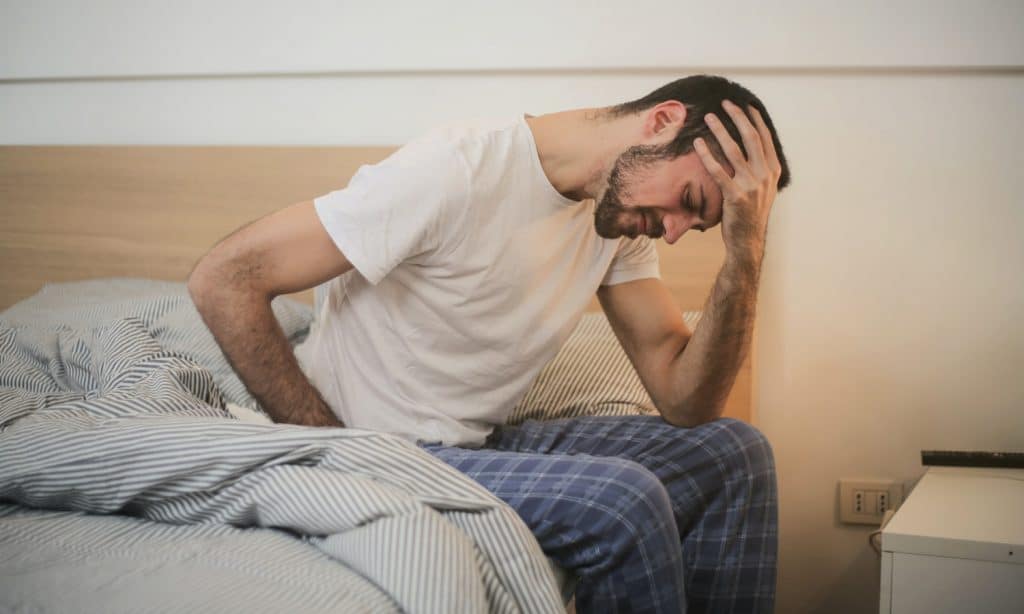
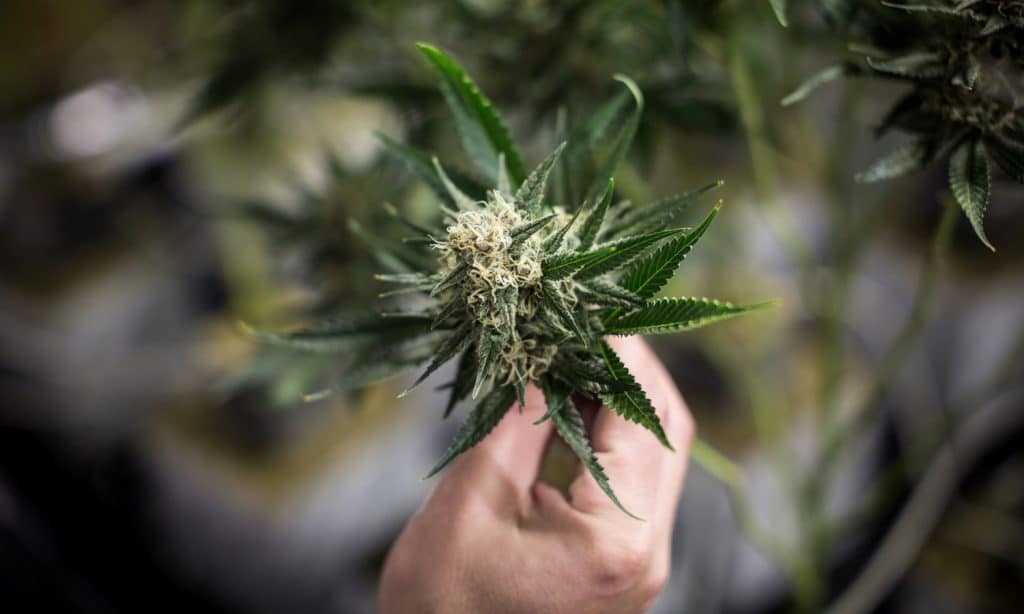
Cannabinoid hyperemesis syndrome (CHS) is a rare condition that is believed to lead to intractable nausea, vomiting and abdominal pain in cannabis consumers. The condition can last days or weeks, returning for months. CHS’s origins remain uncertain.
Awareness of the condition has grown in recent years, first mentioned in a lab study in 2004. Still, some continue to push back on CHS as a condition, questioning its severity or sometimes considering it a misdiagnosis. Advocates for the legitimacy of the condition cite support from leading hospitals, including Cedars Sinai and studies from The Mayo Clinic.
Photo by Andrea Piacquadio via Pexels
An Austin, Texas-based study released on Tuesdayanalyzes underlying genetic mutations in heavy cannabis flower and concentrates consumers in an attempt to better understand and identify the genetic markers of the condition.
Using “the largest contemporaneous database,” the study compared CHS diagnoses and symptoms of heavy-cannabis consumers.
The analysis adds to an incrementally growing pool of studies. “CHS is remarkably stereotyped in its presentation,” the study notes, pointing out that nearly 75% of CHS patients are consumers for at least one year and all suffer from recurring severe nausea, vomiting and other possible adverse effects over several months.
Key Findings And Breakthroughs
Analysts concluded that their research is the first “to note associated mutations in genes affecting neurotransmitters, the endocannabinoid system, and the cytochrome P450 complex associated with cannabinoid metabolism.”
In a press release, CReDO Science CEO and study co-lead, Dr. Ethan Russo, stated that “These important preliminary findings contribute to the growing body of knowledge, stimulate additional investigation, help elucidate the pathophysiology of CHS and, ultimately, direct future treatment.”
Photo by martin-dm/Getty Images
Len May, CEO of Endocanna Health, also co-led the study.
The results came from a pool of 585 heavy cannabis-consuming respondents through an online survey. Of the subjects, 28 patients and 12 controls finished genomic testing.
While the final pool was smaller than anticipated, researchers believe more results will come through ongoing questionnaire submissions and testing, said CReDO ScienceCOO Nishi Whiteley.
Next Steps: CHS Treatment
Whiteley added that the company is assessing its next steps, with the current high priority focused on “coming up with treatments that are affordable and sensible for the patient that will help provide them immediate relief.”
Relief options arose from the study but did not appear consistent at this time.
Whiteley added that the results revealed that one consistent remedy did not work in the study. Instead, various options showed promise depending on the individual and the side effects they experienced.
Do these senators have ties to industries and sectors that don’t serve your interests?
Most Americans want to legalize recreational and/or medicinal marijuana. Scientific research shows its benefits. It’s proven to be viable businesses and states with decriminalized cannabis enjoy incredible revenue. Simply put, legalized marijuana is a hefty source of income, approved by most Americans and truly helps people’s health.
Both science and history have proven the efficacy of cannabis, yet several U.S. senators won’t vote to legalize marijuana on a federal level and/or pass a law that will let banks work with cannabis businesses. Why? It doesn’t make sense. A mystery, indeed. Solving a mystery always starts with questions. Let’s start with the following:
Photo by Harold Mendoza via Unsplash
Who benefits from keeping marijuana as a Schedule 1 drug? Big pharmaceuticals is certainly one of them. After all, who’d need their expensive addictive opioids if marijuana can alleviate pain and aid crippling anxiety?
Let’s pull on this thread a bit and ask more questions.
Who would Big Pharma want to talk to protect their interests? Lo and behold, it’s the people who make laws. And why do people who make the laws listen to Big Pharma instead of the people they represent? Are they getting paid? And IF they are getting paid, why are the lawmakers voted in and stay in office?
Now, that’s a question we must answer.
To answer this question let’s investigate the usual suspects who deny income and potential jobs to the people they represent.
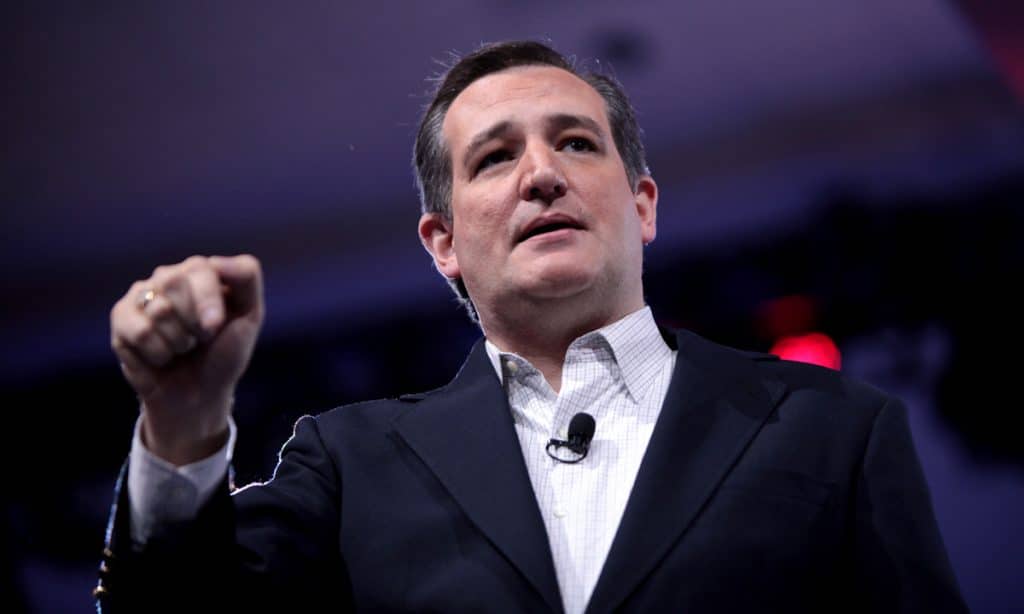
Photo by Flickr user Gage Skidmore
Let’s take a look at Ted Cruz (R-TX) who said, “I think it’s an issue in which reasonable people can disagree, and so each state should adopt laws that reflect the values of their citizens.” Huh. If he really thinks that states should be able to decide for themselves, why won’t the 64% of approval make him vote cannabis decriminalization? Perhaps the reason for Ted Cruz to be a staunch opponent to legalizing marijuana is his plans to run for president in 2024. According to The Texas Politics Project at UT Austin, 72% of the most conservative Republicans oppose any use of marijuana. Basically, Ted Cruz has to curry to the base to launch his bid to be President. It’s also worth to consider this fact: Sen. Cruz received $1,897,718 during the 2020 election cycle.
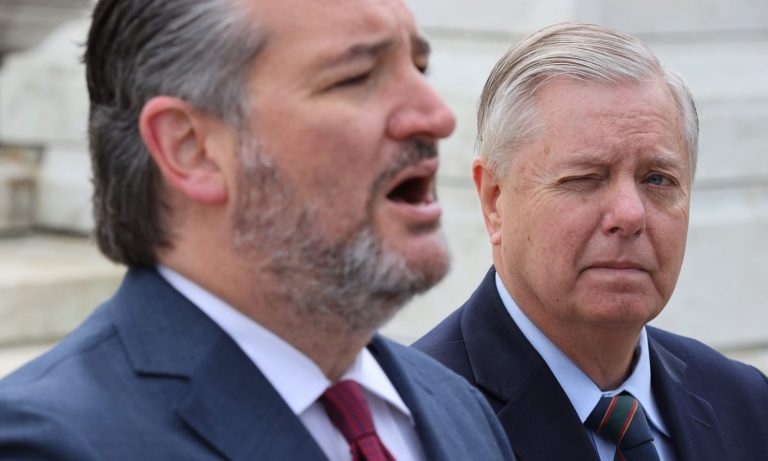
On the other hand, Lindsey Graham (R-SC) is not running for president in 2024. Yet, Sen Graham does not support the legalization of cannabis prohibition at the federal level nor will he support cannabis businesses to use banks. Sen. Graham must answer to the Republican base who are, like in Texas, strongly opposed to decriminalizing cannabis. More startling, however, is that Sen. Graham received $2,909,00 from the health industry during the 2020 election industry[i]. While the “health industry” sounds innocuous, it in fact, includes Big Pharma. In other words, Sen. Graham will not bite the hand that feeds him—at the expense of American’s well-being.
Senator Mike Crapo (R-ID)stated the following in Dec. 2019: I remain firmly opposed to efforts to legalize marijuana on the federal level, and I am opposed to legalization in the State of Idaho. I also do not support the SAFE Banking Act that passed in the House of Representatives. This bill would provide banking services to a legitimate cannabis-related business. Without banking services, legitimate cannabis is less accessible to people who need it. Why would Sen. Crapo limit people’s access to legal cannabis? Is it because in 2020, he received $362, 241 from big pharmaceuticals? [1] Is it because he has political ambitions in 2024? Perhaps. Yet it is true he is the ranking member of the finance committee and a member of the health subcommittee.
Steve Hawkins, executive director of DC-based Marijuana Policy Project, said in a recent interview that cannabis banking reform is critical to enabling small businesses — including women- and minority-owned enterprises — to get the access to capital they need to operate and grow cannabis businesses.
Why is small business being hindered to thrive? It doesn’t make sense. Who benefits from small businesses thriving? Not local business owners. Not our neighbors. Not the economy. Certainly, not regular people. And yet, as we know, the majority of regular people support the legalization of cannabis.
Photo by Nathan Griffith/Getty Images
Who are the other politicians who are miserably failing at the tasks of representing people’s needs? There are quite a few and just like Emperor Palpatine of Star Wars, they are shrouded in secrets. Fortunately for us, the information age sheds light on these nefarious characters.
Senator Susan Collins (R-ME) claims to be a moderate, but she has failed to stand up for states’ rights on marijuana even after her own constituents approved a marijuana legalization initiative in 2016.
Senator Marco Rubio (R-FL) says he supports medical marijuana, but only if done through the FDA process (which is not possible). Despite his opposition, Florida voters approved a medical marijuana initiative in 2016, showing Rubio is out of step with his constituents.
Do these senators have ties to industries and sectors that don’t serve your interests? Find out. Open Secrets and Just Facts are two of the organizations that’ll help you help yourself. With these tools, the time of legalizing cannabis on a federal level is within the horizon. Already, the House of Representatives passed the SAFE Banking Act. It’s up to us to target the remaining senators who aren’t listening to us and heeding the calls of big money and narcissistic political ambition.
Go ahead. Ask questions and you’ll find out who’s got your back.
A vaccine is the best preventative measure against the spread of COVID-19. Still, they’re not 100% effective. Here are a few things that can make it possible to get COVID-19 post-vaccine.
COVID-19 vaccines are incredibly effective at curbing the spread of the virus. Their use has allowed large percentages of people to return to their normal lives, being able to hang out with friends and go to their jobs knowing that they’re safe from the virus.
Is it possible to get COVID-19 after getting your shot? While odds are low, the vaccines aren’t 100% effective and there is a margin of error. This is known as “breakthrough COVID-19.”
Photo by CDC via Unsplash
Early research suggests that breakthrough COVID-19 is very rare but that a few factors can make it more likely. According to WebMD, the possibility of this can happen if the vaccine was stored improperly, when people have weakened immune systems or if they’re exposed to a COVID-19 variant.
Errors when administering vaccines are not common, but they include giving too low or too high of a dose, using the wrong needle, or improper storage and handling. According to a report published in April of this year, there were around 160 vaccine errors that were self-reported. The CDC requires healthcare workers to call recipients in order to inform them of the mistake.
People with weakened immune systems should remain mindful of distancing measures and community spread. Studies have shown that weakened immune systems are less likely to produce the same amount of antibodies than immune systems that are functioning normally, making it more likely for people with comorbidities to catch COVID-19 despite taking all of the appropriate preventative measures.
Photo by Diana Polekhina via Unsplash
Lastly, COVID-19 variants still pose a threat. The Delta variant has doubled in the U.S. over the past two weeks, and it can be a threat for everyone no matter whether they’re vaccinated or not, especially when community spread is high.
Breakthrough COVID-19 is unlikely, but it’s still a possibility depending on factors like you’re health and where you live. Still, having the COVID-19 vaccine is the best preventative measure you can take, so it’s important to get your shot as soon as you can and to remain informed.
TikTok is addictive and, if you follow the right hashtags, incredibly dramatic.
We all love reality TV for a reason: real-life drama is addictive. Nowadays, this isn’t limited to the Bravo network or your neighbors. TikTok is one of those drama hubs where you can spend hours scrolling and gasping if you’re following the right hashtag. Here are some to watch:
The hashtag #messytiktok has a staggering amount of views, over 2 million to be precise. It is messy, filled with drama about exes, former best friends who do terrible things to each other, screenshots of terrible conversations, and a never-ending stream of embarrassing tales.
Also very popular on Reddit, the hashtag #aita stands for “Am I The Asshole?” People usually are the assholes when they’re asking themselves these questions. Anyway, the hashtag sometimes contains stories people read from the internet or people coming forward with their own.
This hashtag is clear and to the point. In #dramatok you’ll find public and semi-public figures having arguments, disagreements, and the like, usually resulting in something dramatic because if not it wouldn’t go viral.
This hashtag is bad. It just is. Aside from featuring drama and toxic behavior, #toxictiktok actually gives out toxic recommendations, like filling out keyholes with superglue or telling you how to listen in on your partner’s phone without them noticing. It’s a hashtag that’s not meant for life advice, a crazy yet valid disclaimer one has to make whenever TikTok is mentioned.
Lastly, #spillthetea is mostly focused on influencer or celebrity drama. It’s a nice spot to catch up on if you’re behind on feuds and dates and are feeling like going on a TikTok spiral.
As first reported by TechCrunch and WeedWeek, the ongoing conundrum between cannabis and tech took its latest turn last month, when Apple Inc (NASDAQ:AAPL) updated its policies to allow pot-centric apps onto its store.
Under its new policy, Apple created leeway that allows “licensed and otherwise legal cannabis dispensaries” from working with Apple. Companies must also be geofenced to qualify for store listing.
Photo by Joanna Malinowska via freestocks.org
The decision was not a cannabis-specific one made by Apple. Instead, the move came as part of the company’s attempt to curtail fraudulent apps that scam consumers across the marketplace.
Alphabet Inc Class A (NASDAQ:GOOGL), which announced its ban on cannabis apps in 2019, continues to stick with its policy regarding its Google Play store.
The decision comes as tech giants continue to handle cannabis apps and accounts in often unclear ways.
Social media platforms, including Facebook, Inc. Common Stock (NASDAQ:FB) and its other dominant social media app, Instagram, continue to allow cannabis brands to sign up. However, numerous accounts have reported being deleted, shadowbanned or suspended over the years.
Mary Pryor, the co-founder of the cannabis advocacy platform Cannaclusive, successfully campaigned Instagram to restore her company’s account after being suspended for several days in June.
Photo by ROBIN WORRALL via Unsplash
Pryor, an equity advisory board member to Jay-Z’s TPCO Holding Corp (OTC:GRAMF), called Apple’s decision groundbreaking, noting that it coincided with discussions incrementally occurring on the federal level as well.
She encourages Google, Facebook and other tech giants to “learn from Apple” and its decision.
Speaking about industry and advocacy efforts, Pryor said: “We should expect Facebook and Instagram to figure it out. We may need to do more to encourage and inform them.”
As a country, we seem determined to keep marijuana federally classified as an illegal drug for reasons that are either based on a false premise or inherently racist.
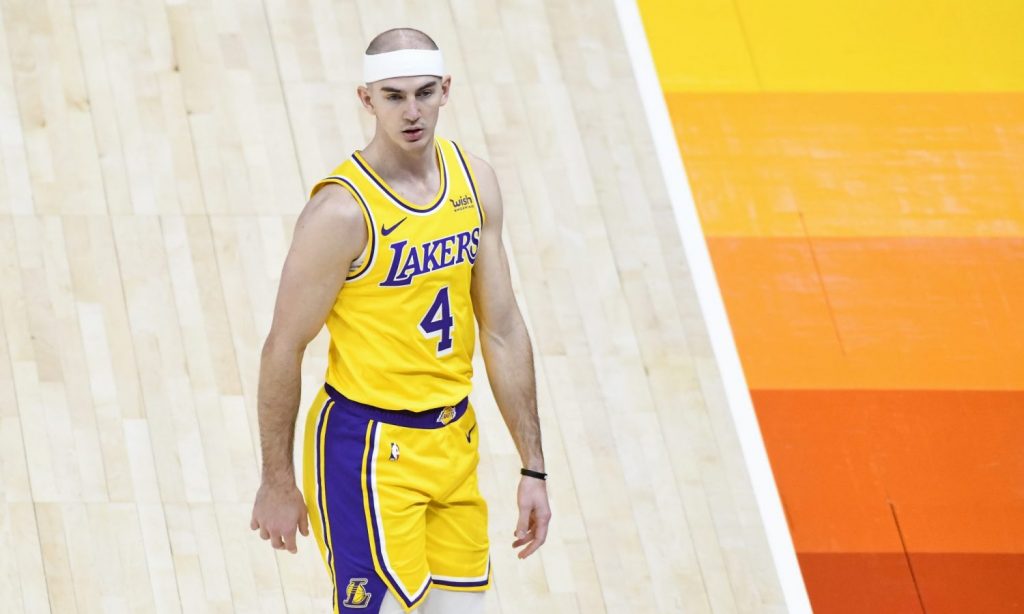
Like many Americans, one of the first things I do every morning is check the overnight headlines, including anything that happened in the sports world. Recently, I woke up to an article about Los Angeles Lakers guard Alex Caruso being arrested at Easterwood Airport in College Station, Texas for “possession of marijuana and drug paraphernalia.”
Given that Mr. Caruso is a guard on the reigning NBA championship team and an alumnus of Texas A&M, I assumed that his arrest, which would obviously make national headlines, was for some absurd amount of marijuana. I was wrong.
Photo by Alex Goodlett / Getty Images
Mr. Caruso was arrested after the TSA searched his bags and found an “herb grinder that contained marijuana.” The arrest was for possession of “less than two ounces of marijuana.” It was likely significantly less than two ounces of marijuana considering the fact that it was in an herb grinder.
I get it, a professional basketball player getting arrested for trying to board a flight with a federally illegal substance is not a national tragedy. But you know what is? The fact that 545,602 Americans were arrested for marijuana-related offenses in 2019. And that 40,000 Americans were incarcerated for marijuana-related offenses in 2020. And that, in extreme cases, people are still being locked up for life for possessing a similar amount of marijuana to Mr. Caruso.
In all, that is 545,602 Americans who will have a much harder time finding a job because we, as a country, seem determined to keep marijuana federally classified as an illegal drug for reasons that are either based on a false premise or inherently racist. As for the politicians who push against the national trend towards legalization because of social or “public safety” reasons, well, those politicians are either stupid or lying.
Here in Harris Bricken’s New York office, we have been giving a lot of thought to “why” recreational marijuana should be legal. We have clients who are interested in getting licensed in New York. Regardless of whether they plan to obtain a cultivation license or a retail license, engendering the support of the local government is important for long-term success. Which means that we, as our clients’ advocates, sometimes need to explain to local government officials why: 1) embracing legal recreational marijuana is beneficial for their community; and 2) embracing legal recreational marijuana will not destroy the fabric of their community (dramatic, I know).
Our arguments in favor of embracing legalization apply on a federal level, and quite frankly, it doesn’t take a rocket scientist to get to the inescapable conclusion that there is no justifiable reason for marijuana to remain an illegal drug.
From a financial perspective, the benefits are obvious. The estimated value of America’s illegal marijuana market is $100 billion. Billion with a “B.” That is $100 billion that is currently unregulated and largely untaxed, to the benefit of no one. Conversely, with just 15 states having legalized recreational marijuana in some form (now 16, hello Connecticut!), the estimated value of the legal marijuana market in 2021 is $16.1 billion. That is projected to increase to $24 billion by 2022. Here in New York alone, the legal marijuana market is expected to reach $3.7 billion in value by 2025.
Photo by rgbspace/Getty Images
The tax revenue from legal sales is already a boon for many states. Let’s assume that federal legalization, when it finally happens, comes with a tax structure sufficient to offset the overnight IRC § 280E drain. Why on earth wouldn’t we, as a country with a healthy budget deficit, also want to capture some tax revenue from the other $100 billion of sales floating around the country?
Tax revenue aside, the ancillary revenue from national marijuana legalization would bolster our economy. Banking services, transportation and logistics, software, security, real estate, and on and on, are all industries that would gain revenue and, in turn, offer additional employment opportunities. Maintaining the status quo keeps all of those economic benefits in the black market.
And it’s not just making more money from a legal industry. The average annual cost of incarcerating a single American is $33,274. That is $1,330,960,000 a year spent on incarcerating Americans for marijuana-related offenses. Which does not even include the exponentially greater resources expended by law enforcement in investigating and prosecuting these “crimes” or the human cost of the lives ruined by such arrests.
But those are all easy statistical arguments that are hard to contradict with data. The social “harm” of marijuana is what politicians tend to rely on when claiming that legalizing marijuana would be a catastrophe of epic proportions. We are all familiar with the social arguments against legal marijuana: marijuana needs to be kept out of the hands of children; marijuana is a dangerous gateway drug; and marijuana somehow breeds criminal activity.
Photo by Anton Petrus/Getty Images
Let’s start with the ease of access argument. The reality is that marijuana will be harder for minors to purchase after it is legalized. I think I speak for many people when I say that in high school it is probably easier to buy marijuana than alcohol. Why? Because you can only buy alcohol from a licensed establishment that risks its license when it sells alcohol to minors. As far as I know, there aren’t any drug dealers that are concerned about “licensure” when selling marijuana to a high school senior.
That changes immediately when marijuana is legalized. A retail dispensary will not only have to prove that it can prevent sales to minors, but risk losing its license if it fails to implement systems for preventing underage sales. Those arguments against arresting and prosecuting marijuana sales become a lot different (i.e. justifiable) when tweaked to prosecuting illegal marijuana sales.
Of course the other reality is the fact that marijuana is really easy to buy now, even as an illegal substance. I am relatively certain that almost every American could buy marijuana right now within one phone call. I am 100% sure that every single American is no more than two phone calls away from buying marijuana. Ease of access can only get harder after legalization.
Is marijuana dangerous? Potentially. Anyone who argues that marijuana is harmless is doing a disservice to the industry. Just like any other substance, dependence on marijuana can have serious negative effects. I know people who failed to reach their potential because of marijuana usage. But I also know people who are dependent on alcohol with equally negative consequences, and the prohibition movement has been really quiet for the last hundred years.
Photo by Israel_Patterson/Getty Images
In terms of marijuana being a gateway drug, I have yet to see an honest study that shows that marijuana use leads directly to narcotics use. I would argue that we all have seen many more people make bad life decisions under the influence of alcohol than after consuming marijuana.
But I won’t belabor the point. The alcohol vs. marijuana argument is well-tread and, quite frankly, irrelevant. Both should be legal. Both should be regulated. And both need systems in place to avoid consumption by minors.
In terms of marijuana breeding criminal activity, it sure does when it is federally illegal. Setting aside the obvious definitional argument (it’s criminal activity because we choose to define it as a criminal activity), it is hard to argue that America’s well-developed black market is better than a well-regulated legal market. And organized crime activities within the marijuana black market have been well-publicized.
You might again be asking: “what does this have to do with Alex Caruso?” Nothing and everything. A single professional athlete getting arrested for marijuana possession doesn’t actually move the needle, but it is a public reminder of where we are. With all of the excitement in New York legalizing recreational marijuana, it is easy to ignore that federal law still considers marijuana an illegal drug. Which means we, as a country, will continue to waste lives, time, and money fighting a “battle” against ourselves where everyone loses for no good reason. We at the Canna Law Blog hope the tide is turning and maybe, just maybe, putting a few more rational arguments into the ether will nudge us over the finish line.
The Drug War has created a culture of fear and violence and it will not be easy to change, but let peace begin with us.
Disclaimer:The views expressed in this article solely belong to the author and do not necessarily represent those of The Fresh Toast.
Last September, a NY Post op-ed by retired New York Prosecutor Jim Quinn argued that “Crime, not cops, is by far the largest threat to black lives.” (He was the senior executive assistant district attorney in the Queens County District Attorney’s Office. He retired in December 2019, after 42 years as a prosecutor.)
Quinn explained, “In New York City in 2019, 319 people were murdered. Fully 88 percent of them — 280 people — were black or Hispanic. And 93.2 of them were murdered by other people of color.
Photo by Spencer Platt/Getty Images
“Almost 96 percent of all shooters and shooting victims in the Big Apple in 2019 were people of color. People of color also accounted for 73.8 percent of rape victims and 81.3 percent of the rape suspects; 69 percent of robbery victims and 93.3 percent of the robbery suspects; and 79.5 percent of felony assault victims and 86 percent of the assault suspects.
“People of color, in other words, are disproportionately both victims and perpetrators of violent crime in New York City. That is a cold fact. These proportions have remained remarkably consistent over the past 12 years.
“Murders in New York are up 30 percent so far this year (2020) — 60 more people killed so far than last year. Close to 90 percent of the victims were people of color. There have been 1,095 shooting victims in Gotham so far this year — 514 more than last year. And 95 percent of these additional shooting victims were people of color.”
It has gotten even worse this year. According to Gothamist, “In 2021 alone, 299 people have been shot, a 54% increase over the same time last year, and the most the city has seen since 2012.”
Unfortunately, New York is not unique. A 2016 report from Chicago showed similar numbers: “75% of murdered are Black, 71% of murderers are Black.”
These numbers speak for themselves, but among unarmed victims specifically, Black people were killed by the police at three times the rate of white people.
The fact that more Blacks are killed by Blacks does not mean that we can ignore that disparity in police shootings, especially given the racist history of the Drug War.
Photo by Michael M. Santiago/Getty Images
Like the Post Op-Ed, the Chicago article doesn’t mention the Drug War, but one of the comments points out that, “No one is talking about ending the drug war. It’s an utter failure. That needs to be done through the ballot box first, supporting candidates who will act. I appreciate your vision of a heavenly future, but people are dying now, fueled by gang warfare and the drug trade. End the drug war intelligently. Let’s see what happens then and act accordingly.”
The Drug War creates global violence between gangs, especially in Mexico, but also between the police and minority communities in the U.S.
Of course, the Drug War may not have been the immediate impetus to most of the violence, but it has contributed to both the acceptance of violence as a literally inescapable part of life in these communities and to a well-justified fear of law enforcement.
The behavioral problems associated with substance abuse, especially including alcohol, are also major contributors to public disorder. Alcohol abuse actually kills more Americans than illegal drugs, but not in Drug War shootouts.
According to the Centers for Disease Control and Prevention, “Excessive alcohol use is responsible for more than 95,000 deaths in the United States each year, or 261 deaths per day. These deaths shorten the lives of those who die by an average of almost 29 years…”
Photo by LeszekCzerwonka/Getty Images
More than 70,000 Americans died from a drug-involved overdose in 2019, including illicit drugs and prescription opioids.
Fortunately, the long-term effects of marijuana legalization on public order can be seen in the Netherlands, where marijuana has been sold over-the-counter for almost 50 years. The police are rarely called to the cannabis “coffeeshops”.
Simply ending marijuana prohibition is not enough. Venues, where people can gather socially (peacefully), should be an essential part of the urban scene. Unfortunately, marijuana retailing and social consumption is being treated as a source of political patronage and tax revenues.
COVID-19 boosters are still not in circulation. Here’s what experts say on when to expect one or if we even need them.
Talks of COVID-19 boosters have been circulating ever since vaccines were first introduced at the start of the year. These boosters were compared to flu shots; after a certain period of time, you’d have to get a new shot in order to remain protected from the virus.
According to data from the Centers for Disease Control and Prevention (CDC), people who were vaccinated over six months ago still have protection from the virus, delaying talks of boosters. This is good news.
While this doesn’t mean that boosters won’t be needed in the long run, it means that vaccines are as effective as predicted, providing significant protection for half a year. But when will these boosters be needed? Are they even necessary?
According to data presented by the CDC and the Prevention’s Advisory Committee on Immunization Practices this past Wednesday, boosters would be recommended if one of the following conditions were met: if there’s evidence of vaccines becoming less effective (this would be measured by rising numbers of infections) or if a new COVID-19 variant appears and isn’t affected by the COVID-19 vaccines in circulation. This is known as an “escape variant.”
Research on boosters and COVID-19 vaccines is still ongoing. If boosters were to be made, it’s not known if everyone will need them or if only a subset of people would benefit from them, for example, people with weakened immune systems or elders. When it comes to immunocompromised people or those who are copying with an underlying disease, there’s evidence of them having their COVID-19 shots and not producing antibodies for the virus. Still, these tests for measuring antibodies are not that accurate, so more time and research is needed in order to get a clearer picture.
Vaccines haven’t been around that long, so there’s not enough data to know if they provide protection for longer than six months. For the time being, data shows that people who have been infected with COVID-19 have protection that lasts for up to eight months.
Quality marijuana is important, especially in this day and age, when there’s so much good weed to be consumed.
Thanks to the legalization of cannabis in many states in the U.S., the plant has been going through a period of reevaluation; people are now into it for a variety of reasons, whether that’s relaxing, partying, working out or therapeutic reasons.
But how can you tell if your weed is good? Like all things weed, this gets easier the more you’re exposed to it.
Good quality cannabis starts from the place you buy it at, to using all of your senses to get a full picture of what you’ll be consuming. Here are some things you should keep in mind when making your weed purchase:
Now that we live in an era of legalization, there’s no need to smoke ugly looking weed. Start purchasing weed like you care about the fact that it’s going into your body. Check out your local dispensary or ask around for sellers and brands that sell quality product. The more legit the seller, the higher odds your weed has of being cultivated by ethical companies, ones that focus on producing quality cannabis with a diverse batch of cannabinoids.
Use your senses
Photo by Bloomberg Creative Photos/Getty Images
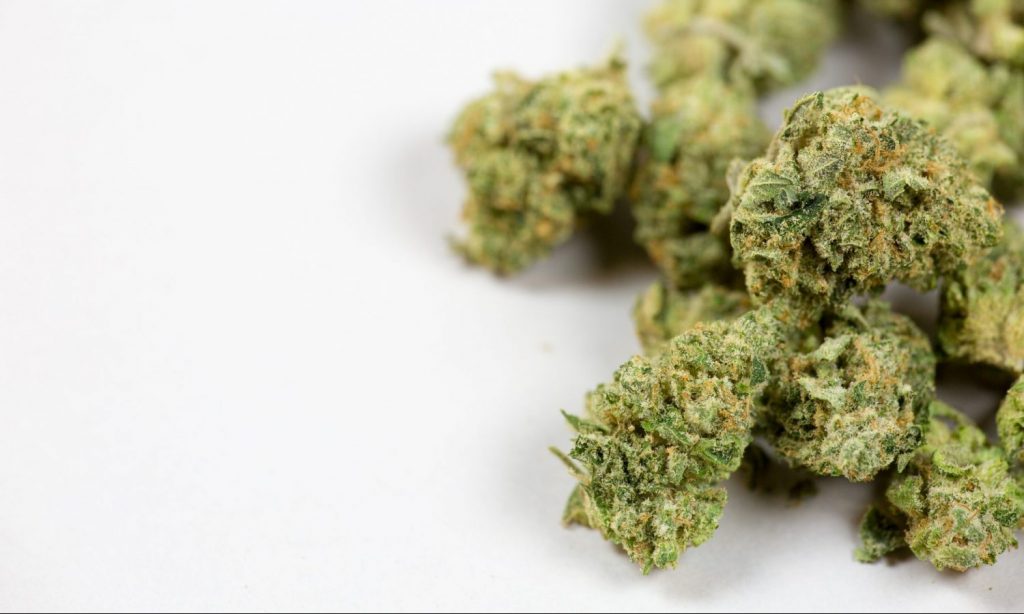
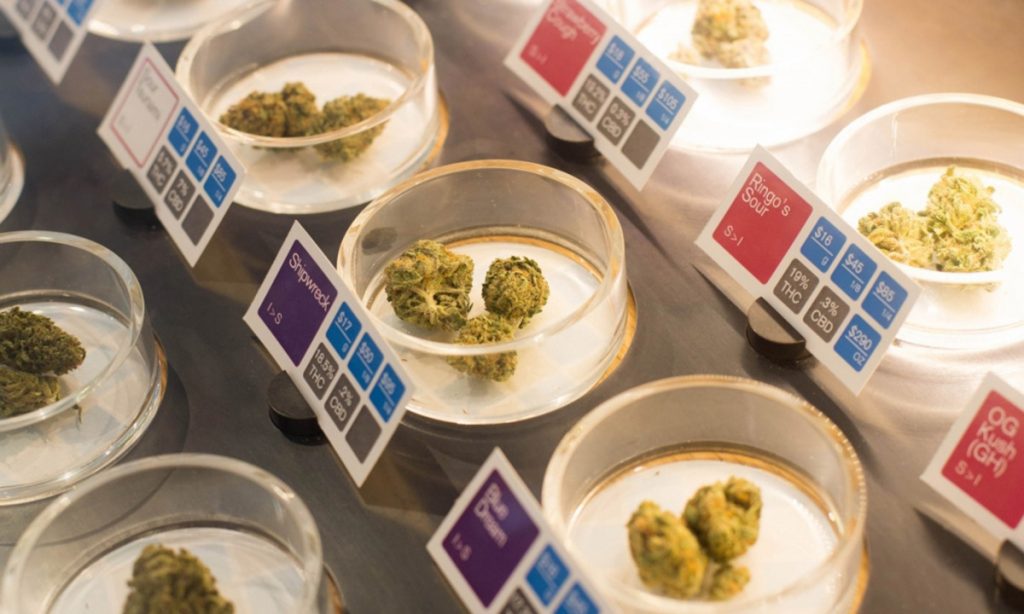
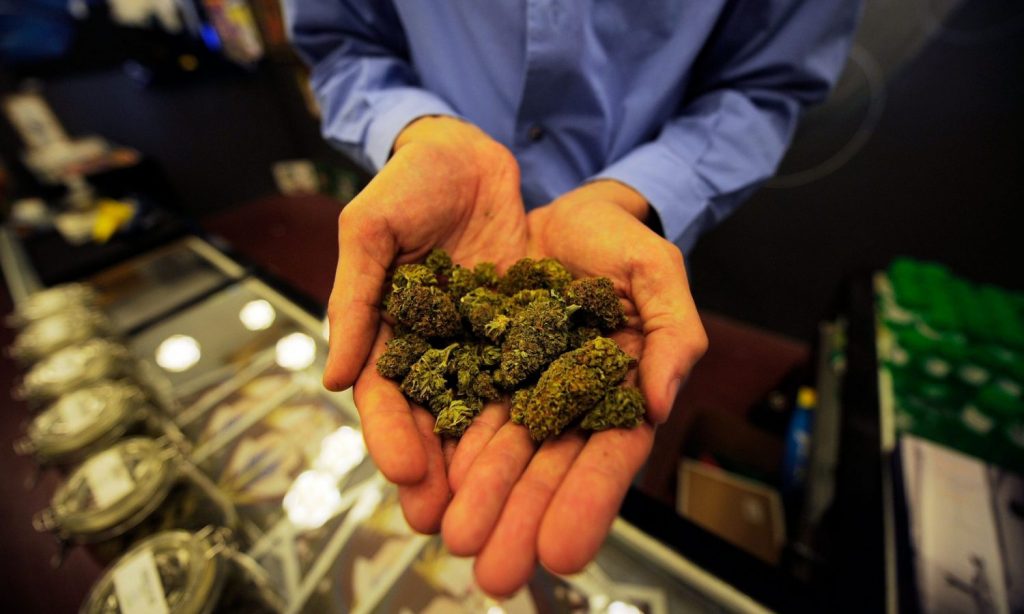
Use all of your senses to determine the quality of your product. Good quality weed should smell good and strong, look bright and colorful, and feel airy and light. The flower should separate when you apply pressure to it; it shouldn’t fall apart by itself or be dense and overtly sticky.
Once you’ve interacted with high quality weed, the bad stuff is easier to spot. While you should steer clear of any type of weed that smells, looks, or feels off, you should also avoid strains that claim to have extreme effects. For example, if your seller tells you that they have a strain with over 30% THC potency, ask more questions since that seems unlikely. You also don’t need a strain with crazy THC levels in order to get the results you want or are looking for.
Any time that someone compares today’s marijuana with that of the 1960s, you can know with absolute certainty that they are lying.
Disclaimer:The views expressed in this article solely belong to the author and do not necessarily represent those of The Fresh Toast.
One of the most successful themes in prohibitionist propaganda is the “New Potent Pot” line, which tells us that “marijuana stronger than it was back in the 60s, when everyone thought it was harmless.”
This “new potent pot” line is intended to negate the knowledge gained by experience and thereby eliminate this type of objection. It is said that the THC levels of marijuana today are (pick a number) times higher than in the past.
Photo by Anastassiya Bezhekeneva/Getty Images
The notion that today’s marijuana that your children might smoke is qualitatively different from the marijuana in the past is obviously perfect for anxious parents who have been conditioned by decades of prohibitionist propaganda to feel guilty about their youthful “experimentation.” In this regard it is very successful.
That there is no data to back it up is not a problem, because, when the subject is marijuana, the usual purveyors of data — the media (right, left and center) — have been in the anti-fact business for decades. They have enshrined the “new potent pot” line as a basic part of “conventional wisdom.” Everyone knows…. Actually, it is what everyone does not know that is important.
There are several important points to be learned from looking at this particular bit of prohibitionist propaganda.
Data, data, who’s got the data?
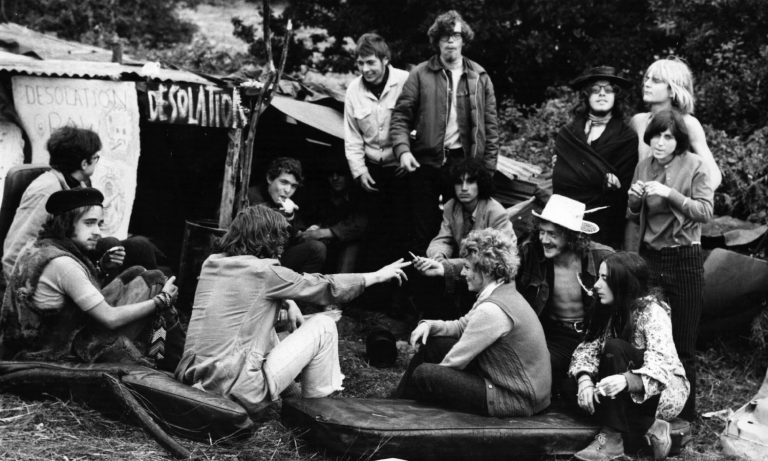
Any time that someone compares today’s marijuana with that of the 1960s — or Woodstock, which is somehow still a common reference point — you can know with absolute certainty that they are lying. There is simply no data — no data — on marijuana potency from the 1960s, much less from any one concert. The first testing of marijuana for THC did not begin until the early 1970s.
Here it gets a little bit more complicated.
In 1972, the first year of official government testing for the THC level, a small sample of marijuana of unknown origin, but probably Mexican, averaged only 0.18% THC. This is below the level of industrial hemp, but this number is often used as the base for comparison to justify the high multiples.
If a visitor to the U.S. walked out of his hotel and met a homeless person dressed in rags, and insisted that this was the typical American, ignoring everyone else in sight, you would question the visitor’s judgement — or integrity. In effect, that is what prohibitionists are doing when they use this 1972 government number. It requires persistent dishonesty.
In their book Marijuana Myths, Marijuana Facts, Zimmer and Morgan devote a short chapter to the data on marijuana potency. I recommend this book for many reasons, but this chapter alone is worth the price of the book.
They point out that in 1973 a private company PharmChem tested four times as many samples as the government, and the average potency was 1.62%. Did marijuana increase in potency tenfold in one year?
Photo by Thought Catalog via Unsplash
Also consider that one sample tested by PharmChem in 1975 was actually 14% THC, which was 20 times the average for the samples tested by the government that year.
Subsequently, private testing was prohibited, and for 20 years the only data has come from the government, but in 1980 the average potency from government testing was around 2% and generally varied between 2 and 3% for several years.
In short, there is no data from the 60s, and data from the 70s does not support the notion that there was only low THC marijuana available.
Public officials have the obligation to report the government’s own data honestly. They do not. It seems to be perfectly acceptable to lie to support the arrest of millions, including the sick and dying as part of the suppression of medical marijuana. A really bitter political satirist might come up with something like this scenario, but it would probably be rejected as too heavy-handed.
Even without access to the data there are other serious problems with the “new potent pot” line that should set off alarms for anyone capable of critical thought.
First, marijuana was contraband. There are no standards for contraband. In some countries beer may be said to be stronger than in other countries because there are laws regulating potency – alcohol content – but there can be no standards for contraband. This means that there would have to be large scale sampling, and even then it would be hard to know how typical the samples were of the total market.
And just how did marijuana come to change? Here is where it really gets perverse. Under prohibition there is an incentive to increase the potency of contraband by volume. More bang for the bulk. This is why prohibition encourages hard drugs over marijuana.
In other words, we are told that something that happened under prohibition, and which was encouraged by prohibition, somehow justifies prohibition.
But that was never the right question, in the first place. The proper question was “Did the average potency of marijuana on the market — or the THC content of the average marijuana being sold — increase?”
Again, as we have seen, the data do not support this. There was marijuana with at least 14% THC available in 1975. And even if there were data from the 60s, we still could not know this to be true, because we would not know how representative the samples were then — or are now.
Also there is the matter of testing techniques on the individual samples. Were they manicured down to the bud, as is often the case with the very best? Or were there leaves and seeds and stems included in the total weight, which is often the case with commercial grades aimed at “less discriminating” buyers? In other words, the packaging and preparation of the extremes will accentuate the differences.
Actually, I’m confident that the best indoor sinsemilla today is better than the best from the 60s. I would like to think so. I am a technological optimist. Today’s best may have a THC content in the range of 25%, depending on the sampling and testing technique.
Of course, this is largely irrelevant, because, just as most people don’t drink 25 year-old Scotch, most people don’t smoke the most potent — and most expensive — marijuana. Price is not the only reason for this. Some people just like beer. Which brings us to the “beer” market.
Photo by Mayara Klingner/EyeEm/Getty Images
What about the children?
So, yes, there is some very strong marijuana available today, just as there was in the 1960s and 70s. Does this pose a threat to “children?”
Well, if more potent marijuana really were more dangerous — and it is not, more on that soon — it might be a threat to very rich children. The scourge of Beverly Hills.
The fact is that most kids are very unlikely to be able to afford the stronger strains of marijuana. Kids get the cheaper stuff, in part because they have limited budgets, and partly because there are not many young connoisseurs. Consequently, when prohibitionists mix lying about potency with concern about children, this has even less to do with the real world than is usually the case.
Learning from the Dutch
Also, all this speculation requires that we continue to ignore the Dutch experience. There has long been some very strong marijuana available in the Netherlands, along with much that is in the American range, but people do not automatically buy the strongest.
Experienced smokers do not always go for the “strongest” marijuana, just as people don’t drink pure grain alcohol. People find that there are strains that they like and stay with that.
One of the things that prohibitionists do not understand – or don’t want to understand – is that there are important differences in various marijuana strains other than THC levels. Again, consider that there are differences in various alcohol drinks other than alcohol content.
In some ways the differences in marijuana strains are chemically more important than the differences between beer and Bourbon. Alcohol is the only active ingredient in most alcohol drinks, but the different cannabinoids influence the quality of the marijuana high. This is one reason that many people find Marinol, the synthetic pharmaceutical version of THC to be unpleasant. In short, focusing solely on THC “potency” is misleading.
Of course, under prohibition it is very difficult to find consistent supplies, so this not only increases the emphasis on THC potency, it also makes it difficult to know the potency of any given supply.
The circumstance in which marijuana with higher levels of THC may pose a danger would be when someone does not know its potency and smokes more than necessary for the desired effect. While the onset of a high from smoking is fairly rapid, a person might take several puffs of 15% THC marijuana when they are accustomed to the same amount of 10% THC product. This can produce undesirable results. Fortunately, the effects are almost always transitory.
Stronger marijuana may actually be safer.
Photo by mikroman6/Getty Images
As Zimmer and Morgan point out in Marijuana Myths, Marijuana Facts, increased potency does not mean increased danger. In fact, just the opposite may be true.
Inasmuch as almost all smokers find being over-stoned unpleasant, people use only enough marijuana to achieve the desired effect. Insofar as the one clearly established risk in using marijuana comes from smoking, the less a person has to smoke to achieve a desired “high” the better. As noted, if there is the unexpected high from marijuana of unknown potency that may pose a risk to smokers, but this is a consequence of contraband and a lack of standards under marijuana prohibition, not something intrinsic to the plant.
The Political Uses of the “New Potent Pot” Argument
As observed, the primary value of this line is that it is used to negate the experience of those who smoked in the past. However, some of the prohibitionists have become more creative.
In one area it seemed as though this line could backfire on the prohibitionists. I have seen a number of articles about hemp in which either the journalist or hemp industry representative said that industrial hemp legally has only 0.30% THC, while marijuana has 10% to 15% THC. Well, how could anyone be concerned about hemp, if marijuana has 20 to 30 times more THC?
However, now the prohibitionists are still opposing hemp by saying that the marijuana smoked back in the 1960s and ‘70s had only 0.50% THC. In other words, the hippies were smoking hemp. Clever, eh?
But now more potent marijuana is claimed to be qualitatively different and causes violence and addiction. Imagine someone saying that the effects of whisky are qualitatively different from beer.
But of course, this is classic reefer madness. The problem here is that if it takes the “new potent pot” to cause “addiction” and violence, why were they saying the same thing sixty years ago? Prohibition causes long-term memory loss.
The “new potent pot” is worth a lot of money, and involves organized crime.
Photo by Kevork Djansezian/Getty Images
One of the oddest things about prohibitionism is that it treats making money in a capitalist society as an intrinsically evil thing. The business of America is business, but making money on marijuana is morally wrong, unlike making money on guns, gambling, booze, etc. Consequently, we are supposed to be outraged and alarmed when we are told that the “new potent pot” sells for thousands of dollars per pound in some markets. This makes it morally worse than ordinary marijuana. Of course, this leads to Organized Crime!
This is the classic case of prohibition, of course. The high prices and criminal activity are the result of the laws against marijuana, not of marijuana itself.
Many people may even understand this obvious point, and still be outraged by the high prices, or the size of the market, as though this were some sort of moral insight.
If this moralistic outrage were happening in a socialist country, it would at least be consistent with the dominant philosophy, but in America???
Conclusions: What will be the impact of legalization on potency, price, and safety?
What will happen to average potency when marijuana is really legalized? It will be known. (We really do not know what the average potency of marijuana has been or may be. This is impossible under marijuana prohibition.)
The average potency available to most users may increase, but there will be choice. This is impossible under marijuana prohibition.
There will be less focus on THC potency and more on other qualities. There will be a recognition of qualitative differences in various strains, as is the case in Holland and legalized states today. This is impossible under marijuana prohibition.
The highest prices will almost certainly fall substantially. This will decrease the incentive for maximizing THC potency, which is a characteristic of contraband markets. (Contraband risk premiums will be replaced with taxes and other costs, so the price of the average grade may not fall as much.) This is impossible under marijuana prohibition.
The lowest grade will almost certainly disappear, which is good because of uncertain purity. This is impossible under marijuana prohibition.
People will be able to find the safest and most satisfying way of using the plant. This is especially important in use for self-medication in sub-clinical conditions in which self-medication is the accepted norm in our society. This is impossible under marijuana prohibition.
Regulations can be focused on maintaining quality and minimizing use by children. This is impossible under marijuana prohibition.
Information will be credible and education believable. This is impossible under marijuana prohibition.
The actual dangers in marijuana will be recognizable and can be more easily dealt with by both society and the individual. This is impossible under marijuana prohibition.
People will be able to grow their own and have a personal relationship with their plants, gaining an insight into their relationship with Creation and the Creator. This is impossible under marijuana prohibition.