Burnout isn’t easily treated. And doing nothing only makes it worse.
Burnout is more common than you think. It affects your lifestyle and zaps the joy out of your hobbies, work, and relationships. It’s difficult to define since it can encapsulate a lot of symptoms, but burnout refers to that mental and physical exhaustion that occurs when faced with a recurring and stressful situation. This can be a job, a micromanaging boss, or any other situation in your life. Despite how common it is, burnout is difficult to treat, which is why the best path is to check in with yourself regularly and take the necessary steps to prevent it. Here are 5 simple hacks to prevent burnout.
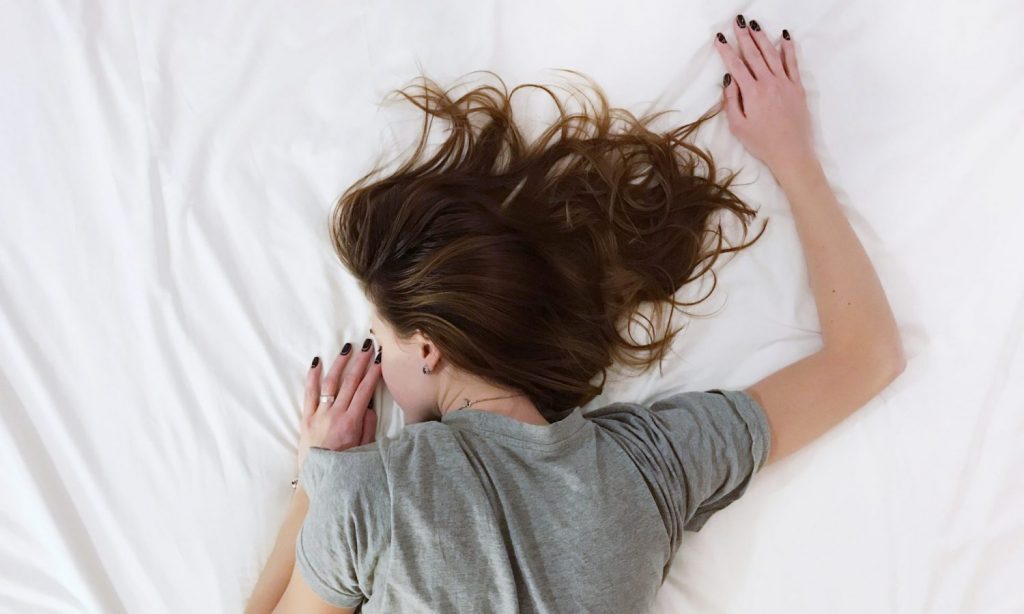
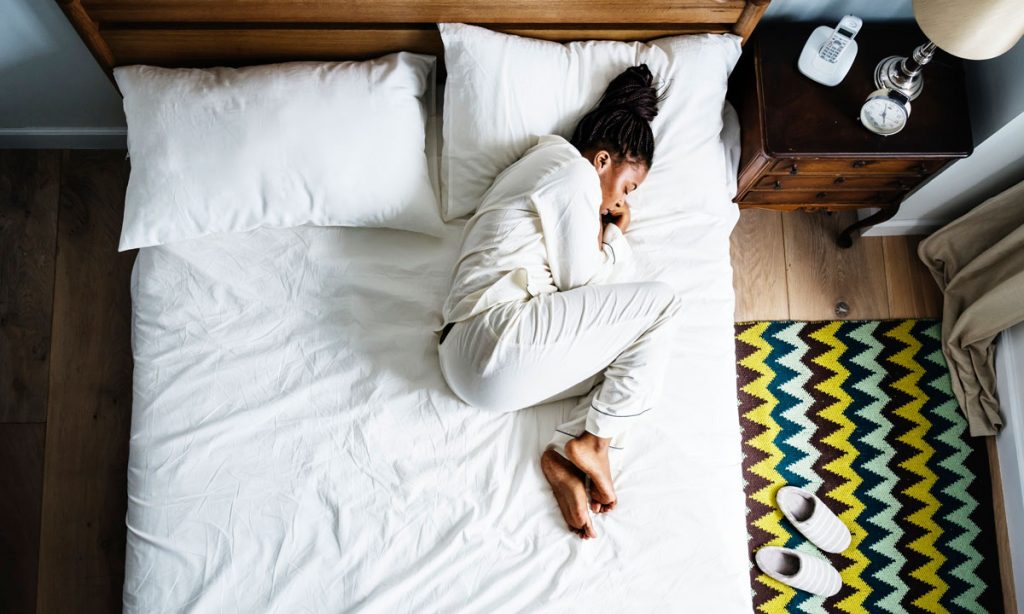
Go to bed a little earlier than usual
Photo by Kinga Cichewicz via Unsplash
Sleep is pivotal for preventing and treating burnout. It’s also one of those habits that’s incredibly difficult to incorporate since people approach sleep so differently. A simple recommendation would be to go to bed at a fixed time. While that is great, it’s also a bit unrealistic, so you can make an effort every day to go to bed a little earlier than usual. By keeping this in mind, slowly and progressively, you’ll find a bedtime that works for you and that makes you feel rested and better.
Burnout tends to create a self-sabotaging dialogue within your brain. Unconsciously, your brain tells you that your tasks are unmanageable, that you can’t cope with this particular situation, etc. Come up with a brief and positive mantra you can use when faced with this, and repeat this to yourself when going through one of these moments. Mantras are easy to remember and will quickly make you feel better and calm.
Find a funny podcast
Photo by Meghan Schiereck via Unsplash
There are podcasts for all kinds of people, from true crime to scripted series. Laughter is always great, especially when coping with burnout, so look for a funny podcast you can get into and incorporate that into your routine. When experiencing burnout it’s important to protect yourself; surrounding yourself with good and positive things is a good first step.
The state of your home and workspace has a significant impact on your functioning. If your house is all messy, it’s common for you to feel overwhelmed like you don’t know where to start cleaning and picking things up. Make your space more comfortable by adding some flowers, organizing your desk, or cleaning things up. It’s a small change that will make a significant difference.
Talk about it
Photo via rawpixel.com
Lastly, it’s very important to talk about burnout if you think you’re experiencing it. This conversation can be had with a friend, family member, or even a professional. They can advise you on how to move forward and care for yourself. By validating your feelings and listening to you, you’ll start feeling better and less overwhelmed.
In the real world, people should try to take care of their health, but public health advice should be realistic.
Disclaimer:The views expressed in this article solely belong to the author and do not necessarily represent those of The Fresh Toast.
Alexander Woollcottquipped that “All the things I really like to do are either immoral, illegal, or fattening.” He died in 1943 so he missed so many other hazards that modern science would discover.
For example, The Guardianreports that researchers recently discovered that, “Any amount of alcohol consumption harmful to the brain.
Photo by Shopify Partners via Burst
“A senior clinical lecturer at the University of Oxford said that a “UK study of 25,000 people finds even moderate drinking is linked to lower grey matter density.”
The study’s authors suggested that, “The associations of wine-drinking with higher educational attainment and socioeconomic status may explain the perceived health benefits.”
“If you look at who is moderately drinking, at least in this country, they are better educated, wealthier people that would do much better on a memory test … just because of who they are, than people that are less educated,” said lead author, Anya Topiwala, a senior clinical lecturer at the University of Oxford.
In other words, smart people, everyone from Jesus to Bill Buckley, have been drinking wine and giving it a good name, but now we know they would have been even smarter, if only…
One of the standard arguments against marijuana legalization is based on the view that the human brain isn’t fully developed until we are 25, so cannabis should not be legalized for people who aren’t at least that old.
Photo by LordHenriVoton/Getty Images
Of course, the contraband markets don’t have age limits, and scientists need to factor that into policy recommendations. Also, public health choices are not a “zero-sum game.”
Now consider that, according to the Centers for Disease Control and Prevention: “Excessive alcohol use is responsible for more than 95,000 deaths in the United States each year, or 261 deaths per day. These deaths shorten the lives of those who die by an average of almost 29 years, for a total of 2.8 million years of potential life lost.”
And yet alcohol prohibition was a disaster that was abandoned after 13 years, while it has taken almost a century to repeal marijuana prohibition, even though marijuana may help with alcoholism.
That is the only realistic answer to those who claimed that there is no “harmless” level for alcohol or cannabis use. And that is also true of pandemics.
Another quote from Woollcott seems very relevant today:“I’m tired of hearing it said that democracy doesn’t work. Of course it doesn’t work. We are supposed to work it.”
In the real world, people should try to take care of their health, but public health advice should be realistic.
Cannabidiol (CBD) is one of at least 144 cannabinoids found in the cannabis plant. Unlike delta-9 tetrahydrocannabinol (THC), which is another well-known cannabinoid, CBD has no intoxicating effects.
CBD acquired from hemp has different effects than marijuana because of its lack of an ability to produce a “high,” unlike THC. Legally, delta-9 THC cannot be present in any chemical entities in quantities of more than 0.3% on a dry weight basis. Hemp contains less than this amount of THC, while marijuana has a greater concentration.
Photo by Nisangha/Getty Images
Effects of CBD on the Brain
Before understanding the effects of CBD, we have to learn about an important system in our body known as the ECS, or endocannabinoid system. It is a critical system that helps the body maintain homeostasis (i.e. balance).
CBD supports the ECS to work more efficiently. Furthermore, some researchers have found that CBD is effective in reducing symptoms of both anxiety and depression. CBD works to ease these symptoms by binding to the CB1 receptor, one of the key receptors in the ECS.
Another anxiety and stress blocker which helps calm the neurons is known as gamma-Aminobutyric acid, or GABA. Some researchers agree that CBD is able to help reduce neuronal excitability. If you have a prescription from your doctor, you can look at CBD edibles UK for resources.
There is promising evidence that indicates that CBD is capable of reducing symptoms of depression in animals. However, studies have not been as clear about its effect on humans, although CBD is gaining popularity as a treatment for depression and anxiety.
CBD’s Effect on Anxiety and Depression
Some of us assume that anxiety and depression are essentially the same, but they are quite different disorders. Anxiety is characterized by chronic worry, nervousness, and fear, while depression revolves more around sadness, numbness, or a loss of interest in normal activities or hobbies.
Research indicates that CBD may have a positive influence on insomnia, mood disorders, and pain. It may also be useful for acne and neurological disorders like epilepsy and multiple sclerosis. If you have one of these conditions and would like to track your response to CBD, consider The CBD Jotter.
Photo by Elsa Olofsson via Unsplash
Some patients who are suffering from depression may also develop social phobias as well, facing difficulties with social events such as public speaking or attending parties. CBD can be used to improve such panic disorders and phobias by decreasing the functioning of the amygdala. However, it’s important to note that research on the effects produced by cannabinoids is still ongoing and evolving.
Before consuming CBD, you should consult with your medical health specialist or primary care physician. CBD may help with some psychological difficulties, but it is important to adhere to any directions offered by your care provider.
Most Effective Forms of CBD
Tinctures or Oils
Photo by Stefan Rodriguez via Unsplash
Not all CBD extracts are produced in the same way; one of the most recommended forms of CBD is in an oil or tincture. A tincture is an alcohol-based solution consumed sublingually, ensuring quick absorption and proper distribution of the cannabinoids throughout the body.
With tinctures, the medicine passes through the gut and may be destroyed by the gastrointestinal system before it can be effective. Because of that, medical experts often suggest consuming CBD as edibles. However, the effectiveness of CBD edibles may differ from person to person based on their metabolism and other factors.
Vaping
Photo by nd3000/Getty Images
Some medical professionals recommend that patients who require immediate relief vape CBD through a dry herb vaporizer. Through this method, dry CBD flowers are vaporized and inhaled. However, vaping has recently come under scrutiny because of health issues that some users have suffered.
Safe Consumption Dosages
One of the interesting facts about CBD is that there is no exact amount that can be considered ideal. Given that the effects of CBD differ from person to person, there is no way to tell beforehand which dosage is correct for you. The same response has been noticed among animals as well.
Most experts agree that regular consumption of CBD may work more efficiently than occasional use. Like most medicine, CBD may require time to produce desired effects, however, some patients feel relief after a single treatment.
No matter how immediate the reaction, a patient should start to consume CBD at a minimum dosage, which can be increased if you or your medical professional deem it potentially worthwhile. This ensures a higher likelihood of effective treatment while causing the least number of side effects. It is highly recommended not to consume CBD without advisement. Consult with your doctor to develop the best treatment plan for you.
Possible Reactions and Side Effects of CBD
Like many other medications, side effects of CBD have also been noticed in some cases. These can include:
Diarrhea
Fatigue
Poor appetite
Another possible problem is reactions with other medications. Migraine, heartburn, and hypertension medication can potentially cause such reactions. Consult with your doctor about possible negative interactions with other medications you are taking.
Many medical schools have not yet started to teach their students about CBD and other cannabinoids. Moreover, many physicians are still unaware of the effects and usage of medical cannabis. However, many integrative and holistic physicians who deal with phytomedicines have clear knowledge about CBD and would be happy to help you explore your options.
Working out after ingesting cannabis is a popular habit for a reason. Here’s how to do it safely.
Marijuana’s legalization has had wide-ranging implications. From attracting a varied base of users to the production of a larger selection of products, the plant’s legality has opened up a whole new landscape for enthusiasts and people who are curious. It has also launched a growing “weed and workout” cult.
Many people call their weed workouts invigorating and joyful, going against the pervasive lazy stoner stereotype. Cannabis has always been pretty malleable; Once you know how to use it, you can pretty much add it to any activity and obtain positive results. Still, whenever you ingest a substance, it’s very important to prioritize your health and well-being and to practice safety above all.
Here are a few tips that can make your workouts on weed safer and just as efficient:
Start small
Photo by Alessandro Zambon via Unsplash
Whether you’re an experienced bodybuilder or an experienced cannabis user, it’s important to start slow when combining the two activities for the first time. You don’t want to be high out of your mind when working out; the sweet spot is a little less than a nice high, an amount of THC that feels invigorating and that allows for focus but that doesn’t cloud your mind.
Smoke less than you’d usually smoke and work out, monitoring your experience. Increase the dose if necessary.
The consumption method is just as important as dosage. For your first couple of times, stick to a method you’ve tried before, something that you know how to manage. While a lot of people are experts at handling their edibles, when it comes to working out, timing plays a key factor. Ideally, you’d want something that’s fast-acting, that way you can reach peak high while working out and have that reflect on your performance.
This is also very up to you and the kind of highs you generally have. If you regularly run, try out running while on weed. If you practice something else, try that too. Generally, it’s best to pair weed with a workout that is kind of mindless, allowing you to be hyper-focused on movement. Walks, light hikes, spinning, or treadmill workouts are ideal since your mind will focus and you’ll likely work out much harder than what you’re used to.
For years, cannabis consumption lounges have been kept at bay, though lately pro-lounge legislation is becoming more prevalent in the legal cannabis marketplace.
While uncertainty remains regarding regulations and projected revenues, many seem to be optimistic.
Photo by LordHenriVoton/Getty Images
What Led To The Uptick?
Cannabis operators across the U.S. say consumption lounges are the result of a maturing market and increased demand.
Tim Wright is CEO of Shasta Management, which plans to open the largest consumption lounge in the U.S. by late May in Imperial County, California. He credits the public most of all.
“Just like in bars and restaurants, people want to be able to socialize with friends while consuming cannabis,” Wright said.
David Farris, VP of sales and marketing for Planet 13 Holdings Inc. (OTC:PLNHF), said the continued marijuana legalization leads to evolution in the marketplace. “Done the right way, consumption lounges can not only be beneficial to the public, but also to government coffers at all levels, adding jobs and additional tax revenue,” Farris said. Farris credited Las Vegas for getting involved in the emerging sector, noting the city’s need for tourist consumption spaces.
Harold Sims, Denver-based chef and winner of Netflix Inc‘s (NASDAQ:NFLX) “Cooked With Cannabis,” underscored the need for consumption lounges as legalization gains momentum. He noted that 17 states have legalized adult-use cannabis, though most continue to prohibit consumption in public or rented spaces.
Photo by Israel_Patterson/Getty Images
“It is in this grey area where cannabis lounges found their market,” Sims said.
He noted that lounges could create multi-faceted benefits, such as providing a place for people to consume while mitigating opposition to public consumption and the smells that accompany it.
“Finally, it will stimulate the economy of the surrounding community,” Sims added.
Uncertain Market Performance Bolstered By Expected Opportunities
Shasta Management COO Mai Vue said the company is not expecting profits right away though, in the meantime, it is focused on creating an elevated consumption experience for guests.
“It’s important that we provide our customers with a safe, comfortable and — in the desert — a cool space to enjoy their products and to try new ones,” Mai Vue said.
Many in New York’s entertainment world see ample opportunity in the Big Apple’s hospitality sector if legislation allows.
Photo by Adam Jaime via Unsplash
What About Alcohol?
Though cannabis consumption spaces are often compared to bars, one may wonder if lawmakers will ever allow the two to operate cohesively. Early indications suggest they will not.
In 2019, California officials obliged Lowell Cafe and seven other license holders to split their businesses into a restaurant and a cannabis retail space in order to comply with regulations. Under California law, cannabis lounges cannot sell food or drinks.
Chef Sims, meanwhile, is optimistic. He says Las Vegas will be a major beneficiary when cannabis consumption spaces take off. He pointed to Sin City’s bars, nightlife and smoking bans (limited to non-hospitality workplaces) as selling points.
A new study shows that middle-aged people who get less than six hours of sleep per night are more likely to develop dementia.
A new study found new reasons why you should always be well-rested. It found some links between lack of sleep and dementia, specifically when people are in their 50’s and 60’s.
Published in the journal Nature Communications, the study tracked over 8,000 subjects from Britain, starting when they were 50-years-old. Those who consistently clocked less than six hours of sleep a night were 30% more likely to develop dementia three decades later than subjects who consistently slept over seven hours a night.
Photo by Marcus Aurelius from Pexels
The research team was able to adapt for behaviors and characteristics that could influence people’s sleep patterns and increase their risk for dementia, like smoking, alcohol consumption, physical activity, and body mass index.
“It would be really unlikely that almost three decades earlier, this sleep was a symptom of dementia, so it’s a great study in providing strong evidence that sleep is really a risk factor,” Dr. Kristine Yaffe, professor of neurology and psychiatry at the University of California, told the New York Times.
Limitations of the study include that the majority of the data was self-reported, which doesn’t allow for the most accurate results; the study didn’t differentiate between different types of dementia, and the majority of participants were white and better educated than the overall British population.
Photo by FatCamera/Getty Images
Disordered sleep is correlated with several health conditions. While experts don’t know the connection that it could have with dementia, there are several theories in circulation. The more people are awake, the more they produce amyloid, a protein associated with Alzheimer’s. It’s also believed that during sleep, fluid flowing in the brain clears out excess proteins, which means that when this process is disrupted, harmful proteins can build up and cause brain damage.
While the study doesn’t answer all questions, experts believe that while they don’t have a completely clear picture, results show a strong connection between lack of sleep and dementia. Developing better sleep habits, a factor that’s under our control and that we can work on, could result in a preventative measure against dementia, a condition that’s long been associated with genetics and mystery.
Face mask guidelines are changing on a daily basis. Here’s a breakdown of what that means when you’re indoors.
Guidelines from the Centers for Disease Control & Prevention (CDC) are confusing. With new updates released every couple of days, it’s difficult to keep track of the rules you should follow, which vary depending on whether or not you are vaccinated, the state and the business you’re entering.
According to the latest CDC guidelines, if you’re vaccinated, you no longer have to wear face masks. Well, almost.
Photo by Gabriella Clare Marino via Unsplash
Infectious disease experts emphasize on the importance of every person’s individual level of risk and comfort, and the state of infections in their community. If a person is young, vaccinated, with no underlying health conditions and living in an area with a low level of transmission, they’re better off than someone who is high risk and living in a place where there’s a lot of COVID-19 infections.
Here are some guidelines for mask wearing indoors. If you’re unvaccinated, it’s best to stick to your mask for a little while longer:
Gyms
Photo by Humphrey Muleba
Once you’ve been vaccinated, it’s very unlikely for you to spread COVID-19. Despite that, whether you wear a mask depends on the gym itself. In order to keep employees and customers safe, and to avoid problems when verifying vaccination records, some gyms might ask people to wear their masks while indoors.
While you should still be polite when entering and leaving a restaurant (perhaps even when going to the bathroom), you should be good without your mask. When it comes to unvaccinated or partially vaccinated people, they should still be careful since they’re exposed to larger risks and there’s no way of knowing if their servers, neighbors, etc., are vaccinated.
Work
Photo by Marvin Meyer via Unsplash
As is the case with most situations indoors, what matters is your coworkers. If they’re all vaccinated, there is no problem. Still, managing this is difficult and requires a lot of planning and sincerity from employers and employees. Some experts suggest separating employees depending on their vaccination status, allowing those who’ve been vaccinated to return to work at the office and those who haven’t been vaccinated to stay working from home.
Whether the gathering is large or small, if you’re vaccinated, you should be fine. Unvaccinated people who present a risk to others should wear their masks in case the gathering is large. If the majority of people are vaccinated, there should be much lower risk for the party to dissolve into a super spreader event.
Despite the fact that event venues, such as theaters, result in people standing in the same place for long periods of time, vaccinated people should be fine to stay without masks. Still, you should follow your state’s guidelines. The bigger issue here is concerts, since people tend to sing and stand or sit packed together. Wearing no mask is okay, especially if you’re exposed to low risks and you’re young and vaccinated. Even if vaccinated people get COVID-19, the odds of developing a serious infection are very low.
While they may be federally more likely to stand in opposition of legalization, the recent surge in legalization efforts in Red states indicate that there is a dissonance between representation and the represented.
For years, activists have fought for your right to smoke cannabis. As we are entering into mid-2021, some might argue that cannabis rights activists won that war.
But did they really?
Is the current day landscape of legal cannabis what the freedom-fighters of old envisioned? Or are we seeing prohibition shape the way that cannabis is regulated — far stricter than other more dangerous substances?
Photo by Cavan Images/Getty Images
In this article we’ll take a closer look at what’s happening in the international cannabis marketplace, and how legalization could very well be a “less restrictive version of prohibition”.
Are Republicans the last Drug Warriors?
It’s true: Cannabis prohibition has been in steady decline over the past few decades. We can safely consider 2012 as the pivotal shift in public opinion post-legalizing in Colorado and Washington, which set the precedent.
However, even despite the dramatic shift of opinion, there still have been several “old school drug warriors” standing in between the will of the people.
This recent Rolling Stone article titled “Cannabis is the latest Battlefield in the Republican War on Democracy” suggests that the “opposition to legalization” is a Republican effort.
While it is true that a large portion of Republicans are more likely to be opposed to the idea of legalizing cannabis, it isn’t true to assume that only Republicans have a vested interest in keeping the status quo.
Hell, President Biden himself is staunchly opposed to allowing Americans choose their own vices. “We need more research” is the official bulls*** answer, but the truth of it all is that when you build a career dumping on drug users and become president, you’re still going to be somebody’s bitch.
Photo by Sean Rayford/Stringer/Getty Images
Therefore the best stance that the president can make, without angering his corporate sponsors would be to suggest decriminalization or a de-scheduling of the official classification of cannabis under the Controlled Substance Act.
Of course, we know that a Schedule II ruling — something that Biden is very fond of — would only really benefit Big Pharma and effectively make it impossible for mom-and-pop shops to keep up with the regulatory requirements of such a classification.
A Schedule II listing would essentially be a shadow ban on cannabis, making it technically “legal,” but still with hefty fines, police powers, and a monopoly of all supply.
And this is not a “Republican plot” — this is as Blue as it gets, which is what people should be understanding by now; the left-right dynamic is a smokescreen for the abhorrent corporatism that has democracy by the balls!
…But the Republicans!
While Republicans tout their moral philosophy and public outrage at the thought of a drug being legalized, they obey but one God. And that is the God of Money.
We can see many conservatives jump ship the moment they begin to see the dollar bills run in. Furthermore, the Republican ethos is “leave it up to the states,” and while they may be federally more likely to stand in opposition of legalization, the recent surge in legalization efforts in Red states indicate that there is a dissonance between representation and the represented.
Prohibition has always been a bipartisan monster and to shift the blame suddenly is disingenuous. In Colorado, the latest attempt at draconian restrictions for cannabis came at the hands of a democrat.
Rep. Yadira Caraveo (D-Colorado) attempted to put an arbitrary 15% cap on THC products citing “mental health issues” and “youth consumption” are motivations behind this move.
But then again, why are you trying to legislate an adult activity and force it to abide by the rules of minors?
Photo by DonkeyHotey via Flickr
And even within the medical aspects, lawmakers are attempting to place blanket restrictions on issues such as youth access, when all that needs to be done is a heavier emphasis on these particular pain points.
Yet, both Republican and Democratic representatives have been attempting to rein in the expansion of the cannabis industry, whether through outright attempting to make it “unconstitutional to ever vote on any illegal drugs” as they tried to pull in Idaho.
The other form of prohibition is limiting access, such as creating high costs of entry, excluding minorities, overregulation, and so forth.
The Most Oppressed Minority…
It was Ayn Rand who said, “The smallest minority on earth is the individual. Those who deny individual rights cannot claim to be defenders of minorities.”
Of course, Ayn Rand had numerous faults within her reasoning and was an extremist in the truest sense of the word. However, the fact that someone who said something once doesn’t mean that what they said wasn’t true.
In today’s society we need to understand that there is a delicate balance between the “tribe” and the individual. It’s a very fine line because when the tribe becomes too powerful, oppression reigns. And when the individual is above the law, civil society begins to deteriorate.
These norms are constantly shifting, but with the War on Drugs, the balance of power between “individual” and “tribe” unilaterally shifted towards the tribe. The police became the anti-body to the “virus” which in this case was freedom of choice, expression and bodily ownership”.
Photo by traffic_analyzer/Getty Images
Under current policies, The Tribe has integrated the idea of consuming cannabis, but wishes to place its restrictions on the individual due to further “perceived threats” to the tribe. To put it in simpler terms, the government’s position of outright prohibiting cannabis no longer gels with the will of the people. But this doesn’t mean that the paradigm of prohibition ceases to exist. It merely suggests that prohibition will have to adapt and become restrictive in nature as opposed to obstructive.
Legislation now becomes the tools of oppression. Overregulation becomes the means of keeping the individual from participating in a marketplace that the “representatives of the tribe” deem unfit. Yet the Tribe (society) has long abandoned those ideals.
There is a dissonance between current leadership and the will of the people. These lawful chokeholds on the cannabis industry is a means of shaping legalization according to their will when it was the freedom-loving counter culture who hacked through the dense forest to create a pathway to legalization.
Placing caps on THC, limiting adult choice due to the recycled fears of prohibitionists (a la save the children!) is simply prohibitionists’ attempts to mold legality according to their wills.
It is important that the individual be placed at the center of cannabis policy and not the State, nor the undefinable “children”, nor the police, nor the treasury. But the will of the individual and his or her right to choose what they can and cannot put into their bodies.
This doesn’t mean that the market as a whole doesn’t need to be regulated. However, what we’re seeing in the case of cannabis is that the “regulation” doesn’t seem to be equal to that of more harmful drugs such as alcohol or tobacco.
This city, known as a mecca for weed tourism, is thinking about cracking down on visitors due to COVID-19 restrictions and rising crime rates.
Now that vaccines are widely available, travel is becoming a priority for people in the United States. When it comes to cannabis consumers, there’s one particular European destination that tops the list.
The EU will be allowing visitors who have received EU approved vaccines (Moderna, Pfizer and Johnson & Johnson) allowing them to travel without having to undergo testing or quarantine. This is great for Americans who’ve been vaccinated and who might be itching to travel and try different things after spending a year living under pandemic conditions.
Photo by Jeff W via Unsplash
When it comes to marijuana, enthusiasts might have to reconsider a trip to Amsterdam, a city that for decades has been one of the most pro-weed destinations in the world. In January, the city’s mayor, Femke Halsema, said she might consider banning marijuana tourism in the country, allowing only the city’s residents to partake in cannabis-related activities.
Before the coronavirus pandemic, Amsterdam, the capital city of the Netherlands, was receiving over a million tourists every month — the majority of whom were hoping to make a stop in one of the city’s infamous coffee shops.
Photo by Flickr user Dominic Milton Trott
“Coffee shops, especially in the center, largely run on tourists,” Halsema said. “The increase in tourism has only increased demand and attracted hard-drug criminality in the process. We can be an open, hospitable and tolerant city, but also a city that makes life difficult for criminals and slows down mass tourism.”
Per the Centers for Disease Control and Prevention (CDC), the Netherlands is currently a level 4 risk destination when it comes to COVID-19. “Because of the current situation in the Netherlands even fully vaccinated travelers may be at risk for getting and spreading COVID-19 variants and should avoid all travel to the Netherlands,” explains the CDC.
While the cannabis industry has been beneficial for Amsterdam, producing revenue, keeping dispensaries running and promulgating a culture of fun and freedom, COVID-19 concerns could result in the mayor taking a more conservative stance. It might be the push the city needs to protect further spread from COVID-19 infections and control drug criminality.
Reports of cannabis poisoning are on the rise. And health experts believe this number will only increase because of marijuana legalization.
A new report indicates that people of all ages are calling poison control centers more often in relation to cannabis. Researchers involved in the study believe this can increase due to marijuana’s legalization.
The report, published in the JAMA Network Open, found that over 28,000 people called poison control between January 2017 and December 2019. 38.5% of the phone calls made were in regards to cannabis poisoning via products like edibles and vapes. Adults 21 and older were more likely to make the call for help.
Photo by Matthew Karila via Unsplash
Cannabis products, such as vapes, tinctures, and edibles are more likely to prompt strong responses from users, like nausea, paranoia, dizziness, vomiting, and more. These products are usually more concentrated, at times having additives that are harmful and that aren’t yet fully understood, like the vitamin E additive in certain vape pens. This was linked to the EVALL disease, which rose to prominence in 2019.
Still, researchers warn about the strength of today’s cannabis strains and how people involved in the cannabis industry should take the necessary precautions to avoid exposing people to risks.
“Applying regulatory controls to market-driven innovations in potency and additives is key,” wrote researchers. “Novice cannabis users are often advised to ‘start low, go slow’; this guidance may be equally applicable to regulating new retail cannabis markets and products.”
With an evolving cannabis landscape and new users joining in, it’s important for responsible parties to provide guidance and regulation for the industry. While cannabis has many medicinal effects and relatively mild side effects, users need to be informed of its proper consumption and should know that cannabis products are stronger than ever.