Thursday, May 7, 2026
Home Blog Page 398

Largest Human Trial To Date Will Review Safety Of Full Spectrum Hemp Products

As is the case in the United States, Europe lacks sufficiently reliable scientific data to support the safety of products infused with full spectrum hemp extract.

In January 2019, the European Union (EU) reclassified extracts of cannabis sativa L. and derived products containing cannabinoids, including CBD, as “Novel Food” under the EU Novel Food Catalogue. The reclassification was based on the lack of demonstrated history of human consumption of these extracts and of any product to which they might be added.

As one would naturally suspect, the Novel Food Application process is time consuming and expensive. Every successful Novel Food Application goes through three phases (the “Application Assessment,” the “Safety Assessment” and the “Marketing Authorization”), which last 3 to 4 years and require a hefty budget of €350,000 to €500,000.

To alleviate to burdensome cost of an individual Novel Food Application, the European Industrial Hemp Association (EIHA), which represents and advocate for the interest of European hemp producers and processors, launched a Novel Food Consortium (the Consortium). The Consortium was established to submit joint Novel Food applications and share the costs between its members, the majority of which are small and medium-sized enterprises (SMEs) that could not bear the cost of an individual application.

To date EIHA has submit three categories of Novel Food applications, including one for CBD-isolate-based products, another for synthetic-CBD-based products and a third one for products infused with full spectrum hemp extract. For each of these applications, EIHA will need to submit toxicological studies showing the substances are safe for human consumption, yet the organization seems particularly concerned with that of full spectrum hemp extract-based products.

RELATED: EU Adds CBD To Its List Of Legal Cosmetic Ingredients

In a recent interview with Cannabis Health, EIHA’s Managing Director, Lorenza Romanese explained that the challenge lays in the presence of tetrahydrocannabinol (THC) in the full spectrum hemp extract.

As is the case in the United States, Europe lacks sufficiently reliable scientific data to support the safety of products infused with full spectrum hemp extract, including the safety of THC, one of the 100+ cannabinoids naturally found in the extract. Therefore, through its collective effort, EIHA is taking the lead on investing in the type of comprehensive research the industry so desperately needs to freely operate by spearheading the largest human trial to date on the safety of consuming trace amounts of THC.

person holding white and black box mod
Photo by Evopure CBD via Unsplash

EIHA hopes that this toxicological study, which will assess 200 participants during a 30-day period, will make regulators more comfortable with the concept of full spectrum hemp extract and will enable EIHA members to continue producing and selling these products on the European market and overseas.

Nevertheless, there remains a possibility that European regulators will reject the validity of the study during the Assessment Phase of the Novel Food Application process, in which case EIHA is prepared to appeal.

RELATED: Congress Takes Issue With The (Awful) DEA Hemp Rule

Once submitted, the European Food Safety Authority (EFSA), the Food and Drug Administration’s European counterpart, will have 9 months to carry out the safety assessment of EIHA’s toxicological study, at which point the EFSA will issue an opinion to the EU Commission. If favorable, the EU Commission will submit a draft of an implementing regulation approving products infused with full spectrum hemp extract to the Standing Committee on Plants, Animals, Food and Feed, which would then add these products to the EU Novel Food Catalogue.

Needless to say, such approval would be a game changer for the industry. We’ll continue to monitor and report on the development of this ground-breaking study so stay tuned!

 is an attorney at Harris Bricken. This article was originally published on the Canna Law Blog and is reposted with permission.

The Most Effective Way To Start Taking CBD

0

The more comfortable you get with the product, the more likely you are to experiment with it in its various forms.

Cannabis plants consist of more than 100 chemical compounds which are called cannabinoids. Cannabinoids, or CBD for short, attach to receptors in the brain and the body’s immune system and have been known to have a variety of health benefits. Whereas tetrahydrocannabinol (THC) is the psychedelic ingredient from the cannabis plant, CBD has zero psychoactive properties and doesn’t get its users high or stoned. Here is the most effective way to start taking CBD.

Several studies suggest that CBD is effective for children, animals, and anyone who else wants to reap the benefits of cannabis without the “high” that’s commonly associated with marijuana use. The CBD compound itself is proving to be a valuable compound with a bevy of health benefits.

For CBD to work in both humans and animals, the body must absorb it. CBD needs to find a way into the bloodstream where it can interact with the brain and immune system’s receptors.

It should be noted that you can’t overdose on CBD; because it’s a natural substance, no amount of CBD is too much.

Orally Ingested Capsules

Finding The Best CBD Capsules & Soft Gels For Your Needs
Photo by Elsa Olofsson via Unsplash

If smoking isn’t for you, you might want to consider using pills or capsules of CBD, like any other type of medication. Plus, monitoring the dosage is easier with things that come in pill form. Being able to have a reliable CBD dosage (which isn’t the case when smoking), might be ideal for people who want a consistent concentration of CBD. Starting off with 25mg of capsules would be a smart starter and you could slowly increase the increments if you feel the effects are working but want a bit more. Unlike smoking, however, capsules can take at least 45 minutes to work its way into your system and then the effects last for several hours. If you’re looking for a quick fix orally, ingesting CBD might not be for you.

CBD Tinctures

What If You're Not Feeling The Effects Of CBD?
Photo by CRYSTALWEED cannabis via Unsplash

RELATED: 5 Of The Most Popular Ways To Take CBD

CBD oil is one of its most popular forms, especially when it comes to cooking (yes, you can even replace your regular cooking oil with CBD oil for added benefits). If you’re not using the oil in food, you simply place a few drops under your tongue and the effects are reasonably quick. Check for the right dosage level, and a full spectrum CBD oil is known for more benefits than isolate CBD tinctures. You can also easily adjust the amount you’re ingesting with relative ease.

Edibles

Are High-CBD Hemp Flowers The Next Big Thing In Cannabis?
Photo by BATCH by Wisconsin Hemp Scientific via Unsplash

It used to be popular to assume eating cannabis edibles was a way to start tripping out on hallucinogenics but CBD-based gummies have been proven as effective ways to feel the effects. Gummies, like other candies, come in a variety of flavors and colors and can pack a pretty good CBD kick.

RELATED: How To Choose The Best CBD Gummies

Orally ingesting CBD is often used for people who are suffering from sleeping disorders, anxiety, and other body issues as CBD gives off more of a “full body high” when taken orally.

If you’re looking to loosen up some body or joint pain, you might want to consider the next option.

Inhaled

The FDA Objects To The Sale And Marketing Of Nasal, Ophthalmic, Inhalable CBD Products
Photo by
Javier Zayas Photography/Getty Images

Just like its THC counterpart, CBD can be inhaled, which has an effective and quick delivery to the body. Effects are almost immediate making it a viable option for people who are experiencing pain and need something to kick in quickly.

RELATED: FDA Objects To Sale And Marketing Of Nasal, Ophthalmic, Inhalable CBD Products

Inhaling CBD, like vaping, gets the compound into your lungs and quickly into your bloodstream. Similarly to rolling a cigarette or marijuana joint, rolling CBD joints can take under five minutes — its impact is almost immediate upon smoking. If you’re in pain and you think CBD might be the right choice, rolling a joint and smoking it might be the fastest way to reap the benefits. Many cannabis shops sell non-THC strains of marijuana, which would be the cannabis equivalent of non-alcoholic beverages.

Topical Creams

Here's What You Should Know About CBD Topicals
Photo by vadimguzhva/Getty Images

For muscle aches and pains, a CBD cream is a smart option. The value of topical treatment is they can specifically target one area instead of working the entire body or mind. The majority of CBD creams are packaged with herbal and natural remedies to give a variety of solutions to body aches. CBD cream is popular among athletes and trainers. The cream gives off a warmer sensation. It might be your next go-to on a cold day.

CBD Isolate

This Is The Most Effective Way To Start Taking CBD If You Are Just Starting Out
Photo by Kelly Sikkema via Unsplash

CBD isolate is considered by many to be the purest form of the plant because it consists predominantly of cannabidiol and nothing else. There are a few ways that CBD isolate comes in, but perhaps none is as popular as powder.

The powder can be used to cook, bake, or as a sprinkle inside fruit smoothies. The powder can also be vaporized or mixed with other forms of CBD ingestion.

CBD Dabbing

5 Amazing Things To Know About CBD Was And Shatter
Photo by Cappi Thompson/Getty Images

CBD dabbing is a form of ‘flash vaporization’ and it’s achieved by heating the cannabis to a very high heat to extract the most out of its compounds. Many CBD users agree that dabbing is the most effective way to ingest CBD. The effects are instantaneous, longer lasting, and it feels more potent than ingesting it any other way. While CBD dabbing may seem a bit complex for first time users, there are tools for sale that facilitates the process. Dabbing rigs, torches, and nails are available for people who want to consider going down the dabbing route.

RELATED: 5 Amazing Things To Know About CBD Wax And Shatter

In the end, there’s no one real way of consuming the magical compound. It’s a matter of personal preference and it varies by user. If you’re a cigarette smoker, smoking CBD joints might be your best bet. If you’re an avid cooker, sprinkling some CBD powder or using CBD oil as a substitute might be your easiest method. For beginners, you might want to start off ingesting CBD in a form that is already manufactured, like edibles or pills. The more comfortable you get with the product, the more likely you are to experiment with it in its various forms.

Since it is a natural substance, CBD medication isn’t dangerous if it’s mixed with alcohol, different foods, or other prescription drugs. There’s also no way to overdose on the plant so you can ingest as much as you want.

The only side effects associated with CBD are relatively mild, including drowsiness,  changes in appetite, and occasionally dizziness. Apart from that, there are a variety of positive factors to consider before you embark on a potentially prosperous CBD adventure.

This article originally appeared on Cannabis.net and has been reposted with permission.

Will Senate’s Marijuana Legalization Plan Work In The Land Of The Greedy?

We shall see soon whether Chuck Schumer’s plan to legalize marijuana while keeping the cannabis industry in the hands of small businesses has any clout.

More details about the upcoming proposal designed to legalize marijuana at the federal level have emerged, and they might be just as ambitious as they are unrealistic for the capitalistic ethos of the United States of America.

Senate Majority Leader Chuck Schumer just released a video on his Twitter page explaining details of his plan to take on cannabis reform in 2021. Set to be filed in a matter of days, Schumer indicated the bill would focus on small business, preventing Big Alcohol and Big Tobacco from hijacking the cannabis scene, “justice, justice, justice” and freedom.  

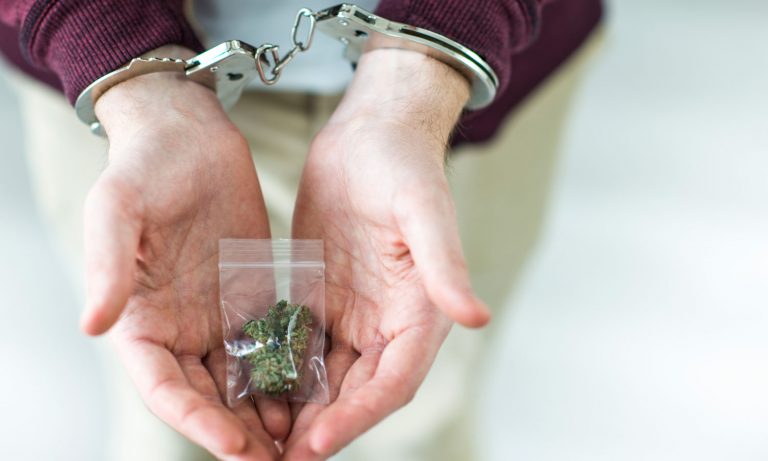
Schumer said, “We don’t want the big tobacco companies and the big liquor companies to swoop in and take over. The legislation we have will make sure that smaller businesses, businesses in communities of color, get the advantage because communities of color have paid the price for decades. They should at least get something back. “For decades,” the Senator continued, “young men who were arrested with a small amount of marijuana in their pockets served long prison terms and then they had a felony record and could never make themselves right.”

All of Schumer’s ideas sound well and good, but is it really possible to keep the big dogs of American commerce out? This question is going to be tested for sure — this year and in the years to come. Although the US Senate is hellbent on approaching the cannabis reform issue this year, Congressional divides and a skeptical president could make it next to impossible for the Democrats to get anything remotely close to a “comprehensive” cannabis bill approved this year.

What Chuck Schumer Can Do For Marijuana As Senate Majority Leader
Photo by Tasos Katopodis/Getty Images

According to the Daily Beast, President Biden just forced dozens of White House staffers to resign because they admitted to marijuana use. Even though a spokesperson for the Biden Administration says, “well-qualified applicants with limited marijuana use will not be barred from serving the American people,” that still doesn’t account for why the White House is firing people for this substance in the first place. The undertones suggest that Biden isn’t yet all in on cannabis. 

Meanwhile, Big Alcohol and Big Tobacco have already banded together to create a national lobbying group intended to do just what Schumer is trying to avoid – a complete hijacking of the cannabis industry. Therefore, in his limited leadership, Senator Schumer will have to combat the American Way — capitalism — to get his vision of a marijuana law on the books in the coming months.

 RELATED: Marijuana Reform Could Lose Out This Year To ‘Scorched Earth Senate’

The real focus of the US Senate appears to be in drafting a “restorative justice” bill that includes marijuana legalization. ​Senator Cory Booker said in Schumer’s video that the nation cannot have one without the other. ”It’s not just about creating an environment where states are legalizing, it’s about restorative justice, and that’s a number of things,” Senator Booker asserted. “That’s, one, making sure that we expunge records. Don’t talk about free adult use of marijuana without talking about expunging records. Number two, the tax money — this is going to be a multibillion-dollar business. Those tax receipts should be reinvested in those in those communities.” 

Senator Ron Wyden, one of the three key players in the Senate’s marijuana legalization campaign, thinks the group has “a real shot now at making progress.” However, I can’t decide whether this attitude is wishful thinking, delusions of grandeur, or just another political illusion designed to keep Democrats looking progressive and productive.

Marijuana Reform Could Lose Out This Year To ‘Scorched Earth Senate’
Photo by Chip Somodevilla/Getty Images

There is a whole lot stacked against the cannabis reform debate this year. Slim majorities in both houses, the controversial fate of the filibuster, Senate Minority Leader Mitch McConnell’s threats of a scorched earth Senate, and Biden’s apparent anti-cannabis stance could all have a negative impact on this battle. Ending pot prohibition is bigger than Senate Democrats. It’s a feat that will need significant reach from both sides of Congress and the White House to gain enough traction to advance. One way or another, divergence and bad blood will likely continue to be the ultimate saboteur.

RELATED:  If Senate Democrats’ Idea Of Cannabis Reform Is SAFE Banking Act, They Should Give Up Now

Earlier this week, we predicted that, if backed against a wall, Senate Democrats might try to pass a measly banking bill and call it cannabis reform. Wall Street analysts have since come forward to confirm that such a move is precisely what the party plans to do if they can’t rally enough support for full legalization. It’s “the backup plan if Democrats cannot enact legalization legislation,” Cowen’s Jaret Seiberg recently told MarketWatch. “Right now there is pressure to pass a cannabis bill,” said Seiberg. “Passing the SAFE Act would relieve that pressure, which means legalization would be unlikely to get a Senate vote. It is why the more likely play is to try to pass legalization with the backup plan of switching to the SAFE Act if there are not the votes to legalize.”

We shall see soon whether Schumer’s plan to legalize marijuana while keeping the cannabis industry in the hands of small businesses has any clout. It seems highly unlikely that will be the case. This is America, after all. Even at the state level, marijuana corporations have played at stakes much higher than their pay grade. They’ve tried to compete with the big dogs, and now they’re officially in the cage.

RELATED: Is It Bad For Big Alcohol And Big Tobacco To Help Shape Marijuana Legalization?

Schumer’s concept of a small national cannabis sector and giving back to ravaged drug war communities could be viewed as soft and laughed off the Hill. However it shakes out, the cannabis industry will eventually lock horns with Big Alcohol and Big Tobacco to maintain control. These two mega industrial sectors come with extremely deep pockets and far too much political experience to just walk away from potentially billions of dollars. 

No, this is only the beginning.

Cannabis Prohibition Is About To End — Does History Have To Repeat Itself?

Federal cannabis legalization may not help residents of states that currently prohibit cannabis in some form unless those states enact their own legalization measures.

America is on the cusp of legalizing marijuana at the federal level. There appears to be enough support in Congress to amend federal law and make commercial marijuana activities legal. But a federal mandate may not mean that recreational marijuana will be accessible in all 50 states.

As we near the end of cannabis prohibition in the U.S., it is important that we look at the history of prohibition to better assess the potential outcomes that states’ rights may cause, even after cannabis is federally legal.

In 1972, the federal Controlled Substances Act (“CSA”) classified “marihuana” as a Schedule I substance. This law made it illegal to cultivate, distribute, or possess cannabis. Before the CSA was signed into law, the federal strategy for thwarting cannabis use was imposing a substantial tax on the transfer of marijuana using the Marihuana Tax Act of 1937 (“MTA”). The MTA did not expressly prohibit the cultivation, distribution, and possession of marijuana, but instead made marijuana transactions prohibitively expensive.

Before the CSA, marijuana criminal laws were largely creations of state law. Interestingly, the relatively conservative state of Utah was the last state to criminalize marijuana. It is ironic that state legislatures have subsequently reversed course and removed criminal sanctions at such a rapid pace that now federal lawmakers are using state repeal and reform efforts to inform federal legalization proposals. For those keeping score, California was the first state to legalize medical marijuana, doing so in 1996. Colorado and Washington became the first two states to legalize recreational marijuana in 2012.

RELATED: We Must End Marijuana Prohibition For Economic Recovery In A Post Pandemic World 

With cannabis prohibition nearing its end, it is useful to review the history of federal repeal of alcohol prohibition. Alcohol prohibition ended in 1933 with the repeal of the Volstead Act and 18th Amendment, which were the federal laws prohibiting alcohol manufacture, distribution, and possession. However, some state legislatures refused to repeal their parallel state laws criminalizing alcohol, despite the repeal of prohibition on the federal level. The state of Mississippi remained a dry state until 1966, 33 years after the repeal of the Volstead Act and 18th Amendment. Almost half the state’s local jurisdictions continue to ban liquor sales as of today.

So, How Close Are The Feds To Ending Marijuana Prohibition?
Photo by bubaone/Getty Images

It is important to recognize that the repeal of federal marijuana prohibition will not automatically entitle individuals in all fifty states to possess marijuana for recreational use. The Constitutional doctrine of preemption provides that the federal government cannot require state legislatures to enact identical federal laws, so a state legislature must decide to actually repeal criminal law sanctions for marijuana possession, distribution, and manufacture, even if federal legalization measures are successful.

RELATED: Marijuana Prohibition Is The Greatest Scientific Fraud Of The Last Century

The movement for federal cannabis legalization may not help residents of states that currently prohibit cannabis in some form unless those states enact their own legalization measures. Idaho was the only state without any legalization measure in effect until late 2020 (i.e., not even allowing an affirmative defense based on medical necessity if found in possession of ≤.03% THC, industrial hemp-derived CBD products), which demonstrates that the movement towards national legalization could be irrelevant in Idaho. Like Mississippi and alcohol, it could take years for Idaho, and other politically and culturally conservative states, to fully legalize cannabis even after federal cannabis prohibition ends.

Emily is a recognized expert on cannabis-related legal, regulatory, and policy issues, having worked with a wide range of individuals and entities in both the public and private sector. This article originally appeared on Green Light Law Group and has been reposted with permission. You can contact Emily at info@gl-lg.com or (503) 488-5424.

Demystifying Marijuana And Heart Health

With the rise of marijuana legalization, researchers conducted a study to determine if marijuana’s growth and use had any impact on cardiovascular disease.

According to the American Heart Association, cardiovascular disease (CVD) claims more lives each year than all forms of cancer. In 2016 alone, CVDs were responsible for every one out of three deaths in the United States. 

The Centers for Disease Control (CDC) believes that cardiovascular ailments such as stroke and heart attack are now the leading cause of death in America. With almost 50% of the population affected by CVDs, it’s on the forefront of many researchers’ minds to try and understand the complex issue and what other ailments, medicines and activities may help or hurt the heart. 

New research details the need for candid conversations

With the ever-growing rise of marijuana legalization, researchers recently unveiled a study to determine if marijuana’s growth and use had any impact on America’s serious CVD issue. Recognizing an opportunity for wider dialog around patients’ marijuana use, the Journal of the American College of Cardiology published a January 2020 study by four major health institutions: Columbia University Irving Medical Center, University of Alabama at Birmingham, Brigham & Women’s Hospital Heart & Vascular Center, and Harvard Medical School. 

RELATED: Does Marijuana Have Any Health Risks For Patients With Cardiovascular Problems?

Researchers looked at an association of those who have used marijuana against those with cardiovascular diseases. Estimating that over 2 million Americans have used marijuana and that heart disease is still on the rise, the team determined that better screening should be in place to identify key risk factors as some studies showed marijuana could have adverse effects on heart health. 

5 Things You Can Do To Protect Your Heart Health
Photo by rawpixel.com

While not a gigantic leap in research, the study is hoping to bring to light the importance of better conversations around marijuana use in a clinical setting, which is a vital element in a good care plan. Candid conversations around lifestyle habits like cannabis can help doctors and nurses offer more personalized care to keep medicines from interacting with one another offering more safety to patients through better communication.

Does marijuana hurt the heart? 

With very little research being done around marijuana’s effects on cardiovascular health, doctors have little information to go on when asked about marijuana’s effects from patients. While cannabis can raise the heart rate and make the heart pump faster temporarily, there’s no studies that show long-term effects, positive or negative. Some studies have cited a risk of stroke for those with CVDs immediately after using marijuana, while other studies claim CBD can reduce blood pressure.

RELATED: Marijuana And Heart Attacks: What New Research Reveals

While research is inconclusive to heart health, marijuana, and CBD oil, one thing is certain: Better communication between doctors and patients can lead to stronger trust and relationships which can better health outcomes for all.

Willie Nelson On His Marijuana Advocacy: ‘We Have Made A Lot Of Progress’

Willie Nelson made his first SXSW appearance, discussing his music, COVID-19 and, of course, marijuana.

It may be hard to believe, but Willie Nelson had never made an appearance at SXSW until yesterday. The weeklong festival, which began on Monday, not only went digital for the first time but it marked Nelson’s inaugural keynote speech in the festival’s history.

Nelson spoke about his music, his experiences with COVID-19 and how much of an impact this year has had on him. He also took the time to discuss his experiences with cannabis and his life long support for the herb’s decriminalization.

Willie Nelson Has Officially Stopped Smoking Marijuana
Photo by Terry Wyatt/Stringer/Getty Images

“We have made a lot of progress through the years since the first time I was busted for marijuana,” Nelson said. “A lot of people have jumped on the bandwagon and realized marijuana is medicinal, it can help you in a lot of ways. A lot of states out there have already legalized it medicinally and also recreationally, but more states are on the way.”

RELATED: Jimmy Carter’s Son Smoked A Joint With Willie Nelson On The White House Roof

Nelson talked about the importance of activism, and how it gives people something to believe in and fight for. “It’s important to have those valuable things to keep you going.”

The multi-Grammy award winner has a long history with marijuana and even has his own label, Willie’s Reserve, which has been in circulation since 2015 and continues to expand.

RELATED: How Willie Nelson Got Woody Harrelson Smoking Marijuana Again

In 2019, Nelson’s stoner image was tarnished after he said he was no longer smoking weed due to having abused his lungs for many years. His son, Lukas Nelson, tweeted that while Willie was more careful with his lungs for health reasons, there were many ways in which cannabis could be consumed besides smoking. Said Nelson’s spokeswoman: “Willie does what he wants, when he wants, when it comes to smoking.”

Cannabis Banking Act Begins…Again

SAFE Banking Act would protect financial institutions from federal prosecution for providing banking and other services to cannabis businesses that are in compliance with state law.

The Secure and Fair Enforcement (SAFE) Banking Act was reintroduced in the House of Representatives today. This bill, which was introduced by Reps. Ed Perlmutter (D-CO), Steve Stivers (R-OH), Nydia Velazquez (D-NY), and Warren Davidson (R-OH), would provide a safe harbor for banks and other financial institutions working with state-legal cannabis businesses.

“Thousands of employees and businesses across this country have been forced to deal in piles of cash for far too long,” said Rep. Perlmutter. “It is time to enact SAFE Banking to align federal and state laws and reduce the public safety risk in our communities. I appreciate the partnership of the cannabis industry and businesses across this country who have added their voice to this effort. The SAFE Banking Act is an important first step to treating cannabis businesses like legal, legitimate businesses and beginning to reform our federal cannabis laws.”

In the last Congress, this legislation was the first cannabis policy reform bill brought to the floor of the House in recent history with 206 co-sponsors, and was the first to be approved by either chamber of Congress with an overwhelming bipartisan vote of 321-103 in September 2019. The bill moved to the Senate but was delayed due to the onset of the coronavirus pandemic. The House also approved two separate pandemic relief bills last year that included the legislation’s language.

RELATED: If Senate Democrats’ Idea Of Cannabis Reform Is SAFE Banking Act, They Should Give Up Now

“At a time when small businesses need all the support they can get, and after cannabis businesses specifically have been providing essential services and generating significant tax revenues for states and the federal government with little to no financial relief, it is more imperative than ever to get the SAFE Banking Act passed into law,” said Aaron Smith, co-founder and CEO of the National Cannabis Industry Association (NCIA).

“Lack of access to banking services continues to create serious unnecessary issues for public safety, transparency, and access to traditional lending that smaller operators desperately need. These businesses are contributing billions of dollars to the national economy every year, and need to be treated like any other legal regulated industry. We are grateful to the sponsors of this legislation who have generated strong and consistent bipartisan support year after year, and we are confident that it has a clear path to approval again.”

The NCIA said in a statement that the SAFE Banking Act would protect financial institutions from federal prosecution for providing banking and other services to cannabis businesses that are in compliance with state law, as well as help address serious public health and safety concerns caused by operating in predominantly cash-only environments. NCIA said, “The legislation would make traditional lending more accessible for the cannabis industry, helping alleviate the lack of access to capital that has presented major hurdles for smaller businesses. It would also mandate a study on diversity in the cannabis industry. The latest version makes clear that protections would extend to financial services providers working with the hemp industry as well.”

This article originally appeared on Green Market Report and has been reposted with permission.

Is It Bad For Big Alcohol And Big Tobacco To Help Shape Marijuana Legalization?

It might not take long before the deep pockets of Big Alcohol and Big Tobacco all of a sudden start swaying political opinion.

Marijuana advocates have done their best to keep the industry as pure and untainted by corporate crooks as possible. But like it or not, Big Alcohol and Big Tobacco have infiltrated the scene and are working with federal lawmakers to help shape policy geared toward nationwide marijuana legalization.

Seriously, several heavy hitters from the alcohol and tobacco trade recently launched a federal lobbying group to press the flesh of pot-friendly politicians on Capitol Hill and get marijuana laws passed in their favor. In other words, marijuana has been hijacked.  

This new development isn’t sitting well with the national cannabis advocacy group NORML. The organization argues that it has dedicated the past several decades to changing the minds of the American people with respect to marijuana. Their goal for national cannabis reform has always been to give people the freedom to “possess and consume marijuana responsibly without being either criminalized and stigmatized.” NORML has no interest in commercializing the cannabis plant. They claim lobbying groups, like those recently formed, will put corporate interests ahead of the American pot consumer. 

“While these industries have been raking in billions of dollars over the past decades, NORML has been fighting for your rights to possess and consume cannabis legally,” wrote NORML Executive Director Erik Altieri. “Now that we have made so much headway, these corporate interests are seeking to swoop in and shape the landscape in a manner that works best for them, not for you.” 

But how does the average cannabis consumer feel about it? Is the thought of marijuana being controlled mainly by Big Alcohol and Big Tobacco a concern, or is it no big deal as long as weed goes legal? 

NORML recently conducted a survey to get to the bottom of these questions. It turns out that most cannabis consumers aren’t too excited about these alcohol and tobacco corporations taking over the cannabis industry. Around 47 percent of the respondents said it “greatly concerns” them, and they’d like NORML to step in and try to stop them. Meanwhile, 31% said it’s only concerning “when businesses lobby for policies that conflict with consumer issues.” 

Twelve percent doesn’t think NORML should waste resources trying to intervene. These people, perhaps naively, believe the “market will sort these issues out on its own.” Another 10% of the respondents think the cannabis “focus should be on policies that impact individuals, not business.” 

replace your favorite alcohol drinks with these cannabis equivalents
Photo by Natasha Kapur via Unsplash

But is there anything cannabis advocates can do to stop Big Alcohol and Big Tobacco from absorbing the marijuana money train? Probably not. The industry doesn’t have enough clout of its own to shake things up in D.C., and they in no way have the kind of funding available to compete with the alcohol and tobacco trade.

RELATED: Marijuana Reform Could Lose Out This Year To ‘Scorched Earth Senate’

Marijuana lobby groups only dropped $4 million last year on policy persuasion, while the alcohol and tobacco groups contributed $60 million. The fact that these two business sectors have banded together to ensure marijuana policy is drafted to benefit their businesses is like a bunch of professional MMA fighters showing up at a schoolyard and kicking the crap out of a couple of eighth-graders. It’s not really going to be much of a fight.

Nevertheless, Big Marijuana is still looking to influence Congress. Last month, a marijuana lobbying group called the U.S. Cannabis Council (USCC) was assembled to advance federal cannabis reform. But unlike the group overseen by Big Alcohol and Big Tobacco, the USCC is focused on furthering federal marijuana legalization and social equity. “USCC is a unified voice advocating for the descheduling and legalization of cannabis,” USCC Interim CEO Steven Hawkins, Executive Director of the Marijuana Policy Project and a founding member of USCC, said in a statement. “Legalization at both the state and federal level must include provisions ensuring social equity and redress for harms caused to communities impacted by cannabis prohibition.” 

RELATED: Will Tobacco Companies Get Involved With Legal Marijuana?

Which of these lobbying groups will the U.S. Senate listen to when it comes to passing comprehensive cannabis reform this year? There will likely be a lot of support for any lobbying group pushing social equity. Giving back to communities ravaged by the Drug War is a hot topic right now among cannabis advocates. It’s actually something that the U.S. House addressed last year with the passing of the MORE Act.

However, while pure reform might catch an early lead, it might not take long before the deep pockets of Big Alcohol and Big Tobacco all of a sudden start swaying political opinion. This is America, after all, and money talks. Especially in Congress.

Marijuana Reform Could Lose Out This Year To ‘Scorched Earth Senate’

Perhaps it would be wise to sabotage the filibuster in 2021 and push marijuana reform at full throttle.

Senate Democrats are hoping to push a “comprehensive” cannabis reform bill in the coming months. However, talks about eliminating the filibuster, an old-time rule that requires a 60 vote supermajority, has Republican leaders hissing and spitting.

Senate Minority Leader Mitch McConnell of Kentucky threatened a “completely scorched earth Senate” earlier this week if Democrats so much as change the rules. If that happens, any hope of marijuana legalization could be doomed. Democrats need Republican support for cannabis reform to stand a fighting chance.  

Several reports indicate that Senate Democrats have been discussing privately making changes to the filibuster. They are trying to figure out a way to get rid of this old rule, which allows a single senator to object and jam up a bill’s progress. It’s a stall tactic created way back in the day, whereby senators could spend hours jabbering against legislation to prevent it from passing. McConnell wants this rule to remain in play. It’s the only thing that still gives him any power. Yet Democrats understand that it could prevent them from making more progress this session.

It’s for this reason that President Biden wants the filibuster changed. Rather than what it has become, he recently told ABC News’ George Stephanopoulos that he’d like to see it revert back to “what it used to be when I first got to the Senate back in the old days.” Biden said, “you had to stand up and command the floor. You had to keep talking. You’ve got to work for the filibuster,” he continued. “It’s getting to the point where, you know, democracy is having a hard time functioning.”

But a dysfunctional Senate is something that McConnell strives to keep. On Tuesday, the Kentucky Republican straight-up admitted that nothing concrete would get done in the Senate if Democrats altered the filibuster. “So let me say this very clearly for all 99 of my colleagues. Nobody serving in this chamber can even begin to imagine what a completely scorched-earth Senate would look like,” McConnell barked. “None of us have served one minute in a Senate that was completely drained of comity and consent. This is an institution that requires unanimous consent to turn the lights on before noon, to proceed with a garden-variety floor speech.”

Mitch McConnell Plans To Run Pro-Marijuana Democratic Majority Out Of Senate In 2022
Photo by Chip Somodevilla/Getty Images

“I want our colleagues to imagine a world where every single task, every one of them, requires a physical quorum,” McConnell continued. “Which, by the way, the vice president does not count in determining a quorum. This chaos would not open up an express lane for liberal change … The Senate would be more like a 100-car pileup, nothing moving.” 

RELATED: If Senate Democrats’ Idea Of Cannabis Reform Is SAFE Banking Act, They Should Give Up Now

This fight over the filibuster is nothing new. It’s part of the reason that it took so long to negotiate a power-sharing agreement between McConnell and Senate Majority Leader Chuck Schumer. McConnell didn’t want to sign-off on anything until Schumer swore in writing not to touch the filibuster. He later backed off that demand after learning that the Democrats didn’t have the votes to make it happen. But now, the pressure is on to make the change.

Pointing out how the filibuster was used to stall the Civil Rights Act of 1957, Senator Rick Durbin of Illinois recently said, “the filibuster is still making a mockery of American democracy.” Still, it remains uncertain whether liberal Democrats have persuaded conservatives to go their way. Many are not in favor, and the party needs every Democratic member to sign on in order to disrupt the filibuster. 

RELATED: Congressional Democrats Must Legalize Marijuana Nationwide Before Midterms, Or Else

So far, Democrats look like they are kicking crack and taking names on the Hill this session. The recently approved $1.9 trillion COVID-relief bill was a big win. But the bill was pushed through without Republican support through budget reconciliation. It’s a situation where a simple majority vote is needed to pass. Democrats have the majority in both chambers, but it is by such a thin margin that it’s almost treacherous. To that end, Democrats cannot rely on the budget reconciliation tactic to pass everything on their agenda, including marijuana reform. Any cannabis-related measure picked up by the Senate in the coming weeks could be filibustered to death.

white concrete building under cloudy sky during daytime
Photo by Harold Mendoza via Unsplash

Unfortunately, to pass a comprehensive marijuana bill this year, Senate Democrats need to amend, if not kill, the filibuster. It has been done before, so it’s not out of the scope of imagination. 

Yet, if what McConnell says is true, pushing more of President Biden’s agenda could prove challenging if they go that route. McConnell wants Democrats to know that any mission they accomplish by changing the filibuster would be repealed once Republicans win back the majority. Once again, this could include marijuana legalization. “As soon as Republicans wound up back in the saddle, we wouldn’t just erase every liberal change that hurt the country—we’d strengthen America with all kinds of conservative policies with zero input from the other side,” McConnell asserted.

RELATED: Mitch McConnell Plans To Run Pro-Marijuana Democratic Majority Out Of Senate In 2022

Some argue that getting rid of the filibuster is the only way Democracy can survive, that it’s only through an abuse of the rule that it’s even on the chopping block to begin with. It could be argued that Democrats should strike while the iron is hot and force McConnell and crew to contend with the aftermath however they see fit. Sure, Republicans could go medieval the next time they have control — it could be following the midterms — but Democrats should at least try to level the playing field and put democracy back to work in Congress. Eventually, Republican strong arm tactics will no longer bode well for them in the election process; ultra-conservative ideas and a blatant disregard for most of the population will catch up with the party and force a pivot. 

Therefore, perhaps it would be wise to sabotage the filibuster in 2021 and push marijuana reform at full throttle. Let the Republicans contend with the backlash that would surely arise from trying to resurrect prohibition.

Lung Cancer And Smoking Weed — Here’s What You Should Know

0

Smoking tobacco has long been associated with lung cancer. When it comes to smoking marijuana, the evidence is more complex.

Smoking has always been linked to lung cancer, but scientists have never found a precise answer when it comes to the risk that comes with marijuana use. As marijuana slowly earns legal status and respect across the nation, it’s becoming more and more important for health experts to determine some of the risks.

One of the biggest questions people have regarding marijuana use is whether or not smoking it poses the same risks as smoking tobacco, which is one of the main causes of  lung cancer. Discover Magazine spoke with several experts in order to paint a clearer picture on the relationship between the two.

Study: Cannabidiol Shows Promise As Treatment For Tobacco Addiction
Photo by christian acosta via Unsplash

“The unfortunate short answer is that we just don’t really know that much,” said Deborah Korenstein, chief of General Medicine Service at Memorial Sloan Kettering Cancer Center. Korenstein and some researchers analyzed existing data on lung cancer and marijuana and only found 25 studies on the matter. “There were problems with almost all of them that really limited our ability to draw conclusions,” she said.

RELATED: As Teen Use Rises, Study Finds Vaping Damages Lungs

Depending on the study, marijuana use has been shown to decrease, increase and have no effect when it comes to cancer risk. These results are difficult to obtain and studies are difficult to conduct, primarily because the drug is illegal on a federal level. Making matters worse is the fact that until a couple of years ago, marijuana use was seen as something bad, making people much more reticent when sharing their marijuana use with health experts.

While there were no definite conclusions, some links were found between marijuana smoke and chronic bronchitis. Still, there was no evidence that suggests that marijuana use increases the risk of lung cancer, which might be explained because of the marijuana itself or because marijuana is smoked with less regularity than tobacco is.

RELATED: Is Smoking Marijuana Bad For Your Lungs?

“If somebody smokes one joint a day, every day, that’s a pretty heavy [marijuana] user. But if somebody smokes one cigarette every day, that’s a really light user,” said Korestein. “Like a two-pack-a-day smoker — you can’t function in life if you smoke that much marijuana.”

More research is necessary in order to get a clearer picture when it comes to the risks and benefits of marijuana use. The more that legalization proceeds and develops, the better

Don't Miss Your Weekly Dose of The Fresh Toast.

Stay informed with exclusive news briefs delivered directly to your inbox every Friday.

We respect your privacy. Unsubscribe anytime.