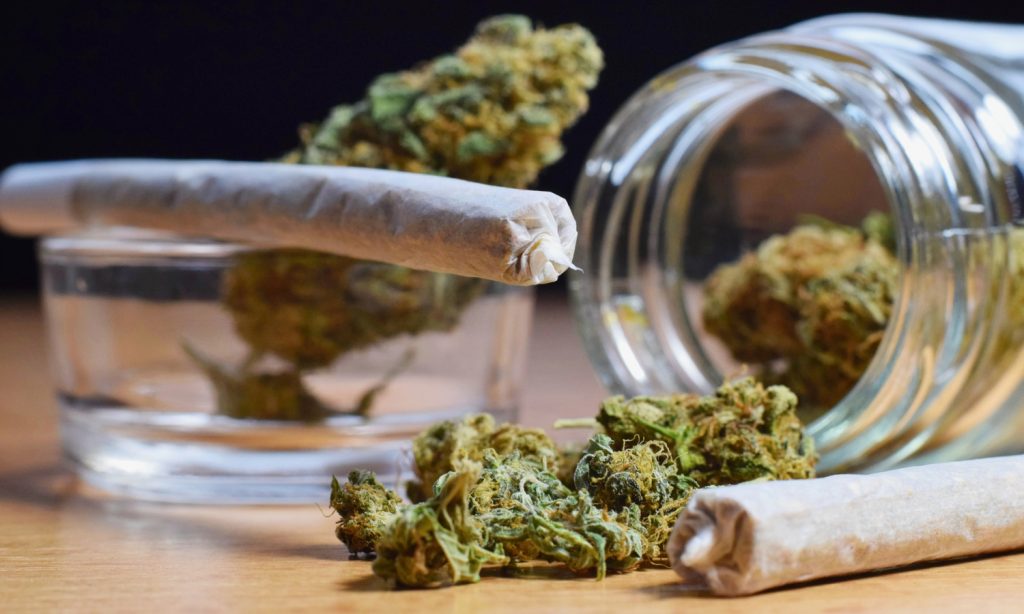
The real challenge to reduce crime associated with marijuana is federal legalization and more aggressive law enforcement to eliminate the black market.
Marijuana advocates like to say that legalization generally means a decrease in crime wherever it is legalized. But that assertion is difficult to prove. More legal marijuana equals less crime, maybe.
A 2019 study found that while marijuana use can increase the likelihood of violent and property crimes, marijuana use may also diminish a user’s violent tendencies.
First, a sounding factoid: A violent crime is committed in the U.S.every 26.2 seconds, according to the FBI Uniform Crime Reporting program (UCR). Overallviolent crime rose again in 2018, an increase of nearly one million victims over 2015. Nationwide,UCR figures report that marijuana arrests continue to outpace arrests for violent crimes.
While the usual issues with marijuana possession continue in states where it is still illegal — such as in Virginia, where the state made 28,866 arrests for marijuana offenses in 2018, according to theUniform Crime Reporting Section of the Virginia state police, an increase ofover 1,000 from 2017 — even in states where both medical and recreational marijuana have been legalized, arrests for possession have increased or stayed the same.
In Washington, D.C., for example, where recreational marijuana was legalized in 2014, you can still bebusted for possession anywhere in the District. New data released by the DC metro police department reported A total of 926 people were arrested for cannabis crimes in Washington, D.C. in 2017, up 37% from 676 in 2016, asreported in Marijuana Moment.
Photo by Andrew Brookes/Getty Images
In Colorado, the total number of marijuana arrestsdecreased by about half from 2012-2013, but have remained about the same since then.
But interestingly, themost common marijuana industry‐related crime in Denver was burglary, accounting for 59% of marijuana crime related to the industry in 2017.
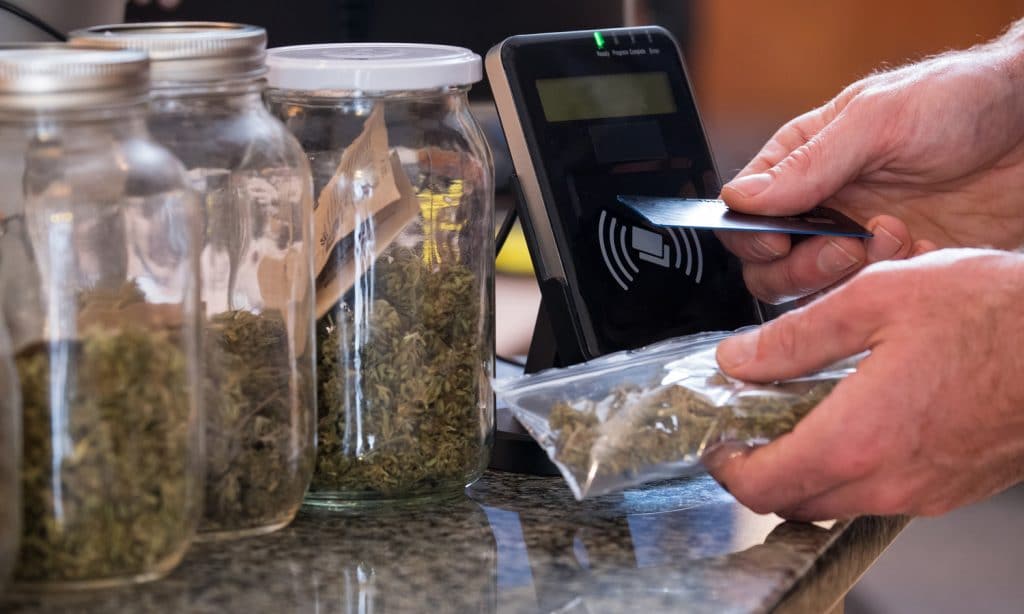
And that points to the real challenge of crime and marijuana — keeping an industry safe that has no real federal protections, with dispensaries generally relegated to remote areas of a town or city, all working on a cash-only banking system. The industry itself is creating more avenues of crime.
There has already been a spate of robberies in Sacramento, Denver and Seattle. In the case of Washington state, as a result of regulatory compliance, anyone (read: any thief) canfind total industry and individual sales for most of the 540 marijuana retailers and 1,534 producer/processors in the state.
But the biggest crime issue the industry faces is the black market, whichcontinues to proliferate. In California, for example, the black market is expected to make over $8.7 billion in 2019, compared to the legal market’s $3.1 billion. The black market is forecast to make up 53% of all sales in the state by 2024, according to areport in BDS Analytics, a marijuana research company.
While the research continues, mostly pointing to facts that more legalization can help reduce crime like it’s doing insome of the Mexico border states, it’s clear that the real challenge to reduce crime associated with marijuana is federal legalization — beginning with banking — and more aggressive law enforcement to eliminate the black market, which flourishes in part because of high taxes on legalized marijuana products.
CBD is starting to gain respect as an option for those looking at appetite suppression and may offer benefits that can lead to weight management.
According to The Institute for Health Metrics and Evaluation (IHME), 160 million Americans are overweight, including 30% of children under the age of 20. The Weekfound that the average American adult weighed 15 more pounds than two decades ago, and researchers have been studying American’s obesity epidemic at a rising rate. But can food addiction be tackled with marijuana?
“(Animals) given intermittent access to sugary food ate less of their normal food when the sweet food wasn’t available, and they overate the sweet food when it was available again. The scientists hypothesized that the brain’s stress system might be behind the behavior.”
The Boston University team tested drugs that block signaling for stress, showcasing the power of food addiction. A partner of the study, Dr. Eric Zorrilla at the Scripps Research Institute explained that stress often leads to overeating. “Our findings suggest that intermittently eating sweet food changes the brain’s stress system so that you might feel stressed…In other words, you might be self-medicating stress-like symptoms of abstinence with that piece of pie.”
And are Americans stressed? Absolutely. The American Psychological Association found that stress levels were rising due to political and economical tensions. The Association reports that “nearly half of Americans” (45%) are lying awake at night in the past month due to stressful thoughts. And more surprising, the survey found that stress was growing amongst individuals of almost every class.
“The survey revealed a significant increase in the percentage of Americans who had experienced at least one symptom of stress in the past month, from 71 percent in 2016 to 75 percent in 2017. Of the symptoms reported, around one-third of adults reported experiencing feeling nervous or anxious (36 percent), irritability or anger (35 percent), and fatigue (34 percent) due to their stress.”
Photo by Rod Long via Unsplash
With stress-eating causing one facet of the overeating epidemic, more Americans are at risk of the damaging effects caused by what they put in their bodies. However, a recent study found damning evidence that the very food Americans are eating also has a hand in deteriorating their health. A 2019 study featured in Cell Metabolism found:
“Increased availability and consumption of ultra-processed foods have been associated with rising obesity prevalence, but scientists have not yet demonstrated that ultra-processed food causes obesity or adverse health outcomes. Researchers at the NIH investigated whether people ate more calories when exposed to a diet composed of ultra-processed foods compared with a diet composed of unprocessed foods. Despite the ultra-processed and unprocessed diets being matched for daily presented calories, sugar, fat, fiber, and macronutrients, people consumed more calories when exposed to the ultra-processed diet as compared to the unprocessed diet. Furthermore, people gained weight on the ultra-processed diet and lost weight on the unprocessed diet. Limiting consumption of ultra-processed food may be an effective strategy for obesity prevention and treatment.”
In simple terms, diets with more ultra-processed food (high-sodium meats, high-fat milk) was correlated with weight gain, while those who ate unprocessed food (whole fruits, skim milk) tended to lose weight in the study.
While medications, lifestyle, and other important elements play a role in weight gain that leads to over-eating, research is showcasing Americans are at a higher-risk for weight-related health effects, such as heart disease, stroke and mortality.
Photo by mojzagrebinfo via Pixabay
The role of cannabis in weight management
Cannabinoids and their receptors (CB1 and CB2) are a part of each human body. Found in the brain and central nervous system, cannabinoid receptors have been studied wildly for the role they play in pain, irritability, and overall health. Interestingly, studies have found that individuals that are overweight tend to have more CB1 receptors in fatty tissue. Researchers and scientists have been looking into the link between CB1 receptors and obesity for decades.
In people with obesity, however, CB1 receptors become more widespread, especially in fatty tissue. Because of this, researchers believe that there may be a link between the activation of the CB1 receptors and obesity. A study in 2004 found that mice given a diet similar to what would be found in the wild with simulation of CB1 receptors led to mice being leaner, while a higher-fat diet led to increased obesity. Interestingly, they found that diet-induced obesity and stimulation of CB1 receptors went hand-in-hand, almost like cannabis intake leads to the “munchies.”
CBD and THC alert the body to activate or block certain CB1 or CB2 receptors. While THC can lead to overeating while being high, it has other effects for those trying to gain an appetite back after surgery or long-term illness as the drug can trigger feelings of hunger. The Society for the Study of Ingestive Behavior found that partaking in cannabis caused individuals to crave food more frequently and in smaller amounts, albeit with a delay.
Scientists coined the term “micro-dosing” after realizing that certain drugs could have an effect on mood, appetite, and more. An October 2019 study looked into the effect of micro-dosing as it pertained to CB1 receptors in certain individuals. It further studied the understanding of genetics and CB receptors to see how cannabis could play a role in issues like obesity and anxiety.
Photo by Arminas Raudys via Pexels
Interestingly, CBD has been linked to appetite suppression. While THC ignites CB1 receptors in many cases, CBD can help calm the appetite, controlling obesity by blocking the receptor. Research around CBD and the body has also found that CBD plays a role in how the body stores and converts fat. In 2016, researchers found fats are stored and converted differently when CBD is introduced to the body. CBD has also been shown to increase cell changes (from white to brown cells,) helping to burn fat.
A September 2018 study, published in the International Journal of Molecular Science, explained that the “Browning” process could lead the way for other research on CBD-related weight loss. The study also cited that Orlistat, a medication given to children who experience obesity had side effects like “vitamin deficiency, pancreatitis, nephrotoxicity and hepatotoxicity,” creating a risk in treating obesity. CBD has none of those risks.
While new studies are being conducted yearly, CBD is starting to gain respect as an option for those looking at appetite suppression and may offer benefits that can lead to weight management. As with any introduction of a new drug or treatment, its important care teams are involved, especially when CBD or THC is introduced to other medications. Whether CBD or THC could play a role in eliminating America’s obesity epidemic is still being uncovered. However, so much more research is needed.
A new report explains that conspiracy theories play a prominent role on the internet, particularly when it comes to COVID-19 vaccines.
Conspiracy theories surrounding COVID-19 vaccines are prominent on social media and could leave a lasting impression in the future of vaccines and medicine. A new report from First Draft, a non-profit that aims to fight mis- and disinformation online, explains that false data reaches a large audience and will likely create distrust in medicine.
“When people can’t easily access reliable information around vaccines and when mistrust in actors and institutions related to vaccines is high, misinformation narratives rush in to fill the vacuum,” reveals First Draft. “We have reached a pivotal and hypersensitive crossroads where increasing rates of vaccine skepticism may not only jeopardize the effectiveness of a potential COVID-19 vaccine, but that of vaccines more broadly.”
Researchers collected over 14 million posts from Facebook, Twitter and Instagram for a period of three months starting mid-June, when conversations about a vaccine increased in volume. They selected posts with words like “vaccine” and “vaccinations” in English, French and Spanish, whittling them down until they were left with the 1,200 most viral posts.
The report states that the narrative surrounding the COVID-19 vaccine is full of “data deficits,” meaning that there’s high demand for information but a low supply of credible sources. The two topics that drove the majority of online conversations were “political and economic motives” and the “safety, efficacy and necessity” of the vaccine. Instagram and unverified posts from Facebook appeared to be the main drivers of conversation, accounting for 71% of these interactions.
“Conspiracy theories about vaccines in general and the COVID-19 vaccine specifically play an outsized role on social media, particularly in Francophone spaces. More posts linked vaccines to conspiracy theories than moral issues and religious and civil liberties concerns combined. And these conspiracy theories were not limited to fringe groups,” researchers conclude.
With the current political and social climate it’s valid to assume that if and when a vaccine for COVID-19 is developed, a considerable number of people will mistrust and oppose it. This event will be controversial, likely to result in an influx of erroneous misinformation and mistrust in government and health programs.
Medical marijuana patients in places like South Dakota, one of the five new legal states, have the same rights as those on prescription drugs. The laws are getting less restrictive, so be aware.
There’s no way to stop progress, no chance of turning back time, and certainly no way of making the country forget about marijuana. The herb is becoming increasingly more legal across the United States. Five more jurisdictions entered toker territory in the recent 2020 election. We could see more states, too, including New York and Pennsylvania, jumping on the bandwagon next year. And where there is legal weed, there is a slew of people motivated to use it.
Unfortunately, the nation’s cannabis laws can be exceptionally difficult for business owners to understand since the federal government still considers it an illegal drug. Not to mention its legality always seems to differ from state to state. Nevertheless, anyone who owns or even manages a company is being forced to contend with marijuana use in the workplace. Research shows that drug tests for marijuana have increased 35% since 2010. So, it’s crucial to understand the ins-and-outs of legal weed, not only to protect the interest of your place of business but the employees responsible for keeping it running like a well-oiled machine.
Employers need to have a solid understanding of the marijuana laws in their state to avoid cries of discrimination. For now, most legal states do not require employers to accommodate marijuana use. In many cases, the law even allows them to maintain a zero-tolerance policy. Because of how marijuana metabolizes in the body, an employee that got high over the weekend could still technically fail a drug test a month later. And even though they weren’t impaired on the job, employers are still well within their rights to fire a worker for this offense.
That’s zero-tolerance.
Advocates are trying to change this aspect of the law. They want employers to prove impairment before taking disciplinary action. But that’s probably not going to happen until the federal government changes the law first at the national level. But don’t just assume that you can fire all of the potheads. Some medical marijuana states now have stipulations in place that require employers to prove impairment before dismissal. Medical marijuana patients in places like South Dakota, one of the five new legal states, have the same rights as those on prescription drugs. The laws are getting less restrictive, so watch out.
That doesn’t mean marijuana users get to do whatever they want and the employer has to go along with it. Regardless of whether it is legal for recreational or medicinal use, it’s not mandatory in any state for employers to tolerate marijuana use on the job or employees working under the influence. A company has every legal right to discipline or even fire a subordinate who breaks the rules. If they show up to work high, they can be fired. If they get high on the job, they can be fired. If they bring pot to work, they can be fired.
Photo by KLH49/Getty Images
Also, if the business happens to be one where mandatory drug testing is dictated through federal regulations, an employee can be terminated for a positive marijuana test — no matter what the state law says. If federal law requires that workers pass a drug test — something that is common in manufacturing positions and jobs where heavy equipment is used — they can be terminated for just having pot in their system. It’s a matter of safety, according to Uncle Sam, and it’s been this way since the Reagan Administration.
Meanwhile, some states have made it illegal to drug test applicants before offering them a job. In places like Nevada and New York City, it is against the law for an employer to force a person to pass a pre-employment marijuana test before they are offered the job. But once the employee is hired, the employer has every right to demand they stay clean of THC to maintain their position.
Of course, a company has more things to worry about than watching workers for pot. One in every three Americans now lives in a state where marijuana is legal, so it stands to reason that more workers will use it. Therefore, it is important to understand the marijuana laws in your state. It is also crucial to establish a workplace drug policy and make sure that every employee fully understands the implications. Beyond that, all a company can do to protect itself is to make sure that its management has a grasp of the company’s cannabis policy and the legal procedures for policing it. It is a good idea to consult with an attorney specializing in cannabis law in your state.
It should be pointed out, however, that while being stoned on the job should always be discouraged, just the same as alcohol or any other mind altering substance, firing a person just because they have marijuana in their system might not be the way to go. As we mentioned earlier, marijuana metabolizes differently in the body than any other drug. It can stay in a person’s system for a month or longer after the last use.
This is where companies often fail. They might be quick to terminate a quality employee on the basis that they were high on the job when, in reality, the person had only used marijuana on their personal time off the clock. Companies should be evolving with the times, not trying to hinder growth. Learn how to spot the difference.
Bingeing on nostalgic movies, music and shows has been a strange side effect of the pandemic. Psychologists explain why this is a good thing.
No matter your approach to the pandemic, you’ve likely had to get creative with your free time. When lockdown was first enforced people were spending lots of time watching movies and shows, at times old releases, since Hollywood has been stuck in limbo for the entire year. While summer offered some reprieve and the ability to enjoy the outdoors, now that the weather is changing, we’re all experiencing a very depressing sense of deja vu. It feels like the pandemic is starting all over again.
The New York Times reports one interesting trend that has been experienced by people all over the world: nostalgia, particularly from music, movies and shows from the 80s and 90s. People all over the world, like 31-year-old Anna Townsend from Atlanta, GA, have been relying on content from their formative years to provide them with a sense of security. “It’s something to numb your mind a little bit. You can just spend one hour and 45 minutes zoning out.”
Drive-in theaters, which have been incredibly popular during the pandemic, have been screening films like The Empire Strikes Back, Jurassic Park and Back to The Future, not only because there’s not a lot of new movies to screen, but because that’s what people want to see.
“We feel that we have lost footing at the present time, and we gain some comfort by taking a step back and revisiting something that reminds us of a time that we used to feel more connected with other people,” explains Dr. Wing Yee Cheung, an associate professor of psychology at the University of Winchester. “It gives you energy to cope with what is going on now and move forward.”
Getting lost in a childhood favorite, whether that’s regressing to your Backstreet Boys obsession or spending hours invested in a favorite old show, can provide some refuge in times of stress. It’s also a healthier coping mechanism than drinking yourself to sleep or watching the news on a loop while you clutch your chest. That feeling of familiarity that something you reliably love and enjoy is especially reassuring when faced with all of the foreignness that surrounds us. It takes you back to simpler times.
There’s still a stigma attached to psychedelics and cannabinoids as being dangerous drugs that contain no medical value, but it’s slowly disappearing.
What do cannabis and psychedelics have in common? They’re all classified and considered illegal, dangerous substances in the U.S. However, many states are starting to recognize these substances for their medicinal and/or therapeutic value. Here are the impact psychedelics and cannabis on medicine.
So far, in more than half of the country, cannabinoids such as THC and CBD are recognized and/or treated as alternative medicine, and in recent years, views about psychedelics have shifted, especially within the medical field.
Before diving into the world of psychedelics and cannabis, it’s important to know that psychedelic drugs or hallucinogens are substances that produce different visual and/or auditory hallucinations. A few popular psychedelic drugs include LSD, DMT, peyote, “magic mushrooms”, ketamine, and MDMA. Then, there’s the plentiful cannabis plant, which contains over 400 chemical entities with more than sixty of them being cannabinoid compounds including cannabidiol (CBD) and tetrahydrocannabinol (THC).
Photo by Moha El-Jaw/Getty Images
In addition, to represent and advocate for the medicinal benefits of psychedelics, leaders in the psychedelic medicine field have joined forces to create the worldwide psychedelic medicine association (PMA). PMA aims to show people how psychedelic medicines could offer hope as groundbreaking alternative treatment methods for the purpose of improving one’s mental health, curbing and combating addiction, or serving as a pain management method.
What many might view as a small but mighty victory is that within the U.S., annual conferences like New York City’s “Horizons: Perspectives on Psychedelics” occur, which focus on discussing the latest developments in psychedelic science and medicine. As a result, the public and medical community can gain knowledge about the medicinal side of psychedelics and their potential.
Furthermore, recent research findings indicate that compounds within psychedelics possess therapeutic value and potential in addition to serving as a rapidly-producing antidepressant, a treatment method for PTSD, and/or as a treatment method for those diagnosed with a terminal illness.
Regarding cannabis, its transformation over the last decade has been profound, especially because more than half of the country has legalized cannabis for medical and/or recreational purposes. New cannabinoids continue to be discovered, studied, and discussed in the medical community, and the list of medicinal and therapeutic benefits tied to cannabinoids keeps growing.
Emerging Research Findings About Psychedelics Worth Noting
Due to the groundbreaking findings in this field thus far, John Hopkins University (JHU) is studying the use of psilocybin to help treat addiction, anorexia, and other health issues. Interestingly enough, in 2017, the FDA approved “breakthrough therapy” status to MDMA-assisted psychotherapy as an alternative treatment method for PTSD. A year later, JHU researchers recommended that “magic mushrooms” be moved from Schedule I to Schedule IV so it could be used for medical purposes.
In addition, a 2017 study found that psilocybin from “magic mushrooms” can be used as an alternative treatment method for cancer-related psychiatric distress, anxiety, depression, addiction, and substance use disorders, which has captured the attention of many states, but particularly Oregon. Oregon recently introduced Measure 109, and if it passes and becomes law, Oregon will be the first state to legalize psilocybin on a statewide level, and medical professionals will be able to legally conduct psilocybin-assisted therapy in a supervised setting.
There’s still a stigma attached to psychedelics and cannabinoids as being dangerous drugs that contain no medical value, but it’s slowly disappearing. The abundance of research findings demonstrating the medicinal properties of these drugs continues to spread into the medical community, which is cause for celebration for many.
There is room for market optimism after the latest state reforms. That said, substantial hurdles exist.
Depending on who you ask, the latest election results are the latest sign to invest in cannabis, or at least another market milestone investors should consider.
American marijuana reform received its latest sign of optimism when five states approved ballot measures on Election Day. The passage is not only a positive boost for reform efforts, but also the investment space.
Alan Brochstein, founder of 420 Investor, said that the time to invest has already happened. In a post-election day recap, Brochstein identified a March 2020 rally that signaled the beginning of the nascent space’s third investment wave. He noted that stocks rose over 27% around election time, posting its best week since a late March increase of 32%.
Catharine Dockery, founding partner at Vice Ventures, said that entering the market depends on investor timelines. “For us, we’re absolutely keeping cannabis on the radar, but less on businesses that directly touch the plant,” she said.
Dockery added, “Over the past several years, the exit landscape has become much more challenging as public cannabis companies struggled.”
Market Optimism Meets High Hurdles and Potential
There is room for market optimism after the latest state reforms. That said, substantial hurdles exist.
Brochstein feels that some investors are overly optimistic about rollout New Jersey’s rollout. He also highlighted near-term concerns around recent capital raises, which could produce short-term negatives. However, he predicts that high-return investment opportunities exist, which should prompt long-term growth.
Dockery brought up the nascent stage of the market and its scattered offerings. “One thing that’s rather striking about the cannabis market currently is its fragmentation, with every state offering different products, regulations, and stores,” Dockery said. She hopes to see the market centralize slightly in time.
Photo by Darren415/Getty Images
A Likely Long Haul to Returns
Those seeking quick returns could find frustration in cannabis. While possible, Dockery said early-stage spaces present a challenge for quick returns–especially during the pandemic.
Some suggest looking towards smaller ventures to support cannabis community ethics and long-term investments.
Morgan Fox, Media Relations Director and Committee Manager for the National Cannabis Industry Association, implored investors to seek alternatives besides larger players. Fox said, “Start looking at providing capital in a fair and equitable manner to small companies, particularly those owned and operated by people of color, women, and others disproportionately harmed by prohibition.”
He added, “This is a sector of the market which has limited access to capital and which could provide savvy and ethical investors with huge rewards in the long run.”
It’s not a huge jump, but more people support legal weed than they did in 2019, according to a new Gallup poll.
As the country’s growing acceptance of marijuana continues to spread across state lines, it should come as no surprise that Americans are now more likely than ever to support legal weed. In fact, a new Gallup poll reveals that they’re more likely to support it now than at any point in the previous five decades, with seven in 10 Americans vouching for the drug’s legalization.
The poll found that 68% of U.S. adults are in support of legal marijuana:
The 68% of U.S. adults who currently back the measure is not statistically different from last year’s 66%; however, it is nominally Gallup’s highest reading, exceeding the 64% to 66% range seen from 2017 to 2019.
The poll indicates that the majority of people are for marijuana legalization, no matter their age, gender, race or education. All in all though, young people, college graduates, men, and those with incomes of at least $100,000 are more likely to favor legalization.
Politics play an important role. Democrats and Independents are more likely to support legal marijuana over Conservatives and Republicans, which remain the groups that are least likely to support the measure (about half of them offered their support in the polls).
Religious people are also less likely to support the legalization of the drug, with the frequency of church attendance playing a key factor. Per Gallup: “A slim majority of those who say they attend weekly oppose legalization. Yet, about three in five of those who attend nearly weekly or monthly, and about four in five who attend less frequently, favor legalizing marijuana.”
Support for marijuana grows with each passing year. This change is reflected in people’s mindsets, conversations, and state laws. It’s only a matter of time before we see it on a federal level.
Hash is a concentrated form of cannabis resin that’s increasing in popularity. Here are some of the basics you should know.
It’s a great time for cannabis in the United States. Following the November elections, marijuana was decriminalized in some states and different medical and recreational programs were put in motion. With this new wave of acceptance hitting the country, you can expect more curiosity about the plant, including its different parts and the ways in which it can be consumed. Here is a quick and easy primer on hash.
Hash is a concentrated form of cannabis resin. Also known as hashish, it’s the wax or liquid form of kief. The compound comes from the trichomes of unpollinated female cannabis. In less complicated words, in its natural form, hash is the sticky coating you can see on cannabis buds. It can be diluted into a butter or oil and used for cooking or for concentrates. It can also be smoked.
Hash is one of the most concentrated form of cannabis, featuring no other components aside from raw cannabinoids. While traditional weed has a THC potency of up to 25%-30%, hash has levels that range from 20%-70%. If there’s one thing you get out of reading all of this, it should be that hash will get you much higher than your average joint, and it should be approached carefully.
Photo by Wild0ne via Pixabay
According to industry experts, hash has been on the rise in the U.S. These types of extracts are claiming bigger shares of the market, representing about 6% of sales. Hash can be found in different forms at dispensaries, including dry sift, bubble and wax. It can also be made at home through different process, including the use of dry ice and CO2.
For those users who have not tried hash before and are curious about its effects, we suggest steering clear of black market purchases or home made recipes. Visit a trusted dispensary and ask your budtender for some recommendations of hash products, preferably something manageable. For your first time, your safest bet will be a traditional product made by a popular and trusted brand that has the appropriate certifications and quality assurances.
As more research finds that CBD can be a useful medicine for dogs and cats, the compound has become one alternative medicine that’s being considered much more now than ever before.
In the U.S. and many other countries, dogs and cats alike are adored as loving family members. The ASPCA has estimated that in the U.S. alone, 78 million dogs and 85.8 million cats are owned and treated as pets. Similarly, 44% of all American households have a dog as a pet, and 35% have a cat. Due to the abundance of pet dogs and cats, the demand for medical and veterinary services is significantly high, and it keeps growing. So what is the relationship between cannabis and veterinary medicine?
For decades, pharmaceutical medications and traditional treatment methods tended to be the norm. However, in recent years, cannabidiol (CBD) has been making a large splash within the veterinary medicine industry. So, stick around to learn about the unique relationship between cannabis, but specifically CBD and modern-day veterinary medicine.
CBD Usage and Pet Mammals—What the Research Says
As more research findings are released about CBD’s medicinal properties that can be reaped by mammals including dogs and cats, the compound has become one alternative medicine that’s being discussed and/or considered much more now than ever before.
To date, publications from Colorado State University (CSU) and Cornell University have documented the pharmacokinetics of CBD in dog subjects. The study reported that orally administered CBD (by mouth) is absorbed more effectively than transdermally administered CBD (applied on the skin’s surface). The study also found that orally administered CBD was well tolerated, which supports CBD’s solid safety profile.
Furthermore, a 2018 double-blind study was conducted by neurologist Stephanie McGrath from CSU to determine CBD’s ability to help treat seizures and epilepsy in dogs. It turns out that 89% of the dogs that received CBD experienced a reduction in seizure frequency. On a similar note, the cannabis-derived product called Epidiolex can be used by humans, but it can also be used in an extra label manner by veterinarians in accord with the Animal Medicinal Drug Use Clarification Act (AMDUCA).
To learn more about the relationship between cannabinoids like CBD and animals, especially dogs, American Kennel Club (the nation’s largest and oldest purebred dog registry) awarded a $350,000 grant for a three-year crossover study to focus on CBD administration for epileptic dogs.
Photo by Eric Ward via Unsplash
How Do Veterinarians View CBD?
In a 2018 nationwide study published in the journal Frontiers in Veterinary Science, numerous veterinarians shared their views about CBD in their industry. When asked about which medical ailments they’d potentially treat with CBD products, the most common replies were for pain management, anxiety relief, and seizure relief. And when vets were asked about the potential benefits of CBD for treating various health issues, they reported witnessing (either first-hand or via pet owner reports) that CBD was the most helpful for treating chronic and acute pain, anxiety, and reducing seizure frequency/severity.
The Progressive Growth of the Veterinary CBD Market
Not only is the global veterinary CBD market projected to reach $125 million USD by 2022, the number of companies within this space are accumulating and launching their own therapeutic-grade, food-grade, and/or personal care CBD products. For example, True Leaf Brands Inc. launched their own veterinarian-formulated CBD supplements, and this is only the beginning!
Can Veterinarians Recommend or Prescribe CBD to Pet Owners?
Although cannabis is legal in more than half of the country, this doesn’t mean that veterinarians can legally prescribe or dispense cannabis. However, within Colorado and California (via Assembly Bill #2215), cannabis-derived veterinary CBD is deemed legal and can be discussed with pet owners and recommended. Whereas, in New York, a bill was proposed to legalize medical cannabis for pets, but it’s still in the early stages.