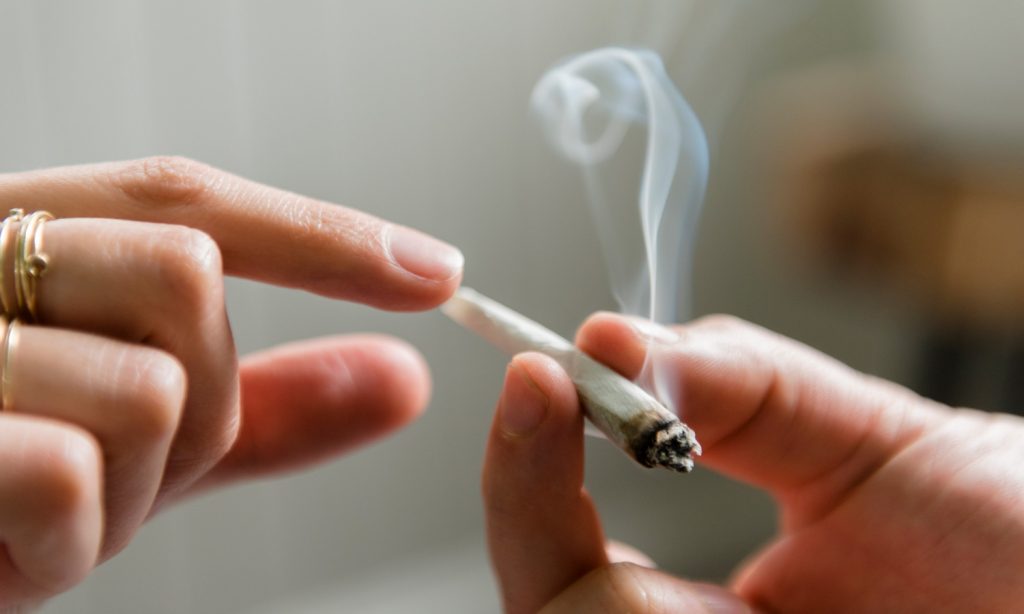
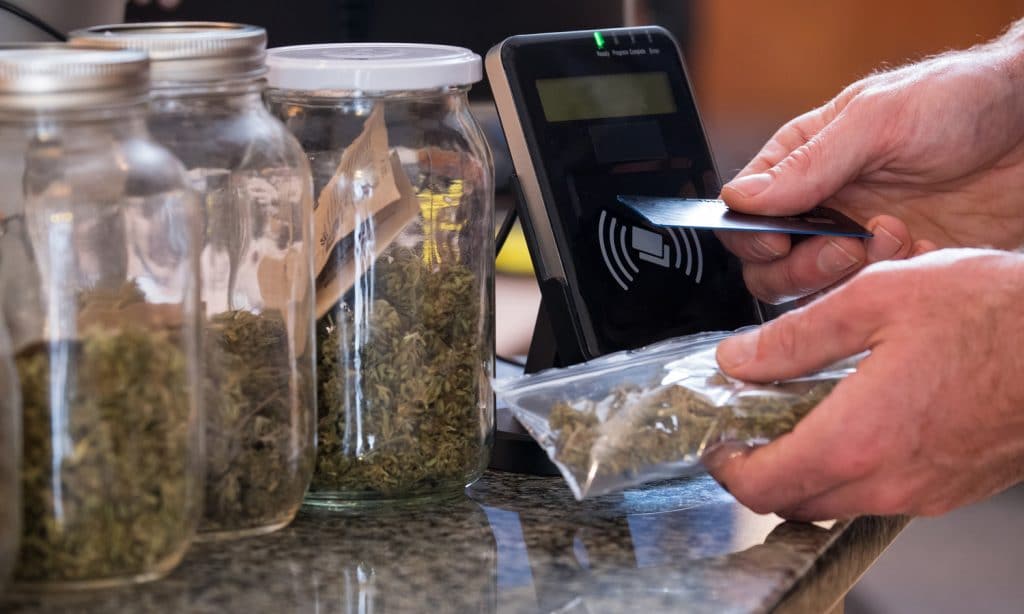
It might sound like sharing weed with your teen is a hip move, but it can actually get a person in deep trouble with the law.
Some adults believe it makes them “cool parents” to have an open relationship with their children and smoke marijuana with them from time to time. This sort of thing happens fairly regularly, but we really only hear about it when the hammer gets brought down on those adults who subscribe to this irresponsible policy. Because while it might sound like sharing pot with your teen is a hip move, it’s the kind of behavior that can actually get a person in deep trouble with the law.
A perfect example of the problems that can arise from smoking cannabis with a minor went down in Oregon — a state where weed is legal for adults 21 and older. It was there that a couple was arrested for getting two 13-year-olds high, according to a report from the Ashland Tidings.
The article claims that 38-year-old Lindsey Ann Monda and her 46-year-old boyfriend Jason Michael Dunn were taken into custody after police learned they were allowing Monda’s children to participate in various pot-related activities. A string of text messages sent by Monda to a friend shows that she was “getting blasted” with her kids, “and teaching ‘em how to use a bong.”
Interviews with the minors helped police collect enough evidence to charge both adults with a crime.
So, where did these two go wrong?
Photo by Jamie Grill/Getty Images
Even though marijuana is now legal in a growing number of states, it is still illegal in those places for adults to sell or share marijuana with people under 21 years of age. Anyone caught breaking this law, which is considered “contributing to the delinquency of a minor,” can be slapped with a felony charge. How that all shakes out in a court of law really depends on a variety of factors, including the amount of marijuana involved and if the adult on the chopping block has a criminal history. Either way, a conviction for sharing or selling weed to minors can lead to years in prison and thousands of dollars in fines. In California, for example, providing children with cannabis can result in up to 7 years in prison.
If you think this can’t happen to you, you would be sadly mistaken. Getting busted for this offense is relatively easy for those who dare try it. In the case of Monda and Dunn, it appears that text messages bragging to friends about one of the teens being “totally blazed” and how it was “hilarious” to see them so stoned is what ultimately prompted a tip to law enforcement. It seems that not even your friends can be trusted. And even if the claims are false, it is the responsibility of the police to investigate all matters where a minor’s well being could be at risk.
There is also a distinct possibility that the kids will tell on you, as well. Indeed, even if no other adults sell you out, teens are known for having loose lips. It doesn’t matter how many times you utter the phrase, “Hey, don’t tell anybody about this or I’ll get into trouble,” rest assured they will run their mouth to someone. It will then most likely get back to a teacher, a school counselor or someone else who doesn’t find it a bit humorous that you’re getting your kids high. Therefore, engaging in this practice, even if just once, is a dangerous game that could cost you your freedom.
Once again, any report at all suggesting that an adult is sharing weed with kids, and the cops are going to show up at the door asking questions. Let’s hope you can prove the visit is unwarranted. If not, you could be taking a trip downtown, and there’s nothing about the events that are sure to follow that will make you the “cool parent.” That is unless you count cooling off in a jail cell.
A2011 study found that “marijuana and hemp are significantly differentiated at a genome-wide level,” further confusing hemp’s legal status.
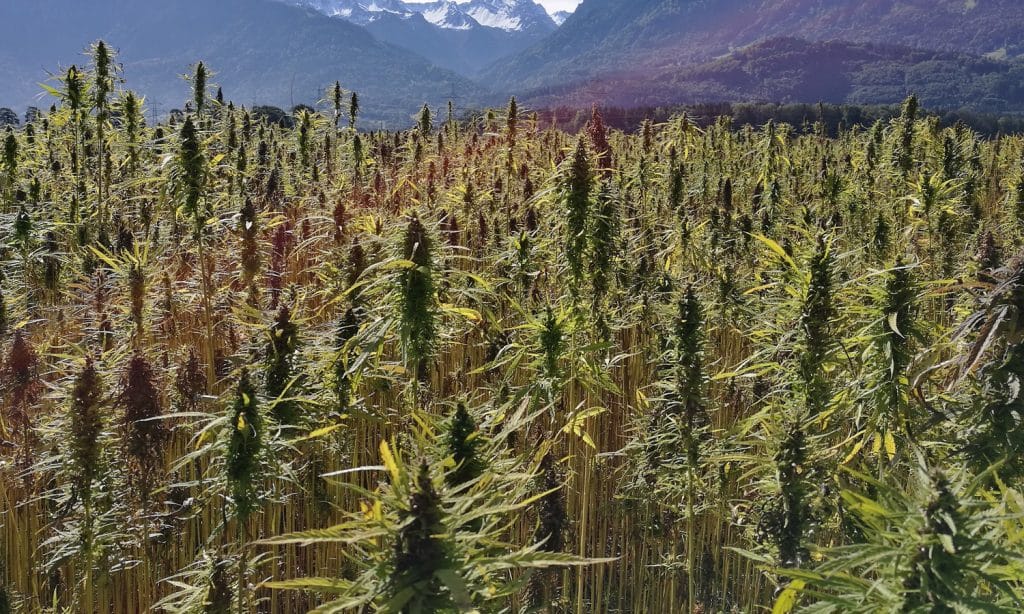
Since the signing of the2018 Farm Bill in December, 2018, significant attention has been paid to the differences between hemp and marijuana. Most reasoning comes down to the level of THC as the differentiating factor. But there is so much more going on here.
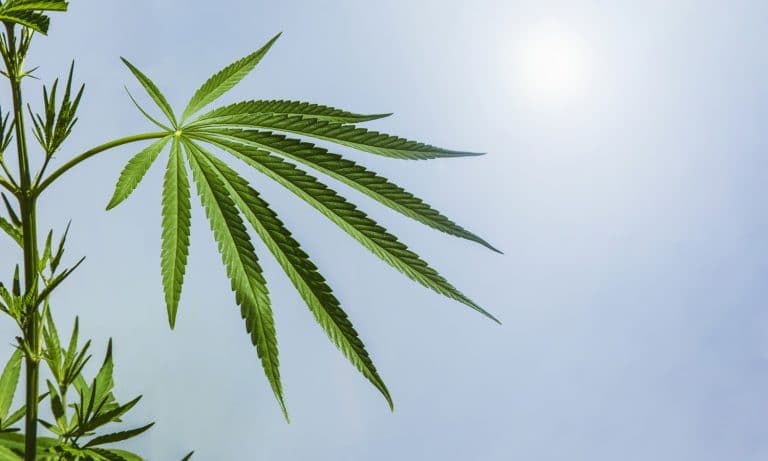
Hemp and marijuana are, in fact, two different plants in the same species of three different types of marijuana: cannabis sativa, cannabis indica, and cannabis ruderalis.
According to the 2018 Farm Bill (which is still technically not in force yet), hemp is the cannabis sativa type of marijuana that has no psychoactive properties because of an extremely low level of THC. It’s why hemp products are generally legal, depending on various state laws.
Buta recent government report concludes that marijuana and hemp are neither genetically identical nor genetically similar. And a 2011 Canadian study, published in the journal PLOS ONE, found that “marijuana and hemp are significantly differentiated at a genome-wide level.”
This new information only serves to further confuse what the government is trying to figure out about hemp’s legal status. If hemp is genetically not marijuana, then does that mean any hemp with any level of THC is not marijuana—and therefore, should not to be included as a Schedule 1 substance?
This new scientific information could have helped in the situation in Idaho on January 19, 2019, where an Oregon trucker was arrested for felony trafficking of marijuana carrying 6,701 pounds of hemp that the Idaho trooper said tested positive for THC with his field testing unit. His drug dog alerted to it as well.
Photo by TinaKru via Pixabay
The shipment was confiscated because the state said that hemp is marijuana, and since the 2018 Farm Bill legalizing hemp was not in force yet, the state could confiscate the shipment and arrest the driver for interstate transportation of a controlled substance.
But what about the genetic differences? Could this new scientific information about marijuana and hemp being genetically different become the basis of a more informed argument for the defense of what constitutes marijuana and what constitutes hemp?
But the plot thickens!
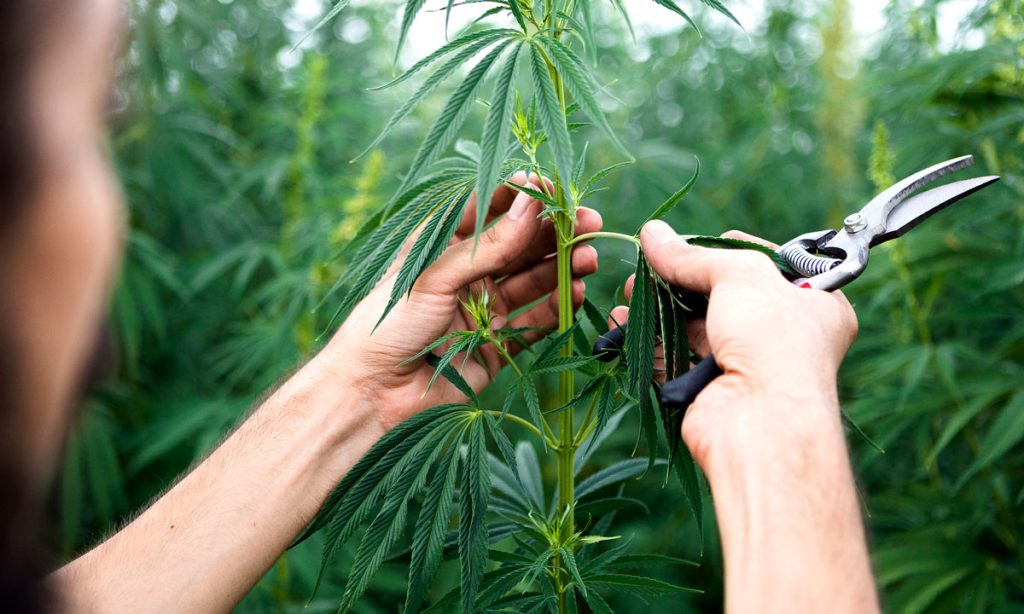
The 2018 Farm Bill assigned regulatory developments about growing and transporting hemp to the U.S. Department of Agriculture (USDA), which is currently working on finalizing those rules, which is why the new rules legalizing hemp are not officially in place yet. Creating these rules is not going to be simple.
Adraft of the interim final rule for domestic hemp production by the USDA shows what the USDA is up against. It pointed out that plants grown from the same hemp seeds planted in one state could have different THC levels when planted in another state.
That means hemp grown in one state could be marijuana, where hemp grown from the same seeds in another state could still be hemp.
The USDA also has an allowable error margin for THC content in a hemp sample. Hemp has to be lab tested in one of44 Drug Enforcement Administration (DEA) registered labs to determine its THC content (DEA registration is necessary because tests may determine that the sample is actually marijuana).
Photo by Nastasic/Getty Images
The USDA draft states that a lab’s “measurement of uncertainty” is allowed, meaning that a sample of hemp that tests for the allowed .3% THC level in a hemp sample instead comes up as .35% is OK, if the lab measurement of uncertainty is plus or minus .06%. That means that a level of THC of .35 percent is OK because it’s within the high end of a range ending at .41% (.35 + .06%).
So that sample, which is actually marijuana because it’s over .3% THC, is okayed as hemp according to the USDA’s lab guidance.
Got that? Hold on.
Yet another hemp-not-marijuana-but-seems-like-marijuana wrinkle has surfaced, also fromgenetic researchthat discovered that hemp plants may, in fact, create higher THC content through their own genetics, and not inenvironmental conditions (drought, flooding, excessive, nutrients, and other conditions) as originally thought. Hemp can turn itself into marijuana.
So many questions.. too few answers. More research is needed. Bottom line: This is one complicated, amazing plant—and a snickering Mother Nature doesn’t give up her secrets easily.
A TikTok video illustrating the Vice President-elect’s Thanksgiving turkey recipe has been making the rounds over the past couple of days.
Modern day politicians are one of the topics that social media apps love the most, adding a bit of humanizing to them, especially during the holiday season. An example is Kamala Harris’s Thanksgiving turkey recipe goes viral on TikTok.
The Vice President-elect has shared her love of cooking with followers, discussing her childhood experiences with cooking, as well as her favorite cookbooks and authors. “As a child, I remember hearing the pots and smelling the food, and kind of like someone in a trance, I would walk into the kitchen to see all this incredible stuff happening,” she said in an interview with Glamour.
Photo by Win McNamee/Staff/Getty Images
The trending TikTok video was taken from a 2019 appearance on MSNBC. In it, Harris discusses the differences between wet brine versus dry brine and why white wine is her secret ingredient when it comes to adding flavor and moisture to her Thanksgiving Day turkey.
The video was shot during a commercial break and is now edited with footage of someone actually cooking the bird according to Harris’s recipe. “Do it like a pot of water, a couple bay leaves, a little sugar, a cup of peppercorns, you could even do a slice of orange, something like that,” she explains.
The video made its first appearance on Twitter before reporter Jonathan Capehart uploaded the footage and hashtagged it #KamalaCooks.
Harris has been vocal about cooking and how it benefits her mental health by giving her a semblance of control over her hectic life. She’s cooked masala dosa with Mindy Kaling and addressed Senator Mark Warner’s gross tuna melt Twitter tutorial gone wrong.
There are more than 600,000 marijuana arrests made every year in the United States. So if you’re not careful, the coronavirus might be the least of your worries.
Millions of Americans are still traveling this holiday season, despite the pandemic. Some of the latest data shows that COVID-19 is now responsible for more than 85,000 hospitalizations per day in the United States. Yet, nobody wants to miss turkey day or any other holiday festivity this year, so they are piling into planes, trains, and automobiles to get to their families, even though the Centers for Disease Control and Prevention (CDC) has warned that this might not be the best idea.
Many of them are under the impression that as long as they wear masks, load up on hand sanitizer and stay six feet away from others, they might escape unscathed. But none of these precautions will save them from going to jail if they happen to get caught with weed.
Wait, what?
Although COVID is the apparent threat in 2020, so is getting busted for marijuana possession. Perhaps now more than ever. Sure, the herb is now legal in some form or fashion in more than half the nation, but that doesn’t mean the population can just transport it from this place to that all willy-nilly like without breaking the law.
And make no mistake about it — even with COVID being the primary concern this year, law enforcement agencies are still on the lookout for toking travelers during the holidays. There are more than 600,000 marijuana arrests made every year in the United States. So if you’re not careful, the coronavirus might be the least of your worries.
When traveling by air this holiday season, it is crucial to have a grip on the marijuana laws before even stepping foot inside the terminal. Although TSA agents have said time and again that they are not actively searching peoples’ luggage for marijuana, they will forward the situation to the local authorities if they find some.
This isn’t a huge deal if a person happens to get caught in LAX; marijuana is entirely legal in California. As long as the traveler is within the possession limit, the most that will happen is the pot will be seized and they might get delayed boarding their flight.
Photo by Flickr user Nick Harris
But if the same situation happens in a prohibition state — someplace like Indiana, Kentucky, or Georgia — the outcome will be more severe. Chances are the traveler will be arrested and charged with criminal marijuana possession. And no, they won’t get to eat Thanksgiving dinner before being carted off to jail. From there, they will undoubtedly face a wealth of legal woes that could potentially cost them thousands of dollars in legal fees and fines and perhaps even lead to more jail time.
Still, traveling with marijuana by air is safer than doing it on the highways. Police are out in full force during the holiday season, looking for intoxicated drivers and those engaged in the unlawful transport of marijuana. It’s really only a problem for those traveling in and out of prohibition states. If a Denver resident is making the trip to Pueblo with a little herb, the cops cannot give them a hard time during a traffic stop as long as they are sober.
But the same cannot be said if a pot-toting Colorado resident travels into Kansas. First of all, crossing state lines in possession of marijuana is considered federal drug trafficking – an offense that comes with prison time and steep, steep fines. Secondly, police in prohibition states still aren’t keen on weed.
In fact, officers will often find ways to search a person’s vehicle during a routine traffic stop just to see if there’s any marijuana or other illegal drugs. The legality of some of these tactics are questionable at best, especially in rural towns, but they still happen. The best advice for highway travelers this holiday season is to leave the weed at home. Maybe someone at your final destination can spot you. You just don’t want to give the cops any chance of ruining family time.
But if you must take weed along, travel with edibles (they don’t smell), keep your car clean, don’t smoke weed on the road, and obey the traffic codes. Never break more than one law at a time.
The holidays are an emotional time of year. Here’s what you need to do if you want to stay sober.
For a variety of reasons, we’re all looking forward to the end of the year. With a pandemic, elections and an overall sense of dread that permeates most of our days, you can’t blame people for counting down the days until 2020 is behind us. It has also been a year where we’ve consumed more drugs and alcohol than expected, with lockdown and quarantine giving people the excuse to drink every day the minute the sun goes down. While some people are able to make things work with these new measures in place, medical experts are concerned by the repercussions of these kind of behaviors.
Trying to get through the holidays without the help of any kind of substance is a tall order under normal circumstances. This year, it almost sounds unrealistic. Still, if alcohol or other substances are causing you discomfort, check out some tips that can help you stay sober through the holidays:
Most of us don’t think about what makes us want to have a drink. Take this opportunity as a chance to be more introspective, thinking about your relationship with a substance and writing down whenever you feel the urge to have a drink and what prompted that reaction. After a couple of days of sticking to this routine, you’ll spot some trends and patterns that can help you steer clear of those situations, making it easier to stay sober. This is also a helpful practice when using alcohol or substances to numb emotions, which should be cause for concern.
Stick to a routine during the big days
Photo by Vlada Karpovich via Pexels
Days of celebration, like Thanksgiving or Christmas Eve, are usually associated with a lot of drinking, making it more difficult than other days to stay sober. Make a plan for these days and try to stick to it, waking up at a certain time, working out and planning whatever it is you want to do to celebrate. If you don’t feel like being that productive, it’s okay; plan out your movie marathon, your phone calls with friends or your video game binge. Keep yourself busy and the odds of drinking or overthinking will be dramatically reduced.
No matter what your plans are over the holidays, whether you’re riding solo, staying with family or hosting a socially distanced dinner, it’s okay to feel overwhelmed and sad. It’s been a rough year and the holidays usually exacerbate these kind of emotions. Reach out to your loved ones and let them know your situation; odds are, they’re probably coping with something similar.
If passed, the measure will improve Mexico’s living conditions while reducing drug trafficking crime. However, cannabis advocates and legal experts have several concerns.
Mexican Senators approved a historic adult use cannabis legalization bill on Nov. 19, with an 82 to 18 vote.
This doesn’t legalize adult use just yet, but Mexico appears well on its way to becoming the third nation to do so and potentially the largest legal market in the world. Mexico’s cannabis legalization bill will boost business, but there are concerns.
The bill’s passage comes after five similar Supreme Court rulings, which deemed prohibition unconstitutional. Two extended deadlines delayed the process, but everything appears to be on track as the bill heads to Congress’ lower house for a final review and Senate vote.
If passed before Mexico’s legislative session ends in December, the measure will improve Mexico’s living conditions while reducing drug trafficking crime.
‘Strict Rules’
Luis Armendáriz, Mexican Attorney and Hoban Law’s Head of Global Practice Group, says the bill is “a huge step for the birth of the legal industry”, which should lead to jobs and investments.
But the proposed regulations continue to impose restrictions and penalties on those who don’t comply with what he considers strict rules.
“Advocates for social justice and public health also have legitimate concerns, but we can all agree that it is a law that will be subject to improvement in the coming years,” Armendáriz says.
Still, he expects the bill to set the foundation for cannabis and hemp legalization.
At the same time, the country’s Secretary of Health is close to publishing the long-awaited medical market laws.
“Hopefully the momentum can push these rules coming out as well,” Armendáriz says.
Photo by Jezael Melgoza via Unsplash
‘That’s Concerning For Us’
Zara Snapp, co-founder of the research and advocacy group Instituto RIA, points out that Mexico is not effectively decriminalizing the plant before going into a regulatory scheme.
“It continues to have a punitive focus with simple possession continuing to be a crime,” Snapp says. A US$500 fine for possessing over 28 grams is “a huge quantity for any [citizen].”
A police force known for extortion and that penalizes for simple possession-type fines cuts into the bill’s significance, she says.
Also, last minute removals of vertical integration parameters could be a sign of courting large businesses over microliceses.
“That’s concerning for us just because of the entrance of big businesses into the market, which is going to happen anyway,” she said.
Snapp says that much of the rule making will be left up to whoever heads up the institution on cannabis once legalized. Her group will be monitoring the appointment closely, she adds.
Weed is becoming the new choice for today’s social imbiber, and it’s growing in popularity as alcohol sales crash and burn and more states legalize recreational cannabis.
Cannabis opponents have been wrong before. Now they appear to be wrong again.
Opponents of cannabis legalization were adamant that more legal, available recreational cannabis would lead to more alcohol intoxication…then harder drugs…then to a drug-fueled society out of control.
Cannabis was a gateway to hell.
But guess what? Turns out alcohol as a social lubricant has been losing its appeal as cannabis becomes more of the intoxicant of choice. Alcohol—that substance that could literally kill you in one chug-a-lug sitting, that substance that could get you addicted because somewhere in your brain you needed it, that substance that has a long history of changing people from happy-go-lucky productive citizens into drooling homeless people—has been outed for what it is. Poison. The real gateway drug.
Rising up today is cannabis as the intoxicant of choice, the social lubricant of a new generation. Not addictive (most agree). Not deadly (some disagree-see driving stats, they say). No hangovers (all agree).
Sure, there is hope for the alcoholic. There is Alcoholics Anonymous. And you can overcome your alcohol addiction by following a plan like charting your drinking, or building drink refusal skills using some scripted lines. There are literally hundreds of ways of getting sober. Most caution that even sober, you will always be an addict.
But today’s partier has enough to worry about without adding the stress of overcoming an addiction like with alcohol, an addiction that probably spun out of the use of alcohol at socially approved gatherings, reinforced by a massive alcohol marketing machine that makes you want to slam a beer just about anywhere, anytime, because that’s how you get and keep friends—or impress the opposite sex with you social slurring skills. Or just be the life of the party, as you slowly kill yourself, sip after sip.
Photo by Hero Images/Getty Images
Alcohol abuse sloshes on. You probably know the stats but let’s review…
Nearly 70% of adults said that they drank alcohol in the past year; 55% in the last month. Over 14 million U.S. adults suffer from alcohol use disorder, along with over 400,000 youths ages 12 to 17. An estimated 95,0005 people (approximately 68,000 men and 27,000 women) die from alcohol-related causes annually, making alcohol the third leading preventable cause of death in the United States. Alcohol misuse costs this country nearly a quarter of a billion dollars a year.
So why, WHY jump on that particularly ugly, boozy bad-idea bandwagon when there is cannabis, a sweet yet complicated plant winking to you in the wings at the party stage, ready to give you a buzz maybe reminiscent of an alcohol buzz (beer is made with fermented hops, which is a close plant cousin of cannabis). But so much better for you in so many ways.
Cannabis is not the evil perpetrator of disaster like alcohol.
Cannabis doesn’t own you. It calmly rents your mind, it slyly tweaks your body in a good way. Then it goes away. It still lets you be you during and after you consume.
It’s becoming the new choice for today’s social imbiber, and it’s growing in popularity as alcohol sales crash and burn and more states legalize recreational cannabis. As of November 3, 15 states and the District of Columbia have now either enacted or have voted to enact adult-use legalization laws, while 36 states have either enacted or have voted to enact medical marijuana access laws.
Getting high on cannabis is quickly becoming the new normal for a healthier way to unwind, for living longer, and prospering. Less alcohol, better partying, healthier outcome.
But amid all this feel-good huzzah-ing, studies have shown conflicting results.
For example, the Distilled Spirits Council reported in January, 2019, that, in the three states with the longest history of legalized recreational marijuana sales—Colorado, Washington state and Oregon—there is no evidence that legalization has had any impact on spirits sales, nor is there any evidence that it has impacted total alcohol sales. People are getting just as hammered on alcohol as always.
Photo by Grav via Unsplash
A 2017 study published in SSM – Population Health showed a definite increase in cannabis consumption states that legalized, like Washington, but that alcohol usage didn’t increase.
Yet another study published in the journal Alcoholism: Clinical and Experimental Research showed that people who consume both cannabis and alcohol tend to use them at the same time, and that simultaneous use was associated with increased frequency and quantity of alcohol use. “Individuals who use both cannabis and alcohol may be inherently more susceptible to poly-substance use because of common genetic vulnerabilities.”
What this all means is that it’s cool to just consume cannabis, but when you start drinking and smoking, the pathway to abuse turns into a slippery downhill slope.
But there is also a trend for less alcohol consumption and more marijuana consumption.
Fewer college-age Americans drink alcohol, compared to nearly 20 years ago, according to a new study in Journal for American Medical Association – Pediatrics.
Between 2002 and 2018, the number of adults aged 18-22 in the U.S. who abstained from alcohol increased from 20% to 28% for those in college, according to study researchers at the University of Michigan and Texas State University. And alcohol abuse among both groups decreased by roughly half.
However, this study of 182,722 U.S. young adults found that the number of young adults using marijuana, as well as co-using alcohol and marijuana, has increased.
Then there are other studies examining the alleged physiological addiction to cannabis, complete with withdrawal symptoms that need to be managed.
The trends are becoming harder to understand. Cannabis use rising while alcohol use declines? Cannabis addiction possibilities? Cannabis as a good substance that can cure alcohol abuse?
Photo courtesy of Cannaclusive/Flickr
Well, the good-cannabis bad-cannabis cops are all over the place, which is pretty typical in these heady days of growing cannabis adult-use availability and acceptance.
And frankly, figuring out if consuming a complicated plant is either good or bad can go either way, precisely because of its complications—and, to a certain extent, whatever entity may be bankrolling the study.
Whatever the case, industry sees the opportunities in cannabis-infused non-alcoholic drinks, and marches on.
In May, Constellation Brands, makers of Negro Modelo, Corona, and Pacifico, doubled down on their $4 billion investment in cannabis grower Canopy Growth, as they tickle the edges of making and marketing their own cannabis-infused beer.
And smaller craft breweries, like Ceria Brewing Company in Arvada, Colorado, with their THC and CBD-infused beer and other non-alcoholic beers, are popping up all over to tap into the growing cannabis-infused beer-and-wine crowd.
The non-alcoholic beer market is expected to reach $25 billion by 2024, giving additional credence to the no-alcohol, more cannabis theory.
Go ahead this holiday season and chose your intoxicant wisely. Choose a non-alcoholic beer paired with a cannabis smoke. Or choose to just get high and let the holiday CBD/THC buzz warm your mind and body.
Maybe the best thing to come out of this Shakespearean tragedy of 2020 with its raging pandemic chorus is that we all make better, healthier choices. Methinks it’s time for cannabis to take a bow.
This winter, expect to spend more time than usual indoors. Here are 5 weed hacks that can help you make the most of this time.
Winter is fast approaching and it’s gonna be one to remember, for better or worse. With less incentive and options to go out and have fun, it looks like the majority of our time will be spent indoors. Smoking weed probably.
While you’ll hopefully spend your time doing a healthy mix of different activities, don’t beat yourself up if you end up smoking more weed than usual. It’s the holidays and it’s been a wild year. Here are 5 weed hacks you should use this winter:
Buy enough to keep you stocked up
While we should never hoard anything, having a sufficient stock of weed during the holiday season s a good investment. Buying anything during this time of the year is a pain and a hassle, made worse by the pandemic. Next time you visit your dispensary, buy enough to keep you stocked for a couple of weeks, that way you limit your level of exposure and can focus on other aspects of the holidays that are fun and also stressful.
When purchasing significant amounts of weed, it’s important to store it properly in order to not waste any money or product. Don’t store large amounts of weed in Ziploc bags, since they’ll lose all of their stickiness. Place your weed in mason jars, with airtight lids, and place them in areas where there’s no direct sunlight or extreme temperatures. This will preserve the quality of your product without losing smell or flavor. Need more suggestions? Here are 8 Ways To Properly Store Marijuana For Freshness.
Have a comfortable smoking space
A good smoking space can transform your smoking experience. Whether that’s your bedroom or your couch, make the space comfy and inviting, someplace you’d be happy to spend hours on end. Make sure there’s a window nearby, that way the smell and air will clear out and that you wash nearby blankets and sheets with some regularity.
The holidays are already a tough time on everyone’s waistline. If you’re the type of person who gets very intense munchies, save yourself some stress by stocking up on healthy snacks that can be stored and preserved. Limit the amount of junk foods you purchase, since they’ll look extra appetizing after you smoke a joint.
Build up your kief stash
Buy a grinder with an extra level on the bottom, perfect for storing kief. Build up your reserves and use these to add an extra kick to your joints. Your kief will build up naturally, without much work from you. Just be sure to store your grinder in a dark and cool space, that way the quality of the kief won’t be messed with. But first, What Is Kief And What To Do With It.
The pandemic has made consumers even more comfortable with ordering online as a safer and more convenient purchasing option.
‘Tis the season for America’s favorite foodie holiday, and whether turkey, Tofurkey, or none of the above are on the menu, this is sure to be a Thanksgiving like no other. With Covid-19 spikes turning the U.S. map red and growing concerns about the capacity of states to handle an even higher coronavirus positivity rate if citizens choose to gather, some thought leaders in the cannabis industry are taking a stab at predicting the impact on Thanksgiving sales.
Cannabis compliance technology company Akerna (NASDAQ: KERN) anticipates a 78% increase over average daily sales for 2020 during this Thanksgiving weekend, hitting $270 million between November 25 and November 28. James Arendt, Akerna’s Business Intelligence Architect, explains that the huge sales spikes typically happen on Green Wednesday and Black Friday as most dispensaries are closed on Thanksgiving Day, but this hasn’t prevented Thanksgiving from being one of the Top 5 sales holidays of the year. A trend that is expected to continue in 2020.
Akerna projects that the average order total will be around $83.30 for adult-use consumers and $128.46 for medical consumers. This is an increase of roughly $13 over average order totals for the rest of the year. Cannabis flower is predicted to be the top seller, garnering 42% of sales with cartridges and pens coming in a strong second at 37%. Male users will likely make up the majority of consumers at 64%, with under 30’s and 30-40 year-olds making up a combined 58% of the top consumers over Thanksgiving.
Photo by mikroman6/Getty Images
Akerna’s data doesn’t make correlations with anticipated sales and the ongoing Covid-19 pandemic, but Joe Catabliano, founder of cannabis and medical marijuana company, Cresco Labs, (OTC: CRLBF) highlights the fact that cannabis was deemed essential at the pandemic’s outset. “At the same time,” he adds, “we saw regulators rapidly adopt emergency rules allowing online ordering, curbside pick-up, and delivery in areas where it’s permitted.”
These measures will no doubt contribute to keeping cannabis sales strong for Thanksgiving, as retail sales increased by 40% after the measures were taken and remained high even after the stimulus paid out by the federal government in April was exhausted. Catabliano posits that the pandemic has made consumers even more comfortable with ordering online as a safer and more convenient purchasing option, with retailers offering special deals for those who choose to purchase online, further brightening the prospect for chart-topping Thanksgiving totals.
Catabliano also predicts that the money saved on airfare, hotels, or other travel-related expenses by those choosing the “safer at home” approach this Thanksgiving may lead to a pandemic holiday trend of self-care. “This year’s new tradition could be treating oneself with an eighth of premium flower instead of buying a bottle of wine for the family dinner.” Between that and the fact that other pandemic-era holidays such as the Fourth of July and Labor Day have seen increased retail sales, Catabliano thinks retailers will have ample reason to give thanks once Thanksgiving 2020 is done and dusted.
Cannabis retail stores located in the lockdown regions are allowed to operate through e-commerce, curbside pickup, and home delivery services causing cannabis stores to once again pivot to online orders.
The number of cases of COVID-19 has spiked in the province of Ontario causing new lockdown orders. It was reported that more than 1,400 new coronavirus cases had been recorded in Ontario on November 20. Toronto has been the hot zone for the latest outbreak as the city broke its record for new infections on Tuesday and has reported several hundred new cases each day this week.
On Friday, Attorney General Doug Downey approved an emergency order placing the Toronto and Peel regions under a new lockdown to combat COVID-19. On Sunday, Ontario Regulation 654/20 was made allowing cannabis retail stores located in the lockdown regions to operate through e-commerce, curbside pickup, and home delivery services causing cannabis stores to once again pivot to online orders.
High Tide
High Tide Inc. (OTCQB: HITIF) announced that it is fully compliant with the order issued by the Province of Ontario to place Toronto and Peel under lockdown. The company noted that in Toronto, the affected locations have been adjusted to offer only curbside pickup with delivery services to follow shortly thereafter for the announced 28-day period. High Tide currently operates 60 other retail cannabis stores across Canada and it does not have any locations in the Peel Region.
“Throughout the pandemic, we have remained agile in our operations to prioritize the needs of our customers across the country in a safe and compliant manner. Our curbside pickup services available at CannaCabana.com and MetaCannabis.com will continue to provide our Toronto-based customers with access to our full catalog of cannabis products throughout the 28-day lockdown,” said Raj Grover, President and Chief Executive Officer of High Tide.
“As a diversified cannabis company with 66 retail locations in four provinces, a robust e-commerce portfolio and extensive operations in the US and abroad, we expect the lockdown to minimally impact our business. We will continue to optimize our business and are taking appropriate action to manage our operating costs accordingly,” added Mr. Grover.
Photo by nattrass/Getty Images
Fire & Flower
Fire & Flower Holdings Corp. (OTC: FFLWF) has said that its stores will once again offer free home delivery and curbside pick-up to safely and responsibly service its customers during the newly-mandated Toronto and Peel region lockdown in the Province of Ontario. “We applaud Attorney General Doug Downey for the practical solution of allowing provincially-licensed cannabis retailers the same e-commerce abilities of delivery and curbside pick-up that all other retailers have during this period of lockdown,” said Trevor Fencott, Chief Executive Officer, Fire & Flower. “This act allows us to safely provide service to our customers and continue to combat the burgeoning illegal market during these challenging times.”
“As the legal industry steps up for the second time and invests in safe delivery for our customers, we hope the Provincial government will recognize that the Ontario Cannabis Store’s monopoly on delivery is an unnecessary burden on public health, taxpayers, customers and economic growth in the Province” continued Fencott.
“Lockdowns will eventually end, but the road to economic recovery for private business will be difficult and the large illegal market will continue unchallenged unless the government makes these changes permanent. Our customers expect e-commerce and delivery options from every other kind of retailer in the Province, and deserve to receive equitable treatment for licensed cannabis retailers.”