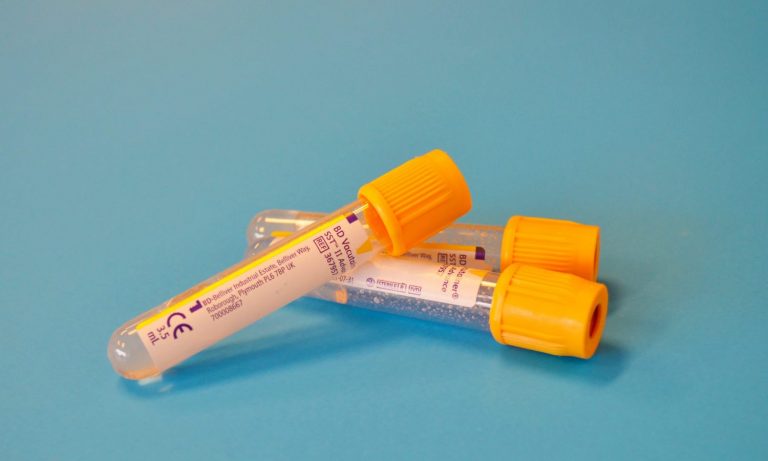
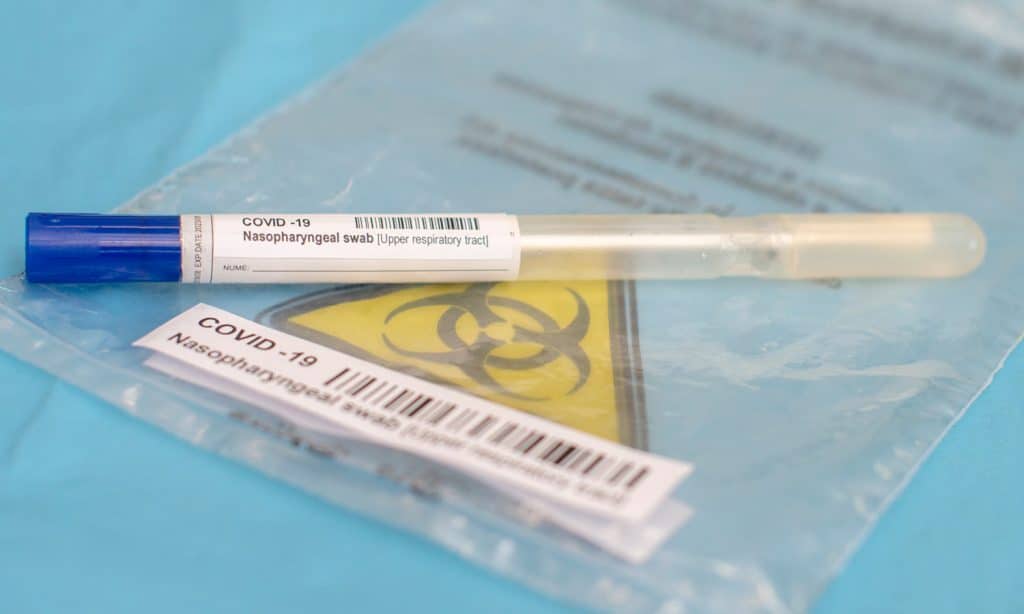
Experts believe face masks provide some protection against air pollution. But the amount of protection depends on the type of face mask.
Face masks have never been more popular, but there’s a history of their use in everyday life. Face masks have been used in Asia since long before the pandemic, with data finding them helpful in curbing the spread of the flu, SARS virus, and even our exposure to air pollution. However, experts say it depends on what type of mask you’re wearing.
While some harmful particles are filtered out by cloth face coverings, most pollutants we breathe are prohibited primarily by surgical masks due to their tightly woven fibers.
Pulmonologist Dr. Denitza Blagev explained to FOX 13 that N95 masks can offer significant protection. “It will work for trapping the particulates and reducing the particular air pollution exposure, and it will prevent you from getting COVID exposure.”
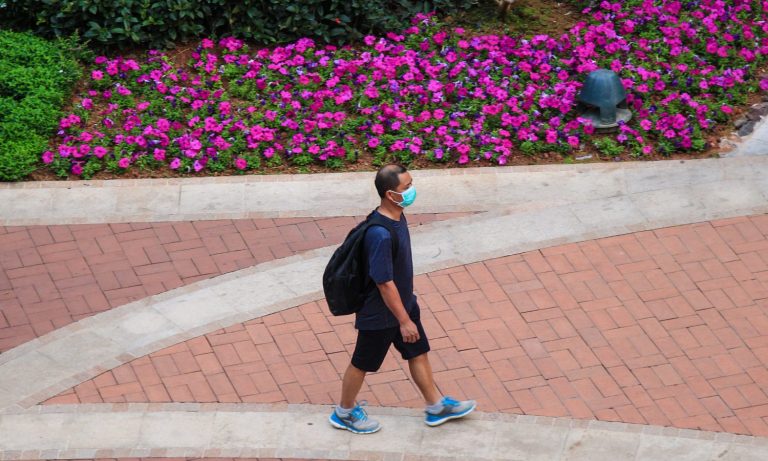
Photo by Retha Ferguson via Pexels
Richard Peltier, associate professor of environmental health science at the University of Massachusetts Amherst, said something similar to Men’s Health. “If we’re just talking about what we call ambient air pollution—that’s the stuff that comes out of factories and the tailpipes of cars and trucks—the answer is yes. When you’re wearing an N95 mask, it actually does protect you from that kind of exposure. Those masks do a pretty good job of filtering out the smallest particles.”
Peltier says that face coverings, such as bandanas and cloth masks, provide little protection from air pollution but that a study from 2016 showed that they were able to filter about 15% to 30% of contaminated air particles.
While this knowledge shouldn’t enable people to walk comfortably through construction sites with just their face coverings, it shows that they provide a small amount of protection that’s preferred over wearing nothing at all.
Cannabis experts agree that the effects of the decision could be substantial, impacting the entire cannabis industry on a global level.
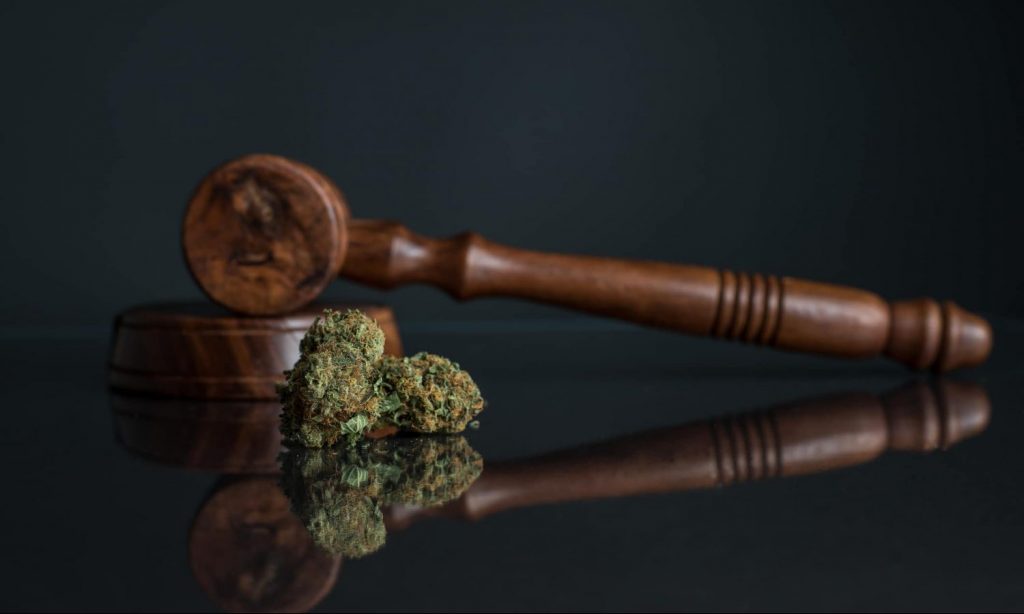
The United Nations Commission on Narcotic Drugs has made a final decision to remove cannabis from Schedule IV of the 1961 Single Convention on Narcotic Drugs.
Cannabis advocates have waited almost two years for the vote.
The World Health Organization (WHO) had recommended all forms of THC to be removed from the drug convention of 1961, placing it with cannabis in Schedule 1, the least restrictive classification by UN standards. Meanwhile, pharmaceutical cannabis medications would be placed in Schedule 3.
Only 53 current member states of the United Nations Commission on Narcotic Drugs voted, but the decision acts upon all signatories of the international drug conventions.
Although it didn’t have a vast majority with 27 votes for, 1 abstention, and 25 votes against, the recommendation was finally approved.
The remaining five related recommendations, such as 5.2 that asks to move THC from the 1971 convention to the 1961 treaty, for example, were all rejected.
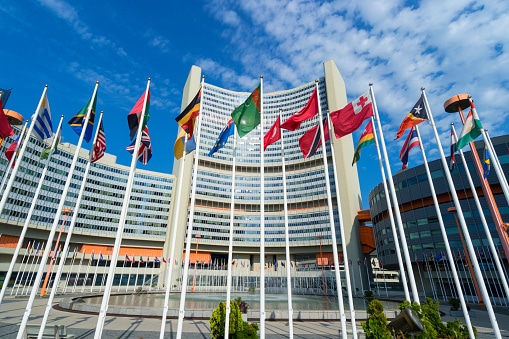
Photo by JacobH/Getty Images
What Does This Mean?
Cannabis experts agree that the effects of the decision could be substantial, impacting the entire cannabis industry on a global level.
While most of them projected positive outcomes in case of approval, Grace Kaucic, Senior Communications Manager for Bluebird Botanicals said that“a vote might lead to more clarity, but it could also lead to more restrictive national frameworks.”
More optimistic views see it as a possibility of enhancing medical cannabis legalization efforts, and for the industry to experience benefits both in its regulation and research segments.
“The medical cannabis wave has accelerated in recent years already, but this will give it another boost,” Martin Jelsma, drugs and democracy program director at the Netherlands-based Transnational Institute, told Marijuana Business Daily. “And for those countries that basically mirror the U.N. scheduling in their domestic legislation, it may lead to national descheduling and remove obstacles to use cannabis for medical and research purposes.”
Is it Enough?
One concern remains: Did WHO push far enough? After all, cannabis is not similar to other drugs in Schedule 1 when it comes to risk factors.
Nevertheless, the decision is definitely one big battle cannabis finally won.
As a matter of federal law, yes, cannabis will be descheduled entirely if the MORE Act becomes law. And not only that, but all federal marijuana convictions will be expunged
We have spilled a good bit of ink on this blog writing about the MORE Act (Marijuana Opportunity and Expungement Act) which is finally headed to a floor vote in the House, probably tomorrow, December 3. The MORE Act ends federal marijuana prohibition and the criminalization of cannabis by descheduling marijuana from the Controlled Substances Act (CSA).
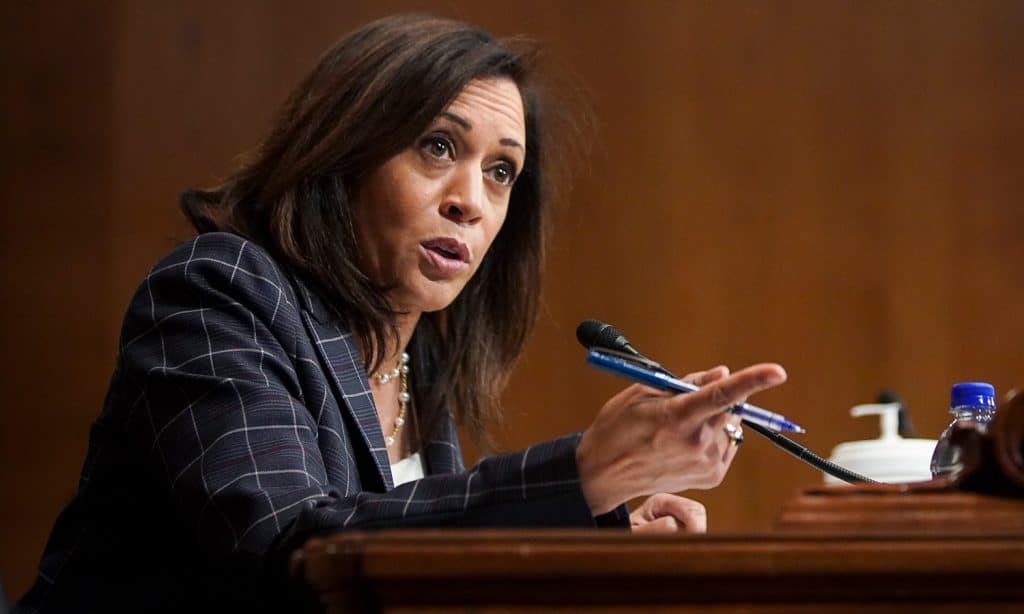
That would be great, of course. Assuming the House version (HR 3884) passes, it will be crucial for the Senate version (S 2227), sponsored by Vice-President-Elect Kamala Harris, to also see daylight in the upper chamber. My guess is it won’t, unless both Democratic candidates prevail in the Georgia runoffs this January, resulting in Mitch McConnell’s replacement as Senate Majority Leader.
But that’s a question for another day. For now, I want to highlight what would happen if the MORE Act does become law someday soon, because I’m seeing some bad information out there. The biggest point of confusion seems to be the idea that if the MORE Act passes, cannabis will become legal nationwide. It won’t. As a matter of federal law, yes, cannabis will be descheduled entirely. And not only that, but all federal marijuana convictions will be expunged — even the folks who were captured with many tons of cannabis in helicopters and submarines. But state laws will not be preempted in the least.
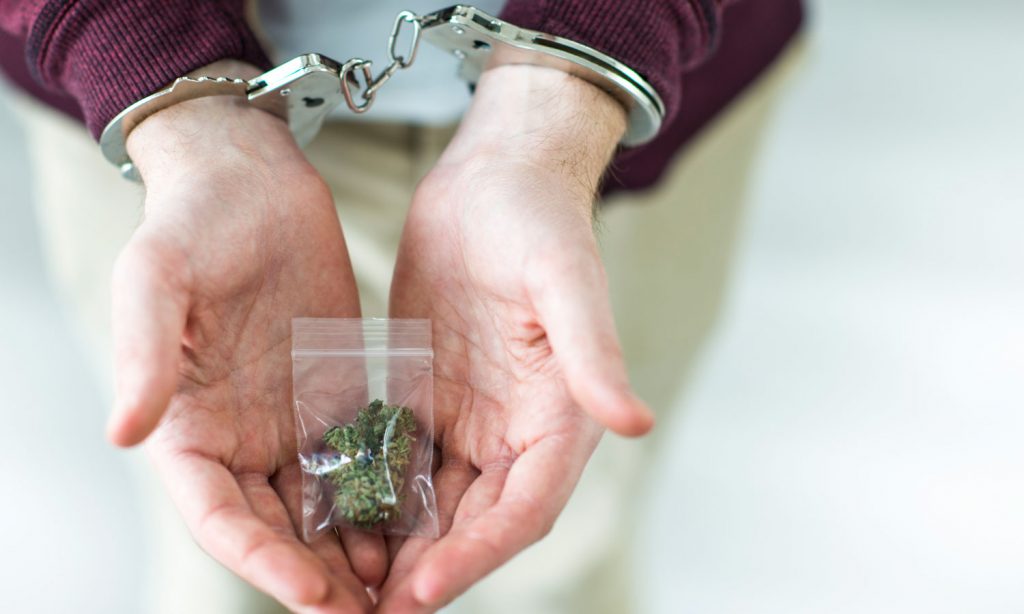
Does this mean someone could still be arrested for walking around with an ounce of cannabis in e.g. Boise, Idaho, the day after the MORE Act becomes federal law? Yes it does! And that’s a shame, because most cannabis arrests today are for simple possession, and most are made under state laws and by state police.
Close to four years ago, I explained on this blog that the federal government probably does not have the power to shutter state cannabis programs. Aside from the fact that the CSA contains express “anti-preemption” language, the Tenth Amendment of the U.S. Constitution provides that the federal government cannot “commandeer” states by forcing them to enact laws in the federal interest. That’s true in the cannabis prohibition context, and it will also be true once the feds give a green light to cannabis, under the MORE Act or otherwise.
If the MORE Act passes, what we will see is a flip of the current marijuana policy gap. Federal agents will no longer track or arrest cannabis traffickers, but state police sure could. We will be left with a patchwork of state legality, set against a permissive federal backdrop (with a 5% federal tax). And a million wrinkles to iron out.
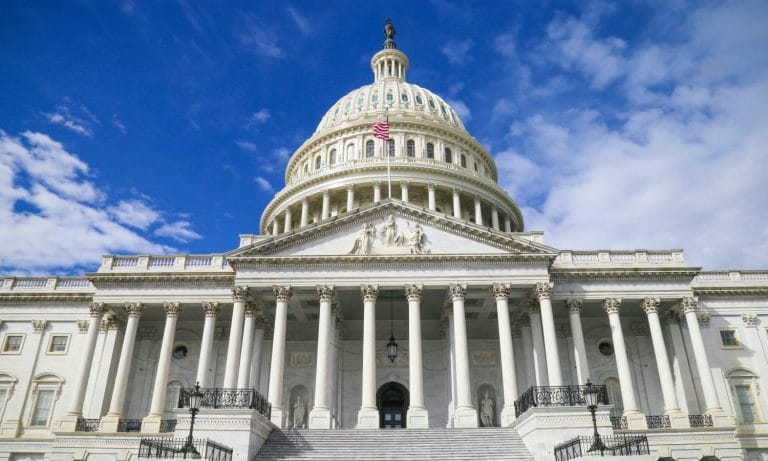
Photo by Stefani Reynolds/Getty Images
It’s true that the feds will have some tools for dealing with prohibitionist locales once the CSA is amended. The best option is probably for Congress to preempt state law through Commerce Clause legislation, as it did with the 2018 Farm Bill for interstate transportation of hemp. It seems late for that in marijuana, though, with so many states so far down the road with cannabis licensing programs. The MORE Act steers clear of federal licensing altogether, perhaps for this reason.
Alternatively, Congress could use its spending power to encourage states to come around on ending prohibition. To this end, the MORE Act makes certain federal funds available only to “eligible States” that have taken steps to expunge cannabis convictions and eliminate penalties for cannabis parolees. This may move the needle in some jurisdictions; others will likely resist.
It’s also important to understand that the MORE Act doesn’t change all the federal laws around cannabis. For example, our firm deals with a lot of Food and Drug Administration (FDA) issues for cannabis businesses. That whole area will still be a cluster.
The FDA has taken the position that under the Federal Food, Drug, and Cosmetic Act (FD&C Act), cannabis and cannabis-derived compounds are drugs that require FDA approval before they may be added to foods and beverages, sold as dietary supplements, or advertised for therapeutic purposes. The MORE Act as written does not alter the regulatory regime under the FD&C Act. And even if it did, we again would still have the problem of 50 states with a myriad of different, confusing laws in this area.
The MORE Act does quite a bit, but it doesn’t do everything. At state and local levels, its impact will be more penumbral than direct. I do like and support the MORE Act on balance and I hope that it passes. That said, it is not the end of the road. Not even close.
Vince Sliwoski is an attorney at Harris Bricken, a law firm with lawyers in Seattle, Portland, Los Angeles, San Francisco, Barcelona, and Beijing. This story was originally published on the Canna Law Blog and has been reposted with permission.
Over the past few days, many Republicans have taken to social media to protest moving forward with the MORE Act out of respect for those still trying to survive COVID.
Senator GOP members can’t believe that House Democrats are moving forward with plans to legalize marijuana while America continues to suffer from the effects of the coronavirus. The Senate republicans balk at a move to legalize marijuana. But whose fault is that?
The U.S. House will vote on a measure today (Dec. 2) to legalize marijuana like alcohol, yet opposing forces think it should be postponed until Congress can pass a COVID relief bill. As it stands, no new round of coronavirus funding has been approved, and individuals and businesses alike are tanking.
The House wants to pass legislation known as the Marijuana Opportunity, Reinvestment and Expungement (MORE) Act. The bill is designed to eliminate marijuana from the Controlled Substances Act, allowing for a nationwide taxed and regulated pot market to unfold. It also sets aside a percentage of the tax revenue to help rebuild communities ravaged the most by the war on drugs.
Sounds great, right?
Not to a slew of Republicans. Over the past few days, many have taken to social media to protest moving forward with the MORE Act out of respect for those still trying to survive the coronavirus. “Democrats are bringing the House back into session to…Legalize marijuana?” reads a Tweet from the official House Republicans Twitter page. “THOSE are the Democrats’ priorities right now — not COVID and small business relief that the American people actually need.”
Democrats are bringing the House back into session to…
Legalize marijuana?
And…
Ban the private ownership of lions and tigers?
You read that right.
THOSE are the Democrats’ priorities right now — not COVID and small business relief that the American people actually need.
Democrats aren’t under any illusion that prioritizing marijuana reform over COVID relief efforts is going to win them any popularity contests. In fact, the MORE Act was initially scheduled to be voted on in September, yet it was pushed back to keep from upsetting the voters. But, the truth is, Democrats actually put coronavirus funding ahead of anything else. The House passed a $2.2 trillion relief bill in October — one that provided $400 per week in jobless benefits and additional funding for the business sector — but the Republicans did not want a bill that went that far.
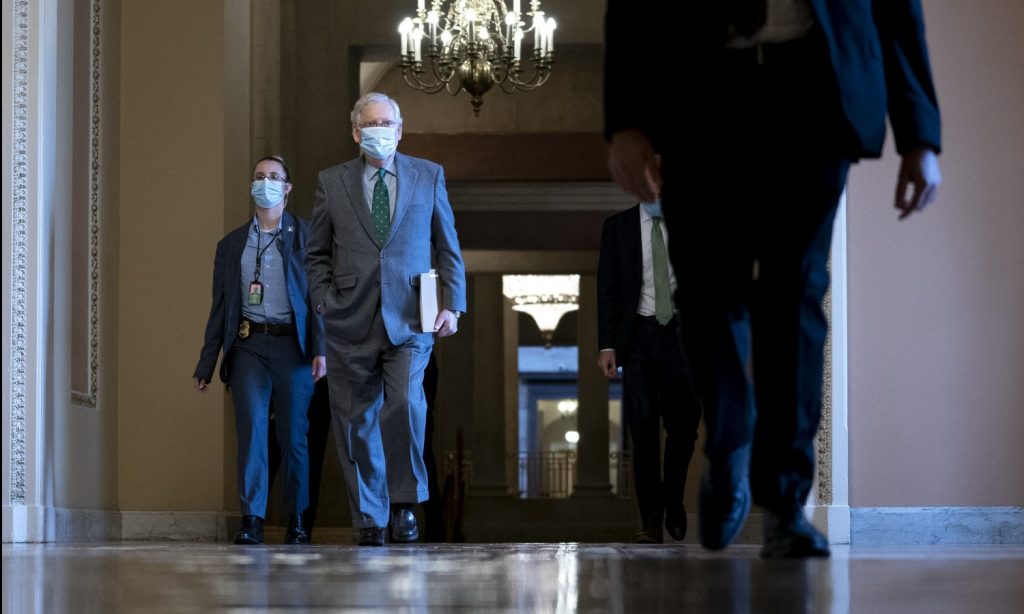
Furthermore, on Tuesday, House and Senate lawmakers reached a $908 billion compromise on a COVID relief bill, but Senate Majority Leader Mitch McConnell shot it down. Instead, he wants one that is closer to $500 billion — something he believes will be signed into law by President Trump. So, it’s not that the Democrats aren’t trying to move on a measure to help people ravaged by the corona debacle. It’s more or less a showdown between the two parties that has prevented action.
Photo by Esther Kelleter/Getty Images
But Republicans want their constituents to think that all the Democrats care about is legal weed. Only that narrative is a tad askew from the truth. Again, House Democrats have been pushing for trillions in funding since the last round ended in July. Republicans just don’t want to spend the money.
Even if the House passes the MORE Act this week, which is expected to happen, it will still require Senate approval before it can even come close to becoming law. But that is not going to happen — not even close. Senator McConnell, the same gatekeeper to the upper chamber raising a stink over $400 billion, has said time and again that he doesn’t have any interest in supporting a bill aimed at legalizing marijuana. So in a way, the House’s vote on the MORE Act is more symbolic than a calculated move to end pot prohibition.
On the flip side, legalizing marijuana nationwide is a move that market analysts claim would create one million jobs nationwide and contribute billions to the economy. The federal government used a similar move decades ago to help dig the country out of the pits of the Great Depression. It ended alcohol prohibition.
Human sexuality can be divided into four states — desire, arousal, orgasm and satisfaction— and no sexual health medicines address this. Erectile dysfunction medications like Viagra and Cialis treat arousal in men, and that’s all. Interestingly, cannabis can help both men and women in all four of the sexual phases. It heightens the senses, leads to relaxation, opens the mind to deeper intimacy and promotes mindfulness.
Molecules That Make Us Make Vowels
Everyone seems to have an anecdote in the chamber involving marijuana and toe-curling sex, but scientists are interested in what specific molecules are involved in sexual satisfaction.
While many of us would have assumed that it was the THC making sex feel extra gratifying, the researchers of the orgasms and endocannabinoids study found that it’s not anandamide (THC’s endocannabinoid cousin) released during orgasm, it’s 2-Arachidonoylglycerol (2-AG).
Over the course of two studies, the researchers found that healthy individuals who masturbated to orgasm had elevated levels of 2-AG, not anandamide, concluding that 2-AG release plays a role in the reward aspect of sexual arousal and orgasm.
Photo by franckreporter/Getty Images
Although it doesn’t directly engage the CB1 or CB2 cannabinoid receptors, the CBD molecule does boost the body’s levels of 2-AG, which may indicate that high-CBD products could improve the action of 2-AG in sexual response.
One More Way Cannabis is Aiding Human Sexuality
Cannabis is an excellent sexual aid for those who have PTSD due to sexual trauma. THC binds to CB1 cannabinoid receptors that reside in the sexual response areas of interest, the hippocampus and amygdala. The two areas are linked to memory, the autonomic nervous system, and emotions such as fear and anxiety. Under the influence of THC, a person is less likely to experience anxiety or other negative feelings surrounding sex.
Equally notable is the fact that cannabis, specifically THC, use induces the impairment of short-term memory which is specifically suitable for keeping one’s mind in the moment during sex. When we’re not stressed out about the things waiting for us outside of the bedroom, we can relax and enjoy the sex happening on the bed (or wherever it’s happening, you animal).
Cannabis Is the Gift That Keeps on Giving
In addition to just being an enjoyable way to unwind at the end of the day, marijuana eases symptoms of anxiety disorder and helps insomniacs get some much-needed shut-eye, and if it turns out that cannabis has benefits in the bedroom as well, it will undoubtedly stoke a whole new section of the market. Who needs a brand name erectile dysfunction drug when there’s a natural supplement that does the trick without the risks and four-hour hard on?
Photo by Becca Tapert via Unsplash
The study on orgasms and the release of 2-AG in humans did not explore whether anandamide hinders our ability to receive 2-AG during sex. They only proved a reliable link between orgasms and the chemical we produce before and during the climax.
There are also no studies exploring sex and marijuana dosage. Dosage is crucial if you plan on smoking or taking edibles before having sex, especially since large doses can interfere with the performance of men.
But if we know anything from watching the cannabis space for this long, it’s that one study leads to a new one, and maybe soon those who need to can precisely dose their way to a more satisfying sex life.
The people have spoken, the U.S. is ready to go, and it’s time to pull the trigger on legalization.
It’s time. Cannabis history is having its moment. Here is a deep dive on a key congressional day for cannabis. Let’s hope it goes well.
The election is over, cannabis had its biggest voter approval day ever on November 3, and everyone who has a stake in the cannabis industry is saying it out loud: The cannabis legalization battle is over.
In total, 15 states have now either enacted or have voted to enact adult-use legalization laws, while 36 states have either enacted or have voted to enact medical marijuana access laws.
National support for cannabis legalization has reached an all-time high, as 99% of Americans now live in a state that either has now or will soon have some form of legalized marijuana as a result of the 2020 elections.
The National Organization for the Reform of Marijuana Laws (NORML) is cheering the move, calling it “…a uniquely popular issue with voters of all political persuasions.”
Step one is scheduled for Wednesday, December 2—an historic hearing on the Marijuana Opportunity Reinvestment and Expungement Act (the MORE Act, or H.R. 3884), originally introduced by now Vice President elect Kamala Harris and recommended for passage in the House by the Committee on the Judiciary.
Photo by FatCamera/Getty Images
It feels like full legalization—not just rescheduling but taking cannabis entirely off the Drug Enforcement Administration (DEA) schedule of substances where it has lived since the hippie-hating Nixon administration parked it there—is at hand.
A few discussions in the House on the MORE Act, which then gets voted on and pushed to and through the Senate, and voila: Open the floodgates because cannabis will join the agriculture mainstream as a just another cash crop, free and clear of all the hindrances that The Man has created to crush it.
It should be a slam dunk. But let’s take a deeper dive.
This article is not about another affirmation, another confirmation, another declaration of clarification that Joe Biden and Kamala Harris will get to work and fix this broken bit of 60-year-old stupid centered around growing and selling a plant that can get you thrown in prison in one state and make you a millionaire in the next state.
This article is a pick axe chipping away, mining down, revealing a blur of red flags throwing shadows of doubt on the light at the end of this particular tunnel leading to cannabis legalization, because full and complete cannabis legalization is nowhere close to being a done deal under this new administration.
The ifs and ands come with pretty large buts.
It begins with Joe Biden.
Biden’s record with cannabis and the war on drugs is messy, as outlined in a GOP memo in June, 2020. He was the sponsor of the National Drug Control Strategy Act of 1990, which, among other things, provides for asset forfeiture for drug offenses and the training of police using military tactics and equipment—both pillars of abuse within the war on drugs.
Biden’s pre-election plan called for the legalization of medical cannabis only, keeping cannabis on the DEA’s list of abused substances and dropping it to a Schedule II drug from its current listing as Schedule 1 drug—on par with heroin.
Biden is not exactly on the same page as his VP, who has her own bumpy background on cannabis.
First the good news: Kamala Harris is the Senate sponsor of the MORE Act in July, 2019 [co-sponsored by seven Democrats and no Republicans, with the House version to be discussed Wednesday sponsored by Jerry Nadler, D-NY].
Then, to position herself for her run as president, in May, 2018, she came out in favor of cannabis as a co-sponsor of the Marijuana Justice Act, later adding much of the language of that act into her MORE Act.
Will she be proactive for the legalization cause using her new power and influence? No word yet. Biden has demonstrated he can evolve his position on important social issues, like integrated school busing, so maybe there is some hope there.
Then there is the MORE Act itself. As proposed for discussion in the House, there are rules that need to be followed, deadlines to work through after it gets approved in the Senate..
For example, it gives the attorney general six months to decide when and how to remove cannabis from the DEA’s list of controlled substances after the MORE Act is passed—a key ruling of the Act.
Photo by FatCamera/Getty Images
Also, the creation of Cannabis Justice Office within the Office of Justice Programs, with a director appointed by the assistant attorney general, could take up to six months after passage of the bill. The director of the office will be charged with organizing and carrying out a far-reaching community reinvestment program with funding from the IRS. That will take time.
The Department of the Treasury, the Department of Justice, and the Small Business Administration all have a year to amend any rules, standard operating procedures, and other legal or policy guidance after the Act becomes law. That could create a nightmare for cannabis businesses just trying to get a foothold in the new cannabis environment.
With all that being said, there is another relevant, crucial deadline—the January 5, 2021 U.S. Senate runoff election in Georgia—that might just be the final break the cannabis industry is looking for.
If the Georgia voters send two Democrats to the Senate, then Democrats could tee up the MORE Act when it gets to the Senate and maybe, just maybe, get it passed.
The take-away here is that the industry is on a roll, a clear winner in the November elections not only in states that voted to legalize it, but because of a new Democratic administration focused on the sort of economic rebuilding assistance offered by the cannabis industry.
Many questions remain, but some uncertainty has dissolved.
The people have spoken, the U.S. is ready to go, and it’s time to pull the trigger on legalization. “The vote in the House will mark the first time that the House or the Senate has ever voted as a full chamber on legislation to end the federal cannabis prohibition since it went into effect following the passage of the Controlled Substances Act of 1970,” Blumenauer said in a statement on his website. “Congress must capitalize on this momentum and do our part to end the failed policy of prohibition that has resulted in a long and shameful period of selective enforcement against communities of color.”
The holiday season is a stressful time, resulting in overeating and skipped workout sessions. Here’s what you can do to erase the guilt and build some peace of mind.
Thanksgiving marks the official start of the holiday season, when Christmas decorations pop up overnight and the countdown to New Year’s begins. It’s also the season where eating, drinking and huddling up for the winter becomes the focus. As we grow older, the holiday season takes on a tint of stress that’s difficult to shake.
For many of us, it’s hard to feel like our healthiest and happiest self, especially for those who have complicated relationships with food. The holiday season exposes us to many of our favorite meals and treats, all in the span of a month. It’s very common for people to gain some weight and to forego some of their workouts and health routines. Still, no matter how much prep you do before hand, it’s tough to control the guilt that this results in.
Here are some tips that can help you feel better in the coming weeks:
The holidays can stir up a lot of emotions in your life. You can feel excited, happy, anxious and melancholic, all at the same time. These emotions can also spark your appetite, resulting in eating when you’re not hungry, or stress eating, which many of us are participating in right now. Pay attention to how your body feels and give it what it wants, whether that’s food, rest or movement. It’s difficult to be in tune with your body, but the more you try, the easier it becomes.
Don’t “reward” yourself with food
Photo by rawpixel
A comment we often hear throughout our lives is that you should get a good workout in after indulging in a dessert or a meal you’ve looked forward to, burning off all of those calories. While some people feel rewarded by this behavior, working out shouldn’t be associated with some form of punishment or as a way of ridding your body of calories. Or worse yet, something you do to “allow” yourself to eat. You never have to “earn” a meal.
This way of thinking creates a negative relationship with food, one that can transform into disorders and that can cause tons of stress and unhappiness. If you overeat, try your best to forgive yourself. Keep a somewhat regular workout schedule through the holidays, accepting that some weeks will be better than others. If you don’t have time to include a vigorous workout, a light stretch or a yoga session will help you feel better and will ease your anxiety.
A lot of people work out because they want to look good. While this provides results and encourages healthy lifestyles, it doesn’t work for everyone. A more positive and accurate approach to fitness would be to see movement and exercise as a complement to a healthy lifestyle, one that works best when supported by healthy eating and a positive relationship with food. At the end of the day, food should be enjoyed since it makes living possible. On significant dates, it should be indulged in and shared with others.
U.S. lawmakers keep saying that marijuana legalization will pass, but they just can’t make any predictions on the timeline.
Marijuana is legal nationwide in Canada, and it could soon be in Mexico, as well. So the US is sandwiched between two countries with legal weed. But the United States government has all but refused to even consider marijuana legalization as part of the American way.
Although a slew of states has ended pot prohibition at the state level — allowing weed to be sold like booze — the feds do not have any interest in taking this concept to the big stage. But if the U.S. is about to be sandwiched between two countries with legal weed, could lawmakers have a change of heart? The answer is one part politics and two parts everything else.
Last week, Mexico’s Senate put its seal of approval on a bill aimed at creating a fully legal cannabis market. The initiative aims to remove the power from the drug cartels and put the plant to work for the national economy in a way that doesn’t bring about waves of brutality and murder. It’s not exactly a done deal, according to a recent report from Reuters. The legislation must first pass the lower House, and some technicalities need to be hashed out before it is a lock. If it happens, though, Mexico will join Canada in operating a taxed and regulated marijuana market.
It was just a few years ago that the northern nation made the same leap. It was one of the first lines of business brought on by then newly appointed Prime Minister Justin Trudeau. He, too, was sick of the criminal organizations reaping all of the benefits while the country’s youth suffered the consequences. Still, there were and continue to be growing pains with legal weed. Cannabis consumers are still getting a better price on the black market, preventing around 40 percent from moving over to the legal system. But all in all, the business is in reasonably decent shape.
So, what are the chances that the U.S. government will recognize the legalization efforts to the north and south and make a move to do something similar? For now, the chances are slim.
In November, more states moved to legalize the leaf for medicinal and recreational purposes. More than half of the nation now recognizes cannabis as a legitimate product. Meanwhile, some of the latest polls show that nearly 70 percent of the U.S. population now supports full-blown legalization. But this sentiment is not resonating in the nation’s capital.
Photo by runner of art/Getty Images
The Republican-dominated Senate is still morally opposed to marijuana. A lot of the older Republicans, like Senate Majority Leader Mitch McConnell, aren’t about to legalize a substance that they worry might wreak havoc on society. It’s just not consistent with their Bible-belt upbringing.
And while the Democratic-controlled House is set to vote on a legalization bill (MORE Act) this week, there are still plenty of reservations in the lower chamber. In fact, the upcoming vote was initially scheduled for September, but Democrats thought it best to reschedule it for a later date because they were worried about losing votes. It’s like they aren’t even paying attention to the polls. In short, marijuana isn’t the hot topic on Capitol Hill that cannabis advocates would like the masses to think it is. Congress just isn’t aligned in a way that is going to allow marijuana to go legal anytime soon.
But it is getting there. Just slowly.
U.S. lawmakers keep saying that marijuana legalization will pass, but they just can’t make any predictions on the timeline. “[Cannabis legalization] is going to happen, I’m confident,” Democratic Senator Cory Booker toldPolitico. “But how it happens and when it happens is the question.”
Pro-marijuana lawmakers have been slinging the same “coming soon” spiel for the past decade or more. Sadly, Congress just isn’t going to be equipped to make significant strides on this issue next year. Even president-elect Joe Biden isn’t interested in leading the country into fully legal territory. The most he’s willing to do is decriminalize it and make it more accessible for medicinal purposes.
So, it’s unlikely that Canada and Mexico are going to inspire U.S. lawmakers to join the fun. At best, the United States could see some reforms falling into place that lessens the criminal penalties for pot possession and perhaps even some that allow convicted marijuana offenders some reprieve. But as for marijuana legalization in America, it’s a non-starter.
While there are countries where the use of cannabis is a way of life, it is a big crime to be found with a cannabis product in many other countries.
What was once an illegal substance is now considered in many countries around the world as being acceptable. As you could guess, I’m talking about cannabis or marijuana. Thanks to its many benefits, cannabis has infiltrated many markets globally, with more and more people joining the bandwagon of users, sellers, transporters, and producers. So, what is its legal status in the Scandinavian world? Well, just a little patience will pay off, as the answer is just around the corner. But first things first: what is cannabis?.
Cannabis Explained
Cannabis is a plant that grows naturally in temperate and tropical conditions. However, by use of what is known as hydroponic technology, many people also grow this plant in just about any climate conditions. THC (tetrahydrocannabinol) is the main psychoactive ingredient in this plant, and it is known for initiating the “high” feeling.
The plant exists in two divisions, which include Cannabis sativa and Cannabis indica. You can differentiate the two by simply looking at their different physical characteristics. Typically, cannabis is consumed in the form of hash oil, hashish, or marijuana, which are made from the plant’s hashish, resin, and dried leaves respectively.
The Legal Situation of Cannabis in Scandinavia
I must explain that the legality of cannabis products depends upon the country. And while there are countries where the use of cannabis is a way of life, it is a big crime to be found with a cannabis product in many other countries. Let’s explore its legality in Scandinavian countries.
Sweden
The cannabis laws here are even tougher, with transportation, selling, usage, and production of the plant all forbidden. However, the country allows limited usage of cannabis for medical purposes. For instance, doctors in Sweden may be allowed to prescribe cannabis-based drugs for patients with multiple sclerosis.
Need more information on cannabis or CBD? Please visit cbdguiden.se, a one-stop shop, education, and FAQ.
Iceland
Any cannabis-related activity here is completely illegal, whether it is consuming, selling, cultivating, or possessing. The government of Iceland first declared the illegality of cannabis in 1969, which means the laws here have been in force for about half a century. If you are found in contravention of the law, you would be liable to a fine or jail, which varies depending on the amount of substance you are found with and what you were doing with it. For instance, if you are caught with more than half a kilogram of cannabis, you may be jailed for no less than three months.
Finland
Just like in Iceland, possessing, selling, transporting, using, or producing cannabis is prohibited. Any person found using cannabis in the country could be liable to summary fines, which are usually imposed by the police. If the user insists on being taken to court, however, the police have no option but to comply. Those found culpable of serious cannabis offenses, such as selling, typically face a trial in the court of law, and the penalties for such people are usually harsher.
It was not until recently (2018) that the laws on the use and possession of cannabis in Norway were adjusted to favor the country’s citizens. This was upon the realization that the citizens were missing out on the medicinal effects of the substance. As such, Norwegians who are found to be in possession of small amounts of cannabis are not brought to book. Rather, they are treated for any possible addiction issues etc.
Denmark
The Danes are, by law, prohibited from everything cannabis-related. Those found culpable may be fined or jailed, but the same law also protects (since the amendment of the 1955 Euphoriants Act in 2004) the Danes found with limited quantities (less than 10 grams) of cannabis. Such people may only be warned by the authorities. However, they may face the law if they are repeatedly found committing the same offense.
The CDC released guidelines on how COVID-19 vaccines will be distributed, highlighting four groups of people that’ll likely be the first recipients.
There are three promising coronavirus vaccines in the works, from Pzifer, Moderna and AstraZeneca, meaning that the release of the first round of immunizations is imminent. The Advisory Committee on Immunization Practices (ACIP) to the Centers For Disease Control (CDC) released their first guidelines on how they are making important decisions, such as who gets the first round of COVID-19 vaccines. The panel notes four groups of people who’ll likely be the recipients of these inaugural doses.
According to disease experts, one of the proposed vaccines should be ready for distribution by the end of this year. The problem lies in creating enough dosages to treat everyone, which is why vaccines will likely be released to groups, prioritizing those who are most in contact with the virus and people who belong to high risk groups.
Photo by Paul Biris/Getty Images
The panel will distribute doses according to four ethical principles: maximizing benefits and limiting harm, promoting justice, mitigating health inequities and promoting transparency about the plans surrounding the spread of the vaccine.
According to ACIP’s guidelines, the four groups that should have first access to the vaccine are health care personnel (an estimated 21 million people), essential workers (87 million people), adults with underlying health conditions (100 million people) and adults over the age of 65 who are also considered high risk (53 million people).
It’s estimated that vaccines should be available to anyone who wants them in the U.S by mid-2021. Until then, the government will continue to advise for patience, social distancing, face masks, hand washing, and other important safety measures.