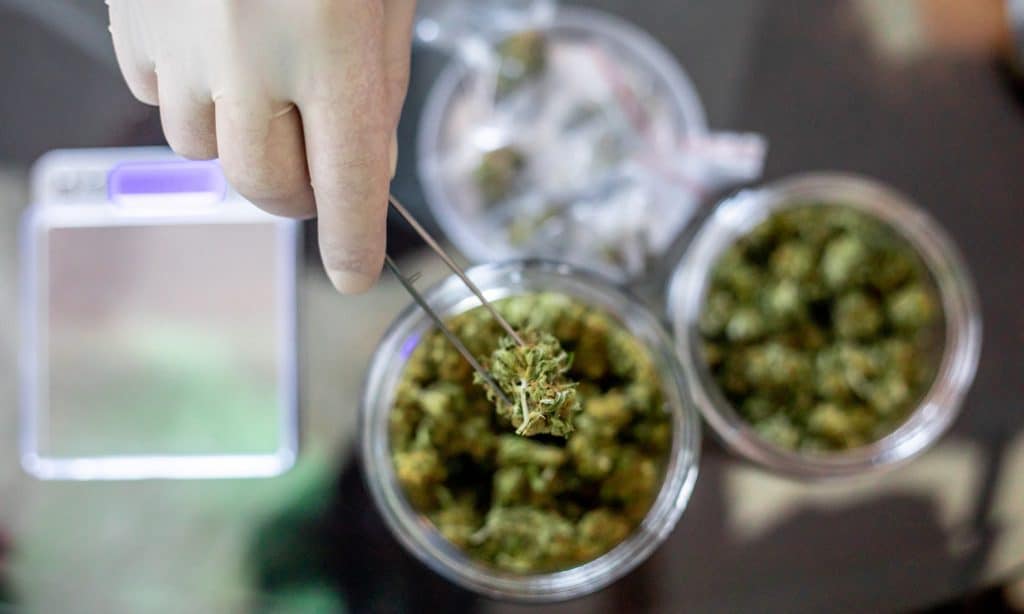
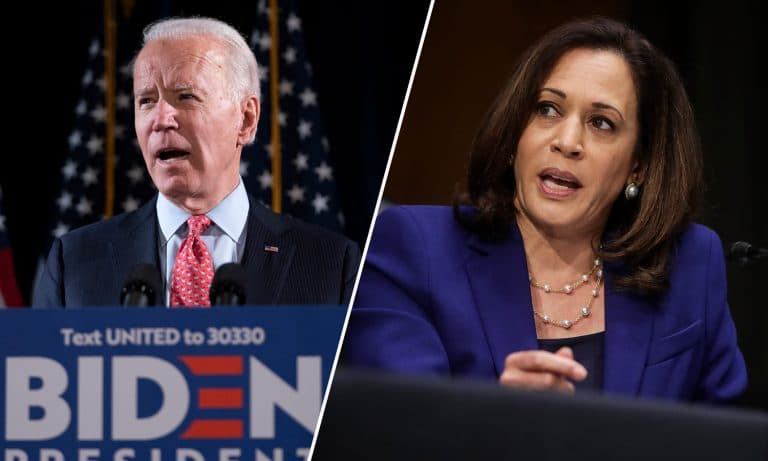
Medical marijuana has long been used for pain relief. A new study says that, unlike opioids, marijuana doesn’t increase patients’ pain sensitivity.
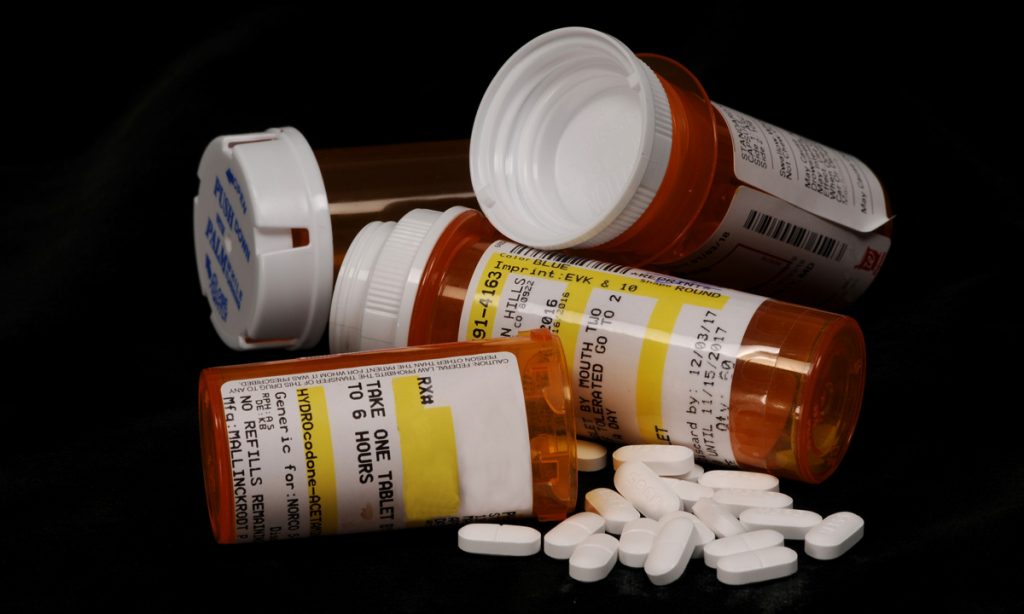
Though opioids can be useful medications that provide strong relief, their negative side effects can outweigh their positives, contributing to America’s growing opioid addiction problem. Unlike opioids, a new stuidy found cannabis doesn’t increase pain sensitivity when used over long periods of time.
The study was conducted by the psychology department of UBC Okanagan and was trying to highlight the differences in pain tolerance that exist between people who use cannabis regularly and people who don’t.
“Recent years have seen an increase in the adoption of cannabinoid medicines, which have demonstrated effectiveness for the treatment of chronic pain,” says Michelle St. Pierre, lead researcher of the study. “However, the extent to which frequent cannabis use influences sensitivity to acute pain has not been systematically examined.”
Photo by K-State Research and Extension via Flickr
Cannabis has long been used as medicine for pain. In recent years, data has shown that pain management is one of the principal reasons why people consume medicinal cannabis.
“This study should come as good news to patients who are already using cannabis to treat pain,” explains Zach Walsh, one of the study’s co-authors. “Increases in pain sensitivity with opioids can really complicate an already tough situation; given increasing uptake of cannabis-based pain medications it’s a relief that we didn’t identify a similar pattern with cannabinoids.”
Authors of the study initially speculated that frequent cannabis users would demonstrate greater pain sensitivity, but this wasn’t the case.
“There is a different effect from opioid users; sustained use of opioids can make people more reactive to pain. We wanted to determine if there was a similar trend for people who use cannabis frequently,” says St. Pierre. “Cannabis and opioids share some of the same pain-relief pathways and have both been associated with increases in pain sensitivity following acute use.”
Frequent opioid users run the risk of developing hyperalgesia. The conditions causes pain tolerance to be lowered and patients have to consume more opioids in response, increasing their risk of developing an addiction.
The opioid pandemic has taken many lives in America, over 450,000 between the years 1999 and 2018. It’s a serious problem that has grown difficult to manage, with the CDC trying to raise public awareness and trying to minimize the amount of risk that people are exposed to. While more research is necessary in order to see how cannabis could impact the opioid addiction, studies like this one show that the plant holds some promise in pain management and that in some cases it could provide a better option for patients.
The money was supposed to fund veteran programs but instead Missouri is burning through cash to defend itself in court.
In 2018, Missouri voters approved a ballot measure to legalize medical marijuana in the state. Two years later and licensed sales have yet to occur. Instead, businesses that applied for a license and were rejected have filed more than 800 lawsuits against Missouri. To date, 785 of the cases remain unresolved.
Missouri regulators have spent $1.3 million in court fees defending themselves against the 853 appeals filed. Lisa Cox, the Department of Health and Senior Services (DHSS) spokeswoman, said these were a one-time fee associated with getting the program off its feet. There were 2,270 facility applications sent to the state, but only 348 licenses were awarded.
“The number of appeals is not an indication of flaws in the process, but rather the high number of applicants,” Cox told The St. Louis Dispatch.
Funds generated from the program support operating and administrative costs. Whatever is left over gets deposited into a newly created Veterans’ Health and Care Fund. Although business application and medical card fees produced $19 million as of December 2019, the Missouri Veterans Commission, which determines how to spend allocations, has yet to receive a penny. However, a state release announced the DHSS had transferred $2.1 million to the Veterans’ Fund over the weekend.
Critics argue those legal costs defending the lawsuits, which constitute about 7% of the total medical marijuana program fund to date, amount to wasted dollars that should’ve gone to the Veterans Commission instead.
Photo by adamkaz/Getty Images
Chuck Hatfield is a lawyer representing eight different clients who filed the lawsuits. He compared scoring documents from approved applications and those that were declined. They delivered similar answers, but a third-party agency rated his clients’ applications lower. The lawsuits are about understanding why.
“They answered verbatim the way other applicants answered, because a lot of the applicants shared common consultants on certain issues,” Hatfield said. “And so our answers are identical to the word, to the way other applicants answered, and yet we got a different score.”
Representatives state medical marijuana sales should begin this month, should everything go according to plan. But worries over supply chains and testing protocols remain.
“The biggest challenge that we’re seeing now is the ability to have product for those dispensaries,” said CAMP Cannabis president Susan Griffith.
“We also have to factor in testing facilities as well as transportation [licenses],” she added. “There are a lot of different license types that are all under their own timelines to get operational. At the end of the day, we’re going to need all of them to be able to get dispensaries their product.”
New Mexico Gov. sees legalization as funding stopgap for government programs like Medicaid, and will campaign for it.
New Mexico Gov. Michelle Lujan Grisham expressed regret this April the state did not legalize recreational cannabis before the coronavirus pandemic. Lawmakers were discussing ways New Mexico’s economy could recover and avoid budget deficits.
“If there was ever a time for wishful thinking, I wish we had passed recreational cannabis because that was $100 million,” Gov. Grisham said at the time. “Those are pre-COVID-19 estimates, but $100 million in the budget. And I am very sad about that.”
Grisham renewed this lament during a press briefing last Thursday, responding to a question about how the state will fund programs amid the pandemic. Federal lawmakers remain locked in a months-long stalemate over the next round of coronavirus stimulus package. Sen. Majority Leader Mitch McConnell said Friday “it doesn’t look that good right now” that a deal will happen soon.
Photo by Braden Collum via Unsplash
The lack of new funding affects programs at the state level as well and Grisham acknowledged that New Mexico must “look for innovative ways to increase economic activity.” She used the opportunity to again “plug” marijuana as a potential solution.
“Recreational cannabis is one of those areas where that’s $100 million,” she said. “It doesn’t fix it, but it plugs one of those holes. It potentially would be enough to do a whole lot in the Medicaid gaps.”
She made similar calls of recreational cannabis as a potential economic solution back in May. A survey found nearly 3 in 4 New Mexicans favor adult-use marijuana legalization, but lawmakers failed to pass legislation ending state prohibition earlier this year. Grisham hinted she may campaign against those legislators the blocked the cannabis bill, which has become a focal point of her administration.
“We have an opportunity,” she said. “I think all of our policymakers need to think clearly—and they should expect me to be supporting in the next general election—we have to pass recreational cannabis in the state. We need to diversify our economy, we need to increase opportunity for recurring revenue and we have to rebuild an economy that has suffered dramatically during this public health crisis.”
Disclaimer:The views expressed in this article solely belong to the author and do not necessarily represent those of The Fresh Toast.
Our Middle Eastern wars seem to be finally ending and we all hope that a vaccine will end the current pandemic. But what will our “new normal” look like?
Altucher is a New Yorker who loves his city, so this was not the slightest bit of schadenfreude. Of course, many New Yorkers were outraged, but his points were based on real numbers that paint a very grim picture, especially for Manhattan, the heart of the metropolis.
Although the pandemic is the immediate cause of the city’s problems, the fundamental threat is simply “bandwidth.” As Altucher explains:
“In 2008, average bandwidth speeds were 3 megabits per second. That’s not enough for a Zoom meeting with reliable video quality. Now, it’s over 20 megabits per second. That’s more than enough for high-quality video. There’s a before and after. Before: no remote work. After: everyone can remote work.
“The difference: Bandwidth got faster. And that’s basically it. People have left New York City and have moved completely into virtual worlds. The Time-Life building doesn’t need to fill up again. Wall Street can now stretch across every street instead of just being one building in Manhattan.
“We are officially AB: After Bandwidth. And for the entire history of NYC (and the world) until now, we were BB: Before Bandwidth. Remote learning, remote meetings, remote offices, remote performance, remote everything.
That’s what is different.”
Obviously, “bandwidth” is more or less the same in all major cities, so while the problems may be greatest in Manhattan, “bandwidth” is going to have a similar impact everywhere in America, including Los Angeles and San Francisco.. and around the industrial world. In Los Angeles the greatest visible impact may be reduced traffic, long the bane of the city. San Francisco may return to its old culture of art and eccentricity.
So the 2020s are going to be a decade of resetting all aspects of our lives driven by technology and its cultural impact. Consequently, it might be helpful to look back one hundred years to another decade of rapid social changes driven by new technologies… after a pandemic.
Photo by Adrianna Calvo via Pexels
Sometimes decades are clearly defined. The 1920s really did begin in 1920 after the “Great War” (WW1) and the “Spanish Flu” pandemic, and then came to a crashing end with the stock market crash in late 1929. The 1930s then began with the Great Depression and ended with WW2 in September, 1939. Other decades were not so neatly defined, but right now I am fascinated by the possible parallels between the 1920s and the 2020s.
Our Middle Eastern wars seem to be finally ending and we all hope that a vaccine and/or testing and/or treatments will end the current pandemic. But what will be our “new normal”?
We can find some clues looking back a century.
In 1920, women finally got the right to vote, and a century later it looks like they really meant it. Four years ago, Hillary Clinton ran for President and won the popular vote by a wide margin, and this year Kamala Harris may well become the most important Vice President ever. Of course, we know that having a nominal right does not per se create equal opportunity. It takes time, hard work and persistence, something women have always needed, and women of color even more so. But women finally have a major presence in almost every part of our business and politics.
In perhaps the most important parallel between then and now, the 1920s were also a period of major technological advances that had an enormous cultural impact. First and foremost, mass electrification made the modern world possible for everyone except the very poor.
The new automobiles made it possible for women to travel without a man to handle the horses. The telephone made it possible for women to communicate on an equal basis with men. Zooming just takes that to a new level.
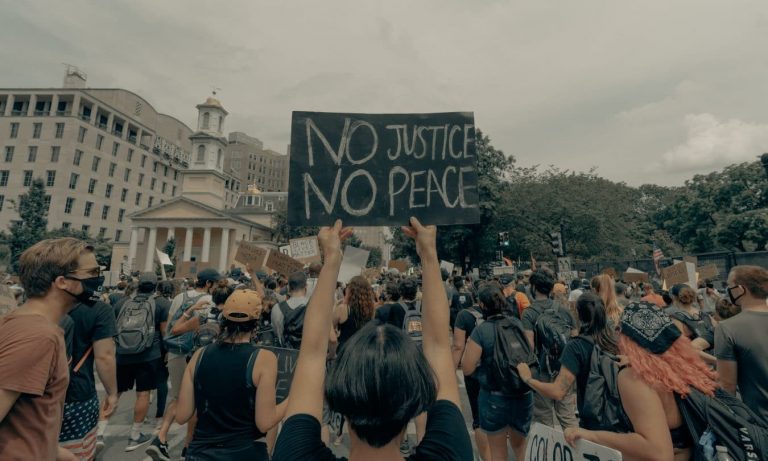
Similarly, we have already come to take “smartphones” for granted, but they have had a major impact on the drive for minority rights and criminal justice reform, by making the problems impossible to ignore. Without them “we” would have no idea what is really happening on “the streets.”
In another parallel, in 1919 alcohol prohibition became federal law, via a constitutional amendment, and it was almost immediately defied by several states and cities, most notably in New York, and most notoriously in Chicago.
“Speakeasy” entered the language, and “flappers” could actually have a drink in public, so long as it was private, but the culture was permanently changed by prohibition. A few of the speakeasies survived, most notably 21 Club, a wonderful place.
Today, marijuana prohibition is still federal law, but it is being successfully resisted by more and more states and cities. Alcohol culture still shows the influence of “prohibition” (until recently the very word still seemed to apply only to alcohol), but we finally see it being used for contemporary marijuana policies. Unfortunately, the same stupidity that made a mess of “repeal” is making a mess of “legalization.”
Photo by Nastasic/Getty Images
Of course, “repeal”, the end of alcohol prohibition, was hastened by the Great Depression, just as the Pandemic Depression is hastening marijuana legalization. But the politicians should be focused on cannabis policies that create jobs and not just a source of tax revenues… or social engineering.
The Great Depression was especially devastating to farmers and coincided with the Dust Bowl, a major environmental disaster aggravated by bad agricultural practices, especially growing crops not suited to the land. Hemp is actually good for the land, and hemp seed is highly nutritious, and hemp fiber has many uses.
The storms that are ravaging the Midwest are a reminder that corn, as a monoculture crop, may be untenable, literally. If the DEA would get out of the way American farmers may be able to avoid bankruptcy by having a real market for hemp.
Now women are finally taking leadership roles in the cannabis business in what was a mostly male world. Women will also play a key role in developing legal on-premise consumption venues, semi private “clubs” where women will be comfortable. The best prototypes would be the Cannabis Social Clubs in Barcelona, or Barneys Uptown Bistro in Amsterdam.
Interestingly, the Spanish Flu pandemic did not seem to make any lasting impact on the 1920s. It almost seemed forgotten. People crowded into big parties. Baseball drew huge crowds. Ocean liners were popular with the rich and famous. I think that this bodes well for next year. We are social animals, and I think there will be some great parties… Eventually…
Speaking of “Ocean Liners”, cruise ships may or may not come back, but tourism in the 2020s is apt to be much more expensive than previously, because the pandemic has devastated the travel industry and has also demonstrated the problems with “over-tourism.” Paris may not be Hemingway’s “Moveable Feast” again, but at least we will be able to move.
Just as smart phones and the Internet changed the world in the last two decades, technology changed life in the 1929s. “Between 1923 and 1930, 60 percent of American families purchased radios. Families gathered around their radios for night-time entertainment.”
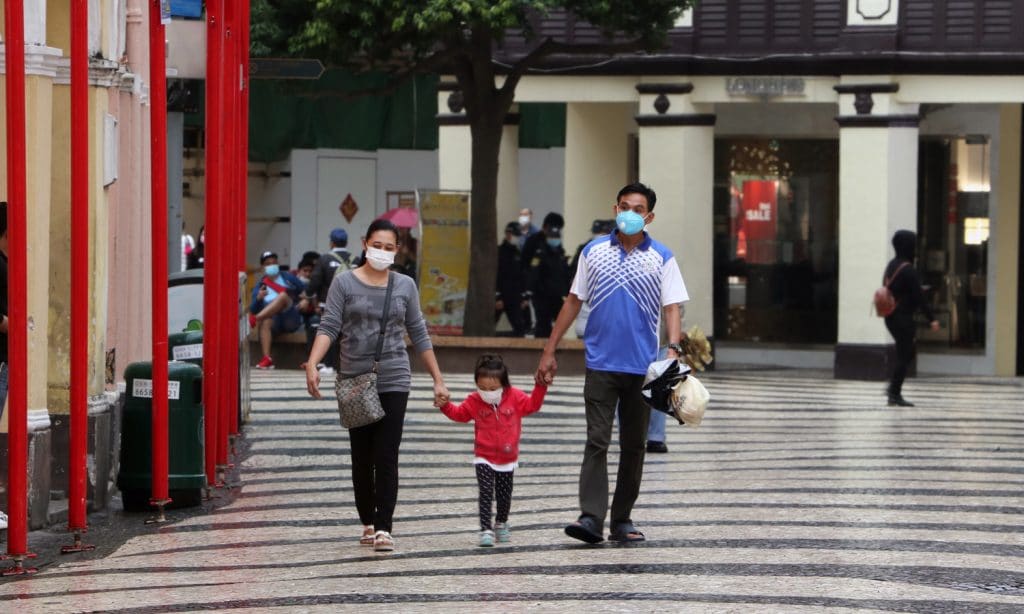
Photo by Macau Photo Agency via Unsplash
And radios really strengthened the family because it offered a shared experience without leaving home. It also created a “shared experience “ in a huge nation. Decades later, television reinforced that trend. Now as families get smaller, and the population is aging, technologies are facilitating living alone, and we are drifting apart.
By 1920, silent movies had become a major art form creating the first international celebrities, including women, and “movie palaces” were jammed. Again, movies were something that could be enjoyed by the family. By the end of the decade the “talkies” had taken over, and musicals would make major “stars” and really took the “celebrity culture” to another level. We still marvel at The Wizard of Oz.
Today, “Hollywood” is both the victim and the beneficiary of the new technologies. Computers are making “films” (an old technology word) easier to make, but a combination of streaming and huge high definition television screens is devastating the movie theater business. Streaming has become a major catalyst for social change. Even after the pandemic, streaming will provide new ways for artists to communicate with new audiences.
In transportation, Henry Ford’s technologies dominated the 1920’s just as Elon Musk’s will dominate the 2020s, but it is worth remembering that General Motors overtook Ford by the end of the decade. Will GM be the new GM? Possibly. In fact, every industry is being forced to change faster. “Future Shock” seems like an understatement. All change, or all fall down.
In the meantime, fasten your seatbelts, it’s going to be a bumpy decade.
Some activities are safer than others when it comes to avoiding the risks of COVID-19. Here are some situations you should be wary of.
The coronavirus asks us to constantly weigh the pros and cons of different situations. Although throughout the year we’ve developed an awareness as to what constitutes as safe and what doesn’t, there’s still a lot we don’t know. The virus is novel and easy to spread, making it very important for us to be careful and stay informed.
Every situation is different and there’s a ton of variables up for grabs, but generally, some activities are deemed less risky than others. It’s why indoor and cluttered settings are more stressful than outdoor and open spaces.
CNET spoke with several experts and compiled a list of the highest risk situations you can walk into during coronavirus times. Here are 5 of the most common ones:
Air travel
One of the most painful entries on this list is air travel, which is considered a high risk activity even when taking all the necessary precautions. Airports are high stress places, making it likely for people to forget social distancing guidelines and proper sanitary measures. They’re also places where people from all over the world gather, potentially exposing you to thousands of variables that are impossible to control. It’s just as risky once you’re in the plane. While many airlines are blocking out seats and sanitizing more often, you can only hope they enforce face masks and social distancing measures.
Another setting that makes it hard to social distance are bars, which are generally crowded. Also, once people are drinking, it’s tough for them to wear their masks consistently and maintain social distancing, especially when hanging out with friends and trying to speak over the sound of loud music. Bars are also kind of dirty, so not a good spot for a pandemic.
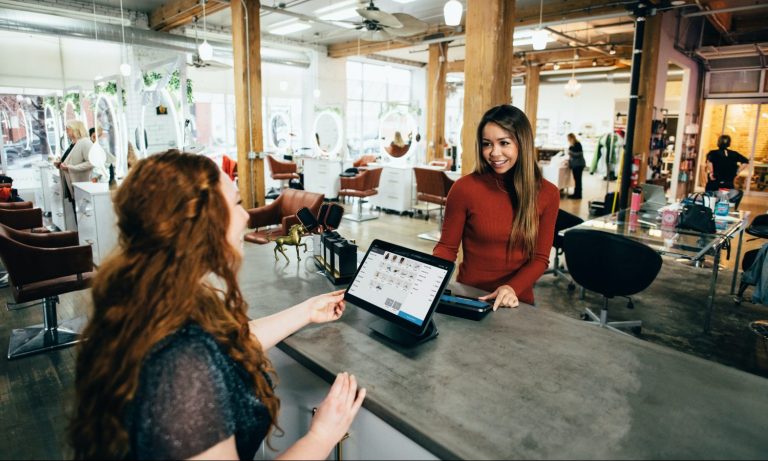
Visiting the hair salon
Sadly, getting a haircut is also a high risk activity. These visits tend to last well over 15 minutes and close proximity with your stylist is unavoidable. Still, if you want to go to the hair salon because it’s been months since you’ve tended to it, you can minimize some risk by booking an appointment ahead of time and by keeping your session short (do you really need a balayage right now?). The least amount of time you spend there, the better.
While this all depends on the number of people that get together and their attitudes towards the virus over the past several of months (maybe not hang out with your friend who thinks it’s a hoax), most health authorities are warning against indoor gatherings with people outside of your bubble. The smaller the gathering, the better, especially since people tend to relax when they’re having a good time and are surrounded by loved ones.
Going to the gym
Gyms expose you to a medium amount of risk, especially if the space is large with few people around. You should be extra careful with classes and group training, since this can expose you to others more easily. Putting yourself near a window or somewhere where there’s air can eliminate the risk of transmission. Some gyms are requiring members to reserve a spot in advance while putting a time limit on their workouts so as to make it easier to social distance.
As a U.S. senator, John Hickenlooper could be the hero this industry thought he was eight years ago as governor of the first state to legalize recreational cannabis.
As he coordinates the platform for his senate run to unseat Republican incumbent Cory Gardner, it’s a good time to revisit former Colorado Governor John Hickenlooper’s stance on cannabis.
That may be easier said than done. He’s been up, and he’s been down.
The up? After eight tries, advocates finally convinced the Colorado Legislative Council to put the initiative to legalize recreational cannabis on the 2012 ballot. Suddenly Hickenlooper was governor of a state’s social experiment to legalize a substance for recreational use that theDrug Enforcement Administration claimed was as bad as heroin. He seemed to be the people’s champion. He was in the crosshairs of an annoyed U.S. Department of Justice that held the cannabis industry in contempt. But he didn’t blink.
The down? In September, 2012, out of the blue and just two months before the November votes legalizing recreational cannabis in Colorado, he sounded the alarm to the citizenry about what a bad idea legalizing recreational cannabis would be.
What was that all about? No one really knows.
To the voters of Colorado, it looked likely that Hickenlooper would support cannabis all along, given his background as a banjo-playing brewpub owner and restauranteur who helped develop downtown Denver’s nightlife district. Surely legalizing cannabis would be an easy and logical next step for a guy who knew what people wanted when they were looking for a good time.
But Hickenlooper was apparently no fan of the voter-approvedAmendment 64, which legalized recreational cannabis in 2012. “Colorado is known for many great things —marijuana should not be one of them,” he said in apublic statement. “Amendment 64 has the potential to increase the number of children using drugs and would detract from efforts to make Colorado the healthiest state in the nation. It sends the wrong message to kids that drugs are OK.”
Cue “The Twilight Zone” music.
Time has proven how out of step that statement was for the majority of citizens who approved the amendment, and the state coffers that continue to benefit from record sales of legalized cannabis.
Photo by Bailey Starner via Unsplash
Total revenue for the state has reached $200 million so far in 2020; total sales today, beginning from 2014, is just over $9 billion. That sort of resounding economic success is a calling card for any governor seeking higher office.
But Hickenlooper has hopped and skipped his way in and around the state’s cannabis economic success story as late as the middle of last year.
For example, in 2019, during his last full term as governor and a year in which Colorado marked $1.5 billion in cannabis sales, Hickenlooper actually vetoed three cannabis-related bills: On June 4th, he vetoedHB18-1258, to allow cannabis consumption rooms; on June 5th, he vetoedHB19-1028 adding autism to conditions covered by medical cannabis (a revised version was one of the first bills Governor Jared Polis signed into law when he took office in January, 2020); also on June 5th, he vetoedHB18-1011, to allow greater investment flexibility in cannabis businesses.
Those veto moves may have come as a sort of prerequisite for Hickenlooper’s plan to run for president in 2020, which he announced on March 4, 2019, when he joined a field of 22 other contenders — maybe he didn’t want to seem to be leaning too much to the left on what many Democrats running for office still consider a contentious issue. But then he bragged about his cannabis legalization work during the presidential debates on July 1.
In his debate summaryon July 30, 2019, in Detroit, he said “I’m as progressive as anybody on this stage, but I’m also pragmatic. And I’ve done the things that most of these other people are just talking about.”
Hmm…a veiled reference to his work in cannabis? Maybe. On August 15, 2019, he dropped out of the presidential race. A week later, he announced his run for U.S. senate.
Then on June 30 this year, after a shaky start, he won the Democratic senate primary and is set to go for the November elections.
But so far, he’s been mum on his position about cannabis.
Let’s consider some ifs.
Photo by Kait Herzog via Unsplash
If he wins the senate seat…and if Joe Biden and cannabis-legalization leader Kamala Harris win…and if Hickenlooper’s winning a senate seat helps change the balance of Democratic power in the Senate, which has always been where cannabis legalization bills go to die at the hands of a Republican majority…and if the issues about the pandemic are addressed to include fixing the economy and solving race issues related to the war on drugs, where cannabis legalization lives…then maybe Hickenlooper would find himself speaking out about his state’s wonderful and rosy cannabis past (and present, and future) and put himself and Colorado right in the center of the legalizing cannabis discussion across the country as a case study in what goes right in the cannabis industry.
That’s encouraging news. But a senator doesn’t have the same power as president.
As a U.S. senator, Hickenlooper could be the hero this industry thought he was eight years ago as governor of the first state to legalize recreational cannabis. He could make a more enduring history as a U.S. senator to work with a new president and new vice president on an important issue Congress has tossed around and bullied for years. He could be the catalyst of a vote or a bill that would instantly change the lives of millions, and help the cannabis industry finally overcome all those dumb obstacles that a federally scheduled drug has to deal with.
If he did all those things, the cannabis industry could finally ride the winds of destiny to sail on into the money-making hinterlands of a stronger American economy it helped make, without a fear of blowback.
Hickenlooper could be a big part of that. If only…
“The evolving retail arena is increasingly competitive and requires rapid innovation,” – Cannapreneur Partners Co-CEO Todd Sullivan.
By Andrew Ward
Cannabis vending machines have been gaining ground in the U.S. and Canadian markets.
In 2014, Vancouver dispensary B.C. Pain Society installed what is believed to be the first assistant-less vending option. Since then, other Canadian operations and legal U.S. markets have followed suit.
In Colorado, for example, the first “anna” vending machines debuted with some 2,000 products, including flower, oils and edible options. Introduced at Pueblo’s Strawberry Fields dispensary, these machines catered to experienced consumers who didn’t require Budtender assistance.
“The evolving retail arena is increasingly competitive and requires rapid innovation,” says Anna investor and Cannapreneur Partners Co-CEO Todd Sullivan. “Cannabis vending machine technologies can be a viable solution for dispensary owners to give themselves an edge.”
An Emerging Market Feature
For Greenbox CEO Zack Johnson, the rollout of “Anna” machines is a positive sign for the sector.
“We’re actually excited to see the launch of the Anna vending machines in Colorado simply because it spans the automation market within the cannabis industry,” Johnson said.
Greenbox is touted as a robot that recognizes new and returning customers, creating a tailored CBD buying experience for each user, Johnson explained.
Beyond that, vending machines and adjacent products alike need to create an efficient consumer experience, he added, citing how average transaction times for Greenbox shrank from just short of four minutes to under two minutes.
The company also partnered with Cura Cannabis Solutions and its Select brand, which leased four Greenbox robots to sell CBD items at the 2019 Coachella Festival. This created an opportunity for Greenbox that would have otherwise taken years to achieve.
“We ended up pivoting to offer CBD robots where customers can learn as much as they possibly can about how these products are going to help them with any sort of challenge,” Johnson said.
Greenbox expanded to 10 malls across the U.S., in states such as California, Texas, Florida and New Jersey. Each robot offers 15 different brands and various consumption methods.
However, additional pivoting would be required with the onset of the COVID-19 pandemic.
Because the ongoing pandemic kept potential customers in their homes and away from malls, Johnson had to assess Greenbox’s next steps. That’s when he connected with The Souferian Group and Behzad Souferian, who recently acquired Los Angeles’ 10th largest apartment complex.
One robot was installed in its lobby, stocked with products geared toward home consumption, including oils and bath bombs. The decision led to the company’s most successful robot to date.
Johnson said the company is now looking into rolling out more residential options.
“We’re seeing names pop up again and again,” Johnson said of returning business at the apartment complex.
Next Steps
Cannapreneur Partners’ Sullivan said the company has an eye on disruptive tech while emphasizing that brick-and-mortar will continue to remain in the space.
“As we continue to deploy capital in the cannabis space, our eye is on a wide range of next-generation technologies with the potential to be effective solutions for the industry’s ever-changing demands and drive sizable growth,” Sullivan said.
One potential solution is the integration of Android and Apple Pay options so consumers can make contactless payments, Johnson says, adding that companies must remain innovative.
“If you can’t execute and move the ball down the field, evolve your business and your offering, as well as stay up to speed on regulations and compliance, then you will get left in the dust,” Johnson said.
Holistic Chinese medicine views the body as a garden and seeks to integrate the physical body, mind, and spirit so that the garden can thrive.
What roles do herbal and classic natural medicines have in common with modern medical research when it comes using cannabis for medicinal purposes? During the 2019 Cannabis Collaborative Conference in Portland, Oregon, Dr. Heather George, Doctor of Science in Oriental Medicine (DSOM), c-IAYT , TheLotusWay.org and AOMScholarshipFund.org, sought to address this question.
George offered a brief history of cannabis as a healing agent dating back to around 2737 BCE. During this era, Emperor Shen Nung, the father of Chinese medicine, was said to have used cannabis for medical purposes. During this reign form 2698-2598, Emperor Huangdi was said to have written the Nei Jing (Chinese Canon of Medicine).
Quoting from the Nei Jing, George pointed to how, throughout history, Chinese medicine sought to return the body to a state of equilibrium.
“The ancient sages treated all disease through living a peaceful life in balance with nature. They moved and transformed the concentrated Qi without herbs or needles. But humans became internally disturbed by over-attachment to emotions. Sense organs became externally vulnerable by overwork & loss of balance with nature. Our immune systems (Zheng qi) became weak; and in general qi was no longer able to flow optimally; Organs bones and marrow could become more easily damaged.” (Chapter 13)
George then explained Chinese herbalism’s role in helping to regulate the endocannabinoid system (ECS). “This unique body of knowledge explains how and why to use various parts of plants or the whole plants for different purposes.” In her practice, “using multi-herbal formulations is foundational and vital to the successful treatment of our patients. We can boost the effectiveness of individual herbs when we know and understand how to combine those herbs and counter side effects.”
Next, George outlined the distinctions between traditional Western medicine and holistic Chinese medicine. Western/modern medicine views the body more like a machine. Health is seen as the absence of disease whereby the body functions within normative parameters. In this model, medicine is practiced akin to war whereby the aim is to kill any disease and maximize the body’s performance. This model portrays doctors as generals, disease as the enemy, and the patient as occupied territory.
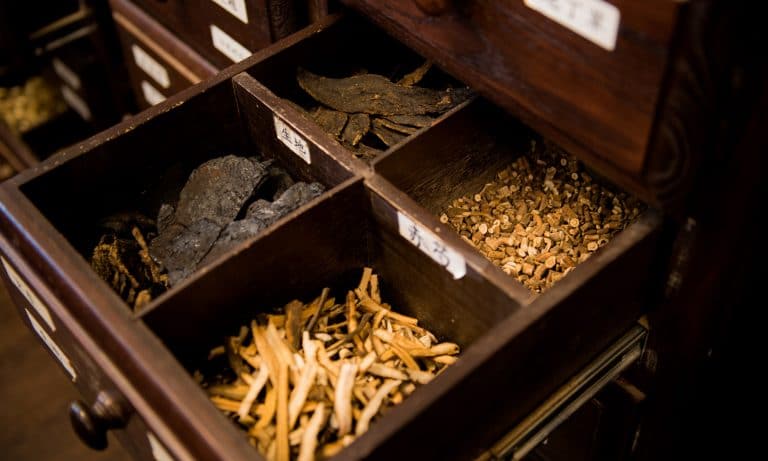
Photo by CasarsaGuru/Getty Images
Conversely, holistic Chinese medicine views the body as a garden and seeks to integrate the physical body, mind, and spirit so that the garden can thrive. Medicine is seen as cultivating health with the doctor and the patient working in partnership to improve the body’s ecological conditions. Here, the goal is to enhance the patient’s self-regulatory capacity.
In Chinese medicine, every organ and channel/networking system is regulated by a system tuned in to the most sensitive and densest levels of our body. According to George, “The ECS may be a key part of this process.” However, they are just at the beginning phase of researching how holistic Chinese medicine combined with the newest in cannabinoid research can help people get their ECS into a state of homeostasis.
Cannabis reform, or lack thereof, appears an influential factor in the upcoming presidential election based on recent comments by both campaigns.
Comments from a top Biden-Harris aide show how the Democratic presidential ticket has prioritized cannabis reform ahead of the 2020 election. Symone Sanders, a senior advisor to Biden, stated in a recent interview the potential administration wants to establish preemptive criminal justice reform and that includes cannabis records.
“We’re really reforming the criminal justice system so we’re preventing things on the front end,” Sanders said, as Marijuana Moment first reported.
“Joe Biden and Kamala Harris don’t believe anyone should be in jail for drug offenses only,” she continued. “They believe that marijuana should be decriminalized and folks with marijuana convictions should have those automatically expunged.”
This does not represent a new stance by the Biden administration, however. Biden running mate Kamala Harris had previously reiterated that cannabis decriminalization was a primary concern, as well as expunging prior cannabis records. Harris, who has had a complicated history with cannabis reform, is also a lead Senate sponsor on the Marijuana Opportunity, Reinvestment, and Expungement (MORE) Act, which will receive a vote in the House this month.
Some thought Harris may push Biden further to the left on marijuana. Although the ticket announced no new changes to their policy on cannabis reform, the campaign and has mentioned the issue more and more in recent months.
Photo by Esther Kelleter/Getty Images
Sanders membered a policy task force formed between Biden and Bernie Sanders to issue guidelines on important issues for the Democratic party. Advocates had hoped the task force would also convince Biden to push for legalization, a position that would be in line with many Democratic party members.
But Biden has remained firm on his policies. He believes in cannabis decriminalization and expunging past marijuana records. He also supports legalizing medicinal marijuana and re-scheduling the plant to remove current restrictions imposed on cannabis research.
Cannabis reform, or lack thereof, appears an influential factor in the upcoming presidential election. At the same time as the Biden campaign’s comments, President Donald Trump has told Republicans to keep legalization off the ballots if they want to. Trump reportedly fears that cannabis could lose him the election and requests regular updates where legalization is on the 2020 ballot.
Safe sex during COVID now includes face masks, according to Canadian guidelines.
Because sex is one of the few things we can do to bring us pleasure and a sense of normalcy in a pandemic, new health guidelines are being recommended to help us all ease back into real life dating. Still, even if you try your best to meet up with someone who is COVID free, there are risks to having sex with someone outside of your bubble during the pandemic; and governments are making this very clear.
Canada is the most recent country to release guidelines on sex, recently outlining steps people should take to stay careful. One of their golden nuggets of advice is to wear a mask that completely covers the nose and mouth, because that isn’t at all awkward.
The report says the safest sex you can have is with yourself (who else is getting high school sex ed vibes?), echoing what other governments have said recently. Health experts also advise that before having sex, you and your partner should check for COVID-19 symptoms, including sore throat, fever, coughs, etc. Even if there are none, they express that it’s still a risk to expose yourself to someone who isn’t a part of your bubble, which is why they suggest skipping kissing and face to face contact.
Photo by Dean Mitchell/Getty Images
“Current evidence indicates there is a very low likelihood of contracting the novel coronavirus through semen or vaginal fluids. However, even if the people involved do not have symptoms, sexual activity with new partners does increase your risk of getting or passing COVID-19 through close contact, like kissing. Remember as with all social interactions, try to keep your number of close contacts low if possible,” explains Dr. Tam.
Like all activities that put you in close contact with other people, sex is a thorny issue during these complicated times. It’s up to everyone to weigh the pros and cons and measure their level of risk, contemplating their age or if there’s an underlying condition that they have to cope with. Afterwards, they can make a decision that works best for them and what they need.